
Bingsu is one of Korea’s most recognizable cold desserts. It is built around finely shaved ice or a soft milk-based frozen base and topped with ingredients such as sweet red bean, fruit, injeolmi, condensed milk, ice cream, or other dessert toppings.
Traditional patbingsu remains an important reference point, but modern Korean bingsu has expanded into mango, strawberry, injeolmi, matcha, chocolate, and many other styles.
For international visitors, bingsu is also an introduction to Korean café culture: large bowls, colorful toppings, seasonal fruit, and desserts designed to be slowly shared at the table.
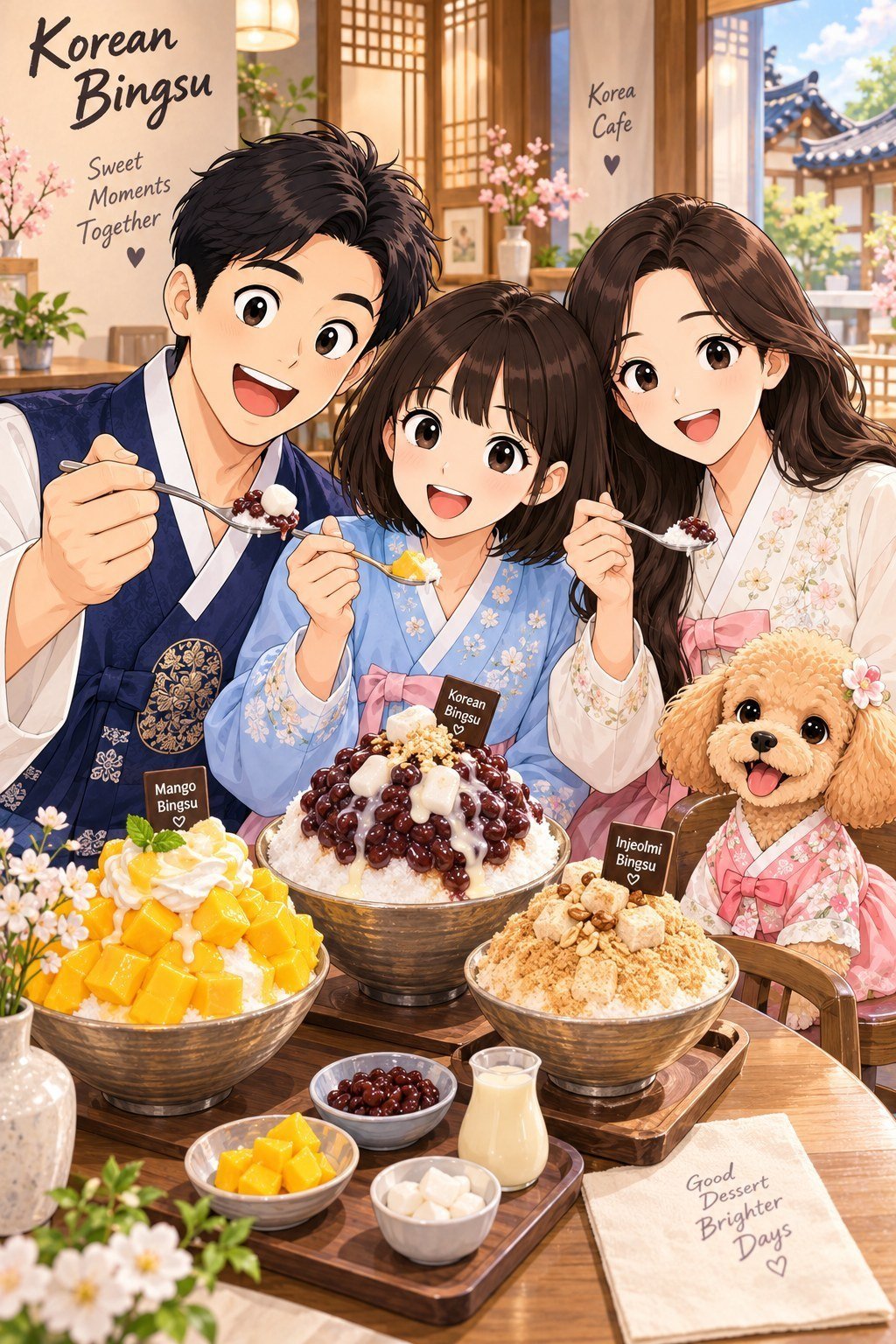
Patbingsu, mango bingsu, and injeolmi bingsu show how one Korean shaved-ice dessert can range from traditional red bean flavors to modern fruit and café-style creations.
Quick Guide
| Korean name | 빙수 |
| Romanization | Bingsu |
| Common English description | Korean shaved ice |
| Traditional style | Patbingsu with sweet red bean |
| Popular modern styles | Mango, strawberry, injeolmi, matcha and other café variations |
| Base | Finely shaved ice or recipe-dependent milk-based frozen ice |
| Common toppings | Sweet red bean, tteok, fruit, injeolmi, condensed milk and other dessert toppings |
| Common setting | Korean cafés, dessert shops, restaurants and hotels |
| Serving style | Individual portions or larger bowls designed for sharing |
| Important first-time tip | Ingredients and portion sizes vary significantly by bingsu style and café |
What Is Bingsu?
Bingsu is a Korean frozen dessert centered on finely shaved ice.
The ice is served with toppings that can range from traditional sweet red bean and small pieces of tteok to fresh fruit, injeolmi, condensed milk, ice cream, cereal, cookies, chocolate, or other modern ingredients.
Because the base and toppings vary so widely, “bingsu” describes a dessert category rather than one fixed recipe.
What Does Bingsu Mean?
The Korean word 빙수 refers broadly to shaved-ice dessert.
Additional words usually identify the major topping or style. For example, patbingsu refers to a red-bean-centered version, while mango bingsu emphasizes mango.
This naming pattern makes Korean café menus easier to understand once the basic word “bingsu” is familiar.
Bingsu vs. Regular Shaved Ice
Bingsu belongs to the wider family of shaved-ice desserts found in many countries, but modern Korean versions have developed distinctive textures, toppings, presentation, and café culture.
Some bingsu uses ordinary shaved ice, while many contemporary versions emphasize extremely fine milk-based ice with a soft, snow-like texture.
The toppings are also often arranged as an important part of the presentation rather than treated only as flavored syrup poured over ice.
What Is Milk Bingsu?
Milk bingsu uses a milk-based frozen mixture or milk-oriented ice preparation to create a richer base than plain water ice.
When shaved very finely, the frozen base can resemble soft snow or delicate flakes rather than coarse crushed ice.
Recipes differ between cafés, so “milk bingsu” should not be interpreted as one standardized formula.
Why Is Modern Bingsu So Soft?
The texture depends on both the frozen base and the shaving equipment.
Very fine shaving produces thin frozen particles that melt quickly on the tongue and create the soft texture strongly associated with contemporary Korean dessert cafés.
This snow-like base also allows fruit, red bean, injeolmi, and other toppings to remain visually prominent.
Preparing the Bingsu Base
The frozen base is shaved into a serving bowl until a soft mound forms.
Depending on the recipe, the base can be plain ice, milk-based ice, or another café-specific preparation.
Toppings are then arranged over or between layers of shaved ice so different flavors can be reached throughout the dessert rather than existing only on the surface.
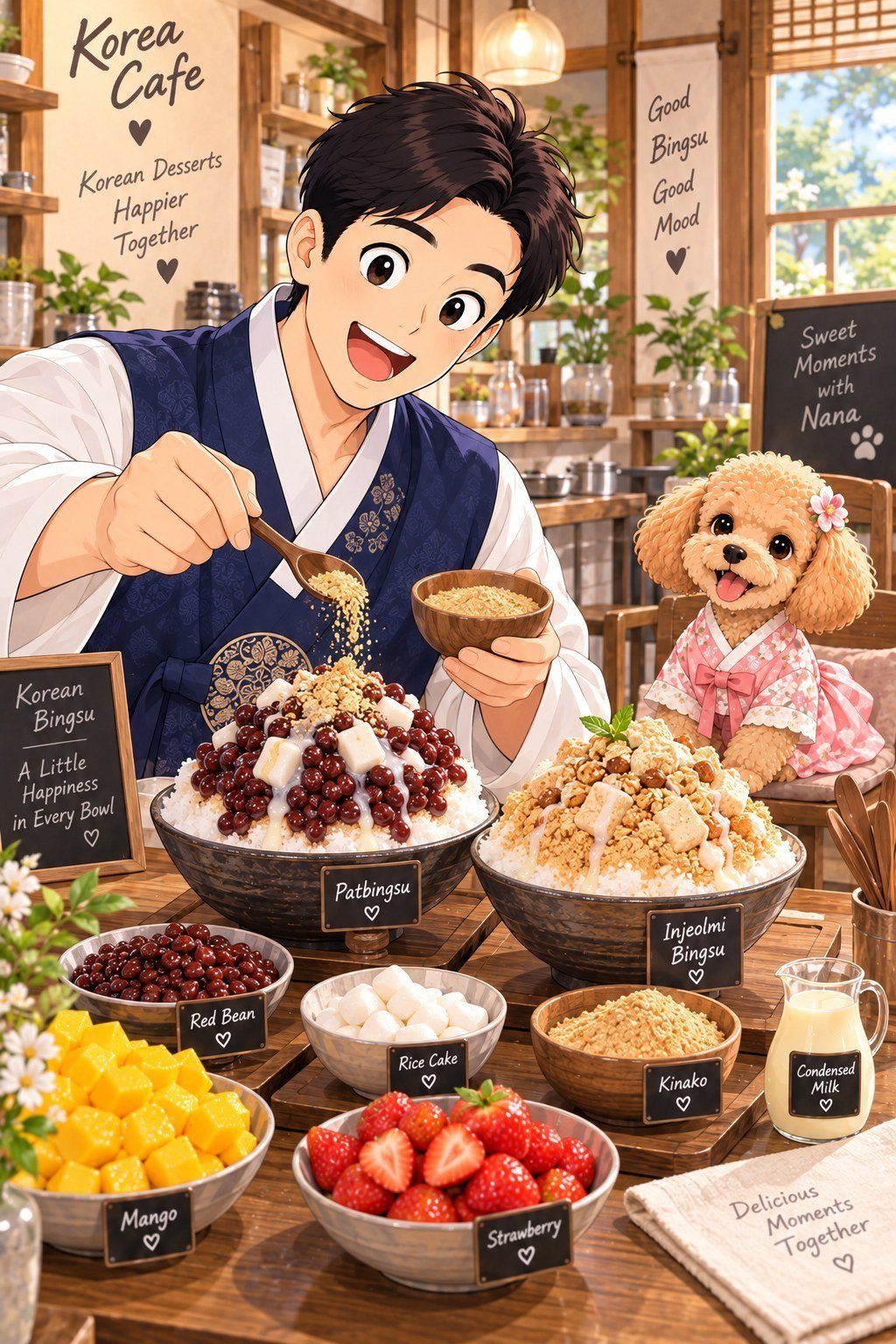
Fine milk snow can become the base for red bean, tteok, injeolmi, condensed milk, mango, strawberries, and many other Korean bingsu combinations.
What Is Patbingsu?
Patbingsu is one of the most important traditional reference points for understanding bingsu.
“Pat” means red bean, so patbingsu centers on sweetened red bean served with shaved ice.
Additional ingredients can include tteok, condensed milk, fruit, ice cream, cereal, or other toppings depending on the recipe and period.
Sweet Red Bean in Patbingsu
Sweet red bean provides a dense, soft texture that contrasts strongly with cold shaved ice.
The beans can retain some individual texture or be prepared in a softer paste-like form depending on the recipe.
For international visitors unfamiliar with sweet beans in desserts, patbingsu provides an accessible introduction to an ingredient that appears across several Korean sweets.
Tteok in Bingsu
Small pieces of tteok can add a chewy texture to bingsu.
The contrast is distinctive: shaved ice melts quickly, while rice cake requires more chewing and remains substantial in the bowl.
Tteok pieces can become firm when very cold, so texture can change as they sit against the ice.
What Is Injeolmi Bingsu?
Injeolmi bingsu emphasizes the flavors associated with injeolmi, a Korean rice cake traditionally coated with roasted soybean powder.
Modern café versions can combine finely shaved milk ice with injeolmi pieces, soybean powder, condensed milk, nuts, or other toppings.
The result is generally less fruit-focused than mango or strawberry bingsu and emphasizes nutty, roasted, chewy, and milky characteristics.
Roasted Soybean Powder
Roasted soybean powder contributes the distinctive beige coating and nutty aroma associated with injeolmi.
On bingsu, the powder can settle into the shaved ice and combine with milk-based flavors as the dessert begins to melt.
Because soybean is a relevant allergen for some diners, injeolmi-style desserts should not be assumed to be suitable for everyone.
How Patbingsu & Injeolmi Bingsu Are Assembled
A mound of finely shaved ice provides the foundation.
Patbingsu can be finished with sweet red bean and tteok, while injeolmi bingsu can emphasize rice cake pieces and roasted soybean powder.
Condensed milk or other recipe-dependent ingredients can be added to increase sweetness and richness.
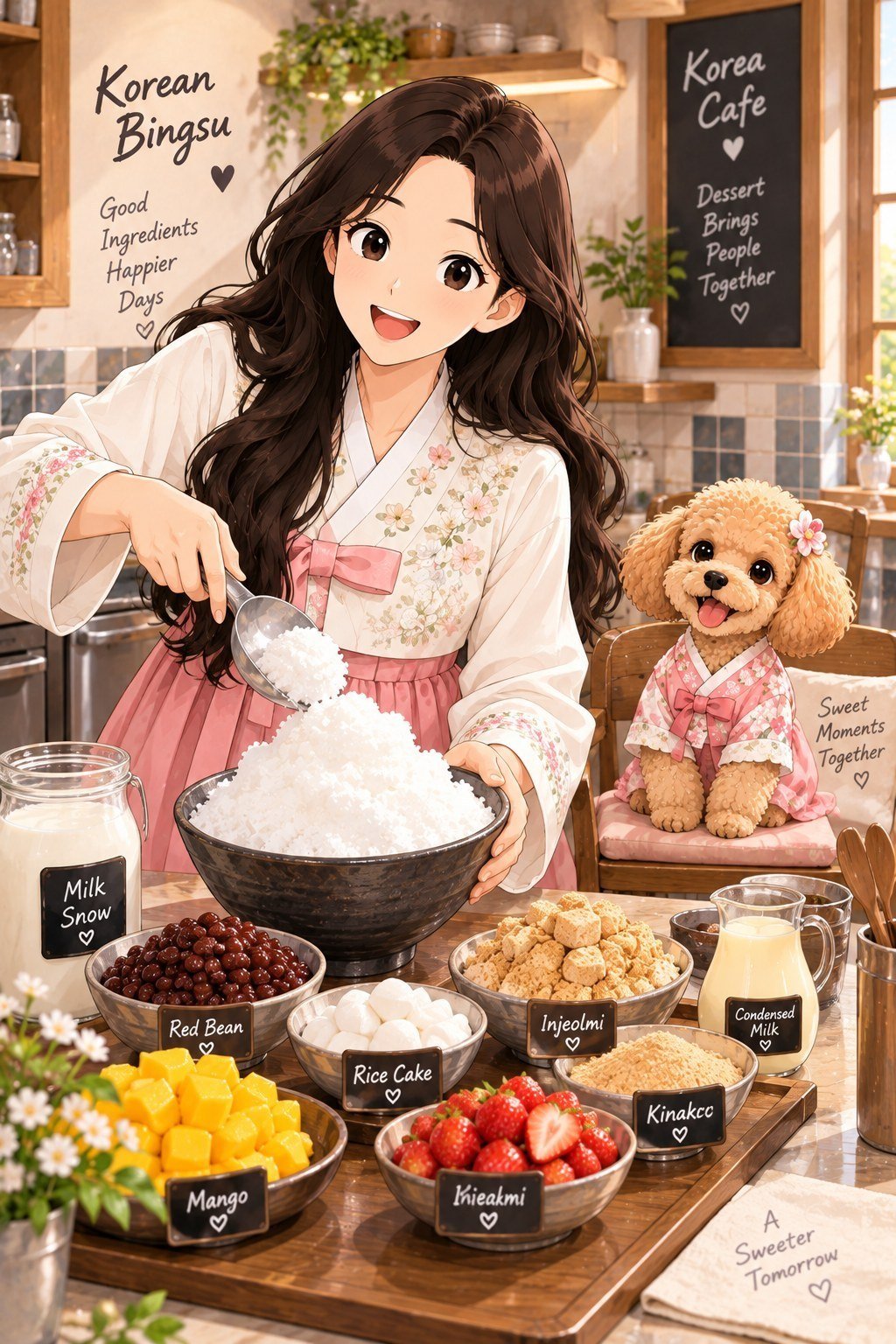
Sweet red bean and tteok define classic patbingsu, while injeolmi and roasted soybean powder create another distinctly Korean shaved-ice experience.
Mango Bingsu
Mango bingsu is one of the most visually recognizable modern fruit versions.
Ripe mango pieces are arranged over finely shaved ice, often with additional mango sauce, condensed milk, ice cream, or other café-specific toppings.
The bright yellow fruit and pale shaved ice create a strong visual contrast that has helped mango bingsu become especially recognizable in café and social-media imagery.
Strawberry Bingsu
Strawberry bingsu follows a similar fruit-centered approach.
Fresh strawberries can be combined with milk-based shaved ice, strawberry sauce, condensed milk, cream, ice cream, or other toppings depending on the café.
Because fresh fruit quality and availability change seasonally, strawberry bingsu can also appear as a seasonal menu item.
Matcha Bingsu
Matcha or green-tea-oriented bingsu demonstrates how the basic shaved-ice format can incorporate flavors from the wider East Asian dessert world.
Green-tea powder, sauce, ice cream, red bean, rice cake, or other toppings can be combined depending on the recipe.
It should be treated as one modern variation rather than as the definition of traditional Korean bingsu.
Condensed Milk
Condensed milk is a common way to add sweetness and dairy richness to many bingsu styles.
It can be drizzled over the top or served separately so diners can adjust the amount themselves.
Not every bingsu contains condensed milk, and dairy content should be checked when allergies or dietary restrictions matter.
How to Eat Bingsu
Use a spoon to take shaved ice together with a manageable amount of topping.
There is no requirement to immediately mix the entire bowl into one uniform mixture. Eating from different sections first can make it easier to experience individual toppings and textures.
As the ice begins to melt, gently combining the remaining ingredients can create a different texture toward the end of the dessert.
Should You Mix Bingsu?
Both approaches are possible.
Some diners prefer to combine toppings and ice early, while others eat the carefully arranged toppings gradually and mix only after the base starts melting.
Presentation-heavy fruit bingsu can be easier to manage if large fruit pieces are eaten progressively rather than aggressively stirring a tall bowl from the beginning.
Sharing Bingsu
Many Korean cafés serve bingsu in bowls large enough for two or more people to share.
Other businesses offer individual portions, so size should be checked before ordering rather than assuming every bowl is designed for one person.
Sharing bingsu is one reason the dessert fits naturally into Korean café culture, where people may spend time talking over drinks and dessert.
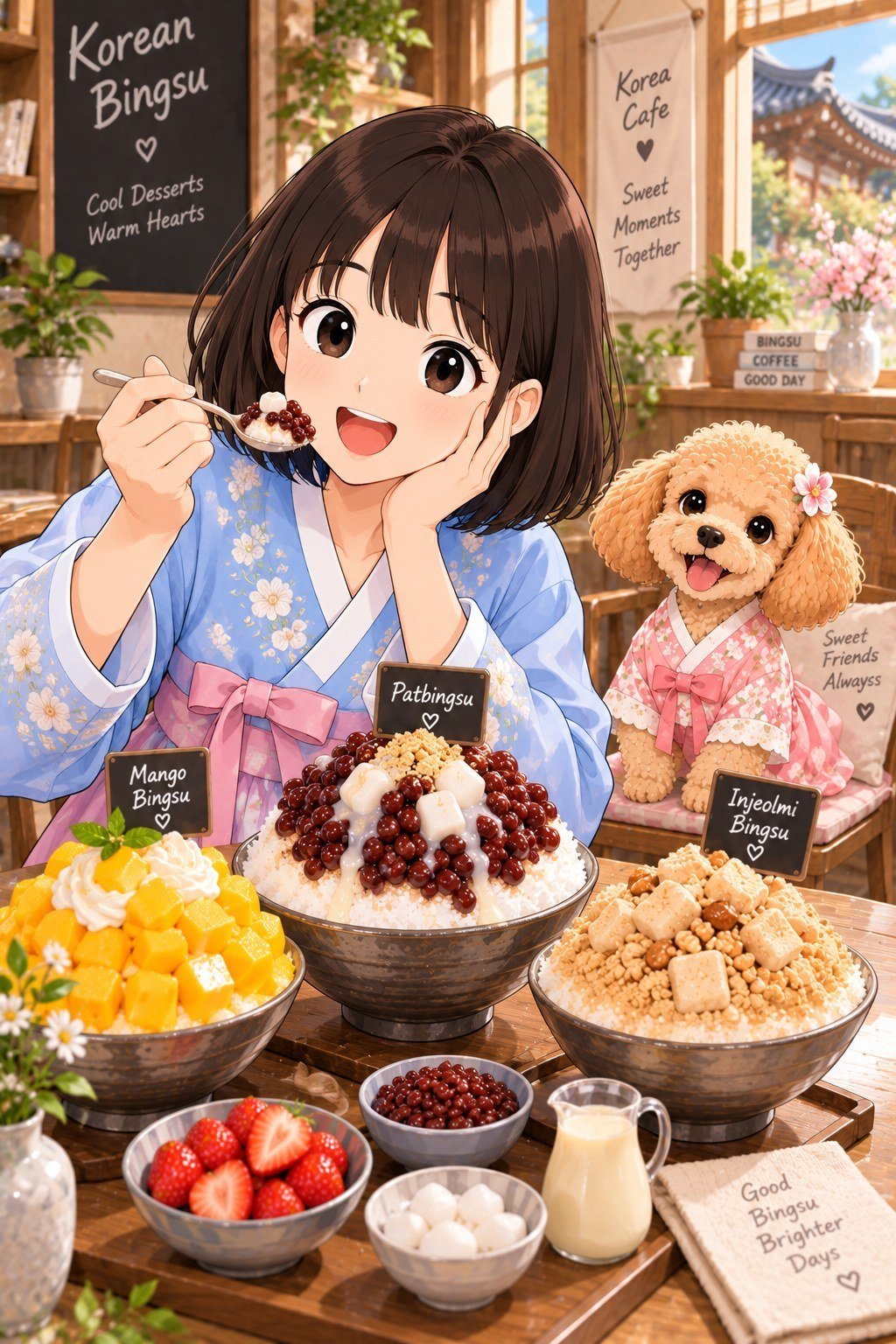
Patbingsu, mango bingsu, and injeolmi bingsu offer very different combinations of cold milk snow, fruit, red bean, rice cake, and roasted soybean flavors.
Bingsu & Korean Cafe Culture
Bingsu is closely connected with Korea’s modern café and dessert culture.
Rather than functioning only as a quick street snack, bingsu can be a sit-down dessert served in carefully designed bowls with elaborate toppings and presentation.
Cafés can build seasonal menus around fruit, premium ingredients, or visually distinctive combinations, giving the dessert considerable room for reinvention.
Bingsu as a Korean Summer Dessert
Bingsu is particularly appealing during Korea’s hot and humid summer.
The cold shaved ice provides an immediate contrast to warm weather, while fruit versions can emphasize seasonal produce and refreshing flavors.
However, cafés and dessert shops can sell bingsu outside summer as well, so it should not be treated as a strictly seasonal food.
Bingsu vs. Ice Cream
Bingsu and ice cream are both frozen desserts, but their structures are different.
Ice cream is a frozen mixture with a relatively continuous creamy texture. Bingsu is built around shaved frozen material combined with separate toppings and sauces.
Some bingsu can include ice cream as a topping, meaning the two desserts can even appear in the same bowl without becoming the same food.
Bingsu vs. Patbingsu
Bingsu is the broad dessert category, while patbingsu is a specific red-bean-centered type of bingsu.
This distinction is useful for international visitors because modern Korean menus may offer many bingsu varieties without red bean.
Ordering mango bingsu, for example, does not automatically mean that sweet red bean will be included unless the menu says so.
Hotel Bingsu
Bingsu is not limited to casual dessert cafés. Korean hotels have also developed elaborate versions that present shaved ice as a premium seasonal dessert.
Hotel bingsu can emphasize high-quality seasonal fruit, carefully prepared milk ice, premium toppings, large portions, and detailed presentation.
This side of bingsu demonstrates how a familiar Korean dessert can move between everyday café culture and luxury dining environments.
What Is Premium Bingsu?
“Premium bingsu” does not refer to one standardized recipe.
The expression can describe bingsu made with premium fruit, specialty ingredients, elaborate presentation, larger quantities of toppings, or service in an upscale café or hotel.
A higher price therefore does not automatically indicate one particular type of bingsu or guarantee the same ingredients at every business.
Why Can Bingsu Prices Vary So Much?
Bingsu prices can differ considerably according to portion size, café location, fruit quality, season, ingredient quantity, presentation, and the type of business serving it.
A simple individual patbingsu and a large hotel mango bingsu are both bingsu, but they can represent very different products and dining experiences.
Travelers should check the current menu and serving size rather than relying on an older online price as a universal reference.
Seasonal Fruit & Bingsu
Fresh fruit plays an important role in many modern bingsu menus.
Mango, strawberry, melon, peach, and other fruits can appear according to the café, region, season, and availability.
Because fruit quality and supply change, a popular seasonal bingsu may disappear, return later, or use a different presentation from one year to the next.
Bingsu & Global K-Food
International interest in Korean food increasingly includes desserts as well as kimchi, barbecue, noodles, fried chicken, and street food.
Bingsu is particularly accessible as a global K-Food dessert because the basic idea of shaved ice is familiar across many cultures while Korean toppings and café presentation provide a distinctive experience.
Patbingsu introduces sweet red bean and tteok, while fruit and milk-based versions provide additional entry points for diners unfamiliar with traditional Korean dessert ingredients.
Why Bingsu Works Well on Social Media
Modern bingsu can be highly visual.
Bright mango, strawberries, pale milk snow, red bean, beige injeolmi powder, ice cream, sauces, and carefully arranged toppings create strong color and texture contrasts.
Large bowls and tall presentations also make the dessert easy to recognize in travel photos, café videos, and short-form food content.
Bingsu & Korean Entertainment
Korean cafés and desserts are frequently part of the everyday lifestyle imagery international audiences encounter through Korean entertainment and online content.
Bingsu fits naturally into scenes involving friends, couples, families, summer weather, cafés, and shared desserts.
Its international appeal should therefore be understood as part of the broader spread of Korean café and dessert culture rather than being attributed to one specific drama or celebrity.
Bingsu Outside Korea
Korean dessert cafés and restaurants outside Korea can serve patbingsu, fruit bingsu, injeolmi bingsu, and locally adapted variations.
Recipes can change according to available fruit, dairy products, equipment, customer preferences, and local ingredients.
A dessert labeled “bingsu” outside Korea should therefore not be expected to have exactly the same ice texture, toppings, sweetness, or portion size as every bingsu served in Korea.
Choosing Your First Bingsu
The easiest approach is to choose according to the flavor experience you want.
Patbingsu is useful for experiencing the traditional combination of shaved ice and sweet red bean. Mango bingsu emphasizes fresh fruit and is an approachable choice for diners unfamiliar with red bean.
Injeolmi bingsu emphasizes rice cake and roasted soybean powder, providing a more distinctly Korean combination of chewy, nutty, milky, and cold textures.
Patbingsu vs. Mango Bingsu
Patbingsu and mango bingsu demonstrate how broad the bingsu category has become.
Patbingsu centers on sweet red bean and can include tteok and other traditional-style toppings. Mango bingsu places ripe fruit at the center of the dessert and often uses milk-based shaved ice.
Neither represents every bingsu. They are two different branches of the same Korean shaved-ice category.
Patbingsu vs. Injeolmi Bingsu
Patbingsu emphasizes red bean, while injeolmi bingsu emphasizes rice cake and roasted soybean powder.
Both can contain tteok, milk-based ingredients, condensed milk, or additional toppings depending on the café.
The main difference is therefore the dominant flavor and topping identity rather than one rigid recipe formula.
Mango Bingsu vs. Injeolmi Bingsu
Mango bingsu tends to emphasize juicy fruit, sweetness, and refreshing flavors.
Injeolmi bingsu provides a more roasted and nutty flavor profile through soybean powder and chewy rice cake.
Trying the two styles provides a useful contrast between modern fruit-centered Korean café desserts and flavors derived from traditional Korean rice-cake culture.
Is Bingsu Only for Summer?
Bingsu is strongly associated with hot weather, but it is not universally restricted to summer.
Permanent dessert cafés can sell bingsu throughout much or all of the year, while seasonal fruit menus can appear only for limited periods.
Availability depends on the individual café, restaurant, hotel, and menu.
Individual vs. Sharing Bingsu
Portion size is especially important when ordering bingsu.
Some bowls are designed for one diner, while large café or hotel presentations can be intended for sharing.
Checking the size before ordering helps avoid comparing prices between products that contain very different amounts of shaved ice and toppings.
The Complete Bingsu Experience
Bingsu can move from traditional sweet red bean to modern mango, strawberry, injeolmi, matcha, and premium seasonal-fruit creations.
What connects these variations is the cold shaved base and the way toppings, texture, presentation, and sharing become part of the dessert experience.
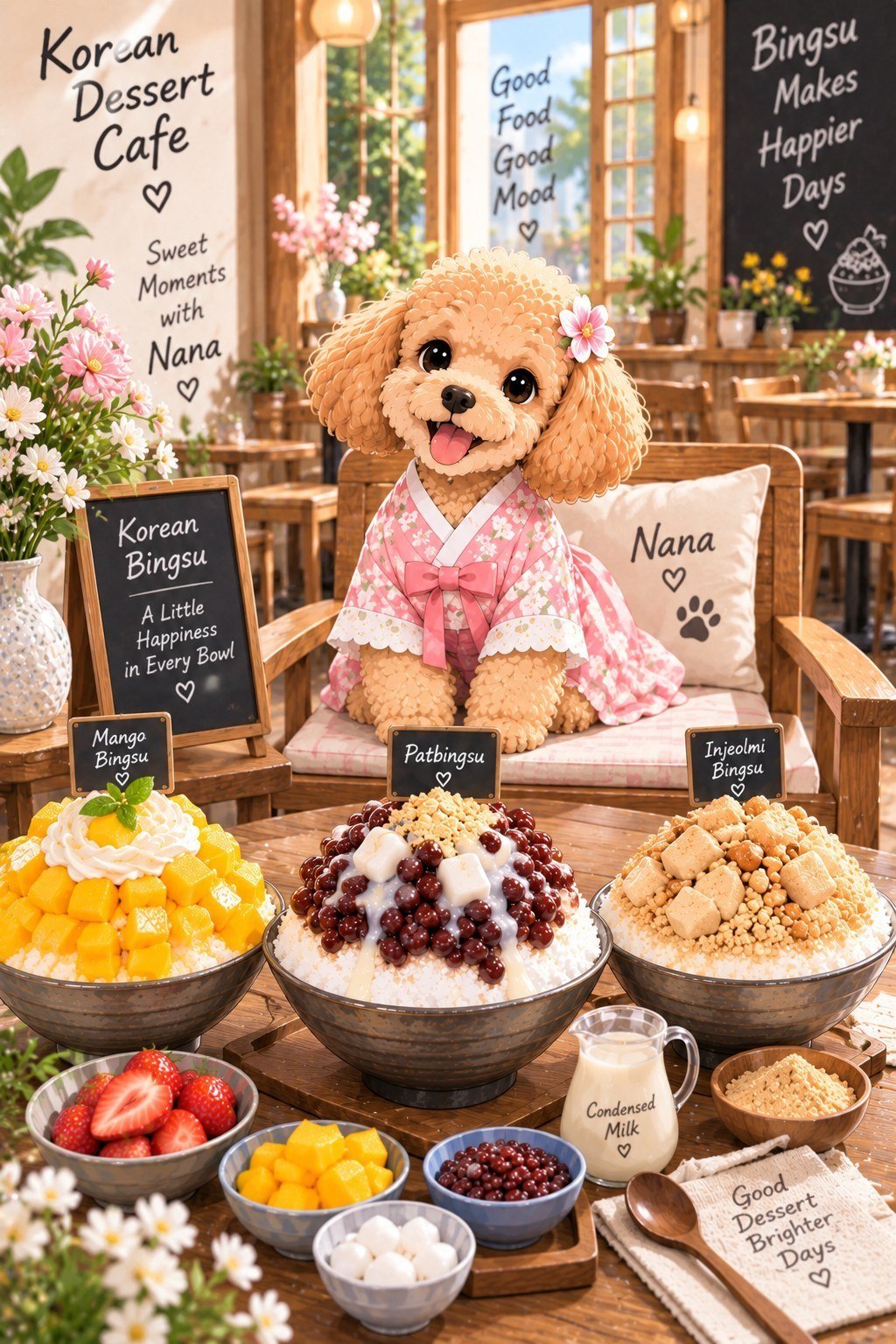
Patbingsu, mango bingsu, and injeolmi bingsu represent the traditional, fruit-centered, and rice-cake-inspired sides of modern Korean dessert culture.
How Bingsu Connects with Other K-Food
Hotteok provides a warm Korean dessert contrast through filled dough, brown sugar, cinnamon, nuts, and seeds.
Bungeoppang expands the dessert collection into Korea’s fish-shaped winter pastry with red bean, custard, and modern fillings.
Tteokbokki, Korean Corn Dog, and Gimbap provide contrasting examples of savory Korean street and casual food.
Mandu introduces Korean dumplings, while Korean Ramyeon introduces instant-noodle and convenience-store food culture.
Buldak Bokkeummyeon provides a dramatic contrast with bingsu through concentrated K-Spicy flavors, while Korean Fried Chicken represents another globally recognizable modern K-Food category.
Kimchi introduces Korean fermentation, while Bibimbap and Kimchi Fried Rice expand the collection into rice-centered meals.
Japchae, Jjajangmyeon, and Naengmyeon show three very different Korean noodle traditions.
Kimchi-jjigae, Sundubu-jjigae, and Samgyetang extend the collection into Korean stews and soup.
Korean BBQ, Galbi, Bulgogi, and Samgyeopsal represent the shared-table grilled-meat side of Korean dining.
Bingsu & Hongdae
Hongdae provides a natural connection with Korean café culture, youth trends, shopping, entertainment, and visually distinctive desserts.
A café stop for bingsu can fit between shopping, walking, performances, and other activities without requiring a full restaurant meal.
Bingsu & Insadong
Insadong provides another useful setting for exploring Korean tea, traditional-style desserts, cafés, crafts, and cultural streets.
Injeolmi, red bean, and other traditional Korean dessert flavors can provide a particularly natural connection between bingsu and a more traditional Seoul itinerary.
Bingsu & Seoul Cafe Culture
Modern Seoul café culture ranges from small neighborhood cafés to large dessert businesses and luxury hotels.
Bingsu fits across this spectrum because the dessert can be simple or elaborate, traditional or fruit-centered, individually portioned or designed for sharing.
This flexibility helps explain why bingsu remains relevant even as Korean café trends continue to change.
Bingsu & a Seoul Travel Day
A cold dessert break can fit naturally into a warm-weather itinerary involving Gyeongbokgung Palace and Bukchon Hanok Village.
Travelers can move from historical outdoor attractions to a café and experience another side of contemporary Korean daily culture through dessert.
Menus, seasonal fruit, prices, serving sizes, and café operating hours can change, so current information should be checked when planning a specific visit.
FAQ
What is bingsu?
Bingsu is a Korean shaved-ice dessert served with toppings such as sweet red bean, fruit, injeolmi, tteok, condensed milk, ice cream, or other ingredients. Modern versions often use extremely fine milk-based ice with a soft, snow-like texture.
What is the difference between bingsu and patbingsu?
Bingsu is the broader dessert category. Patbingsu is a specific type centered on sweet red bean, because “pat” means red bean. Mango, strawberry, injeolmi, and other bingsu varieties do not necessarily contain red bean.
What is milk bingsu?
Milk bingsu uses a milk-based frozen preparation rather than relying only on plain water ice. When shaved very finely, it can create the soft, snow-like texture associated with many modern Korean dessert cafés.
What is injeolmi bingsu?
Injeolmi bingsu is a Korean shaved-ice variation inspired by injeolmi, a rice cake associated with roasted soybean powder. Café versions can combine fine milk ice, injeolmi pieces, soybean powder, condensed milk, nuts, or other toppings.
What is mango bingsu?
Mango bingsu is a fruit-centered variation topped with fresh mango and often combined with milk-based shaved ice. Depending on the café, mango sauce, condensed milk, ice cream, or additional fruit can also be included.
Should you mix bingsu before eating it?
There is no single required method. Some diners mix the toppings and ice, while others eat different sections separately before gently combining the dessert as the ice begins to melt.
Is bingsu only eaten in summer?
No. Bingsu is strongly associated with hot weather, but cafés, restaurants, and hotels can serve it outside summer. Seasonal fruit varieties and individual menus can still be limited to particular periods.
Where to Try Bingsu
Bingsu can be found at Korean dessert cafés, coffee shops, restaurants, specialty dessert businesses, and hotels.
The experience varies considerably. A neighborhood café may serve a relatively simple patbingsu, while another business can specialize in elaborate fruit or premium bingsu designed for sharing.
Menus, seasonal ingredients, prices, and availability change, so current information should be checked when visiting a specific business.
What to Check Before Ordering
Start with the main style: patbingsu, mango, strawberry, injeolmi, matcha, or another available variation.
Next check the serving size. Some bowls are intended for one person, while larger bingsu can be designed for two or more diners.
Finally, check the toppings and frozen base when allergies, dietary restrictions, or ingredient preferences matter.
First-Time Bingsu Tips
- Try patbingsu — it provides an important traditional red-bean reference point.
- Choose mango for fruit — it offers a very different modern café-style experience.
- Try injeolmi — rice cake and roasted soybean powder introduce distinctly Korean textures and flavors.
- Check the portion — large bowls can be intended for sharing.
- Do not overmix immediately — tasting different sections first can help distinguish individual toppings.
- Check seasonal menus — fresh-fruit varieties can change throughout the year.
- Confirm allergens — milk, soy, nuts, wheat, and other ingredients can appear depending on the recipe.
Food & Allergy Notes
Bingsu recipes vary substantially between cafés, restaurants, hotels, and packaged products.
Milk-based ice, condensed milk, ice cream, red bean, rice cake, soybean powder, nuts, fruit, sauces, cereal, cookies, and other toppings can introduce different allergens and dietary considerations.
People with allergies, intolerances, medical conditions, religious dietary restrictions, vegetarian or vegan requirements, or other individual needs should confirm the frozen base and every relevant topping with the business or manufacturer.
Milk & Dairy
Many contemporary bingsu varieties use milk-based shaved ice, condensed milk, ice cream, cream, or other dairy ingredients.
A fruit-centered appearance does not automatically mean the dessert is dairy-free because the shaved base itself can contain milk.
People avoiding dairy should confirm both the ice base and toppings before ordering.
Soy & Injeolmi Bingsu
Injeolmi bingsu commonly features roasted soybean powder, making soy an important ingredient to identify.
Additional sauces, rice cakes, packaged toppings, or other ingredients can have their own formulations.
People with soy allergies should verify the complete preparation rather than removing only the visible soybean powder.
Tteok & Chewing Safety
Tteok can provide the chewy texture found in patbingsu, injeolmi bingsu, and other Korean desserts.
Rice cake should be eaten in manageable pieces and chewed thoroughly. Its dense, sticky texture can present a choking hazard, particularly for young children, older adults, or anyone who has difficulty chewing or swallowing.
Very cold tteok can also become firmer, so texture should be considered before eating quickly.
Red Bean
Sweet red bean is the defining ingredient in patbingsu but recipes differ in sweetness, texture, and additional ingredients.
Some preparations retain recognizable beans while others can be softer or more paste-like.
The presence of red bean does not determine whether the complete dessert contains dairy, gluten, nuts, soy, or other ingredients.
Nuts & Additional Toppings
Nuts can appear on injeolmi bingsu, premium bingsu, or other café variations.
Cookies, cereal, chocolate, sauces, ice cream, cakes, and other modern toppings can introduce wheat, gluten, milk, egg, soy, nuts, or additional allergens.
Because toppings can change frequently, the specific menu should be checked rather than assuming that all versions with the same name contain identical ingredients.
Fresh Fruit
Mango, strawberry, melon, peach, and other fruits can appear in modern bingsu.
Fresh-fruit quality, ripeness, origin, preparation, and availability can change according to season and business.
People with relevant fruit allergies should also consider sauces, purées, garnishes, and mixed-fruit toppings rather than checking only the most visible fruit.
Shared Equipment & Cross-Contact
Dessert cafés can prepare multiple bingsu varieties using shared equipment, containers, utensils, and preparation surfaces.
Ingredients such as milk, soy, nuts, wheat, egg, fruit, and other toppings can therefore present cross-contact concerns.
Anyone managing a serious food allergy should ask the business about its preparation environment rather than relying only on the visible toppings.
Cold Food & Eating Comfort
Bingsu is intentionally served very cold and can be uncomfortable when eaten too quickly.
Taking smaller spoonfuls and eating at a comfortable pace can make the dessert easier to enjoy, particularly for people sensitive to very cold foods.
Large bowls do not need to be finished quickly simply because the ice is beginning to soften.
What Happens When Bingsu Melts?
Bingsu changes texture continuously after it reaches the table.
Fine shaved ice gradually absorbs sauces, condensed milk, fruit juice, and melted toppings, creating a softer and more liquid mixture near the end of the dessert.
This change is normal, but a fully melted bowl no longer provides the texture that defines freshly served bingsu.
Storage & Leftovers
Bingsu is generally best enjoyed soon after preparation because shaved ice loses its structure as it melts.
Fruit, dairy products, rice cake, red bean, ice cream, and other perishable toppings also require appropriate food handling.
Refreezing a partially melted bingsu does not restore its original snow-like texture and can create a substantially different result.
Image Credits
Korean bingsu family dessert-café visual with Dad, Mom, K-Nana daughter, and Nana in hanbok enjoying patbingsu, mango bingsu, and injeolmi bingsu — K-Nana Studio original visual.
Korean bingsu preparation visual with Mom in hanbok preparing fine milk snow, sweet red bean, tteok, injeolmi, condensed milk, mango, and strawberries while Nana watches from a separate safe seat — K-Nana Studio original visual.
Korean bingsu topping visual with Dad in hanbok finishing patbingsu and injeolmi bingsu with sweet red bean, rice cake, roasted soybean powder, and condensed milk while Nana remains separately seated — K-Nana Studio original visual.
Korean bingsu tasting visual with K-Nana daughter in hanbok enjoying patbingsu, mango bingsu, and injeolmi bingsu while Nana sits separately without touching the desserts — K-Nana Studio original visual.
Nana in pink floral hanbok seated separately as a K-Food mascot beside patbingsu, mango bingsu, injeolmi bingsu, sweet red bean, rice cake, fruit, soybean powder, and condensed milk — K-Nana Studio original visual.
Disclaimer
This article is provided for general food, travel, and cultural information. Bingsu bases, milk ice, red bean, rice cake, injeolmi, soybean powder, condensed milk, fruit, ice cream, nuts, sauces, toppings, allergens, serving sizes, prices, and seasonal availability can vary by business and product. Recipes may contain milk, soy, wheat, gluten, egg, nuts, or other recipe-dependent ingredients, and shared equipment or preparation surfaces can create cross-contact risks. Rice cake can present a choking hazard if eaten in large pieces or without adequate chewing. Fruit and dairy-based toppings require appropriate food handling, and melted or refrozen bingsu will not retain the original shaved-ice texture. People with allergies, medical conditions, swallowing difficulties, religious dietary restrictions, or other individual requirements should confirm ingredients and preparation directly with the business or manufacturer and follow appropriate professional guidance when necessary.