
Bukchon Hanok Village is one of Seoul’s best-known historic neighborhoods, where traditional Korean houses, tiled roofs, stone walls, narrow alleys, and hillside views remain part of the modern city. Located between major royal palaces in Jongno, Bukchon offers first-time visitors a chance to explore traditional architecture while walking through a real residential neighborhood.
Quick Guide
| Location | Jongno-gu, Seoul |
| Best for | Hanok architecture, historic streets, photography, walking, first-time visitors |
| Recommended time | About 2–3 hours |
| Nearest subway | Anguk Station (Line 3) |
| Admission | The neighborhood itself is free to explore |
| Important | Bukchon is a residential neighborhood; follow current visitor access rules |
What Is Bukchon Hanok Village?
Bukchon is a historic neighborhood in central Seoul containing many traditional Korean houses known as hanok. Its location between Gyeongbokgung Palace and Changdeokgung Palace places the neighborhood within one of Seoul’s most important historic districts.
Bukchon is not a single enclosed attraction. It is a living neighborhood made up of streets, homes, cultural spaces, workshops, cafés, small businesses, and viewpoints.
This distinction is important because visitors share the neighborhood with people who live and work there.
Why Visit?
- Walk through streets lined with traditional hanok architecture.
- See tiled roofs, wooden structures, stone walls, and narrow alleys.
- Enjoy elevated views across historic and modern Seoul.
- Explore small cultural spaces, workshops, cafés, and local businesses.
- Photograph traditional architecture within a modern city.
- Combine Bukchon with nearby royal palaces and Insadong.
Walk Through the Hanok Streets
The most memorable way to experience Bukchon is on foot. Rather than treating the neighborhood as one attraction with a fixed route, allow time to explore its changing streets and viewpoints.
Some lanes are steep and narrow, while others open toward views of tiled roofs, mountains, palace areas, and the modern Seoul skyline.
Comfortable shoes are particularly useful because the neighborhood includes slopes, stone surfaces, and steps.

A Living Residential Neighborhood
Bukchon’s traditional scenery can make the area feel like an open-air historic attraction, but many buildings remain private homes and working spaces.
Visitors should keep voices low, avoid entering private property, respect signs and barriers, and never block residential entrances for photographs.
Visitor access rules and restricted hours can change. Always follow current local guidance and posted notices during your visit.
Hanok Architecture
Hanok architecture is one of the main reasons people visit Bukchon. Curved tiled roofs, wooden frames, courtyards, walls, gates, and the relationship between buildings and surrounding terrain create a distinctive streetscape.
The neighborhood also demonstrates how traditional architecture continues to exist within contemporary Seoul rather than only inside museums or reconstructed heritage sites.
Views of Seoul
Bukchon’s hillside location creates interesting contrasts between old and new Seoul. From certain streets, traditional tiled roofs appear in the foreground while mountains, towers, and modern buildings rise beyond them.
These layered views are among the neighborhood’s most recognizable visual features.
Hanok Cafés & Cultural Spaces
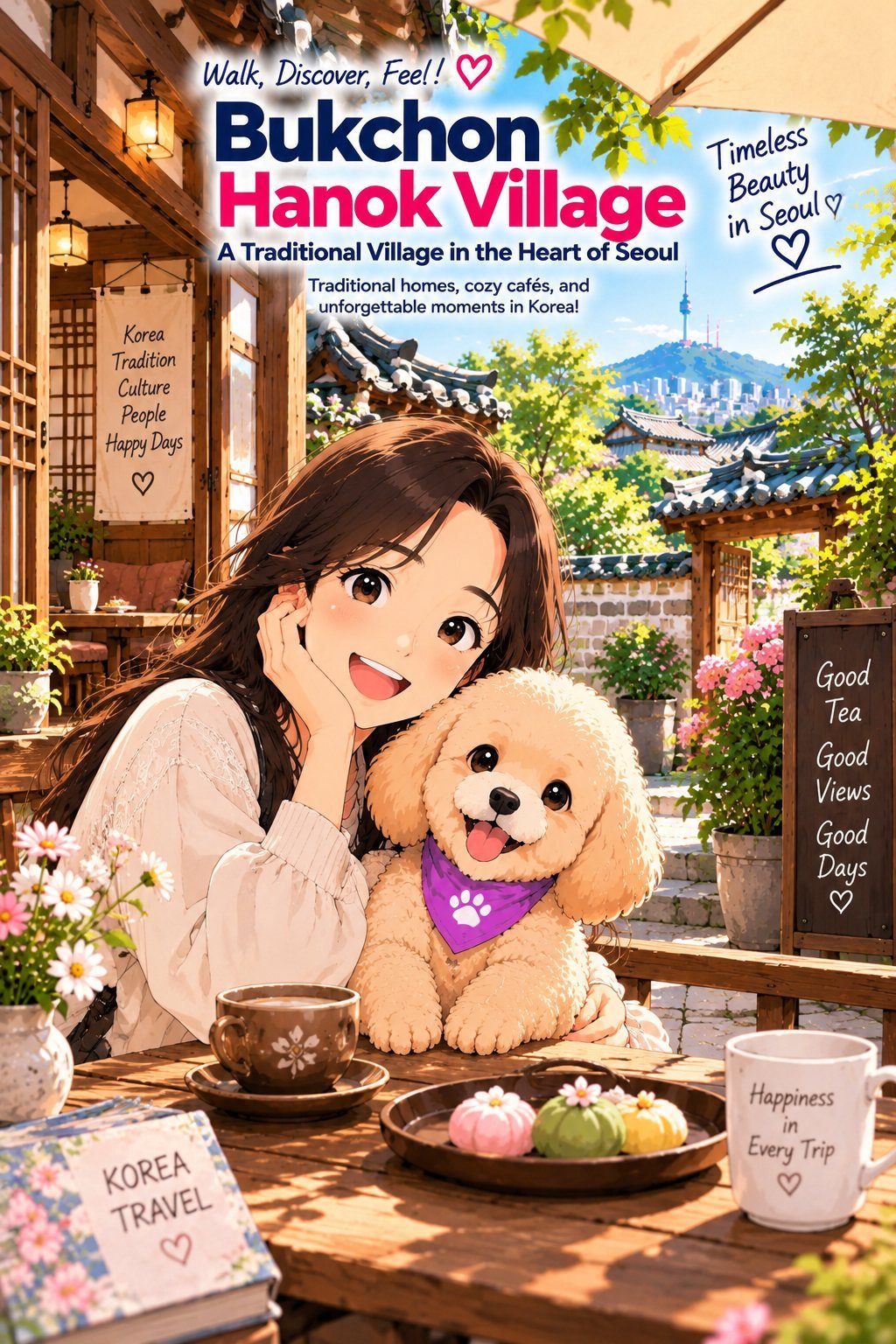
Bukchon and the surrounding area contain cafés, galleries, workshops, craft spaces, museums, and other cultural businesses, some located in or inspired by traditional architecture.
A café or cultural stop can provide a useful break during a walking route, particularly because Bukchon’s hills can make the area more tiring than it first appears.
Photography in Bukchon
Bukchon is popular for photography because its narrow streets combine traditional architecture, stone walls, wooden gates, plants, flowers, hills, and city views.
Photography should never interfere with residents. Avoid standing in doorways, photographing directly into private homes, blocking narrow streets, or creating excessive noise.
Early daytime visits can provide a calmer experience, but current visitor-access rules should always take priority when planning your arrival time.
Hanbok in Bukchon
Visitors wearing hanbok are a familiar sight around Bukchon and the nearby royal palace district. Traditional clothing can complement the historic streets and architecture, particularly when a Bukchon walk is combined with a palace visit.
Hanbok rental businesses operate around the wider Jongno area. Prices, rental periods, accessories, return policies, and opening hours vary by business.
Combine Bukchon with Gyeongbokgung Palace
Gyeongbokgung Palace is one of the most natural places to combine with Bukchon.
The palace introduces visitors to monumental royal architecture, ceremonial courtyards, gates, pavilions, gardens, and Joseon history. Bukchon then provides a different perspective through smaller-scale residential architecture and historic streets.
Experiencing both helps show the difference between royal spaces and traditional urban neighborhoods.
Continue to Changdeokgung Palace
Changdeokgung Palace is another major historic destination close to Bukchon.
Its royal architecture, wooded landscape, courtyards, and garden areas create a different atmosphere from both Gyeongbokgung and Bukchon.
Visitors with a strong interest in Korean history can include Bukchon between the two palace areas as part of a longer Jongno itinerary.
Continue to Insadong
For traditional crafts, galleries, tea houses, souvenirs, and cultural shopping, continue to Insadong.
Insadong has a more commercial character than residential Bukchon, so combining the two creates useful variety within the same part of Seoul.
Walk Toward Ikseon-dong
Visitors interested in contemporary uses of hanok architecture can also explore Ikseon-dong.
Ikseon-dong’s narrow streets contain cafés, restaurants, dessert shops, boutiques, and other businesses inside and around renovated hanok buildings.
Bukchon and Ikseon-dong therefore provide two very different experiences of traditional Korean architecture within modern Seoul.
Best Time to Visit
Daytime is generally the most practical period for exploring Bukchon because the neighborhood is easier to navigate and surrounding cultural businesses are more likely to be open.
Weekdays may feel calmer than weekends and major travel periods.
Because Bukchon is residential and visitor-management policies can change, check the latest access information rather than relying on old opening-hour recommendations.
How Long to Spend
About 2–3 hours is a useful starting point for a first visit.
Visitors who stop at cafés, museums, workshops, cultural spaces, or nearby palaces can easily spend half a day in the wider Jongno area.
How to Get There
Anguk Station on Seoul Subway Line 3 is one of the most convenient starting points for visiting Bukchon Hanok Village.
From the station, the best walking route depends on which part of Bukchon you plan to explore and whether you are combining the neighborhood with nearby palaces or Insadong.
Respecting Bukchon
The most important rule in Bukchon is simple: remember that people live there.
- Keep voices low, especially on narrow residential streets.
- Do not enter private homes or courtyards.
- Do not block gates, doorways, alleys, or vehicle access.
- Follow all posted access restrictions and visitor hours.
- Avoid intrusive photography of residents and private interiors.
- Dispose of rubbish properly.
- Use public facilities and commercial spaces rather than residential property.
First-Time Visitor Tips
- Wear comfortable shoes because Bukchon includes hills and stone steps.
- Check current visitor-access rules shortly before your visit.
- Explore slowly instead of trying to photograph every street.
- Use cafés and cultural spaces for rest stops.
- Visit on a weekday if you prefer a calmer atmosphere.
- Respect residents even when a street is a popular photography location.
- Combine Bukchon with one or two nearby historic attractions rather than rushing through many places.

What to Do Nearby
- Gyeongbokgung Palace — monumental royal architecture, courtyards, gardens, and Joseon history.
- Changdeokgung Palace — royal architecture, wooded grounds, and historic garden scenery.
- Insadong — traditional crafts, galleries, tea houses, souvenirs, and cultural shopping.
- Ikseon-dong — renovated hanok buildings, cafés, restaurants, and narrow streets.
K-Culture Connection
Bukchon provides a direct visual connection between traditional Korean architecture and contemporary Seoul. Hanok roofs, wooden structures, stone walls, courtyards, workshops, cafés, cultural spaces, and modern city views coexist within the neighborhood.
Unlike a palace or museum, Bukchon also demonstrates that historic architecture can remain part of an active urban community.
For international visitors, understanding this residential character is as important as appreciating the neighborhood’s visual beauty.
FAQ
Is Bukchon Hanok Village worth visiting?
It is particularly suitable for visitors interested in traditional Korean architecture, historic streets, photography, walking, and central Seoul culture.
Is Bukchon Hanok Village free?
Walking through the public streets is generally free. Individual museums, workshops, cultural experiences, cafés, and other businesses may charge their own fees.
Do people actually live in Bukchon?
Yes. Bukchon is a real residential neighborhood as well as a popular visitor destination. Respecting residents and current access restrictions is essential.
How long should I spend in Bukchon?
About 2–3 hours works well for many first-time visitors. Allow longer if you plan to visit cafés, museums, workshops, or nearby palaces.
Which subway station should I use?
Anguk Station on Line 3 is one of the most convenient starting points for exploring Bukchon.
Can I combine Bukchon with Gyeongbokgung Palace?
Yes. Gyeongbokgung Palace and Bukchon provide complementary experiences of royal and residential Korean heritage and can naturally be included in the same itinerary.
What should I visit after Bukchon?
Insadong is convenient for traditional crafts and tea, while Changdeokgung Palace provides another royal-history experience. Visitors interested in hanok cafés and restaurants can continue to Ikseon-dong.
Related K-Nana Guides
Continue exploring historic Seoul with Gyeongbokgung Palace for royal architecture and Joseon history, Changdeokgung Palace for another major royal palace, Insadong for crafts, galleries, tea houses, and traditional culture, or Ikseon-dong for contemporary cafés and restaurants inside historic hanok streets.
Official Information
Bukchon Hanok Village is a living residential neighborhood, and visitor access policies, restricted hours, pedestrian routes, cultural-facility schedules, and local visitor-management rules can change. Some residential streets may have specific access restrictions or visiting hours. Check the latest official Seoul tourism and Jongno-gu information before visiting, and always follow signs and guidance posted within the neighborhood.
Image Credits
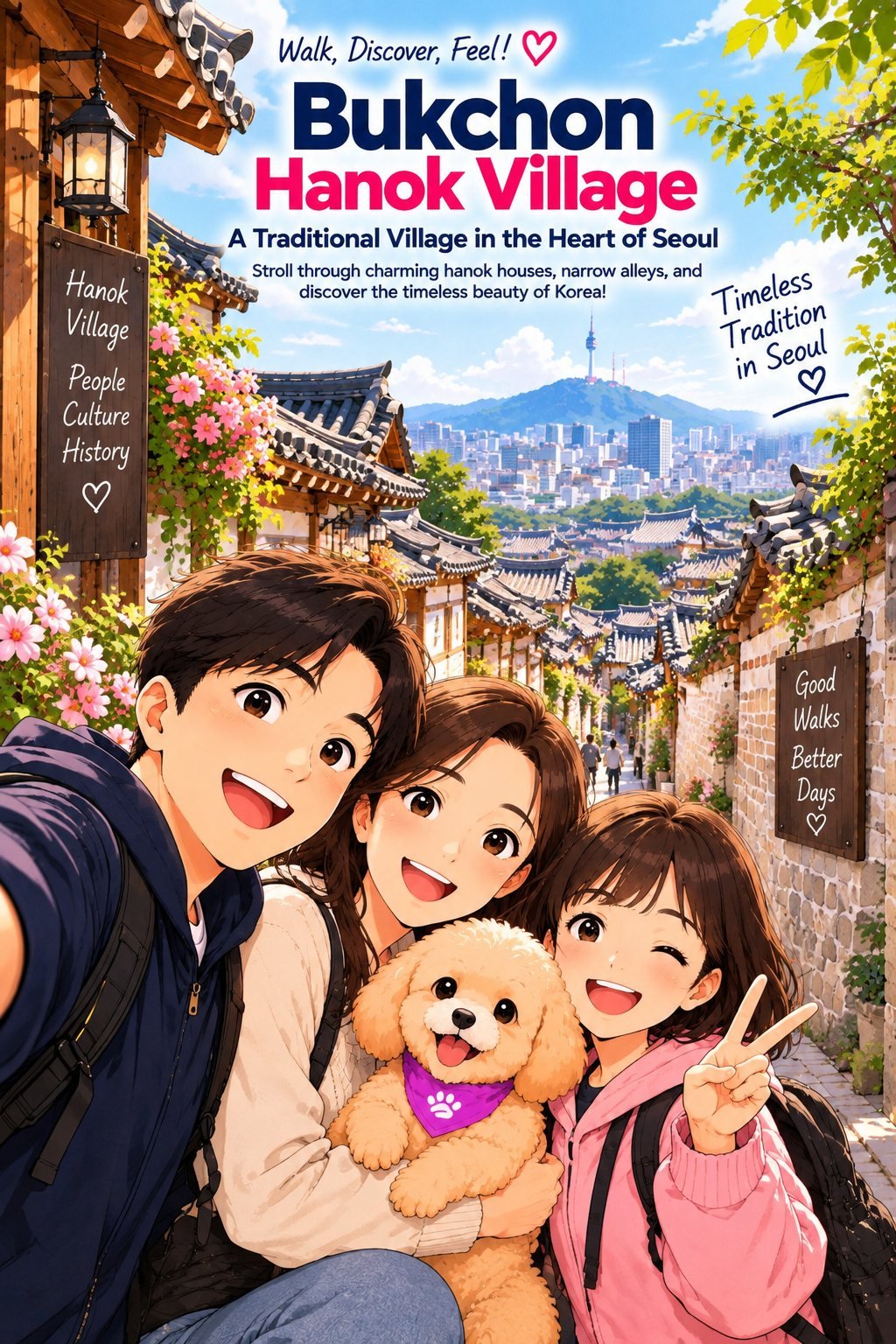
Bukchon Hanok Village family travel visual — K-Nana Studio original visual.
Bukchon Hanok Village traditional alley visual — K-Nana Studio original visual.
Bukchon Hanok Village hanok café visual — K-Nana Studio original visual.
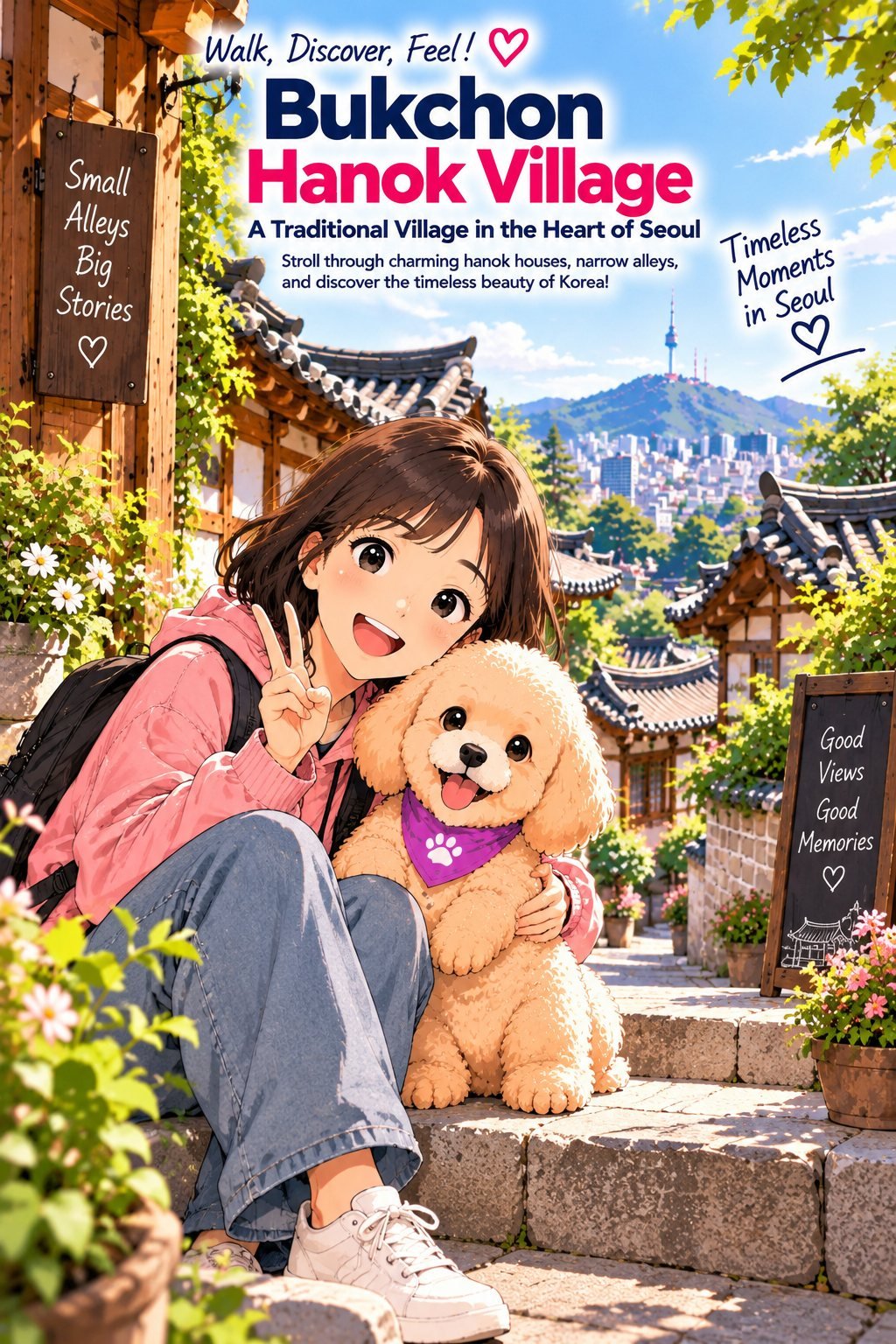
Bukchon Hanok Village hillside street visual — K-Nana Studio original visual.
Bukchon Hanok Village Nana travel visual — K-Nana Studio original visual.