
Ikseon-dong is one of Seoul’s most distinctive neighborhoods, where narrow alleys lined with traditional hanok buildings have become home to cafés, restaurants, dessert shops, boutiques, and small creative businesses. Located in central Jongno, the area offers an unusual mix of historic architecture and contemporary Seoul culture within a compact neighborhood made for walking.
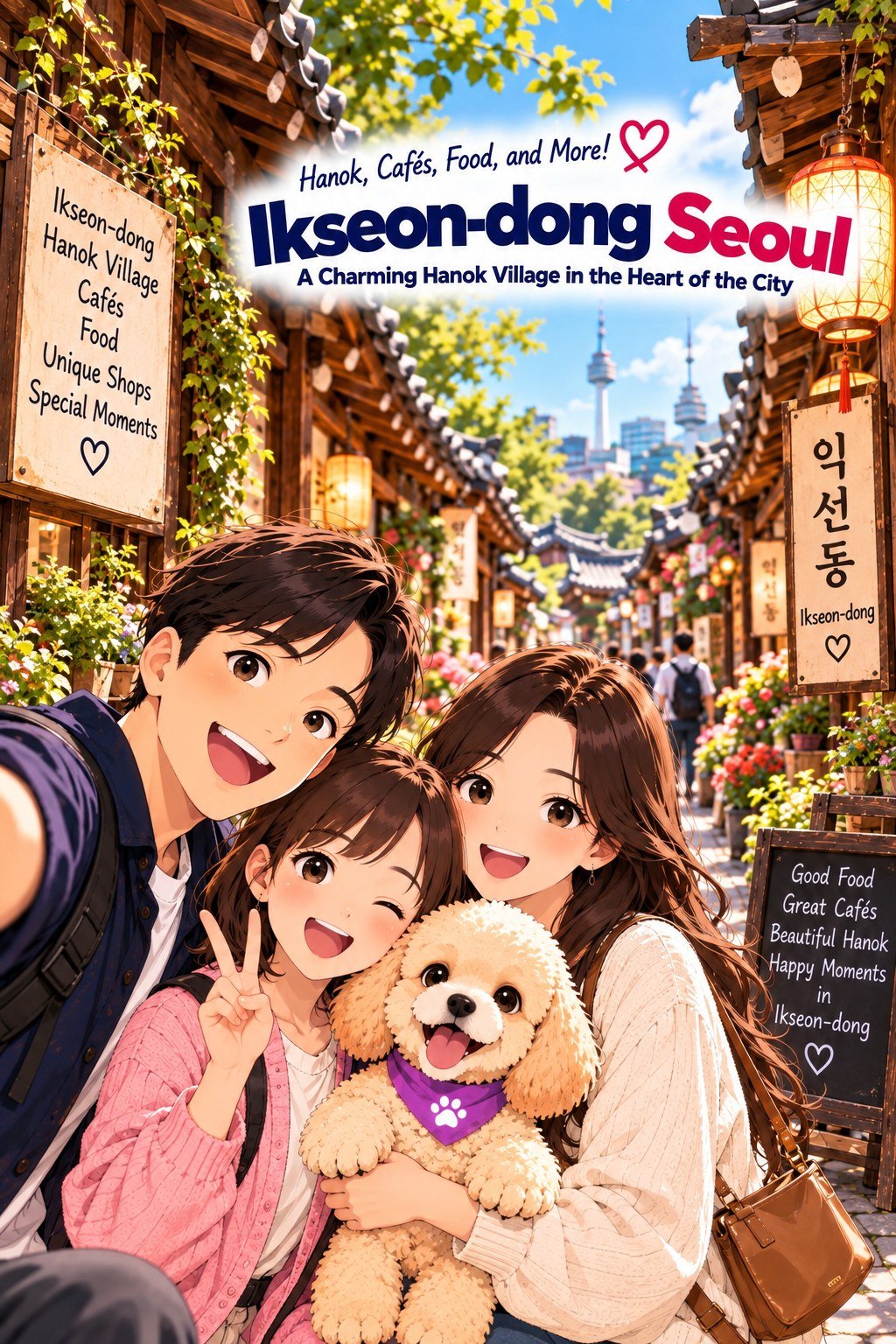
Explore hanok alleys, cafés, food, and small shops in Ikseon-dong with the K-Nana family.
Quick Guide
| Location | Jongno-gu, Seoul |
| Best for | Hanok streets, cafés, food, photography, small shops, evening walks |
| Recommended time | About 2–3 hours |
| Nearest subway | Jongno 3-ga Station |
| Admission | The neighborhood itself is free to explore |
| Good to combine with | Insadong, Changdeokgung, Bukchon, and Gwangjang Market |
What Is Ikseon-dong?
Ikseon-dong is a historic neighborhood of narrow streets and traditional Korean houses in central Seoul. Many of its hanok buildings have been adapted for modern uses while retaining elements of their traditional architecture.
Today, visitors can find cafés, restaurants, dessert shops, boutiques, craft stores, and other small businesses inside and around these older buildings.
The result is a neighborhood where the physical scale of older Seoul meets contemporary food, design, and café culture.
Why Visit?
Ikseon-dong is especially appealing to travelers who enjoy exploring neighborhoods on foot rather than visiting one large landmark.
- Walk through narrow streets lined with hanok buildings.
- Visit cafés built inside renovated traditional houses.
- Explore restaurants, dessert shops, and small boutiques.
- Look for distinctive architecture and photography spots.
- Experience the neighborhood again after the lights come on in the evening.
- Combine Ikseon-dong with nearby Insadong and other Jongno attractions.
Walk Through the Hanok Alleys
One of the simplest ways to experience Ikseon-dong is to walk without following a rigid route. The neighborhood is compact, and its narrow alleys encourage visitors to slow down and look around.
Wooden doors, tiled roofs, small courtyards, shop windows, plants, signs, and café entrances create a constantly changing streetscape.
Because some alleys are narrow, be considerate of other pedestrians and avoid blocking the street when stopping for photographs.
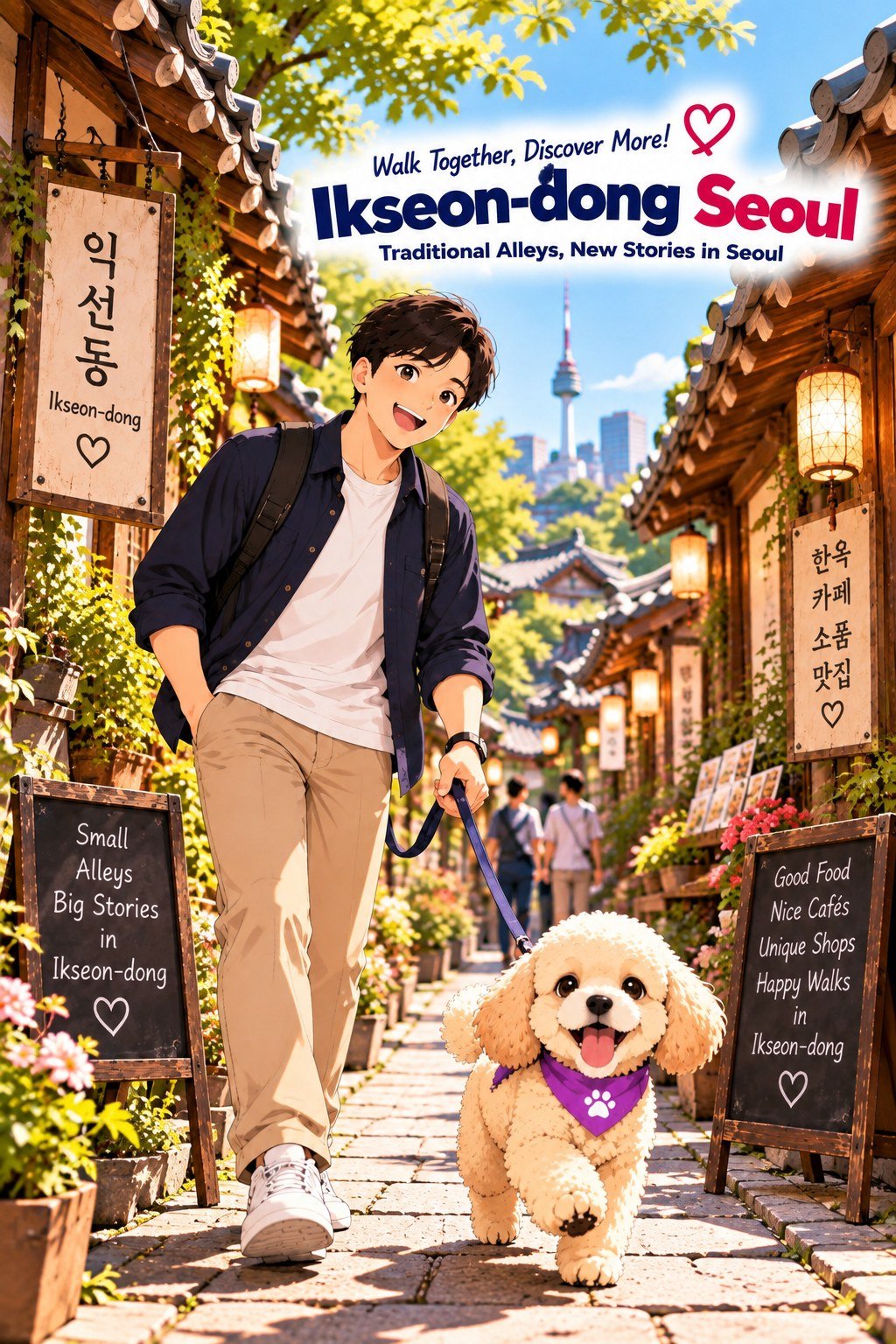
Small hanok alleys make Ikseon-dong an enjoyable neighborhood to explore on foot.
Hanok Cafés
Cafés are a major part of the modern Ikseon-dong experience. Many businesses use renovated hanok buildings to create spaces that combine traditional architectural elements with contemporary interiors, desserts, and drinks.
Some cafés emphasize courtyards or traditional materials, while others use modern design inside an older building shell.
The exact businesses change over time, so it is often more useful to explore the neighborhood and choose a place that appeals to you rather than planning a trip around only one café.

Renovated hanok cafés bring traditional architecture and modern Seoul café culture together.
Food & Desserts
Ikseon-dong has developed into a popular dining area as well as a café neighborhood. Korean food, contemporary restaurants, desserts, bakery items, drinks, and other dining options can be found throughout the alleys.
Popular businesses can become busy during peak periods, particularly on weekends and in the evening.
Menus, prices, reservations, and opening hours vary by business, so check individual restaurants if a specific dining experience is important to your visit.
For a more traditional market-food environment nearby, Gwangjang Market offers food stalls, traditional market culture, textiles, and busy shopping passages.
Small Shops & Creative Finds
Between cafés and restaurants, visitors can discover small boutiques and shops selling accessories, stationery, postcards, gifts, lifestyle products, and other creative items.
The shops add another reason to explore slowly because many are located inside small spaces that are easy to pass without noticing.
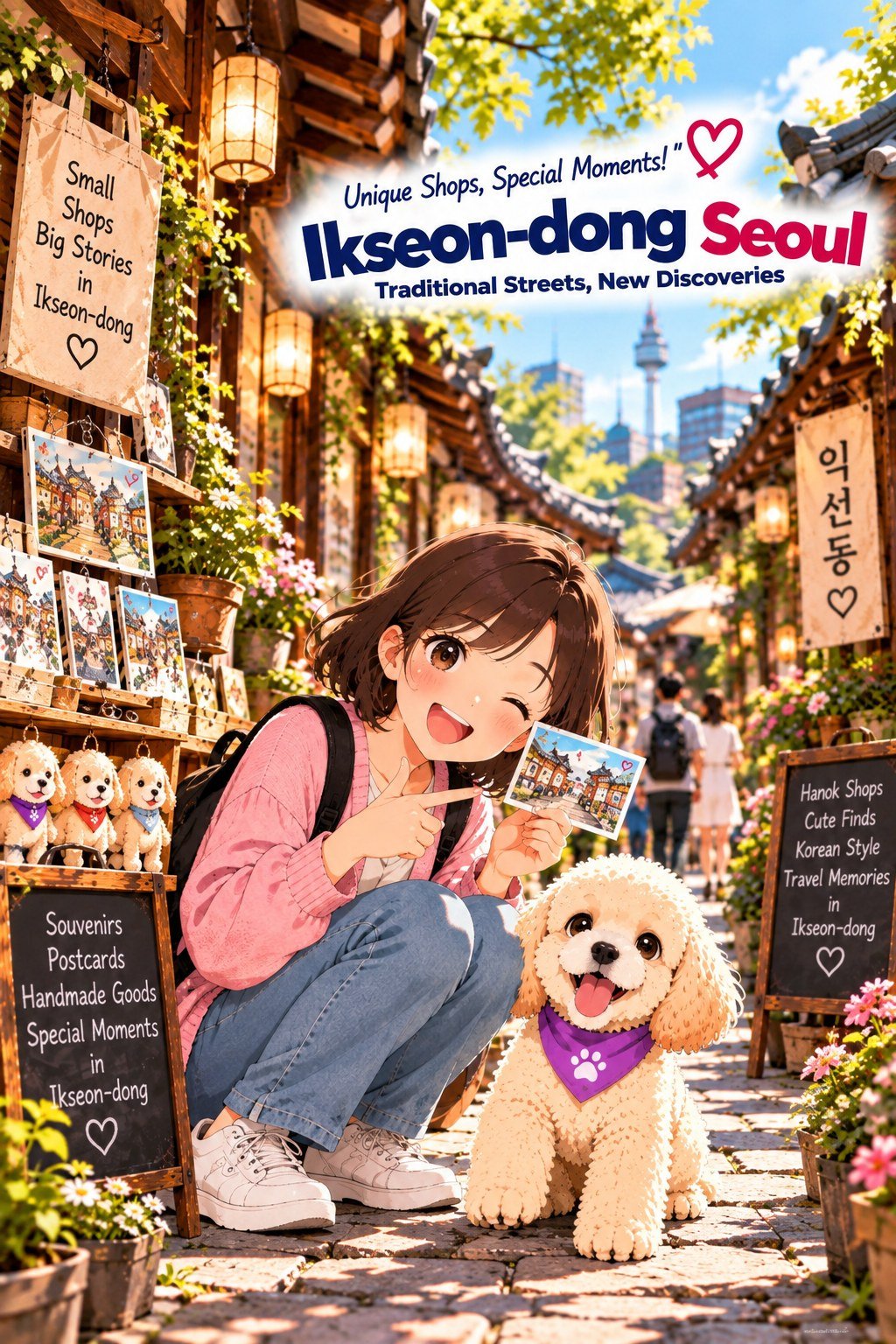
Small shops, postcards, and creative goods add another layer to an Ikseon-dong walk.
Old Architecture, New Uses
One of the most interesting aspects of Ikseon-dong is the contrast between the age and scale of its hanok buildings and the contemporary businesses operating inside them.
A traditional roofline may sit above a modern café, restaurant, boutique, or dessert shop. This mixture gives the neighborhood a character that is different from both a preserved historic site and a conventional modern shopping district.
Photography in Ikseon-dong
The combination of narrow alleys, traditional roofs, wooden buildings, plants, shop signs, windows, lanterns, and evening lights makes Ikseon-dong popular for photography.
However, these streets are real public spaces used by businesses, residents, workers, and other visitors. Avoid blocking entrances or narrow paths while taking photographs.
Ikseon-dong After Dark
Ikseon-dong changes noticeably toward evening. As natural light fades, lanterns, shop windows, restaurants, and café lighting create a warmer atmosphere along the narrow streets.
Visitors who arrive in the late afternoon can experience both daytime architecture and the beginning of the evening atmosphere during the same visit.
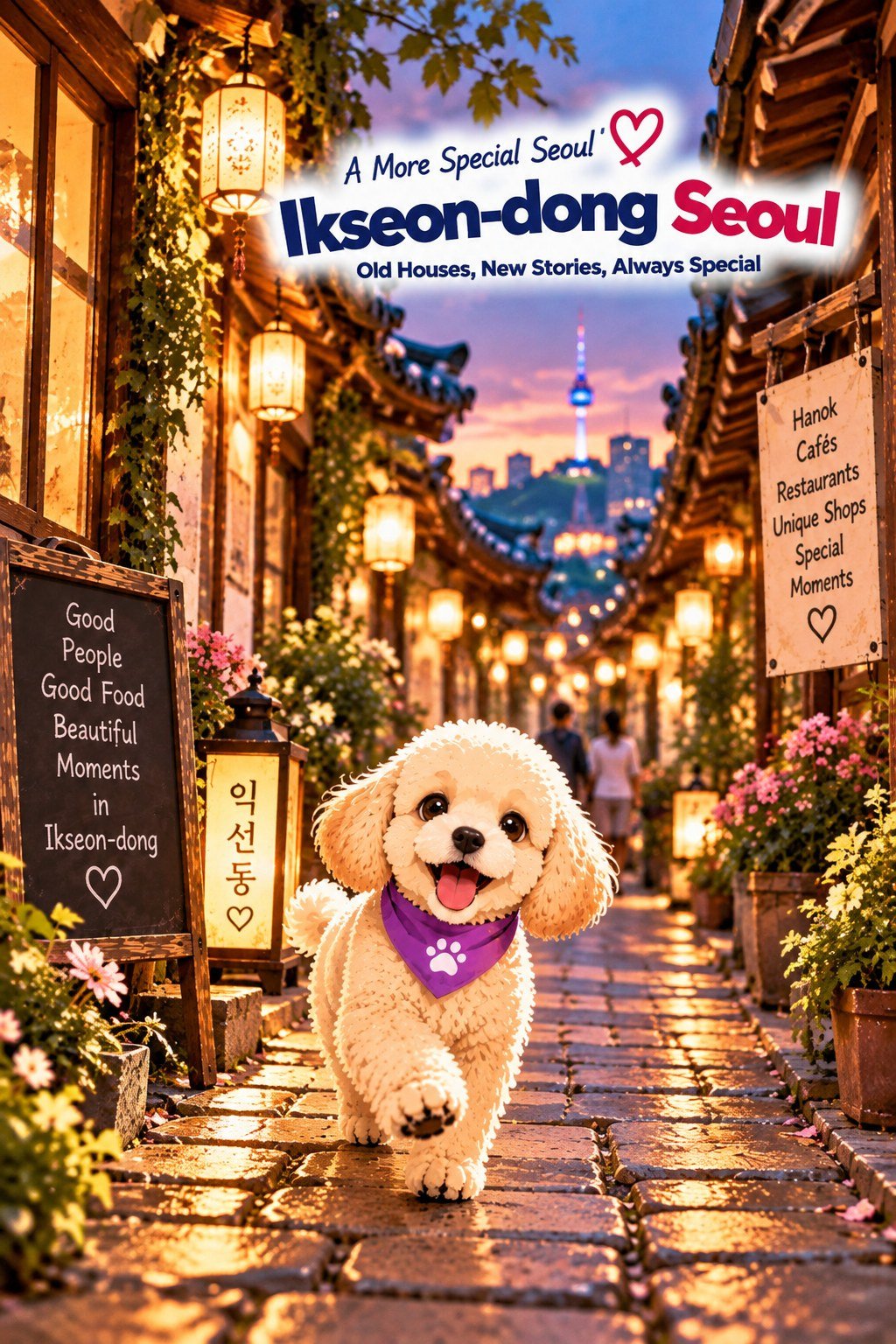
Warm lights give Ikseon-dong’s hanok alleys a different character after sunset.
Ikseon-dong vs Bukchon
Although both neighborhoods are associated with hanok architecture, the visitor experience is quite different.
Bukchon Hanok Village remains strongly associated with historic residential streets and requires particular care because people live in the neighborhood.
Ikseon-dong has a more commercial character, with many hanok buildings adapted into cafés, restaurants, boutiques, and other businesses.
Visiting both can therefore provide two different perspectives on how traditional Korean architecture exists within modern Seoul.
Ikseon-dong vs Insadong
Insadong is particularly associated with traditional crafts, galleries, tea houses, souvenirs, and a larger cultural shopping street.
Ikseon-dong is more focused on intimate hanok alleys, cafés, restaurants, small shops, and contemporary uses of traditional buildings.
The two areas are close enough that many visitors can combine them during the same day.
Continue to Changdeokgung Palace
Nearby Changdeokgung Palace provides a different historic experience through Joseon royal architecture, courtyards, wooded grounds, and its famous garden areas.
Combining the palace with Ikseon-dong creates a route that moves from royal history and landscape into contemporary uses of traditional architecture.
Best Time to Visit
Late morning and afternoon are practical for exploring the architecture, shops, cafés, and restaurants.
Late afternoon is particularly useful if you want to see the neighborhood change from daylight into its evening atmosphere.
Weekends can be lively but crowded. A weekday visit may provide a more relaxed experience in the narrow alleys.
How Long to Spend
About 2–3 hours is a comfortable starting point for a first visit.
If you only want to walk through the neighborhood, you can spend less time. A café visit, meal, shopping, and photography can easily extend the visit.
How to Get There
Jongno 3-ga Station is the most convenient subway starting point for many visitors to Ikseon-dong.
The station is served by Seoul Subway Lines 1, 3, and 5, making the neighborhood relatively easy to reach from different parts of Seoul.
Once you arrive, Ikseon-dong is best explored on foot.
First-Time Visitor Tips
- Wear comfortable shoes for walking through narrow streets.
- Explore side alleys instead of following only the busiest route.
- Visit on a weekday if you prefer smaller crowds.
- Consider arriving in the late afternoon to experience both day and evening scenery.
- Check individual restaurant and café hours before visiting a specific business.
- Do not block narrow alleys or shop entrances when taking photographs.
- Leave some time unplanned so you can explore places that catch your attention.
What to Do Nearby
- Insadong — traditional crafts, galleries, tea houses, and cultural shopping.
- Changdeokgung Palace — UNESCO-listed royal architecture and gardens.
- Bukchon Hanok Village — historic residential streets and traditional hanok scenery.
- Gwangjang Market — traditional market food, textiles, and shopping.
- Jongmyo Shrine — an important royal ancestral shrine of the Joseon Dynasty.
K-Culture Connection
Ikseon-dong illustrates one way traditional architecture can be adapted to contemporary urban life. Hanok buildings provide the setting for modern cafés, restaurants, design, shopping, photography, and social culture.
For international visitors, the neighborhood offers a compact example of how historic visual elements and contemporary Korean lifestyle trends can exist side by side.
FAQ
Is Ikseon-dong worth visiting?
It is particularly suitable for visitors interested in hanok architecture, cafés, food, photography, small shops, and walking through a compact Seoul neighborhood.
Is Ikseon-dong free to visit?
Yes. Walking through the neighborhood itself is free. Cafés, restaurants, shops, and other businesses charge individually.
What is Ikseon-dong famous for?
It is known for narrow hanok streets filled with cafés, restaurants, dessert shops, boutiques, and other small businesses.
How long should I spend in Ikseon-dong?
About 2–3 hours works well for many first-time visitors. Allow longer if you plan to eat, visit cafés, shop, or explore nearby areas.
Which subway station is best for Ikseon-dong?
Jongno 3-ga Station is one of the most convenient choices and is served by Lines 1, 3, and 5.
Is Ikseon-dong good at night?
Evening lighting gives the hanok alleys a warm atmosphere, while cafés and restaurants make the area active later in the day. Individual business hours vary.
Related K-Nana Guides
Continue exploring central Jongno with the K-Nana Studio guides to Insadong, Changdeokgung Palace, and Bukchon Hanok Village. For traditional market food and shopping, continue to Gwangjang Market. Visitors building a wider royal-history route can also explore Gyeongbokgung Palace.
Official Information
Ikseon-dong is a neighborhood containing independently operated cafés, restaurants, shops, and other businesses. Opening hours, menus, prices, reservations, events, and individual business operations can change, so check current Seoul tourism information and specific businesses when necessary.
Image Credits
Ikseon-dong family travel visual — K-Nana Studio original visual.
Ikseon-dong hanok alley with Dad and Nana visual — K-Nana Studio original visual.
Ikseon-dong hanok café with Mom and Nana visual — K-Nana Studio original visual.
Ikseon-dong shopping with K-Nana daughter and Nana visual — K-Nana Studio original visual.
Nana walking through Ikseon-dong at night visual — K-Nana Studio original visual.