
Gwangjang Market is one of Seoul’s best-known traditional markets, bringing together Korean street food, textiles, clothing, household goods, and generations of local market culture under one sprawling roof. For first-time visitors, it is an energetic place to experience the sounds, flavors, people, and everyday atmosphere of central Seoul.
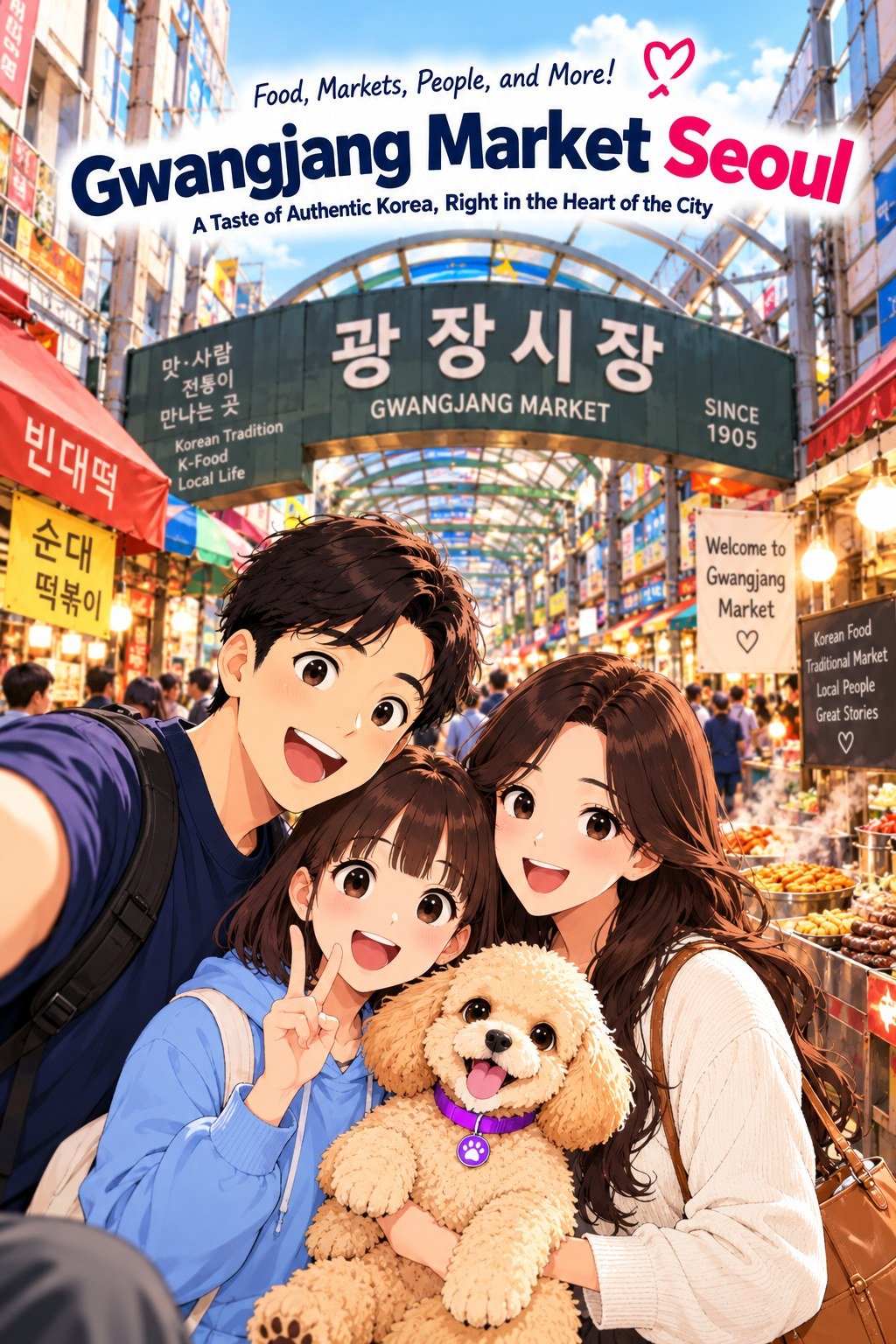
Discover Korean food, local culture, and the lively atmosphere of Gwangjang Market with the K-Nana family.
Quick Guide
| Location | Jongno-gu, Seoul |
| Best for | Korean food, traditional markets, textiles, shopping, local atmosphere |
| Recommended time | About 2–3 hours |
| Nearest subway | Jongno 5-ga Station (Line 1) |
| Admission | Free to enter; food and shopping are purchased individually |
| Good to combine with | Jongno, Jongmyo, Ikseon-dong, and Insadong |
What Is Gwangjang Market?
Gwangjang Market is a long-established traditional market in central Seoul. Its history reaches back to the early 20th century, and the market has grown into a large commercial area filled with food stalls, textile businesses, clothing vendors, household goods, and specialty shops.
International visitors often know Gwangjang Market for its busy food alleys, but food represents only one part of the market. Walking beyond the most crowded dining areas reveals a broader commercial district with its own history and character.
Why Visit?
Gwangjang Market provides a very different Seoul experience from royal palaces, hanok neighborhoods, and modern shopping districts.
- Experience the atmosphere of a traditional Korean market.
- Explore busy food alleys filled with Korean dishes and snacks.
- See textile, clothing, and traditional-goods sections.
- Watch vendors preparing food directly in front of customers.
- Explore a market that remains part of everyday commercial life in Seoul.
- Combine the market with nearby historic neighborhoods in Jongno.
Korean Food at Gwangjang Market
Food is one of the main reasons many travelers visit Gwangjang Market. Rows of stalls prepare dishes directly in front of customers, creating an experience where cooking, eating, conversation, and market activity all happen in the same space.
Popular foods commonly associated with the market include bindaetteok, mayak gimbap, tteokbokki, sundae, dumplings, noodles, and various Korean pancakes and snacks.
Individual vendors, menus, prices, and operating hours can change, so it is better to explore what is available on the day of your visit rather than expecting every stall to offer exactly the same selection.
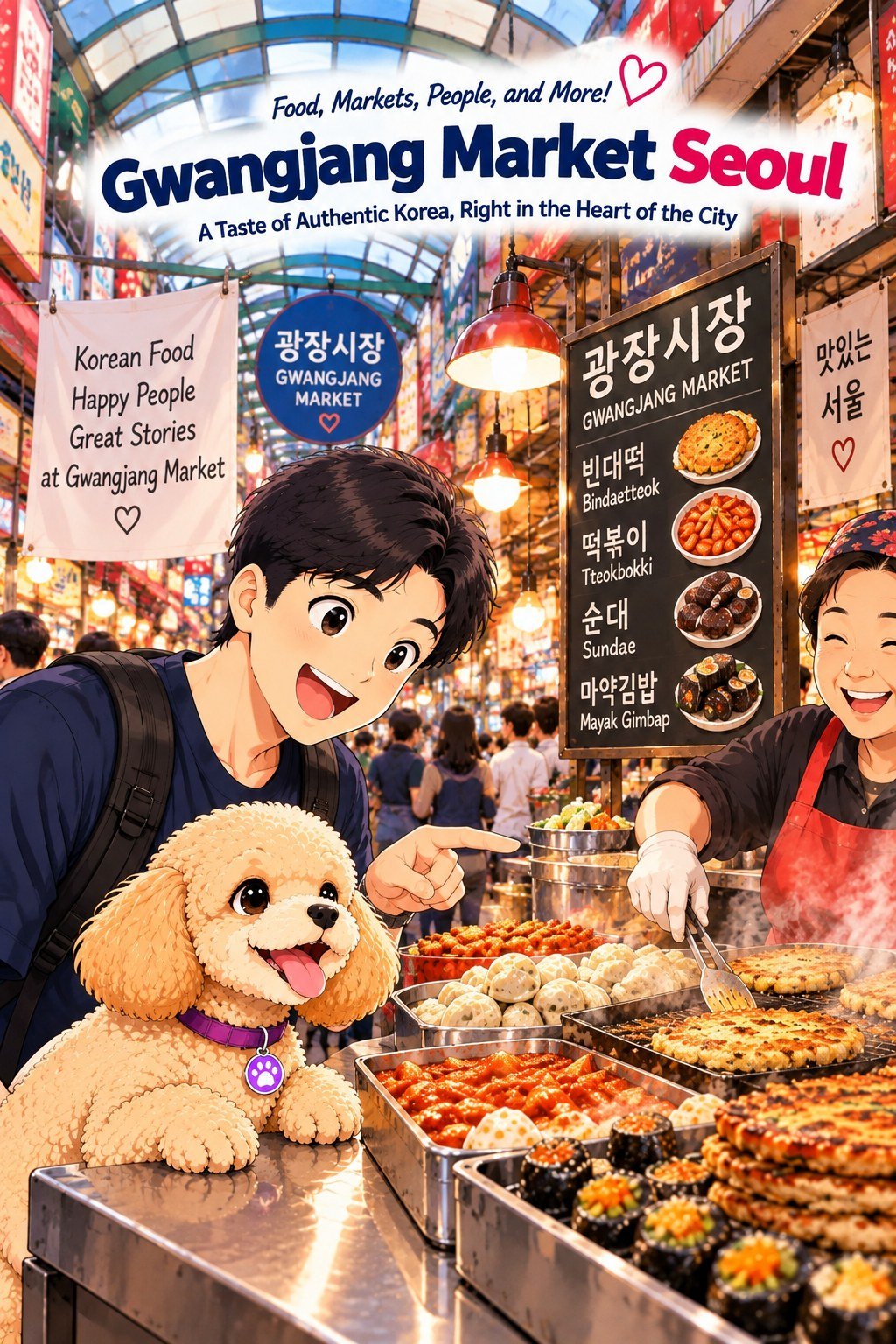
Food stalls bring together sizzling dishes, local flavors, and the energy of Gwangjang Market.
Bindaetteok
Bindaetteok is a savory mung bean pancake and one of the foods strongly associated with Gwangjang Market. The pancakes are cooked on large griddles until the outside becomes crisp while the inside remains substantial and savory.
Watching them cook is part of the experience. Busy griddles, steam, sizzling oil, and stacks of freshly prepared pancakes contribute to the atmosphere of the food alleys.
Mayak Gimbap
Small rolls of rice and vegetables wrapped in seaweed are another familiar sight around the market. They are commonly known as mayak gimbap and are often served as an easy snack or shared dish.
The nickname is informal; recipes and accompaniments vary between vendors.
Tteokbokki, Sundae & Market Snacks
Tteokbokki brings chewy rice cakes together with a spicy-sweet red sauce, while Korean-style sundae is a type of blood sausage commonly found in traditional markets.
Visitors may also encounter dumplings, noodles, fried foods, pancakes, seafood, sweets, and seasonal items as they walk through different sections.
More Than a Food Market
Gwangjang Market should not be understood only as a street-food destination. Textiles and clothing have long played an important role in the market’s commercial identity.
Depending on the section, visitors can encounter fabrics, clothing, bedding, traditional-style products, accessories, souvenirs, and other goods.
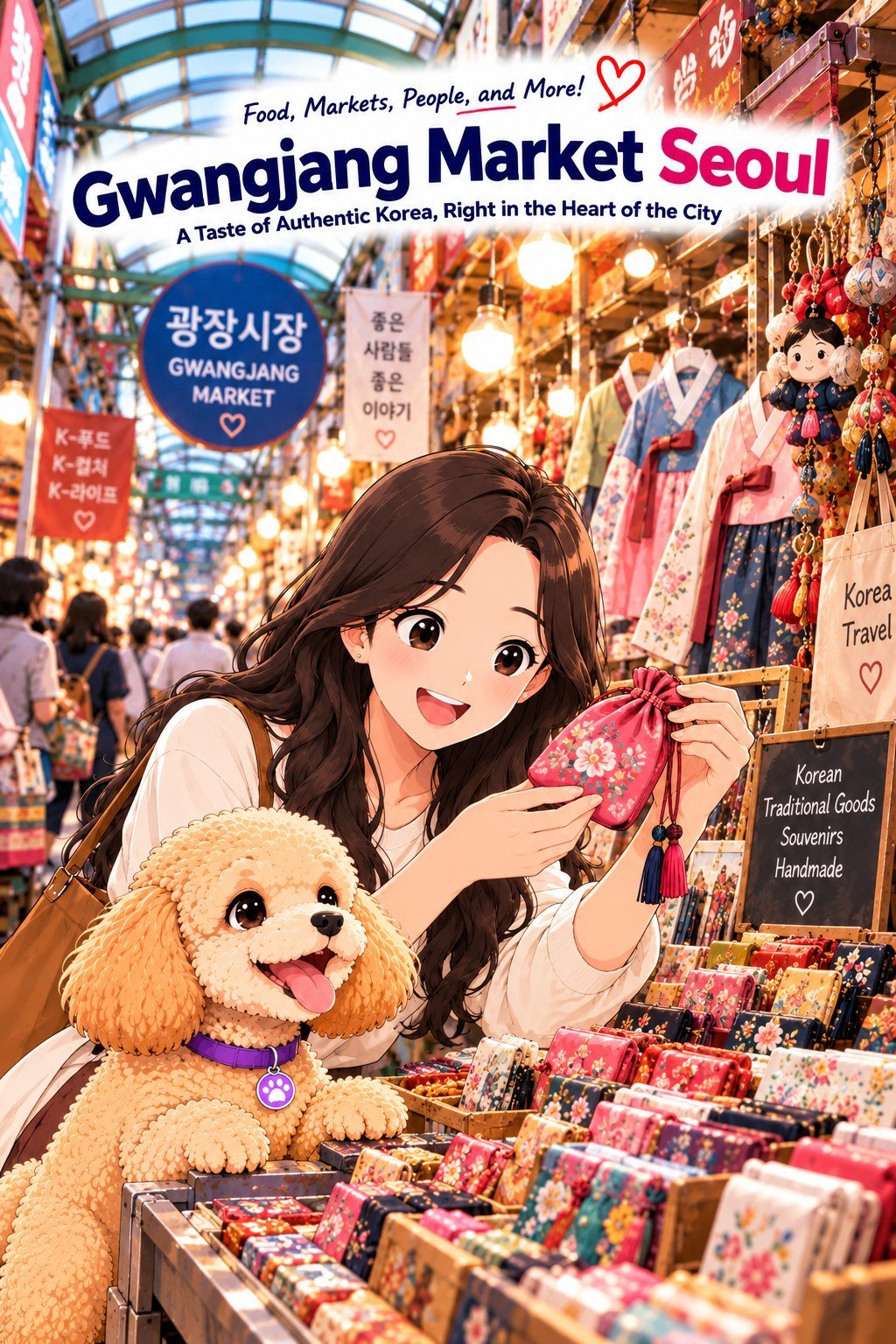
Beyond the food stalls, Gwangjang Market has textiles, clothing, accessories, and traditional goods.
Textiles & Traditional Goods
The market has a long connection with textiles and clothing. Some areas specialize in fabrics and related products, while others contain businesses connected with traditional Korean clothing and accessories.
This side of Gwangjang can feel very different from the famous food alleys and helps visitors understand the market as a working commercial district rather than a single tourist attraction.
Eating at the Market
Many market stalls use compact counter-style seating. Customers sit close to the cooking area and often close to one another, creating a casual and energetic dining environment.
During busy periods, seating can be limited. Keep bags and personal belongings compact, avoid occupying extra seats, and be considerate when other customers are waiting.
Trying several smaller dishes can be a practical way to experience more than one flavor during a visit.
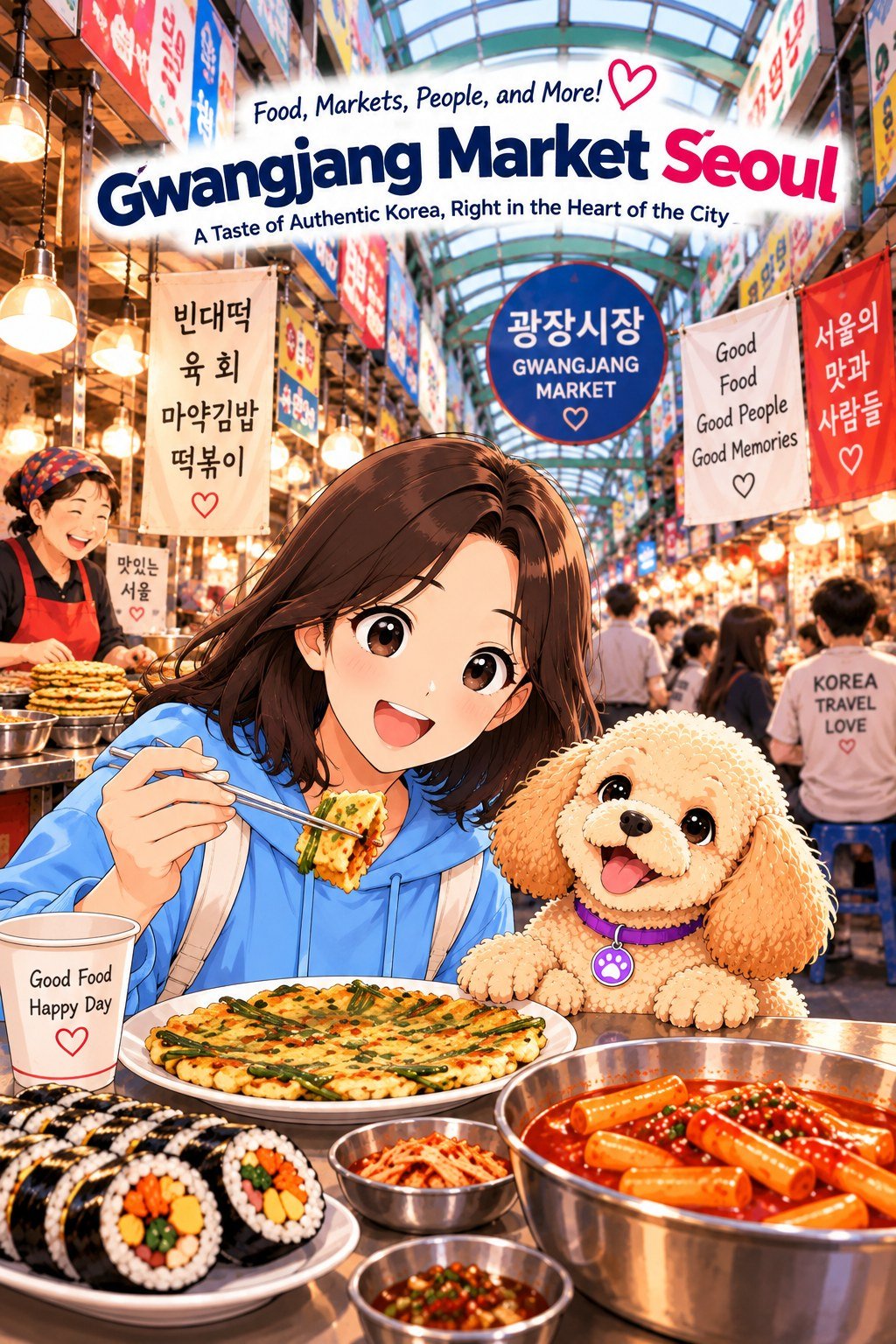
Sharing different dishes is one of the easiest ways to experience the market’s food culture.
Daytime vs Evening
The character of Gwangjang Market changes throughout the day. Daytime is useful for exploring the wider commercial market, including sections that are not focused primarily on food.
Later in the day, illuminated stalls and busy dining areas can create a warmer and more energetic atmosphere.
However, Gwangjang Market contains many independently operated businesses. Different sections and vendors do not necessarily follow identical opening hours.
Walk Beyond the Busiest Food Alley
First-time visitors can easily spend their entire visit around the most famous food stalls, but walking farther into the market reveals a more complete picture.
Different passages can contain textiles, clothing, household goods, traditional products, and smaller local businesses. The atmosphere can change significantly within a short walk.
A Market Full of Everyday Seoul
Part of the appeal of Gwangjang Market is that tourism exists alongside everyday commerce. Vendors prepare food, merchants organize products, regular customers shop, and visitors move through the same interconnected market spaces.
Walking slowly and paying attention to these ordinary scenes can be just as interesting as trying a famous dish.
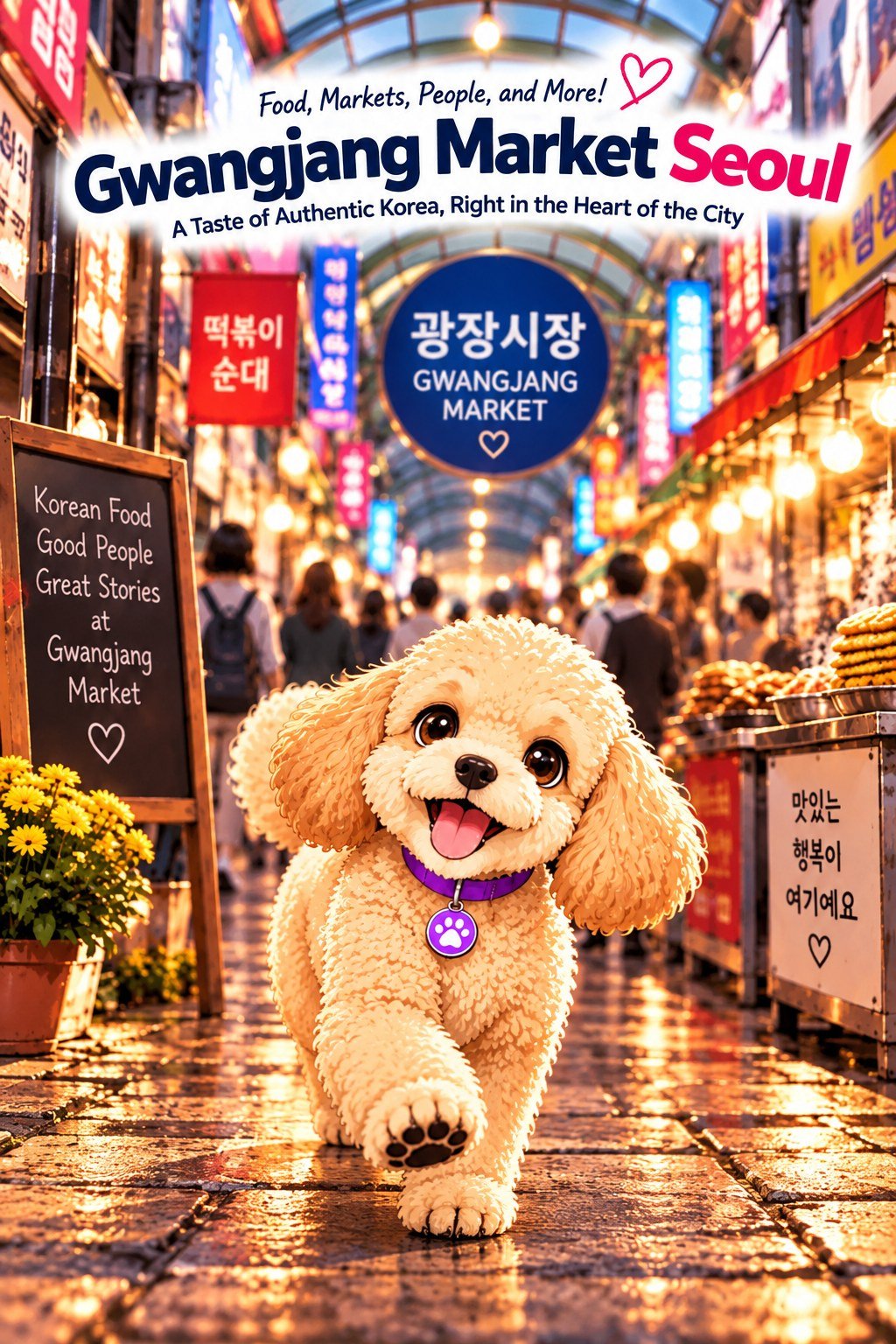
Warm lights and busy stalls give Gwangjang Market a lively atmosphere later in the day.
Best Time to Visit
Late morning through the afternoon is practical if you want to experience both shopping areas and food stalls.
Late afternoon and early evening can provide a livelier food-market atmosphere as lights become more visible and dining areas grow busier.
Weekends and popular meal periods can be crowded. A weekday visit may provide more room to explore.
How Long to Spend
About 2–3 hours is a useful starting point for a first visit.
Visitors focused only on food may spend less time, while those exploring textiles, shopping areas, and nearby neighborhoods can easily extend the visit.
How to Get There
Jongno 5-ga Station on Seoul Subway Line 1 is one of the most convenient starting points for Gwangjang Market.
Euljiro 4-ga Station, served by Lines 2 and 5, can also be useful depending on your route.
The market has multiple entrances and interconnected sections, so it is better to explore on foot once you arrive rather than treating it as a single building with one fixed route.
First-Time Visitor Tips
- Visit with an appetite, but consider trying several smaller dishes instead of filling up immediately.
- Carry a payment method that works for smaller independent vendors.
- Keep bags close to you in crowded food and shopping areas.
- Do not block narrow passages while taking photographs.
- Ask before closely photographing individual vendors.
- Explore beyond the most famous food stalls.
- Check individual businesses if there is a specific shop or dish you want to visit.
Combine Gwangjang Market with Ikseon-dong
Gwangjang Market can be combined naturally with Ikseon-dong. The two areas provide very different experiences despite being relatively close within central Seoul.
Gwangjang emphasizes traditional market culture, food stalls, textiles, and busy commercial passages, while Ikseon-dong is known for narrow hanok streets, cafés, restaurants, and small creative businesses.
Continue to Insadong
Visitors interested in traditional culture can also continue toward Insadong, where crafts, galleries, traditional tea houses, souvenirs, and cultural shopping create another distinct side of Jongno.
Combining these neighborhoods can show how traditional markets, historic architecture, food culture, crafts, and contemporary Seoul exist within the same central part of the city.
What to Do Nearby
- Ikseon-dong — hanok cafés, restaurants, small shops, and atmospheric alleys.
- Insadong — traditional crafts, galleries, tea houses, and cultural shopping.
- Jongmyo Shrine — an important Joseon royal ancestral shrine.
- Dongdaemun — shopping, fashion, and major urban attractions east of the market.
K-Culture Connection
Gwangjang Market offers a direct look at Korean market culture through food, shopping, conversation, textiles, and everyday commercial activity.
For international visitors, the market can provide a useful contrast to Seoul’s palaces and preserved historic areas. Instead of observing history primarily through monuments, visitors encounter traditions that continue through cooking, selling, eating, shopping, and social interaction.
FAQ
Is Gwangjang Market worth visiting?
It is especially suitable for visitors interested in Korean food, traditional markets, local shopping, textiles, and a lively central Seoul atmosphere.
Is Gwangjang Market free to enter?
Yes. There is no general admission fee to enter the market. Food, shopping, and individual services are purchased separately.
What food is Gwangjang Market known for?
Foods commonly associated with the market include bindaetteok, mayak gimbap, tteokbokki, sundae, noodles, dumplings, and other Korean market dishes.
How long should I spend at Gwangjang Market?
About 2–3 hours works well for many first-time visitors, although a food-focused visit can be shorter.
Which subway station is best?
Jongno 5-ga Station on Line 1 is one of the most convenient choices. Euljiro 4-ga Station can also be useful depending on your route.
Is Gwangjang Market only about food?
No. Food is highly visible, but the market also contains textiles, clothing, traditional goods, accessories, and other commercial sections.
Related K-Nana Guides
Continue exploring central Seoul with the K-Nana Studio guides to Ikseon-dong and Insadong. Future guides will expand the network to Jongmyo Shrine, Dongdaemun, Korean street food, traditional markets, and other nearby experiences.
Official Information
Gwangjang Market contains many independently operated vendors and businesses. Opening hours, menus, prices, payment methods, holidays, and individual store operations can vary. Check current Seoul tourism information and individual businesses when a particular vendor or shop is important to your visit.
Image Credits
Gwangjang Market family travel visual — K-Nana Studio original visual.
Gwangjang Market food stall with Dad and Nana visual — K-Nana Studio original visual.
Gwangjang Market traditional goods with Mom and Nana visual — K-Nana Studio original visual.
Gwangjang Market food experience with K-Nana daughter and Nana visual — K-Nana Studio original visual.
Nana exploring Gwangjang Market visual — K-Nana Studio original visual.