
Gyeongbokgung Palace is one of Seoul’s most important historic landmarks and a natural starting point for first-time visitors interested in Korea’s royal history. Located in central Seoul, the palace brings together monumental gates, royal halls, courtyards, gardens, pavilions, mountain scenery, and centuries of Joseon history within one large complex.

Quick Guide
| Location | Jongno-gu, Seoul |
| Best for | Royal history, Korean architecture, hanbok, photography, first-time visitors |
| Recommended time | About 2–3 hours |
| Nearest subway | Gyeongbokgung Station (Line 3) |
| Closed | Normally Tuesdays |
| Good to combine with | Bukchon, Insadong, and Changdeokgung |
What Is Gyeongbokgung Palace?
Gyeongbokgung was founded in 1395 during the early years of the Joseon Dynasty and served as the dynasty’s principal royal palace. Its name is commonly interpreted as a palace greatly blessed by heaven.
The palace experienced destruction and reconstruction during Korea’s long history. Today, restored gates, halls, courtyards, pavilions, and surrounding museums allow visitors to explore an important part of Seoul’s royal heritage.
Its location beneath the mountains of northern Seoul also gives the palace a distinctive landscape that separates it visually from the dense modern city around it.
Why Visit?
Gyeongbokgung is useful for first-time visitors because it combines Korean history, architecture, traditional clothing, photography, gardens, and central Seoul sightseeing in one destination.
- Explore one of the most important royal palaces of the Joseon Dynasty.
- See monumental gates, ceremonial halls, courtyards, and pavilions.
- Experience traditional Korean architecture and decorative details.
- Enjoy palace scenery with mountains visible in the background.
- See visitors wearing colorful hanbok throughout the palace grounds.
- Combine the palace with nearby historic neighborhoods and cultural streets.
Gwanghwamun Gate
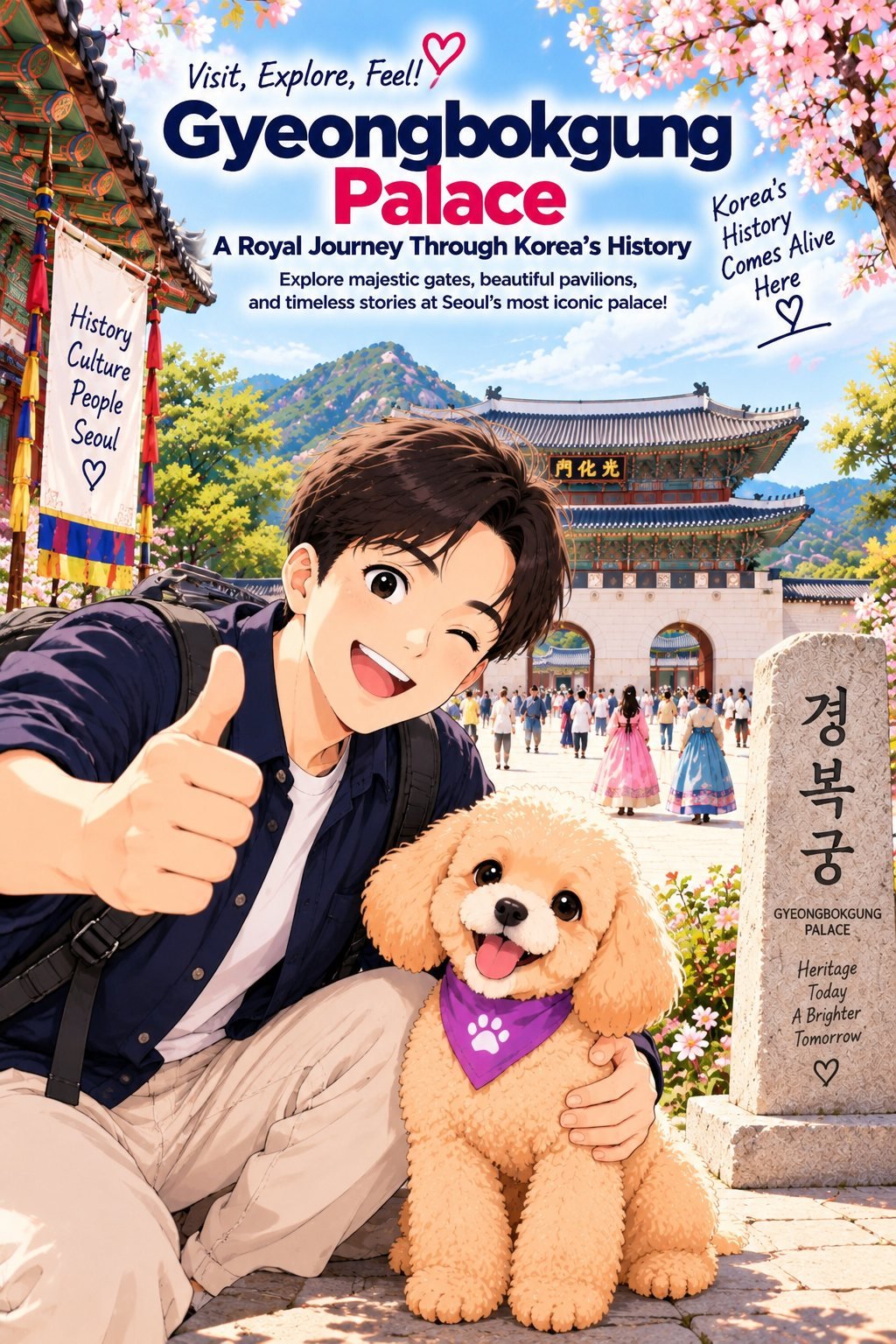
Gwanghwamun is the principal gate of Gyeongbokgung and one of the palace’s most recognizable architectural features.
The gate forms a dramatic entrance between modern central Seoul and the historic palace complex. Passing through it creates a clear transition from busy city streets into broad royal courtyards and traditional architecture.
Geunjeongjeon Hall
Geunjeongjeon is the main throne hall of Gyeongbokgung. Important royal ceremonies and official events took place in this part of the palace.
The large courtyard and carefully arranged architecture demonstrate the formal character of Joseon royal spaces. Take time to look beyond the main building at the stone markers, roof details, decorative painting, and surrounding structures.
Gyeonghoeru Pavilion
Gyeonghoeru is one of the most visually memorable areas of Gyeongbokgung. The pavilion stands beside a pond and was historically associated with royal banquets and important events.
Water, traditional architecture, trees, and distant mountains combine to create a very different atmosphere from the palace’s large ceremonial courtyards.
The scenery changes with the seasons, making the pavilion area especially attractive for visitors interested in photography and landscape views.
Hyangwonjeong Pavilion & Palace Gardens
Gyeongbokgung also contains quieter garden areas where visitors can slow down after exploring the larger halls and courtyards.
Hyangwonjeong Pavilion and its surrounding pond create another recognizable palace landscape. Trees, water, bridges, and traditional architecture provide a calmer contrast with the monumental buildings near the main entrance.

Hanbok at Gyeongbokgung
Colorful hanbok is now a familiar part of the visitor experience around Seoul’s royal palaces. Visitors wearing qualifying traditional clothing may be eligible for free general admission under current royal palace policies.
Hanbok rental businesses can be found around the palace area, but prices, rental periods, clothing styles, accessories, and business hours vary.
If free palace admission is important to your plans, check the current official requirements concerning qualifying hanbok before visiting.
Changing of the Royal Guard
Gwanghwamun and the palace entrance area are also associated with Royal Guard ceremonies that recreate aspects of historical palace guard traditions.
Schedules can change because of weather, special events, maintenance, or other circumstances. Visitors hoping to see a ceremony should confirm the current schedule shortly before their visit.
Photography at the Palace
Gyeongbokgung provides many opportunities for travel photography, including gates, courtyards, rooflines, gardens, ponds, mountain scenery, and visitors in hanbok.
Early daytime hours can provide a calmer environment, while seasonal flowers and autumn foliage can add different colors to the palace landscape.
Be considerate of other visitors and follow any posted photography restrictions in exhibitions, museums, or controlled areas.
Walk Slowly Through the Palace
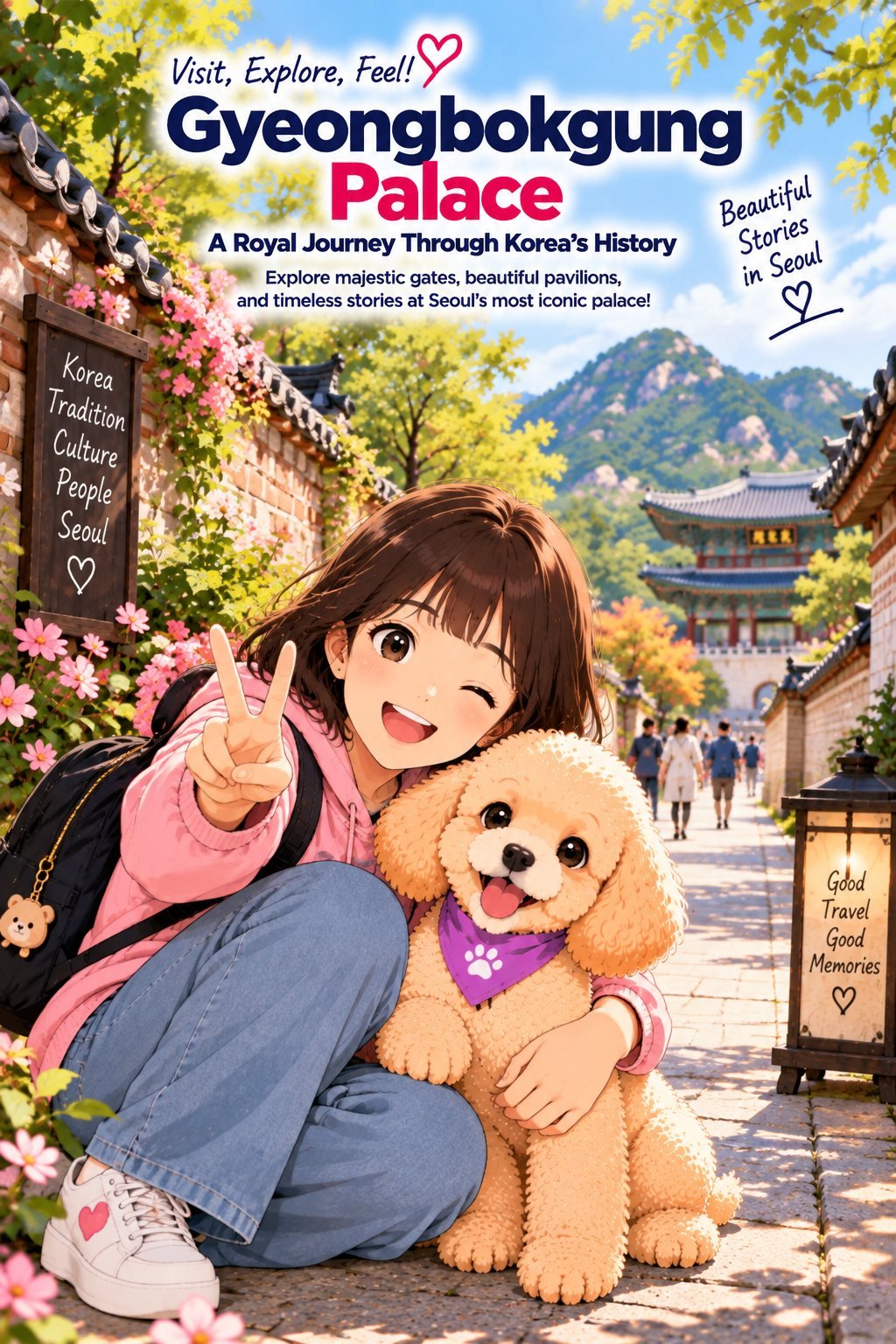
Gyeongbokgung is large enough that rushing directly between famous landmarks can mean missing many details.
Decorative rooflines, painted wooden structures, stone walls, gates, courtyards, trees, ponds, and smaller buildings all contribute to the experience.
Allow time to explore beyond the main ceremonial route, particularly if you enjoy architecture or photography.
Combine Gyeongbokgung with Bukchon
Nearby Bukchon Hanok Village is a natural continuation of a historic Seoul itinerary.
Bukchon adds traditional residential architecture, tiled roofs, narrow hillside streets, workshops, and hanok scenery to the royal history experienced at Gyeongbokgung.
Remember that Bukchon remains a residential neighborhood. Visitors should follow current access rules, avoid entering private property, and keep noise low.
Continue to Insadong
Visitors interested in traditional crafts, galleries, tea houses, souvenirs, and cultural shopping can continue to Insadong.
Gyeongbokgung and Insadong provide complementary experiences: the palace focuses on royal history and architecture, while Insadong brings traditional culture into a living commercial neighborhood.
Gyeongbokgung vs Changdeokgung Palace
Changdeokgung Palace offers another perspective on Joseon royal history.
Gyeongbokgung is particularly memorable for monumental gates, broad ceremonial spaces, royal halls, pavilions, and its mountain backdrop. Changdeokgung is known for the way its architecture follows the natural terrain and for its wooded garden areas.
Visitors interested in Korean royal heritage can experience both without expecting the two palaces to feel the same.
Best Time to Visit
Morning is a practical choice for visitors who prefer a quieter start and want plenty of time to explore the palace grounds.
Spring can bring blossoms and fresh greenery, while autumn can add yellow and red foliage to the palace landscape. Summer is greener but can be hot and humid, and winter offers a more restrained architectural atmosphere.
Weather matters because much of a Gyeongbokgung visit involves walking outdoors.
How Long to Spend
About 2–3 hours is a comfortable starting point for many first-time visitors.
Visitors interested in photography, museums, cultural programs, gardens, or a slower walk may want considerably longer.
How to Get There
Gyeongbokgung Station on Seoul Subway Line 3 is one of the most convenient choices for reaching the palace.
Gwanghwamun Station on Line 5 can also be useful depending on your route and the part of central Seoul you plan to explore before or after the palace.
Opening Days & Visitor Information
Gyeongbokgung is normally closed on Tuesdays, although schedules can change because of public holidays, special circumstances, or official events.
Opening hours can also vary by season. Special evening openings and cultural programs may operate according to separate schedules or reservation systems.
Check the latest official palace information shortly before visiting rather than relying only on an older itinerary.
Admission & Hanbok
Admission fees, age categories, free-admission conditions, group policies, and hanbok rules can change.
Visitors wearing qualifying hanbok may be eligible for free general admission under current palace policies. Confirm the latest requirements if this is an important part of your visit.
First-Time Visitor Tips
- Check the current opening schedule because the palace is normally closed on Tuesdays.
- Wear comfortable shoes because the palace grounds are extensive.
- Arrive earlier if you prefer fewer visitors and calmer photography conditions.
- Check the current Royal Guard ceremony schedule separately.
- Bring water and sun protection during warmer months.
- Allow additional time if you plan to visit museums or cultural facilities.
- Confirm current hanbok admission rules before renting traditional clothing.
- Leave time to explore gardens and smaller palace areas instead of seeing only the main halls.

What to Do Nearby
- Bukchon Hanok Village — traditional residential architecture, tiled roofs, and historic streets.
- Insadong — traditional crafts, galleries, tea houses, souvenirs, and cultural shopping.
- Changdeokgung Palace — another major Joseon royal palace with architecture integrated into the natural landscape.
- Gwanghwamun Square — a major public space directly connected with the palace area.
- National Folk Museum of Korea — a useful destination for learning more about traditional Korean life and culture.
K-Culture Connection
Gyeongbokgung provides an accessible introduction to Korea’s royal heritage while remaining part of contemporary Seoul.
Joseon architecture, hanbok, royal ceremonies, traditional decorative design, museums, photography, and modern tourism all meet within and around the palace.
For international visitors, the palace can serve as a starting point for understanding how historic Korean culture remains visible within the modern capital.
FAQ
Is Gyeongbokgung Palace worth visiting on a first trip to Seoul?
It is particularly useful for first-time visitors interested in Korean history, royal architecture, hanbok, photography, and major central Seoul landmarks.
What day is Gyeongbokgung closed?
The palace is normally closed on Tuesdays. Special schedules can occur, so check current official information before visiting.
Can I wear hanbok at Gyeongbokgung?
Yes. Hanbok is commonly worn by visitors, and qualifying traditional clothing may provide free general admission under current palace policies.
How long should I spend at Gyeongbokgung?
About 2–3 hours is a useful starting point. Visitors interested in photography, museums, gardens, cultural programs, or slower exploration may want longer.
Which subway station should I use?
Gyeongbokgung Station on Line 3 is one of the most convenient choices. Gwanghwamun Station on Line 5 can also be useful depending on your route.
What should I visit after Gyeongbokgung?
Bukchon Hanok Village and Insadong are natural choices for continuing a historic Seoul itinerary. Visitors interested in another royal palace can also explore Changdeokgung Palace.
Related K-Nana Guides
Continue exploring historic Seoul with Bukchon Hanok Village for traditional residential architecture, Insadong for crafts, galleries, tea houses, and traditional culture, and Changdeokgung Palace for another major Joseon royal palace. Visitors who want to continue through Jongno can also explore Ikseon-dong for hanok cafés, restaurants, and contemporary neighborhood culture.
Official Information
Opening hours, admission fees, cultural programs, Royal Guard schedules, special evening openings, holiday closures, hanbok admission rules, museum operations, and visitor services can change. Check the latest official Gyeongbokgung Palace and Seoul tourism information shortly before visiting.
Image Credits
Gyeongbokgung Palace family travel visual — K-Nana Studio original visual.
Gyeongbokgung Palace royal gate visual — K-Nana Studio original visual.
Gyeongbokgung Palace pond and pavilion visual — K-Nana Studio original visual.
Gyeongbokgung Palace traditional street visual — K-Nana Studio original visual.
Gyeongbokgung Palace Nana garden visual — K-Nana Studio original visual.