
Mandu is the Korean word for dumplings, a broad family of foods made by wrapping a filling inside a thin piece of dough. Depending on the recipe and cooking method, mandu can be steamed until soft, pan-fried until crisp and golden, boiled in water, or cooked as part of a warm soup.
The filling is just as varied as the cooking method. Familiar Korean mandu can contain minced meat, tofu, chives, onions, vegetables, kimchi, glass noodles, or combinations of several ingredients. The wrapper is folded around the filling and sealed, creating dumplings that can differ in size, shape, texture, and flavor.
For international visitors, mandu is useful for understanding how one basic food can develop into several different Korean eating experiences. A soft steamed dumpling, a crispy pan-fried dumpling, and a dumpling served in soup may share a similar basic structure while tasting and feeling very different.
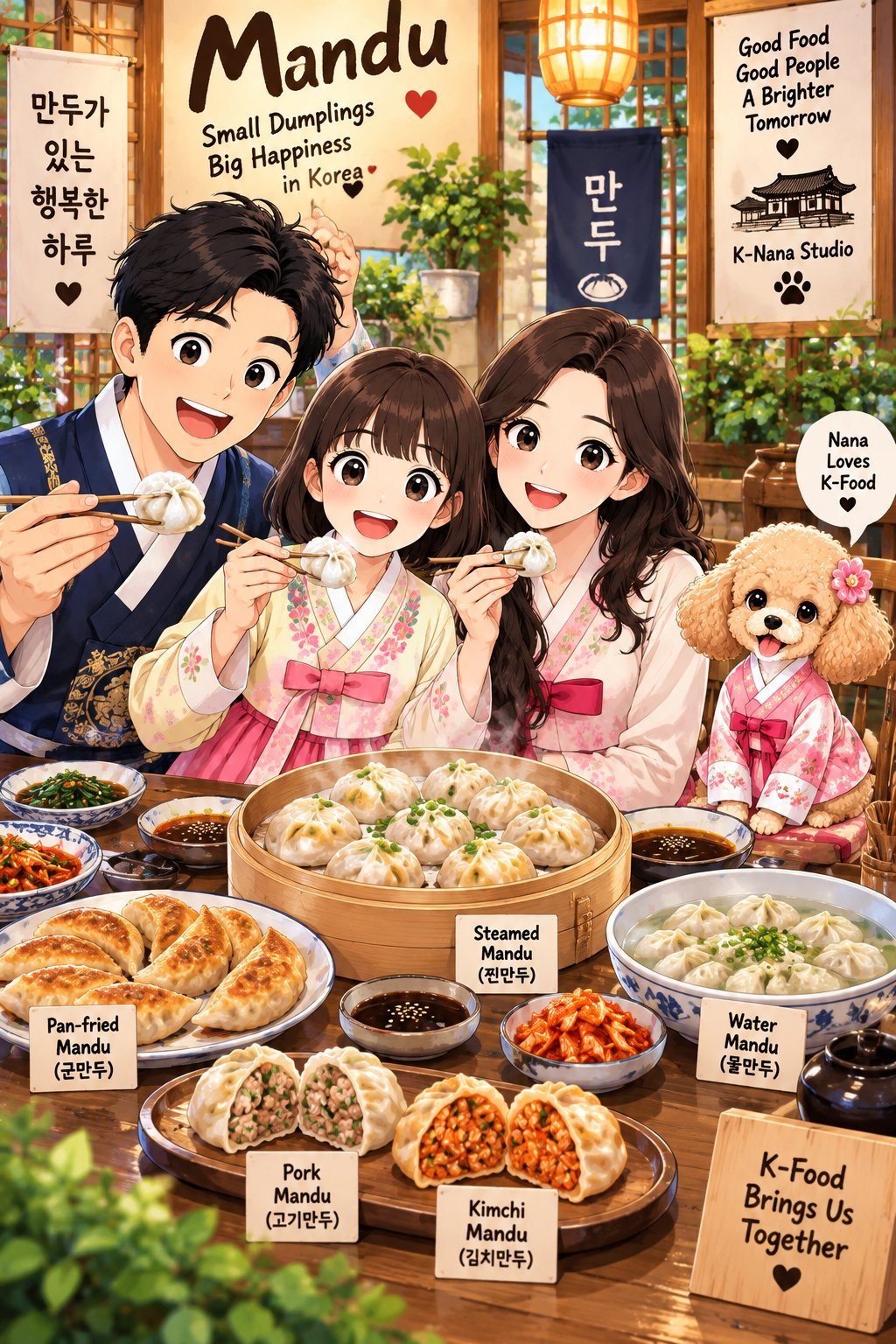
Steamed, pan-fried, and boiled mandu show how different cooking methods can transform one of Korea’s most familiar filled foods.
Quick Guide
| Korean name | 만두 |
| Food type | Korean filled dumpling |
| Basic structure | Dough wrapper surrounding a savory filling |
| Common fillings | Meat, tofu, chives, onion, vegetables, kimchi, glass noodles, and recipe-dependent ingredients |
| Common cooking methods | Steaming, pan-frying, boiling, and cooking in soup |
| Common accompaniments | Soy-based dipping sauce, kimchi, and other Korean side dishes |
| Useful for first-time visitors | Check both the filling and cooking method because different mandu can provide very different experiences |
What Is Mandu?
Mandu is not one single standardized dumpling. It is a category that includes many Korean dumplings with different fillings, shapes, sizes, wrappers, and cooking methods.
The basic idea is straightforward: a portion of filling is placed inside a dough wrapper, the wrapper is folded and sealed, and the dumpling is then cooked.
What happens after that creates much of the variety. Steaming keeps the wrapper soft, pan-frying can create a browned and crisp surface, boiling produces another texture, and cooking mandu in broth turns the dumpling into part of a larger soup dish.
The Mandu Wrapper
The wrapper forms the outer structure that holds the filling together during cooking. Thickness, size, ingredients, and texture vary according to the type of mandu and the recipe.
A wrapper needs enough flexibility to fold around the filling without tearing. At the same time, the edges need to seal properly so that the filling does not easily escape during steaming, frying, or boiling.
The wrapper also changes noticeably according to the cooking method. Steaming can make it soft and tender, while contact with a hot pan can produce a crisp, browned surface.
What Goes Inside Korean Mandu?
Mandu fillings vary considerably. Familiar ingredients can include minced pork or beef, tofu, chives, green onion, onion, cabbage, mushrooms, glass noodles, kimchi, and other vegetables or seasonings.
Not every mandu contains all of these ingredients. One shop may specialize in a meat-heavy filling, while another may use more tofu and vegetables. Kimchi mandu introduces fermented and potentially spicy flavors that are very different from a mild meat dumpling.
This variation makes the filling one of the most important things to check when ordering mandu, especially for travelers with allergies, dietary restrictions, or preferences regarding meat and spice.
Preparing Mandu Filling
Mandu filling needs to be prepared so that several ingredients can fit inside a relatively small wrapper. Meat, tofu, vegetables, chives, onion, kimchi, or other ingredients may therefore be chopped, minced, squeezed, seasoned, or otherwise prepared before assembly.
Moisture is important. Ingredients that release excessive liquid can make the wrapper difficult to seal or affect the texture of the finished dumpling.
The ingredients also need to be distributed well so that individual dumplings do not contain completely different proportions of filling.
How Mandu Is Folded
A wrapper is placed on the work surface or held in the hand, and an appropriate amount of filling is positioned near the center.
The edges are then brought together and sealed. Depending on the style, the wrapper can be folded into a simple half-moon shape, pleated along the edge, or shaped using another technique.
Too much filling can make sealing difficult and increase the chance of tearing. Too little filling can leave the finished mandu dominated by wrapper rather than the ingredients inside.
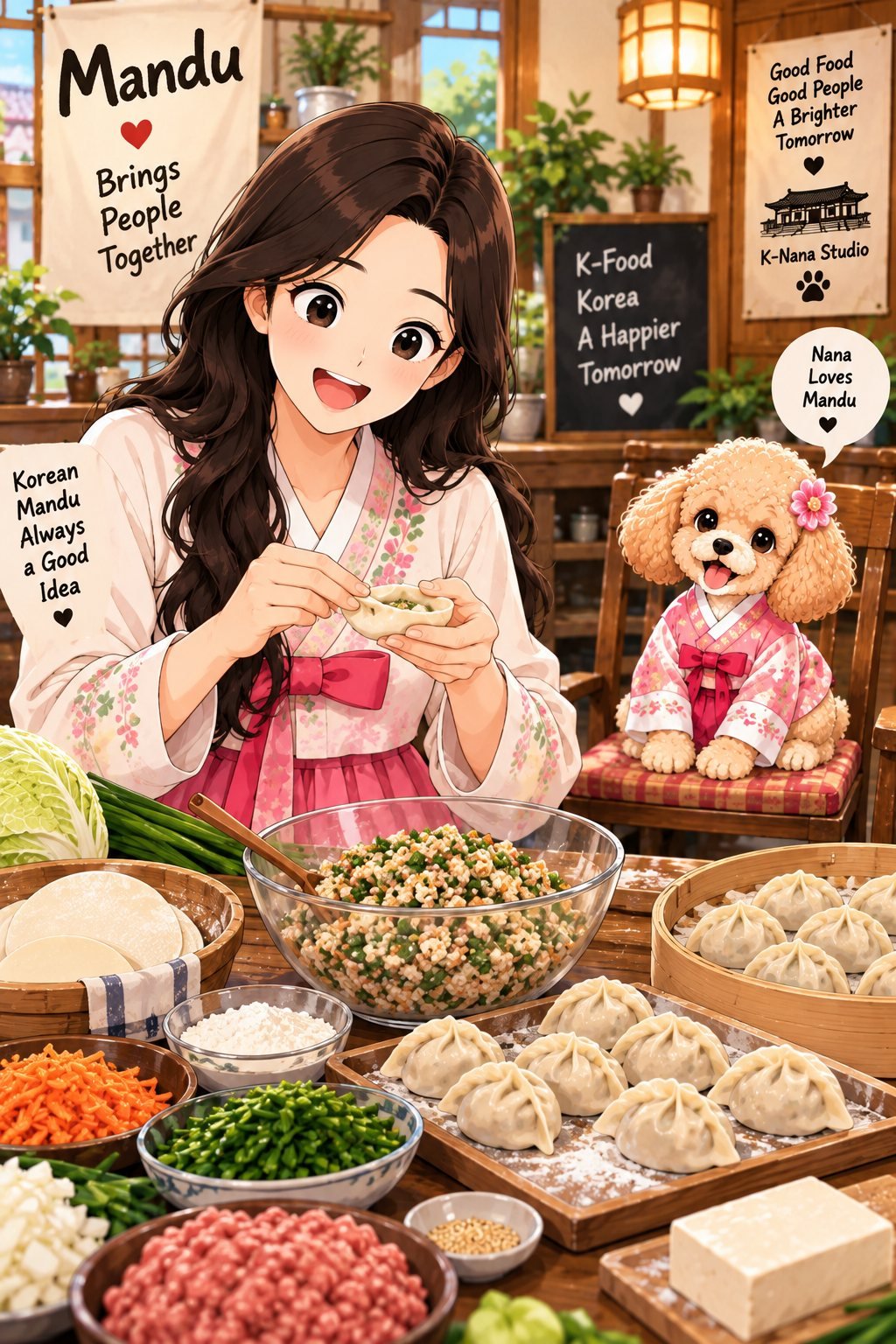
Filling, folding, and carefully sealing the wrapper turns individually prepared ingredients into a finished Korean mandu ready for cooking.
Why Mandu Shapes Are Different
Travelers may encounter mandu shaped like half-moons, rounded pouches, pleated dumplings, or other forms. Shape can be influenced by recipe, cooking method, restaurant style, regional tradition, or the person making the dumplings.
Appearance alone does not reliably identify the filling. Two dumplings with similar shapes can contain very different ingredients, while the same filling can appear inside differently shaped wrappers.
For that reason, menu descriptions and ingredient information are more useful than shape when choosing between different mandu.
Steamed Mandu
Steamed mandu is cooked using hot steam rather than direct contact with a frying surface. This keeps the exterior relatively soft and allows the texture of the wrapper to remain prominent.
Because the surface is not browned in the same way as pan-fried mandu, steamed versions can provide a useful starting point for tasting the wrapper and filling without a crisp fried layer.
The dumplings can be served alone, with dipping sauce, or as part of a larger Korean meal.
Pan-Fried Mandu
Pan-fried mandu uses direct heat and oil to create browned, crisp areas on the wrapper. Depending on the technique, other parts of the dumpling can remain softer.
This contrast between a crisp exterior and moist filling is one of the main attractions of pan-fried mandu.
Oil and cooking time affect the final texture, so pan-fried dumplings can range from lightly browned to noticeably crisp.
Steamed vs. Pan-Fried Mandu
Comparing steamed and pan-fried mandu is one of the easiest ways to understand how cooking method changes the same basic food.
Steamed mandu emphasizes softness and moisture. Pan-fried mandu adds browning, oil, and a crisp surface. Even when the fillings are similar, the eating experience can therefore be noticeably different.
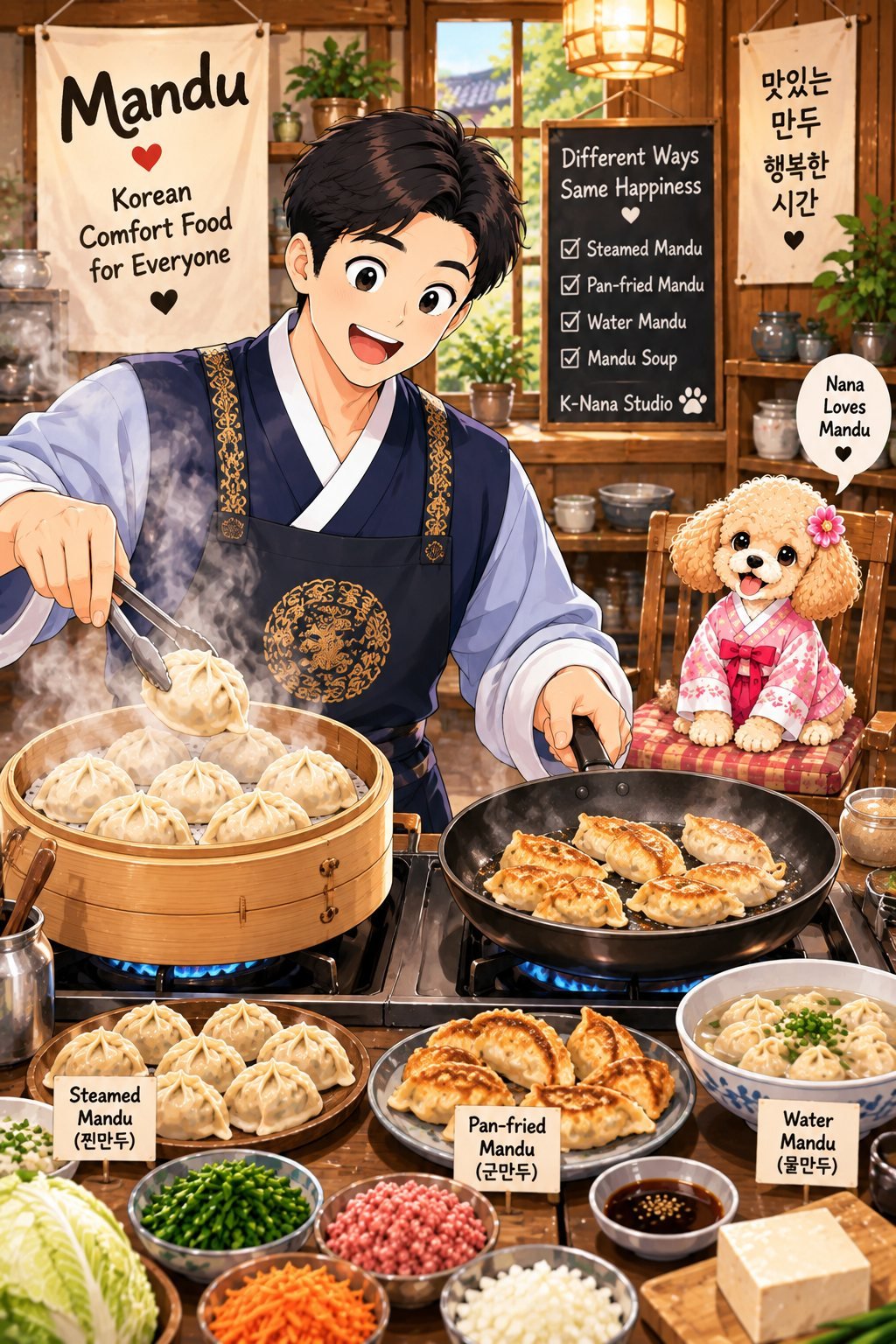
Steam creates a soft wrapper, while direct pan heat produces golden, crisp surfaces—two different ways to experience Korean mandu.
Boiled Mandu
Mandu can also be cooked in boiling water. This produces a soft exterior without the browned surface associated with pan-frying.
Boiled dumplings may be served after draining or incorporated into other dishes depending on the recipe. The wrapper needs to remain sealed well enough to protect the filling during cooking.
Because there is no fried crust, boiled mandu offers another way to focus on the texture of the wrapper and the filling inside.
Meat Mandu
Meat mandu commonly uses a filling built around minced meat combined with vegetables, tofu, chives, seasonings, or other ingredients.
The exact meat is not universal. Pork, beef, combinations of meats, or restaurant-specific recipes can be used, so travelers should check the menu when the type of meat matters.
Even dumplings described as meat mandu can differ significantly in the ratio of meat to vegetables and other filling ingredients.
Kimchi Mandu
Kimchi mandu incorporates kimchi into the filling, creating a different flavor from milder meat or vegetable dumplings.
The fermented character of kimchi can add acidity, savory depth, and chili heat depending on the recipe. Additional tofu, meat, vegetables, or glass noodles may also be included.
K-Nana Studio’s Kimchi Guide explains fermentation, kimjang culture, and the wider role of kimchi in Korean food.
Mandu & Korean Food Culture
Mandu can appear in several parts of Korean food culture rather than belonging to only one type of restaurant or meal.
Travelers can encounter dumplings at markets, mandu specialty restaurants, casual eateries, traditional Korean restaurants, and shops selling prepared foods. Mandu can be eaten as a snack, a shared dish, part of a larger meal, or as an ingredient in soup.
This versatility makes mandu different from foods defined by one particular serving style. The same basic idea of wrapper and filling can move from a steaming basket to a frying pan or a hot bowl of broth.
Dipping Sauce & Kimchi
Mandu can be flavorful enough to eat by itself, but a dipping sauce is a familiar accompaniment. A soy-based dipping sauce can add saltiness, acidity, and additional seasoning to steamed, boiled, or pan-fried dumplings.
The exact sauce varies. Vinegar, chili, sesame, green onion, or other ingredients may be added depending on the restaurant or household recipe, so diners should not expect every mandu dipping sauce to taste identical.
Kimchi provides another strong contrast. Its fermented acidity, seasoning, and possible chili heat can balance the soft wrapper and rich filling of a dumpling. This is particularly noticeable when comparing mild meat mandu with a bite of kimchi between pieces.
Comparing Different Mandu
Trying more than one cooking style at the same table makes the differences between mandu easier to understand. A steamed dumpling can emphasize softness, while a pan-fried dumpling adds a browned and crisp surface.
The filling creates another layer of comparison. Meat mandu can be relatively mild and savory, while kimchi mandu can introduce fermented flavor and stronger seasoning.
Instead of asking which version is the single “best” mandu, first-time visitors can compare wrapper texture, filling, cooking method, and dipping sauce to discover which combination they prefer.
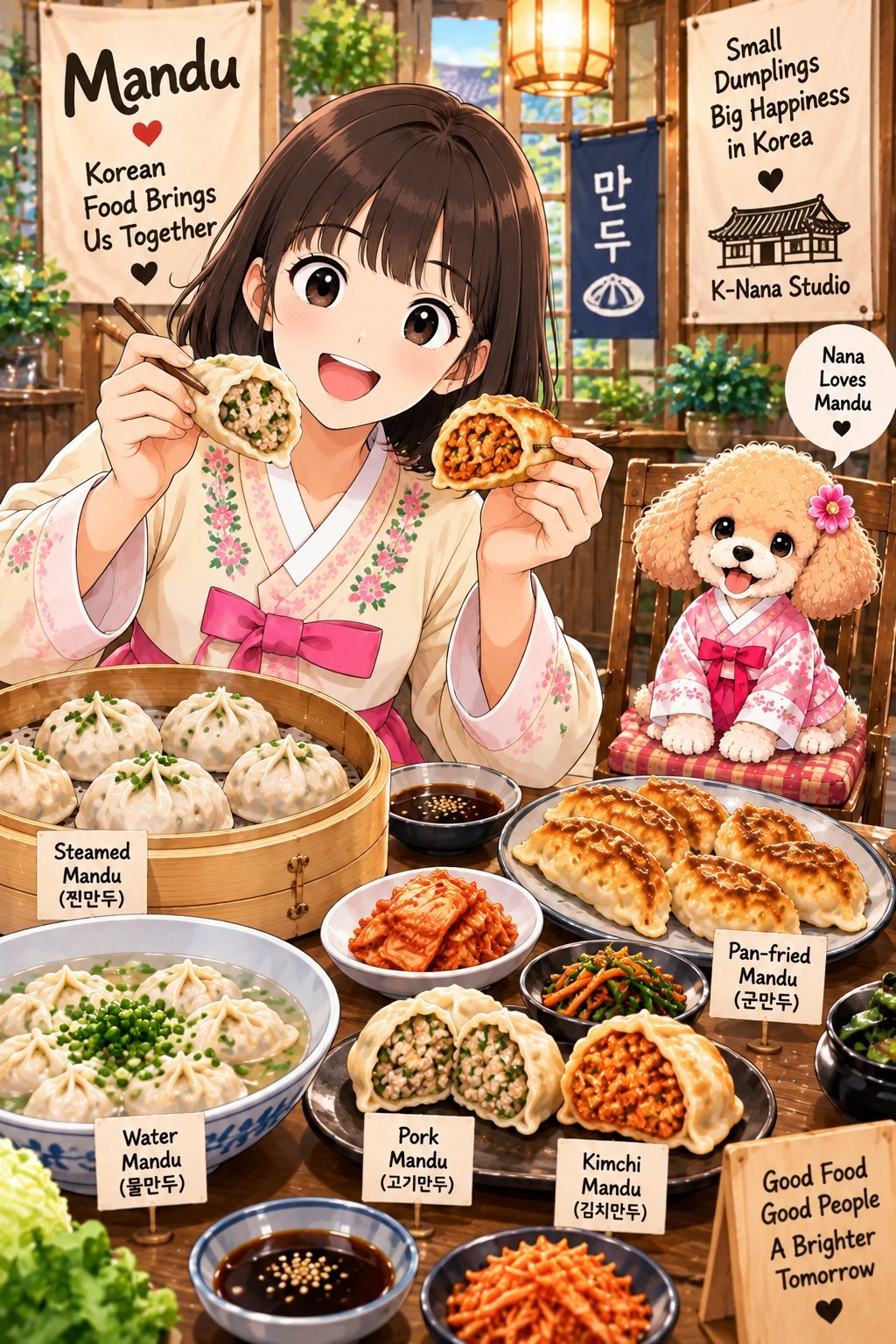
Soft steamed mandu, crisp pan-fried mandu, different fillings, dipping sauce, and kimchi make one dumpling table a useful introduction to Korea’s mandu variety.
What Is Manduguk?
Manduguk is Korean dumpling soup. Instead of serving the dumplings alone, mandu is cooked or served in a hot broth, turning the dumplings into part of a complete soup dish.
The broth, garnish, dumpling filling, and additional ingredients vary by recipe. Egg garnish, green onion, seaweed, or other toppings may appear, while the broth itself can differ between restaurants and households.
Because the dumplings sit in hot liquid, the wrapper becomes soft and absorbs some of the surrounding broth. This creates a very different experience from crisp pan-fried mandu.
What Is Tteok-Manduguk?
Tteok-manduguk combines mandu with sliced rice cakes in soup. The result brings two different textures into the same bowl: filled dumplings and chewy rice cakes.
The balance between tteok and mandu varies. Some bowls emphasize rice cakes with a smaller number of dumplings, while others contain a more substantial mandu portion.
Tteok-manduguk also connects dumplings with the wider Korean tradition of eating rice-cake soup, particularly around the Lunar New Year period.
Mandu, Tteokguk & Seollal
Soup containing rice cakes has a strong association with Seollal, the Korean Lunar New Year. Depending on household and regional traditions, mandu may also be included, creating tteok-manduguk.
It is important not to treat one family’s recipe as the universal Korean standard. Holiday foods and preparation styles can vary by region, household, and family tradition.
For travelers, the connection is useful because it shows that mandu is not only a restaurant snack. Dumplings can also become part of family meals and seasonal food traditions.
Mandu as a Winter Food
Hot mandu is especially appealing in cold weather. Steam rising from freshly cooked dumplings or a bowl of hot manduguk creates a very different experience from eating a cold portable food.
Markets and casual food areas can make this particularly noticeable during winter, when hot dumplings and soup provide warmth as well as food.
This seasonal appeal does not mean mandu is available only in winter. Steamed, fried, boiled, frozen, and prepared mandu can be found throughout the year.
Mandu at Korean Markets
Traditional markets can provide a particularly visual mandu experience. Visitors may see dumplings being shaped, stacked in steamers, cooked, or displayed in large batches.
The size and style can vary considerably between vendors. Some specialize in large dumplings with substantial fillings, while others offer smaller pieces suited to snacking or sharing.
K-Nana Studio’s Gwangjang Market guide introduces one of Seoul’s best-known traditional-market environments, where visitors can experience a much broader range of Korean market and prepared-food culture.
Mandu Specialty Restaurants
Dedicated mandu restaurants can offer another experience from market stalls. A specialty restaurant may focus on a small number of dumpling styles, serve manduguk, or offer dumplings as part of a larger Korean meal.
Some establishments make dumplings in-house, while preparation methods and menu structures vary widely. Travelers should check the specific restaurant rather than assuming all mandu shops use the same fillings or cooking methods.
Portion sizes also differ. Large dumplings can be much more filling than their number on the plate suggests.
How to Order Mandu
When ordering mandu, begin by checking two things: the filling and the cooking method.
A menu may distinguish meat mandu from kimchi mandu and steamed mandu from fried or boiled versions. Soup-based dishes such as manduguk or tteok-manduguk may appear in another section entirely.
If you want to compare textures, ordering steamed and pan-fried versions can be useful. If you want to compare fillings, choose two different fillings prepared in a similar way when the menu allows it.
When spice, meat type, allergens, or dietary restrictions matter, confirm the ingredients directly because the appearance of the wrapper usually reveals very little about what is inside.
First-Time Mandu Tips
- Check the filling — similar-looking dumplings can contain very different ingredients.
- Compare cooking methods — steamed and pan-fried mandu provide noticeably different textures.
- Try the first bite without sauce — this makes the wrapper and filling easier to understand.
- Add dipping sauce gradually — a strongly seasoned sauce can overpower a mild filling.
- Expect hot filling — freshly steamed, fried, or boiled mandu can remain extremely hot inside.
- Do not assume kimchi mandu is meat-free — recipes may contain meat or other animal-derived ingredients.
- Check portion size — large mandu can be more filling than expected.
- Consider manduguk in cold weather — soup provides a different way to experience dumplings.
The Complete Mandu Experience
Mandu demonstrates how much variety can develop from a simple structure of wrapper and filling. Changing the filling can move the flavor from mild meat and vegetables to fermented kimchi, while changing the cooking method can transform a soft wrapper into a crisp, browned surface.
Soup adds another dimension by placing dumplings in hot broth, while dipping sauces and kimchi create additional contrasts at the table.
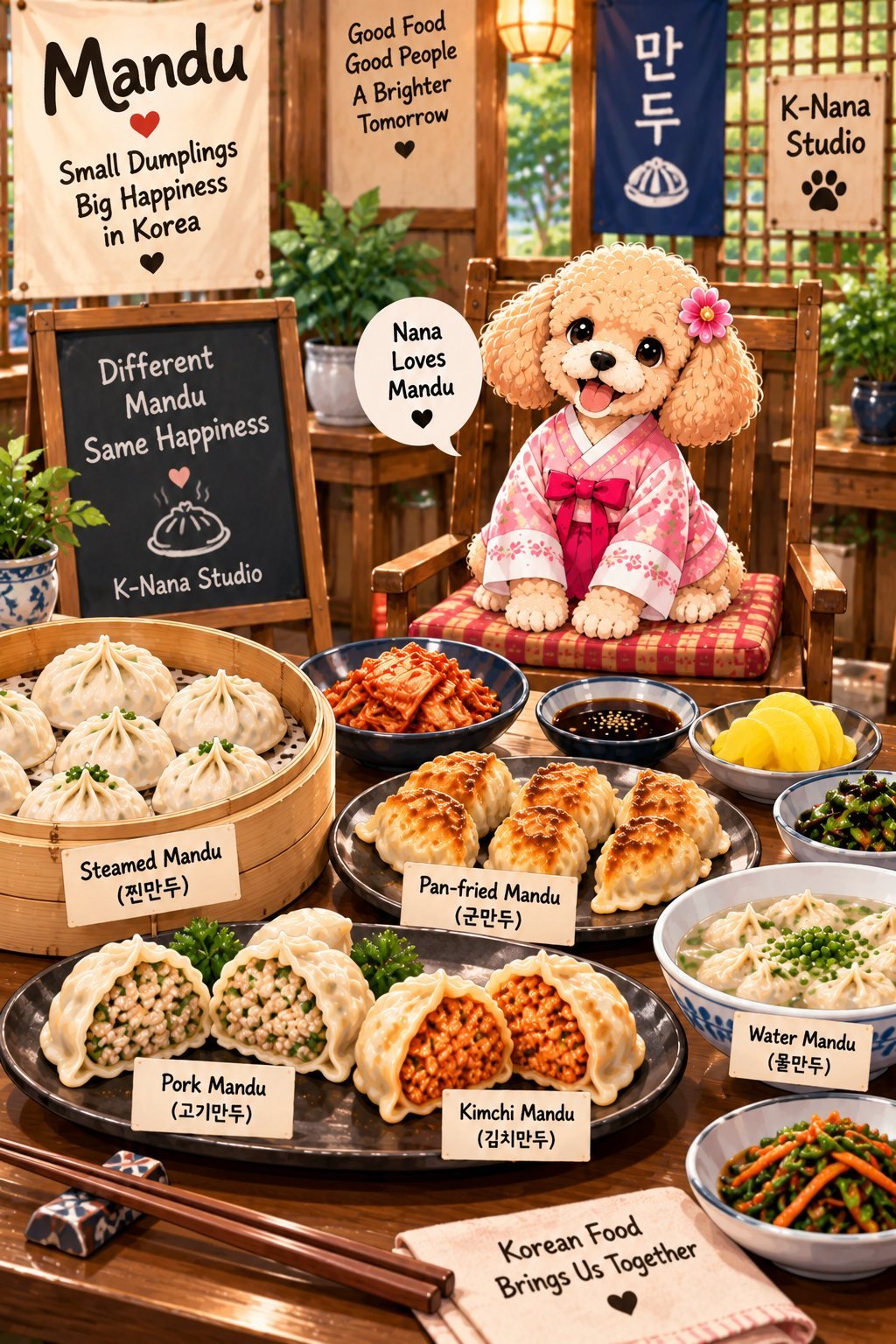
From steamed and pan-fried dumplings to meat, kimchi, and soup variations, mandu shows how one basic form can become many different Korean food experiences.
How Mandu Connects with Other K-Food
Mandu adds a filled-dumpling category to K-Nana Studio’s growing K-Food collection and connects naturally with several foods already introduced.
Kimchi can be served beside mandu and can also become part of the dumpling filling itself, demonstrating how one fermented food can play several roles within Korean cuisine.
Japchae introduces dangmyeon as the main ingredient of a noodle dish, while glass noodles can also appear as one component inside some mandu fillings.
Gimbap provides another example of multiple separately prepared ingredients being assembled into one compact food, although it uses rice and gim rather than a sealed dough wrapper.
Tteokbokki represents Korea’s bunsik and rice-cake culture, while rice cakes meet mandu directly in tteok-manduguk.
For meat-centered meals, Bulgogi, Samgyeopsal, and the broader Korean BBQ Guide introduce very different shared dining and cooking experiences.
Bibimbap shows how multiple ingredients can be combined around rice, while Korean Fried Chicken represents another popular casual food with several cooking and seasoning variations.
Mandu & a Korea Travel Day
Mandu can fit easily into a Korea itinerary because travelers can encounter it in traditional markets, casual restaurants, specialty shops, and sit-down Korean restaurants.
Gwangjang Market connects mandu with the atmosphere of a traditional Seoul market and a much wider range of Korean prepared foods.
For a traditional-culture itinerary, travelers can combine a Korean meal with Insadong, Bukchon Hanok Village, and Gyeongbokgung Palace.
These areas provide different connections to traditional streets, crafts, hanok architecture, Korean history, and food, allowing mandu to become one part of a broader K-Culture travel day.
FAQ
What is mandu?
Mandu is the Korean word for dumplings. A filling is enclosed inside a dough wrapper and then cooked by steaming, pan-frying, boiling, or another method. Mandu can also be served in soup, and both the wrapper and filling vary between recipes.
What is inside Korean mandu?
Common fillings can include minced meat, tofu, chives, green onion, onion, cabbage, mushrooms, glass noodles, kimchi, and other vegetables or seasonings. There is no single standard filling, so ingredients should be checked for each type of mandu.
What is the difference between steamed and pan-fried mandu?
Steamed mandu generally has a softer wrapper because it cooks with steam. Pan-fried mandu develops browned and crisp areas where the wrapper contacts the hot cooking surface and oil. Even with a similar filling, the two cooking methods can create noticeably different textures.
Is kimchi mandu always spicy?
Kimchi mandu commonly has stronger fermented and chili flavors than mild meat mandu, but the level of heat depends on the kimchi, seasoning, and recipe. Appearance alone cannot reliably indicate how spicy a particular dumpling will be.
Does kimchi mandu contain meat?
It can. The name describes the use of kimchi in the filling and does not guarantee that the dumpling is vegetarian or vegan. Meat, tofu, glass noodles, vegetables, and other ingredients can also be included depending on the recipe.
What is manduguk?
Manduguk is Korean dumpling soup. Mandu is served in hot broth with recipe-dependent ingredients and garnishes. The wrapper becomes soft in the broth, producing a different eating experience from steamed or pan-fried dumplings served separately.
What is tteok-manduguk?
Tteok-manduguk combines mandu and sliced Korean rice cakes in soup. It connects dumpling culture with tteokguk traditions and is particularly associated with Korean Lunar New Year food culture, although recipes and family traditions vary.
Where to Try Mandu
Mandu can be found throughout Korea in several different settings, including traditional markets, mandu specialty restaurants, casual eateries, Korean restaurants, and prepared-food shops.
Instead of choosing only by appearance, check the filling, cooking method, portion size, and whether the dumplings are served alone or in soup. Large handmade-style mandu can be considerably more filling than smaller dumplings.
Travelers interested in Korean market-food culture can explore Gwangjang Market, where a broader range of Korean prepared foods and market dining can be experienced in one area.
For a traditional Seoul itinerary, Insadong, Bukchon Hanok Village, and Gyeongbokgung Palace provide natural connections between Korean food, traditional streets, hanok architecture, crafts, and history.
Related K-Nana Guides
The Kimchi Guide explains fermentation and kimjang culture and provides useful background for understanding both kimchi served beside mandu and kimchi used inside dumpling fillings.
The Japchae Guide introduces Korean dangmyeon, vegetables, mushrooms, soy-based seasoning, and sesame oil. Glass noodles can also appear as one component in some mandu fillings.
The Gimbap Guide explores another compact Korean food assembled from multiple ingredients, while the Tteokbokki Guide introduces rice cakes and Korea’s bunsik culture.
For Korean meat dishes, continue with the Bulgogi Guide, Samgyeopsal Guide, and Korean BBQ Guide.
The Bibimbap Guide explores rice with multiple colorful ingredients, while the Korean Fried Chicken Guide introduces another popular Korean casual food with several cooking and seasoning styles.
Food & Allergy Notes
Mandu can contain several ingredients inside a wrapper, so allergens may not be visible from the outside. The wrapper itself commonly requires ingredient checking, while the filling can contain meat, tofu, soy, wheat, sesame, egg, vegetables, mushrooms, glass noodles, seafood-derived ingredients, or other recipe-dependent components.
Dipping sauces can introduce additional ingredients such as soy, wheat, sesame, chili products, or other seasonings. Kimchi used in mandu or served alongside it can also contain ingredients that vary according to the recipe.
Vegetable mandu or kimchi mandu should not automatically be assumed to be vegetarian or vegan. Meat or other animal-derived ingredients may be incorporated into the filling or seasoning, and shared preparation equipment can also be relevant.
Travelers with allergies, intolerances, medical conditions, religious dietary restrictions, vegetarian or vegan requirements, or other dietary needs should confirm both the wrapper and filling ingredients directly with the restaurant or seller.
Raw Filling & Cooking Safety
Some mandu fillings contain raw minced meat before cooking. Dumplings containing raw meat need to be cooked appropriately so that both the exterior and the filling are properly cooked.
A browned exterior does not by itself prove that the center has been cooked sufficiently. This is particularly important with larger dumplings or thick fillings.
When making mandu at home, raw meat should be kept appropriately separated from ready-to-eat foods. Hands, bowls, knives, cutting boards, utensils, and preparation surfaces that contact raw ingredients should be handled carefully to reduce cross-contact.
Steam, Hot Oil & Soup Safety
Different mandu cooking methods create different heat hazards. Steamers can release very hot steam when opened, while pans and cooking oil can cause burns or splattering.
Manduguk and tteok-manduguk can remain extremely hot after serving. The broth may cool more slowly than expected, and the filling inside a dumpling can retain significant heat even when the exterior feels manageable.
Allow freshly cooked mandu to cool enough to eat safely, and follow restaurant or kitchen instructions when handling steamers, hot pans, boiling water, cooking oil, or soup vessels.
Storage & Reheating
Fresh mandu, cooked mandu, frozen mandu, and takeaway dumplings can require different storage methods. Follow instructions provided by the restaurant, seller, or manufacturer when available.
Dumplings containing meat, tofu, vegetables, or other moist fillings should not be assumed to remain safe indefinitely at room temperature.
When reheating cooked mandu, heat it appropriately for the ingredients it contains. Texture may change during reheating: steamed wrappers can dry, while previously crisp pan-fried surfaces can soften depending on the method used.
Image Credits
Korean mandu family dining experience with steamed, pan-fried, and boiled dumplings, dipping sauce, kimchi, and banchan with the K-Nana family and Nana in hanbok visual — K-Nana Studio original visual.
Traditional mandu-making experience with Mom in hanbok filling and folding dumpling wrappers with minced meat, tofu, chives, onions, and vegetables while Nana watches from a separate seat visual — K-Nana Studio original visual.
Korean mandu cooking comparison with Dad in hanbok preparing steamed mandu and golden pan-fried mandu while Nana watches from a separate safe seat visual — K-Nana Studio original visual.
Korean mandu table with K-Nana daughter in hanbok comparing steamed and pan-fried dumplings, visible fillings, dipping sauce, and kimchi while Nana sits separately without touching the food visual — K-Nana Studio original visual.
Nana in pink floral hanbok seated separately as a K-Food mascot beside steamed, pan-fried, and boiled mandu, meat mandu, kimchi mandu, dipping sauce, kimchi, and Korean side dishes visual — K-Nana Studio original visual.
Disclaimer
This article is provided for general food, travel, and cultural information. Mandu ingredients, wrappers, fillings, sauces, allergens, cooking methods, storage practices, restaurant recipes, portion sizes, and dietary suitability can vary. Dumplings containing raw meat or other perishable fillings require appropriate handling, cooking, storage, and reheating. Steam, hot oil, boiling water, pans, and soup can cause burns. Always follow appropriate food-safety practices and confirm ingredients and preparation directly with the restaurant, seller, or manufacturer when allergies, medical conditions, religious restrictions, vegetarian or vegan requirements, or other dietary needs are relevant.