
Bibimbap is one of Korea’s most recognizable rice dishes, combining warm rice with an assortment of seasoned vegetables, meat or other toppings, egg, and a sauce that is mixed together before eating. Its name reflects the basic idea of the dish: mixing rice with different ingredients to create one complete bowl.
For international visitors, bibimbap is an approachable introduction to Korean food because many ingredients can be seen separately before they are mixed. Colorful vegetables, rice, protein, egg, sesame, and gochujang come together in a dish that demonstrates how Korean cuisine often balances different flavors, textures, and ingredients within one meal.
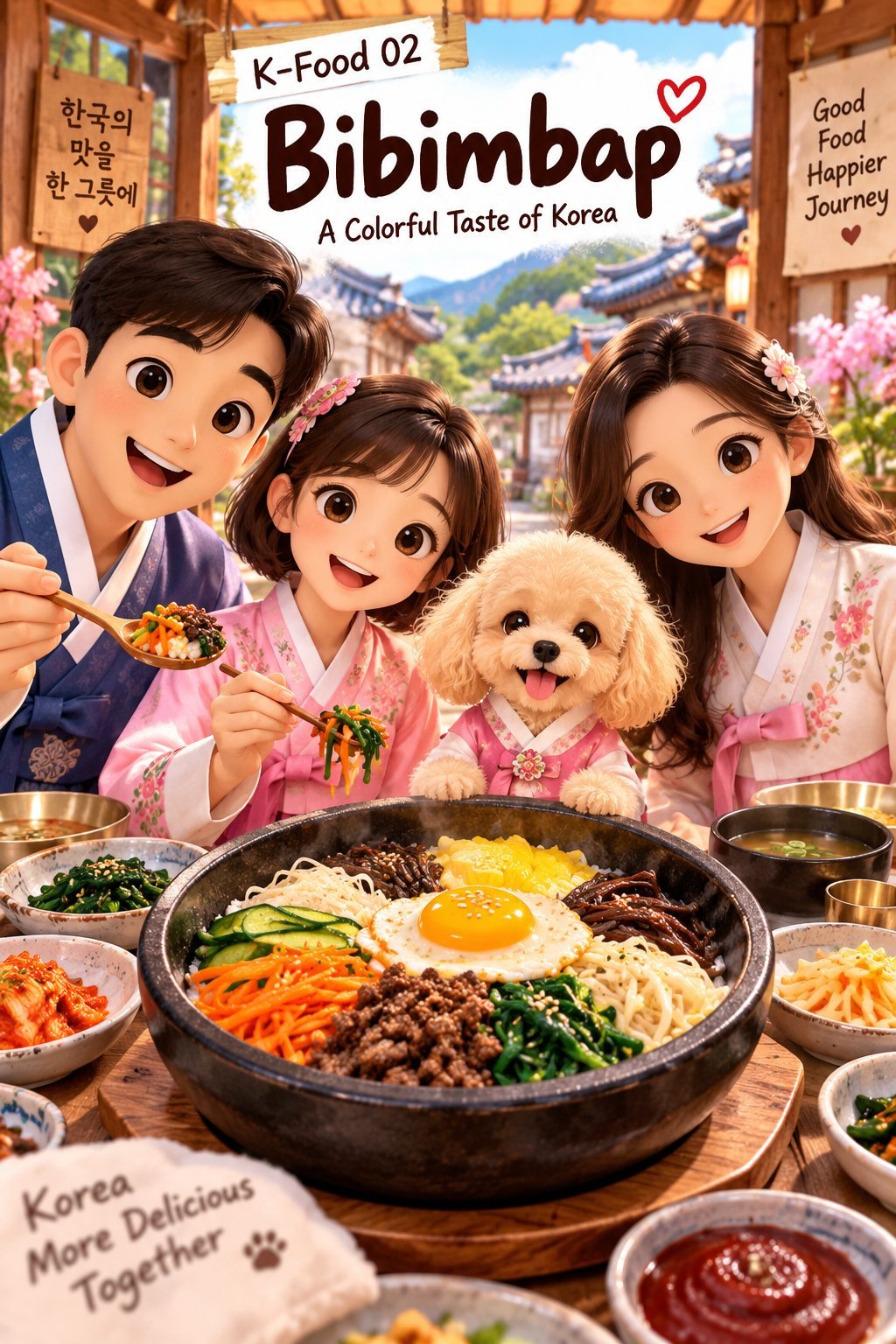
Colorful vegetables, rice, egg, meat, sesame, and gochujang come together in one of Korea’s best-known mixed rice dishes.
Quick Guide
| Korean name | 비빔밥 |
| Food type | Mixed rice dish |
| Main base | Cooked rice with vegetables and assorted toppings |
| Common additions | Seasoned vegetables, beef or other protein, egg, sesame, and gochujang |
| How to eat | Add sauce to taste, then mix the ingredients thoroughly with the rice |
| Well-known regional style | Jeonju bibimbap |
What Is Bibimbap?
Bibimbap literally describes the action at the center of the meal: rice and toppings are mixed together before being eaten. The finished bowl can include several seasoned vegetables, commonly called namul, arranged over rice with additional ingredients such as meat, mushrooms, egg, and sesame.
Gochujang, a Korean fermented red chili paste, is a familiar sauce for bibimbap, although the amount used can be adjusted according to personal preference. Some versions may use a different sauce or seasoning depending on the restaurant, recipe, or style of bibimbap.
There is no single ingredient list that defines every bowl. Recipes vary by region, season, restaurant, household, dietary preference, and available ingredients, which makes bibimbap a flexible format rather than one fixed recipe.
Why Are the Ingredients Arranged Separately?
Before bibimbap is mixed, its ingredients are often arranged individually over the rice. This makes the different colors and textures immediately visible and gives the dish its distinctive appearance.
Carrots, spinach, bean sprouts, mushrooms, cucumber or zucchini, meat, egg, and other ingredients can create contrasting sections around the bowl. The exact combination varies, but the visual arrangement allows diners to see what they are about to mix together.
Once mixed, those separate ingredients become part of the same bite. Soft rice, crisp or tender vegetables, savory protein, egg, sesame, and sauce create a combination of textures rather than allowing one topping to dominate the entire dish.
Jeonju Bibimbap
Jeonju is especially well known for bibimbap and has become strongly associated with the dish in Korean food culture. Travelers visiting the city may encounter bibimbap alongside many other traditional and regional food experiences.
This makes bibimbap a natural food connection to K-Nana Studio’s Jeonju Hanok Village guide. The area combines hanok architecture, hanbok experiences, traditional streets, cafés, restaurants, and local food culture, allowing visitors to experience Korean food within a broader cultural setting.
Jeonju bibimbap can differ between restaurants in its ingredients, presentation, seasoning, side dishes, and preparation. Rather than expecting every bowl to follow one identical recipe, visitors can treat those differences as part of exploring the city’s food culture.
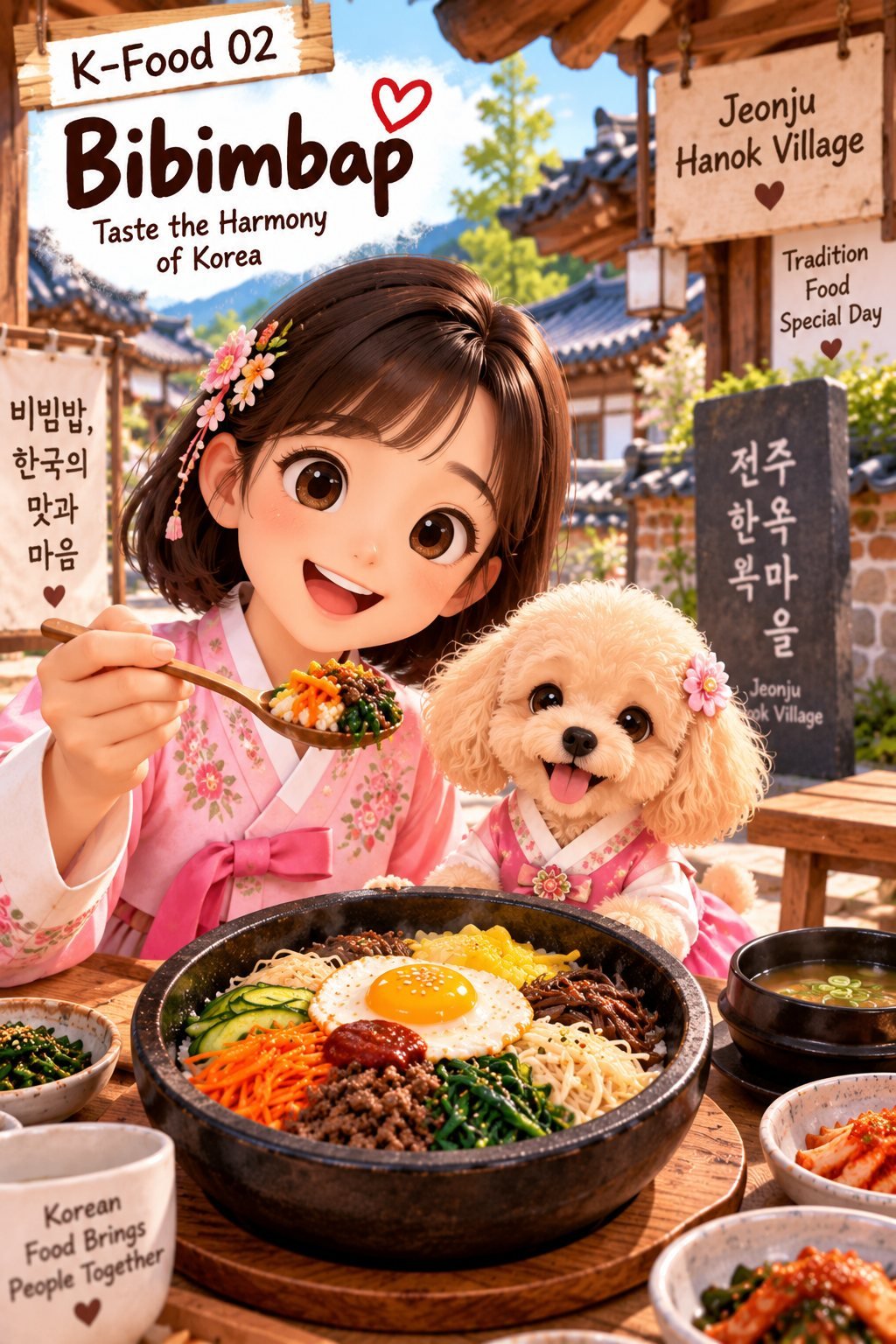
Jeonju connects one of Korea’s best-known rice dishes with hanok streets, traditional culture, and a strong regional food identity.
What Goes Into Bibimbap?
The ingredients in bibimbap can vary widely, but the bowl usually begins with cooked rice and a selection of toppings prepared separately before serving. This allows each ingredient to keep its own seasoning, color, and texture until everything is mixed together.
Common toppings can include spinach, bean sprouts, carrots, mushrooms, zucchini or cucumber, seasoned beef, egg, and sesame seeds. Some versions use different vegetables, seafood, tofu, or other proteins depending on the recipe and location.
The result is not simply rice covered with vegetables. Much of bibimbap’s character comes from preparing the individual components first and then combining them into one bowl at the table.
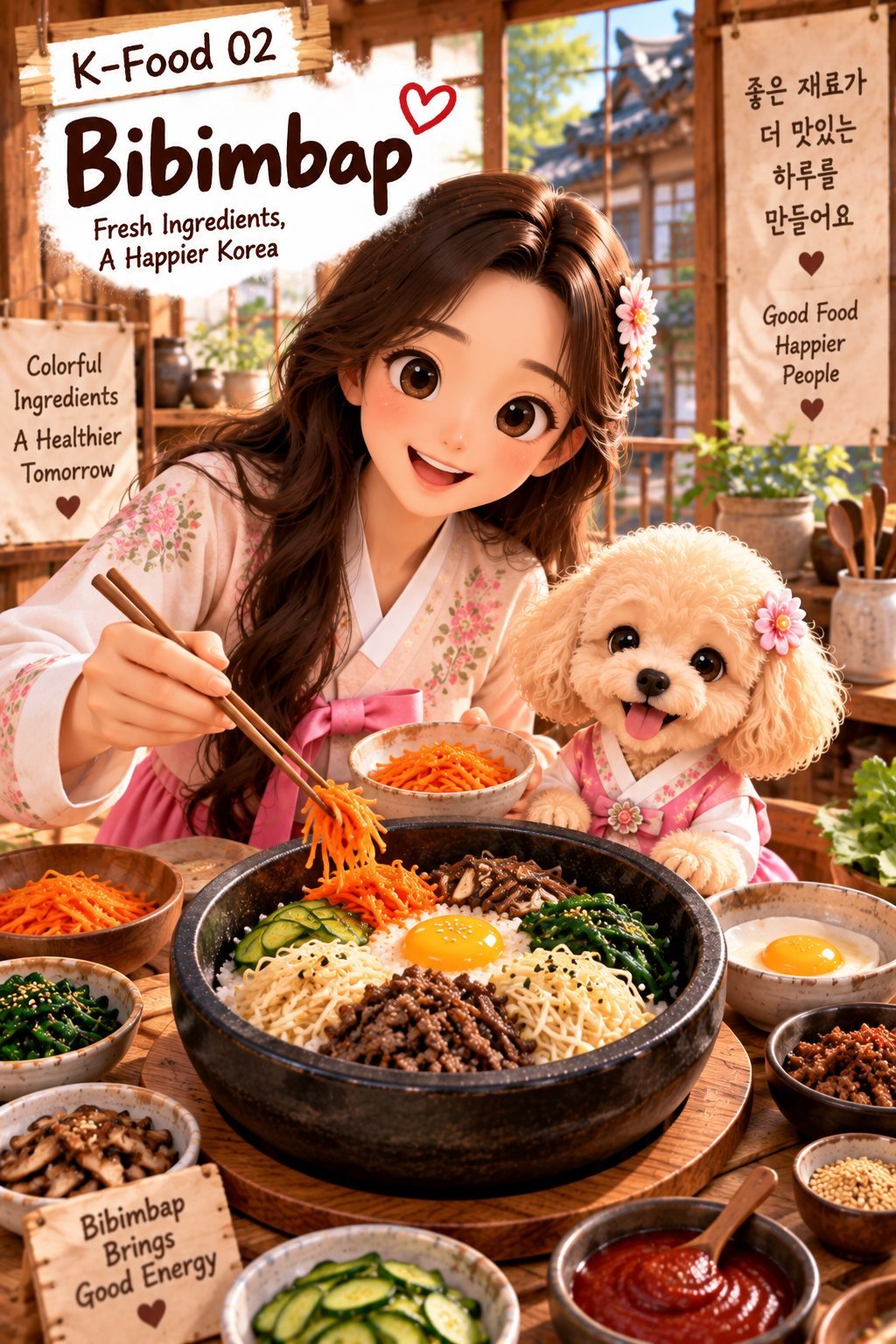
Bibimbap brings separately prepared vegetables, protein, rice, egg, and seasoning together in one colorful bowl.
Namul & Vegetables
Vegetables are central to many bibimbap bowls. Several toppings may be prepared as namul, a broad category of seasoned vegetable dishes that also appear independently as Korean side dishes.
Different vegetables can be blanched, sautéed, seasoned, or otherwise prepared before being placed over the rice. Sesame oil, sesame seeds, garlic, salt, soy-based seasoning, and other ingredients may be used depending on the recipe.
Using several vegetables gives bibimbap much of its visual variety, but it also creates contrasts in texture and flavor. A soft mushroom, crisp bean sprout, tender spinach, and lightly cooked carrot can each contribute something different after the bowl is mixed.
Gochujang: The Familiar Red Sauce
Gochujang is a fermented Korean red chili paste and one of the sauces most commonly associated with bibimbap. Its flavor can combine heat, sweetness, saltiness, and fermented depth.
The amount of gochujang does not need to be fixed. First-time visitors who are uncertain about spice can begin with a small amount, mix the bowl, taste it, and add more if desired.
Restaurants may serve gochujang separately or use their own prepared bibimbap sauce. Recipes and spice levels vary, so the same amount of sauce may taste different from one restaurant to another.
How to Mix Bibimbap
Bibimbap is designed to be mixed. Once the bowl arrives, add the desired amount of sauce and use a spoon to combine the rice, vegetables, protein, egg, and seasoning thoroughly.
Mixing changes both the appearance and the eating experience. The carefully separated colors disappear, but the flavors and textures become distributed throughout the rice so that each spoonful contains several components.
There is no need to preserve the original presentation while eating. The colorful arrangement is part of how bibimbap is served, while mixing is part of how the dish is enjoyed.
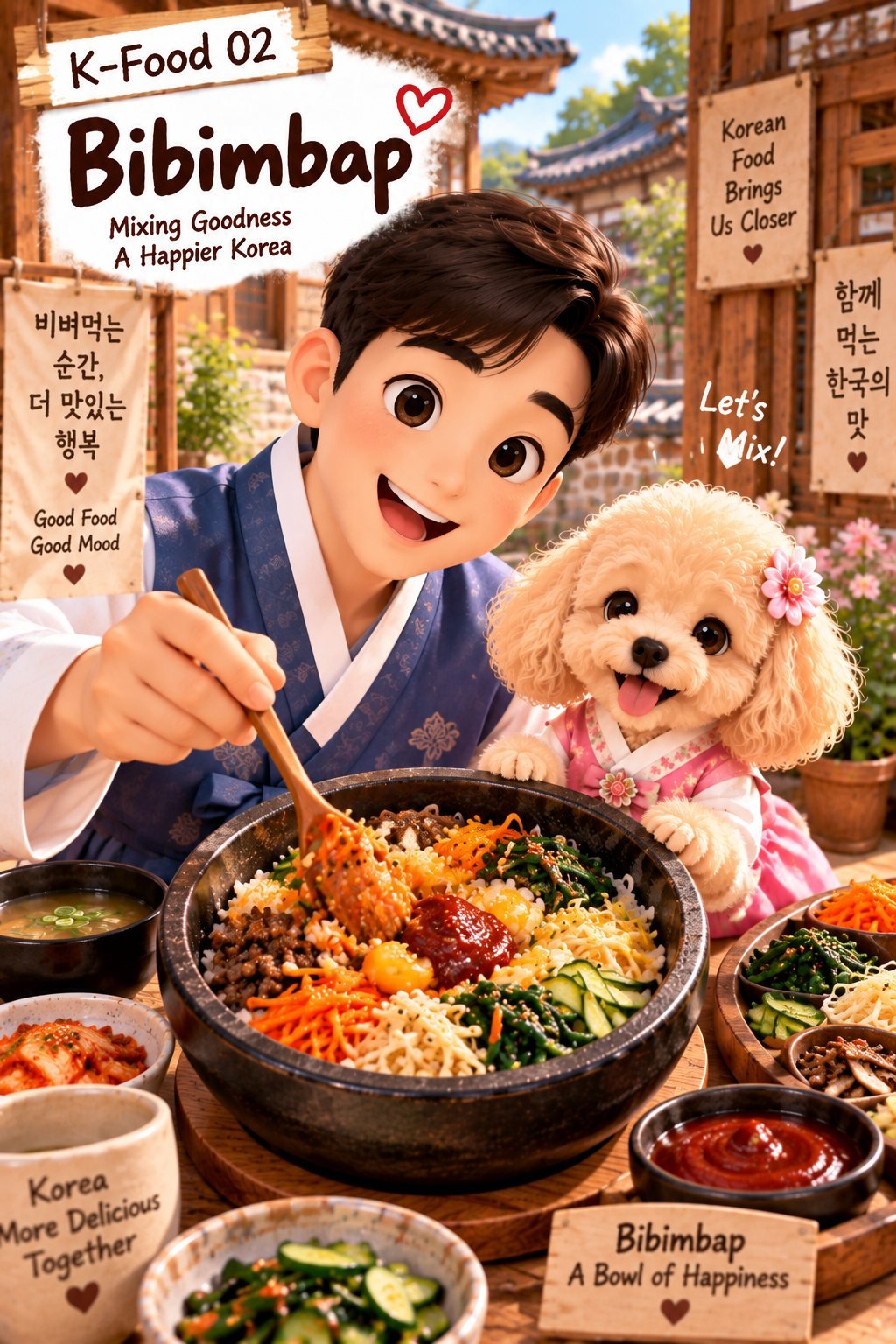
The final step is in the name: add sauce to taste, mix the ingredients with the rice, and turn many separate flavors into one bowl.
Dolsot Bibimbap
Dolsot bibimbap is served in a heated stone bowl. The hot bowl keeps the food warm and can create a layer of crisp rice where the grains remain in contact with the heated surface.
This gives dolsot bibimbap a different texture from bibimbap served in a regular bowl. Diners can experience soft mixed rice together with sections that become toasted and crisp near the bottom.
The stone bowl can remain extremely hot after the food arrives. Avoid touching the bowl directly and follow any instructions provided by the restaurant.
Kimchi is also commonly encountered alongside Korean rice dishes and other meals. Trying bibimbap with several banchan provides a broader introduction to how a Korean meal combines a main dish with smaller accompanying foods.
Different Styles of Bibimbap
Bibimbap is a flexible dish rather than one standardized recipe. The rice, vegetables, protein, egg, sauce, serving bowl, and preparation can all change depending on the region, restaurant, season, and individual recipe.
Some bowls emphasize traditional seasoned vegetables and beef, while others may include seafood, tofu, raw or cooked vegetables, different sauces, or locally available ingredients. Modern restaurants may also create their own interpretations while keeping the basic idea of mixing rice with assorted toppings.
Jeonju bibimbap is one of the best-known regional styles, while dolsot bibimbap is distinguished by its heated stone bowl. Travelers can therefore try bibimbap more than once during a Korean trip without necessarily receiving the same combination each time.
A Bowl Full of Ingredients
Seeing the ingredients before they are mixed is one of the easiest ways to understand bibimbap. Rice forms the base, while vegetables, mushrooms, protein, egg, sesame, and sauce contribute different colors, textures, and flavors.
Carrots can add sweetness and color, spinach and other greens provide a softer vegetable texture, bean sprouts add a light crunch, mushrooms contribute savory flavor, and beef or another protein can make the bowl more substantial.
Gochujang brings the ingredients together with its distinctive fermented flavor, but diners can usually control how much they add. This makes the final balance of the bowl partly dependent on the person eating it.
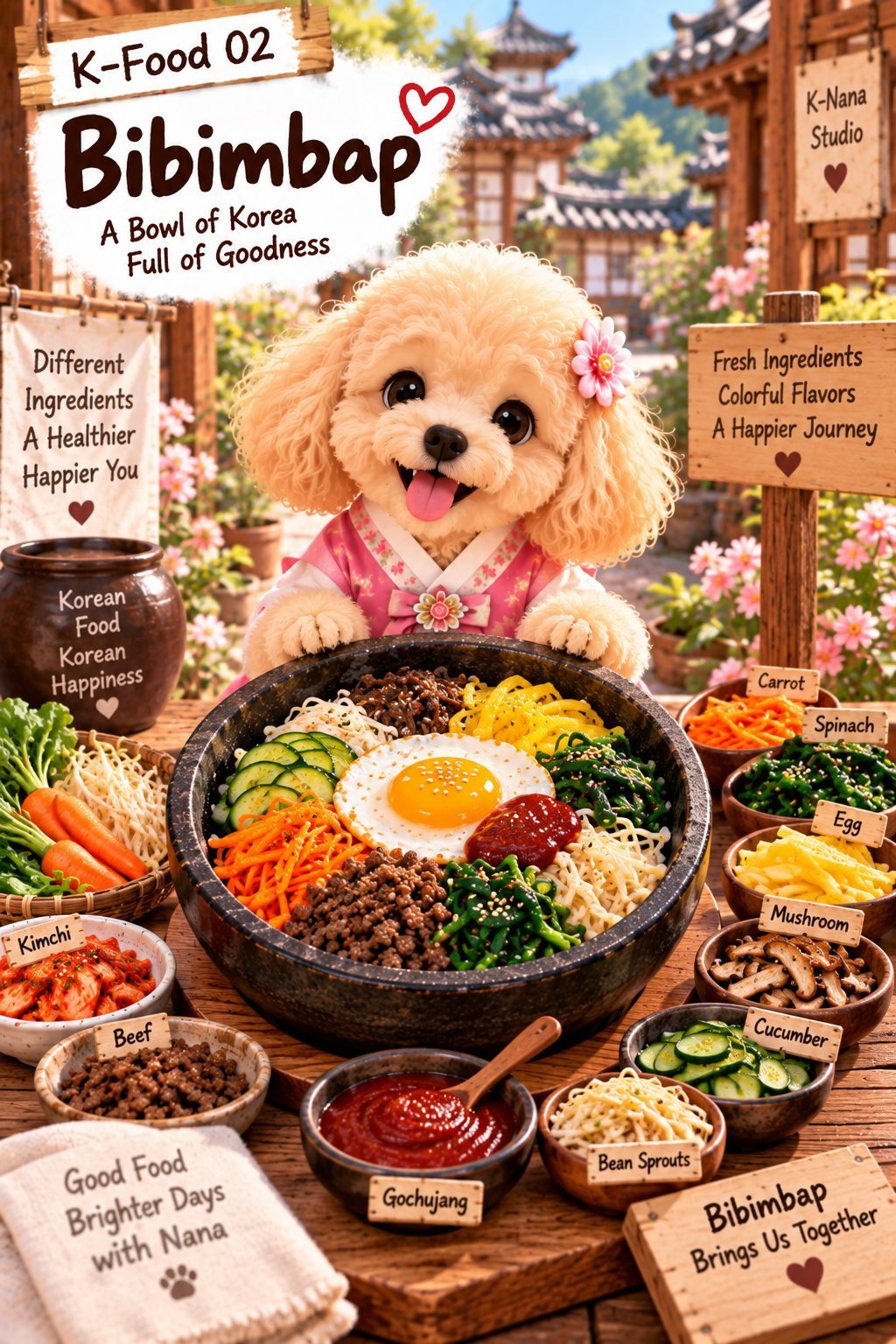
Rice, vegetables, beef, egg, sesame, and gochujang show why bibimbap can look colorful before becoming one thoroughly mixed meal.
Bibimbap & Kimchi
Bibimbap is commonly served with side dishes, and Kimchi is a natural companion to the meal. The fresh or fermented acidity of kimchi can provide a contrast to the warm rice, vegetables, egg, and savory toppings in bibimbap.
The two foods also introduce different parts of Korean food culture. Bibimbap demonstrates how separately prepared ingredients can be combined into one bowl, while kimchi introduces fermentation, seasonal vegetables, banchan, and traditions such as kimjang.
Trying them together gives first-time visitors a simple introduction to several important elements of a Korean meal without requiring a large number of unfamiliar dishes at once.
First-Time Eating Tips
- Look at the ingredients first — the arrangement makes it easier to understand what is inside the bowl before mixing.
- Start with a small amount of gochujang — more can be added after tasting.
- Mix thoroughly — bibimbap is intended to combine the rice, toppings, egg, and sauce.
- Try the banchan — side dishes such as Kimchi add additional flavors and textures to the meal.
- Be careful with dolsot — the stone bowl can remain extremely hot.
- Expect variation — ingredients and sauces can differ significantly between restaurants and regions.
Vegetarian & Dietary Considerations
Bibimbap can look vegetable-focused, but visitors should not automatically assume that every bowl is vegetarian or vegan. Beef, egg, seafood-based seasonings, meat broth, or other animal-derived ingredients may be included in the toppings, sauce, or preparation.
Vegetarian versions are available at some restaurants, but preparation methods vary. Vegan travelers should also confirm whether egg, fish-based ingredients, meat stock, or other animal products are used.
Gochujang and individual toppings can also contain ingredients relevant to allergies or dietary restrictions. Ask the restaurant directly about ingredients and preparation when an allergy, intolerance, religious restriction, or other dietary requirement is important.
Bibimbap & K-Culture
Bibimbap is visually memorable because many colors and ingredients remain separate until the diner mixes them. That transformation from an arranged bowl into a complete meal has helped make bibimbap one of the Korean dishes that international visitors can recognize easily.
The dish also connects naturally with travel. In Jeonju Hanok Village, visitors can combine traditional architecture, hanbok experiences, local streets, and regional food culture within the same journey.
Alongside Kimchi, bibimbap expands K-Nana Studio’s K-Food collection from fermentation and banchan culture into rice, namul, gochujang, regional food traditions, and the experience of mixing different ingredients at the Korean table.
FAQ
What is bibimbap?
Bibimbap is a Korean mixed rice dish made by combining cooked rice with assorted vegetables, seasoned toppings, egg, meat or other protein, and sauce. The ingredients are usually arranged separately when served and then mixed together before eating.
Is bibimbap spicy?
Bibimbap does not have to be very spicy. Gochujang is commonly served with the dish, but diners can often control how much they add. First-time visitors who are sensitive to spicy food can begin with a small amount and add more after tasting.
What is the difference between bibimbap and dolsot bibimbap?
Regular bibimbap can be served in a standard bowl, while dolsot bibimbap is served in a heated stone bowl. The hot stone keeps the meal warm and can create crispy rice along the bottom and sides of the bowl.
Why is Jeonju famous for bibimbap?
Jeonju has a strong regional food identity and is especially associated with bibimbap in Korean food culture. Travelers visiting Jeonju Hanok Village can combine regional food with hanok architecture, traditional streets, hanbok experiences, and other cultural activities.
Is bibimbap vegetarian?
Not necessarily. Many bowls contain vegetables, but beef, egg, seafood-based seasoning, meat broth, or other animal-derived ingredients may also be used. Ask the restaurant about ingredients and preparation if you require a vegetarian or vegan meal.
Should I mix bibimbap before eating it?
Yes. Mixing is a central part of eating bibimbap. Add the desired amount of sauce and combine the rice, vegetables, protein, egg, and seasoning thoroughly so the different ingredients become part of each spoonful.
Where to Try Bibimbap
Bibimbap is widely available throughout Korea, so travelers do not need to visit one specific restaurant or city to experience the dish. Restaurants may serve different combinations of vegetables, proteins, sauces, side dishes, and bowls.
For travelers interested in its regional connection, Jeonju Hanok Village provides a particularly natural setting for trying bibimbap while exploring traditional Korean architecture, hanbok, cafés, restaurants, and local culture.
Traditional markets can provide another perspective on Korean food culture. K-Nana Studio’s Gwangjang Market, Mangwon Market, and Seogwipo Maeil Olle Market guides introduce different market environments that travelers can include in a wider Korean food journey.
Related K-Nana Guides
Start with K-Nana Studio’s Kimchi Guide to learn about fermentation, kimjang, banchan, and the many varieties of Korea’s best-known fermented food.
For the strongest travel connection to this dish, explore Jeonju Hanok Village, where traditional architecture, hanbok experiences, regional food, cafés, and Korean cultural experiences can be combined in one visit.
As the K-Nana Studio K-Food collection expands, this Bibimbap guide will also connect with Korean BBQ, Tteokbokki, Korean Fried Chicken, Gochujang, and other dedicated food guides after those articles are published.
Food & Allergy Notes
Bibimbap ingredients vary between restaurants and recipes. A bowl may contain beef, egg, soy-based seasonings, sesame, wheat-containing sauces, seafood-derived ingredients, or other components that may be relevant to allergies and dietary restrictions.
Gochujang and prepared sauces can contain multiple ingredients, and vegetable toppings may have been seasoned or cooked using ingredients that are not immediately visible. Vegetarian or vegan travelers should therefore confirm the preparation rather than assuming a vegetable-heavy bowl is automatically suitable.
Ask the restaurant directly about ingredients and preparation when an allergy, intolerance, medical condition, religious restriction, or other dietary requirement is important.
Image Credits
Bibimbap and traditional Korean family table with the K-Nana family and Nana in hanbok visual — K-Nana Studio original visual.
Jeonju bibimbap experience with K-Nana daughter and Nana in hanbok visual — K-Nana Studio original visual.
Bibimbap ingredient preparation with Mom and Nana in hanbok visual — K-Nana Studio original visual.
Mixing bibimbap with gochujang with Dad and Nana in hanbok visual — K-Nana Studio original visual.
Nana in hanbok with colorful bibimbap and its different ingredients visual — K-Nana Studio original visual.
Disclaimer
This article is provided for general food, travel, and cultural information. Bibimbap ingredients, sauces, preparation methods, allergens, dietary suitability, restaurant practices, and individual responses to foods can vary. Always confirm ingredients directly with the restaurant, seller, or manufacturer when allergies, medical conditions, or dietary restrictions are relevant.