
Jeonju Hanok Village is one of South Korea’s best-known destinations for experiencing traditional Korean architecture, hanbok, local food, cultural heritage, and atmospheric streets within a living urban neighborhood.
For international visitors, Jeonju offers a different experience from Seoul’s royal palaces, Busan’s coastline, Jeju’s volcanic landscapes, Gyeongju’s ancient Silla heritage, and Seoraksan’s mountain scenery. Traditional tiled roofs, narrow lanes, historic sites, craft experiences, cafés, restaurants, and famous Jeonju food traditions come together within a compact area that is easy to explore on foot.

Traditional tiled rooftops, historic streets, Korean food, and cultural experiences make Jeonju Hanok Village one of Korea’s most recognizable destinations for exploring traditional culture.
Quick Guide
| Location | Jeonju, Jeollabuk-do, South Korea |
| Best for | Hanok architecture, hanbok, Korean food, history, traditional culture, photography, walking |
| Recommended time | Half day to a full day; longer if staying overnight or exploring more of Jeonju |
| Main experiences | Hanok streets, hanbok rental, Jeonju bibimbap, traditional food, Gyeonggijeon, cafés, crafts, and evening scenery |
| Good for first-time visitors | Yes. The compact historic area allows several cultural experiences to be combined on foot. |
| K-Food connection | Jeonju is strongly associated with bibimbap and a wider regional food culture, making it a natural destination for exploring Korean cuisine. |
What Is Jeonju Hanok Village?
Jeonju Hanok Village is a large concentration of traditional-style Korean houses known as hanok. Curved tiled roofs, wooden structures, courtyards, stone walls, narrow lanes, and traditional architectural details create a streetscape that differs noticeably from modern Korean city centers.
The village is not experienced only by looking at buildings from the outside. Restaurants, cafés, accommodations, cultural facilities, craft spaces, shops, hanbok rental businesses, and historic attractions operate throughout the wider neighborhood.
This mixture allows visitors to experience traditional architecture within contemporary Korean travel culture. A historic-looking hanok may function as a restaurant, guesthouse, café, workshop, or cultural space, creating an environment where older architectural forms continue to be used in modern ways.
The area can become busy during weekends, holidays, festivals, and popular travel periods. Visitors interested in quieter streets and architectural photography may prefer to explore earlier in the day before the busiest pedestrian periods.
Why Visit?
- Walk through one of Korea’s most recognizable hanok districts.
- See traditional tiled roofs, wooden architecture, stone walls, and historic streets.
- Rent hanbok and experience Korean traditional clothing within a suitable historic setting.
- Explore Gyeonggijeon and learn about Jeonju’s connection with Joseon history.
- Try Jeonju bibimbap and discover the city’s wider food culture.
- Visit cafés, craft shops, cultural spaces, and traditional-style accommodations.
- Experience the village in both daylight and the warmer atmosphere of the evening.
- Combine architecture, history, food, clothing, photography, and everyday travel within one walkable area.
Hanbok & Hanok Streets
Wearing hanbok is one of the most visible cultural experiences in Jeonju Hanok Village. Rental shops offer traditional-inspired clothing in a wide range of colors and styles, allowing visitors to walk through hanok streets while experiencing another element of Korean visual culture.
The combination of hanbok and traditional architecture makes the village particularly popular for photography. Tiled roofs, wooden doors, stone walls, narrow lanes, courtyards, and landscaped areas provide many different backgrounds within a relatively compact district.
Hanbok rental prices, rental periods, accessories, hairstyles, operating hours, reservation systems, and return procedures vary between individual businesses. Visitors should check the conditions directly when choosing a rental shop.
Wearing hanbok should also be approached respectfully rather than simply as a costume. Visitors can enjoy photography while remaining considerate around historic properties, religious spaces, private residences, businesses, and other people using the streets.
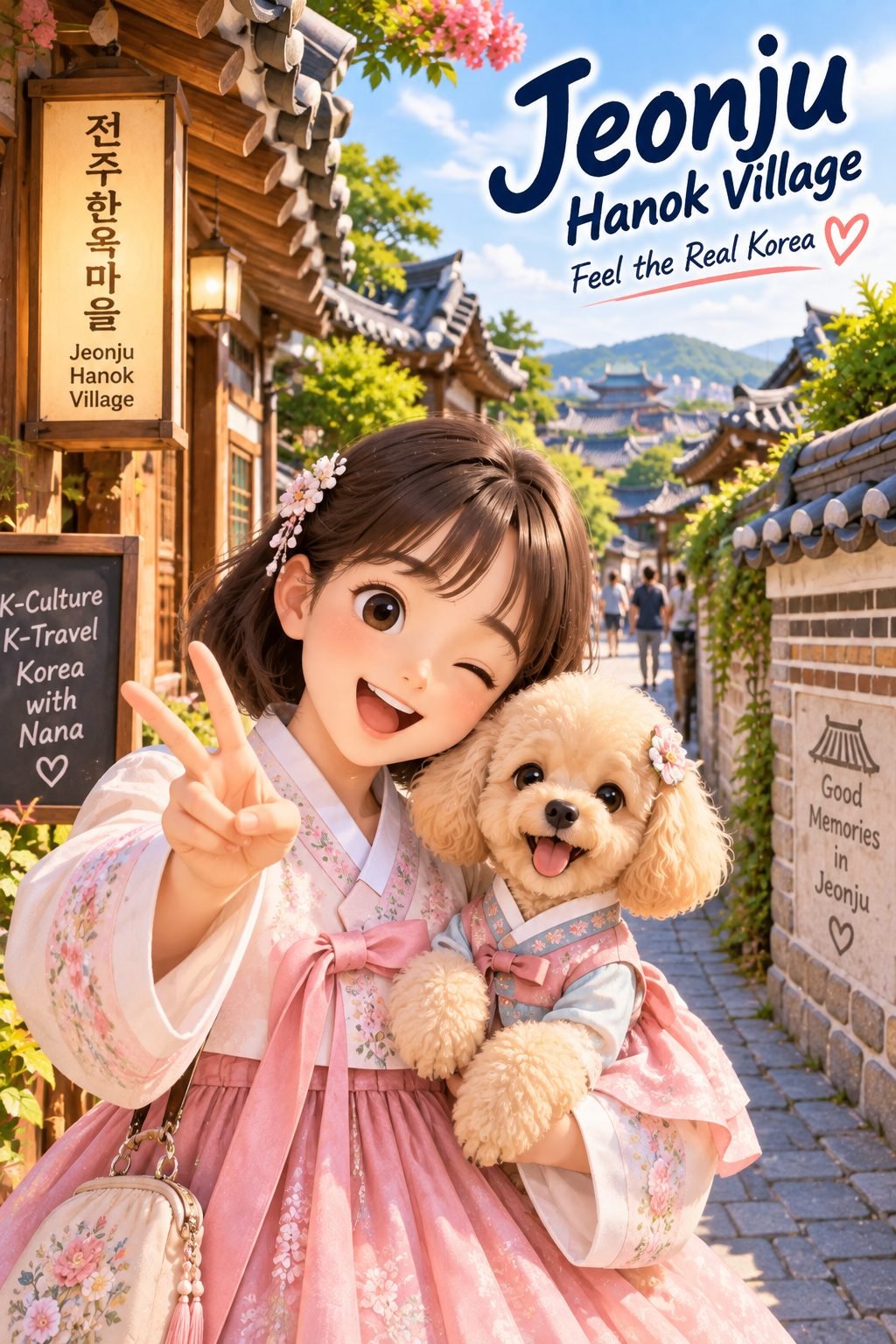
Hanbok, tiled rooftops, stone walls, and traditional lanes create one of Jeonju Hanok Village’s most recognizable K-Culture experiences.
Jeonju Bibimbap & K-Food
Food is an essential part of the Jeonju experience. The city is especially associated with Jeonju bibimbap, a colorful rice dish served with a variety of seasoned vegetables and other ingredients arranged together before being mixed for eating.
Bibimbap is found throughout Korea, but Jeonju has developed a particularly strong culinary identity around the dish. For international visitors, trying it in Jeonju connects a familiar Korean food with the regional culture most closely associated with its name.
The wider food experience extends well beyond bibimbap. Visitors can encounter Korean set meals, soups, grilled dishes, pancakes, side dishes, traditional snacks, desserts, tea, and modern interpretations of local flavors throughout the Hanok Village and surrounding areas.
Menus, ingredients, serving styles, prices, opening hours, and restaurant specialties vary. Travelers with allergies, vegetarian requirements, religious dietary restrictions, or other specific needs should confirm ingredients and preparation directly with the restaurant.

Jeonju bibimbap and a table of Korean side dishes connect the Hanok Village experience directly with one of Korea’s best-known regional food traditions.
Gyeonggijeon & Joseon History
Gyeonggijeon is one of the most important historic sites within the Jeonju Hanok Village area and adds a deeper historical dimension to streets otherwise filled with cafés, restaurants, shops, and cultural experiences.
The site is closely connected with King Taejo, the founder of the Joseon dynasty, and is known for preserving a royal portrait associated with him. Traditional gates, courtyards, tiled roofs, trees, and historic buildings create a quieter environment within the busy visitor district.
For international travelers, Gyeonggijeon helps explain why Jeonju is more than a picturesque collection of hanok buildings. The city has important connections with Joseon history, and the site provides a direct link between Jeonju’s architectural landscape and Korea’s royal past.
Historic buildings, exhibitions, portrait access, operating hours, admission arrangements, photography rules, and restricted areas can change. Visitors should follow current signs and preservation guidance throughout the site.

Gyeonggijeon connects Jeonju Hanok Village with King Taejo, Joseon history, royal heritage, and preserved traditional architecture.
Hanok Village After Dark
Jeonju Hanok Village develops a different atmosphere as daylight fades. Warm lights from hanok buildings, restaurants, cafés, accommodations, and narrow streets highlight wooden structures and tiled rooflines against the evening sky.
Visitors who stay beyond the busiest daytime hours can experience the village at a slower pace, although individual shops, cultural facilities, attractions, and restaurants may close at different times.
Evening is particularly attractive for travelers interested in street photography. Lantern-style lighting, stone lanes, traditional walls, wooden doors, roof silhouettes, and illuminated businesses can create a warmer visual atmosphere than during the middle of the day.
The neighborhood also includes accommodations in traditional-style buildings, making an overnight stay another way to experience Jeonju beyond a short daytime visit. Accommodation facilities, room styles, amenities, and traditional sleeping arrangements vary considerably between properties.
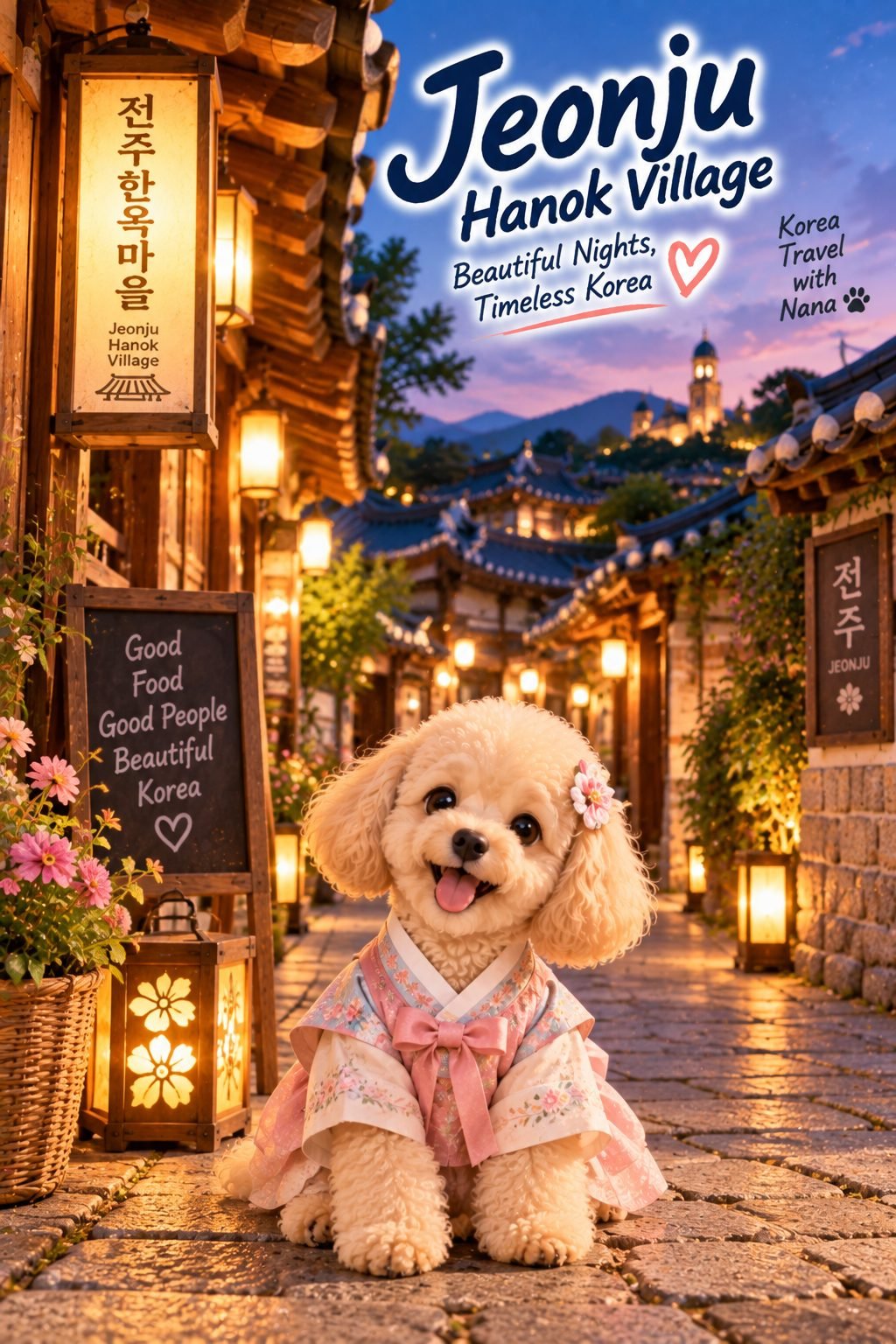
Warm lights, tiled rooftops, and quiet traditional lanes give Jeonju Hanok Village a softer and more atmospheric character after sunset.
Best Time to Visit
Jeonju Hanok Village can be visited throughout the year, and each season creates a different atmosphere among the tiled rooftops, traditional streets, courtyards, and surrounding city landscape.
Spring brings fresh greenery and seasonal blossoms, while summer creates a lively atmosphere but can also bring heat, humidity, and rain. Autumn offers cooler walking conditions and changing foliage, and winter can provide quieter streets and a more restrained architectural landscape.
Morning is useful for visitors who prefer quieter streets and architectural photography. Late afternoon allows travelers to explore in daylight before remaining for dinner and the warmer atmosphere of the Hanok Village after sunset.
Weekends, public holidays, festivals, and popular travel periods can bring substantially larger crowds. Seasonal weather and individual business schedules should also be considered when planning a visit.
How Long to Spend
About 4–6 hours works well for many first-time visitors who want to walk through the Hanok Village, explore Gyeonggijeon, experience hanbok, enjoy a Korean meal, visit cafés or shops, and take photographs without rushing.
A shorter visit can focus on the main streets, architecture, and one or two cultural experiences. Travelers interested in food, crafts, museums, photography, or a slower exploration of the neighborhood can easily spend a full day.
Staying overnight provides another experience because visitors can see the village after many daytime visitors have left and explore again the following morning.
Getting to Jeonju Hanok Village
Jeonju is located in southwestern South Korea and can be reached from Seoul and other major cities using intercity transportation. Travelers commonly arrive in Jeonju by train or bus before continuing to the Hanok Village by local bus, taxi, or another suitable option.
The Hanok Village itself is particularly suitable for exploring on foot because many historic sites, restaurants, cafés, shops, cultural facilities, and traditional streets are concentrated within the wider district.
Train and bus schedules, fares, local transportation, road conditions, parking arrangements, and travel times can change. Visitors should check current transportation information for their specific departure point and travel date.
Travelers planning a day trip should also consider the return journey, while an overnight stay can provide more flexibility for evening dining and quieter morning exploration.
First-Time Visitor Tips
- Wear comfortable shoes because walking is one of the best ways to explore the Hanok Village.
- Visit earlier if you prefer quieter streets and fewer people in photographs.
- Allow enough time for Gyeonggijeon rather than focusing only on cafés and shopping.
- Check hanbok rental prices, rental periods, accessories, and return times before choosing a shop.
- Respect private residences and do not enter courtyards or buildings simply because they look traditional.
- Check restaurant ingredients directly when allergies or dietary restrictions are important.
- Try regional food rather than treating Jeonju only as an architectural destination.
- Stay into the evening if you want to experience illuminated hanok streets and dinner in the village.
- Check current opening hours when a particular museum, cultural facility, restaurant, or shop is important to your visit.
- Remember that Jeonju Hanok Village is an active neighborhood as well as a visitor destination.
What to Do Nearby
- Gyeonggijeon — explore traditional architecture, royal heritage, and Jeonju’s connection with King Taejo and Joseon history.
- Jeondong Cathedral — see one of Jeonju’s recognizable historic architectural landmarks close to the Hanok Village.
- Omokdae — walk to an elevated historic area that can provide views across sections of the Hanok Village and its tiled rooftops.
- Nambu Market — experience a traditional market environment, local food, snacks, and everyday Jeonju culture.
- Jeonju Food Experiences — explore bibimbap, Korean set meals, traditional snacks, desserts, tea, and other regional flavors throughout the wider city.
Opening hours, market schedules, individual businesses, exhibitions, events, admission arrangements, and transportation can change. Check current information when a particular destination, restaurant, shop, or experience is important to your itinerary.
Jeonju K-Culture Connection
Jeonju Hanok Village brings several major parts of Korean culture together within one walkable destination. Hanok architecture introduces traditional living spaces, hanbok adds clothing and visual culture, Gyeonggijeon connects the city with Joseon history, and Jeonju’s restaurants introduce one of Korea’s strongest regional food identities.
This combination makes Jeonju different from destinations centered primarily on a single monument or landscape. Visitors can move between historic buildings, cultural experiences, food, cafés, crafts, shopping, photography, and contemporary neighborhood life without leaving the wider Hanok Village area.
For international travelers, Jeonju also demonstrates how traditional Korean culture continues to interact with modern tourism. Old architectural forms now contain guesthouses, cafés, restaurants, workshops, and shops, while traditional clothing and regional foods remain part of contemporary travel experiences.
Jeonju is also a natural bridge between K-Nana Studio’s Places collection and Korean food culture. Jeonju bibimbap shows how a destination can be understood not only through buildings and history but also through ingredients, preparation, regional identity, and the experience of sharing a Korean meal.
After traveling through Korea’s palaces, neighborhoods, beaches, mountains, islands, historic cities, and traditional villages, the next K-Nana Studio journey turns toward another major reason people around the world discover Korea: K-Food.
FAQ
What is Jeonju Hanok Village known for?
Jeonju Hanok Village is known for its concentration of traditional Korean hanok buildings, tiled rooftops, historic streets, hanbok experiences, cultural heritage, cafés, crafts, and regional food. Jeonju bibimbap and nearby Gyeonggijeon are also important parts of the visitor experience.
How long should I spend at Jeonju Hanok Village?
About 4–6 hours works well for many first-time visitors who want to explore the streets, visit Gyeonggijeon, experience hanbok, enjoy a Korean meal, visit cafés or shops, and take photographs. A full day or overnight stay provides more time for food, cultural experiences, evening scenery, and quieter morning exploration.
Can I rent hanbok in Jeonju Hanok Village?
Yes. Hanbok rental businesses operate throughout the wider Hanok Village area, offering different clothing styles, accessories, rental periods, and optional services. Prices, operating hours, reservations, and return procedures vary between individual businesses, so check the current conditions before renting.
What food should I try in Jeonju?
Jeonju is especially associated with bibimbap, making it one of the most recognizable foods to experience during a visit. Travelers can also explore Korean set meals, side dishes, pancakes, soups, traditional snacks, desserts, tea, and other regional specialties. Individual menus and ingredients vary by restaurant.
What is Gyeonggijeon?
Gyeonggijeon is an important historic site within the Jeonju Hanok Village area that is closely connected with King Taejo, the founder of the Joseon dynasty. Its traditional buildings, courtyards, royal heritage, and preserved portrait tradition provide deeper historical context for visitors exploring Jeonju.
Is Jeonju Hanok Village worth visiting at night?
Yes. After sunset, illuminated hanok buildings, tiled rooflines, stone streets, cafés, restaurants, and accommodations create a different atmosphere from the daytime village. Visitors interested in evening photography, dining, or an overnight hanok experience may want to remain after daylight sightseeing ends.
Related K-Nana Guides
Continue exploring Korea with Nami Island for seasonal nature and K-Drama travel, Everland for theme-park entertainment and seasonal festivals, DMZ Tour Korea for modern Korean history and peace tourism, and Seoraksan National Park for mountain scenery, autumn foliage, Buddhist heritage, and Sokcho’s East Sea coast.
Jeonju Hanok Village completes K-Nana Studio’s first Places collection by connecting traditional architecture, hanbok, Joseon history, regional travel, and Korean cuisine within one destination.
Official Information
Jeonju Hanok Village is an active neighborhood and visitor district containing historic sites, cultural facilities, independently operated restaurants, cafés, shops, accommodations, hanbok rental businesses, and other services. Opening hours, admission arrangements, rental prices, menus, business closing days, exhibitions, events, parking, transportation, pedestrian conditions, and individual services can change. Check current official and individual business information when a particular attraction, restaurant, rental service, accommodation, event, or facility is important to your visit. Respect private residences, historic properties, cultural sites, barriers, posted rules, and local residents while exploring the village.
Image Credits
Jeonju Hanok Village, traditional tiled rooftops, historic streets, and K-Nana family travel visual — K-Nana Studio original visual.
Jeonju Hanok Village hanbok experience, traditional streets, and Korean cultural scenery with K-Nana daughter and Nana visual — K-Nana Studio original visual.
Jeonju bibimbap, Korean side dishes, traditional food table, and K-Food experience with Mom and Nana visual — K-Nana Studio original visual.
Gyeonggijeon, King Taejo heritage, traditional Korean architecture, and Joseon history with Dad and Nana visual — K-Nana Studio original visual.
Nana enjoying Jeonju Hanok Village evening lights, tiled rooftops, traditional streets, and atmospheric nighttime scenery visual — K-Nana Studio original visual.