
Seoraksan National Park is one of South Korea’s most recognizable mountain destinations, known for dramatic granite peaks, forested valleys, clear streams, hiking trails, Buddhist heritage, seasonal scenery, and spectacular autumn foliage.
Located in northeastern South Korea near Sokcho, Seoraksan offers international visitors a very different experience from Seoul’s urban attractions, Busan’s beaches, Jeju’s volcanic landscapes, and Gyeongju’s ancient heritage. Visitors can experience mountain scenery, hiking, a cable car, temples, valleys, rock formations, and the nearby East Sea within the same wider journey.
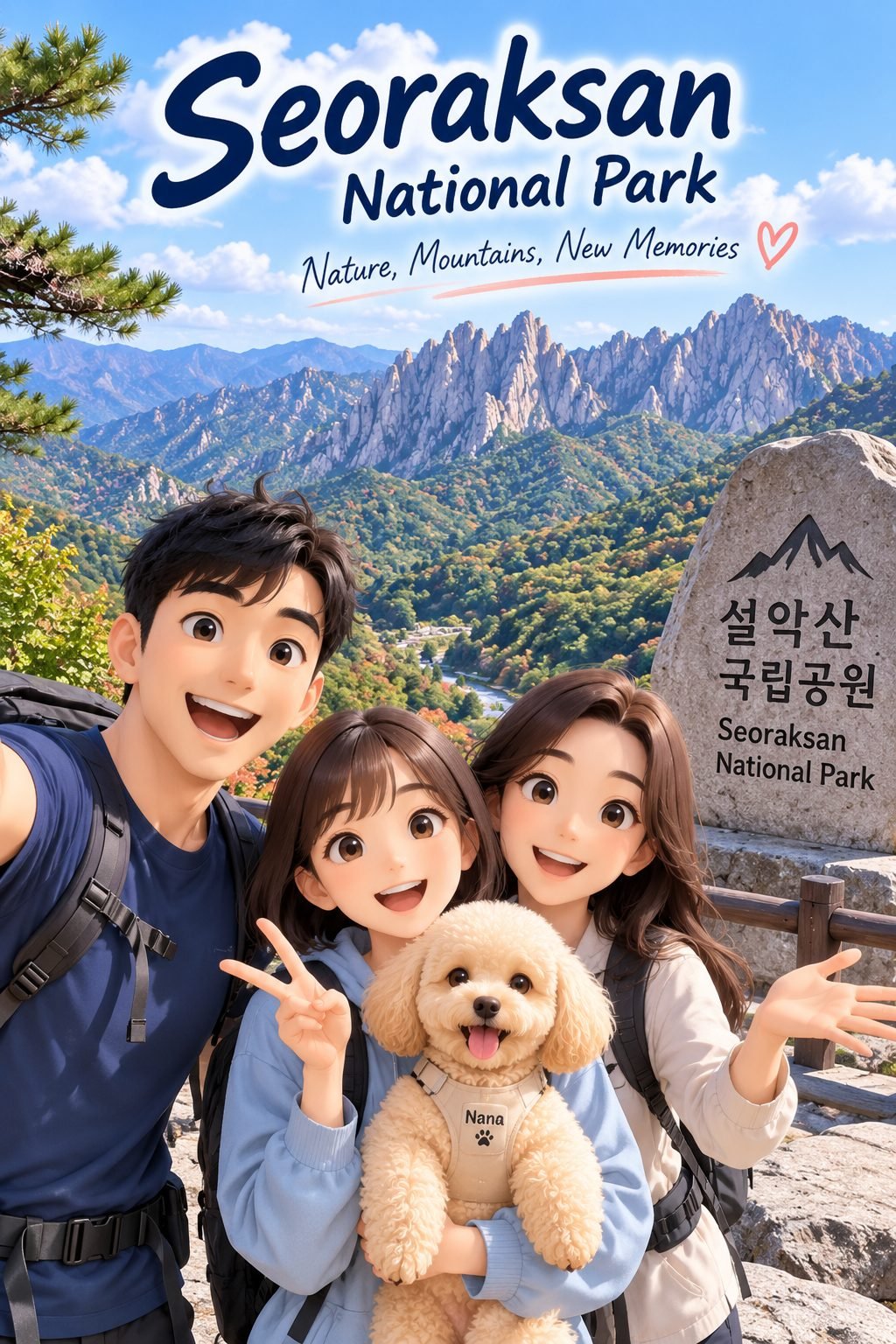
Granite peaks, forested valleys, mountain trails, and changing seasonal landscapes make Seoraksan one of Korea’s most distinctive nature destinations.
Quick Guide
| Location | Gangwon-do, near Sokcho, South Korea |
| Best for | Mountain scenery, hiking, autumn foliage, nature, photography, cable-car views, Buddhist culture |
| Recommended time | Most of a day for a first visit; longer for serious hiking or a combined Sokcho itinerary |
| Major highlights | Ulsanbawi, mountain valleys, Seorak Cable Car, Gwongeumseong area, Shinheungsa Temple, seasonal foliage |
| Popular season | Autumn is especially famous for foliage, while every season creates a different mountain landscape |
| Nearby base | Sokcho provides accommodation, food, transportation, beaches, and East Sea scenery close to the park |
What Is Seoraksan National Park?
Seoraksan National Park protects a mountainous landscape of rocky peaks, ridges, forests, valleys, streams, waterfalls, temples, and diverse natural habitats. The terrain ranges from relatively accessible visitor areas to demanding mountain routes that require substantially more time and preparation.
For first-time international visitors, the park does not need to be experienced only through a difficult summit hike. Scenic walks, temple areas, valley routes, observation points, and the cable-car experience can provide different ways to encounter Seoraksan according to fitness, weather, available time, and personal interests.
Ulsanbawi is one of the mountain’s most recognizable rock formations. Its dramatic granite ridgeline has become closely associated with images of Seoraksan, although reaching higher viewpoints on hiking routes requires appropriate preparation and should not be treated as a casual walk.
Mountain conditions can change quickly. Weather, trail maintenance, seasonal safety controls, wildfire prevention measures, heavy rain, snow, wind, and other conditions may affect individual routes or facilities, so current park information is important before setting out.
Why Visit?
- Experience one of South Korea’s best-known mountain landscapes.
- See dramatic granite peaks and the recognizable Ulsanbawi rock formations.
- Walk through forested valleys beside clear mountain streams.
- Experience some of Korea’s most famous autumn foliage when seasonal conditions align.
- Use the Seorak Cable Car for elevated mountain views when operating.
- Discover Shinheungsa Temple and Korean Buddhist heritage within the mountain landscape.
- Choose between easier scenic experiences and more demanding hiking routes.
- Combine the mountains with Sokcho’s East Sea coastline, food, and accommodation.
Autumn Foliage at Seoraksan
Autumn is one of the most famous times to visit Seoraksan. As temperatures fall, sections of the mountain landscape can turn red, orange, yellow, and gold, creating a striking contrast with granite peaks, evergreen trees, rocky valleys, and clear streams.
The foliage does not change everywhere at exactly the same time. Higher elevations can begin changing before lower valleys, and the timing, intensity, and duration of autumn colors vary each year according to temperature, rainfall, wind, and other weather conditions.
Visitors traveling specifically for peak foliage should therefore check current seasonal reports rather than relying only on photographs or dates from previous years.
Autumn is also one of Seoraksan’s busiest periods. Popular trails, transportation, parking areas, cable-car facilities, and major viewpoints may become crowded, particularly on weekends and during peak foliage periods. Earlier arrival can provide more time and flexibility.
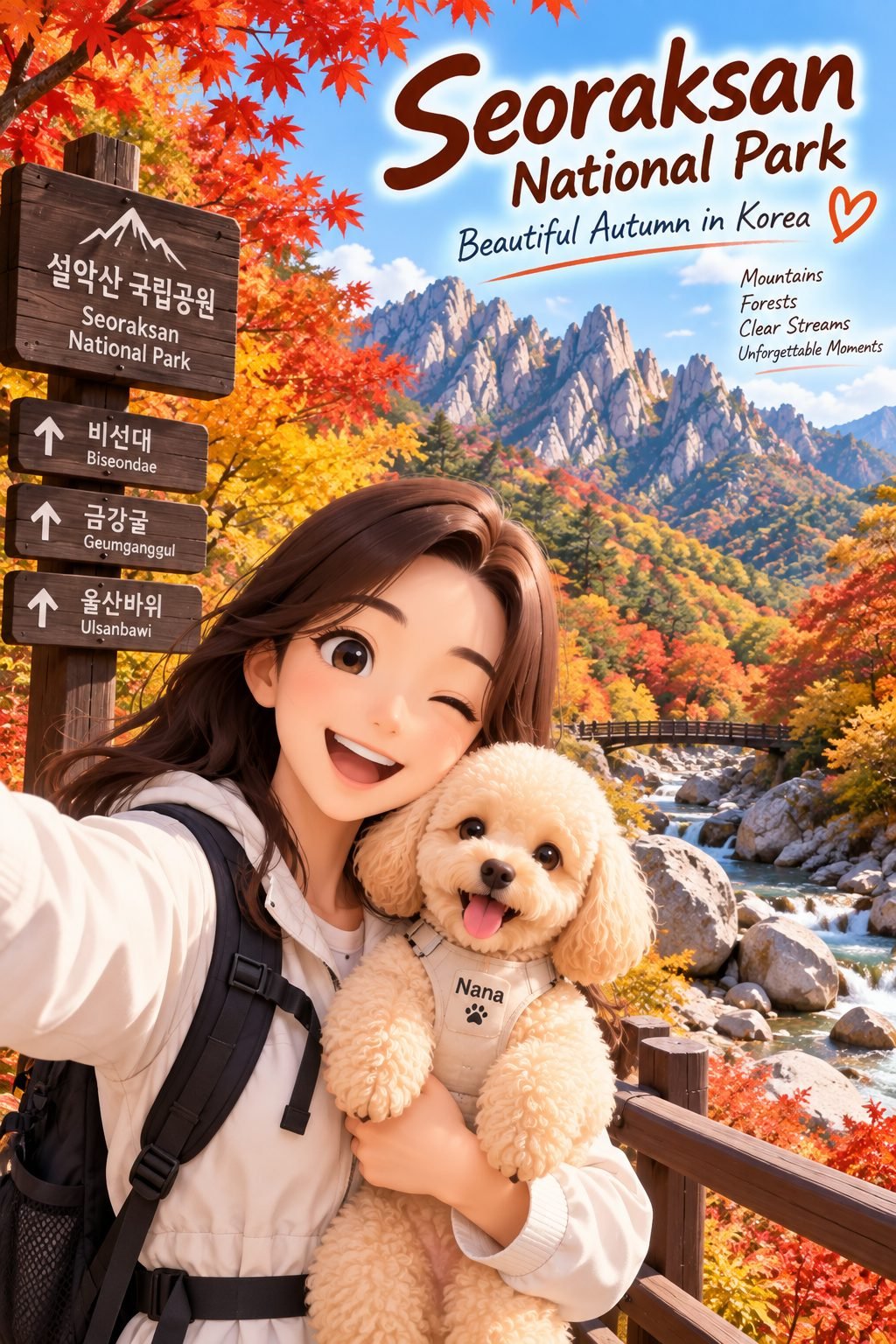
Red, orange, and golden foliage surrounding rocky peaks and clear streams makes autumn one of Seoraksan’s most celebrated travel seasons.
Seorak Cable Car & Gwongeumseong
The Seorak Cable Car provides a different way to experience the mountain for visitors who want elevated views without committing to a long hike. When operating, the cable car climbs from the main visitor area toward the Gwongeumseong area, opening wide views across rocky peaks, forested valleys, and the surrounding landscape.
The scenery changes significantly with the season. Spring brings fresh mountain vegetation, summer creates dense green forests, autumn can reveal broad areas of colorful foliage, and winter may produce a much more dramatic landscape of bare rock, snow, and cold mountain light.
After reaching the upper station, visitors can explore permitted viewing areas and continue toward nearby viewpoints according to current access conditions. Mountain terrain can still involve rocks, slopes, steps, and uneven surfaces, so the cable car should not be understood as eliminating all walking or physical effort.
Cable-car operations can be affected by strong wind, weather, maintenance, safety conditions, and visitor demand. Tickets, boarding procedures, waiting times, operating hours, and access arrangements can also change, so visitors should check current information on the day of their trip.
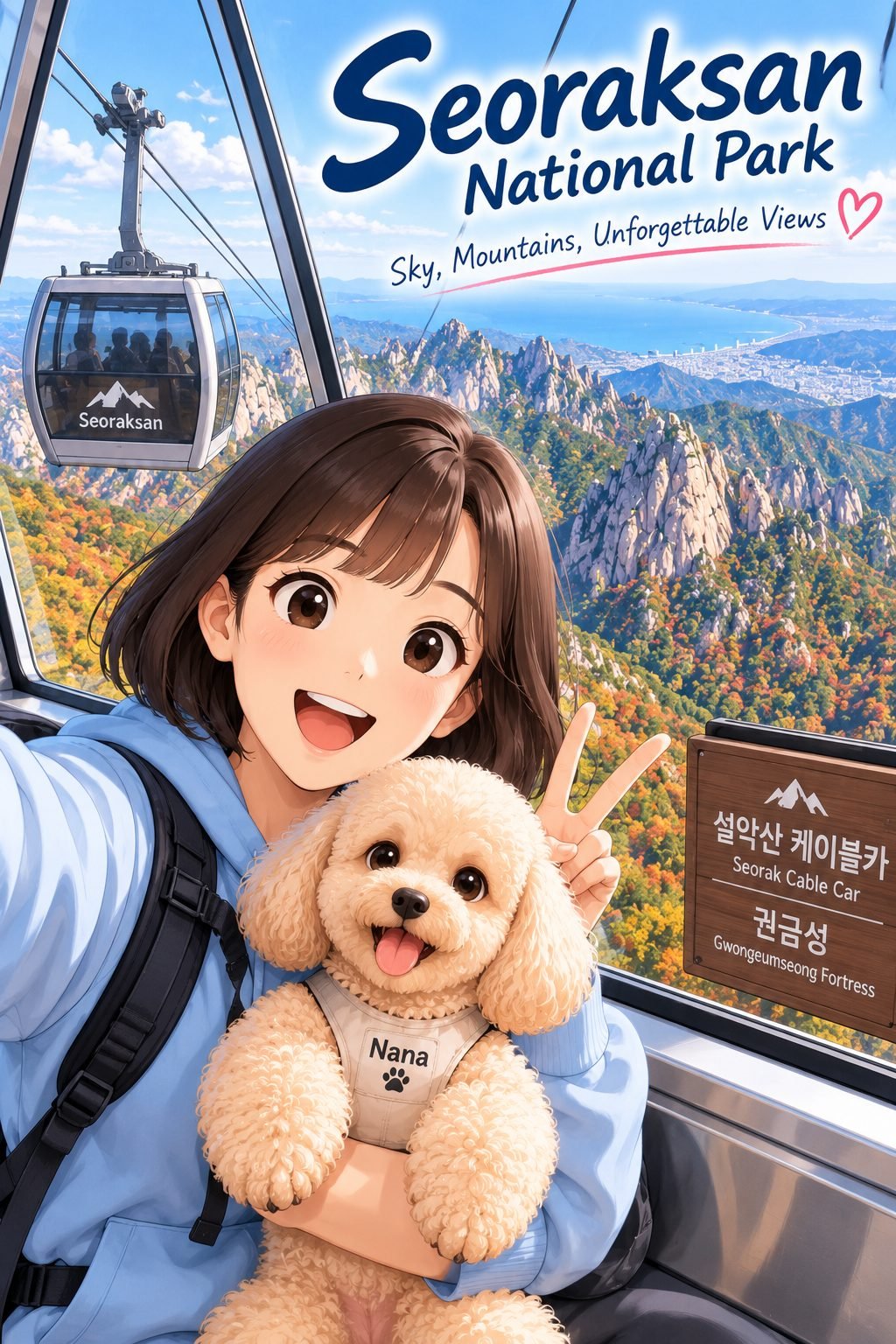
The Seorak Cable Car offers elevated views across Seoraksan’s granite peaks, valleys, forests, and changing seasonal landscapes.
Shinheungsa Temple & Buddhist Heritage
Seoraksan is not only a natural destination. Shinheungsa Temple introduces Korean Buddhist culture within the mountain landscape and adds an important historical and spiritual dimension to a visit.
The temple area combines traditional Korean Buddhist architecture with forested slopes and dramatic mountain scenery. Visitors may encounter temple halls, colorful dancheong decoration, religious objects, stone features, and spaces used for Buddhist practice.
A large seated bronze Buddha is one of the most recognizable landmarks near the temple area. Together with the surrounding architecture and mountain setting, it creates a strong visual connection between Korean religious culture and the natural landscape.
Shinheungsa remains a religious site rather than simply a photography attraction. Visitors should speak quietly around worship areas, respect ceremonies and practitioners, follow current photography restrictions, and avoid touching religious objects or entering restricted spaces.
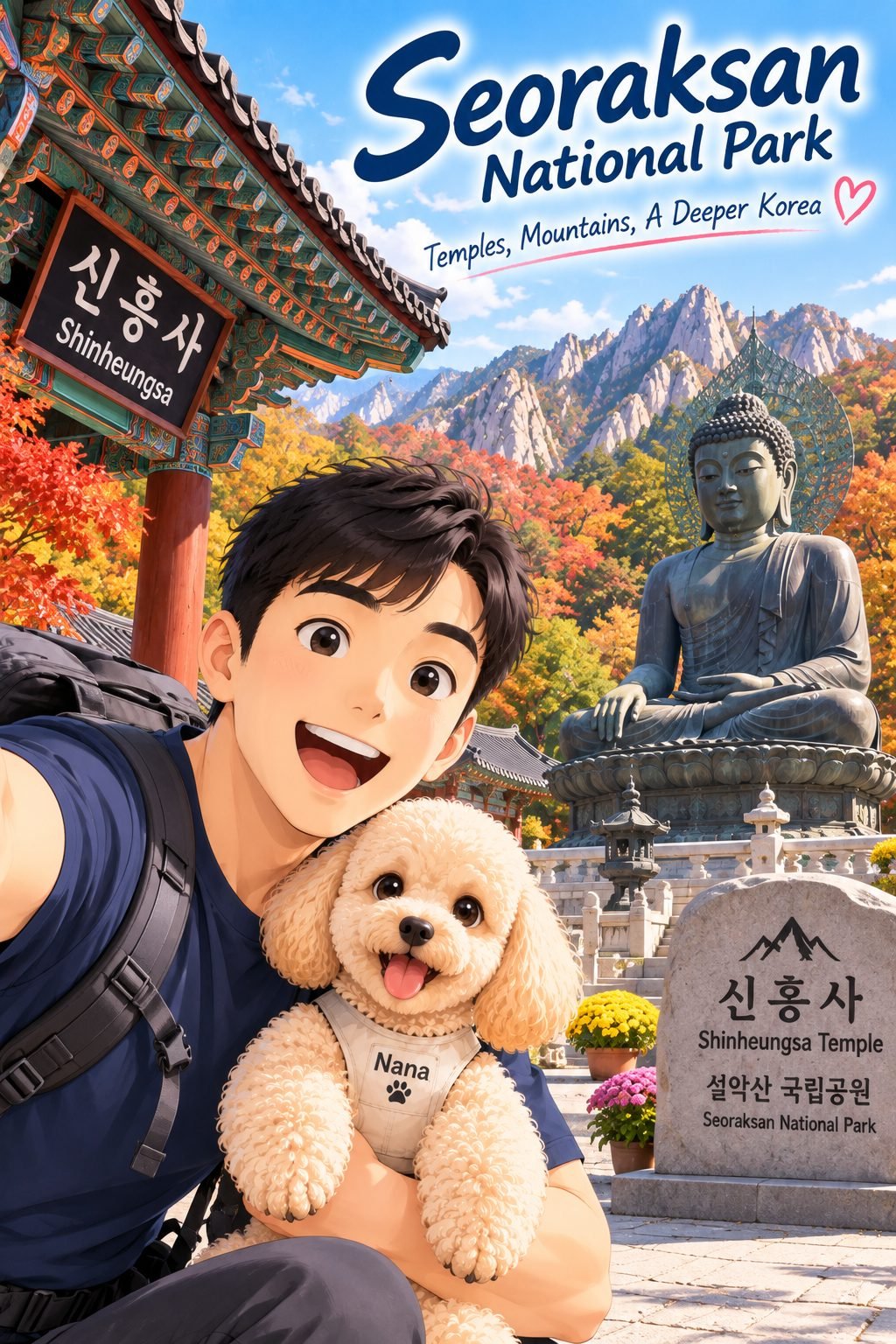
Shinheungsa Temple adds Korean Buddhist heritage, traditional architecture, and a quieter cultural experience to Seoraksan’s dramatic mountain scenery.
Hiking & Trail Safety
Seoraksan includes routes ranging from relatively gentle walking areas to steep and physically demanding mountain trails. Visitors should choose a route according to their fitness, hiking experience, available daylight, weather, and current trail conditions.
Distances alone do not always indicate difficulty. Steep climbs, stone steps, exposed sections, rocky terrain, elevation gain, heat, rain, ice, snow, and rapidly changing mountain weather can make a route substantially harder than expected.
Wear suitable footwear, carry enough water, and prepare appropriate clothing for the season. Starting earlier in the day provides more flexibility, particularly for longer routes where completing the hike before darkness is important.
Never cross barriers or continue onto a closed trail. National park authorities may restrict access because of weather, wildfire risk, heavy rain, snow, ice, maintenance, rockfall danger, environmental protection, or other safety concerns.
Visitors planning more demanding routes such as major peak or ridge hikes should check current trail information carefully and prepare specifically for that route rather than relying on a general sightseeing itinerary.
Sokcho & the East Sea
Sokcho is one of the most convenient bases for exploring Seoraksan National Park and adds a completely different landscape to a mountain-focused trip. Within the wider area, travelers can experience both dramatic granite peaks and the coastline of Korea’s East Sea.
After hiking or sightseeing in Seoraksan, visitors can continue toward Sokcho for beaches, coastal views, local markets, seafood, cafés, accommodation, and evening scenery. This combination makes the region particularly useful for travelers who want more than a single mountain excursion.
The contrast between Seoraksan and Sokcho is one of the area’s strongest attractions. Mountain ridges and forested valleys dominate the inland landscape, while the coast opens into wide sea views, beaches, breakwaters, and changing colors around sunrise and sunset.
Weather can differ between the mountain and coast, and travel times depend on traffic and transportation. Visitors combining both areas should leave enough flexibility rather than planning every stop too tightly.
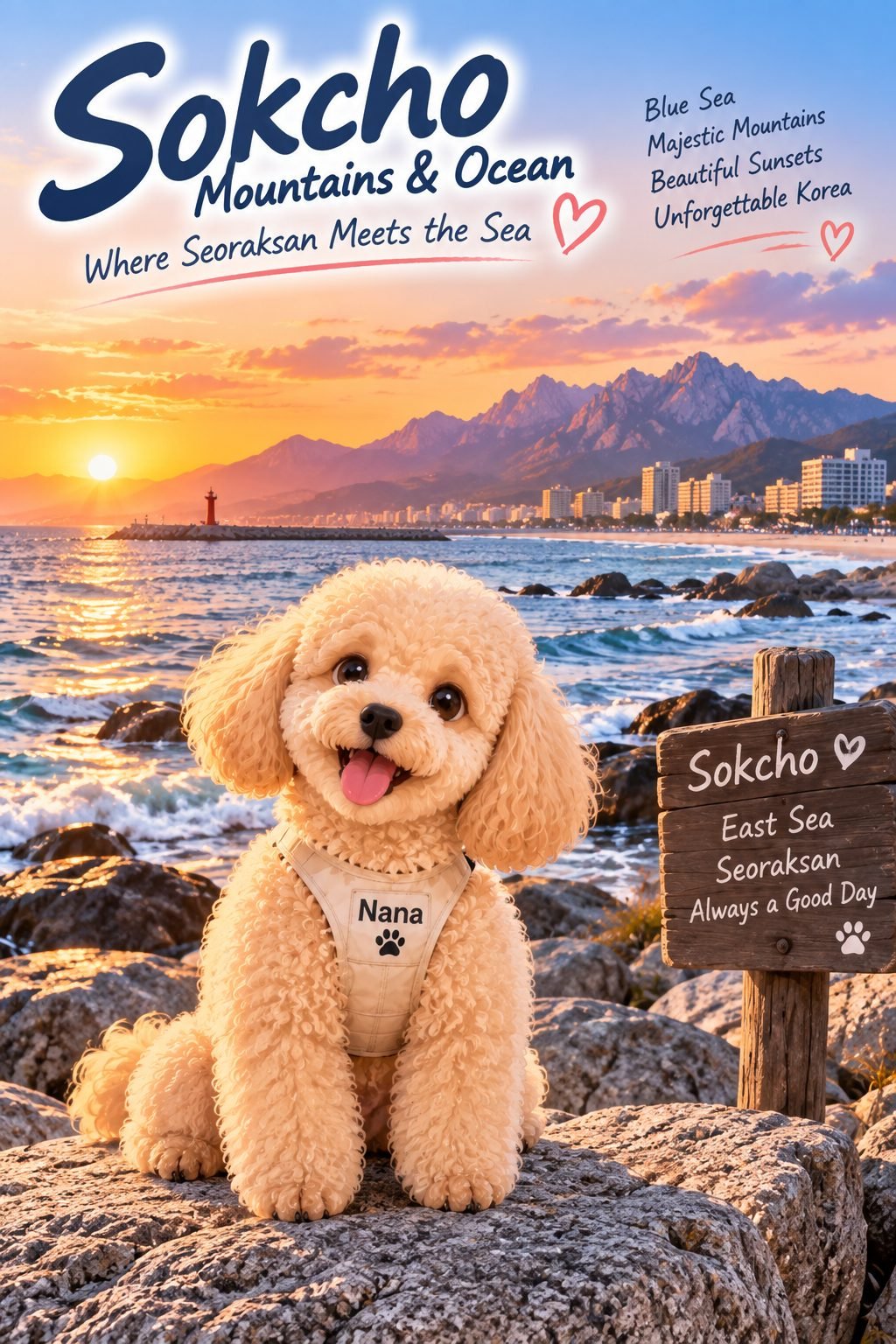
Sokcho brings together East Sea scenery and distant mountain views, allowing travelers to experience Korea’s coast and Seoraksan within the same journey.
Best Time to Visit
Seoraksan National Park can be visited throughout the year, but each season creates a substantially different mountain experience.
Spring brings fresh vegetation and gradually warmer hiking conditions. Summer creates dense green forests and active streams but can also bring heat, humidity, heavy rain, and changing trail conditions.
Autumn is particularly famous for colorful foliage and is one of the busiest periods of the year. Winter can reveal dramatic rock formations and snow-covered mountain scenery, but cold temperatures, ice, snow, wind, and trail restrictions require greater preparation.
There is no guaranteed date for peak autumn foliage or snow. Seasonal conditions change each year, so travelers visiting for a specific landscape should check current reports close to their travel date.
How Long to Spend
Most of a day works well for many first-time visitors who want to experience the main Seoraksan visitor area, mountain scenery, Shinheungsa Temple, a scenic walk, and the cable car when operating.
Visitors planning a longer hike should allow additional time according to the selected route and current trail conditions. More demanding routes may require an early start and substantially more preparation than a general sightseeing visit.
For international travelers with enough time, 1–2 days in the wider Seoraksan and Sokcho area provides a more relaxed experience. One part of the trip can focus on the national park while another can include Sokcho’s coastline, food, markets, and East Sea scenery.
Getting to Seoraksan National Park
Seoraksan National Park is located near Sokcho in northeastern South Korea. Many international visitors travel from Seoul toward Sokcho and then continue to the national park using local transportation, taxi, organized tours, or another suitable option.
The complete journey should be planned using current transportation information because bus schedules, terminals, local connections, road conditions, traffic, and seasonal services can change.
Travel times may increase during weekends, public holidays, peak autumn foliage, and other busy travel periods. Visitors planning a same-day trip from Seoul should consider both the journey to the park and the return schedule carefully.
Staying in Sokcho can provide more flexibility for travelers who want an earlier start, a longer hike, or additional time along the East Sea coast.
First-Time Visitor Tips
- Choose your trail according to fitness and experience rather than selecting a route only because it is famous.
- Check current trail closures, weather, and national park conditions before starting.
- Wear comfortable and appropriate footwear for mountain terrain.
- Carry enough water and suitable seasonal clothing.
- Start longer hikes early enough to return before darkness.
- Do not cross barriers or enter closed trails.
- Check current cable-car operations if the Seorak Cable Car is an important part of your visit.
- Expect larger crowds during weekends, holidays, and peak autumn foliage.
- Respect Shinheungsa Temple as an active Buddhist religious site.
- Consider staying in Sokcho if you want to combine Seoraksan with beaches, markets, food, and East Sea scenery.
What to Do Nearby
- Sokcho Beach — enjoy the East Sea coastline, open beach scenery, walking, and a different atmosphere after a mountain visit.
- Sokcho Tourist & Fishery Market — explore local food, seafood, snacks, and the everyday market culture of Sokcho.
- Abai Village — discover a neighborhood connected with the history of displaced people from North Korea and Sokcho’s modern local culture.
- Yeonggeumjeong Pavilion — experience coastal views, rocky shoreline scenery, and the East Sea close to central Sokcho.
- Cheongcho Lake — add waterfront walking and city scenery to a wider Sokcho itinerary.
Opening hours, transportation, trail access, markets, individual businesses, coastal facilities, and seasonal services can change. Check current information when a particular destination or activity is important to your itinerary.
Seoraksan K-Culture Connection
Seoraksan National Park adds Korea’s dramatic mountain landscape to K-Nana Studio’s Places collection. While Nami Island introduces accessible seasonal nature and K-Drama tourism, Seoraksan offers a larger and more rugged experience centered on mountains, valleys, hiking, autumn foliage, and Korean Buddhist heritage.
The combination with Sokcho also demonstrates an important feature of travel in Korea: very different landscapes can exist close together. Visitors can spend part of the day beneath granite mountain peaks and later encounter beaches, seafood markets, coastal neighborhoods, and the East Sea.
Shinheungsa adds another cultural layer by placing Buddhist architecture and religious practice directly within the mountain landscape. This connection between temples and mountains appears throughout Korean history and gives visitors an experience that combines nature with living cultural heritage.
For international travelers, Seoraksan therefore represents more than a hiking destination. Mountain scenery, seasonal change, Buddhist culture, local food, coastal travel, and Sokcho’s everyday life together reveal another distinctive side of Korea beyond its largest cities.
FAQ
What is Seoraksan National Park known for?
Seoraksan National Park is known for dramatic granite peaks, forested valleys, clear mountain streams, hiking trails, autumn foliage, the Ulsanbawi rock formations, Seorak Cable Car, and Shinheungsa Temple. Its combination of mountain scenery, seasonal nature, hiking, and Buddhist heritage makes it one of South Korea’s most recognizable national parks.
When is the best time to visit Seoraksan National Park?
Seoraksan can be visited throughout the year. Spring brings fresh vegetation, summer provides dense green forests, autumn is especially famous for colorful foliage, and winter can create dramatic snowy mountain scenery. Weather and seasonal timing vary each year, so check current conditions when foliage or snow is an important part of your trip.
Do I need to hike to enjoy Seoraksan?
No. Seoraksan includes experiences for visitors with different fitness levels and interests. Scenic walking areas, Shinheungsa Temple, valley scenery, and the Seorak Cable Car when operating can provide mountain views without requiring a long summit hike. More demanding trails should be approached with appropriate preparation.
Can I ride the Seorak Cable Car?
The Seorak Cable Car provides access toward the Gwongeumseong area when operating. Weather, strong wind, maintenance, safety conditions, visitor demand, and other operational factors can affect service. Check current operating information on the day of your visit if the cable car is an important part of your itinerary.
How long should I spend at Seoraksan National Park?
Most of a day works well for many first-time visitors who want to experience the main park area, mountain scenery, Shinheungsa Temple, scenic walking, and the cable car when available. Longer or more demanding hikes require additional time. Travelers combining Seoraksan with Sokcho may prefer 1–2 days in the wider area.
Can I visit Seoraksan and Sokcho on the same trip?
Yes. Sokcho is a convenient base for visiting Seoraksan National Park and adds beaches, East Sea scenery, local markets, seafood, accommodation, and coastal attractions to the journey. Combining the two allows visitors to experience both Korea’s mountain landscape and its northeastern coastline.
Related K-Nana Guides
Continue exploring Korea with Nami Island for tree-lined avenues, seasonal scenery, riverside travel, cycling, and K-Drama culture, Everland for thrill rides, gardens, animal experiences, seasonal festivals, and nighttime entertainment, and DMZ Tour Korea for Imjingak, the Third Infiltration Tunnel, Dora Observatory, modern Korean history, and peace tourism.
Seoraksan expands K-Nana Studio’s Places collection into Korea’s northeastern mountains and East Sea region, connecting dramatic natural scenery with hiking, autumn foliage, Buddhist heritage, Sokcho’s coastline, markets, and local travel culture.
Official Information
Seoraksan National Park is a protected natural area where trail access, operating hours, cable-car service, transportation, parking, visitor facilities, temple access, safety controls, and individual services can change. Weather, heavy rain, snow, ice, strong wind, wildfire risk, rockfall danger, maintenance, environmental protection measures, and seasonal conditions may result in trail closures or other restrictions. Check current official national park and transportation information before traveling, especially when a specific hiking route or the Seorak Cable Car is important to your visit. Always follow trail closures, barriers, weather warnings, park regulations, temple rules, and staff instructions.
Image Credits
Seoraksan National Park, Ulsanbawi-style granite peaks, mountain landscape, and K-Nana family travel visual — K-Nana Studio original visual.
Seoraksan National Park autumn foliage, colorful mountain valley, and clear stream scenery with Mom and Nana visual — K-Nana Studio original visual.
Seorak Cable Car, Gwongeumseong mountain panorama, and elevated Seoraksan scenery with K-Nana daughter and Nana visual — K-Nana Studio original visual.
Shinheungsa Temple, bronze Buddha, Korean Buddhist heritage, and Seoraksan mountain scenery with Dad and Nana visual — K-Nana Studio original visual.
Nana enjoying Sokcho’s East Sea coastline, sunset scenery, and distant Seoraksan mountain landscape visual — K-Nana Studio original visual.