
The Korean Demilitarized Zone, widely known as the DMZ, is one of the most distinctive destinations international visitors can experience in South Korea. Created after the Korean War armistice, the zone separates North and South Korea and remains closely connected with the history of division on the Korean Peninsula.
A typical DMZ-focused visit from Seoul may include places such as Imjingak, the Third Infiltration Tunnel, and Dora Observatory, depending on current access conditions and tour operations. Rather than functioning as a conventional sightseeing destination, the experience combines modern Korean history, observation, memorial spaces, security restrictions, and messages of peace.

Imjingak and the wider DMZ tourism area introduce visitors to Korea’s divided history through memorial spaces, observation points, preserved sites, and messages of peace.
Quick Guide
| Region | Paju and the northern Gyeonggi-do border area, South Korea |
| Best for | Modern Korean history, peace tourism, observation, memorial sites, educational travel |
| Typical highlights | Imjingak, Third Infiltration Tunnel, Dora Observatory, and selected DMZ-related sites depending on current access |
| Recommended time | Half day to most of a day, depending on the tour, transportation, security procedures, and included locations |
| Common starting point | Seoul for many organized tours; independent access varies by site |
| Important | Access rules, identification requirements, tour routes, photography restrictions, and site availability can change with little notice |
What Is the Korean DMZ?
The DMZ is a buffer zone associated with the Military Demarcation Line between North and South Korea. It was established following the 1953 Korean Armistice Agreement, which halted large-scale fighting in the Korean War without creating a peace treaty.
The zone stretches across the Korean Peninsula and is not a single tourist attraction. Public tourism takes place only through selected locations and approved routes on or near the southern side of the DMZ.
For visitors, this distinction is important. A “DMZ tour” usually refers to an organized itinerary involving several accessible historical and observation sites rather than unrestricted entry into the entire Demilitarized Zone.
Security conditions can directly affect tourism. Individual locations may close, routes may change, and scheduled tours may be modified or canceled. Visitors should therefore treat current official and tour-operator information as more reliable than older itineraries found online.
Why Visit?
- Learn about the Korean Peninsula’s division and the continuing legacy of the Korean War.
- Visit memorial and historical spaces around Imjingak.
- Explore the Third Infiltration Tunnel when access is available.
- Look across the border area from Dora Observatory under permitted conditions.
- Understand how geography, security, history, and everyday life intersect near the border.
- Experience a form of travel that is distinctly different from Korea’s palaces, beaches, theme parks, shopping districts, and natural attractions.
- Encounter memorials and public spaces expressing hopes for peace and future reconciliation.
Imjingak & Pyeonghwa Nuri Park
Imjingak is one of the most accessible and recognizable starting points for understanding the DMZ region. Located in Paju, the wider area contains memorial spaces, exhibitions, monuments, viewpoints, and reminders of families and communities affected by the division of the Korean Peninsula.
Pyeonghwa Nuri Park adds a more open landscape of lawns, public art, walking areas, and peace-themed installations. This creates a notable contrast with the security history associated with the nearby border region.
For international visitors, Imjingak can provide useful historical context before continuing toward more restricted DMZ locations. It also demonstrates that the region is not presented only through military history; remembrance, separated families, peace, and hopes for the future are important parts of the visitor experience.
Third Infiltration Tunnel
The Third Infiltration Tunnel is one of the best-known sites included in many DMZ tours. It was discovered in 1978 and is one of several infiltration tunnels found beneath the border area.
Visitors may be able to descend into an accessible section of the tunnel as part of an approved tour. The experience is physically different from ordinary sightseeing because sections can involve slopes, confined underground spaces, low ceilings, and substantial walking.
Access arrangements and personal-item restrictions can change. Visitors should check current health guidance, photography rules, identification requirements, clothing recommendations, and tour instructions before entering.
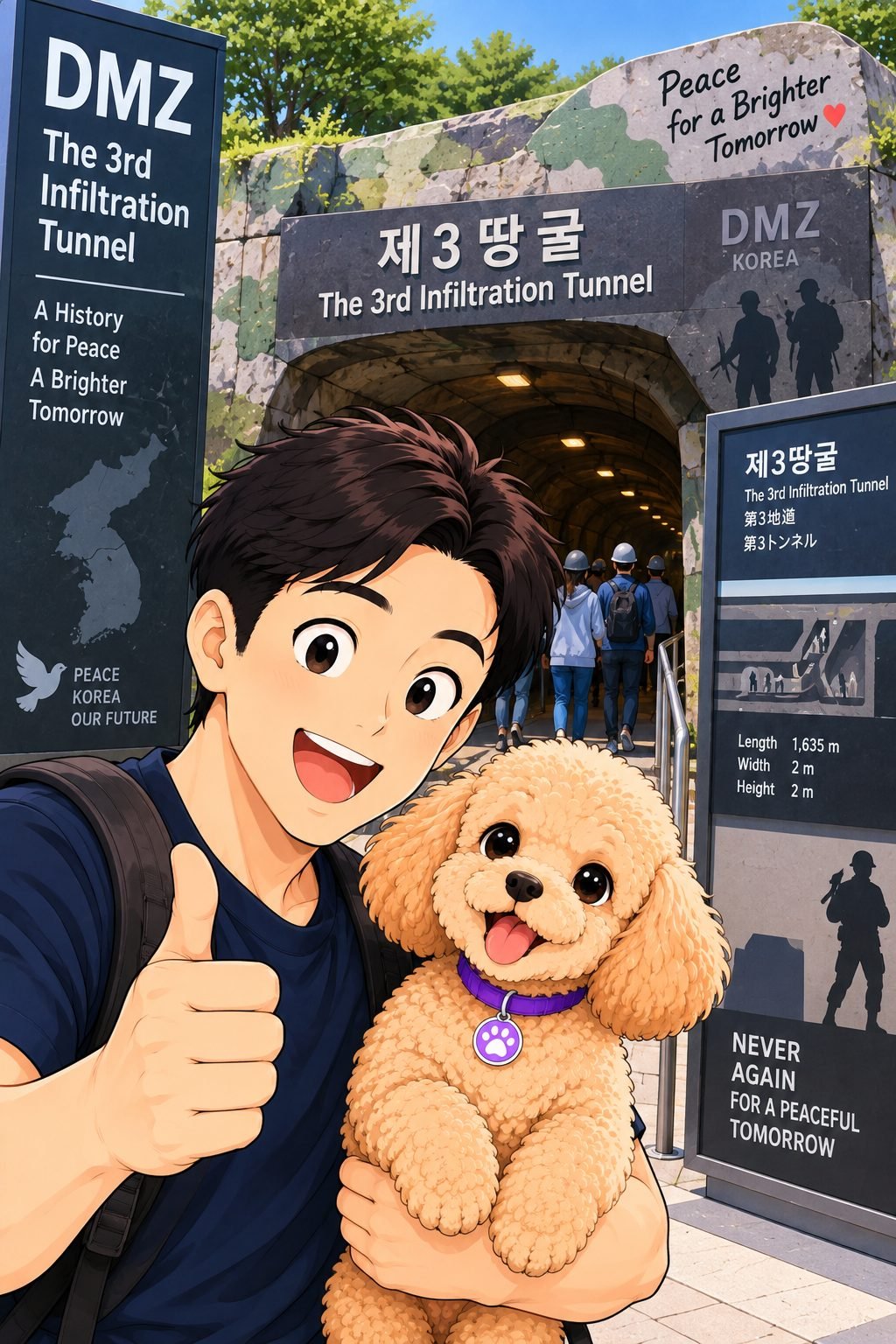
The Third Infiltration Tunnel provides a direct physical connection to the security history of the Korean Peninsula and remains one of the most distinctive stops on many DMZ itineraries.
Dora Observatory
Dora Observatory is one of the best-known observation points included in many DMZ itineraries. From the observatory area, visitors can look north across the border landscape when weather, visibility, and current access conditions allow.
The experience is different from a conventional scenic viewpoint. The landscape visible from the observatory is closely connected with the political and military division of the Korean Peninsula, so historical interpretation and current security conditions are important parts of understanding what visitors see.
Telescopes, viewing areas, and informational displays may help visitors identify features across the landscape. Visibility can vary significantly because of clouds, haze, rain, seasonal weather, and atmospheric conditions.
Photography and observation rules may also change according to current security requirements. Visitors should follow all posted restrictions and staff instructions rather than assuming that every direction or area can be photographed.
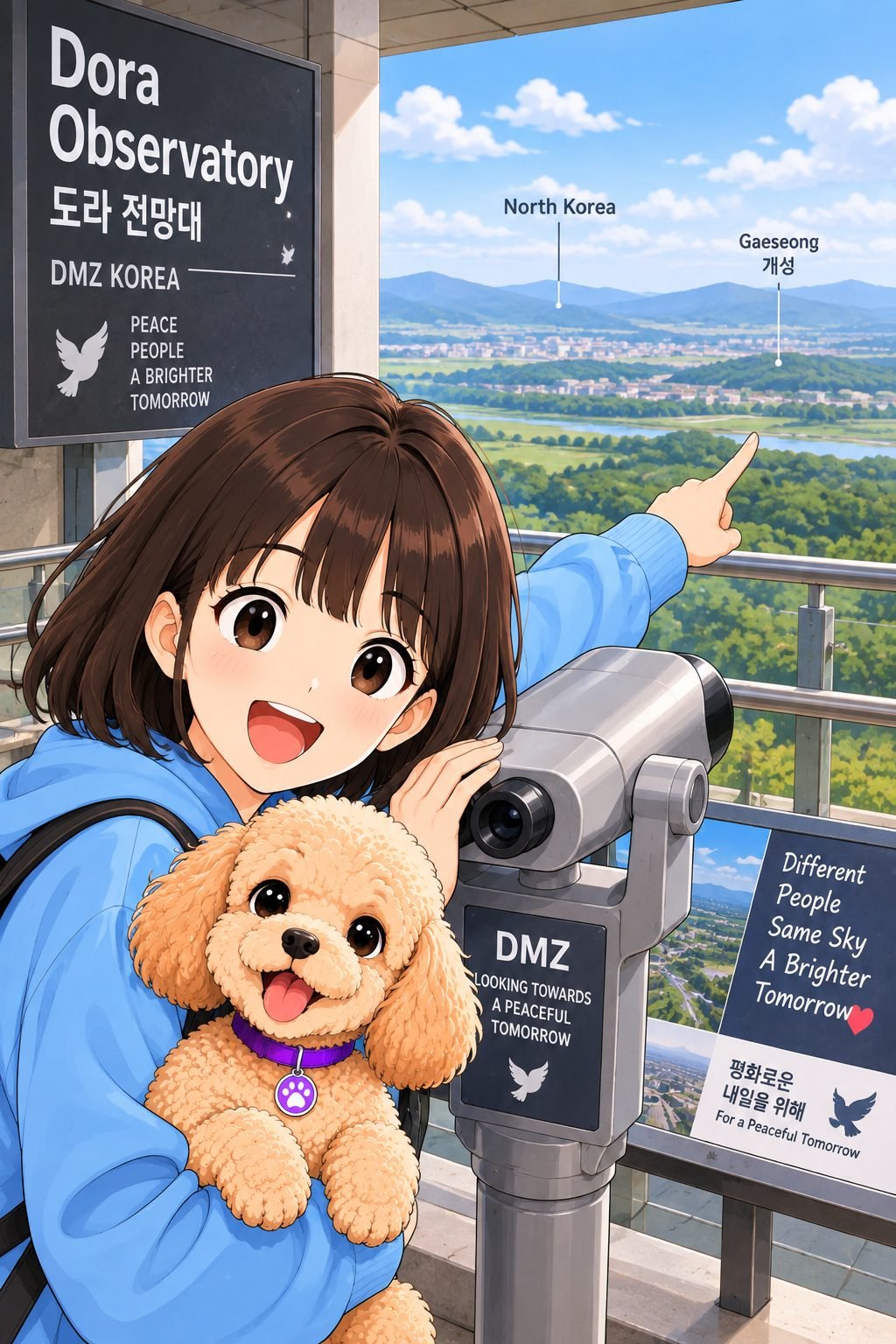
Dora Observatory allows visitors to view the border landscape from the southern side while learning how geography and division continue to shape the Korean Peninsula.
Freedom Bridge & Imjingak Memorial Landscape
The Imjingak area contains several places associated with the Korean War, national division, separated families, remembrance, and hopes for peace. Among the recognizable landmarks is Freedom Bridge, which has become part of the wider historical landscape encountered by visitors to Imjingak.
Nearby fences and memorial areas are often associated with colorful ribbons, messages, and symbols expressing remembrance, reunion, and peace. These visual elements create a very different atmosphere from the observation and security-focused sections of a DMZ tour.
For international visitors, this part of the journey can help place the history of division in a more human context. The Korean Peninsula’s division affected families and communities as well as governments and military forces, and memorial spaces around Imjingak reflect some of those experiences.
Visitors should treat memorial structures, fences, historical objects, and remembrance areas respectfully. Access boundaries and photography conditions should always be followed.

Freedom Bridge, memorial spaces, and peace ribbons at Imjingak connect the history of national division with personal remembrance and hopes for a more peaceful future.
Peace, Nature & Pyeonghwa Nuri Park
The wider Imjingak area also demonstrates an unusual contrast between difficult modern history and open natural landscapes. Pyeonghwa Nuri Park provides broad lawns, walking areas, public art, and peace-themed spaces that create a calmer environment beside a region associated internationally with military division.
Colorful pinwheels and other installations have become recognizable visual elements of the park. Families, couples, and other visitors can walk through open spaces while learning about the historical significance of the surrounding border region.
The natural environment around the DMZ has also attracted attention because decades of restricted human access across parts of the border region have allowed important habitats to remain relatively undisturbed. However, public visitors cannot freely explore the restricted DMZ landscape, and conservation areas should not be confused with ordinary recreational access.
For K-Nana Studio, this contrast is an important part of the story: a DMZ journey can involve military history and national division, but it can also introduce remembrance, nature, public education, and hopes for peace.

Open lawns, colorful pinwheels, and warm evening scenery at Pyeonghwa Nuri Park provide a peaceful visual contrast to the difficult history of Korea’s divided border.
Best Time to Visit
The DMZ region can be visited throughout the year, but weather and visibility can significantly affect the experience, particularly at observation points such as Dora Observatory.
Spring and autumn often provide comfortable temperatures for outdoor walking, while summer can bring heat, humidity, rain, and reduced visibility. Winter can be cold and windy, especially in exposed observation and memorial areas.
Clear weather can improve long-distance views across the border landscape, but visibility is never guaranteed. Haze, clouds, rain, snow, and changing atmospheric conditions can affect what visitors are able to see.
Unlike many conventional tourist attractions, the most important consideration is not only the season. Security conditions, military operations, maintenance, transportation, and access restrictions can change which locations are available on a particular day.
How Long to Spend
A half-day to most of a day works well for many first-time visitors, depending on the itinerary and the number of DMZ-related sites included.
An organized tour may combine Imjingak, the Third Infiltration Tunnel, Dora Observatory, and other approved stops, while a different tour may follow another route according to current access conditions.
Transportation from Seoul, security procedures, waiting periods, walking, tunnel access, observation time, and movement between locations should all be included when estimating the total duration.
Getting to the DMZ
Many international visitors experience the DMZ through organized tours departing from Seoul. This can simplify transportation and access to locations where independent entry is limited or controlled.
Imjingak itself is more accessible than some restricted DMZ sites, but visiting additional locations may require approved transportation, registration, identification checks, or participation in an authorized itinerary.
Departure locations, transportation methods, tour routes, schedules, prices, included attractions, and return times vary between operators and can change according to current conditions.
Visitors should confirm exactly which locations are included before booking because the phrase “DMZ tour” does not always refer to the same itinerary.
Tour & ID Requirements
Identification requirements are particularly important when visiting controlled DMZ-related areas. International visitors may be required to carry a valid passport, while specific tours or locations can have additional registration procedures.
Names and identification details may need to match booking information. Requirements can vary according to nationality, destination, tour type, and current security procedures.
Visitors should confirm passport requirements, booking deadlines, age restrictions, clothing or footwear recommendations, prohibited items, photography rules, and cancellation conditions directly with the current tour provider before departure.
Do not rely on identification or access requirements from an older travel article because procedures can change.
First-Time Visitor Tips
- Carry the identification required by your tour or destination, including a passport when instructed.
- Confirm the exact itinerary because different “DMZ tours” may include different locations.
- Follow photography restrictions carefully, especially around controlled or security-sensitive areas.
- Wear comfortable shoes if your itinerary includes the Third Infiltration Tunnel.
- Consider your mobility and comfort with slopes, underground spaces, and substantial walking before entering the tunnel.
- Prepare for wind, rain, heat, or cold because several stops involve outdoor areas.
- Follow guides, posted signs, barriers, and security instructions at all times.
- Do not attempt to enter restricted areas independently.
- Allow flexibility because individual locations or entire tour routes can change with little notice.
- Check current access conditions again shortly before your scheduled visit.
What About the JSA & Panmunjom?
The Joint Security Area, commonly known as the JSA, and Panmunjom are among the most internationally recognized locations associated with the Korean border. They are also different from the standard stops included on many general DMZ tours.
Access to the JSA and Panmunjom is highly controlled and can be suspended, restricted, or changed according to security and operational conditions. A general DMZ tour should therefore not be assumed to include the JSA.
Travelers specifically interested in Panmunjom should verify current availability, eligibility requirements, identification procedures, booking conditions, and restrictions before planning their itinerary.
Because access conditions can change independently of other DMZ attractions, K-Nana Studio treats the JSA as a possible specialized experience rather than a guaranteed part of a first-time DMZ visit.
DMZ K-Culture Connection
The DMZ adds a fundamentally different dimension to K-Nana Studio’s Places collection. Seoul introduces Korea’s modern capital and royal heritage, Busan adds coastal city culture, Jeju presents volcanic landscapes, Gyeongju explores the ancient Silla kingdom, Nami Island combines nature with K-Drama tourism, and Everland represents contemporary leisure and theme-park culture.
The DMZ instead introduces visitors to the history of national division and the continuing consequences of the Korean War. Understanding this history can provide important context for many aspects of modern South Korea that are difficult to explain through entertainment, food, architecture, or popular culture alone.
At the same time, the visitor experience is not limited to military history. Imjingak, memorial spaces, peace ribbons, observation areas, public art, natural landscapes, and Pyeonghwa Nuri Park introduce themes of remembrance, separated families, education, nature, and hopes for peace.
For international travelers, this makes a DMZ journey one of the most unusual experiences in Korea: it connects modern history with a border that remains active today while allowing visitors to consider how conflict, division, memory, and aspirations for a more peaceful future coexist within the same landscape.
FAQ
What is the Korean DMZ?
The Korean Demilitarized Zone, or DMZ, is a buffer zone associated with the Military Demarcation Line between North and South Korea. It was established following the 1953 Korean Armistice Agreement. Tourist access is limited to selected approved locations and routes rather than the entire DMZ.
What places are usually included in a DMZ tour?
Many DMZ tours may include locations such as Imjingak, the Third Infiltration Tunnel, and Dora Observatory. However, itineraries vary between tour operators and can change because of security conditions, military operations, maintenance, weather, or access restrictions. Always confirm the exact stops included in your tour before booking.
Do I need a passport for a DMZ tour?
International visitors may be required to carry a valid passport for controlled DMZ-related areas, and identification details may need to match the information provided during booking. Requirements can vary according to the tour, destination, nationality, and current security procedures, so confirm the latest rules directly with your tour provider.
Can I visit the Third Infiltration Tunnel?
The Third Infiltration Tunnel is included in many DMZ itineraries when access is available. Visitors should be prepared for slopes, underground spaces, low ceilings, and walking. Health guidance, photography restrictions, personal-item rules, operating conditions, and access procedures can change.
Can I see North Korea from Dora Observatory?
Dora Observatory provides views across the border landscape when access, weather, and visibility allow. What visitors can see varies according to haze, clouds, rain, seasonal conditions, and current observation arrangements. Photography and viewing restrictions should always be followed.
Is Panmunjom or the JSA included in every DMZ tour?
No. The Joint Security Area and Panmunjom are not automatically included in a standard DMZ tour. Access is highly controlled and can be suspended or restricted according to security and operational conditions. Travelers specifically interested in the JSA should verify current availability and requirements separately.
Related K-Nana Guides
Continue exploring Korea with Nami Island for metasequoia roads, riverside scenery, seasonal landscapes, cycling, and K-Drama travel culture, and Everland for T Express, gardens, animal experiences, seasonal festivals, and large-scale Korean leisure culture.
K-Nana Studio’s Places collection also connects the DMZ with destinations across Seoul, Busan, Jeju, and Gyeongju, helping international visitors experience modern cities, royal heritage, coastal landscapes, volcanic nature, ancient Korean history, popular culture, and contemporary travel alongside the history of Korea’s divided peninsula.
Official Information
DMZ tourism is subject to security and operational conditions that can change with little notice. Tour availability, routes, identification requirements, passport procedures, photography restrictions, transportation, access to the Third Infiltration Tunnel, Dora Observatory, Imjingak, Panmunjom, the Joint Security Area, and other controlled locations may be modified, restricted, suspended, or canceled. Weather, military operations, maintenance, safety requirements, and government access decisions may also affect individual sites. Check current official information and your authorized tour provider shortly before traveling, carry all required identification, and follow guides, posted restrictions, security personnel, barriers, and photography rules at all times.
Image Credits
Imjingak Pyeonghwa Nuri Park, Korean DMZ history, peace landscape, and K-Nana family travel visual — K-Nana Studio original visual.
Third Infiltration Tunnel entrance and Korean DMZ history experience with Dad and Nana visual — K-Nana Studio original visual.
Dora Observatory and Korean border observation experience with K-Nana daughter and Nana visual — K-Nana Studio original visual.
Imjingak, Freedom Bridge, peace ribbons, and Korean division memorial landscape with Mom and Nana visual — K-Nana Studio original visual.
Nana enjoying Pyeonghwa Nuri Park, colorful pinwheels, open lawns, sunset scenery, and a peaceful DMZ landscape visual — K-Nana Studio original visual.