
Seogwipo Maeil Olle Market is a lively traditional market in central Seogwipo where visitors can experience Jeju through food, local produce, seafood, snacks, small shops, and everyday market life. After exploring the island’s waterfalls, beaches, volcanic landscapes, and hiking trails, the market offers a completely different way to discover Jeju at street level.
For international visitors, the market is especially useful because many Jeju experiences are concentrated within a walkable area. Travelers can browse local products, look for seasonal fruit, sample different foods, explore seafood stalls, shop for gifts, and experience the atmosphere of a working local market rather than visiting only major sightseeing landmarks.
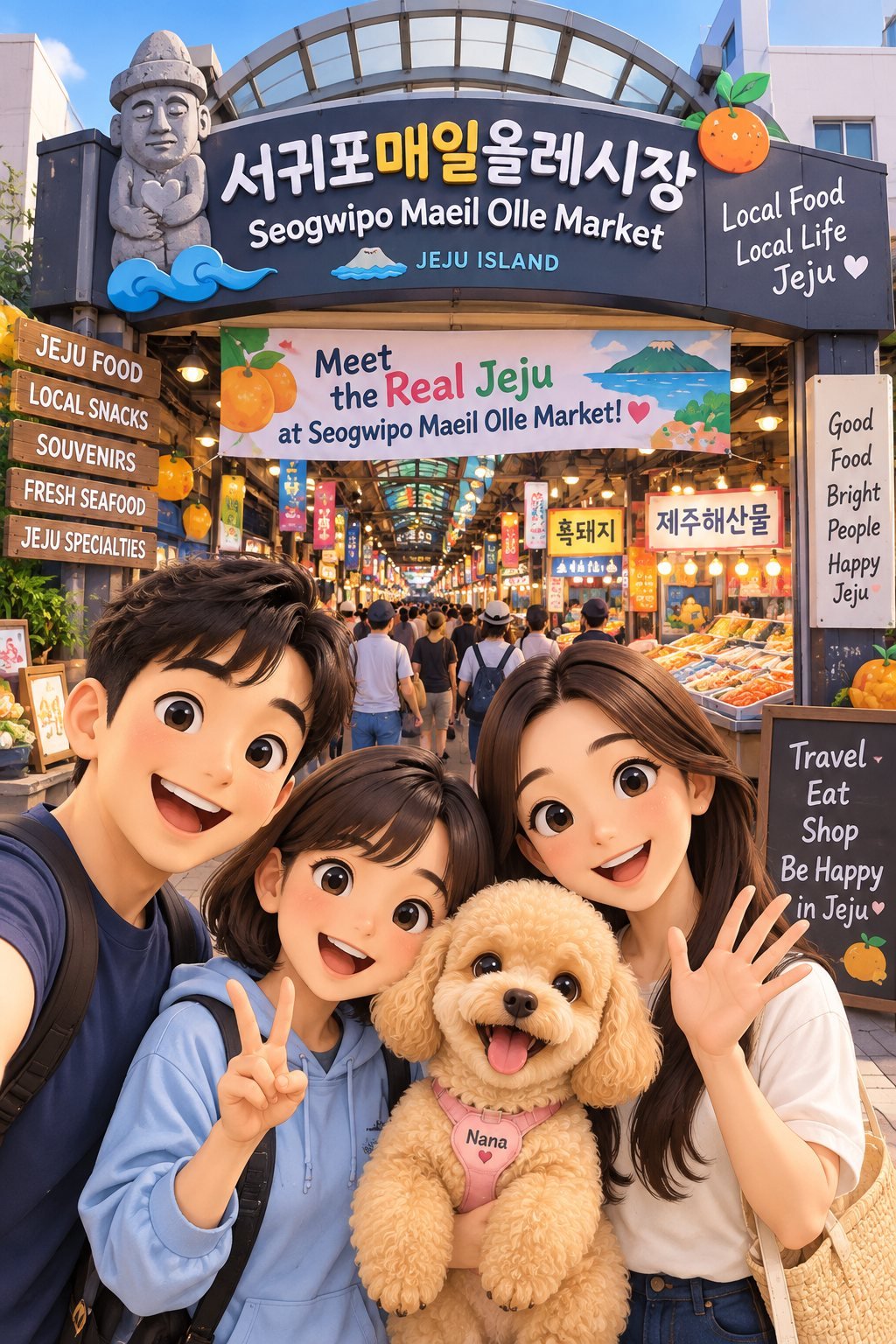
Food stalls, local products, colorful signs, and busy market aisles introduce visitors to a lively everyday side of Jeju.
Quick Guide
| Location | Central Seogwipo, southern Jeju Island |
| Best for | Local food, street snacks, seafood, seasonal produce, souvenirs, market atmosphere |
| Recommended time | About 1.5–3 hours |
| Main experience | Browsing, tasting food, shopping, and experiencing local market life |
| Good to combine with | Jeongbang Waterfall and other Seogwipo attractions |
| Important | Individual shops and food stalls may have different operating hours, prices, menus, and payment options |
What Is Seogwipo Maeil Olle Market?
Seogwipo Maeil Olle Market is a traditional market serving both local residents and visitors in the Seogwipo area. Its covered market passages contain a mixture of produce sellers, seafood stalls, prepared-food vendors, snack shops, restaurants, specialty products, and other small businesses.
The market experience changes as visitors move through different sections. One area may focus on fruit and packaged products, while another may be filled with seafood, cooked dishes, snacks, or small items suitable for taking home.
Unlike a single restaurant or food attraction, the market allows visitors to compare many different foods and products within one visit. This makes browsing itself an important part of the experience.
Why Visit?
- Experience a lively local market atmosphere in central Seogwipo.
- Browse Jeju fruit, produce, seafood, snacks, and regional products.
- Try different foods without building an itinerary around a single restaurant.
- Look for small gifts and edible souvenirs connected with Jeju.
- Experience everyday local commerce alongside tourism.
- Visit during the evening for a busier food-focused atmosphere when participating stalls are open.
- Combine the market naturally with nearby Jeongbang Waterfall for both nature and local food experiences in Seogwipo.
Jeju Citrus & Local Specialties
Jeju is strongly associated with citrus fruit, and market stalls can provide visitors with an easy introduction to the island’s seasonal produce and citrus-based products. Depending on the season and individual seller, visitors may encounter fresh fruit as well as drinks, snacks, sweets, packaged products, and other locally themed items.
The exact varieties and products available can change throughout the year. Rather than expecting one specific item to always be present, it is better to explore the stalls and see what is currently in season or being sold during your visit.
Markets are also useful places to compare different types of Jeju specialties before buying gifts or food to take away. Check packaging, storage requirements, transport restrictions, prices, and product information when purchasing items for later travel.
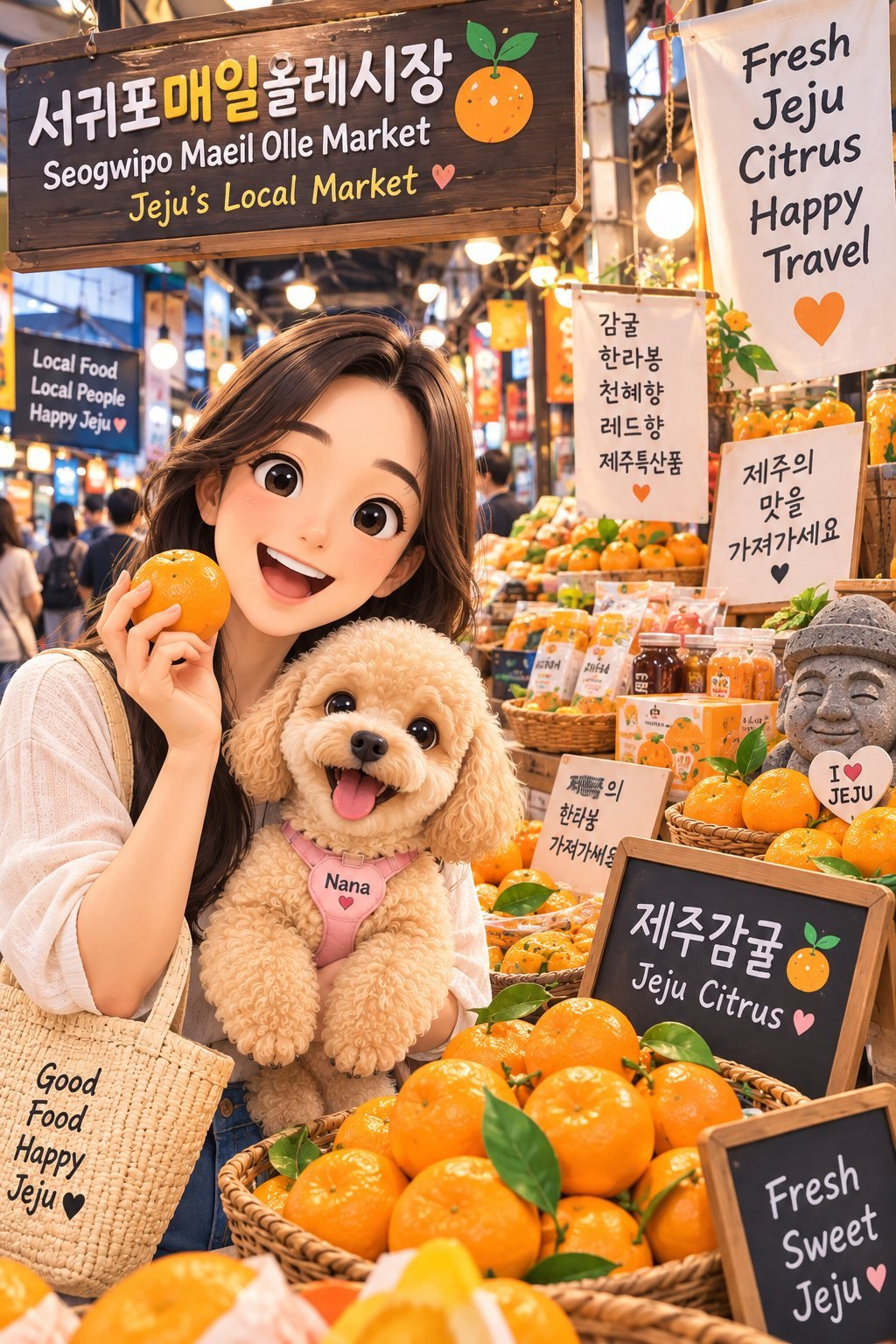
Seasonal citrus, local produce, and Jeju-themed products add bright colors and regional flavor to the market experience.
Street Food & Snacks
Street food is one of the easiest ways for visitors to enjoy Seogwipo Maeil Olle Market. Instead of choosing one full meal immediately, travelers can walk through the market, compare stalls, and try smaller portions or snacks that look interesting.
Available foods can vary by stall, season, and time of day. Visitors may encounter grilled items, fried snacks, rice cakes, seafood-based foods, meat dishes, desserts, fruit drinks, and other products influenced by Jeju ingredients and Korean market food culture.
Popular stalls can develop queues during busy periods. Rather than assuming the longest line is automatically the best choice, visitors can explore several sections of the market before deciding what they want to try.
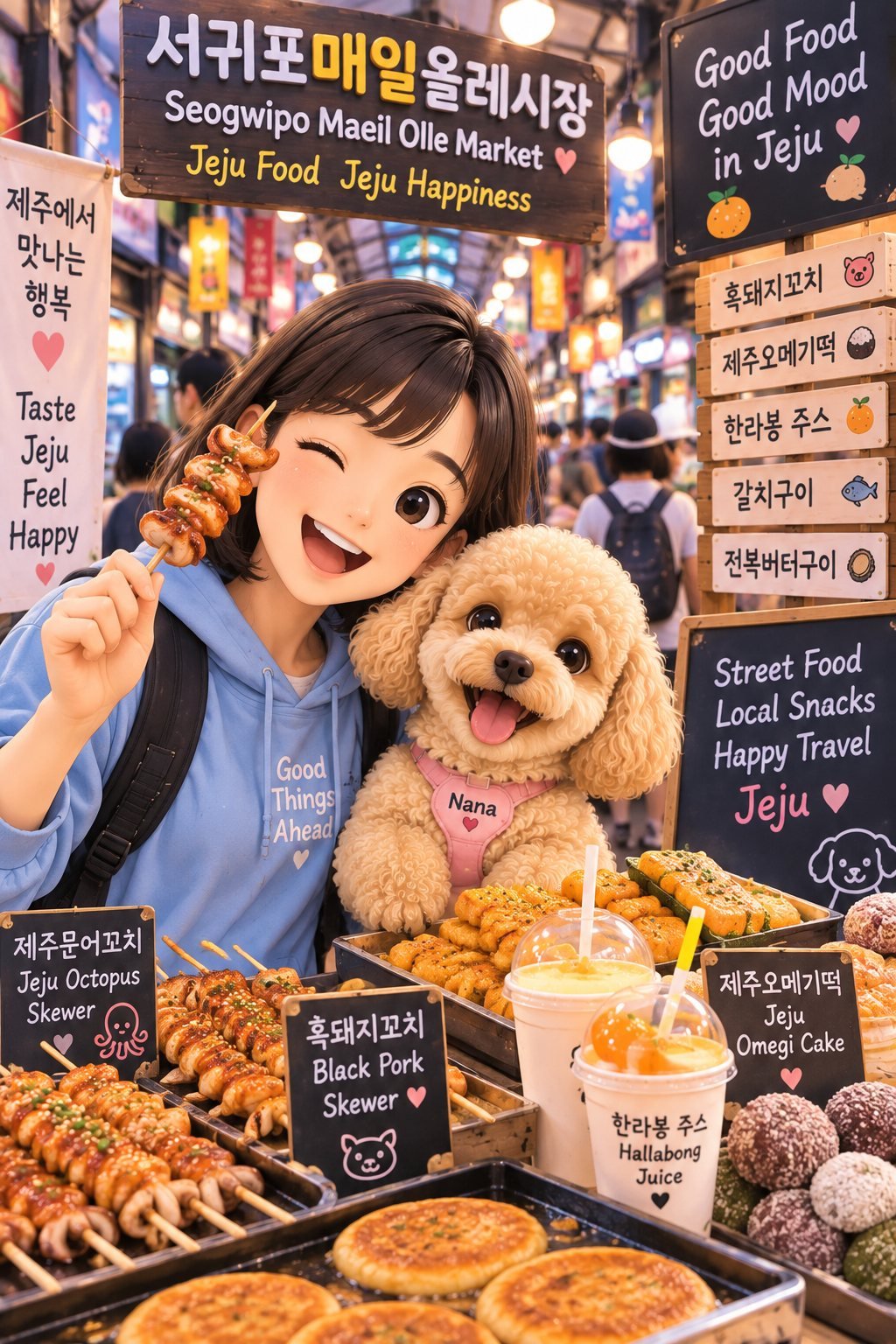
Street food, local snacks, and colorful market stalls create a lively way to taste different sides of Jeju in one visit.
Seafood & Local Food
Jeju’s relationship with the sea is also visible inside the market. Seafood sellers and food vendors add another layer to the experience, connecting the market with the island’s coastal environment and local food culture.
The types of seafood, preparation methods, portions, and prices can differ significantly between businesses. Some products may be sold fresh, while others may be prepared for immediate eating or offered as part of cooked dishes.
Visitors should check displayed prices and ask about preparation, portion size, or additional charges when necessary before ordering. Availability can change according to season, supply, and individual vendor operations.
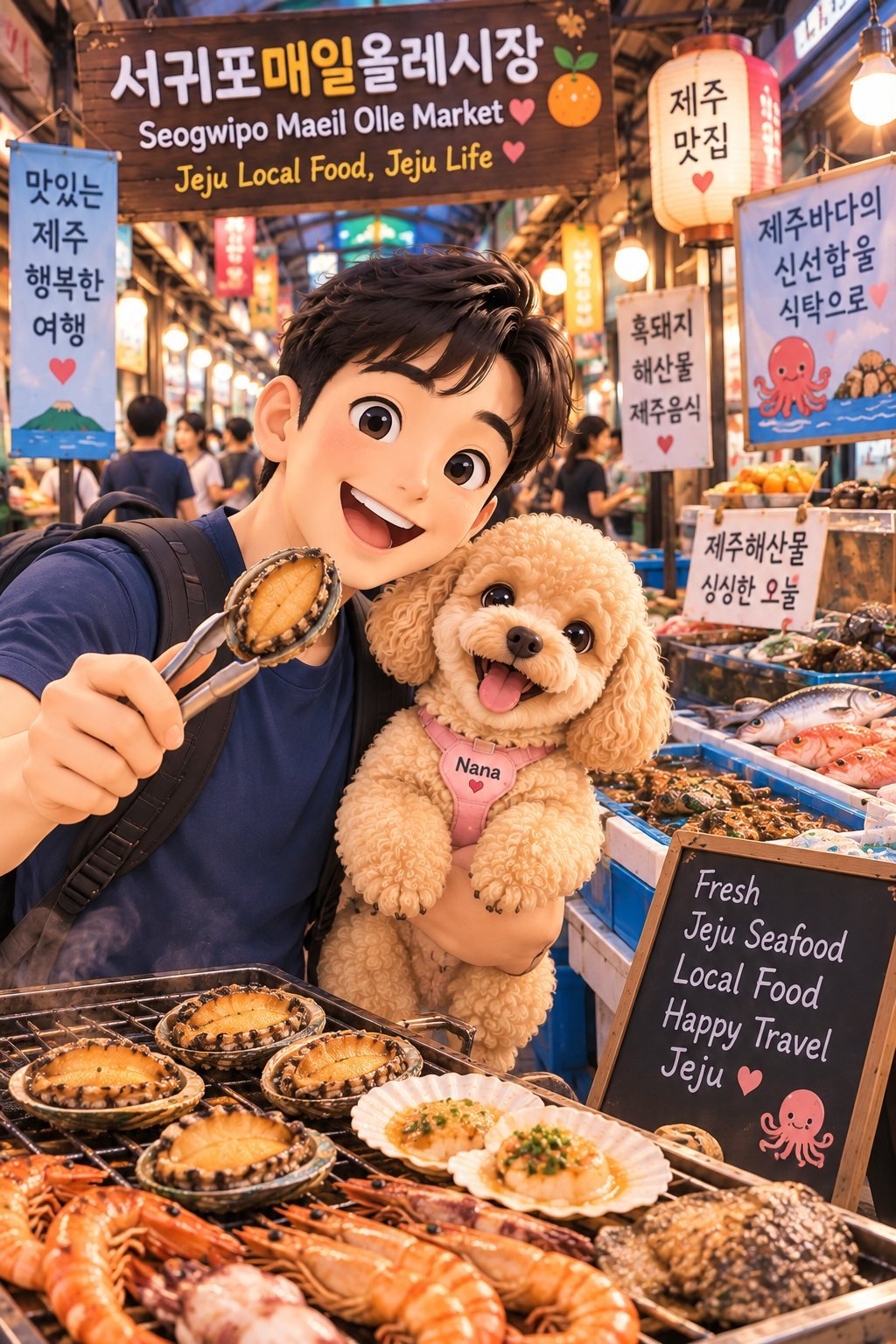
Seafood stalls connect the market’s busy food scene with Jeju’s strong coastal identity and local ingredients.
What to Eat
There is no single food that every visitor must eat at Seogwipo Maeil Olle Market. Part of the experience is comparing stalls and choosing foods according to personal taste, appetite, season, and what is available that day.
Visitors may want to look for Jeju-inspired street snacks, seafood, black pork dishes, rice cakes, seasonal fruit, citrus drinks, desserts, and other regional products. However, individual menus and ingredients can change, and not every item will be available from every vendor.
Trying several smaller items can be practical for first-time visitors who want variety. When ordering unfamiliar food, check ingredients if you have allergies, dietary restrictions, religious dietary requirements, or other food concerns.
Prices can also differ between stalls and products. Check displayed prices before ordering and confirm the total when portion size, preparation, packaging, or additional options are unclear.
Shopping & Souvenirs
Seogwipo Maeil Olle Market is also a convenient place to browse gifts and edible souvenirs. Citrus products, packaged snacks, regional foods, small local goods, and other Jeju-themed items may be available throughout the market.
For travelers continuing to another city or flying internationally, practical considerations matter. Check whether food requires refrigeration, how long it can be stored, whether packaging is suitable for travel, and whether your destination has restrictions on bringing in fresh fruit, meat, seafood, or other agricultural products.
Visitors do not need to purchase something from every popular shop. Walking through the market first makes it easier to compare products, prices, packaging, and available options before deciding what to take home.
Market at Night
Seogwipo Maeil Olle Market takes on a different atmosphere later in the day as market lights, food stalls, signs, and busy aisles create a warmer and more energetic setting.
Evening can be especially enjoyable for visitors interested in prepared food and snacks. The combination of cooking aromas, illuminated stalls, people browsing for dinner, and colorful market displays creates an experience that feels very different from Jeju’s daytime nature attractions.
The market should not be treated as a fixed night market where every vendor operates until the same late hour. Individual shops and stalls can have different schedules, and operating conditions may change by day or season.
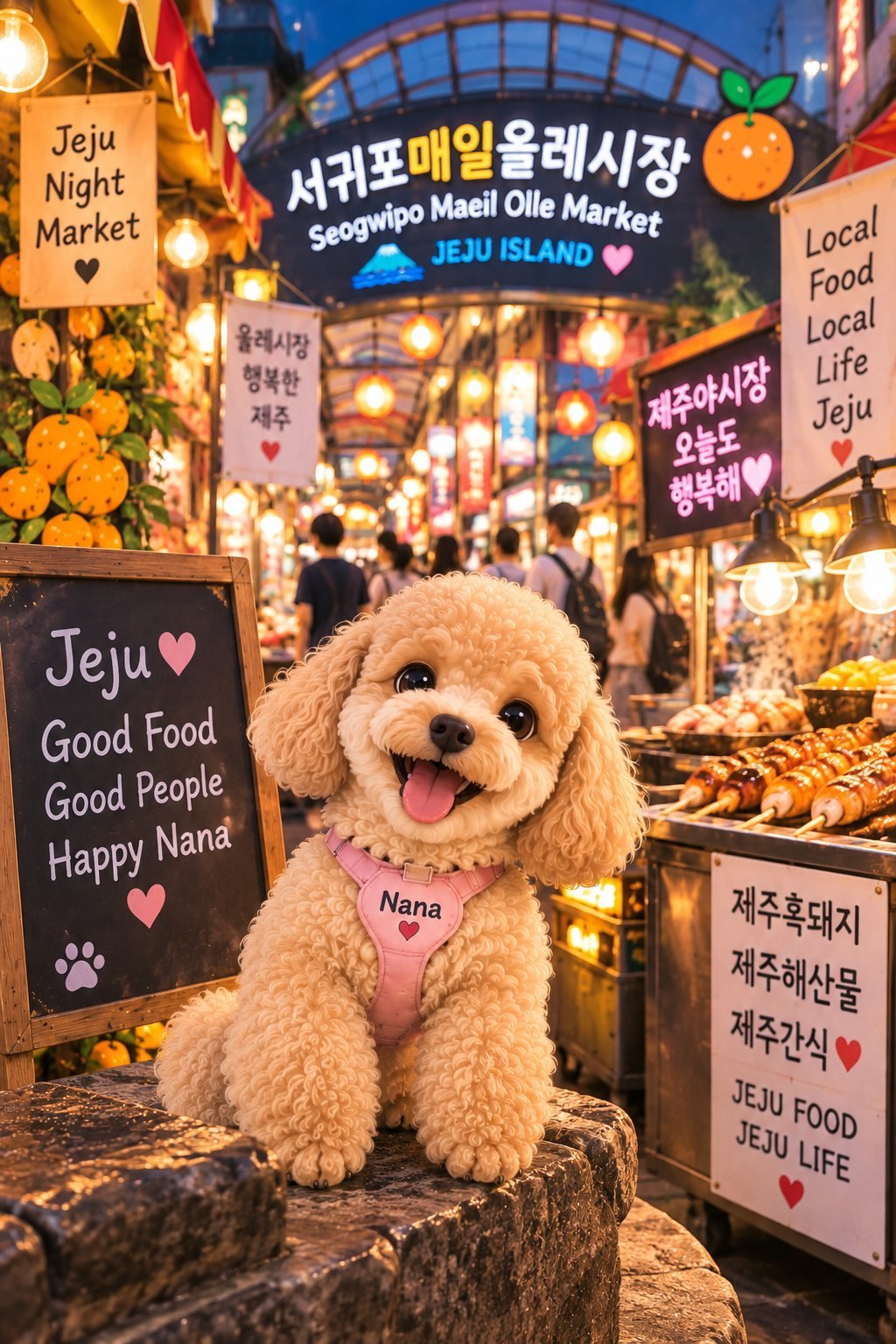
Warm lights, food stalls, colorful signs, and busy aisles give Seogwipo Maeil Olle Market a lively evening atmosphere.
Best Time to Visit
The best time to visit depends on what you want from the market. Daytime is useful for relaxed browsing, produce, local products, and shopping, while late afternoon and evening can provide a livelier food-focused atmosphere.
Weekends, holidays, and popular travel periods may bring larger crowds. Visitors who prefer easier movement through the aisles may want to arrive before the busiest meal periods.
Because individual vendors set their own schedules, a specific food stall or shop may not necessarily be open whenever the overall market is accessible. Check current information when visiting for a particular business or product.
How Long to Spend
About 1.5–3 hours works well for many first-time visitors who want to browse the market, compare food stalls, try several snacks, and look at local products without rushing.
A quick food stop can take considerably less time, while visitors planning a full meal, shopping, photography, or several different food tastings may want to stay longer.
The market can also be used as a flexible meal stop between other Seogwipo attractions rather than as a full half-day destination.
Getting to Seogwipo Maeil Olle Market
Seogwipo Maeil Olle Market is located in central Seogwipo, making it convenient to include in an itinerary focused on Jeju’s southern coast.
Visitors can reach the surrounding area by public transportation, taxi, rental vehicle, or another suitable option depending on their starting point. Those driving should check current parking options and conditions before arrival.
Bus routes, parking availability, traffic, road access, and transportation schedules can change. Use a current navigation or transit service on the day of your visit.
First-Time Visitor Tips
- Walk through part of the market before deciding where to eat or shop.
- Check displayed prices before ordering food or purchasing products.
- Carry a suitable payment method, as payment options can differ between individual vendors.
- Ask about ingredients when allergies or dietary restrictions are important.
- Expect busier aisles during meal times, weekends, holidays, and popular travel periods.
- Check storage requirements before buying food that you plan to carry for several hours.
- Confirm customs and quarantine restrictions before taking fresh or animal-based food products overseas.
- Check current operating information if one particular stall or shop is the main reason for your visit.
What to Do Nearby
- Jeongbang Waterfall — combine the market with a dramatic waterfall, volcanic shoreline, cliffs, and southern Jeju ocean scenery.
- Seogwipo city center — explore local streets, restaurants, cafés, shops, and everyday city life around the market.
- Cheonjiyeon Waterfall — experience another well-known Seogwipo waterfall in a different natural setting.
- Saeyeongyo Bridge & Saeseom Island — enjoy waterfront walking and coastal scenery near central Seogwipo.
- Seogwipo coastal area — combine local food with harbor views, coastal walks, and southern Jeju scenery.
- Hallasan National Park — experience forests, volcanic mountain terrain, hiking trails, seasonal scenery, and Baengnokdam.
Jeju K-Culture Connection
Seogwipo Maeil Olle Market introduces a side of Jeju culture that cannot be experienced through landscapes alone. Food stalls, seasonal produce, seafood, small businesses, local products, conversations, signs, and busy aisles show how everyday life and tourism meet within the city.
For international visitors, traditional markets can also make Korean food culture easier to explore. Instead of experiencing Jeju only through restaurants or famous dishes, travelers can see ingredients, compare products, watch food being prepared, and choose several smaller things to taste during the same visit.
Combined with nearby Jeongbang Waterfall, the market creates a useful Seogwipo pairing: one stop introduces Jeju’s dramatic southern coastline, while the other introduces its local food, shopping, and everyday market culture.
Together with K-Nana Studio’s growing collection of beaches, volcanic landscapes, mountains, islands, waterfalls, and coastal walks, Seogwipo Maeil Olle Market adds an important food and local-life experience to the Jeju Places collection.
FAQ
What is Seogwipo Maeil Olle Market known for?
Seogwipo Maeil Olle Market is known for its lively traditional market atmosphere, local food, seafood, seasonal produce, Jeju citrus products, street snacks, souvenirs, and small businesses. It provides visitors with an easy way to experience food and everyday local life in central Seogwipo.
How long should I spend at Seogwipo Maeil Olle Market?
About 1.5–3 hours works well for many first-time visitors. A shorter visit can focus on a quick meal or snack, while browsing, shopping, photography, and trying several foods can extend the visit.
What should I eat at Seogwipo Maeil Olle Market?
Available food varies by vendor, season, and time of day. Visitors may find seafood, black pork dishes, grilled foods, rice cakes, seasonal fruit, citrus drinks, desserts, and other Jeju-inspired snacks. Explore several stalls and check current menus and prices before deciding what to try.
Can I buy Jeju souvenirs at the market?
Yes. Visitors may find citrus products, packaged snacks, regional foods, and other Jeju-themed items suitable for gifts. Check storage requirements, packaging, and customs or quarantine restrictions if you plan to take food products overseas.
Is Seogwipo Maeil Olle Market good to visit in the evening?
Yes. Late afternoon and evening can provide a lively food-focused atmosphere as market lights and prepared-food stalls become more prominent. However, individual businesses have their own operating schedules, so not every stall will necessarily remain open until the same time.
Can I visit Jeongbang Waterfall and Seogwipo Maeil Olle Market on the same day?
Yes. Jeongbang Waterfall and Seogwipo Maeil Olle Market fit naturally into the same Seogwipo itinerary. The combination gives visitors both a southern Jeju nature experience and a local food and market experience.
Related K-Nana Guides
Continue exploring Jeju with Jeongbang Waterfall for waterfall and ocean scenery, Hallasan National Park for mountain hiking and volcanic landscapes, Hamdeok Beach for turquoise water and coastal cafés, Seopjikoji for grasslands and volcanic cliffs, Seongsan Ilchulbong for volcanic scenery and summit views, and Udo Island for beaches, coastal roads, and island landscapes.
As K-Nana Studio’s Jeju Places collection expands, Seogwipo Maeil Olle Market will connect with more destinations covering local food, waterfalls, coastal walks, cafés, beaches, villages, cultural attractions, and other experiences that international visitors may want to include in a Jeju itinerary.
Official Information
Seogwipo Maeil Olle Market contains many independently operated shops, restaurants, food stalls, and other businesses. Individual operating hours, menus, prices, products, payment methods, holidays, and availability can vary. Market access, parking, transportation, events, and visitor conditions can also change. Check current information when a particular shop, food stall, product, operating time, or event is important to your visit, and confirm ingredients directly with the vendor when allergies or dietary restrictions are a concern.
Image Credits
Seogwipo Maeil Olle Market entrance and Jeju family market travel visual — K-Nana Studio original visual.
Jeju citrus, seasonal produce, and local specialties with Mom and Nana visual — K-Nana Studio original visual.
Seogwipo Maeil Olle Market street food and local snacks with K-Nana daughter and Nana visual — K-Nana Studio original visual.
Jeju seafood and local market food with Dad and Nana visual — K-Nana Studio original visual.
Nana enjoying the evening lights, food stalls, and lively atmosphere of Seogwipo Maeil Olle Market visual — K-Nana Studio original visual.