
Seongsan Ilchulbong is one of Jeju Island’s most recognizable natural landmarks, rising dramatically beside the sea on the island’s eastern coast. Its distinctive volcanic shape, green crater landscape, coastal cliffs, surrounding grasslands, and wide ocean views create a scenery that is very different from Korea’s major urban destinations.
For international visitors exploring Jeju for the first time, Seongsan Ilchulbong offers an introduction to the volcanic landscape that defines much of the island. Visitors can enjoy the lower grassland areas, observe the crater from different viewpoints, climb toward the summit, look across the eastern coastline, and experience one of Jeju’s best-known sunrise locations.
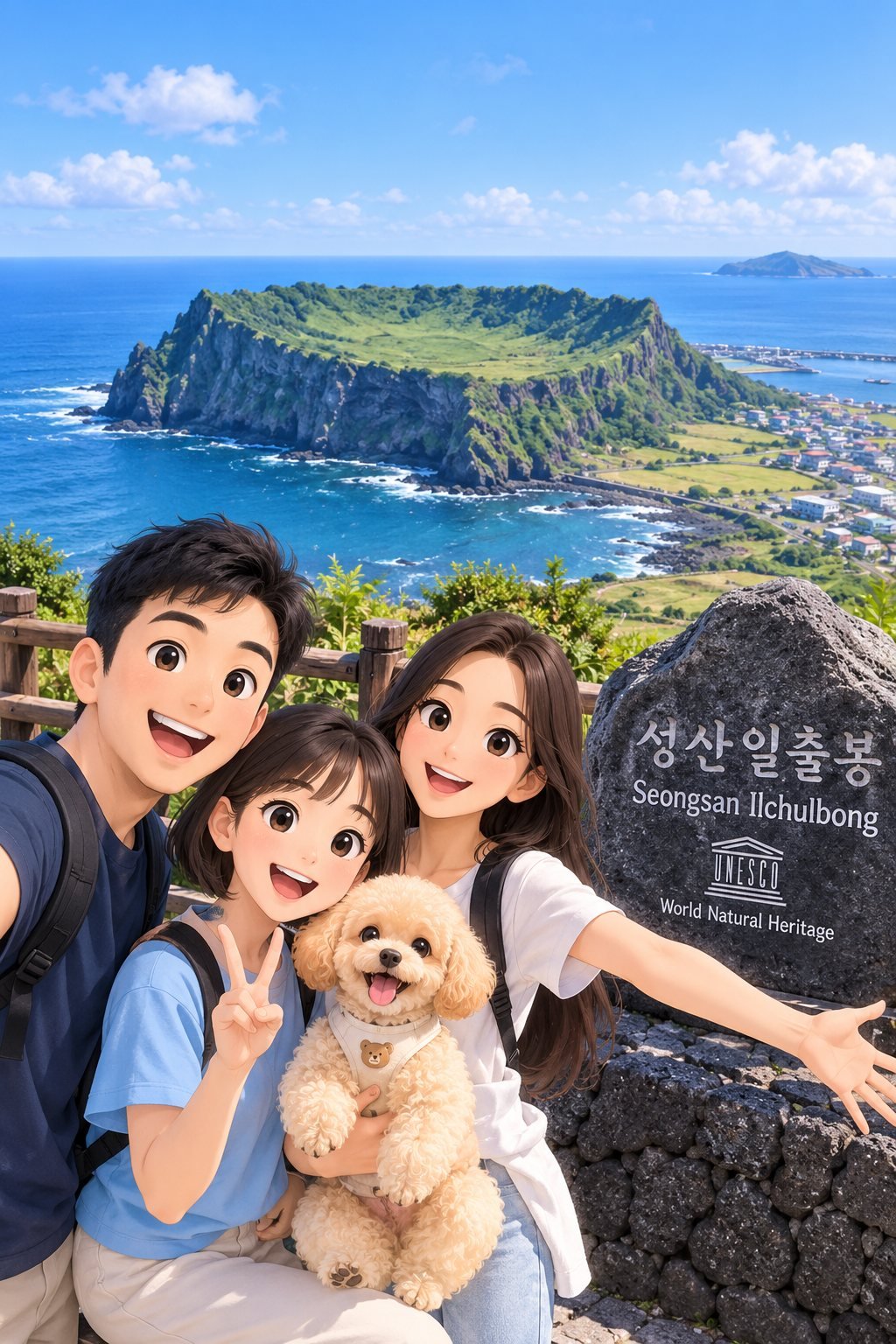
Seongsan Ilchulbong combines volcanic geology, green landscapes, dramatic coastal cliffs, and the blue sea in one of Jeju Island’s most distinctive natural settings.
Quick Guide
| Location | Eastern Jeju Island |
| Best for | Volcanic scenery, UNESCO natural heritage, hiking, ocean views, photography, sunrise |
| Recommended time | About 1.5–3 hours |
| Terrain | Grassland paths, slopes, stairs, and elevated viewpoints |
| Main experience | Exploring the volcanic landscape and climbing toward the summit viewpoint |
| Good to combine with | Udo, Seongsan coastal areas, eastern Jeju attractions, cafés, and nearby scenic routes |
What Is Seongsan Ilchulbong?
Seongsan Ilchulbong is a volcanic landform on the eastern side of Jeju Island. Its crater rises directly beside the sea, creating a distinctive silhouette that can be recognized from many surrounding viewpoints.
The landscape was shaped by volcanic activity, and today visitors can observe steep outer slopes, exposed coastal rock formations, a broad crater area, grass-covered surfaces, and the surrounding ocean within a relatively compact area.
Seongsan Ilchulbong forms part of Jeju’s internationally recognized volcanic natural heritage. Visitors should treat the landscape as a protected natural environment by remaining on designated routes and following current conservation and access rules.
Volcanic Landscape
The volcanic landscape is the main reason Seongsan Ilchulbong looks so different from an ordinary mountain or coastal hill. Its crater form, steep rock faces, green slopes, and direct relationship with the sea reveal Jeju’s geological character at a glance.
From lower viewpoints, visitors can appreciate the overall shape of the volcanic formation against the ocean. As the trail gains elevation, the perspective changes and wider sections of eastern Jeju, nearby communities, farmland, coastline, and surrounding sea become visible.
Season, weather, vegetation, clouds, and sunlight can significantly change the appearance of the landscape. Clear weather emphasizes the blue sea and green slopes, while mist and clouds can create a more dramatic volcanic atmosphere.
Why Visit?
- Experience one of Jeju Island’s most recognizable volcanic landscapes.
- See a major part of Jeju’s UNESCO-recognized natural heritage.
- Walk through green coastal scenery shaped by volcanic activity.
- Climb toward elevated viewpoints overlooking eastern Jeju and the sea.
- Photograph the contrast between dark volcanic rock, green vegetation, and blue water.
- Experience a famous sunrise destination on Korea’s eastern-facing Jeju coast.
- Combine nature, geology, hiking, photography, and coastal scenery in one visit.
Jeju Nature & Grasslands
The lower areas around Seongsan Ilchulbong provide a gentler introduction to the landscape before the steeper climb begins. Open grasslands, volcanic stone, coastal vegetation, and ocean views create a distinctly Jeju atmosphere.
Visitors who do not plan to complete the summit route can still experience much of the area’s visual character from the lower walking sections and surrounding viewpoints.
These open spaces also make it easier to appreciate the scale and shape of Seongsan Ilchulbong from a distance. Depending on the season, vegetation and surrounding fields can add different colors to the landscape.
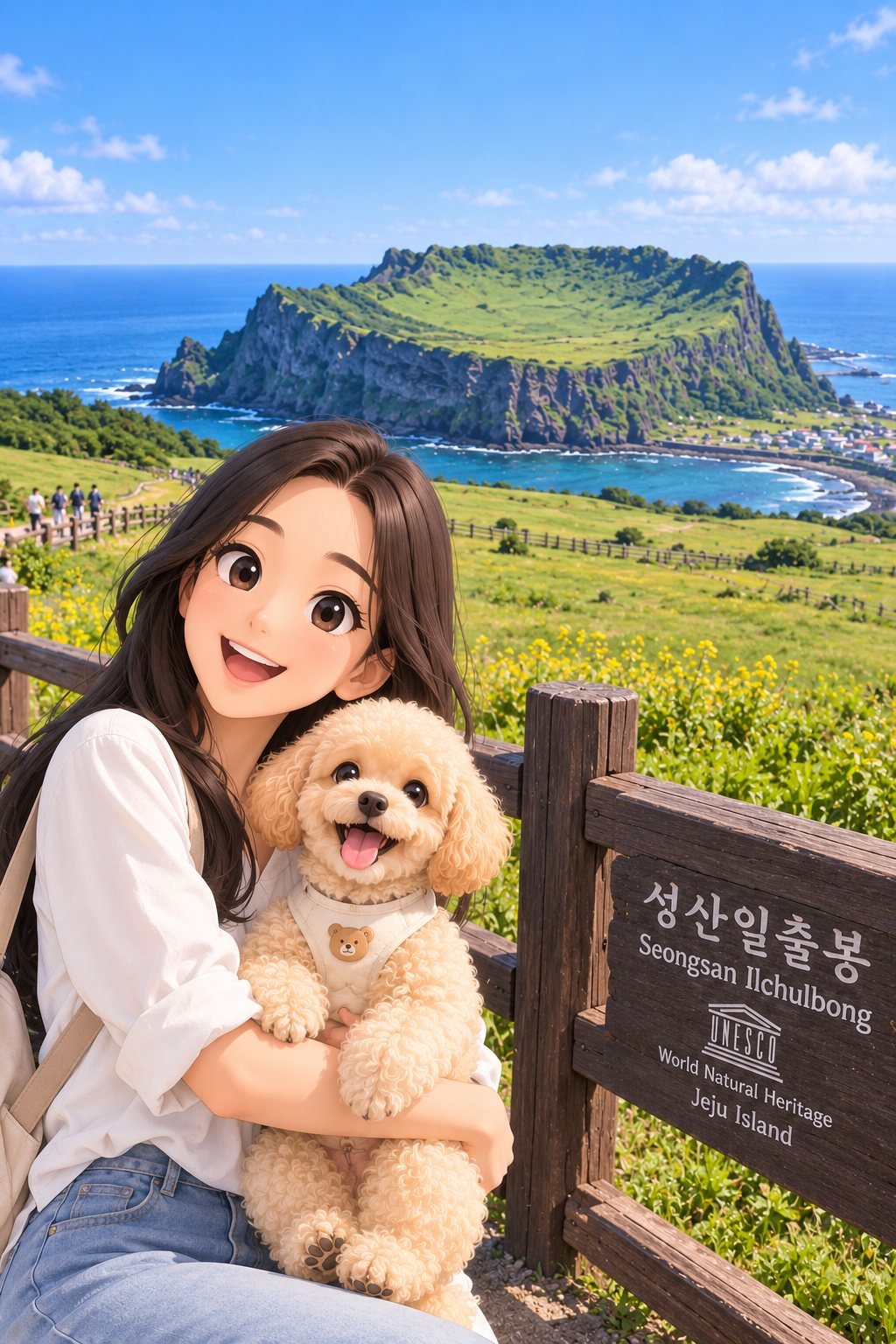
Open grasslands, volcanic rock, coastal vegetation, and ocean views create the distinctive natural atmosphere surrounding Seongsan Ilchulbong.
Climbing Seongsan Ilchulbong
Climbing toward the upper viewpoint is one of the main experiences at Seongsan Ilchulbong. The route gradually becomes steeper and includes numerous stairs as visitors move above the surrounding grasslands and coastline.
The climb requires more effort than exploring the lower walking areas, but regular viewpoints along the route provide opportunities to stop, rest, and look back across eastern Jeju.
Comfortable walking shoes are recommended, and visitors should move at a pace suitable for their fitness level. Hot weather, strong wind, rain, and wet stairs can make the climb more demanding.
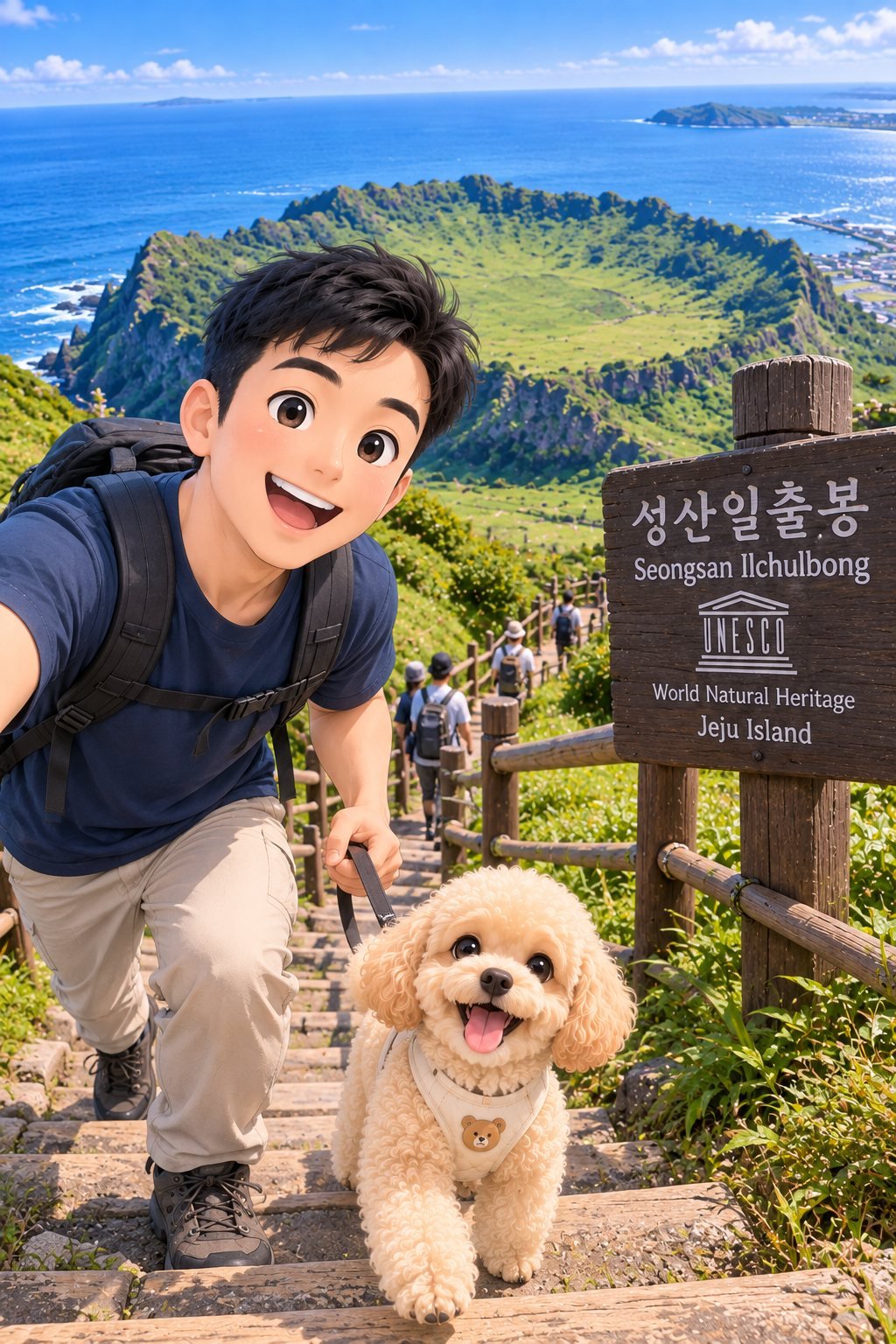
The climb becomes steeper toward the upper viewpoint, but changing views of the volcanic landscape and eastern Jeju reward visitors along the way.
Summit Views
Reaching the upper viewing area provides a broader perspective on Seongsan Ilchulbong and the surrounding landscape. From higher elevations, visitors can look across the volcanic terrain, nearby communities, farmland, coastline, and the open sea.
The elevated perspective also makes it easier to understand how Seongsan Ilchulbong sits at the edge of eastern Jeju rather than appearing as an isolated mountain.
Visibility can vary considerably. Clear conditions provide longer views across the coast and sea, while clouds, mist, strong wind, or rain can limit visibility and change the atmosphere of the summit area.
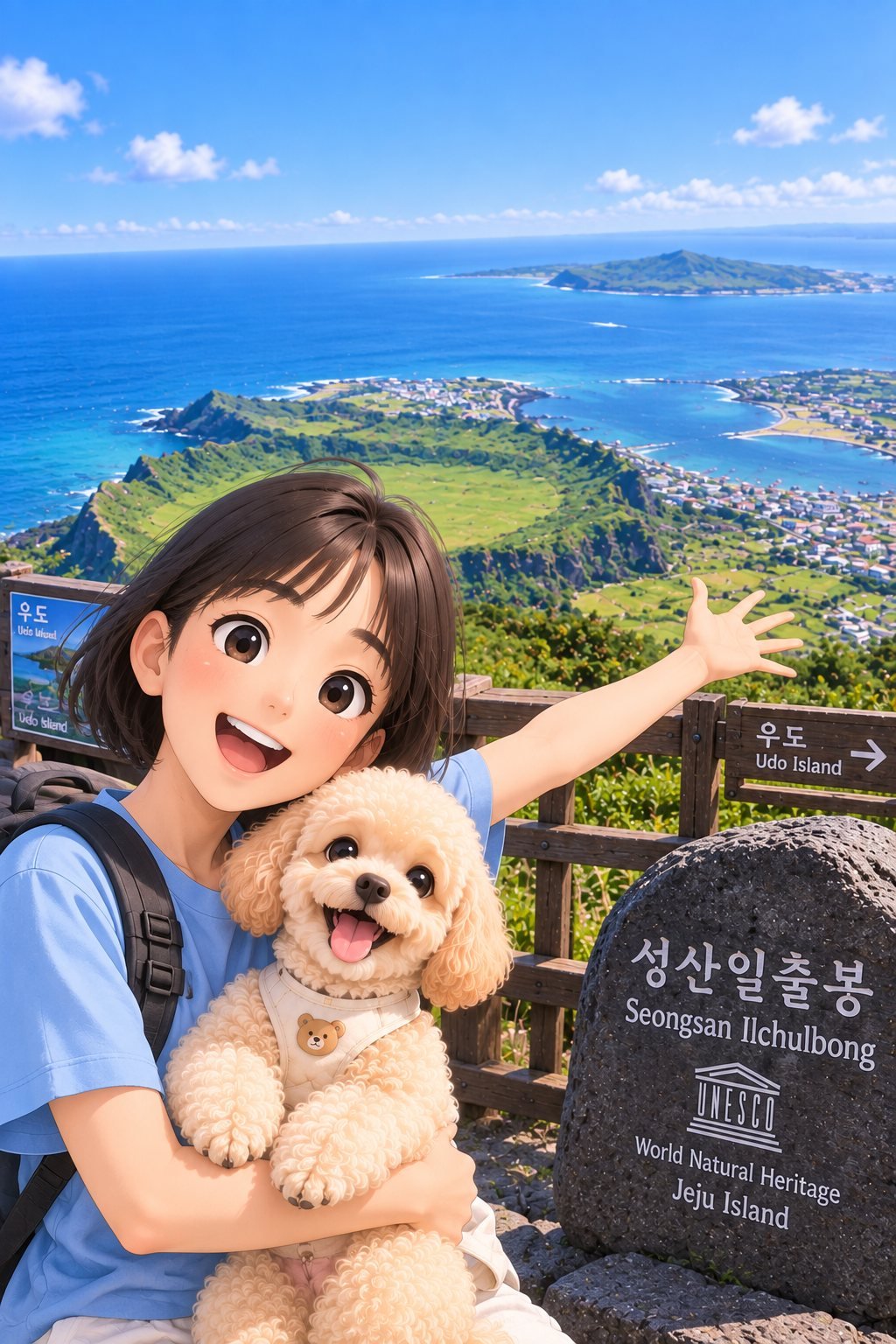
From the upper viewpoint, eastern Jeju opens into a wide landscape of volcanic terrain, coastal communities, blue sea, and distant islands.
Udo & Eastern Jeju Views
Udo is one of the most recognizable islands visible from the Seongsan area when weather and visibility are favorable. Its position offshore adds another layer to the broad coastal panorama.
The surrounding view also includes sections of eastern Jeju’s shoreline, farmland, villages, harbors, roads, and volcanic terrain. This combination helps visitors understand how Jeju’s natural landscape and local communities exist closely together.
Travelers planning to visit Udo separately can combine the two destinations within a wider eastern Jeju itinerary, although ferry schedules, weather, transportation, and operating conditions should always be checked in advance.
UNESCO Natural Heritage
Seongsan Ilchulbong is part of the UNESCO World Heritage property known as Jeju Volcanic Island and Lava Tubes. Its geological importance comes from the volcanic processes that created its distinctive crater and coastal formations.
This international recognition means the site is more than a scenic viewpoint. It is also an important natural landscape that helps explain the volcanic history and geological development of Jeju Island.
Visitors should remain on designated trails, respect barriers, avoid damaging vegetation or volcanic formations, and follow current conservation rules. Protecting the landscape is essential to preserving the site for future visitors.
Photography at Seongsan Ilchulbong
Seongsan Ilchulbong offers several different photography perspectives within a relatively small area. From a distance, visitors can capture the recognizable volcanic silhouette rising beside the sea, while lower paths provide closer views of grasslands, volcanic rock, and coastal scenery.
During the climb, higher viewpoints reveal surrounding farmland, villages, coastline, and ocean. Near the upper viewing area, wide-angle photographs can emphasize the scale of eastern Jeju and the relationship between the volcanic landscape and the sea.
Morning light is especially associated with Seongsan Ilchulbong because of its reputation as a sunrise destination. However, midday, late afternoon, changing clouds, and different seasons can each produce their own distinctive colors and atmosphere.
Weather changes quickly on Jeju Island. Protect cameras and phones during rain or strong wind, remain behind safety barriers, and never leave designated routes simply to obtain a photograph.
Sunrise at Seongsan Ilchulbong
Seongsan Ilchulbong is especially famous for sunrise. Its position on the eastern side of Jeju Island makes the surrounding coast a popular place to watch the morning sky brighten over the sea.
Sunrise conditions vary throughout the year. The exact time changes by season, while clouds, rain, wind, and visibility can significantly affect what visitors see on any particular morning.
Visitors planning an early-morning trip should check the current sunrise time, weather forecast, transportation options, and access conditions in advance. Arriving before sunrise also requires additional preparation because some transportation and visitor services may operate differently early in the morning.
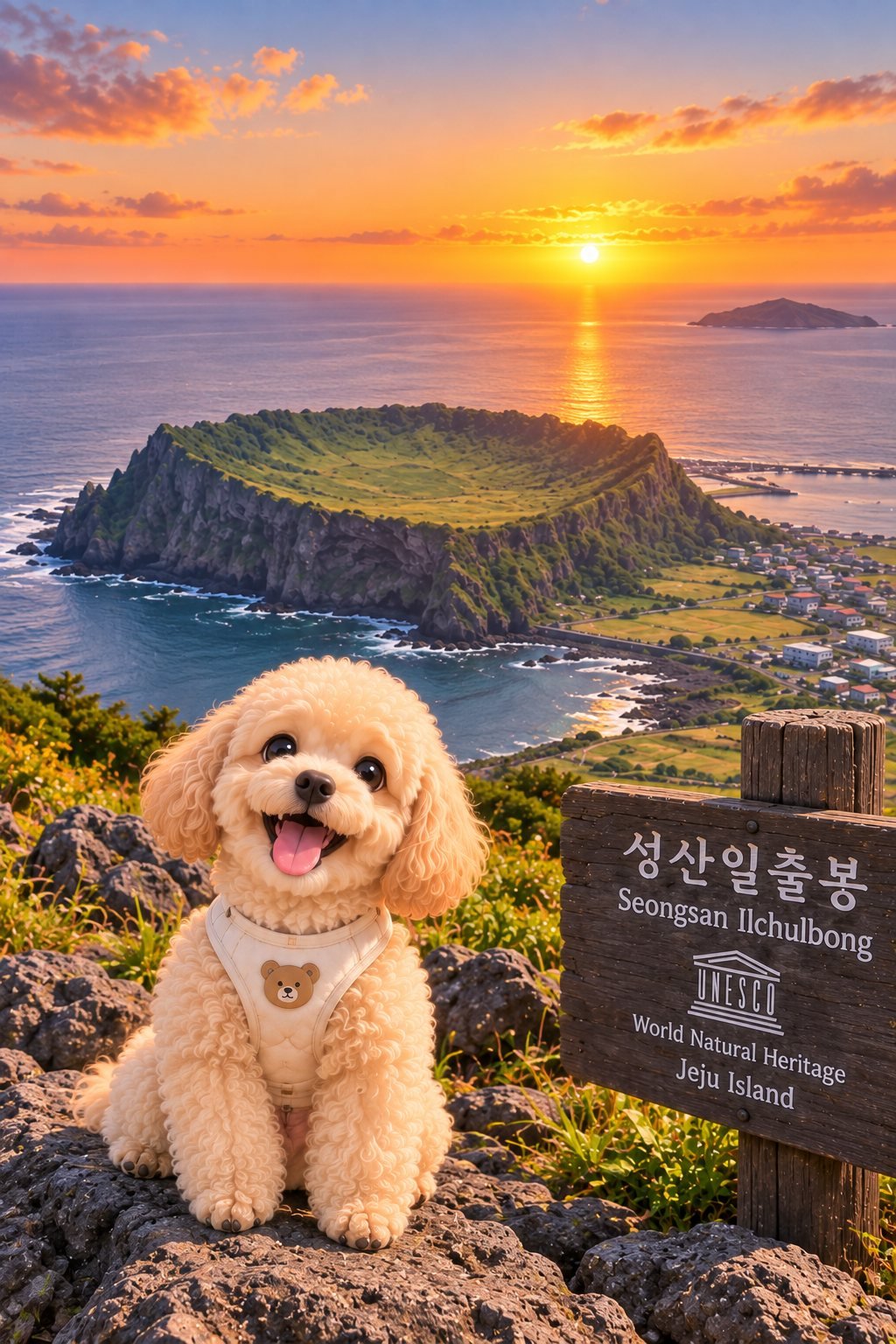
Sunrise over the eastern sea creates one of the most memorable ways to experience Seongsan Ilchulbong and Jeju’s volcanic coastline.
Best Time to Visit
Morning is a popular time to visit Seongsan Ilchulbong, especially for travelers interested in sunrise, cooler walking conditions, and softer light across the volcanic landscape.
Spring and autumn are generally comfortable for walking and climbing. Summer can be hot and humid, while winter may bring strong winds and colder conditions around exposed viewpoints.
Weather is especially important at Seongsan Ilchulbong because clouds, rain, wind, and visibility can affect both the climb and the views. Check current conditions before visiting if reaching the upper viewpoint or seeing a clear sunrise is important to your trip.
How Long to Spend
About 1.5–3 hours works well for many first-time visitors who want to explore the lower areas, complete the main climb at a comfortable pace, enjoy the viewpoints, and take photographs.
A shorter visit can focus on the lower grasslands and exterior views without completing the climb. Visitors interested in sunrise, photography, slower walking, nearby cafés, or additional Seongsan attractions may want to allow more time.
Remember that stairs and elevation can make the summit route more physically demanding than the distance alone suggests.
How to Get There
Seongsan Ilchulbong is located on the eastern side of Jeju Island. Travel time varies considerably depending on whether visitors begin from Jeju City, Seogwipo, another part of eastern Jeju, or a nearby accommodation.
Visitors may use local buses, taxis, rental vehicles, or other suitable transportation depending on their itinerary. Jeju is geographically large, so transportation time should be included when planning multiple attractions on the same day.
Routes, schedules, parking conditions, and public transportation options can change. Check a current navigation or transit service on the day of your visit, especially when traveling early for sunrise.
First-Time Visitor Tips
- Wear comfortable shoes suitable for stairs, slopes, and uneven walking surfaces.
- Check the weather and visibility before planning the summit climb.
- Check the current sunrise time and early-morning access conditions if sunrise is your priority.
- Bring water during warmer weather and take breaks during the climb when needed.
- Allow more time than expected if you prefer a slower pace on stairs.
- Stay on designated trails and respect conservation barriers.
- Take extra care during rain, strong wind, or wet conditions.
- Check current transportation options when combining Seongsan with other eastern Jeju attractions.
What to Do Nearby
- Udo Island — explore turquoise water, beaches, volcanic shoreline, coastal roads, fields, and small island villages.
- Seopjikoji — walk through open grasslands, volcanic cliffs, coastal paths, and panoramic ocean scenery with views toward the wider Seongsan area.
- Seongsan coastal area — explore local streets, cafés, restaurants, harbor scenery, and ocean views around the base of Seongsan Ilchulbong.
- Hamdeok Beach — enjoy turquoise water, beach walks, Seoubong views, coastal cafés, and a relaxed northeastern Jeju atmosphere.
- Eastern Jeju coastal roads — follow scenic routes connecting volcanic landscapes, villages, farmland, beaches, cafés, and ocean viewpoints.
Jeju K-Culture Connection
Seongsan Ilchulbong introduces a side of Korea that is shaped less by dense cities and more by volcanic geology, island landscapes, coastal communities, and the sea. Jeju’s natural environment has influenced local lifestyles, architecture, food, agriculture, tourism, and regional identity.
For international visitors who first encounter Korea through Seoul or Busan, Jeju provides a noticeably different visual and cultural experience. Black volcanic stone, green fields, coastal villages, ocean roads, volcanic formations, and island traditions become part of the journey.
Seongsan Ilchulbong now connects naturally with a wider Jeju journey. Visitors can continue to Udo Island for island landscapes, Seopjikoji for coastal grasslands and volcanic cliffs, Hallasan National Park for mountain landscapes and hiking, Hamdeok Beach for beach culture, Jeongbang Waterfall for waterfall-and-ocean scenery, and Seogwipo Maeil Olle Market for local food and everyday market culture.
FAQ
What is Seongsan Ilchulbong known for?
Seongsan Ilchulbong is known for its distinctive volcanic crater, dramatic coastal cliffs, green landscape, ocean views, sunrise scenery, and geological importance. It is part of Jeju Island’s UNESCO-recognized volcanic natural heritage.
How long should I spend at Seongsan Ilchulbong?
About 1.5–3 hours works well for many first-time visitors. This allows time to explore the lower areas, climb toward the upper viewpoint, enjoy the scenery, rest when needed, and take photographs.
Is Seongsan Ilchulbong difficult to climb?
The main climbing route includes slopes and numerous stairs, so it requires moderate physical effort. Visitors can move at their own pace and take breaks, while those who prefer not to complete the climb can still enjoy the lower grasslands and surrounding views.
Can I see Udo from Seongsan Ilchulbong?
Udo Island can be visible from the Seongsan area when weather and visibility are favorable. Elevated viewpoints also provide broad views across eastern Jeju’s coastline, farmland, villages, harbors, and surrounding sea.
When is the best time to visit Seongsan Ilchulbong?
Morning is especially popular because Seongsan Ilchulbong is one of Jeju’s best-known sunrise destinations. Spring and autumn are generally comfortable for walking, but weather, wind, clouds, and visibility can affect the experience throughout the year.
What should I check before visiting for sunrise?
Check the current sunrise time, weather forecast, visibility, transportation options, and access conditions before making an early-morning trip. Sunrise times and visitor conditions change throughout the year.
Related K-Nana Guides
Continue exploring Jeju with Udo Island for beaches and island landscapes, Hallasan National Park for mountain hiking and Baengnokdam, Hamdeok Beach for turquoise water and coastal cafés, Seopjikoji for grasslands and volcanic cliffs, Jeongbang Waterfall for waterfall and ocean scenery, and Seogwipo Maeil Olle Market for street food, local products, seafood, and everyday Jeju market culture.
Official Information
Seongsan Ilchulbong is a protected natural destination and part of Jeju’s internationally recognized volcanic heritage. Admission conditions, opening hours, summit-route access, walking routes, visitor facilities, parking, transportation, conservation restrictions, and individual services can change. Weather, strong wind, rain, visibility, maintenance, and safety conditions may also affect access to elevated areas. Check current official information when summit access, sunrise, a particular route, transportation option, or facility is important to your visit, and always remain on designated trails and respect conservation barriers.
Image Credits
Seongsan Ilchulbong and Jeju volcanic coastline family travel visual — K-Nana Studio original visual.
Seongsan Ilchulbong grasslands and volcanic scenery with Mom and Nana visual — K-Nana Studio original visual.
Seongsan Ilchulbong climbing trail with Dad and Nana visual — K-Nana Studio original visual.
Seongsan Ilchulbong summit, eastern Jeju, and Udo views with K-Nana daughter and Nana visual — K-Nana Studio original visual.
Nana enjoying sunrise and volcanic coastal scenery at Seongsan Ilchulbong visual — K-Nana Studio original visual.