
Jeongbang Waterfall is one of Jeju’s most distinctive natural attractions, where a powerful waterfall drops from a coastal cliff beside the sea. The combination of falling water, dark volcanic rocks, green vegetation, and open ocean creates a dramatic landscape that feels very different from Jeju’s beaches, mountain trails, and open grasslands.
For international visitors, Jeongbang Waterfall offers a compact but memorable nature experience. Visitors can approach the coastal area, hear the sound of the falling water, see waves moving around the volcanic rocks, and experience several of Jeju’s defining natural elements within the same landscape.
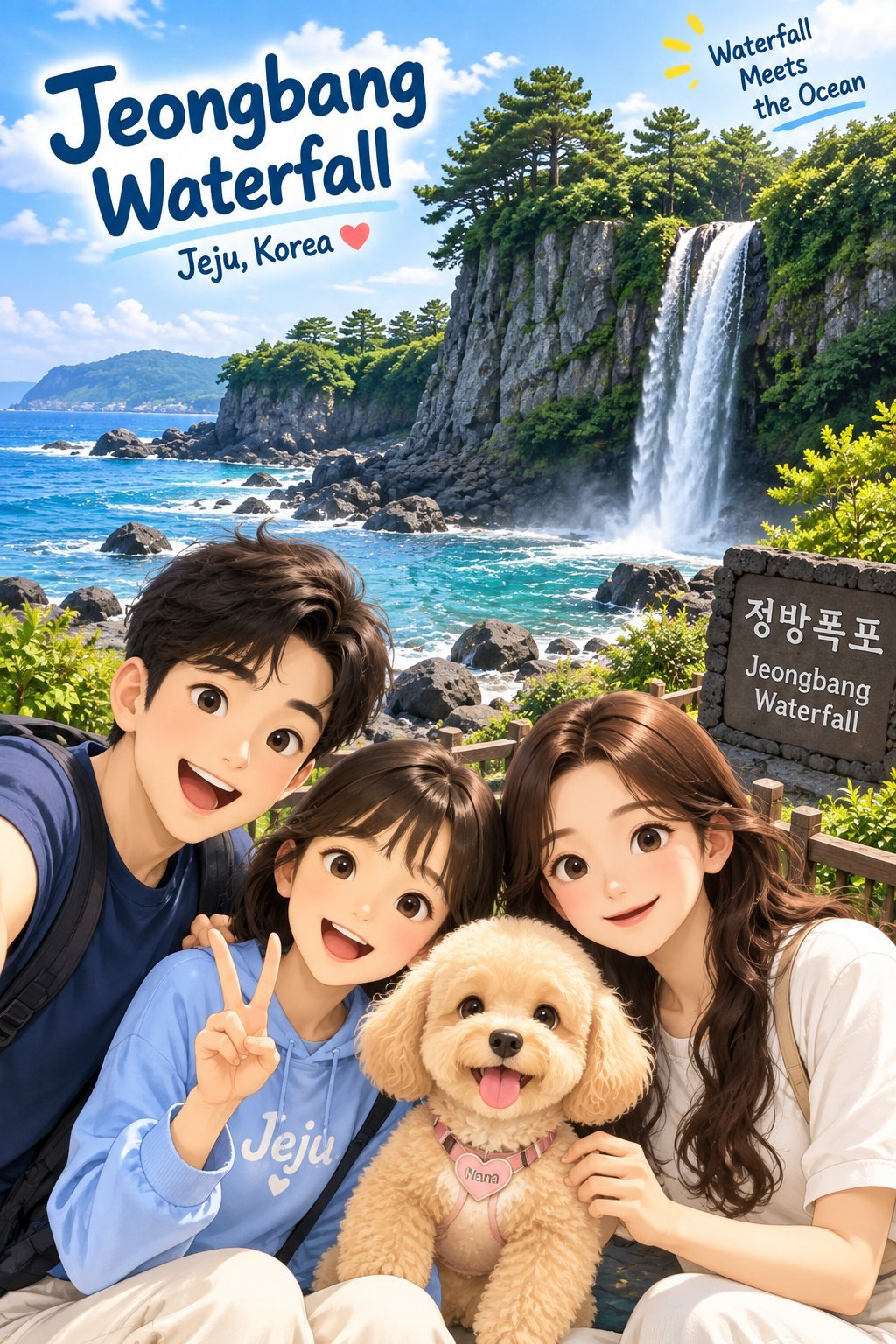
Jeongbang Waterfall brings together a coastal cliff, falling water, black volcanic rocks, and the open sea in one dramatic Jeju landscape.
Quick Guide
| Location | Seogwipo, southern Jeju Island |
| Best for | Waterfall scenery, volcanic coastline, photography, short nature visits, ocean views |
| Recommended time | About 1–2 hours |
| Main experience | Seeing a waterfall beside the sea and exploring the surrounding coastal scenery |
| Terrain | Steps, walking paths, uneven volcanic rocks, and coastal surfaces |
| Important | Wet rocks, waves, weather, and access conditions can affect the experience |
What Is Jeongbang Waterfall?
Jeongbang Waterfall is a coastal waterfall located in the Seogwipo area of southern Jeju. Water descends from a high cliff toward the rocky shoreline, with the sea immediately beyond the base of the falls.
The setting makes the waterfall visually distinctive. Instead of appearing deep inside a forest or mountain valley, Jeongbang is closely connected with the coastline, allowing visitors to experience the waterfall and ocean within the same view.
The amount and appearance of the falling water can vary according to recent weather and natural conditions. Waves, wind, sunlight, and sea conditions can also change the atmosphere around the base of the waterfall.
Waterfall Meets the Sea
The relationship between the waterfall and the coast is the defining feature of Jeongbang. From suitable viewpoints, visitors can see white water descending beside the dark cliff while blue ocean and waves extend across the background.
This creates a strong visual contrast between moving water, black volcanic stone, green vegetation, and the sea. Mist from the waterfall and spray from the coastline can make the surrounding rocks wet even when the weather itself is clear.
Conditions close to the water should always be treated carefully. Waves, slippery surfaces, wet rocks, and changing weather can make some areas more difficult to navigate than they initially appear.
Why Visit?
- Experience one of Jeju’s most distinctive waterfall and coastal landscapes.
- See falling water, volcanic rock, cliffs, and the ocean within the same view.
- Enjoy a memorable nature stop without committing to a long mountain hike.
- Photograph the contrast between white water, black rocks, greenery, and blue sea.
- Experience another side of Jeju after the mountain scenery of Hallasan National Park.
- Compare the southern coastline with the eastern scenery around Seopjikoji and Seongsan Ilchulbong.
- Add a different natural experience to a Jeju itinerary already including beaches and coastal walks.
Volcanic Shoreline
The dark rocks around Jeongbang Waterfall are an important part of the scenery. Their rough surfaces and irregular shapes create a dramatic foreground between the waterfall and the sea.
Walking across or near these rocks can be very different from following a paved sightseeing path. Surfaces may be uneven, wet, or slippery, and visitors should move carefully rather than focusing only on reaching the closest possible viewpoint.
The volcanic shoreline also connects Jeongbang with the wider geological character of Jeju. Similar dark rock can be seen around places such as Udo Island, Hamdeok Beach, and Seopjikoji, although each destination presents it within a very different landscape.
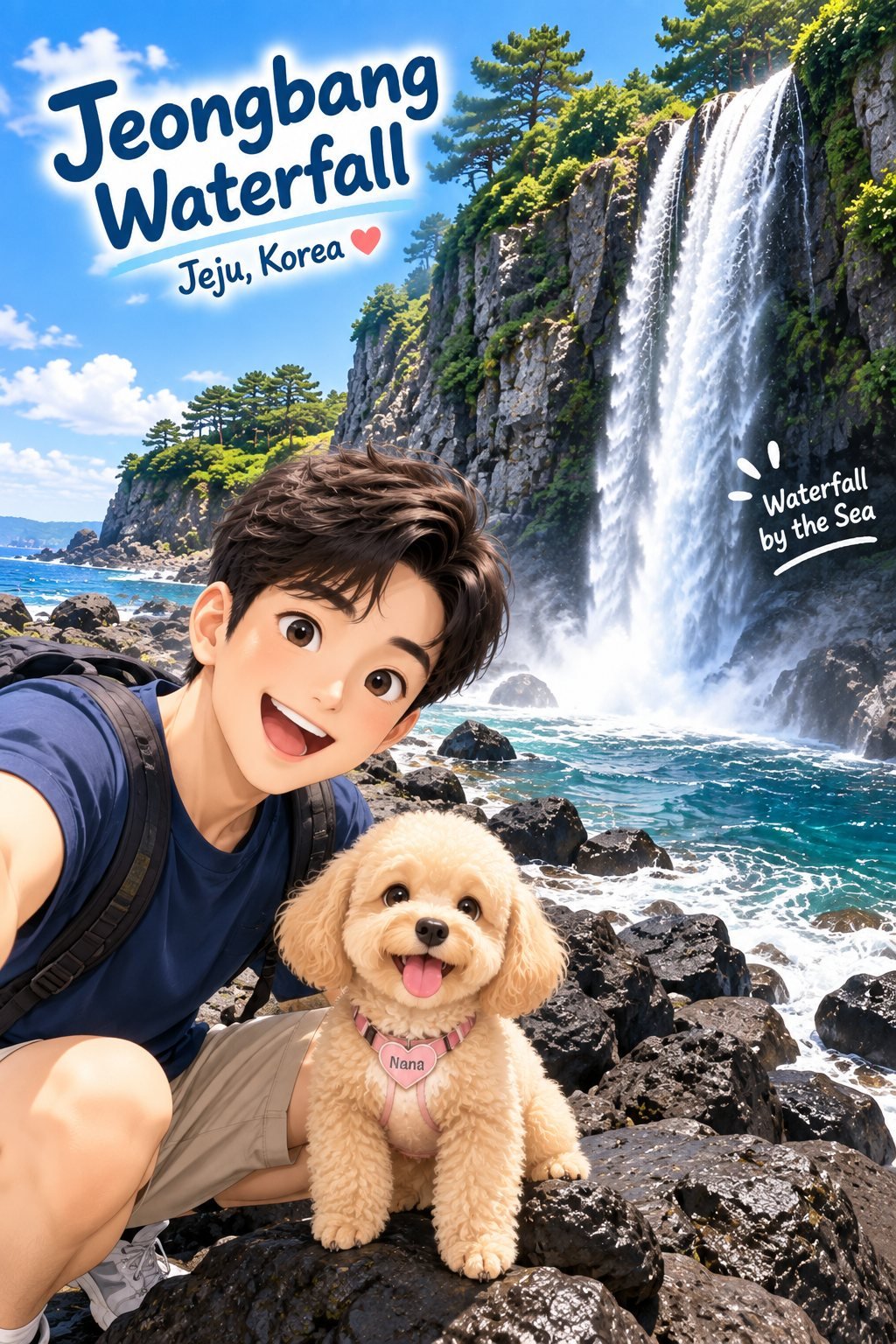
At the base of Jeongbang Waterfall, powerful falling water meets a rugged volcanic shoreline beside the open sea.
Photo Spots & Ocean Views
Jeongbang Waterfall offers several visual perspectives within a relatively compact area. The waterfall itself is the main attraction, but the surrounding sea, volcanic rocks, cliffs, and vegetation are equally important to the overall landscape.
From suitable viewpoints, visitors can frame the waterfall with the ocean behind it or focus on the contrast between the white cascade and dark volcanic shoreline. Wider views can also show how closely the waterfall is connected with Jeju’s southern coast.
Conditions near the base can be wet and slippery, so visitors should choose safe positions rather than moving across unstable rocks simply to find a better photograph.
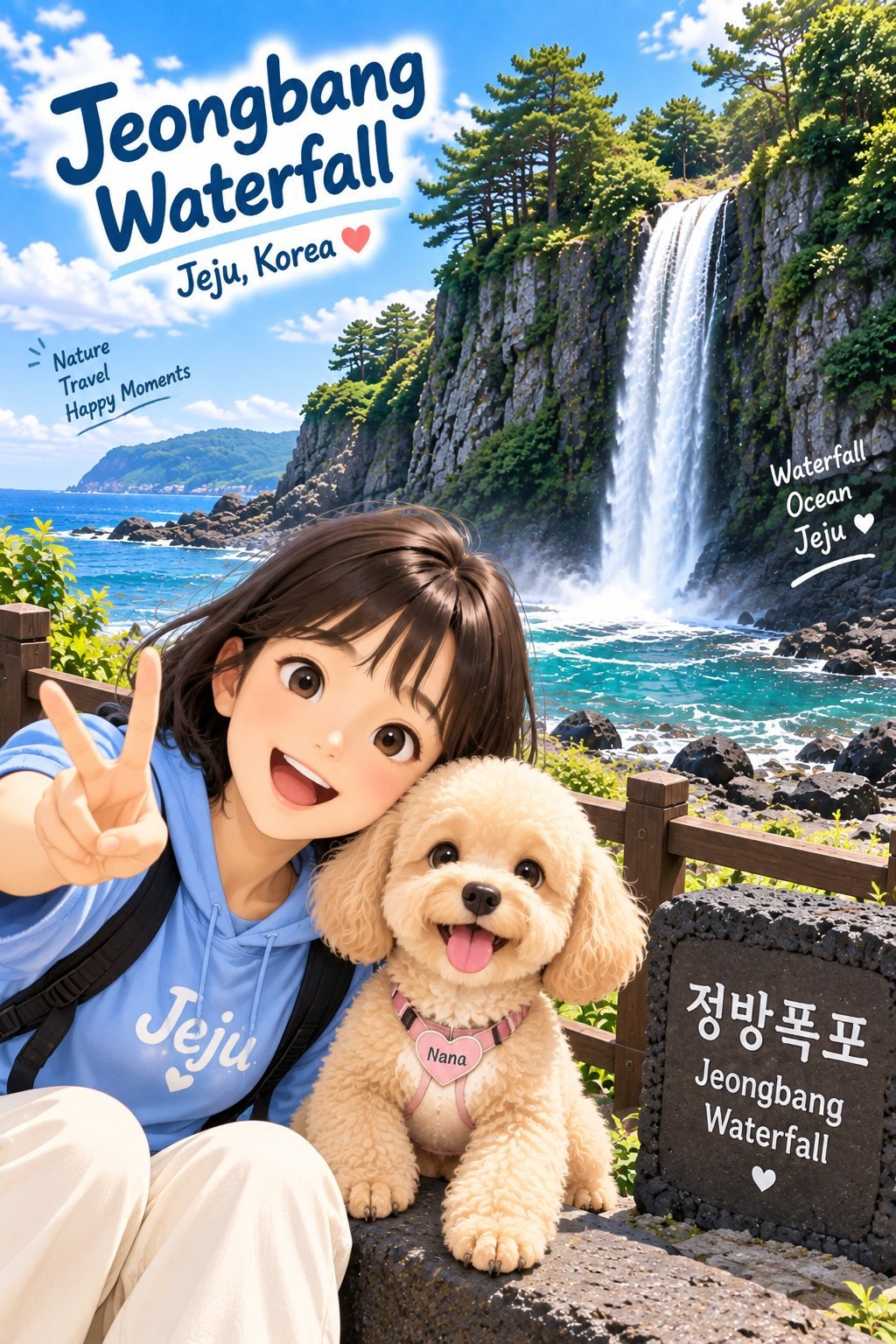
The waterfall, volcanic rocks, and blue sea create one of southern Jeju’s most distinctive photography settings.
Coastal Walk
A visit to Jeongbang Waterfall is not only about standing in front of the cascade. The surrounding paths and coastal viewpoints allow visitors to experience the cliffs, vegetation, volcanic rocks, and sea from different angles.
The combination of falling water and coastal scenery makes even a relatively short walk visually varied. Visitors can move from shaded areas near vegetation toward more open viewpoints where the sea becomes a larger part of the landscape.
Steps and uneven surfaces may require additional care, especially after rain or when mist from the waterfall makes nearby areas wet.
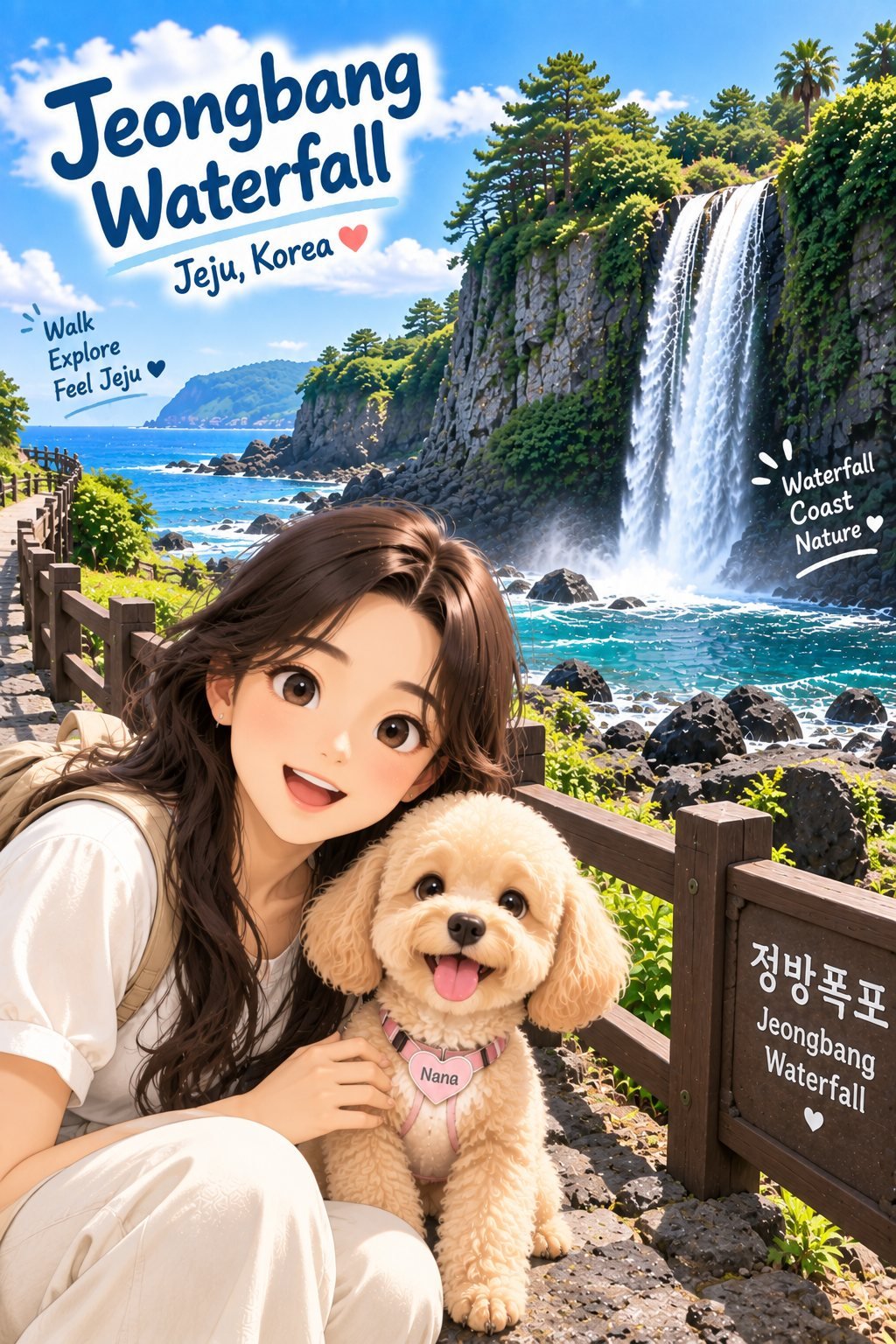
Coastal paths around Jeongbang reveal a landscape shaped by cliffs, vegetation, volcanic rock, falling water, and the sea.
Waterfall Conditions
Jeongbang Waterfall does not look exactly the same on every visit. Recent rainfall and other natural conditions can affect the volume and appearance of the falling water.
Weather also changes the experience around the coast. Bright sunlight can emphasize the blue sea and white cascade, while clouds and mist can create a more dramatic atmosphere around the cliff.
Strong wind, heavy rain, rough sea conditions, maintenance, or safety restrictions may affect access to particular areas. Visitors should follow current signs and staff instructions rather than assuming every viewpoint will always be accessible.
Photography at Jeongbang Waterfall
Jeongbang provides strong photographic contrasts within a small area. White falling water, dark volcanic rocks, green vegetation, blue ocean, and changing coastal light can all appear within the same composition.
Wide photographs can emphasize the relationship between the waterfall and the sea, while closer images can focus on the cascade, volcanic textures, waves, mist, and cliff vegetation.
Lighting changes throughout the day, and water spray can reach cameras and phones near the waterfall. Protect equipment when necessary and keep a secure grip on devices when moving across uneven surfaces.
Safety should always take priority over photography. Remain within permitted areas, avoid unstable or slippery rocks, and do not cross barriers or approach dangerous coastal edges for a photograph.
Jeongbang Waterfall at Sunset
Late afternoon brings warmer light to Jeongbang Waterfall and the surrounding coastline. As the sun moves lower, the sea, volcanic rocks, cliff vegetation, and waterfall can take on softer colors than during the brighter middle of the day.
The exact sunset experience depends on season, weather, clouds, and viewing position. Even when the sun itself is not directly visible from the waterfall, changing evening light can create a dramatic atmosphere across the southern coastline.
Visitors staying later should consider operating hours, coastal conditions, transportation, and reduced visibility around steps and uneven rocks. Check current access information before planning a visit specifically around sunset.
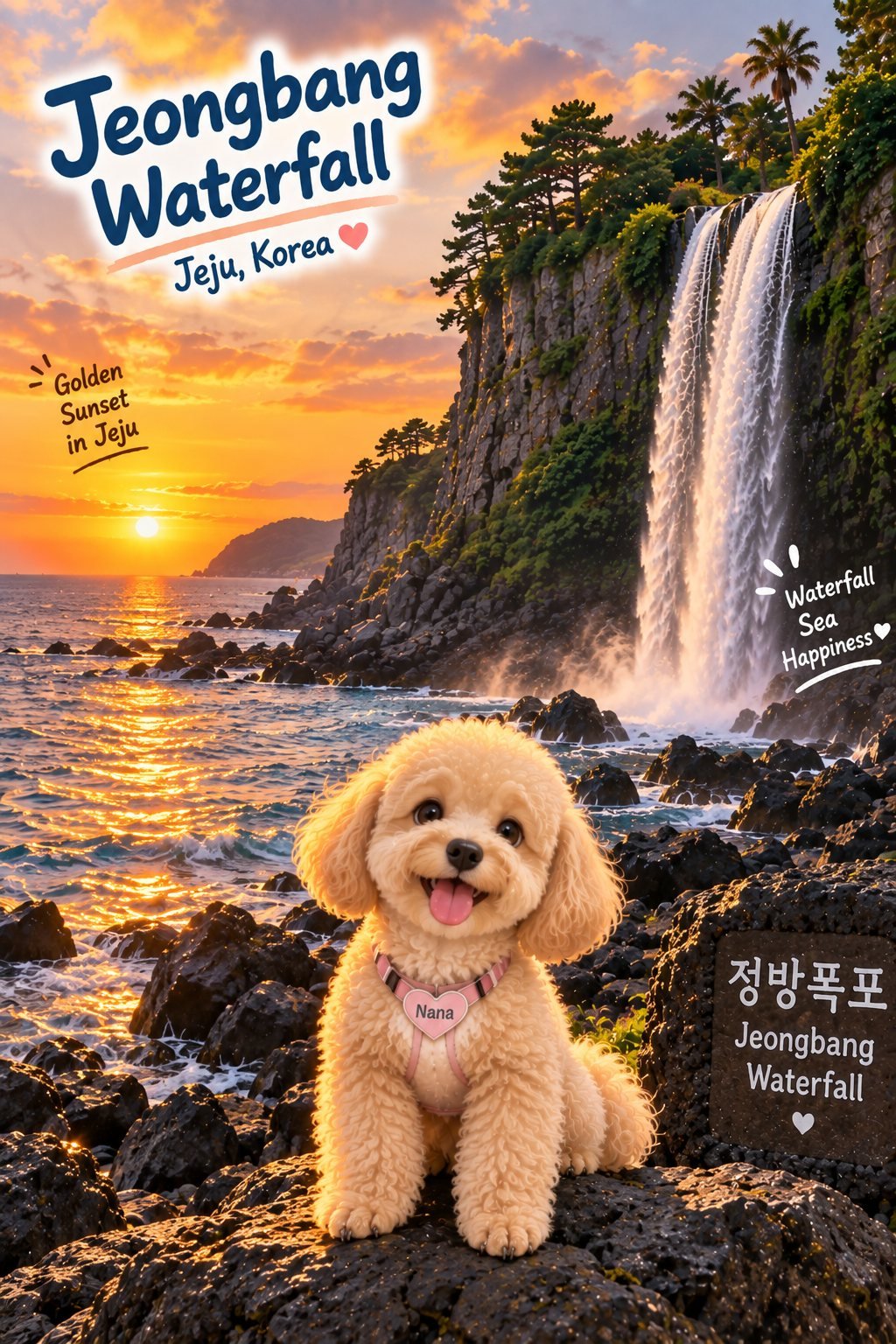
Warm evening light adds another layer of color to Jeongbang Waterfall, the volcanic shoreline, and Jeju’s southern sea.
Best Time to Visit
Jeongbang Waterfall can be visited throughout the year, but weather and recent rainfall can noticeably change both the waterfall and the surrounding coastal environment.
Spring and autumn are comfortable for walking, while summer brings warmer conditions and stronger sunlight. Winter can be quieter, although wind and lower temperatures may make the exposed coastal area feel colder.
Earlier visits can be useful for travelers who prefer a less rushed experience, while late afternoon offers softer light for photography. Always check current weather and access conditions when the waterfall is an important part of your itinerary.
How Long to Spend
About 1–2 hours works well for many first-time visitors. This provides time to approach the waterfall, enjoy the main viewpoints, explore the surrounding coastal scenery, and take photographs without rushing.
Visitors who mainly want to see the waterfall may spend less time, while photography, slower walking, or exploring the surrounding Seogwipo area can extend the visit.
Remember that steps and uneven volcanic rocks can make short distances take longer than expected, especially when surfaces are wet.
Getting to Jeongbang Waterfall
Jeongbang Waterfall is located in the Seogwipo area on Jeju’s southern coast. Its location makes it convenient to combine with other attractions, restaurants, markets, and coastal scenery around Seogwipo.
Visitors can travel by public transportation, taxi, rental vehicle, or another suitable option depending on their starting point and wider itinerary.
Bus schedules, parking conditions, road access, admission procedures, and transportation services can change. Check current navigation and official visitor information on the day of your visit.
First-Time Visitor Tips
- Wear shoes with good grip because volcanic rocks and steps can become wet and slippery.
- Check the weather and current access conditions before visiting.
- Allow extra care when walking close to the rocky shoreline.
- Protect cameras and phones from waterfall mist and sea spray.
- Follow barriers, warning signs, and staff instructions around the waterfall and coast.
- Do not climb onto unstable rocks simply for a closer photograph.
- Bring sun protection and water during warmer weather.
- Check current operating hours if visiting late in the afternoon.
What to Do Nearby
- Seogwipo city center — combine the waterfall with restaurants, cafés, shopping, and everyday city life on Jeju’s southern coast.
- Seogwipo Maeil Olle Market — experience local food, seafood, street snacks, citrus products, shopping, and a lively market atmosphere in central Seogwipo.
- Cheonjiyeon Waterfall — explore another well-known waterfall landscape in the Seogwipo area with a different setting from Jeongbang.
- Saeyeongyo Bridge & Saeseom Island — enjoy waterfront walking and coastal views close to central Seogwipo.
- Hallasan National Park — experience forests, volcanic mountain terrain, hiking trails, seasonal scenery, and Baengnokdam.
- Seopjikoji — explore open grasslands, volcanic cliffs, coastal walking paths, and panoramic ocean views.
Jeju K-Culture Connection
Jeongbang Waterfall shows how closely Jeju’s natural identity is connected with both volcanic land and the sea. The waterfall, dark rocks, coastal cliffs, vegetation, and ocean exist within one compact landscape rather than as separate attractions.
For international visitors, the experience adds another dimension to a Jeju itinerary. After beaches, volcanic craters, mountain trails, islands, and open coastal grasslands, Jeongbang introduces the sound and movement of falling water directly beside the southern coastline.
Jeongbang Waterfall now forms part of a wider K-Nana Studio Jeju journey. Travelers can connect it with Seongsan Ilchulbong for volcanic heritage, Udo Island for island landscapes, Hallasan National Park for mountain scenery, Hamdeok Beach for turquoise water and beach culture, Seopjikoji for coastal grasslands and volcanic cliffs, and nearby Seogwipo Maeil Olle Market for local food and everyday market culture.
FAQ
What is Jeongbang Waterfall known for?
Jeongbang Waterfall is known for its dramatic setting beside Jeju’s southern coast. Falling water, a steep cliff, black volcanic rocks, green vegetation, and the open sea create one of the island’s most distinctive waterfall landscapes.
How long should I spend at Jeongbang Waterfall?
About 1–2 hours works well for many first-time visitors. This allows time to approach the waterfall, enjoy the main viewpoints, explore the surrounding coastal scenery, and take photographs without rushing.
Is Jeongbang Waterfall difficult to visit?
The visit is much shorter than a mountain hike, but steps, uneven volcanic rocks, wet surfaces, and coastal conditions can require care. Comfortable shoes with good grip are recommended, particularly when the rocks are wet.
Does Jeongbang Waterfall flow directly into the sea?
Jeongbang Waterfall is famous for its unusual coastal setting, where the waterfall descends from a cliff immediately beside the sea. The exact appearance of the base area can vary with water flow, waves, tides, weather, and other natural conditions.
When is the best time to visit Jeongbang Waterfall?
Jeongbang Waterfall can be visited throughout the year. Spring and autumn are comfortable for walking, while summer provides bright coastal colors and winter can be quieter. Recent rainfall, weather, sea conditions, and daylight can significantly affect the appearance and experience of the waterfall.
What else can I visit near Jeongbang Waterfall?
The wider Seogwipo area offers markets, restaurants, cafés, additional waterfalls, waterfront walks, bridges, islands, and coastal scenery. Nearby Seogwipo Maeil Olle Market is especially convenient for adding local food, street snacks, seafood, and market culture to the same Seogwipo itinerary.
Related K-Nana Guides
Continue exploring Jeju with Seongsan Ilchulbong for volcanic scenery and summit views, Udo Island for beaches and island landscapes, Hallasan National Park for mountain hiking and Baengnokdam, Hamdeok Beach for turquoise water and coastal cafés, Seopjikoji for grasslands, volcanic cliffs, and coastal walking, and Seogwipo Maeil Olle Market for street food, seafood, local products, and everyday Jeju market culture.
Official Information
Jeongbang Waterfall is an outdoor natural attraction where admission procedures, operating hours, access, parking, transportation, walking routes, viewpoints, and visitor facilities can change. Rainfall, waterfall volume, strong wind, waves, wet rocks, maintenance, weather, and safety conditions may also affect access to particular areas. Check current official information when a specific operating time, route, facility, or access condition is important to your visit, and always follow posted signs, barriers, staff instructions, and coastal safety guidance.
Image Credits
Jeongbang Waterfall, volcanic coastline, blue sea, and Jeju family travel visual — K-Nana Studio original visual.
Jeongbang Waterfall and volcanic shoreline with Dad and Nana visual — K-Nana Studio original visual.
Jeongbang Waterfall, blue ocean, and Jeju travel scenery with K-Nana daughter and Nana visual — K-Nana Studio original visual.
Jeongbang Waterfall coastal walk, cliffs, and natural scenery with Mom and Nana visual — K-Nana Studio original visual.
Nana enjoying Jeongbang Waterfall, sunset, ocean, and volcanic coastal scenery visual — K-Nana Studio original visual.