
Korean fried chicken is one of the most recognizable modern foods in Korea, but the experience goes far beyond simply frying chicken. Crispy coatings, different cuts, sweet and spicy sauces, soy garlic glazes, pickled radish, dipping sauces, and an enormous variety of restaurant styles have turned chicken into a distinct part of contemporary Korean food culture.
For international visitors, Korean fried chicken is particularly interesting because several flavors can often be enjoyed at the same table. One order may focus on the crisp texture of plain fried chicken, while another can be completely coated in glossy red yangnyeom sauce or a darker soy garlic glaze. Sharing different varieties makes it easy to discover how much the flavor and texture can change even though the basic ingredient remains chicken.
Korean fried chicken is also closely connected with everyday social life. It can be eaten at casual chicken restaurants, ordered for takeout, delivered to homes, and shared during gatherings or an evening with friends. This combination of food, convenience, sharing, and constantly changing flavors has helped Korean fried chicken become familiar far beyond Korea.
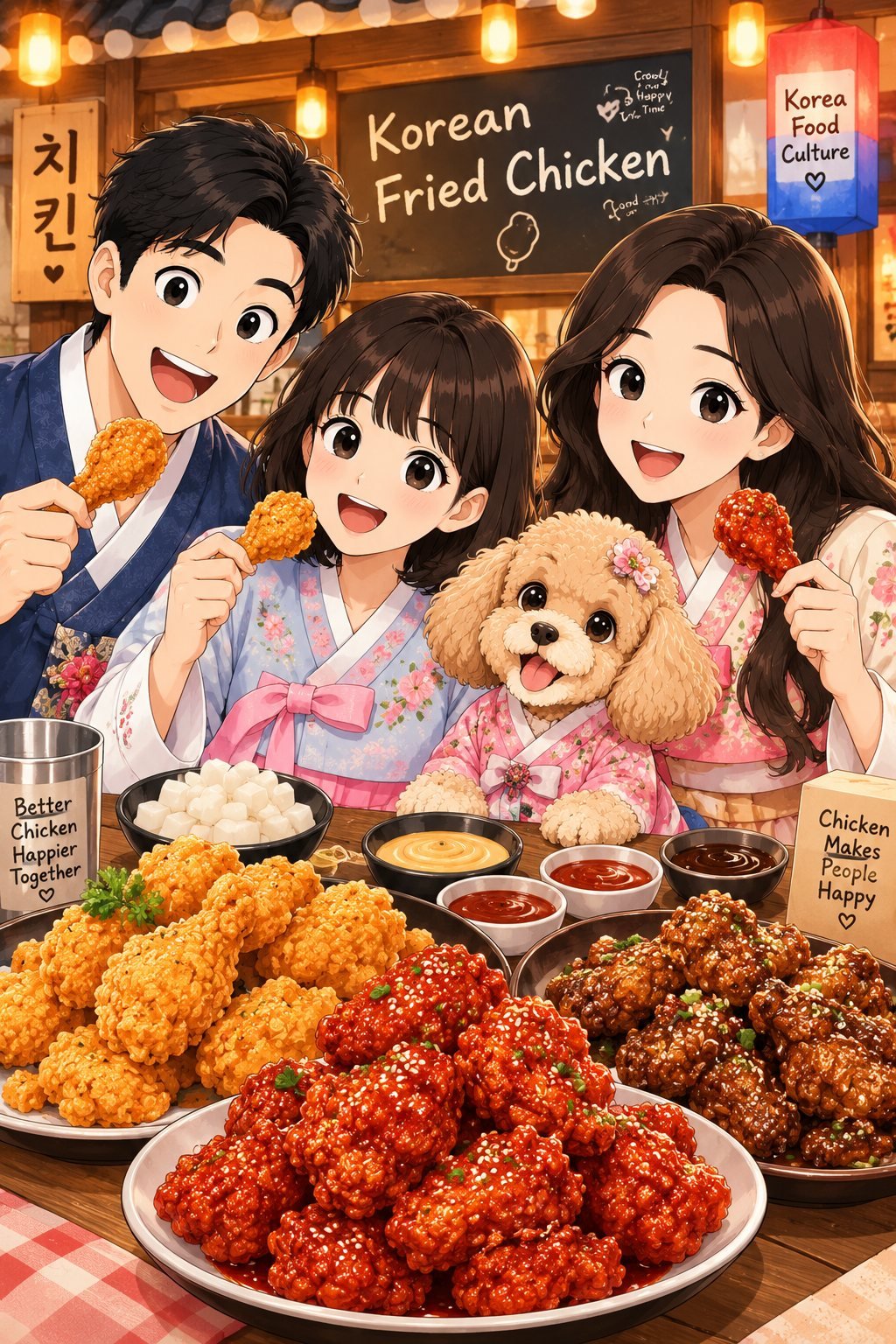
Fried chicken, yangnyeom chicken, soy garlic chicken, pickled radish, and dipping sauces show how one shared table can introduce several sides of Korean chicken culture.
Quick Guide
| Korean name | 치킨 / 프라이드치킨 |
| Food type | Korean-style fried chicken |
| Popular styles | Fried, yangnyeom, soy garlic, and many other seasoned varieties |
| Common side | Pickled radish, commonly called chicken mu |
| Typical experience | Several chicken flavors shared around the table |
| Where to find it | Chicken restaurants, casual dining areas, takeout, and delivery |
| Useful for first-time visitors | Compare plain fried chicken with at least one sauced variety |
What Is Korean Fried Chicken?
Korean fried chicken is not one standardized recipe. It is a broad category covering many ways of frying, seasoning, saucing, and serving chicken. Restaurants may use different coatings, frying techniques, cuts, marinades, sauces, seasoning powders, and side dishes.
The simplest version is usually associated with crisp fried chicken served without a heavy sauce. Other varieties are coated after frying or seasoned with powders and glazes. This allows restaurants to create menus ranging from relatively simple savory chicken to sweet, spicy, garlicky, creamy, or intensely seasoned varieties.
Bone-in chicken and boneless pieces may both be available, depending on the restaurant. Wings, drumsticks, mixed pieces, and restaurant-specific cuts can also appear on menus, so travelers should not expect every Korean chicken restaurant to offer exactly the same format.
Why Is Korean Fried Chicken Different?
One of the main attractions is the contrast between the exterior coating and the chicken inside. A well-prepared piece can provide a crisp surface followed by moist meat, while sauces and seasonings add another layer of flavor.
The experience also changes depending on when sauce is added. Plain fried chicken keeps the surface relatively dry and crisp, while heavily sauced chicken trades some of that dry crunch for a sticky or glossy coating with a stronger flavor.
This is why comparing several varieties at the same table can be more useful than trying only one. The differences between plain fried, yangnyeom, and soy garlic chicken demonstrate how Korean chicken restaurants build multiple eating experiences from the same basic food.
Fried Chicken: Start with the Crunch
Plain fried chicken is a useful starting point for first-time visitors because it allows the coating itself to remain the focus. Without a thick sauce covering the surface, the texture, seasoning, and flavor of the fried chicken are easier to notice.
Restaurants may use different batters or coatings, and the appearance can range from relatively smooth to rough and highly textured. Some versions are lightly seasoned, while others have a stronger savory flavor before any dipping sauce is added.
Plain fried chicken can be eaten by itself or paired with salt, dipping sauces, pickled radish, and other sides provided by the restaurant.
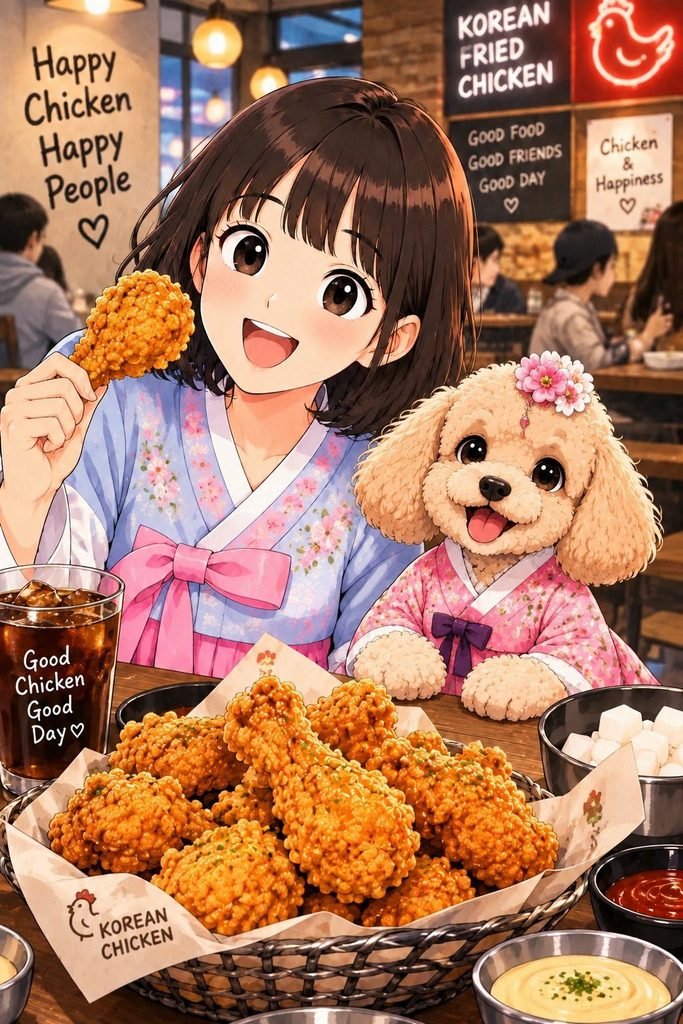
Plain fried chicken puts the crisp coating at the center of the experience and provides a useful starting point before moving to Korea’s many sauced varieties.
Yangnyeom Chicken: Sweet, Spicy & Savory
Yangnyeom chicken is one of the styles most strongly associated with Korean fried chicken. The fried pieces are coated with a seasoned sauce, commonly creating the glossy red appearance that many international visitors recognize immediately.
The flavor is often described as a combination of sweetness, spice, and savory seasoning, but there is no single universal yangnyeom sauce. Restaurants create their own recipes, so sweetness, chili heat, garlic, acidity, and sauce thickness can all vary.
This variation is important for travelers who are sensitive to spicy food. A bright red sauce does not provide an exact measurement of heat. One restaurant’s yangnyeom chicken may be relatively mild and sweet, while another version can have a much stronger chili flavor.
How Yangnyeom Chicken Is Made
A familiar preparation begins with chicken that has already been fried. Instead of cooking the raw chicken directly in the sauce, the finished fried pieces are coated or tossed with the seasoned mixture.
This creates a noticeably different surface from plain fried chicken. The dry crisp coating becomes covered with sauce, producing a sticky or glossy texture and distributing the seasoning across the chicken.
Some versions are finished with sesame seeds, chopped nuts, or other garnishes, although ingredients vary by restaurant and recipe.
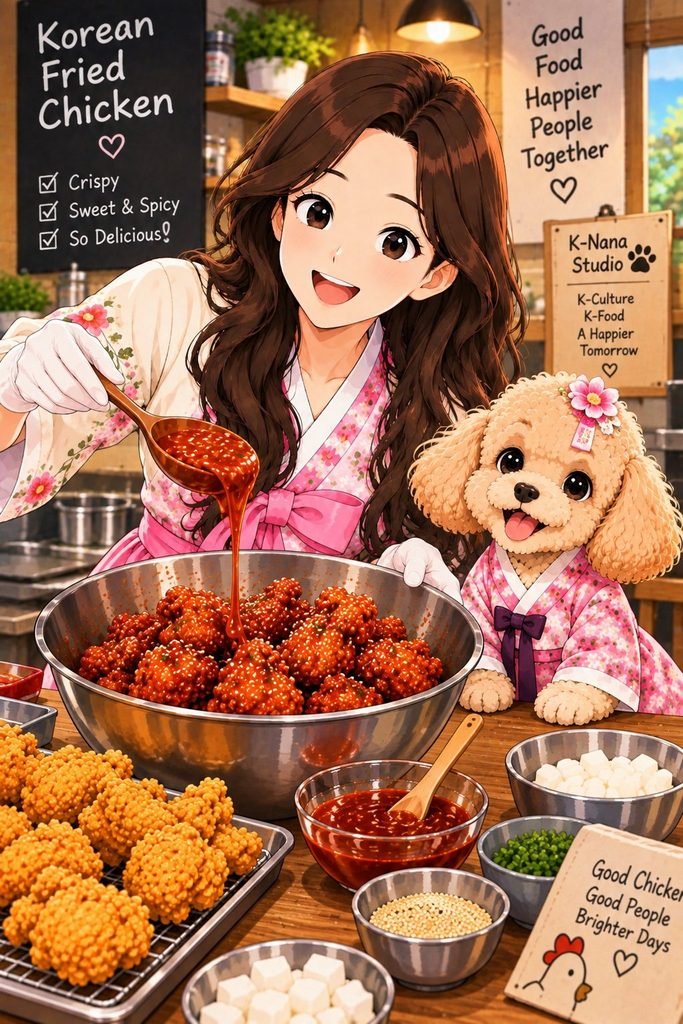
Yangnyeom chicken begins with fried chicken and transforms it with a seasoned coating that can combine sweetness, spice, garlic, and savory flavor.
Soy Garlic Chicken
Soy garlic chicken offers another familiar flavor direction. Instead of the bright-red appearance of many yangnyeom sauces, soy garlic chicken generally has a darker glaze built around savory soy and garlic flavors.
The sauce can also contain sweetness, creating a balance between salty, savory, garlicky, and sweet notes. As with yangnyeom chicken, recipes vary considerably between restaurants.
Ordering soy garlic alongside plain fried and yangnyeom chicken creates three clearly different experiences: crisp and relatively simple, red and strongly seasoned, and dark with a savory-sweet garlic profile.
Chicken Mu: Why Pickled Radish Matters
The small white cubes commonly served beside Korean fried chicken are pickled radish, often called chicken mu. Their role may seem minor at first, but they provide an important contrast to fried and heavily sauced foods.
Chicken mu is typically crisp, cool, and sweet-and-sour. Eating a piece between bites can refresh the palate after rich fried chicken or a strongly seasoned sauce.
This contrast is part of the overall table experience. Korean fried chicken is not only about choosing a sauce; accompanying foods such as pickled radish and dipping sauces change how each variety tastes from one bite to the next.
Comparing Fried, Yangnyeom & Soy Garlic
Placing several chicken styles side by side makes their differences easy to understand. Plain fried chicken emphasizes its coating and crunch. Yangnyeom chicken adds a glossy sauce that can be sweet and spicy. Soy garlic chicken introduces a darker savory-sweet glaze with a noticeable garlic character.
There is no requirement to choose only one. Restaurants may offer combinations, mixed orders, or different portion options, although the exact ordering system varies.
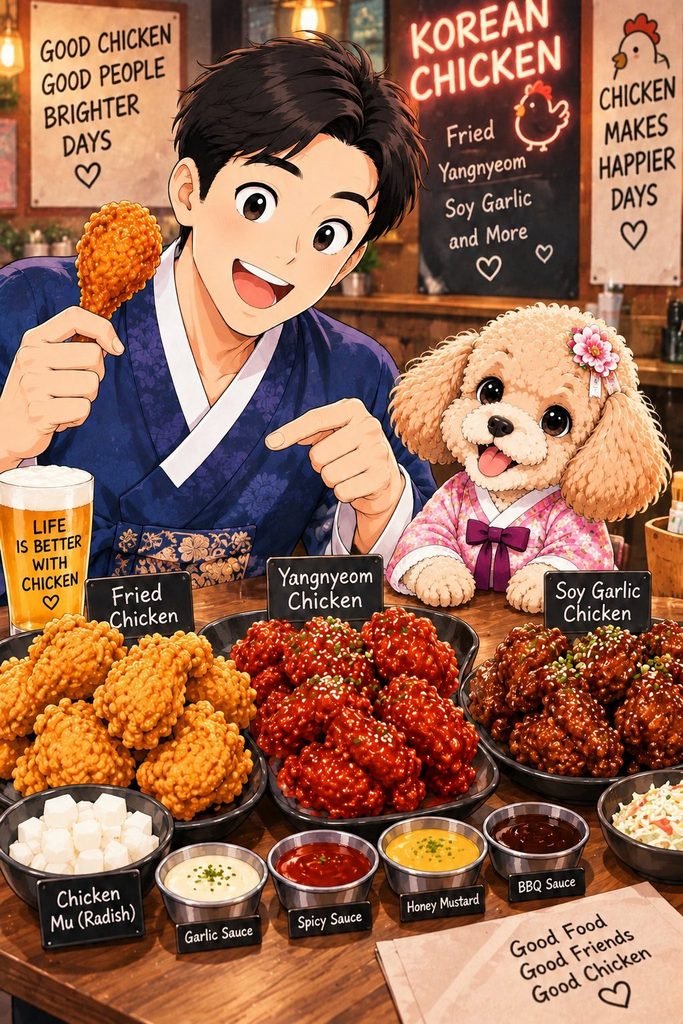
Comparing fried, yangnyeom, and soy garlic chicken at the same table is one of the easiest ways to discover the range of Korean chicken flavors.
Half-and-Half Chicken
For first-time visitors who want to compare flavors, ordering two varieties together can be especially useful. Korean chicken restaurants often have ordering formats that allow customers to combine different styles, although the available combinations and portion sizes depend on the restaurant.
A familiar choice is plain fried chicken together with yangnyeom chicken. The plain pieces keep their dry, crisp coating, while the sauced pieces provide a sweeter and more strongly seasoned contrast.
Soy garlic can provide another option for diners who want a savory-sweet glaze without choosing the familiar red yangnyeom style. Always check the menu because not every restaurant uses the same combination system.
More Than Three Flavors
Fried, yangnyeom, and soy garlic are useful starting points, but contemporary Korean chicken menus can extend far beyond these three styles. Restaurants continually develop new sauces, seasoning powders, glazes, and combinations.
Depending on the restaurant, diners may encounter extra-spicy chicken, garlic-focused varieties, cheese or seasoning-powder styles, honey-based sauces, barbecue-inspired flavors, or recipes unique to a particular brand.
This variety is one reason Korean fried chicken can be tried repeatedly during a trip without every meal feeling identical. A neighborhood chicken restaurant and a large chicken chain may offer noticeably different menus even though both specialize in fried chicken.
Chicken Mu, Sauces & the Complete Table
A Korean chicken table is often built around contrasts. Hot fried chicken is paired with cool pickled radish, while rich coatings can be alternated with sharper or lighter flavors.
Dipping sauces can add another layer. Depending on the restaurant, diners may receive or order sauces with garlic, mustard, chili, barbecue-style seasoning, or other flavors. Some chicken already arrives fully seasoned and needs no additional sauce.
The best approach for a first visit is to taste each chicken variety before adding extra sauce. This makes it easier to understand the flavor the restaurant intended before creating additional combinations.
How to Order Korean Fried Chicken
Korean chicken menus can initially look complicated because they may separate chicken by flavor, cut, bone-in or boneless format, portion size, and combination options.
Begin by deciding whether you want plain fried chicken, sauced chicken, or more than one flavor. Then check whether the restaurant offers bone-in, boneless, wings, mixed pieces, or another format.
Portions are frequently designed for sharing, so travelers should check the serving size before ordering several full portions. A combination option can be more practical when two people simply want to compare flavors.
- Choose the style — fried, yangnyeom, soy garlic, or another available flavor.
- Check the cut — bone-in, boneless, wings, or other options may be available.
- Check the portion — some orders are intended for several people.
- Look for combinations — mixed flavors can make comparison easier.
- Check the heat level — spicy sauces vary considerably between restaurants.
Takeout & Delivery Culture
Korean fried chicken is not limited to restaurant tables. Takeout and delivery are major ways people enjoy chicken, making it a convenient food for homes, gatherings, and casual evenings.
This flexibility has helped chicken become closely associated with relaxed social occasions. Instead of planning a formal restaurant meal, people can share several chicken flavors in a much more casual setting.
For international travelers, delivery can be less straightforward because ordering platforms, payment methods, phone verification, addresses, and service areas can vary. When delivery is inconvenient, ordering directly at a restaurant or using takeout can be simpler.
Korean Chicken Restaurants
Chicken restaurants range from small neighborhood businesses to large chains with extensive menus. Some focus heavily on fried chicken itself, while others provide a broader casual dining environment with side dishes and drinks.
Menus, opening hours, minimum orders, service styles, and available flavors can change. Travelers should therefore check current information for the specific restaurant they plan to visit rather than assuming every Korean chicken restaurant works the same way.
Areas with active evening dining and entertainment can make chicken easy to include in a night out. Hongdae combines restaurants with cafés, shopping, music, and nightlife, while Gangnam Station & Gangnam-daero provides another major concentration of dining and evening activity.
Chicken as a Late-Night Food
Korean fried chicken is strongly associated with casual evening eating. Its shareable format makes it suitable for groups who want to continue talking over food rather than move through a formal sequence of courses.
This helps explain why chicken fits naturally into entertainment districts and nightlife areas. The meal can become part of the evening itself rather than simply a stop for food.
Visitors exploring Hongdae can experience this connection particularly clearly because restaurants, nightlife, street activity, cafés, and youth culture are concentrated within the same broader area.
First-Time Korean Fried Chicken Tips
- Start with plain fried chicken — it provides a useful baseline for comparing the other flavors.
- Add one sauced variety — yangnyeom or soy garlic creates an obvious contrast.
- Try chicken mu between flavors — the pickled radish can refresh the palate.
- Check before ordering several portions — one chicken order may already be intended for sharing.
- Ask about spice — a red sauce does not indicate an exact heat level.
- Check bone-in and boneless choices — preparation and available flavors may differ.
- Eat freshly served chicken carefully — the chicken underneath the coating can remain very hot.
- Do not expect identical menus — individual restaurants and chains can specialize in very different flavors.
A Korean Fried Chicken Table
Looking at several styles together makes Korean fried chicken easier to understand than describing it as one dish. Golden fried pieces emphasize crispness, glossy red yangnyeom provides a stronger seasoned coating, and dark soy garlic chicken introduces another savory-sweet direction.
Chicken mu and dipping sauces create additional contrasts, allowing diners to move between rich, sweet, spicy, savory, sour, and refreshing flavors during the same meal.
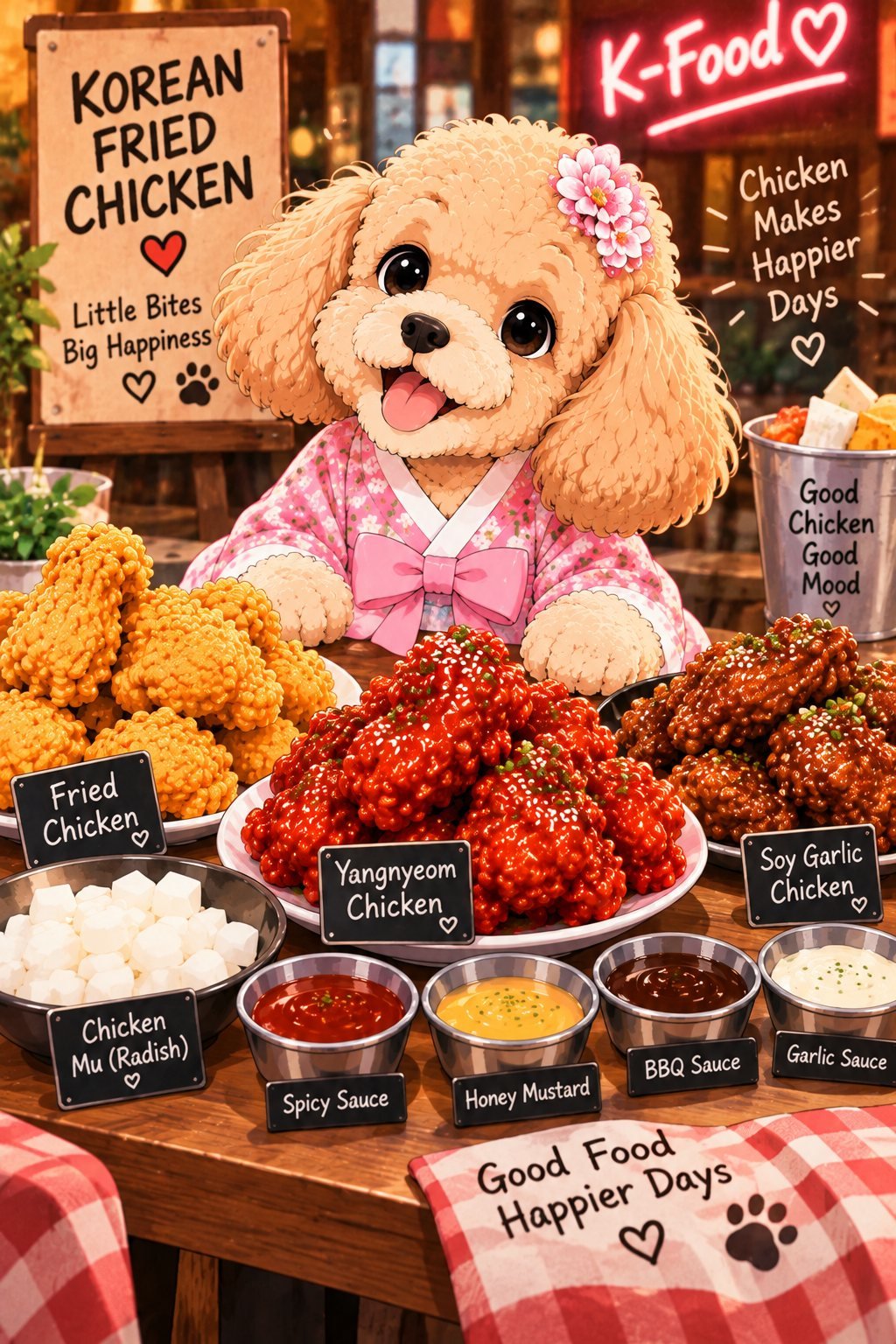
Fried chicken, yangnyeom, soy garlic, chicken mu, and different sauces show why Korean chicken is better understood as a whole dining culture rather than a single flavor.
Korean Fried Chicken & K-Culture
Korean fried chicken has become increasingly recognizable to international audiences through Korean dramas, entertainment programs, online food content, travel videos, and the expansion of Korean restaurants outside Korea.
What visitors encounter in Korea, however, is broader than an image seen on screen. Chicken restaurants are part of everyday neighborhoods, entertainment districts, takeout culture, delivery culture, and casual gatherings.
The experience therefore combines contemporary Korean food with social culture. Choosing several flavors, placing them in the middle of the table, and sharing the order creates a different atmosphere from individually plated meals.
How Korean Fried Chicken Connects with Other K-Food
K-Nana Studio’s K-Food collection now shows several very different ways Korean food can be experienced.
Kimchi introduces fermentation, vegetables, banchan, and kimjang culture. Bibimbap brings rice, namul, protein, egg, and gochujang together in one mixed bowl.
Korean BBQ moves the cooking process directly to the table and emphasizes grilling, ssam, banchan, and sharing. Tteokbokki introduces chewy rice cakes, gochujang sauce, markets, and bunsik culture.
Korean fried chicken adds another dimension: modern restaurant culture, takeout, delivery, multiple sauces, and a casual shared meal that has become internationally recognizable.
Korean Fried Chicken & Seoul Nightlife
For travelers, chicken can also become a bridge between K-Food and exploring the city. A meal does not need to be separated from sightseeing, shopping, music, or nightlife.
Hongdae is particularly suited to this combination because its youth-oriented streets bring together restaurants, cafés, shops, entertainment, and evening activity.
Gangnam Station & Gangnam-daero provides a different urban setting with dense commercial streets, restaurants, cafés, and nightlife.
Visitors looking for another international dining and nightlife environment can also explore Itaewon, where Korean and international food cultures meet within the same neighborhood.
FAQ
What is Korean fried chicken?
Korean fried chicken is a broad category of fried chicken that includes plain crispy chicken as well as many sauced, glazed, and seasoned varieties. Restaurants can differ in their frying methods, coatings, chicken cuts, sauces, seasonings, and serving styles.
What is yangnyeom chicken?
Yangnyeom chicken is fried chicken coated with a seasoned sauce. A familiar version has a glossy red appearance and combines sweet, spicy, and savory flavors, but recipes and heat levels vary considerably between restaurants.
What is soy garlic chicken?
Soy garlic chicken is generally coated with a darker soy-based glaze flavored with garlic. It commonly has a savory-sweet character and provides a noticeably different flavor from both plain fried chicken and red yangnyeom chicken.
Is Korean fried chicken always spicy?
No. Plain fried chicken does not need to be spicy, and soy garlic chicken is another popular alternative to chili-focused sauces. Even red yangnyeom chicken can range from relatively mild and sweet to much hotter versions.
What is chicken mu?
Chicken mu is pickled radish commonly served with Korean fried chicken. The small white cubes are typically crisp and sweet-and-sour, providing a refreshing contrast to rich fried chicken and strongly seasoned sauces.
What does half-and-half chicken mean?
It generally describes an ordering option that allows diners to enjoy two chicken styles or flavors together. Plain fried chicken and yangnyeom chicken are a familiar combination, although available pairings and portion formats vary by restaurant.
Should I order bone-in or boneless chicken?
Both can be available depending on the restaurant. Bone-in chicken provides the experience of eating traditional chicken pieces, while boneless options can be easier to share. Coatings, cuts, prices, and available flavors may differ, so check the specific menu before ordering.
Where to Try Korean Fried Chicken
Korean fried chicken restaurants can be found throughout Korea, so travelers do not need to visit one particular neighborhood or famous restaurant to experience it. Large chains, independent neighborhood restaurants, takeout shops, and other casual establishments can all provide different versions.
Rather than choosing only by brand recognition, first-time visitors can compare the available chicken styles, portion sizes, bone-in or boneless options, combination menus, spice levels, prices, and current restaurant information.
For travelers who want to combine chicken with an active evening itinerary, Hongdae connects restaurants with youth culture, shopping, cafés, music, and nightlife.
Gangnam Station & Gangnam-daero provides another dense dining and entertainment district, while Itaewon offers a different atmosphere shaped by both Korean and international food and nightlife culture.
Related K-Nana Guides
Continue exploring Korean food with K-Nana Studio’s Kimchi Guide for fermentation, kimjang, and banchan culture.
The Bibimbap Guide introduces rice, namul, vegetables, protein, egg, gochujang, and the experience of mixing several ingredients into one bowl.
For another social dining experience, the Korean BBQ Guide explains samgyeopsal, galbi, ssam, ssamjang, tabletop grilling, and banchan.
The Tteokbokki Guide moves into Korean street-food culture with rice cakes, gochujang sauce, eomuk, twigim, kimbap, and bunsik.
For travel connections, explore Hongdae, Gangnam Station & Gangnam-daero, and Itaewon for three different sides of Seoul’s dining and evening culture.
Food & Allergy Notes
Korean fried chicken ingredients vary considerably by restaurant and recipe. Batter, flour mixtures, coatings, marinades, seasoning powders, glazes, and dipping sauces may contain wheat, soy, sesame, egg, milk, garlic, nuts, seafood-derived ingredients, or other ingredients relevant to allergies and dietary restrictions.
Yangnyeom and soy garlic sauces can contain several ingredients that are not obvious from appearance alone. A sauce that looks simple may include soy-based seasoning, wheat-containing ingredients, sesame, sweeteners, garlic, chili products, or other seasonings.
Frying oil and cooking equipment may also be shared with other foods. This creates the possibility of cross-contact even when a particular chicken variety does not appear to contain an allergen directly.
Bone-in and boneless chicken may use different coatings, marinades, cuts, or preparation methods. Do not assume that ingredient information for one menu item automatically applies to another.
Visitors with allergies, intolerances, medical conditions, religious dietary restrictions, or other specific requirements should confirm ingredients, frying practices, sauces, and cross-contact procedures directly with the restaurant before ordering.
Image Credits
Korean fried chicken family dining experience with fried, yangnyeom, and soy garlic chicken with the K-Nana family and Nana in hanbok visual — K-Nana Studio original visual.
Crispy Korean fried chicken experience with K-Nana daughter and Nana in hanbok visual — K-Nana Studio original visual.
Yangnyeom chicken preparation with red seasoned sauce with Mom and Nana in hanbok visual — K-Nana Studio original visual.
Fried, yangnyeom, and soy garlic chicken comparison with chicken mu and sauces with Dad and Nana in hanbok visual — K-Nana Studio original visual.
Nana in pink floral hanbok with fried chicken, yangnyeom chicken, soy garlic chicken, chicken mu, and different dipping sauces visual — K-Nana Studio original visual.
Disclaimer
This article is provided for general food, travel, and cultural information. Korean fried chicken ingredients, coatings, marinades, sauces, seasonings, allergens, frying oils, preparation methods, cross-contact practices, restaurant menus, and dietary suitability can vary. Always confirm ingredients and preparation directly with the restaurant or seller when allergies, medical conditions, religious restrictions, or other dietary requirements are relevant.