
Jjajangmyeon is one of Korea’s most recognizable noodle dishes, built around noodles covered with a thick, dark sauce commonly made with chunjang, meat, onions, and other vegetables. Before eating, the noodles and sauce are mixed together until the strands are evenly coated in the glossy black-brown sauce.
Although jjajangmyeon developed through Chinese culinary influence in Korea, it has evolved into a distinctive part of Korean food culture. Today it is strongly associated with Korean-style Chinese restaurants, casual meals, family dining, takeout, and Korea’s long-established food-delivery culture.
The appearance can be dramatic for first-time visitors because of the dark sauce, but familiar versions are not defined by extreme chili heat. Instead, the dish commonly combines savory, slightly sweet, roasted, and rich flavors with the texture of chewy noodles and diced ingredients in the sauce.
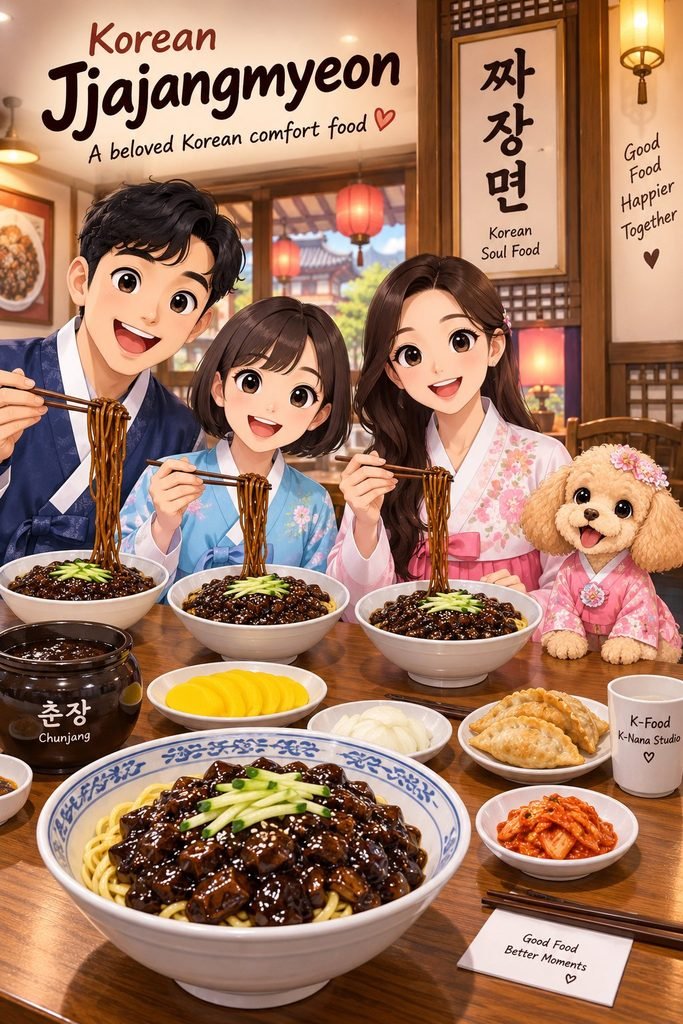
Glossy black-bean sauce, chewy noodles, danmuji, and onion introduce one of the most familiar dishes in Korea’s Korean-style Chinese restaurant culture.
Quick Guide
| Korean name | 짜장면 |
| Main base | Noodles topped with a thick chunjang-based sauce |
| Common sauce ingredients | Chunjang, pork, onion, cabbage, zucchini, and recipe-dependent ingredients |
| Typical flavor | Savory, rich, roasted, and mildly sweet depending on the recipe |
| Common garnish | Julienned cucumber or other restaurant-specific garnish |
| Common accompaniments | Danmuji and raw onion, with additional accompaniments depending on the restaurant |
| Common setting | Korean-style Chinese restaurants, delivery, takeout, and casual meals |
What Is Jjajangmyeon?
Jjajangmyeon is a Korean noodle dish in which cooked noodles are served with a thick dark sauce based on chunjang. Pieces of meat and vegetables are commonly cooked into the sauce, giving it both flavor and texture.
The sauce is placed over the noodles rather than completely mixed before serving. Diners usually combine the two themselves, using chopsticks to lift, turn, and fold the noodles until the sauce coats them evenly.
This mixing process is part of the familiar jjajangmyeon experience. A bowl can arrive with pale noodles visible beneath a mound of dark sauce and become almost uniformly glossy after mixing.
What Is Chunjang?
Chunjang is the dark fermented paste that forms the foundation of familiar jjajangmyeon sauce. It contributes the deep color and strong savory character associated with the dish.
Chunjang is not simply poured directly over cooked noodles. In many preparations, it is cooked or fried as part of the sauce-making process and combined with other ingredients to create a more balanced finished flavor.
The exact product, preparation method, sweetness, saltiness, and additional seasoning vary between restaurants and recipes. This is one reason two bowls of jjajangmyeon can taste noticeably different even when they look similar.
Why Is Jjajangmyeon Sauce So Dark?
The characteristic dark color comes primarily from the chunjang used to build the sauce. Once cooked with meat, vegetables, seasonings, and other recipe-dependent ingredients, the finished sauce develops the glossy black-brown appearance strongly associated with jjajangmyeon.
Color alone does not indicate spiciness. Travelers unfamiliar with the dish may associate a dark sauce with strong heat, but classic jjajangmyeon is generally not defined as a chili-hot noodle dish.
The darker appearance instead signals the distinctive paste and cooking style at the center of the sauce.
What Goes Into Jjajang Sauce?
Recipes vary, but familiar jjajang sauce can combine chunjang with diced pork and vegetables such as onion, cabbage, and zucchini.
Onion is particularly important in many preparations because it adds volume, texture, and natural sweetness as it cooks. Cabbage and zucchini can contribute additional softness and vegetable flavor.
Other ingredients and seasoning choices vary considerably. Travelers should therefore treat these as common examples rather than a mandatory ingredient list for every bowl.
Preparing the Sauce Ingredients
The meat and vegetables are commonly cut into relatively small pieces so that they can cook efficiently and become distributed throughout the thick sauce.
This creates a different experience from a noodle dish topped with large separate pieces of meat and vegetables. With jjajangmyeon, a single chopstickful of noodles can pick up sauce along with small pieces of onion, pork, zucchini, or other ingredients.
Preparation also affects texture. Vegetables need enough cooking to soften and contribute flavor without simply disappearing into the sauce.
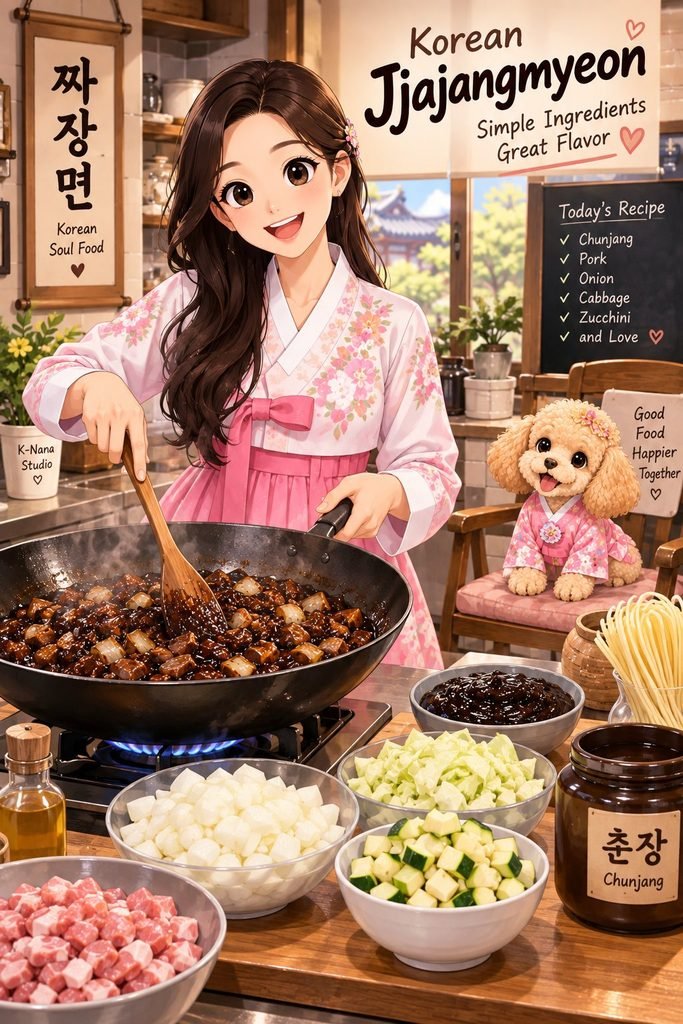
Chunjang, diced pork, onion, cabbage, zucchini, and other ingredients are cooked together to build the thick sauce at the center of jjajangmyeon.
Cooking Chunjang & Building the Sauce
Cooking the paste and combining it with the other ingredients is an important part of transforming chunjang into a finished jjajang sauce.
Meat and vegetables can be cooked in stages before or while the sauce comes together. The exact order and technique depend on the restaurant or household recipe.
The finished sauce needs enough body to cling to the noodles after mixing rather than immediately running to the bottom of the bowl like a thin broth.
The Noodles in Jjajangmyeon
The noodles provide the second major component of the dish. They need enough structure to remain pleasant after being covered and vigorously mixed with a heavy sauce.
Freshly cooked noodles can be springy and chewy, providing an important contrast to the softer diced vegetables and thick sauce.
Noodle thickness and texture vary between restaurants. The balance between noodles and sauce can therefore feel different even when the basic dish remains recognizable.
Building a Bowl of Jjajangmyeon
After the noodles are cooked and drained, they are placed into a bowl and topped generously with the finished jjajang sauce.
A garnish such as thinly sliced cucumber may be added for color, freshness, and textural contrast. Garnishes vary, so cucumber should not be treated as mandatory in every restaurant.
The contrast before mixing is visually distinctive: pale noodles sit beneath the glossy dark sauce, with diced meat and vegetables visible across the surface.
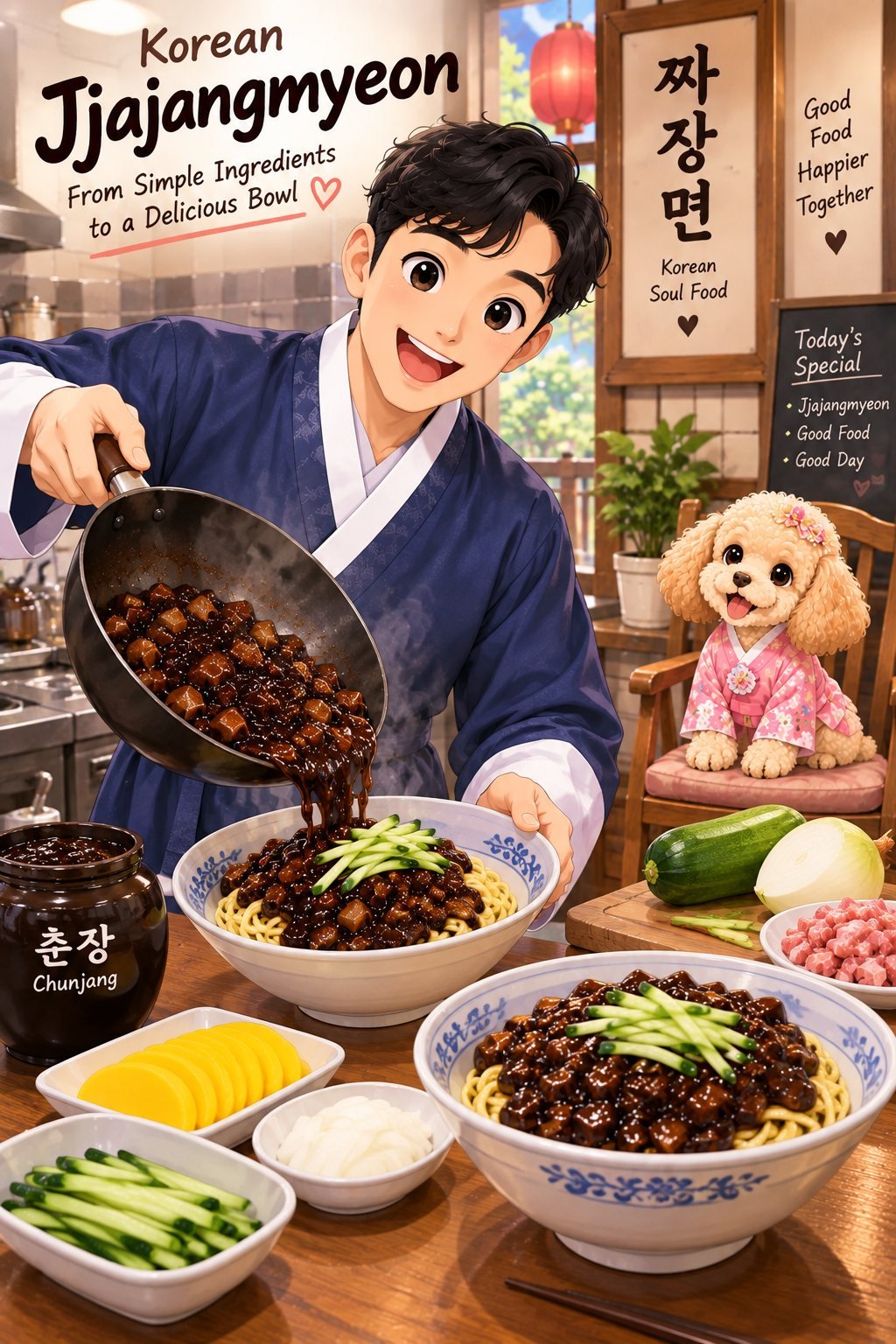
A finished bowl brings freshly cooked noodles, rich jjajang sauce, diced ingredients, and a fresh garnish together just before mixing.
How to Mix Jjajangmyeon
Jjajangmyeon is normally mixed before eating so that the thick sauce coats the noodles rather than remaining concentrated only on top.
Using chopsticks, lift noodles from the bottom and fold them through the sauce. Continue turning and mixing until the pale strands become evenly covered.
Because the sauce is thick, mixing can require more movement than a light noodle dressing. A large bowl provides space to combine everything without pushing noodles over the edge.
What Does Jjajangmyeon Taste Like?
Jjajangmyeon is generally savory, rich, and mildly sweet, with roasted and fermented notes from the chunjang. The exact balance varies significantly between recipes.
Cooked onion can contribute sweetness, while pork and other ingredients add richness and savory depth. The noodles themselves provide a relatively neutral base that carries the sauce.
Classic jjajangmyeon should not automatically be assumed to be spicy simply because it is strongly colored. Spicy variations exist, but chili heat is not the defining feature of the standard dish.
Jjajangmyeon & Korean-Style Chinese Food
Jjajangmyeon is closely connected with Korea’s Korean-style Chinese restaurant culture. Its history reflects Chinese culinary influence, but the dish developed within Korea into the form familiar to Korean diners today.
This makes it useful to understand jjajangmyeon as part of Korea’s own food history rather than simply treating it as an unchanged version of a dish from another cuisine.
Korean-style Chinese restaurants often offer jjajangmyeon alongside other familiar dishes, creating a restaurant category with its own place in everyday Korean dining.
Jjajangmyeon & Delivery Culture
Jjajangmyeon has a particularly strong association with food delivery in Korea. For many diners, ordering a bowl from a neighborhood Korean-style Chinese restaurant is as familiar as eating it inside the restaurant.
This association developed long before app-based delivery became a normal part of modern life, giving jjajangmyeon a distinctive place in the history of Korean delivery food.
Today, restaurant dining, takeout, and app-based delivery can all be part of the jjajangmyeon experience. The serving container and presentation may change, but mixing the noodles with the thick dark sauce remains central to the dish.
How to Eat Jjajangmyeon
Once the noodles and sauce have been mixed thoroughly, jjajangmyeon is normally eaten with chopsticks. A good bite combines sauce-coated noodles with some of the diced meat and vegetables distributed throughout the bowl.
Because the sauce is thick and dark, it can splash onto clothing while the noodles are being lifted. Eating smaller portions at a time can make the bowl easier to manage, especially for first-time visitors.
There is no need to add extra sauce before tasting the dish. Try the mixed noodles first, then use the accompaniments on the table to create contrast between bites.
Danmuji & Raw Onion
Bright yellow danmuji is one of the most recognizable accompaniments to jjajangmyeon. Its crisp texture and sweet-sour pickled flavor contrast with the rich, thick sauce.
Raw onion is another familiar accompaniment at Korean-style Chinese restaurants. Its sharp freshness provides a very different texture and flavor from the soft cooked onions inside the jjajang sauce.
Restaurants may also provide chunjang or another dipping condiment for the raw onion. Accompaniments and serving styles vary, so travelers should not assume that every restaurant provides exactly the same combination.
Mix, Taste & Compare
The easiest way to understand jjajangmyeon is to taste the fully mixed noodles first and then alternate them with danmuji or onion.
This creates several contrasts within one meal: chewy noodles against crisp pickles, rich sauce against sharp onion, and warm noodles against cooler side dishes.
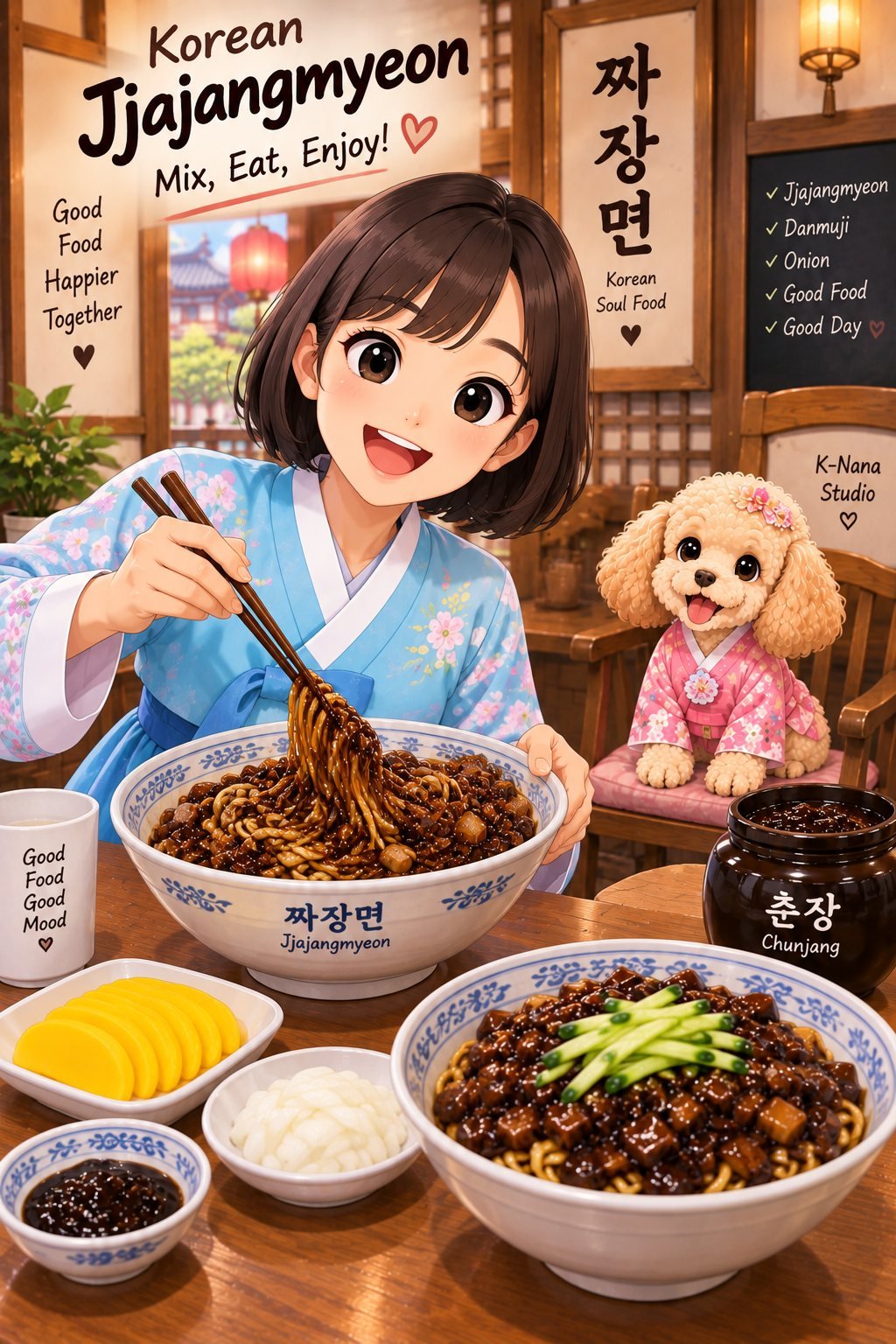
Mixing the noodles thoroughly and alternating bites with crisp danmuji and fresh onion creates the familiar jjajangmyeon table experience.
Different Types of Jjajangmyeon
Jjajangmyeon is not limited to one exact restaurant recipe. Korean-style Chinese restaurants may offer several variations that change the sauce, ingredients, texture, or serving method.
Menu terminology can also vary between businesses. Travelers should read the individual menu description rather than assuming that every restaurant uses a variation name in exactly the same way.
What Is Gan-Jjajang?
Gan-jjajang is a familiar variation in which the sauce is commonly prepared with a different texture and cooking approach from standard jjajangmyeon. It can emphasize freshly stir-fried ingredients and a less uniformly smooth sauce.
Depending on the restaurant, the sauce may be served separately from the noodles so that the diner combines them at the table.
The exact preparation varies, so the distinction should not be reduced to one universal rule about thickness or ingredients. The restaurant’s own description remains the best guide to the version being served.
What Is Uni-Jjajang?
Uni-jjajang generally uses ingredients that are chopped or minced more finely than in versions featuring larger diced pieces.
This can create a sauce with a finer and more uniform texture, allowing small pieces of meat and vegetables to spread throughout the noodles after mixing.
Recipes and terminology vary by restaurant, so travelers should check the menu when comparing uni-jjajang with other jjajangmyeon styles.
Spicy & Seafood Variations
Some restaurants offer jjajangmyeon variations with chili heat, seafood, or other specialty ingredients. These should not be used to define standard jjajangmyeon because they represent specific menu variations.
Seafood versions can introduce shellfish or other seafood allergens, while spicy versions can be significantly hotter than the familiar standard dish.
Checking the menu name and ingredient description is particularly important when ordering a variation for the first time.
What Does Gopbaegi Mean?
Travelers may encounter the Korean word “gopbaegi” when ordering noodle dishes. It generally indicates a larger portion rather than a completely different recipe.
A larger portion can contain substantially more noodles, so first-time visitors should consider the normal serving size before automatically ordering extra.
Portion standards vary between restaurants, and a regular bowl may already be sufficient when other dishes are being shared.
Jjajangmyeon & Tangsuyuk
Jjajangmyeon is frequently associated with tangsuyuk, a Korean-style Chinese sweet-and-sour meat dish. The combination creates a common shared meal in which diners have individual noodle bowls while sharing a larger plate in the center of the table.
The textures are very different: jjajangmyeon is soft, saucy, and noodle-focused, while tangsuyuk can add fried texture and a sweet-and-sour sauce.
Restaurants may offer combination meals or sets, but contents, serving sizes, and prices vary. Travelers should check what is actually included rather than assuming that a named set follows one universal format.
Jjajangmyeon & Korean Delivery Culture
Jjajangmyeon’s relationship with delivery is important enough to be considered part of the dish’s cultural identity in Korea.
Neighborhood Korean-style Chinese restaurants historically became closely associated with delivering noodles and other dishes directly to homes and workplaces. Modern ordering apps changed how customers place orders, but the connection between jjajangmyeon and convenient delivery remained familiar.
This makes the dish useful for understanding that Korean delivery culture did not begin with smartphones. Digital platforms expanded an already established habit of ordering prepared restaurant food.
Jjajangmyeon on Moving Day
Jjajangmyeon is popularly associated with moving day in Korea. A convenient delivered meal can be practical when furniture, boxes, kitchen equipment, and household items are still being organized.
This cultural association should not be interpreted as a rule that Koreans must eat jjajangmyeon whenever they move. It is better understood as a familiar popular image connecting the dish with convenient delivery food.
Jjajangmyeon & Graduation Memories
Jjajangmyeon has also appeared in Korean memories and popular culture surrounding family meals and special everyday occasions, including graduation-related dining.
The association reflects the dish’s long-standing position as an accessible restaurant meal that families could enjoy together rather than a formal ceremonial food with one required occasion.
Modern dining habits are diverse, so travelers should understand these connections as parts of Korean social memory and food culture rather than fixed customs followed by every family.
What Is Black Day?
Black Day is observed in South Korean popular culture on April 14 and is commonly associated with single people and black-colored foods, especially jjajangmyeon.
The idea developed as part of Korea’s modern calendar of relationship-themed popular culture following Valentine’s Day and White Day. Jjajangmyeon became a particularly recognizable food symbol because of its dark sauce.
It should not be interpreted as a traditional Korean holiday or a practice followed by everyone in Korea. For travelers, it is better understood as a modern pop-culture association that has been amplified through media and marketing.
How to Order Jjajangmyeon
Start by checking whether the menu offers standard jjajangmyeon or several variations. Gan-jjajang, uni-jjajang, spicy versions, seafood versions, and restaurant-specific dishes can provide noticeably different experiences.
If you are ordering several foods for a group, check whether the restaurant offers sets combining noodles with a shared dish such as tangsuyuk.
When meat type, seafood, spice level, allergens, or dietary restrictions matter, confirm the ingredients directly with the restaurant. The dark sauce can make individual ingredients difficult to identify visually.
First-Time Jjajangmyeon Tips
- Mix thoroughly — bring noodles from the bottom through the sauce until the strands are evenly coated.
- Taste before adding anything — understand the basic sauce before using additional condiments.
- Try danmuji between bites — its crisp, sweet-sour character contrasts with the rich sauce.
- Expect sweetness to vary — different restaurants balance chunjang and other ingredients differently.
- Do not assume the dark sauce is spicy — standard jjajangmyeon is not defined by strong chili heat.
- Check specialty versions — seafood, spicy, gan-jjajang, and other variations can differ substantially.
- Consider the regular portion first — gopbaegi means a larger serving and may be substantial.
- Protect light-colored clothing — thick dark sauce can splash while noodles are being mixed or lifted.
The Complete Jjajangmyeon Experience
Jjajangmyeon brings together chewy noodles, dark chunjang-based sauce, diced meat and vegetables, fresh garnish, and simple accompaniments such as danmuji and onion.
Its significance extends beyond the bowl. Korean-style Chinese restaurants, neighborhood delivery, family meals, moving-day associations, and modern popular culture have all contributed to the dish’s place in everyday Korean life.
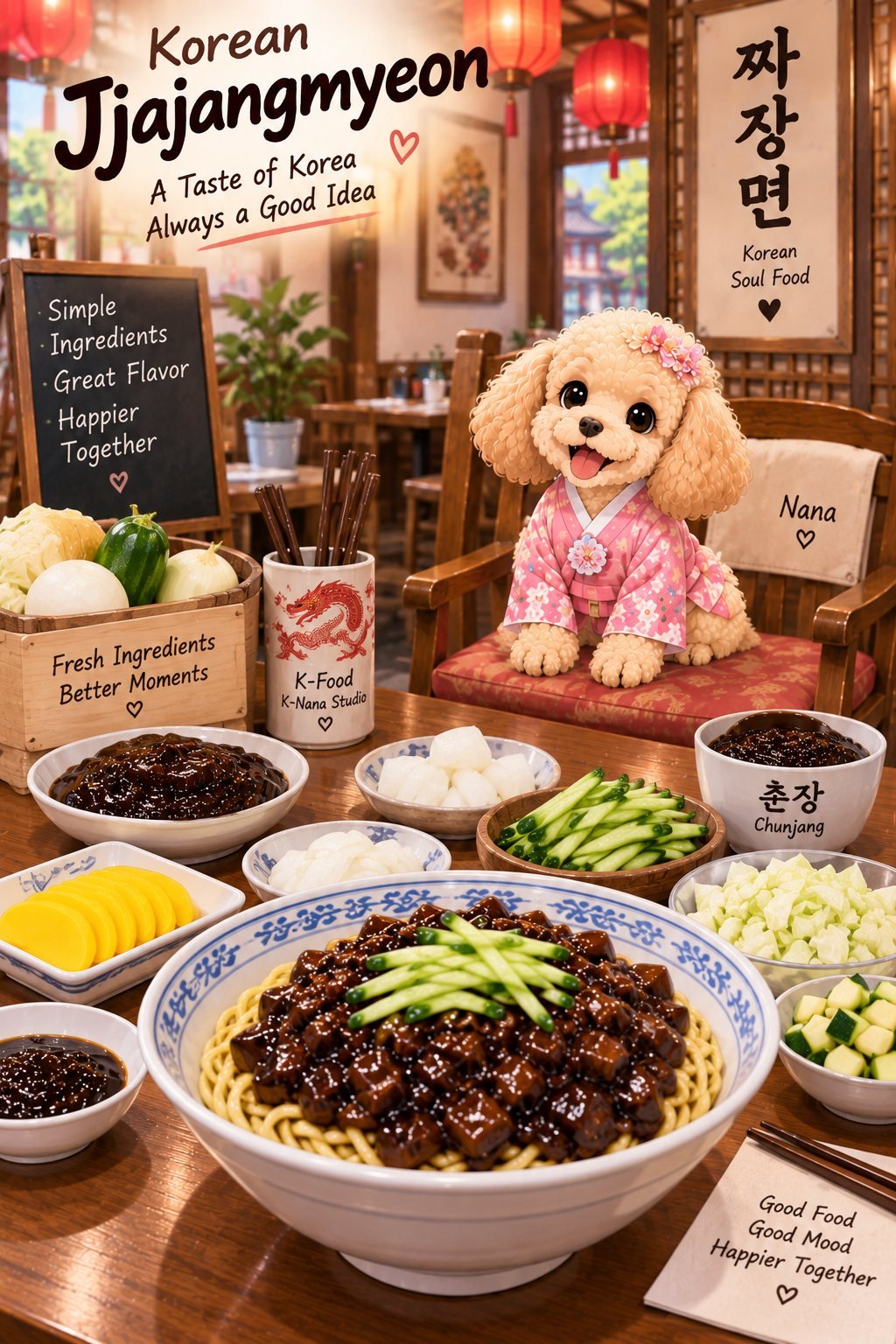
Jjajangmyeon connects chewy noodles and rich chunjang sauce with Korean-style Chinese restaurants, delivery culture, and familiar everyday memories.
How Jjajangmyeon Connects with Other K-Food
Jjajangmyeon adds a Korean-style Chinese noodle category to K-Nana Studio’s K-Food collection and provides a strong contrast with the foods introduced earlier.
Mandu introduces filled dumplings that can be steamed, pan-fried, boiled, or served in soup, while jjajangmyeon centers on noodles coated in a thick sauce.
Japchae provides another noodle comparison. Japchae uses chewy dangmyeon and soy-sesame seasoning, while jjajangmyeon uses a different noodle style and a thick chunjang-based sauce.
Gimbap and Tteokbokki represent other forms of casual Korean dining, particularly portable food and bunsik culture.
Kimchi introduces fermentation through one of Korea’s foundational side dishes, while Bibimbap demonstrates a rice-based meal built by combining multiple ingredients.
For meat-centered dining, Bulgogi, Samgyeopsal, and the Korean BBQ Guide introduce marinated meat, pork belly, and shared tabletop grilling.
Korean Fried Chicken provides another useful connection to modern Korean takeout and delivery culture, although its cooking methods and dining experience are completely different from jjajangmyeon.
Jjajangmyeon & a Korea Travel Day
Jjajangmyeon is easy to include in a Korea itinerary because Korean-style Chinese restaurants can be found in many neighborhoods rather than only in tourist districts.
Travelers exploring Hongdae can combine a casual meal with cafés, shopping, music, and youth culture.
Gwangjang Market provides a contrasting food experience centered on traditional-market energy and a wide range of Korean prepared foods.
For a traditional Seoul itinerary, Insadong, Bukchon Hanok Village, and Gyeongbokgung Palace connect food stops with crafts, hanok architecture, Korean history, and cultural sightseeing.
FAQ
What is jjajangmyeon?
Jjajangmyeon is a Korean noodle dish served with a thick, dark sauce commonly based on chunjang and cooked with meat, onions, vegetables, and other recipe-dependent ingredients. The sauce is placed over the noodles and mixed thoroughly before eating.
Is jjajangmyeon a Korean or Chinese dish?
Jjajangmyeon developed in Korea through Chinese culinary influence and became a distinctive part of Korean-style Chinese cuisine. The version familiar in Korea today has its own ingredients, preparation styles, restaurant culture, and social associations, so it is best understood within the history of Korean-style Chinese food.
Is jjajangmyeon spicy?
Standard jjajangmyeon is generally not defined by strong chili heat. Familiar versions are more commonly savory, rich, roasted, and mildly sweet. Spicy variations do exist, so travelers should check the menu when ordering specialty versions.
What is chunjang?
Chunjang is the dark fermented paste used as the foundation of familiar jjajang sauce. It contributes much of the dish’s characteristic dark color and savory flavor. Products and preparation methods vary, so sweetness, saltiness, and overall flavor can differ between restaurants.
What is gan-jjajang?
Gan-jjajang is a jjajangmyeon variation commonly associated with a differently prepared sauce that can emphasize freshly stir-fried ingredients and a less uniform texture. Some restaurants serve the sauce separately from the noodles. Exact preparation varies by restaurant.
Why is jjajangmyeon associated with delivery in Korea?
Jjajangmyeon became strongly associated with neighborhood Korean-style Chinese restaurant delivery long before smartphone ordering apps became common. Modern delivery platforms changed the ordering process, but the dish retained its familiar connection with convenient delivered meals.
What is Black Day in Korea?
Black Day is a modern South Korean pop-culture observance associated with April 14. Jjajangmyeon became one of its recognizable food symbols because of its dark sauce. It is not a traditional Korean holiday and should not be assumed to be observed by everyone.
Where to Try Jjajangmyeon
Jjajangmyeon is widely available at Korean-style Chinese restaurants throughout Korea. Travelers do not need to visit one particular tourist district to encounter the dish.
Neighborhood restaurants can be especially useful for experiencing jjajangmyeon in the casual setting in which it is commonly eaten. Depending on the restaurant, customers may dine in, order takeaway, or use delivery.
When comparing menus, check whether the restaurant offers standard jjajangmyeon, gan-jjajang, uni-jjajang, seafood versions, spicy variations, or combination meals. Portion sizes and recipes can differ substantially.
Travelers exploring Hongdae can combine casual Korean dining with cafés, shopping, music, and youth culture, while Gwangjang Market provides a contrasting introduction to traditional-market food culture.
Related K-Nana Guides
For another food with strong connections to casual Korean dining, explore the Mandu Guide, which explains steamed, pan-fried, boiled, meat, kimchi, and soup-based dumpling styles.
The Japchae Guide introduces a very different Korean noodle experience built around sweet potato starch dangmyeon, vegetables, mushrooms, and soy-sesame seasoning.
The Gimbap Guide and Tteokbokki Guide explore portable food, bunsik, rice cakes, and everyday casual dining culture.
The Kimchi Guide explains fermentation and kimjang, while the Bibimbap Guide explores rice combined with vegetables, namul, protein, egg, and gochujang.
For Korean meat culture, continue with Bulgogi, Samgyeopsal, and the broader Korean BBQ Guide.
The Korean Fried Chicken Guide provides another perspective on Korea’s modern takeout and delivery culture through fried, yangnyeom, and soy garlic chicken.
Food & Allergy Notes
Jjajangmyeon contains several components that can introduce allergens or ingredients that are difficult to identify visually once everything has been covered by the dark sauce.
The noodles commonly require wheat-related ingredient checking. Chunjang and other sauce ingredients can involve soy and wheat, while meat, seafood, sesame, vegetables, sweeteners, starches, and other seasonings may also appear depending on the recipe.
Seafood jjajangmyeon and restaurant-specific variations can introduce shellfish, mollusks, fish, or other seafood ingredients. Shared kitchens and cooking equipment can also be relevant for people with severe allergies.
A vegetable-heavy sauce should not automatically be assumed to be vegetarian or vegan because pork, other meat, animal-derived ingredients, or recipe-specific seasonings may be present.
Travelers with allergies, intolerances, medical conditions, religious dietary restrictions, vegetarian or vegan requirements, or other dietary needs should confirm the noodles, chunjang, sauce, meat, seafood, and preparation directly with the restaurant.
Hot Noodles & Sauce Safety
Freshly cooked noodles and jjajang sauce can be extremely hot when served. Thick sauce can retain heat, while pieces of meat and vegetables inside it may remain hotter than expected.
Mixing also redistributes heat throughout the bowl. Take care when lifting the first few bites and allow the food to cool when necessary.
Because the sauce is thick, vigorous mixing can cause splashes. Keep the bowl stable and avoid mixing so aggressively that hot sauce or noodles leave the bowl.
Cooking Safety
When preparing jjajangmyeon at home, raw pork or other raw meat should be handled separately from ready-to-eat ingredients until properly cooked.
Hands, knives, cutting boards, bowls, utensils, and preparation surfaces that contact raw meat should be managed appropriately to reduce cross-contact with cooked noodles, garnishes, or other ready-to-eat foods.
Woks, pans, hot oil, boiling water, and freshly drained noodles can cause burns. Use appropriate kitchen equipment and normal heat-safety practices throughout preparation.
Delivery, Takeaway & Storage
Delivery and takeaway are important parts of jjajangmyeon culture, but the dish should still be treated as prepared food containing cooked noodles, sauce, meat, and vegetables.
For the best texture, jjajangmyeon is generally intended to be eaten relatively soon after preparation. Noodles can soften, stick together, or change texture as they sit in sauce or during extended storage.
When food is delivered or purchased for takeaway, follow any storage and reheating guidance supplied by the restaurant. Do not assume that leftovers can remain at room temperature indefinitely.
If storing leftovers, use appropriate food-storage practices for the ingredients involved and reheat them appropriately before eating.
Image Credits
Korean jjajangmyeon family dining experience with glossy chunjang-based black sauce noodles, danmuji, onion, and accompaniments with the K-Nana family and Nana in hanbok visual — K-Nana Studio original visual.
Jjajangmyeon sauce preparation with Mom in hanbok cooking chunjang, diced pork, onion, cabbage, zucchini, and other ingredients while Nana watches from a separate seat visual — K-Nana Studio original visual.
Korean jjajangmyeon preparation with Dad in hanbok pouring finished jjajang sauce over cooked noodles and adding cucumber garnish while Nana watches from a separate chair visual — K-Nana Studio original visual.
Korean jjajangmyeon table with K-Nana daughter in hanbok mixing glossy black-bean sauce through noodles and enjoying them with danmuji and onion while Nana sits separately without touching the food visual — K-Nana Studio original visual.
Nana in pink floral hanbok seated separately as a K-Food mascot beside Korean jjajangmyeon, chunjang, noodles, pork, onion, cabbage, zucchini, cucumber, danmuji, and related ingredients visual — K-Nana Studio original visual.
Disclaimer
This article is provided for general food, travel, and cultural information. Jjajangmyeon ingredients, noodles, chunjang, sauces, meats, seafood, vegetables, allergens, preparation methods, restaurant recipes, serving sizes, delivery practices, storage conditions, and dietary suitability can vary. Raw meat and other perishable ingredients require appropriate handling and cooking, while hot noodles, sauce, pans, oil, and boiling water can cause burns. Always follow appropriate food-handling and storage practices and confirm ingredients and preparation directly with the restaurant, seller, or manufacturer when allergies, medical conditions, religious restrictions, vegetarian or vegan requirements, or other dietary needs are relevant.