
Naengmyeon is one of Korea’s best-known cold noodle dishes, recognized for its long, chewy noodles and distinctly refreshing serving style. Depending on the version, the noodles can arrive in a bowl of chilled broth or be mixed with a spicy, savory, and slightly sweet red seasoning sauce.
The two styles international visitors are most likely to encounter are mul naengmyeon and bibim naengmyeon. Mul naengmyeon emphasizes cold broth and a clean, refreshing character, while bibim naengmyeon focuses on sauce-coated noodles with stronger seasoning and chili heat.
Naengmyeon also shows how temperature can completely change a noodle experience. Instead of relying on steaming broth or a hot sauce, the noodles are cooked and then cooled thoroughly, creating the firm and chewy texture associated with the dish.
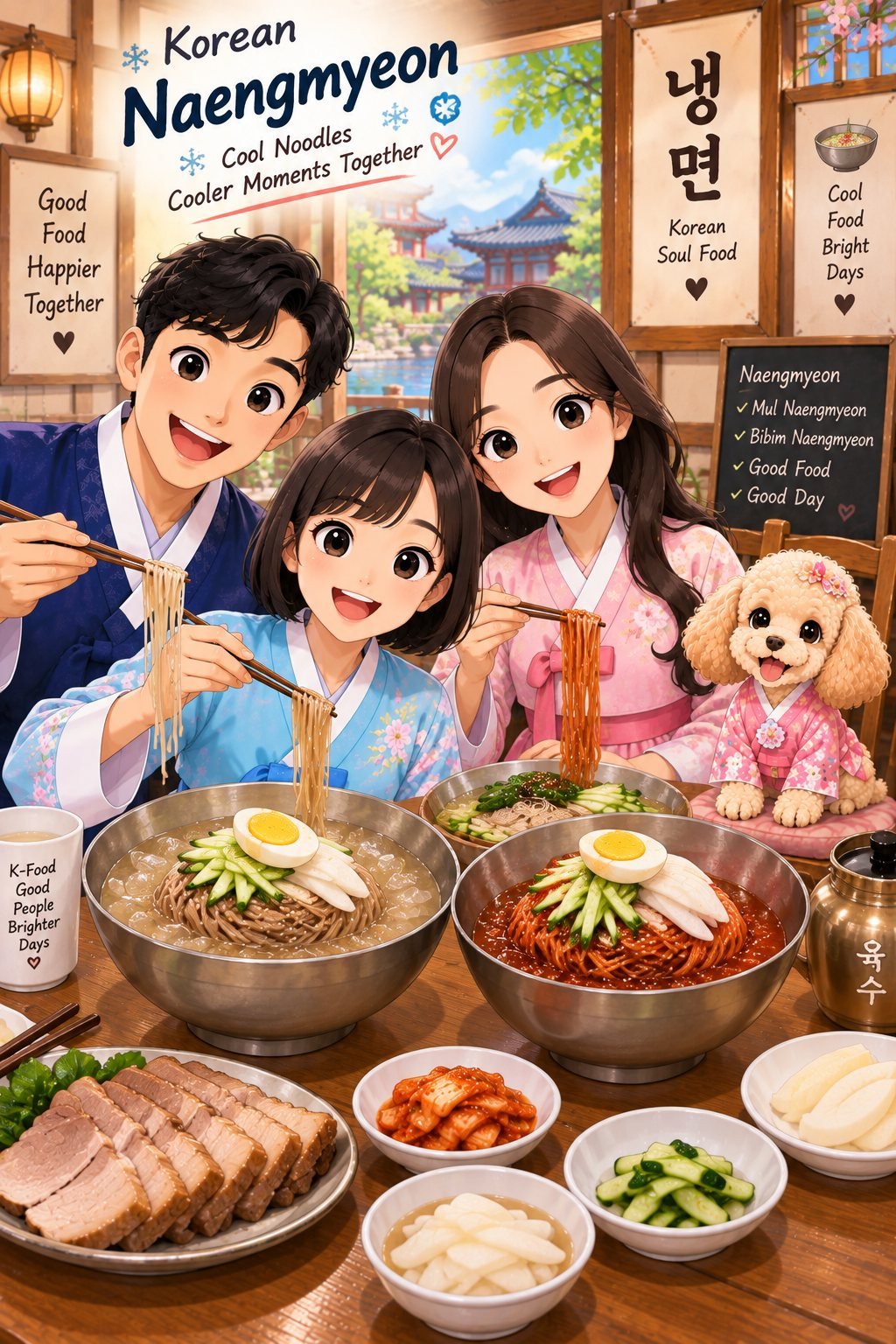
Cold broth, chewy noodles, spicy seasoning, cucumber, pear, and boiled egg introduce the two most familiar sides of Korean naengmyeon.
Quick Guide
| Korean name | 냉면 |
| Food type | Korean cold noodle dish |
| Two familiar styles | Mul naengmyeon and bibim naengmyeon |
| Noodle character | Long, thin, firm, and chewy, with ingredients varying by style and recipe |
| Mul naengmyeon | Noodles served in chilled broth |
| Bibim naengmyeon | Noodles mixed with a spicy seasoned sauce |
| Common garnishes | Cucumber, pear, boiled egg, radish, and recipe-dependent toppings |
| Common experience | Cold, refreshing noodles enjoyed alone or alongside Korean meat dishes |
What Is Naengmyeon?
The Korean word “naengmyeon” literally refers to cold noodles, but the food represents more than simply taking ordinary noodles and chilling them.
The noodles, broth or sauce, garnishes, and preparation are designed around a cold serving temperature. Texture is particularly important because the noodles need to remain pleasantly firm and chewy after cooking and cooling.
Different naengmyeon traditions use different noodle compositions, broths, sauces, and toppings. Travelers should therefore think of naengmyeon as a broader cold-noodle category with several important styles rather than one completely standardized bowl.
What Are Naengmyeon Noodles Made From?
Naengmyeon noodles can be made with combinations of ingredients such as buckwheat and starches derived from ingredients including potato or sweet potato. The exact composition depends on the style, manufacturer, restaurant, and regional tradition.
This variation affects color, firmness, elasticity, and how easily the noodles break when bitten. Some versions can be noticeably more elastic and chewy than visitors expect from ordinary wheat noodles.
Because recipes vary, people who need to avoid wheat, buckwheat, or other specific ingredients should confirm the noodle composition rather than judging only by appearance.
Why Are Naengmyeon Noodles So Chewy?
The distinctive chew comes from both the noodle ingredients and the way the noodles are prepared. Starch-containing noodles can develop considerable elasticity, while rapid cooling after cooking helps create a firmer eating texture.
This is one reason naengmyeon can surprise first-time visitors. The long strands may require more chewing than many familiar hot noodle dishes.
Restaurants can use different noodle formulas, so the degree of chewiness is not identical everywhere.
Cooking & Chilling the Noodles
Naengmyeon noodles are cooked first and then cooled rather than being served directly from the hot cooking water.
After cooking, the noodles are rinsed thoroughly in cold water. This rapidly lowers their temperature and helps remove excess surface starch while creating the cool, firm texture needed for the finished dish.
The noodles are then drained before being placed into the serving bowl. Excess water can dilute the broth or seasoning, so draining is an important part of preparation.
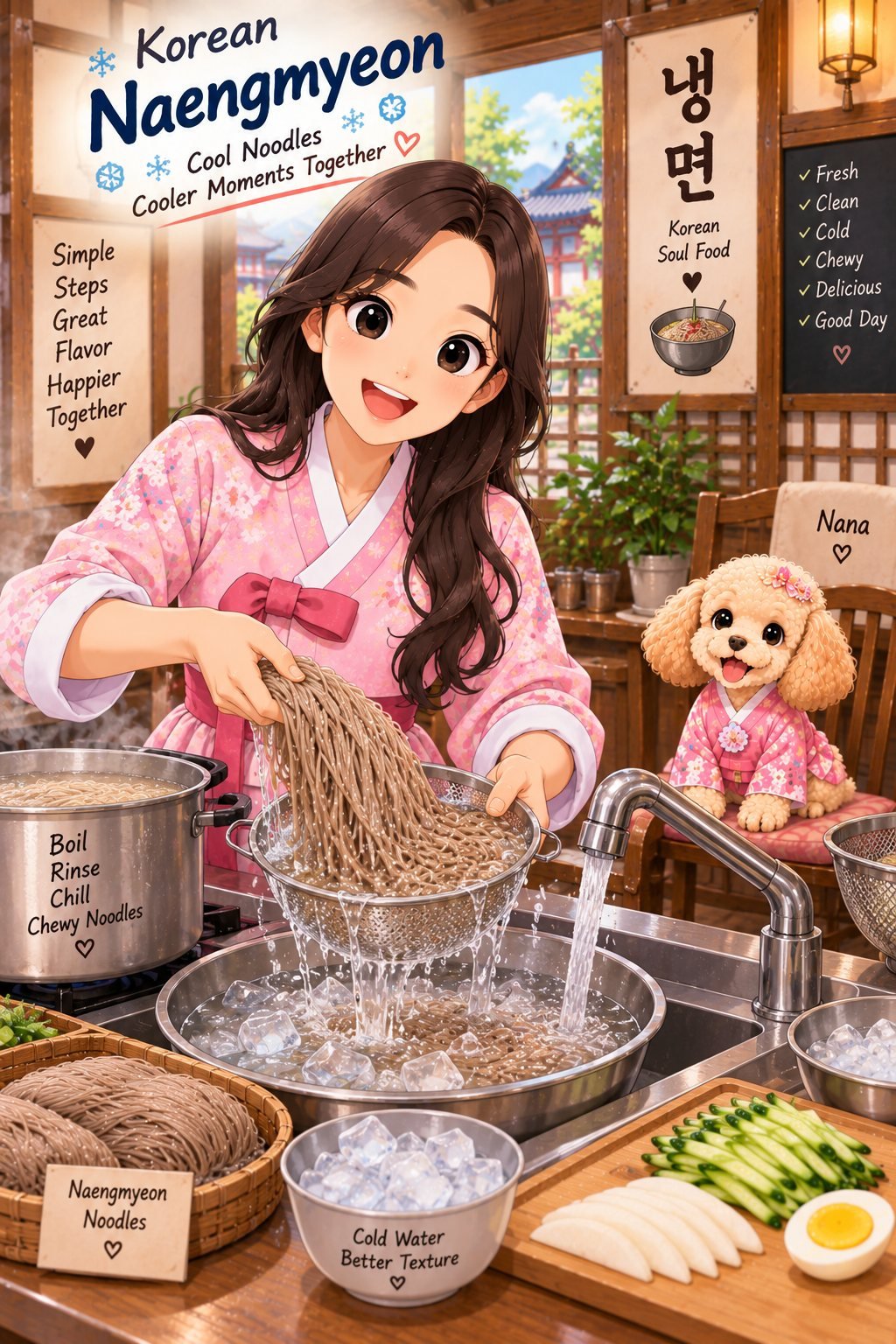
Cooking, rinsing, chilling, and draining the noodles creates the firm and refreshing texture that defines the naengmyeon experience.
What Is Mul Naengmyeon?
Mul naengmyeon is the broth-based form of naengmyeon. The cooled noodles are placed in a bowl and surrounded by chilled broth, creating a dish in which temperature and liquid are central to the experience.
The broth can vary in flavor and composition according to restaurant and tradition. It may combine savory, slightly tangy, subtly sweet, or other balanced characteristics rather than tasting like one universal recipe.
Some bowls are served extremely cold and may contain visible ice or partially frozen broth. Others are chilled without presenting the same amount of ice.
The Chilled Broth
The broth is not simply ordinary hot soup cooled at the last moment. It is prepared as an important component of the dish and chilled for serving.
Its flavor needs to work at a low temperature, when aroma and taste can be perceived differently from a steaming soup. This is one reason a good naengmyeon broth can seem relatively delicate compared with heavily seasoned hot dishes.
Recipes vary widely, and diners should not assume that every broth contains the same meat base, seasonings, sweeteners, or other ingredients.
Building a Bowl of Mul Naengmyeon
Once the noodles have been chilled and drained, they are arranged in a large bowl and surrounded by cold broth.
Garnishes such as cucumber, pear, sliced radish, boiled egg, or other restaurant-specific toppings can then be arranged over the noodles.
The toppings add more than decoration. Cucumber contributes freshness and crunch, pear can add sweetness and juiciness, and boiled egg provides a softer, richer contrast to the chewy noodles.
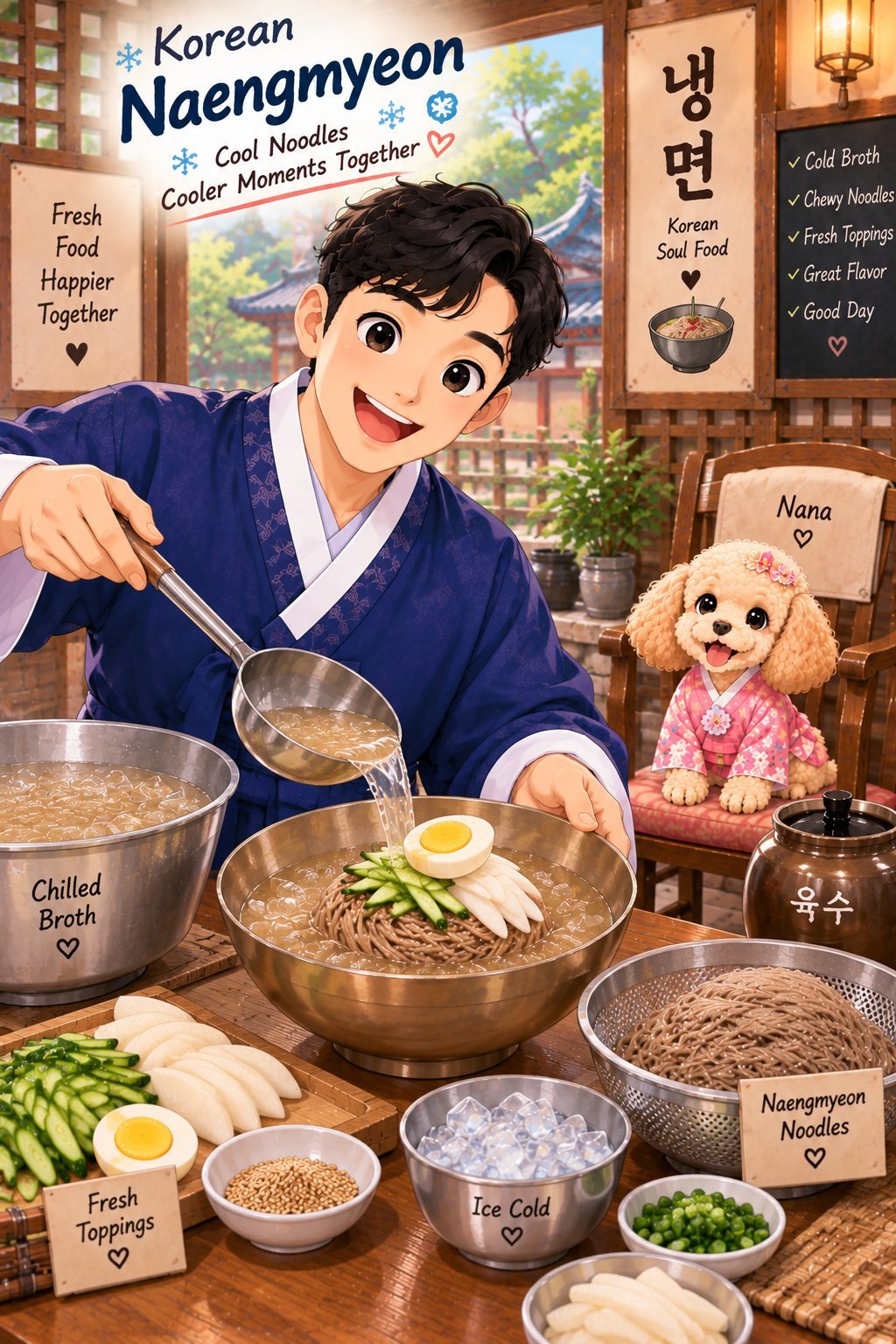
Chilled broth, firm noodles, cucumber, pear, radish, and boiled egg come together to create the refreshing character of mul naengmyeon.
What Is Bibim Naengmyeon?
Bibim naengmyeon removes the large quantity of cold broth from the center of the experience and instead coats the noodles in a seasoned sauce.
The sauce is commonly red and can combine chili heat with sweetness, acidity, savory seasoning, and other recipe-dependent flavors.
Because the sauce clings directly to the noodles, bibim naengmyeon usually delivers a stronger and more concentrated flavor than a delicate bowl of mul naengmyeon.
How Bibim Naengmyeon Is Mixed
The noodles and red seasoning need to be mixed thoroughly before eating so that the sauce is distributed throughout the long strands.
Using chopsticks, diners can lift noodles from underneath and fold them repeatedly through the sauce until the color becomes more even.
Garnishes can remain on top initially or become incorporated during mixing. There is no need to make every bite identical, and diners can alternate noodles with cucumber, pear, egg, or other toppings.
Mul Naengmyeon vs. Bibim Naengmyeon
The clearest difference is the way the noodles are seasoned and served. Mul naengmyeon places them in chilled broth, while bibim naengmyeon coats them in a concentrated seasoning sauce.
Mul naengmyeon can feel lighter and more refreshing, while bibim naengmyeon generally provides stronger seasoning and more obvious chili heat. Individual recipes, however, can vary significantly.
Trying both styles is one of the easiest ways for first-time visitors to understand the range within naengmyeon rather than treating all Korean cold noodles as the same dish.
Naengmyeon & Korean Cold-Noodle Culture
Naengmyeon demonstrates that Korean noodle culture is not limited to steaming bowls and hot sauces. Cold temperature itself becomes part of the design of the dish.
This creates a sharp contrast with Jjajangmyeon, where warm noodles are mixed with a thick, rich chunjang-based sauce.
Naengmyeon instead emphasizes cooling, firmness, refreshing broth or concentrated spicy seasoning, and crisp garnishes, giving travelers a very different Korean noodle experience.
Is Naengmyeon Only a Summer Food?
Naengmyeon is strongly associated with hot weather because a cold bowl can feel particularly refreshing during Korea’s humid summer months.
However, describing it only as a summer dish would be incomplete. Naengmyeon has deeper regional and historical traditions, and restaurants can serve it throughout the year.
Modern diners may choose it for summer refreshment, as a specialty meal in its own right, or as a finishing dish after Korean grilled meat.
Naengmyeon & Its Historical Roots
Naengmyeon has a history that extends beyond its modern image as a refreshing summer dish. Cold noodle traditions developed on the Korean Peninsula long before refrigeration made icy summer meals easy to prepare.
Naengmyeon is particularly associated with northern Korean regional food traditions. Over time, migration, restaurant culture, changing ingredients, and modern food production helped different styles spread and develop in South Korea as well.
For travelers, this background is important because “naengmyeon” does not describe one completely uniform recipe. Regional traditions and modern restaurant styles can produce noticeably different noodles, broths, sauces, and toppings.
What Is Pyeongyang Naengmyeon?
Pyeongyang naengmyeon is associated with Pyongyang and the wider northern Korean culinary tradition. It is especially known for noodles in a chilled broth with a flavor that can seem subtle to diners accustomed to strongly seasoned foods.
Buckwheat is an important ingredient associated with this tradition, although noodle composition can vary. The resulting noodles can have a different texture from highly elastic starch-heavy noodles.
The broth is central to the experience. Rather than expecting intense sweetness, chili heat, or a heavy sauce, first-time diners can focus on the relationship between the chilled broth, noodles, meat or other toppings, and subtle seasoning.
What Is Hamheung-Style Naengmyeon?
Hamheung-style cold noodles are associated with Hamhung and northern Korean regional traditions and are commonly recognized for a noticeably different noodle and seasoning experience.
Starch-based noodles can be particularly firm and elastic, creating the pronounced chew that many diners associate with this style.
Spicy mixed preparations are especially familiar in modern restaurant culture, although terminology and recipes can vary. Travelers should therefore use the individual restaurant description rather than assuming every bowl carrying a regional name follows exactly the same formula.
Pyeongyang vs. Hamheung-Style Naengmyeon
The two traditions are useful for understanding why naengmyeon cannot be reduced simply to “cold noodles.”
Pyeongyang-style naengmyeon is strongly associated with buckwheat noodles and chilled broth, while Hamheung-style traditions are commonly associated with more elastic starch-based noodles and strongly seasoned mixed preparations.
Modern restaurants adapt both traditions in different ways, so these descriptions are broad cultural guides rather than rigid rules for every restaurant.
Naengmyeon After Korean BBQ
One of the most familiar modern ways to encounter naengmyeon is at the end of a Korean grilled-meat meal.
After eating rich and savory grilled meat, cold noodles can provide a strong temperature and texture contrast. Mul naengmyeon offers chilled broth, while bibim naengmyeon provides a spicy and concentrated alternative.
K-Nana Studio’s Korean BBQ Guide explains shared tabletop grilling, while the Samgyeopsal Guide focuses on pork belly, ssam, ssamjang, grilled kimchi, and garlic.
Meat & Naengmyeon Together
Naengmyeon does not always have to wait until every piece of meat has been eaten. Some diners enjoy grilled meat and cold noodles together.
A bite of savory meat followed by chilled noodles creates a contrast between warm and cold, rich and refreshing, and soft meat and chewy noodles.
Bibim naengmyeon can create another combination by pairing spicy sauce with grilled meat. Preferences vary, and there is no required sequence for enjoying the two foods.
Vinegar & Mustard
Naengmyeon restaurants may provide vinegar and mustard as optional table condiments. These allow diners to adjust acidity and sharpness according to personal preference.
For a first bowl, taste the broth or mixed noodles before adding anything. Once a large amount of vinegar or mustard has been added, the original flavor is difficult to recover.
Add a small quantity, taste again, and continue only if you prefer the change. This is particularly useful with a delicate broth, where aggressive seasoning can easily dominate the original balance.
Should You Cut Naengmyeon Noodles?
Naengmyeon noodles can be long and very chewy, so some restaurants provide kitchen scissors.
Cutting the noodles can make them easier to manage for diners who find the long strands difficult to bite or lift. Other diners prefer to leave the noodles intact and experience their original length and texture.
There is no need to treat one approach as mandatory. If scissors are provided and you want shorter noodles, cut them carefully inside the bowl before eating.
Comparing Mul & Bibim Naengmyeon
Ordering mul naengmyeon and bibim naengmyeon together makes their differences immediately visible.
Mul naengmyeon surrounds the noodles with cold broth and emphasizes refreshment, while bibim naengmyeon coats the noodles in a red seasoning that generally produces a stronger, spicier flavor.
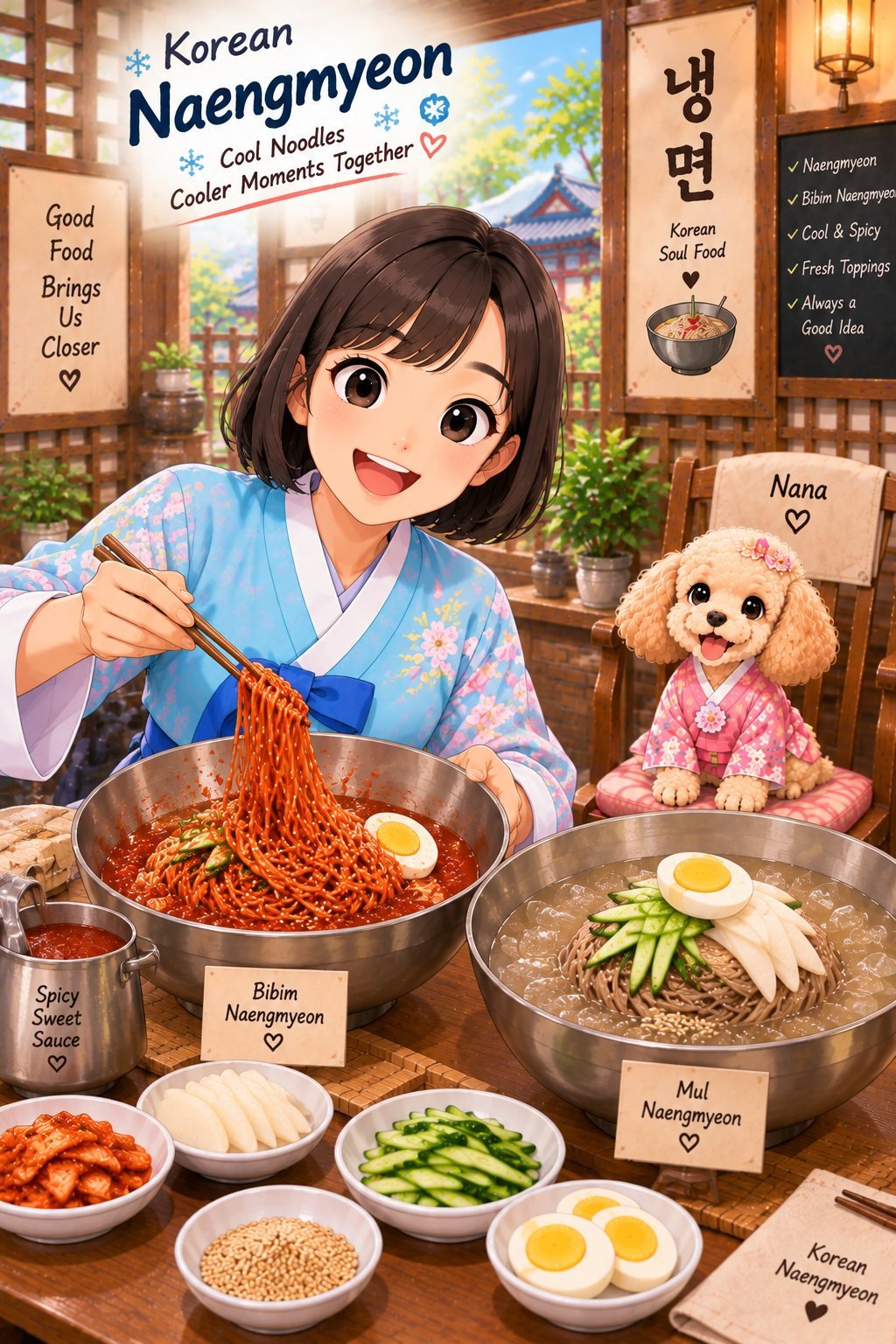
Mul naengmyeon highlights chilled broth and refreshment, while bibim naengmyeon uses a concentrated spicy sauce for a stronger cold-noodle experience.
How to Order Naengmyeon
The first decision is usually whether you want mul naengmyeon or bibim naengmyeon.
Choose mul naengmyeon when you want chilled broth and a more refreshing experience. Choose bibim naengmyeon when you prefer sauce-coated noodles with stronger seasoning and chili heat.
Specialty restaurants may offer regional styles, larger portions, meat combinations, or restaurant-specific variations. Read the individual menu description because terminology and ingredients can differ.
If you are eating Korean grilled meat, check whether naengmyeon is offered as a finishing dish or part of a combination menu.
First-Time Naengmyeon Tips
- Expect very chewy noodles — the texture can be firmer and more elastic than many familiar noodle dishes.
- Taste before seasoning — try the broth or sauce before adding vinegar or mustard.
- Choose mul for broth — it emphasizes cold liquid and refreshment.
- Choose bibim for stronger seasoning — it usually delivers more chili heat and concentrated flavor.
- Use scissors only if needed — long noodles can be cut when they are difficult to manage.
- Check noodle ingredients — buckwheat, starches, wheat, and other ingredients can vary by recipe.
- Try it with grilled meat — warm savory meat and cold chewy noodles create a familiar contrast.
- Do not assume every broth is identical — meat bases, seasonings, sweetness, acidity, and preparation vary.
The Complete Naengmyeon Experience
Naengmyeon combines temperature, noodle texture, broth or seasoning, and fresh garnishes in a way that differs sharply from Korea’s hot noodle dishes.
Mul naengmyeon can emphasize subtle chilled broth, while bibim naengmyeon concentrates seasoning directly onto the noodles. Regional traditions add further differences in noodle composition, texture, and flavor.
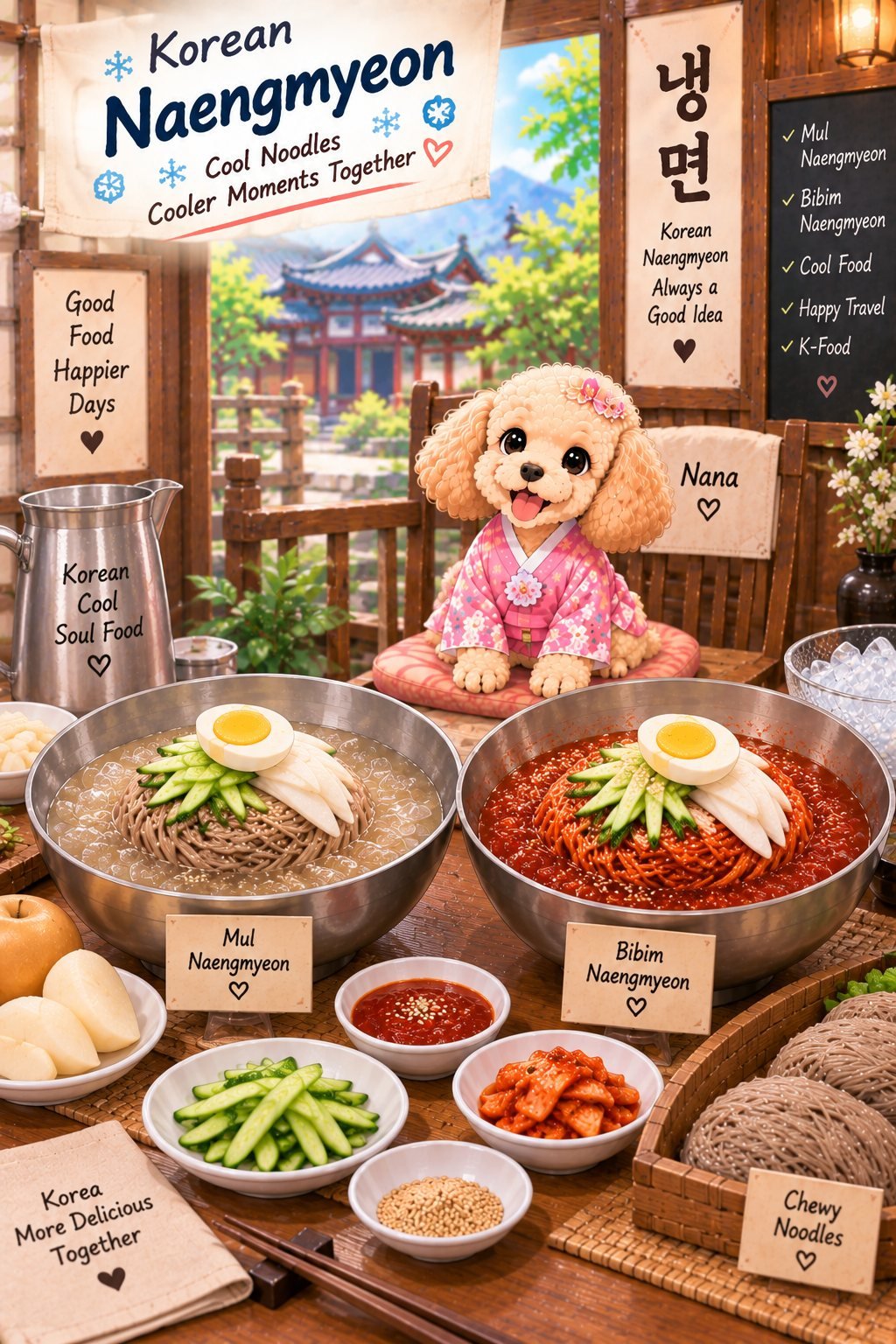
From icy broth to spicy mixed noodles, naengmyeon connects regional traditions, summer refreshment, and Korea’s modern grilled-meat dining culture.
How Naengmyeon Connects with Other K-Food
Naengmyeon adds a cold-noodle category to K-Nana Studio’s growing K-Food collection.
Jjajangmyeon provides the clearest noodle contrast: warm noodles and thick chunjang-based sauce versus chilled noodles served in broth or mixed with spicy seasoning.
Japchae introduces another chewy noodle experience through sweet potato starch dangmyeon, vegetables, and soy-sesame seasoning.
Korean BBQ and Samgyeopsal connect directly with the familiar practice of ordering cold noodles during or after a grilled-meat meal.
Bulgogi provides another meat-based contrast, while Mandu demonstrates how dough wrappers and fillings can be steamed, fried, boiled, or served in hot soup.
Gimbap and Tteokbokki introduce Korea’s casual and bunsik food culture, while Bibimbap represents a rice-based meal built around multiple ingredients.
Kimchi explores Korean fermentation culture, and Korean Fried Chicken provides another modern casual-food experience centered on fried texture, sauces, takeout, and delivery.
Naengmyeon & a Korea Travel Day
Naengmyeon can be especially appealing during a hot Korean summer sightseeing day, but specialty restaurants and grilled-meat restaurants can make it accessible in other seasons as well.
Travelers exploring Gwangjang Market can compare the cold-noodle experience with the energy of traditional Korean market food.
For a traditional Seoul itinerary, Insadong, Bukchon Hanok Village, and Gyeongbokgung Palace connect a Korean meal with traditional streets, hanok architecture, crafts, and history.
For a more contemporary day, Hongdae provides a contrasting environment of cafés, shopping, music, and youth culture where a cold noodle meal can become part of a modern Seoul itinerary.
FAQ
What is naengmyeon?
Naengmyeon is a Korean cold noodle dish known for long, chewy noodles served either in chilled broth or mixed with a seasoned sauce. The two familiar styles are mul naengmyeon and bibim naengmyeon, although regional traditions and restaurant recipes create many variations.
What is the difference between mul naengmyeon and bibim naengmyeon?
Mul naengmyeon places the noodles in chilled broth and emphasizes a cool, refreshing eating experience. Bibim naengmyeon coats the noodles in a concentrated red seasoning that commonly combines chili heat, sweetness, acidity, and savory flavors. Exact recipes vary between restaurants.
What are naengmyeon noodles made from?
Naengmyeon noodles can contain buckwheat and starches made from ingredients such as potato or sweet potato, with formulations varying according to style, restaurant, manufacturer, and regional tradition. Wheat or other ingredients may also be relevant in some products, so people with dietary restrictions should confirm the actual noodle composition.
Is naengmyeon spicy?
Not necessarily. Mul naengmyeon is generally centered on chilled broth rather than chili heat. Bibim naengmyeon commonly uses a red spicy seasoning and can be considerably hotter, although the level of heat and sweetness varies by recipe.
Why is naengmyeon so chewy?
The texture comes from the noodle ingredients and preparation method. Buckwheat and different starch combinations produce different levels of firmness and elasticity, while rinsing and cooling the noodles after cooking helps create the firm texture associated with cold naengmyeon.
Why are scissors sometimes served with naengmyeon?
Naengmyeon noodles can be long and highly elastic, so some restaurants provide kitchen scissors for diners who prefer shorter, easier-to-manage strands. Cutting the noodles is optional rather than a requirement for enjoying the dish.
Why is naengmyeon eaten with Korean BBQ?
Cold noodles provide a strong contrast to hot, rich grilled meat. Mul naengmyeon adds chilled broth and refreshment, while bibim naengmyeon adds spicy seasoning and chewy noodles. Diners may eat naengmyeon during the meat meal or order it as a finishing dish.
Where to Try Naengmyeon
Travelers can find naengmyeon at dedicated cold-noodle restaurants, restaurants specializing in regional styles, Korean meat restaurants, and other Korean dining establishments.
A specialty restaurant can be useful when comparing Pyeongyang-style, Hamheung-style, mul, bibim, or restaurant-specific preparations. Menu terminology and recipes vary, so read the description rather than relying only on the word “naengmyeon.”
Korean BBQ restaurants provide another accessible introduction because naengmyeon is frequently offered during or after grilled meat. This allows travelers to experience the contrast between hot savory meat and cold chewy noodles within one meal.
During a Seoul sightseeing day, Gwangjang Market, Insadong, Bukchon Hanok Village, Gyeongbokgung Palace, and Hongdae provide different cultural settings that can be combined with a Korean food stop.
Related K-Nana Guides
For another Korean noodle experience, continue with the Jjajangmyeon Guide, which explores chewy noodles, chunjang-based black sauce, Korean-style Chinese restaurants, and delivery culture.
The Japchae Guide introduces dangmyeon, vegetables, mushrooms, and soy-sesame seasoning, providing another example of how noodle ingredients and preparation create very different textures.
For the grilled-meat combination commonly associated with naengmyeon, explore the Korean BBQ Guide, Samgyeopsal Guide, and Bulgogi Guide.
The Mandu Guide covers Korean dumplings, while the Gimbap Guide and Tteokbokki Guide introduce other familiar forms of casual Korean food.
The Bibimbap Guide explores a rice-based meal with multiple ingredients, the Kimchi Guide introduces Korean fermentation culture, and the Korean Fried Chicken Guide explores fried chicken, sauces, takeout, and delivery culture.
Food & Allergy Notes
Naengmyeon ingredients vary considerably between noodle types, broths, sauces, garnishes, and restaurants. The appearance of the finished bowl does not reveal every ingredient used during preparation.
Noodles can contain buckwheat, potato starch, sweet potato starch, wheat, or other ingredients depending on the product and style. People with buckwheat or wheat allergies should not assume that all naengmyeon noodles use the same formulation.
Broths can contain meat-derived ingredients and other seasonings, while bibim sauces can include chili products, soy-based ingredients, sesame, sweeteners, garlic, and recipe-dependent seasonings.
Egg is a common garnish, and meat may also be served as a topping. Shared preparation areas and utensils can be relevant for people with severe allergies.
Travelers with allergies, intolerances, medical conditions, religious dietary restrictions, vegetarian or vegan requirements, or other dietary needs should confirm the noodles, broth, sauce, garnishes, and preparation directly with the restaurant.
Cold Broth & Food Safety
Serving naengmyeon cold does not remove the need for appropriate food handling. Broth, cooked noodles, egg, meat, vegetables, and other prepared ingredients still require suitable preparation and storage.
Cold broth should be maintained appropriately before serving, particularly when it contains meat-derived ingredients or other perishable components.
Prepared toppings and cooked noodles should also be handled carefully to reduce unnecessary contamination between raw and ready-to-eat ingredients.
Boiling Water & Kitchen Safety
Although naengmyeon is eaten cold, preparing the noodles begins with hot cooking water. Boiling water, steam, pots, and freshly cooked noodles can cause burns.
Take care when draining hot noodles before transferring them to cold water. Use appropriate kitchen equipment and avoid splashing boiling water during draining.
Once the noodles have been cooled, clean utensils and preparation surfaces should be used appropriately when assembling the finished cold dish.
Takeaway & Storage
Naengmyeon is particularly sensitive to time and temperature because its defining qualities depend on cold broth and firm noodle texture.
For takeaway or delivery, noodles and broth or sauce may be packaged separately so that they can be combined closer to eating time. Packaging practices vary between restaurants.
Extended storage can change the noodle texture, while broth, egg, meat, and other toppings remain perishable ingredients. Follow restaurant or manufacturer storage guidance when provided and avoid leaving prepared naengmyeon at room temperature for an extended period.
Leftovers should be stored appropriately for the ingredients involved. The original noodle texture may not be fully preserved after extended refrigeration.
Image Credits
Korean naengmyeon family dining experience with mul naengmyeon, bibim naengmyeon, cucumber, pear, boiled egg, and cold-noodle accompaniments with the K-Nana family and Nana in hanbok visual — K-Nana Studio original visual.
Naengmyeon noodle preparation with Mom in hanbok rinsing freshly cooked noodles repeatedly in cold water to create a firm and chewy texture while Nana watches from a separate seat visual — K-Nana Studio original visual.
Korean mul naengmyeon preparation with Dad in hanbok adding chilled broth, cucumber, pear, boiled egg, and other garnishes to cold noodles while Nana watches from a separate chair visual — K-Nana Studio original visual.
Korean naengmyeon table with K-Nana daughter in hanbok mixing spicy bibim naengmyeon and comparing it with chilled mul naengmyeon while Nana sits separately without touching the food visual — K-Nana Studio original visual.
Nana in pink floral hanbok seated separately as a K-Food mascot beside Korean mul naengmyeon and bibim naengmyeon with chewy noodles, chilled broth, spicy seasoning, cucumber, pear, and boiled egg visual — K-Nana Studio original visual.
Disclaimer
This article is provided for general food, travel, and cultural information. Naengmyeon noodles, broths, sauces, garnishes, allergens, meat ingredients, preparation methods, regional styles, restaurant recipes, storage conditions, and dietary suitability can vary. Cold serving temperatures do not eliminate food-safety requirements, and boiling water, steam, pots, and hot noodles used during preparation can cause burns. Always follow appropriate food-handling and storage practices and confirm ingredients and preparation directly with the restaurant, seller, or manufacturer when allergies, medical conditions, religious restrictions, vegetarian or vegan requirements, or other dietary needs are relevant.