
Samgyetang is a Korean chicken soup traditionally prepared by simmering a small whole chicken with glutinous rice, ginseng, garlic, jujubes, and other recipe-dependent ingredients. The chicken is cooked until tender, while the rice inside absorbs broth and flavor during the long cooking process.
What makes samgyetang especially distinctive is the relationship between the whole chicken, the ingredients stuffed inside it, and the hot broth surrounding everything. Instead of serving chicken, rice, and soup as completely separate foods, the dish brings them together in one bowl.
Samgyetang is also strongly connected with Korean summer food culture. Despite being served extremely hot, it is famously eaten during the hottest period of the year, particularly around Korea’s Sambok days, when many people traditionally seek restorative foods during summer heat.

A tender whole chicken, glutinous rice, ginseng, jujubes, garlic, hot broth, and Korean banchan create the distinctive samgyetang experience.
Quick Guide
| Korean name | 삼계탕 |
| Food type | Korean whole-chicken soup |
| Main ingredient | Small whole chicken |
| Common stuffing | Glutinous rice, garlic, and recipe-dependent ingredients |
| Common additions | Ginseng, jujubes, garlic, green onion, and other ingredients depending on the recipe |
| Typical flavor | Mild, savory, chicken-rich, and aromatic |
| Common accompaniments | Kimchi, kkakdugi, salt and pepper, and other banchan |
| Cultural connection | Sambok and Korean summer restorative-food traditions |
| Important first-time tip | The broth, chicken, rice, and serving vessel can remain extremely hot |
What Is Samgyetang?
Samgyetang is built around a small whole chicken cooked in liquid with ingredients traditionally associated with the dish, including glutinous rice and ginseng.
Rather than cutting the chicken into ordinary pieces before serving, the bird is commonly presented largely whole. Diners separate the tender meat at the table and discover the softened rice and other ingredients inside.
This presentation makes eating samgyetang different from eating a bowl containing pieces of chicken already divided into bite-sized portions.
What Does “Samgyetang” Mean?
The Korean name reflects ingredients central to the dish. “Sam” refers to ginseng, “gye” refers to chicken, and “tang” refers to a soup or broth-based preparation.
The name therefore points directly to the combination that gives the dish much of its identity: chicken cooked with ginseng in a hot soup.
Modern restaurant recipes can contain additional ingredients, but chicken and the broader ginseng-associated tradition remain fundamental to how samgyetang is understood.
Why Is a Small Whole Chicken Used?
Samgyetang is commonly prepared with a relatively small whole chicken rather than several large separated chicken pieces.
The cavity provides space for glutinous rice, garlic, and other ingredients. As the chicken cooks, the stuffing absorbs liquid and flavor while remaining contained within the bird.
A smaller chicken can also be practical for an individual serving, although portion sizes and restaurant presentations vary.
What Is Inside the Chicken?
Glutinous rice is one of the most recognizable ingredients placed inside the chicken. Garlic and other recipe-dependent ingredients can be added alongside it.
As the dish simmers, the rice becomes soft and absorbs chicken broth. This creates a texture somewhere between cooked rice and a soft, broth-enriched filling.
The exact stuffing differs between restaurants and household recipes, so diners should not assume that every chicken contains precisely the same ingredients.
Why Glutinous Rice?
Glutinous rice has a sticky, cohesive texture after cooking. Inside samgyetang, it absorbs liquid while becoming soft enough to eat with a spoon.
Despite the English word “glutinous,” the term refers to the rice’s sticky texture rather than automatically indicating the presence of gluten.
People who need to avoid specific ingredients should still confirm the complete preparation because seasonings, broths, packaged ingredients, or restaurant practices can vary.
Preparing the Chicken & Stuffing
Before cooking, the chicken and stuffing ingredients are prepared separately. Glutinous rice can be soaked according to the recipe, while garlic, jujubes, ginseng, and other ingredients are cleaned and prepared.
The rice and selected ingredients are then placed inside the chicken cavity. The amount needs to leave enough room for the rice to cook and expand.
Because raw poultry is involved, this preparation stage requires careful separation between raw chicken and ingredients or utensils intended for ready-to-eat foods.

A small whole chicken is prepared with glutinous rice, garlic, ginseng, jujubes, and other ingredients before slow cooking begins.
The Role of Ginseng
Ginseng is one of the ingredients most strongly associated with samgyetang and is important enough to appear in the dish’s Korean name.
During cooking, it contributes its distinctive aroma and flavor to the broth. The intensity can vary according to the amount and type used as well as the cooking method.
Samgyetang is a traditional food rather than a standardized medicinal preparation. Diners should therefore understand ginseng here primarily as a culinary and cultural ingredient rather than assuming that eating one bowl guarantees a particular health effect.
The Role of Jujubes
Dried jujubes, commonly called daechu in Korean, are another familiar visual element in samgyetang.
They contribute subtle sweetness and aroma while contrasting with the pale chicken, broth, rice, and garlic.
Not every restaurant uses exactly the same quantity, and additional ingredients can appear according to the recipe.
Garlic in Samgyetang
Whole garlic cloves are commonly cooked until soft in the soup. Long cooking changes their texture and mellows the sharp character associated with raw garlic.
The softened cloves can be eaten with the chicken and rice or left in the broth according to preference.
Garlic also contributes to the aroma of the soup without requiring the finished dish to taste aggressively spicy.
How Samgyetang Is Cooked
Once stuffed, the chicken is placed into a pot with water or broth and the remaining ingredients. It is then cooked until the poultry is thoroughly done and tender.
Long cooking allows the chicken, rice, garlic, ginseng, jujubes, and liquid to influence one another. The broth develops chicken flavor while the stuffing becomes soft inside the bird.
Cooking times and techniques vary according to chicken size, equipment, restaurant practice, and recipe.
Why Does the Broth Look Pale?
Unlike red Korean stews such as Kimchi-jjigae and Sundubu-jjigae, samgyetang is not defined by a chili-red broth.
The liquid is commonly pale and chicken-centered, allowing the flavors of poultry, garlic, ginseng, rice, and other ingredients to remain prominent.
This makes samgyetang useful for travelers who want to experience a Korean soup that is not built around obvious chili heat.
Slow Cooking & Tender Chicken
Proper cooking should make the chicken tender enough to separate relatively easily at the table while ensuring that the poultry is thoroughly cooked.
The rice inside also needs sufficient time to soften. The result brings together tender meat, soft rice, aromatic ingredients, and hot broth rather than treating them as separate components.

Slow cooking transforms the stuffed whole chicken, glutinous rice, ginseng, jujubes, and garlic into a tender chicken soup with deeply integrated flavors.
How to Eat Samgyetang
A freshly served bowl can be extremely hot. Begin with a small spoonful of broth and allow it to cool sufficiently before eating.
The chicken can then be separated gradually with a spoon and chopsticks. Tender pieces of meat can be eaten with broth, rice from inside the chicken, garlic, or other ingredients.
There is no need to dismantle the entire chicken immediately. Working through the bowl gradually helps keep the meat and rice in the hot broth while allowing each portion to cool before eating.
Eating the Glutinous Rice
The rice inside the chicken is an important part of the dish rather than a disposable stuffing.
As the chicken is opened, the softened rice can be removed with a spoon and eaten together with broth and pieces of chicken.
Its soft, sticky texture provides a strong contrast to the fibrous chicken meat and liquid broth.
Salt & Pepper
Samgyetang can be relatively mild compared with heavily seasoned Korean stews. Restaurants may therefore provide salt, pepper, or a simple seasoning mixture at the table.
Some diners season the broth directly, while others dip individual pieces of chicken into a small amount of salt and pepper.
Taste the broth before adding a large amount of seasoning. Once salt has been mixed throughout the soup, it cannot easily be removed.
Kimchi & Kkakdugi
Kimchi and kkakdugi provide strong fermented, acidic, salty, and sometimes spicy contrasts to the mild chicken soup.
Kkakdugi is a cubed radish kimchi with a crisp texture that can be particularly refreshing between bites of tender chicken and soft rice.
For a deeper introduction to Korean fermentation and kimchi culture, see K-Nana Studio’s Kimchi Guide.
Samgyetang as a Complete Meal
A bowl of samgyetang can contain chicken, rice, broth, and aromatic ingredients in one serving, with kimchi, kkakdugi, and other banchan surrounding it.
This makes the dish substantially different from a light soup served before a main course. The chicken itself is a major component of the meal.
The combination of protein, stuffed rice, broth, and side dishes also explains why diners often approach samgyetang as a complete meal rather than ordering several additional main dishes.
Separating the Chicken at the Table
Samgyetang is commonly served with the small chicken largely intact, so first-time diners may wonder how to begin eating it.
There is no need for complicated carving. After allowing the dish to cool sufficiently, use chopsticks and a spoon to separate manageable pieces of the tender chicken. Long cooking generally makes the meat easier to pull away from the bones.
Continue gradually rather than breaking the entire bird apart at once. This makes it easier to alternate chicken, broth, glutinous rice, garlic, and banchan throughout the meal.
Chicken, Rice & Broth Together
One of the best ways to understand samgyetang is to experience its main components together rather than treating them as completely separate courses.
A spoonful can combine softened glutinous rice with hot broth, while chopsticks can add a small piece of tender chicken. Garlic or another cooked ingredient can provide an additional flavor and texture.
The mild broth also allows kimchi or kkakdugi to provide a much stronger fermented contrast between bites.

Tender chicken, broth-soaked glutinous rice, mild soup, kimchi, and kkakdugi create contrasting textures and flavors throughout a samgyetang meal.
Do You Have to Eat the Ginseng?
Ginseng contributes aroma and flavor while the soup cooks, but diners do not have to eat every piece left in the bowl.
Its flavor can be noticeably earthy or bitter compared with the mild chicken and rice. Some diners enjoy eating the softened ginseng, while others primarily appreciate the flavor it contributes to the broth.
Personal preference is therefore appropriate. The presence of ginseng is important to the identity of samgyetang, but finishing every piece is not a dining requirement.
Do You Have to Eat the Jujubes?
Jujubes can also be eaten, but they do not need to be finished simply because they were cooked in the soup.
After simmering, their texture becomes softer and their flavor can provide a mildly sweet contrast to the savory broth.
Some diners eat them while others leave them behind after their flavor has contributed to the dish.
What Is Sambok?
One of the most distinctive cultural connections surrounding samgyetang is Sambok, the three traditional hottest-period days recognized in the Korean seasonal calendar.
These days are known as Chobok, Jungbok, and Malbok. Their exact Gregorian calendar dates change from year to year because they are determined through the traditional calendar system rather than being fixed to the same modern calendar dates annually.
Samgyetang is strongly associated with these days, and restaurants serving the dish can become particularly busy during the Sambok period.
Chobok, Jungbok & Malbok
Chobok marks the first of the three Sambok days and signals the beginning of this traditional midsummer period.
Jungbok is the middle Sambok day, while Malbok is the final one.
Together, the three days form a familiar seasonal reference in Korea and are closely associated with foods traditionally eaten during intense summer heat.
Why Eat Hot Samgyetang in Summer?
For many international visitors, eating a steaming chicken soup during Korea’s hot and humid summer can initially seem surprising.
Within Korean food culture, however, hot restorative foods have long been associated with maintaining strength during periods when summer heat can feel physically exhausting.
Samgyetang became one of the foods most strongly connected with this tradition, making a hot bowl in midsummer culturally meaningful rather than contradictory.
What Does “Fight Heat with Heat” Mean?
Travelers may encounter the Korean expression “iyeol chiyeol,” often explained in English as fighting heat with heat.
In food culture, the expression helps describe the familiar idea of eating hot food even during very hot weather rather than choosing only cold dishes.
It should be understood primarily as a cultural expression and dining tradition rather than as a guarantee that a hot meal produces a specific medical benefit.
Samgyetang as a Korean Boyangsik
Samgyetang is commonly discussed within the Korean concept of “boyangsik,” foods traditionally associated with nourishment, restoring energy, or supporting the body during demanding seasons.
This cultural classification helps explain why chicken, ginseng, garlic, jujubes, and glutinous rice are often presented together as more than simply a combination of ingredients.
However, cultural ideas about restorative food should not be converted into claims that samgyetang prevents, treats, or cures a disease. Nutritional composition also varies according to chicken size, broth, ingredients, portion, and restaurant recipe.
Summer Tradition vs. Everyday Meal
Although Sambok gives samgyetang a famous summer connection, the dish is not restricted to three days of the year.
Dedicated samgyetang restaurants can serve it throughout the year, and diners may choose it during other seasons simply because they enjoy chicken soup.
The Sambok tradition therefore adds cultural meaning without defining the only acceptable time to eat the dish.
Samgyetang vs. Korean Jjigae
Samgyetang provides a useful contrast with the Korean stews introduced in K-Nana Studio’s Kimchi-jjigae and Sundubu-jjigae guides.
Kimchi-jjigae is centered on fermented kimchi, while sundubu-jjigae is centered on exceptionally soft tofu. Both can have strongly seasoned red broths.
Samgyetang instead places a whole chicken, glutinous rice, ginseng, and a comparatively mild pale broth at the center of the meal.
Is Samgyetang Spicy?
Samgyetang itself is generally not defined by chili heat. Its broth is commonly much milder than red Korean stews or spicy rice-cake dishes.
Spicy and fermented flavors can still appear around the meal through kimchi, kkakdugi, or other banchan.
This separation allows diners to alternate between mild chicken soup and strongly flavored side dishes rather than having chili seasoning dominate the main broth.
How to Order Samgyetang
Dedicated restaurants may offer a standard samgyetang along with premium or restaurant-specific variations containing different ginseng products, medicinal herbs, grains, additional ingredients, or differently sized chickens.
Read the menu description before assuming that a higher-priced variation is simply a larger version of the same bowl.
Also check whether one order is designed as an individual serving. A whole small chicken can make the portion more substantial than the bowl initially appears.
If particular herbs, poultry ingredients, grains, nuts, allergens, alcohol-containing ingredients, or other dietary concerns matter, confirm the complete preparation directly with the restaurant.
First-Time Samgyetang Tips
- Allow it to cool — the broth and chicken can remain extremely hot after serving.
- Separate the chicken gradually — there is no need to dismantle the entire bird immediately.
- Look inside the chicken — the softened glutinous rice is an important part of the meal.
- Taste before seasoning — add salt or pepper gradually if the broth tastes too mild for your preference.
- Try kkakdugi between bites — crisp fermented radish provides a strong contrast to the mild soup.
- Expect bones — the chicken is commonly served whole or largely intact.
- Do not assume ginseng must be eaten — eating the softened root is a matter of preference.
- Check specialty versions — herbs, grains, ginseng products, and other ingredients can vary.
Chicken Bones & Eating Carefully
Because the chicken is served largely whole, bones remain throughout the dish.
Separate meat carefully and pay attention when eating pieces removed from around small bones. The softened texture of the chicken does not mean that every part is boneless.
A separate plate or designated area can be used for discarded bones according to the restaurant’s table setting.
The Complete Samgyetang Experience
Samgyetang brings together a small whole chicken, softened glutinous rice, ginseng, garlic, jujubes, green onion, and steaming broth in a single substantial meal.
Kimchi and kkakdugi provide strong fermented contrast, while salt and pepper allow diners to adjust the relatively mild chicken flavor according to preference.
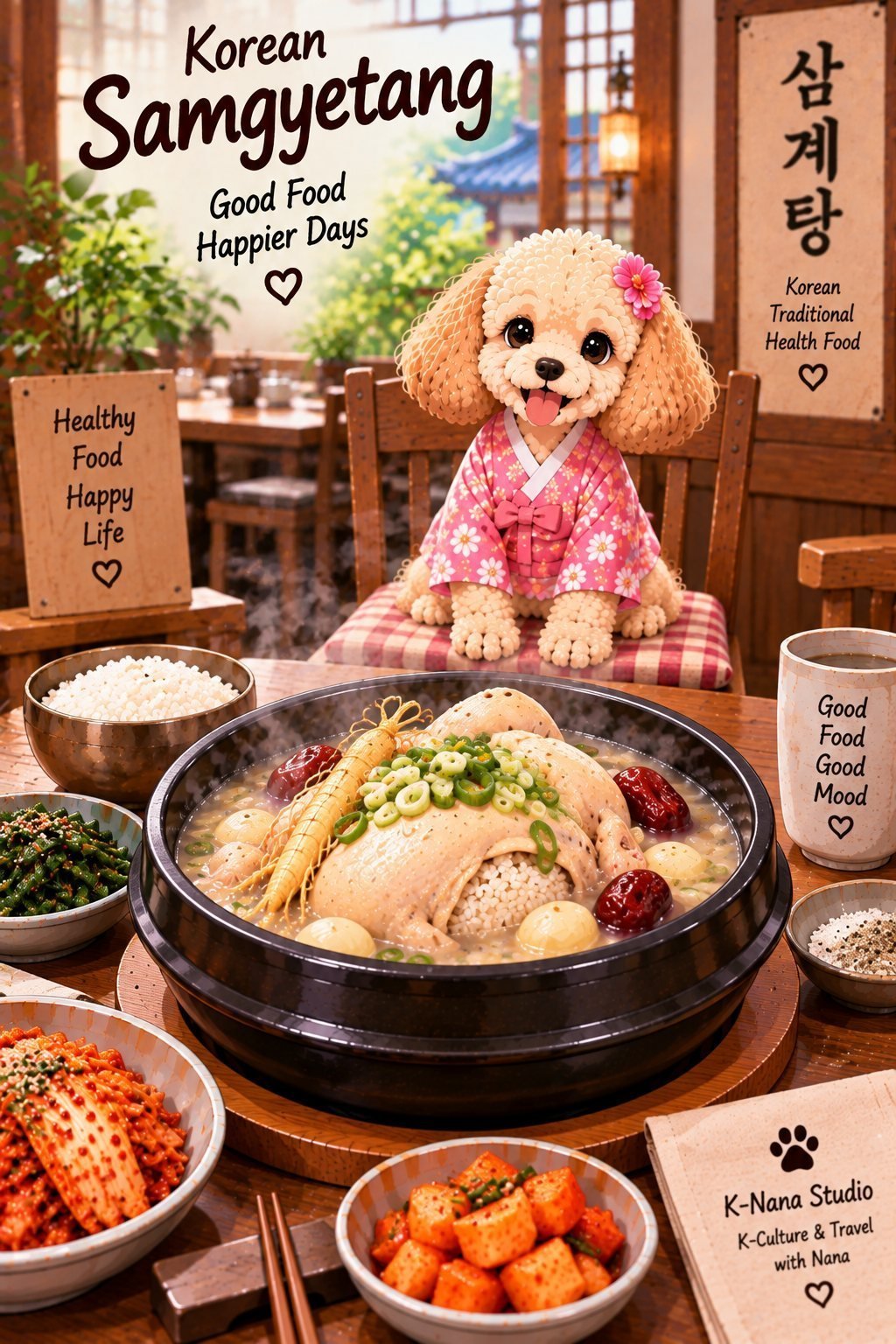
A steaming whole chicken filled with glutinous rice and surrounded by ginseng, garlic, jujubes, kimchi, and kkakdugi connects everyday dining with one of Korea’s best-known summer food traditions.
How Samgyetang Connects with Other K-Food
Samgyetang expands K-Nana Studio’s K-Food collection into Korea’s whole-chicken soup and seasonal restorative-food traditions.
Kimchi provides the fermented side-dish contrast commonly served beside the mild soup, while Kimchi-jjigae demonstrates how fermented kimchi can instead become the foundation of an entire hot stew.
Sundubu-jjigae provides another hot-pot comparison through delicate tofu and often spicy broth.
Korean Fried Chicken offers the strongest chicken comparison: one dish slow-cooks a whole chicken in broth, while the other emphasizes crisp fried texture and sauces.
Korean BBQ, Samgyeopsal, and Bulgogi introduce Korean grilling and meat-centered dining from completely different directions.
Naengmyeon provides an especially interesting seasonal contrast: chilled noodles are strongly associated with summer refreshment, while steaming samgyetang is also famously eaten during summer.
Bibimbap, Japchae, Jjajangmyeon, Mandu, Gimbap, and Tteokbokki continue the collection through rice, noodles, dumplings, portable food, and bunsik culture.
Samgyetang & a Korea Travel Day
Dedicated samgyetang restaurants can be found in Seoul and other parts of Korea, making the dish relatively easy to add to a sightseeing itinerary.
Travelers visiting Gyeongbokgung Palace, Bukchon Hanok Village, or Insadong can combine a traditional-area itinerary with a Korean meal.
Gwangjang Market provides a contrasting introduction to Korea’s traditional-market food culture, while Hongdae connects dining with cafés, shopping, music, and contemporary youth culture.
FAQ
What is samgyetang?
Samgyetang is a Korean soup traditionally prepared with a small whole chicken stuffed with glutinous rice and cooked with ingredients such as ginseng, garlic, and jujubes. The chicken is simmered until tender and is commonly served in hot broth with kimchi, kkakdugi, and other banchan.
Is samgyetang spicy?
Samgyetang itself is generally not defined by chili heat. Its broth is usually mild and chicken-centered, although diners may add salt or pepper according to preference. Spicy and fermented flavors are more likely to come from side dishes such as kimchi and kkakdugi.
Why is samgyetang eaten during summer?
Samgyetang is strongly associated with Korea’s Sambok period, including Chobok, Jungbok, and Malbok. Eating a steaming restorative-style meal during hot weather reflects a long-standing Korean seasonal food tradition sometimes associated with the expression “iyeol chiyeol,” or fighting heat with heat.
What is inside a samgyetang chicken?
Glutinous rice is one of the most recognizable ingredients placed inside the chicken. Garlic and other recipe-dependent ingredients can also be included, while ginseng and jujubes may be cooked inside or around the chicken depending on the preparation.
Do you have to eat the ginseng and jujubes?
No. Both ingredients contribute flavor and aroma during cooking, but diners can decide whether to eat the softened pieces remaining in the bowl. Ginseng can have a distinctive earthy or bitter character, while jujubes can provide mild sweetness.
Is samgyetang considered a health food in Korea?
Samgyetang is culturally associated with Korean boyangsik, or foods traditionally connected with nourishment and restoring energy, particularly during demanding summer weather. This cultural classification should not be interpreted as a guarantee that the dish prevents, treats, or cures a medical condition.
How do you eat a whole chicken in samgyetang?
Allow the dish to cool sufficiently, then use chopsticks and a spoon to separate manageable pieces of tender chicken. The softened glutinous rice inside can be eaten with the broth, while bones should be separated carefully as the meal progresses.
Where to Try Samgyetang
Samgyetang can be found at dedicated samgyetang restaurants and other Korean restaurants serving traditional chicken dishes.
Specialist restaurants may offer a standard version alongside variations using different ginseng products, grains, herbs, additional ingredients, or restaurant-specific preparations.
During the Sambok period, popular samgyetang restaurants can become particularly busy because of the dish’s strong seasonal association.
When comparing menus, check the serving size and ingredients rather than assuming every bowl follows exactly the same recipe. One small whole chicken is commonly substantial enough to form the center of an individual meal.
Related K-Nana Guides
The Kimchi Guide explains fermentation and kimjang culture behind one of the most familiar side dishes served with samgyetang.
The Korean Fried Chicken Guide provides a completely different chicken experience, replacing slow simmering and mild broth with crisp fried texture and sauces.
The Kimchi-jjigae Guide and Sundubu-jjigae Guide introduce two other major hot Korean meals centered on fermented kimchi and soft tofu.
For Korean meat culture, continue with the Korean BBQ Guide, Samgyeopsal Guide, and Bulgogi Guide.
The Naengmyeon Guide provides an especially interesting summer comparison because it represents chilled Korean noodles while samgyetang represents the tradition of eating steaming food during hot weather.
The Bibimbap Guide, Japchae Guide, Jjajangmyeon Guide, Mandu Guide, Gimbap Guide, and Tteokbokki Guide continue the collection through rice, noodles, dumplings, and bunsik culture.
Food & Allergy Notes
Samgyetang recipes vary between restaurants and can contain more ingredients than are immediately visible in the finished bowl.
Chicken, glutinous rice, ginseng, garlic, jujubes, green onion, herbs, grains, seasonings, and broth ingredients can vary. Specialty versions may introduce additional ingredients.
Despite its name, glutinous rice does not receive that English name because it naturally contains gluten; the term refers to its sticky texture. However, diners who must avoid gluten or other specific ingredients should still confirm the complete restaurant preparation and potential cross-contact.
Broths, seasonings, packaged ingredients, specialty herbal mixtures, and side dishes can introduce allergens or dietary concerns that are not obvious from appearance alone.
Travelers with allergies, intolerances, medical conditions, religious dietary restrictions, or other dietary requirements should confirm the chicken, stuffing, broth, herbs, grains, seasonings, banchan, and preparation directly with the restaurant.
Raw Chicken & Cross-Contamination Safety
Preparing samgyetang begins with raw poultry, so careful kitchen hygiene is particularly important.
Raw chicken should be handled separately from cooked rice, banchan, garnishes, and other ready-to-eat foods. Raw poultry juices should not be allowed to contaminate food that will not receive further cooking.
Hands, knives, cutting boards, bowls, utensils, countertops, and other surfaces that contact raw chicken should be cleaned appropriately before they are used for cooked or ready-to-eat ingredients.
Cooking the Chicken Thoroughly
The whole chicken needs to be cooked thoroughly, including the meat surrounding bones and the cavity containing the stuffing.
Appearance alone is not always a reliable way to determine poultry safety. When preparing samgyetang at home, use appropriate food-safety guidance and reliable methods for confirming that poultry has reached a safe level of doneness.
The glutinous rice and other stuffing ingredients inside the chicken also need sufficient cooking time.
Ginseng, Herbs & Specialty Ingredients
Ginseng is an important traditional ingredient in samgyetang, but specialty restaurant versions can contain additional herbs, grains, roots, or other ingredients.
People who need to limit or avoid particular herbal ingredients because of medication use, medical conditions, allergies, pregnancy, or other individual circumstances should check the actual ingredients rather than assuming every samgyetang recipe is identical.
Traditional cultural associations with nourishment should not replace individualized medical or dietary advice.
Hot Broth & Burn Safety
Samgyetang can arrive at the table at a very high temperature. Steam, broth, chicken, rice, garlic, and the serving vessel can all retain substantial heat.
Take a small first spoonful and allow it to cool sufficiently. The rice inside the chicken can remain especially hot because it has cooked within the bird and absorbed hot liquid.
Do not touch a hot ttukbaegi or other heat-retaining serving vessel with bare hands. If the pot needs to be repositioned, ask restaurant staff for assistance.
Chicken Bones & Eating Safety
Samgyetang normally contains a whole or largely intact chicken, which means diners need to expect bones.
Separate the meat carefully with chopsticks and a spoon and pay attention to smaller bones that can remain attached to tender pieces of chicken.
Use the restaurant’s designated plate or an appropriate area for discarded bones rather than returning them to shared side dishes.
Takeaway, Storage & Reheating
Samgyetang contains cooked poultry, broth, rice, garlic, and other perishable ingredients, so leftovers require appropriate storage.
For takeaway or delivery, follow restaurant guidance and avoid leaving the prepared soup at room temperature for an extended period.
Store leftovers appropriately and reheat them thoroughly using suitable food-safety practices. Because a whole chicken contains thick pieces of meat and stuffing, reheating should address the entire portion rather than warming only the surrounding broth.
Repeated cooling and reheating can also change the texture of the chicken, rice, and broth.
Image Credits
Korean samgyetang family dining experience with a small whole chicken, glutinous rice, ginseng, jujubes, garlic, green onion, kimchi, kkakdugi, and banchan with the K-Nana family and Nana in hanbok visual — K-Nana Studio original visual.
Traditional samgyetang ingredient preparation with Mom in hanbok preparing a small whole chicken and stuffing it with soaked glutinous rice and garlic alongside ginseng and jujubes while Nana watches from a separate seat visual — K-Nana Studio original visual.
Korean samgyetang cooking experience with Dad in hanbok simmering stuffed whole chicken with ginseng, jujubes, garlic, and broth until tender while Nana watches from a separate safe chair visual — K-Nana Studio original visual.
Korean samgyetang table with K-Nana daughter in hanbok separating tender chicken and enjoying glutinous rice and hot broth with kimchi, kkakdugi, and banchan while Nana sits separately without touching the food visual — K-Nana Studio original visual.
Nana in pink floral hanbok seated separately as a K-Food mascot beside Korean samgyetang with a tender whole chicken, glutinous rice, ginseng, jujubes, garlic, green onion, kimchi, and kkakdugi visual — K-Nana Studio original visual.
Disclaimer
This article is provided for general food, travel, and cultural information. Samgyetang ingredients, chicken size, stuffing, broth, ginseng, herbs, grains, seasonings, allergens, preparation methods, restaurant recipes, serving formats, storage conditions, and dietary suitability can vary. Traditional associations with boyangsik and seasonal nourishment should not be interpreted as claims that samgyetang prevents, treats, or cures any disease or guarantees a particular health benefit. Raw poultry and other perishable ingredients require appropriate handling, thorough cooking, storage, and reheating. Hot broth, steam, chicken, rice, cooking equipment, and heat-retaining serving vessels can cause burns. Always follow appropriate food-handling and kitchen-safety practices and confirm ingredients and preparation directly with the restaurant, seller, manufacturer, or an appropriate healthcare professional when allergies, medical conditions, medication use, pregnancy, religious restrictions, or other dietary needs are relevant.