
Korean ramyeon is one of the most recognizable forms of Korean convenience food: quick-cooking noodles packaged with concentrated seasoning and designed to become a complete hot meal in only a few minutes.
For many people outside Korea, the first image that comes to mind is a bowl of curly noodles in a bright red, spicy broth. That style is certainly important, but Korean ramyeon is much broader. Products can range from mild soup noodles to intensely spicy varieties, seafood flavors, beef-style broths, black-bean-inspired noodles, and brothless stir-fried noodles.
Ramyeon is also more than a packaged product in modern Korean culture. It appears in homes, convenience stores, camping trips, television dramas, films, online mukbang, late-night meals, and famous travel experiences such as cooking instant noodles beside the Han River.
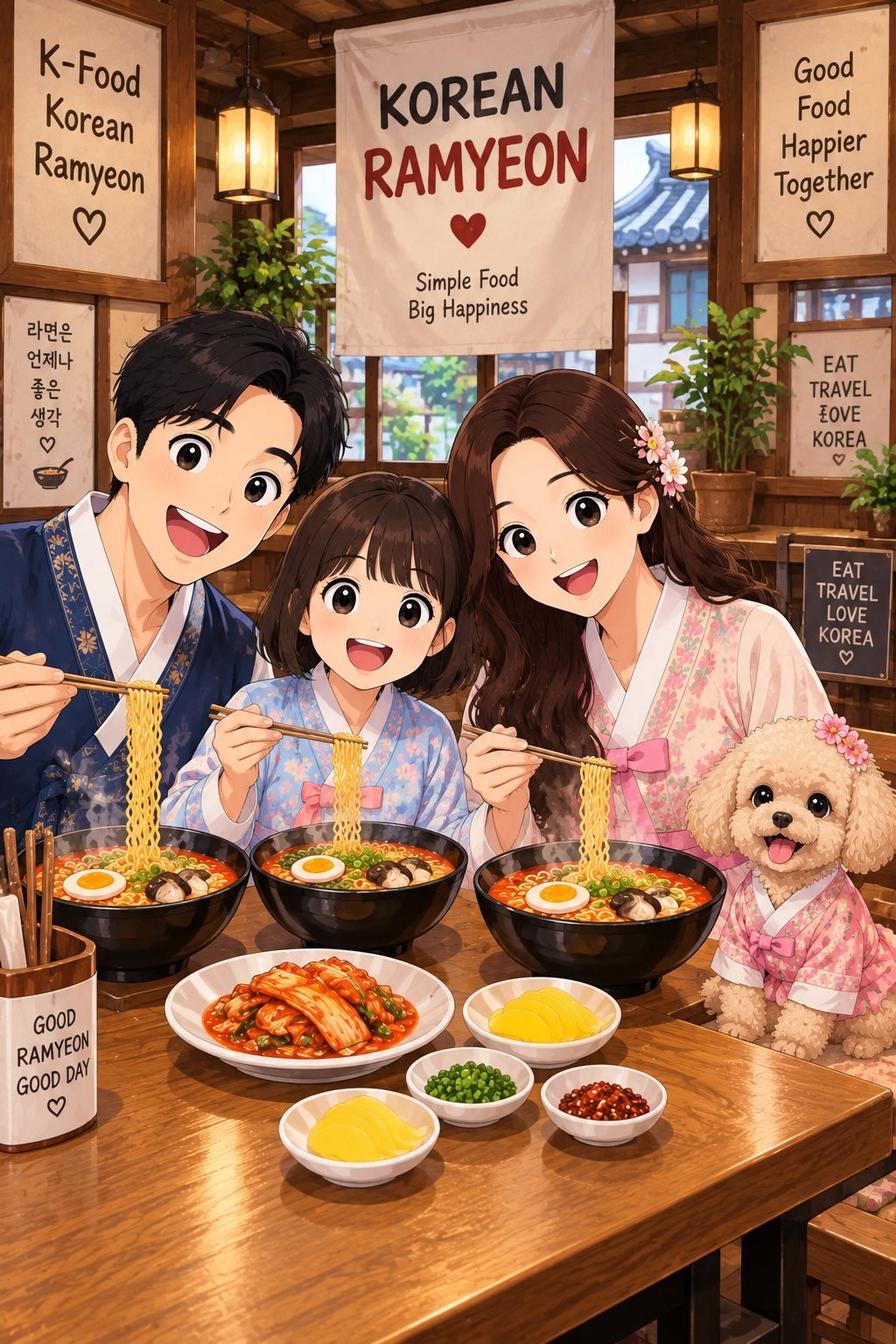
Curly noodles, steaming broth, egg, green onion, mushrooms, kimchi, and simple side dishes create one of Korea’s most familiar quick meals.
Quick Guide
| Korean name | 라면 |
| Common English spelling | Ramyeon, Korean ramen, or Korean instant noodles |
| Food type | Quick-cooking packaged noodle dish |
| Common forms | Packet ramyeon and cup ramyeon |
| Basic components | Noodles, seasoning, and often dried garnish |
| Common additions | Egg, green onion, mushrooms, vegetables, cheese, dumplings, or other ingredients |
| Flavor range | Mild to extremely spicy; soup and brothless varieties |
| Common accompaniments | Kimchi, pickled radish, and other simple side dishes |
| Important first-time tip | Cooking instructions, water quantity, spice level, and ingredients differ by product |
What Is Korean Ramyeon?
In everyday Korean usage, ramyeon commonly refers to quick-cooking packaged noodles sold with seasoning and prepared by boiling or adding hot water according to the product instructions.
The familiar packet format usually contains a block of dried or pre-cooked noodles together with seasoning packets. Depending on the product, there can also be dried vegetables, seaweed, mushrooms, meat-flavored pieces, seafood-flavored ingredients, or other garnishes.
The exact contents vary substantially, which is why one universal recipe cannot describe every Korean ramyeon.
Ramyeon vs. Ramen
English-language searches often use “Korean ramen,” while the Korean word 라면 is commonly romanized as “ramyeon.” Both expressions can therefore appear when international visitors search for Korean instant noodles.
However, Korean ramyeon and the broader Japanese ramen tradition should not simply be treated as identical foods with different spellings.
Korean ramyeon is strongly associated with commercially packaged quick-cooking noodles, while Japanese ramen commonly refers to a broader restaurant noodle tradition involving prepared broths, noodles, and toppings. There are exceptions and overlaps, but the distinction is useful for first-time travelers.
Why Are the Noodles Curly?
The tightly curled noodle block is one of the most recognizable visual features of many Korean ramyeon products.
The shape allows a substantial length of noodles to fit into a compact package. During cooking, the block softens and separates into individual strands.
Noodle thickness, texture, shape, and cooking time vary by product, so not every Korean ramyeon produces exactly the same bite.
Packet Ramyeon
Packet ramyeon is commonly prepared in a pot. The package usually provides a specific quantity of water and cooking time designed for that product.
After the water reaches the appropriate stage, noodles and seasoning are added according to the instructions. Additional ingredients such as egg, green onion, mushrooms, or vegetables can be included if desired.
Because the noodles cook quickly, even a relatively small difference in cooking time can change their texture noticeably.
Cup Ramyeon
Cup ramyeon packages the noodles and seasoning inside a disposable container designed for convenient preparation.
Depending on the product, boiling water is added to a marked line before the cup is covered for a specified number of minutes. Other products may provide different preparation instructions, including microwave directions where appropriate.
Always follow the individual package directions. Not every cup or lid is designed for microwave use, and preparation methods differ between products and markets.
What Is in a Ramyeon Package?
A basic package usually begins with noodles and concentrated seasoning.
The main seasoning packet can contain salt, chili, spices, flavorings, powdered vegetables, soy-derived ingredients, meat- or seafood-derived ingredients, and other components depending on the product.
A separate dried garnish packet can contain green onion, mushrooms, vegetables, seaweed, chili, or other small ingredients.
Because formulas vary, people with allergies, dietary restrictions, vegetarian or vegan requirements, or religious dietary concerns should read the actual ingredient information rather than judging a product only by its flavor name.
How Korean Ramyeon Is Cooked
The most reliable starting point is the preparation method printed on the package.
For a typical soup-style packet, water is heated in a pot before the noodles and seasonings are cooked for a relatively short period. The exact sequence can vary by manufacturer and product.
Home cooks often customize this basic method with additional ingredients, but the package directions remain useful because noodle thickness, seasoning concentration, and intended water quantity are product-specific.
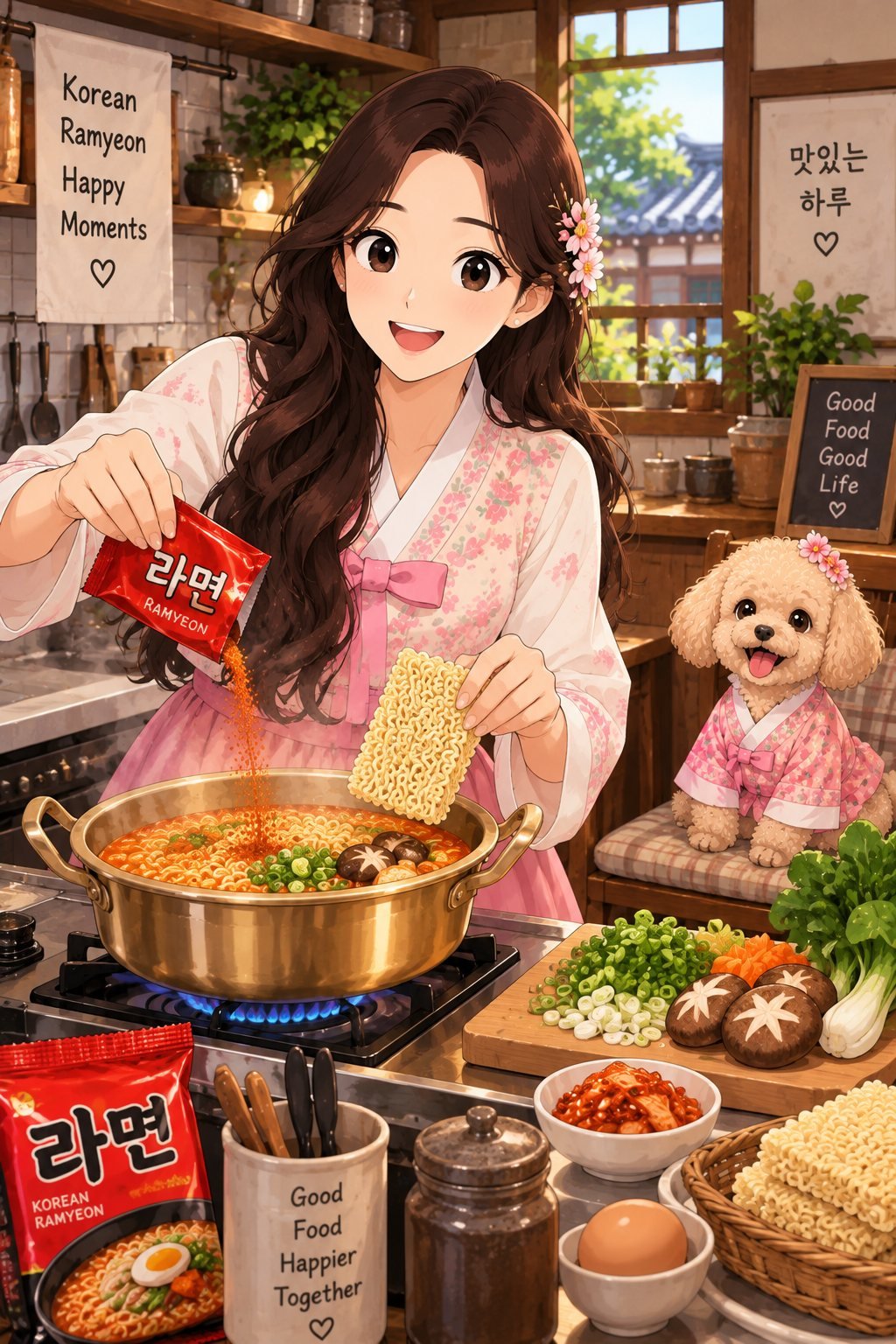
Packet noodles and concentrated seasoning form the basic ramyeon, while green onion, mushrooms, vegetables, and other additions can customize the bowl.
Why Water Quantity Matters
The amount of water affects both the broth concentration and the cooking environment for the noodles.
Using substantially more water than instructed can dilute the seasoning, while using too little can create a much saltier or more concentrated result.
Different products specify different amounts, so a water quantity that works for one package should not automatically be applied to every other ramyeon.
Why Cooking Time Matters
Ramyeon noodles continue changing as they remain in hot liquid. A shorter cooking time can produce a firmer texture, while longer cooking generally makes the noodles softer.
Many diners have personal preferences for how firm their noodles should be, but food preparation instructions and any added raw ingredients still need to be handled safely.
If egg, meat, seafood, or other ingredients are added, their required cooking time can differ from that of the noodles.
Adding an Egg
Egg is one of the most familiar additions to Korean ramyeon.
It can be added whole and allowed to cook in the broth, broken into the soup, or stirred to create strands of cooked egg. The method changes both the appearance and texture of the finished bowl.
The desired degree of doneness varies, but people who require fully cooked egg should make sure it is cooked appropriately rather than relying only on the short noodle cooking time.
Green Onion, Mushrooms & Vegetables
Fresh green onion can add aroma and color, while mushrooms provide additional texture and savory character.
Other vegetables such as cabbage, bean sprouts, chili peppers, or leafy greens can also be added according to preference.
These additions can make a simple packaged noodle meal feel more substantial, but they also change cooking time and the amount of food in the pot.
Finishing the Pot
As the noodles soften, the seasoning dissolves into the water and the broth develops its final color and concentration.
Egg, green onion, mushrooms, or other toppings can be timed according to the texture desired and the amount of cooking they require.
Freshly cooked ramyeon should be handled carefully because the broth, noodles, egg, pot, and steam can all be extremely hot.
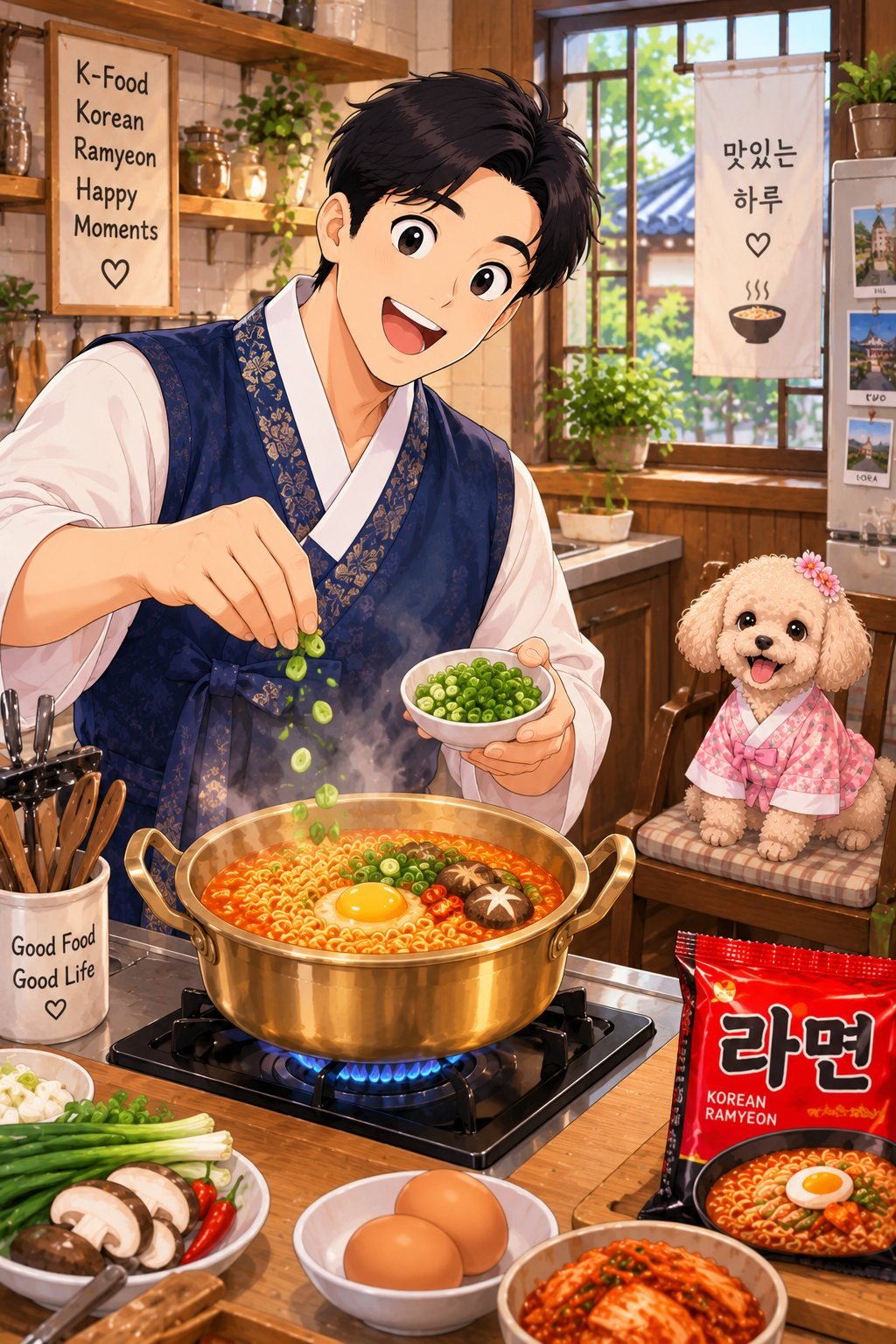
Egg and green onion are familiar finishing additions to a bubbling pot of Korean ramyeon.
Is Korean Ramyeon Always Spicy?
No. Spicy red broth is internationally recognizable, but Korean ramyeon covers a much wider flavor range.
Some products are mild, while others deliberately emphasize intense chili heat. Seafood, beef-style, chicken-style, black-bean-inspired, and other flavor profiles are also available.
Package color or imagery can provide clues, but it should not replace the actual product description when spice tolerance matters.
Soup Ramyeon vs. Brothless Ramyeon
Soup-style ramyeon is cooked and served with a substantial amount of seasoned liquid.
Brothless or stir-fried styles use much less liquid in the final dish. Depending on the product, water may be drained before a sauce or seasoning is mixed through the noodles.
These two styles can differ significantly in flavor concentration, texture, preparation, and spice intensity, so following the correct package instructions is especially important.
Ramyeon with Kimchi
Kimchi is one of the most familiar foods eaten alongside Korean ramyeon.
Cool or room-temperature fermented kimchi creates a strong textural and flavor contrast with hot noodles and broth.
Some people alternate bites of noodles and kimchi, while others place a small piece of kimchi with noodles before eating them together.
Ramyeon with Pickled Radish
Yellow pickled radish can provide a crisp, sweet, sour, and refreshing contrast to spicy or salty noodles.
It is not mandatory with every bowl, but it can be a useful palate change between mouthfuls of strongly seasoned ramyeon.
Side dishes vary according to whether ramyeon is being eaten at home, in a restaurant, at a convenience store, or in another setting.
How to Eat Hot Ramyeon
Freshly cooked noodles can carry extremely hot broth. Lift a manageable amount with chopsticks and allow excess liquid to drip back into the bowl or pot.
Give the noodles enough time to cool before eating. Steam becoming less visible does not necessarily mean the noodles or broth are cool.
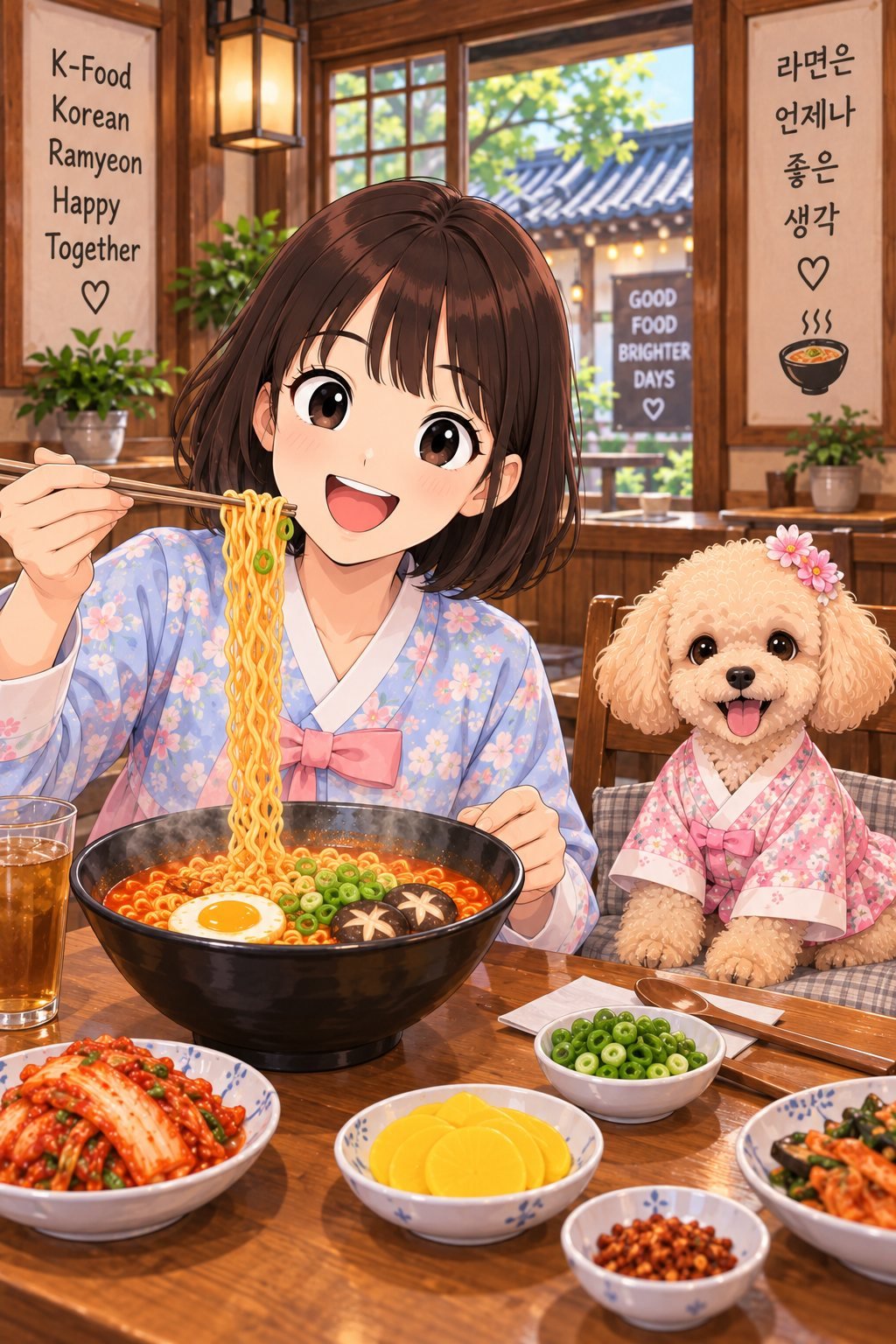
Hot noodles, spicy broth, egg, green onion, mushrooms, kimchi, and pickled radish create a familiar Korean ramyeon table.
Why Ramyeon Is So Convenient
Ramyeon combines shelf-stable packaging, short preparation time, concentrated seasoning, and a relatively simple cooking process.
It can be prepared as a basic bowl with only water or customized with fresh ingredients depending on what is available.
This flexibility helps explain why ramyeon fits so many settings, from a quick home meal to convenience-store dining and outdoor trips.
Convenience Store Ramyeon
Korean convenience stores are one of the most recognizable places to experience ramyeon outside the home. Shelves can contain numerous packet and cup varieties covering different broths, spice levels, noodle styles, and serving sizes.
Some locations provide hot-water dispensers or dedicated cooking equipment, allowing customers to prepare selected products and eat them soon after purchase.
The exact facilities differ by store and location, so travelers should follow the instructions provided for the product and the equipment rather than assuming every convenience store uses the same system.
Choosing Ramyeon at a Convenience Store
The large selection can be confusing for first-time visitors. Start by identifying whether the product is soup-style or brothless, then check the flavor description and expected spice level.
Next, look at the preparation method. Cup products, packet noodles, and products designed for special cooking containers can require different amounts of water and different equipment.
Finally, check ingredients and allergen information when necessary. Similar-looking red packages can contain very different seasonings, proteins, seafood ingredients, or levels of chili heat.
Han River Ramyeon
Eating ramyeon near Seoul’s Han River has become a recognizable casual food experience. Visitors can purchase suitable instant noodles and prepare them using cooking facilities available at some nearby convenience stores or designated locations.
The appeal is not based on a completely different type of noodle. Instead, an ordinary convenience food becomes part of an outdoor Seoul experience through the setting, preparation process, and view.
Facilities and operating conditions can change, so visitors should check the specific location rather than assuming that cooking equipment is available everywhere along the river.
Why Han River Ramyeon Feels Different
Ramyeon is inexpensive, familiar, and quick to prepare, but eating it outdoors beside the Han River changes the context dramatically.
The experience can combine convenience-store culture, river parks, city views, picnics, walking, cycling, and an easy hot meal.
This is a good example of how K-Food travel can involve not only a recipe but also a particular place and way of eating.
Eating Ramyeon from the Cooking Container
Some convenience-store and outdoor ramyeon systems use disposable cooking containers designed for compatible equipment.
Follow the instructions provided at the location because the container, heating method, water quantity, and cooking process can differ.
After cooking, the container and broth can be extremely hot. Keep it on a stable surface and avoid carrying or repositioning it unnecessarily while the liquid is still near boiling temperature.
Popular Ramyeon Additions
One reason ramyeon is so adaptable is that a basic package can become the foundation for many additional ingredients.
Egg and green onion are familiar choices, while mushrooms, vegetables, cheese, rice cakes, dumplings, bean sprouts, or other ingredients can also appear.
Adding more ingredients changes cooking time, food-safety requirements, salt concentration, texture, and the overall size of the meal.
Ramyeon with Mandu
Mandu can turn a simple bowl of noodles into a more substantial meal.
Frozen or fresh dumplings require enough cooking time to heat the filling safely, so they should not simply be added at the final moment because ramyeon noodles themselves cook quickly.
The dumpling filling can also introduce meat, seafood, soy, wheat, sesame, or other ingredients depending on the product.
Ramyeon with Tteok
Korean rice cakes can provide a chewy contrast to curly noodles. Their texture and required cooking time depend on the type and condition of the rice cake.
This combination also creates a natural connection with Tteokbokki, another Korean favorite built around chewy rice cakes and strongly seasoned sauce.
Adding rice cakes makes the dish more substantial, so portion size can increase quickly when several toppings are combined.
Ramyeon with Cheese
Cheese is another modern and familiar addition, particularly with spicy ramyeon.
As it melts, cheese can add richness and change the texture of the broth or sauce. It can soften the perception of chili heat for some diners without actually removing the chili seasoning.
People avoiding dairy should check both added toppings and the packaged noodle ingredients because formulas vary.
Brothless & Stir-Fried Ramyeon
Not all Korean ramyeon is designed to finish as noodle soup. Some products are prepared by cooking the noodles and then removing most of the water before mixing in a concentrated sauce or seasoning.
This can produce a much stronger coating on the noodles because the seasoning is not diluted into a full bowl of broth.
Spice intensity can therefore feel very different from soup-style ramyeon even when the portion of noodles looks similar.
What Is Jjapaguri?
Jjapaguri is a combination associated with two different styles of Korean instant noodles: jjajang-flavored noodles and spicy seafood-style ramyeon.
The name combines parts of the Korean product-style names commonly associated with the mixture. International audiences also encountered a variation through the film Parasite, where English subtitles popularized the expression “Ram-don.”
Jjapaguri is best understood as a Korean instant-noodle combination rather than a traditional restaurant ramen category.
Jjapaguri & Jjajangmyeon
The dark seasoning in jjajang-style instant noodles is inspired by flavors associated with Korean Jjajangmyeon, but instant noodles and restaurant jjajangmyeon are not identical dishes.
Traditional restaurant-style jjajangmyeon uses noodles topped with a cooked chunjang-based sauce containing ingredients such as onion and meat, while packaged versions reproduce a convenient interpretation through instant noodles and concentrated seasoning.
This distinction is useful for travelers who first encounter the word “jjajang” through packaged noodles.
Ramyeon in K-Dramas & Korean Movies
Ramyeon frequently appears in Korean popular culture because it is an ordinary, recognizable food that fits many everyday situations.
Characters can prepare it at home, eat it late at night, share it casually, cook it while traveling, or use it as a simple meal during busy scenes.
For international viewers, repeated appearances in dramas and films can turn an inexpensive packaged food into something strongly associated with everyday life in Korea.
Ramyeon & Mukbang Culture
Ramyeon also appears frequently in Korean and international mukbang content because steaming noodles, bright sauces, long noodle strands, and strong reactions to spicy varieties are visually distinctive.
Online videos have helped international audiences encounter products and preparation styles that may not previously have been available in their local supermarkets.
However, entertainment built around extreme spice levels or unusually large portions should not be treated as a normal serving recommendation.
Why Korean Ramyeon Became Popular Overseas
Korean ramyeon combines several characteristics that travel well internationally: shelf-stable packaging, simple preparation, distinctive flavors, recognizable branding, and a wide range of spice levels and noodle styles.
Korean films, dramas, music, social media, mukbang, cooking videos, and spicy-food challenges have also given international audiences repeated exposure to the category.
As availability expanded outside Korea, consumers could move from watching Korean ramyeon online to preparing it directly at home.
Ramyeon as Everyday Korean Food
Despite its international visibility, ramyeon should not be treated as a ceremonial or elaborate traditional Korean dish.
Its cultural importance comes largely from everyday convenience: it is quick, adaptable, inexpensive compared with many restaurant meals, and familiar across generations.
That everyday character is precisely what makes it useful for understanding modern Korean food culture.
The Complete Korean Ramyeon Experience
Korean ramyeon can be as simple as noodles, seasoning, and water or expanded with egg, green onion, mushrooms, vegetables, mandu, rice cakes, cheese, and other additions.
It can be eaten at home, in a convenience store, beside the Han River, during travel, or as a quick late-night meal.
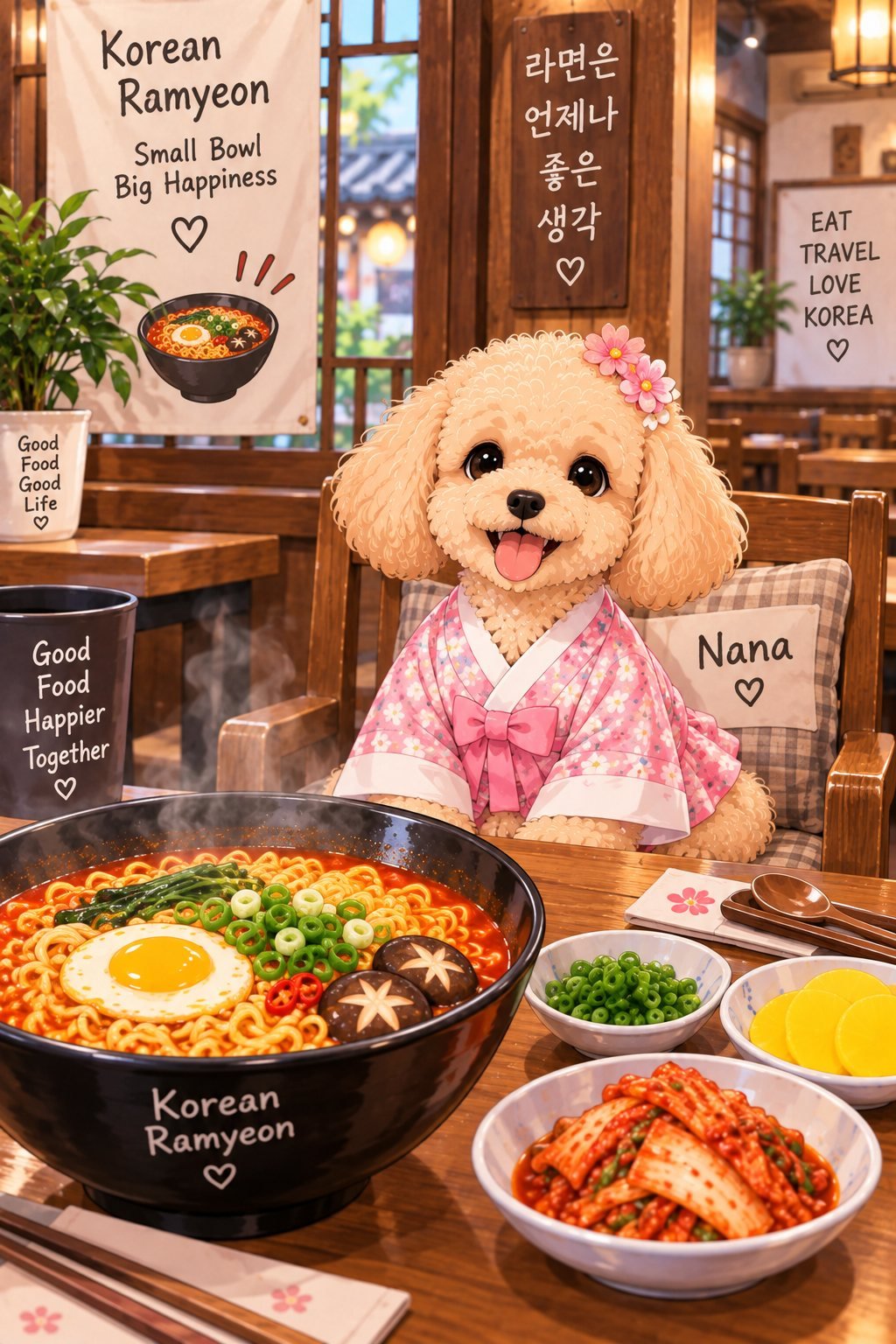
Steaming noodles, spicy broth, simple toppings, kimchi, and convenience-store culture make ramyeon one of the most accessible introductions to everyday K-Food.
How Korean Ramyeon Connects with Other K-Food
Kimchi is one of the most familiar fermented accompaniments to a hot bowl of ramyeon.
Mandu can be added directly to ramyeon, while Tteokbokki provides another major example of spicy Korean convenience and bunsik culture.
Jjajangmyeon helps explain the food tradition behind jjajang-inspired instant noodles, while Naengmyeon and Japchae demonstrate how diverse Korean noodle culture extends beyond instant noodles.
Gimbap is another convenient Korean meal frequently associated with casual eating, while Bibimbap demonstrates a very different rice-centered approach to combining multiple ingredients.
Korean Fried Chicken, Korean BBQ, Samgyeopsal, and Bulgogi expand the collection into fried and grilled Korean meat culture.
Sundubu-jjigae and Kimchi-jjigae provide comparisons with Korean dishes built around bubbling hot broth, while Samgyetang introduces a mild whole-chicken soup with a completely different flavor profile.
Korean Ramyeon & a Korea Travel Day
Ramyeon is especially useful for travelers because experiencing it does not require visiting a specialist restaurant.
A convenience-store meal can fit easily into a day exploring Hongdae, while traditional areas such as Gyeongbokgung Palace, Bukchon Hanok Village, and Insadong provide a contrasting look at historic Seoul.
Gwangjang Market offers another side of casual Korean food through traditional-market dining, allowing travelers to compare packaged convenience culture with foods prepared by market vendors.
FAQ
What is Korean ramyeon?
Korean ramyeon commonly refers to quick-cooking packaged noodles sold with concentrated seasoning. Products include spicy soup noodles, mild varieties, seafood and meat-inspired flavors, jjajang-style noodles, and brothless or stir-fried versions.
Is ramyeon the same as Japanese ramen?
Not exactly. In everyday Korean usage, ramyeon is strongly associated with packaged instant noodles. Japanese ramen commonly refers to a broader restaurant noodle tradition involving prepared broth, noodles, and toppings. International searches may use “Korean ramen” for Korean ramyeon, so both spellings can appear in English.
Is all Korean ramyeon spicy?
No. Spicy varieties are internationally famous, but Korean ramyeon ranges from mild products to extremely spicy ones. Flavor, chili intensity, broth style, and preparation method depend on the individual product.
What can you add to Korean ramyeon?
Common additions include egg, green onion, mushrooms, vegetables, cheese, mandu, and rice cakes. Added ingredients can require different cooking times, so they should be cooked appropriately rather than relying only on the noodle cooking time.
What is Han River ramyeon?
Han River ramyeon refers to the popular experience of preparing and eating instant noodles near Seoul’s Han River, often using suitable products and cooking facilities available at some nearby convenience stores or designated locations. Availability and equipment vary by location.
What is Jjapaguri or Ram-don?
Jjapaguri is an instant-noodle combination associated with jjajang-flavored noodles and spicy seafood-style ramyeon. International audiences became especially familiar with a variation through the film Parasite, where the English subtitle “Ram-don” was used.
Why is Korean ramyeon popular internationally?
Ramyeon combines convenient preparation, shelf-stable packaging, distinctive flavors, multiple spice levels, and many product varieties. Korean films, dramas, social media, mukbang, cooking videos, and global interest in K-Culture have also increased international exposure to Korean instant noodles.
Where to Try Korean Ramyeon
One of the easiest places to experience ramyeon in Korea is a convenience store. Product selection varies, but stores commonly carry several cup and packet noodle varieties.
Some convenience stores provide hot water, seating, or dedicated cooking equipment for compatible products. Facilities vary, so follow the instructions at the specific store.
Ramyeon can also appear at casual restaurants, bunsik establishments, snack bars, camping areas, and other informal dining settings.
For travelers in Seoul, preparing suitable instant noodles near the Han River can add an outdoor and convenience-store dimension to the experience, but cooking facilities and local conditions should be checked at the actual location.
Related K-Nana Guides
The Kimchi Guide introduces the fermented side dish most strongly associated with a hot bowl of Korean ramyeon.
The Mandu Guide explains Korean dumplings that can also be added to noodle soup, while the Tteokbokki Guide introduces spicy rice cakes and Korea’s broader bunsik culture.
The Jjajangmyeon Guide helps explain the Korean noodle tradition behind jjajang-inspired instant products.
The Naengmyeon Guide and Japchae Guide demonstrate how Korean noodle culture extends from chilled noodles to seasoned glass noodles.
The Gimbap Guide and Bibimbap Guide provide two different rice-centered comparisons with quick noodle meals.
For Korean meat and chicken culture, continue with the Korean Fried Chicken Guide, Korean BBQ Guide, Samgyeopsal Guide, and Bulgogi Guide.
The Sundubu-jjigae Guide, Kimchi-jjigae Guide, and Samgyetang Guide introduce three very different Korean hot-broth meals.
Food & Allergy Notes
Korean ramyeon ingredients vary substantially between products, flavors, manufacturers, and markets.
Wheat is common in many instant noodle products, while seasoning packets can contain soy, sesame, milk, egg, fish, shellfish, meat-derived ingredients, or other recipe-dependent components.
A seafood-flavored product can contain fish, shellfish, mollusk, or seafood-derived seasoning, while meat-flavored products can contain animal-derived ingredients even when obvious pieces of meat are not visible.
Vegetable imagery or a vegetable flavor name should not automatically be interpreted as vegetarian or vegan because broth powders, flavorings, seasonings, and processing can introduce animal-derived ingredients.
Travelers with allergies, intolerances, medical conditions, religious dietary restrictions, vegetarian or vegan requirements, or other dietary needs should check the ingredient list and allergen information for the specific product.
Ramyeon & Sodium
Instant noodle seasoning can contribute a substantial amount of sodium, but the exact quantity differs by product and serving size.
Nutrition information on the package is more useful than assuming all Korean ramyeon contains the same amount.
Check whether the nutrition panel describes one complete package or a smaller serving portion, particularly when comparing differently sized products.
People who need to manage sodium intake for individual health reasons should follow appropriate professional guidance and the nutrition information for the actual product they are eating.
Spice-Level Safety
Some Korean ramyeon products are intentionally designed to be extremely spicy.
International spicy-food challenges and mukbang videos can emphasize unusually intense products or large portions, but these entertainment formats should not be treated as a standard way to eat ramyeon.
People who are sensitive to spicy food should start cautiously, check the product description, and avoid assuming that all red packages have the same chili intensity.
Egg, Mandu & Added Ingredient Safety
Adding fresh ingredients changes the food-safety requirements of an otherwise quick-cooking instant noodle meal.
Egg should be cooked to an appropriate level for the diner’s needs. Mandu containing raw or partially cooked meat, seafood, or other fillings requires sufficient cooking according to the product instructions.
Raw meat or seafood added to ramyeon should also be handled and cooked appropriately. The short cooking time required for the noodles alone should not be assumed to be sufficient for every additional ingredient.
Boiling Water & Burn Safety
Boiling water, hot broth, steam, pots, disposable cooking containers, and freshly prepared cup ramyeon can cause serious burns.
Place the container on a stable surface before adding hot water. Avoid holding a cup in the hand while pouring boiling water into it.
When cooking packet ramyeon on a stove, keep pot handles positioned safely and use appropriate protection when touching hot cookware.
Allow noodles and broth to cool sufficiently before eating, particularly when lifting long noodles that can carry hot liquid toward the mouth.
Cup Ramyeon & Microwave Safety
Do not assume every cup ramyeon container is microwave-safe.
Some products are designed for boiling water only, while others provide specific microwave instructions. Materials, lids, heating times, and preparation methods differ.
Follow the package instructions and any directions provided by the convenience store or cooking equipment.
Storage & Package Condition
Unopened ramyeon should be stored according to the manufacturer’s instructions and used within the applicable date guidance on the package.
Before preparation, check that packaging is intact and that seasoning packets and noodles have not been exposed to inappropriate moisture or contamination.
Once fresh egg, meat, seafood, vegetables, cheese, or other perishable ingredients are added, the finished meal should be handled as a prepared food rather than simply as a shelf-stable packaged product.
Image Credits
Korean ramyeon family dining experience with steaming red broth, curly noodles, egg, green onion, mushrooms, kimchi, and pickled radish with Dad, Mom, K-Nana daughter, and Nana in hanbok visual — K-Nana Studio original visual.
Korean ramyeon preparation with Mom in hanbok adding instant noodles and seasoning to a boiling pot while preparing green onion, mushrooms, and vegetables as Nana watches from a separate safe seat visual — K-Nana Studio original visual.
Korean ramyeon cooking experience with Dad in hanbok finishing a bubbling pot of noodles with egg and green onion while Nana watches from a separate chair away from the hot cooking area visual — K-Nana Studio original visual.
Korean ramyeon table with K-Nana daughter in hanbok lifting hot noodles with chopsticks and enjoying them with kimchi and pickled radish while Nana sits separately without touching the food visual — K-Nana Studio original visual.
Nana in pink floral hanbok seated separately as a K-Food mascot beside steaming Korean ramyeon with curly noodles, egg, green onion, mushrooms, kimchi, and pickled radish visual — K-Nana Studio original visual.
Disclaimer
This article is provided for general food, travel, and cultural information. Korean ramyeon ingredients, allergens, nutrition values, sodium levels, spice intensity, serving sizes, preparation methods, cooking containers, toppings, and dietary suitability vary by product, manufacturer, market, and restaurant. Always follow the preparation, storage, allergen, nutrition, and microwave instructions provided for the specific product. Eggs, meat, seafood, mandu, and other added perishable ingredients require appropriate handling and cooking. Boiling water, steam, hot broth, cookware, and cooking containers can cause burns. People with allergies, medical conditions, dietary restrictions, or other individual requirements should check the actual product information and seek appropriate professional guidance when necessary.