
Kimchi-jjigae is one of Korea’s most familiar stews, built around fermented kimchi simmered in a hot, deeply flavored broth. Pork, tofu, green onion, onion, and other ingredients are commonly added, although recipes vary widely between households and restaurants.
The character of the kimchi is especially important. Kimchi that has fermented and developed stronger acidity can contribute a deeper, sharper flavor to the broth than very fresh kimchi, making fermentation itself part of the cooking process.
Served bubbling hot with steamed rice and Korean side dishes, kimchi-jjigae represents a different way to experience kimchi. Instead of eating it cold or at room temperature as banchan, the fermented ingredient becomes the foundation of an entire hot meal.
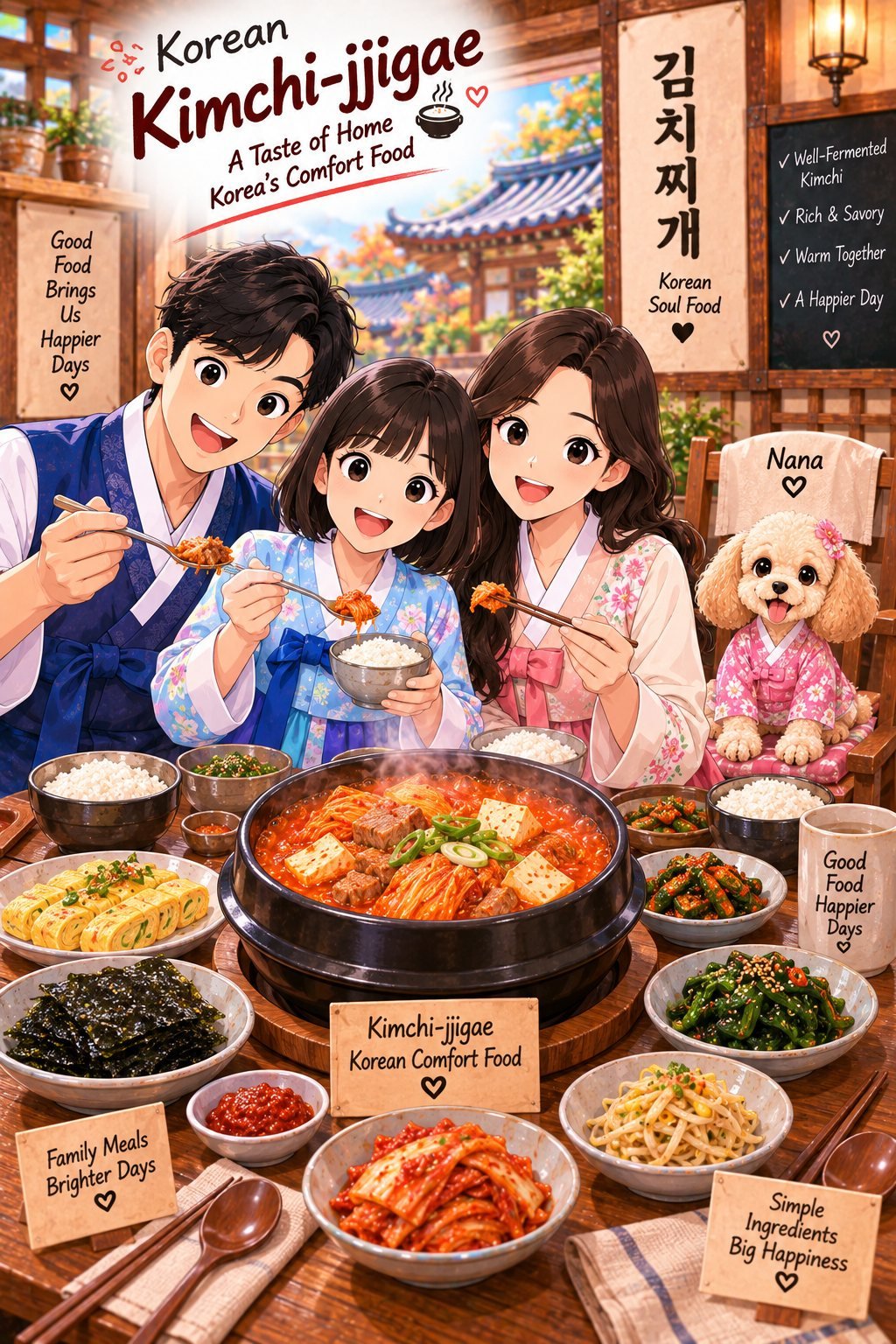
Fermented kimchi, pork, tofu, green onion, steaming rice, and banchan turn a bubbling pot of kimchi-jjigae into a classic Korean comfort meal.
Quick Guide
| Korean name | 김치찌개 |
| Food type | Korean kimchi stew |
| Main ingredient | Fermented kimchi |
| Common additions | Pork, tofu, green onion, onion, garlic, and recipe-dependent ingredients |
| Typical flavor | Savory, fermented, tangy, spicy, and rich, depending on the kimchi and recipe |
| Common serving style | Served very hot in a pot, often with steamed rice |
| Common accompaniments | Rice, gim, gyeran-mari, and other Korean banchan |
| Important first-time tip | The stew and serving vessel can remain extremely hot after reaching the table |
What Is Kimchi-jjigae?
Kimchi-jjigae combines two important Korean food concepts: kimchi and jjigae. Kimchi provides the fermented foundation, while jjigae describes the hot stew format in which that ingredient is simmered with broth and additional foods.
The result is more than simply warmed kimchi. As the ingredients simmer together, the kimchi seasons the surrounding liquid while meat, tofu, vegetables, and other additions contribute their own flavors.
This creates a concentrated stew designed to be eaten alongside rice rather than a light broth intended only as a starter.
Why Fermented Kimchi Matters
Kimchi changes as fermentation progresses. Acidity can become more noticeable, while aromas and flavors develop beyond those of newly prepared kimchi.
These characteristics can be particularly useful in cooked dishes because the stronger fermented flavor remains noticeable even after the kimchi is combined with broth and other ingredients.
This is why well-fermented kimchi is commonly associated with kimchi-jjigae. The exact preferred stage of fermentation, however, varies by cook, household, restaurant, and recipe.
Fresh Kimchi vs. Well-Fermented Kimchi
Freshly prepared kimchi can have a crisp texture and bright vegetable flavor. As fermentation develops, the flavor generally becomes more acidic and complex.
In a stew, stronger fermentation can help the kimchi maintain its identity against pork, tofu, broth, garlic, chili seasoning, and other ingredients.
That does not mean fresh kimchi can never be cooked. It means the fermentation stage changes the final character of the stew and is one reason different kimchi-jjigae recipes can taste significantly different.
Kimchi as Banchan vs. Kimchi in Jjigae
Kimchi can play very different roles within Korean cuisine. As banchan, it can provide a cool, crisp, fermented contrast beside rice and other dishes.
In kimchi-jjigae, the same broad food tradition becomes part of a hot cooked dish. The kimchi softens, releases flavor into the broth, and interacts with meat, tofu, and vegetables.
K-Nana Studio’s Kimchi Guide explains the fundamentals of Korean kimchi, fermentation, ingredients, and kimjang culture in greater detail.
Common Ingredients in Kimchi-jjigae
Recipes vary, but familiar kimchi-jjigae can contain fermented napa cabbage kimchi, pork, tofu, green onion, onion, garlic, chili seasoning, and broth or water.
Additional ingredients can include mushrooms, different cuts of meat, canned tuna, seafood, or restaurant-specific additions.
There is no single mandatory ingredient list beyond the central role of kimchi, so travelers should check the individual version when meat type, seafood, allergens, or dietary restrictions matter.
Preparing the Kimchi
Large pieces of napa cabbage kimchi are commonly cut into manageable portions before cooking so they can be distributed through the stew and eaten easily with a spoon or chopsticks.
The kimchi liquid can also contribute seasoning and acidity depending on the recipe. Cooks may use some of this liquid rather than treating only the cabbage leaves as useful.
Because kimchi already contains multiple seasonings, the cook needs to consider its existing saltiness, acidity, and chili character when adjusting the rest of the stew.
Preparing Pork, Tofu & Vegetables
Pork is a familiar partner for kimchi-jjigae because its richness works well with fermented acidity and chili seasoning.
Tofu provides a much milder contrast. Its relatively gentle flavor absorbs some of the surrounding broth while offering a soft texture against the kimchi and meat.
Green onion, onion, garlic, and other vegetables or aromatics can add sweetness, freshness, and additional savory character.

Well-fermented kimchi, pork, tofu, green onion, onion, and aromatics form the familiar foundation of a hearty kimchi-jjigae.
Why Pork & Kimchi Work Together
Fermented kimchi can be acidic, spicy, salty, and intensely flavored. Pork introduces richness that creates a useful contrast with those characteristics.
As the pork cooks, its flavor becomes part of the surrounding broth while the kimchi seasons the meat. The two ingredients therefore influence each other rather than remaining completely separate.
Different cuts and amounts of pork can change the richness of the finished stew, so one restaurant’s version can feel noticeably different from another.
Is Pork Required?
No. Pork is extremely familiar in kimchi-jjigae, but it is not the only possible additional ingredient.
Some versions use canned tuna, beef, seafood, or other ingredients, while household recipes can be adapted according to preference and what is available.
However, a version without visible pork should not automatically be assumed to be vegetarian because the kimchi, broth, or seasonings can still contain animal-derived ingredients.
The Role of Tofu
Tofu provides a mild and soft component within an otherwise strongly flavored stew.
Unlike the exceptionally delicate tofu at the center of Sundubu-jjigae, kimchi-jjigae commonly uses tofu firm enough to remain in recognizable slices or pieces while simmering.
This creates an important distinction between the two stews. Sundubu-jjigae is defined by its soft tofu, while kimchi-jjigae is defined primarily by fermented kimchi.
Building the Broth
Kimchi-jjigae broth develops from the interaction of kimchi, its seasoning, additional liquid, meat or other protein, vegetables, and recipe-specific seasonings.
The broth does not need to taste separate from the solid ingredients. The goal is for the kimchi flavor to become integrated throughout the pot.
Because kimchi already contributes salt, chili seasoning, acidity, and fermented flavor, additional seasoning needs to be adjusted according to the particular kimchi being used.
Simmering Kimchi-jjigae
Simmering gives the ingredients time to exchange flavors. Kimchi softens, pork cooks and contributes richness, and the broth becomes more integrated.
Tofu and green onion can be added according to the desired texture and recipe. Ingredients that need less cooking do not necessarily have to enter the pot at the same time as the meat and kimchi.
The finished stew should bring the components together while still allowing diners to identify pieces of kimchi, meat, tofu, and vegetables.
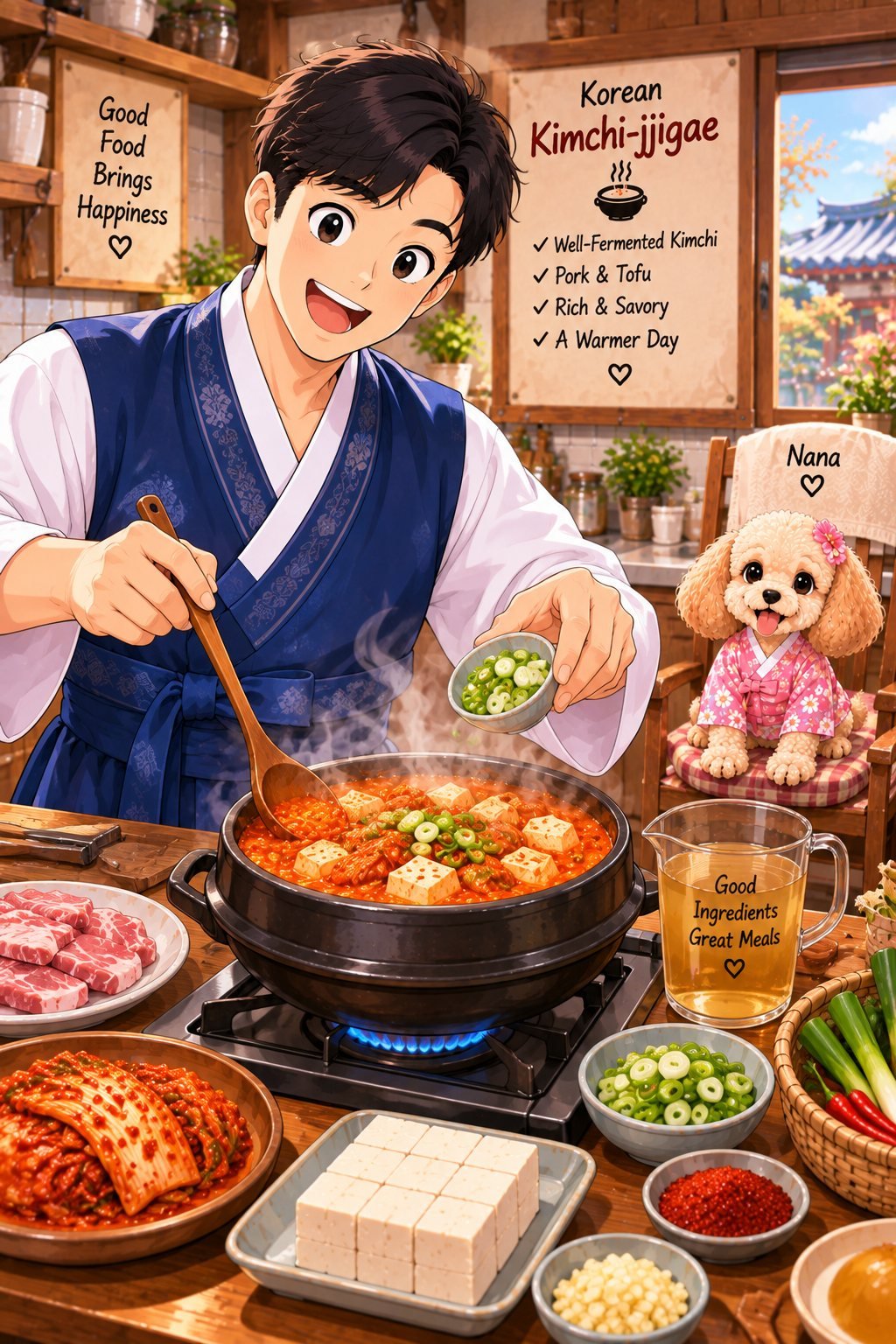
Slow simmering allows fermented kimchi, pork, broth, tofu, and green onion to develop into one deeply flavored Korean stew.
Kimchi-jjigae with Rice
Steamed white rice provides one of the most important contrasts in a kimchi-jjigae meal. Its mild flavor balances the stew’s acidity, chili seasoning, saltiness, and richness.
Diners can alternate between spoonfuls of stew and rice or combine small amounts of broth, kimchi, pork, or tofu with rice.
There is no requirement to pour the entire stew over the rice. Keeping the two separate allows each bite to be adjusted according to personal preference.
Gim, Gyeran-mari & Banchan
Kimchi-jjigae can be accompanied by a variety of Korean side dishes. Gim, or roasted seaweed, adds a crisp and savory element, while gyeran-mari, a Korean rolled omelette, provides a mild egg-based contrast.
Seasoned vegetables, sprouts, pickled foods, or other banchan may also appear depending on the restaurant.
The exact side dishes are not fixed. Their role is to create variety around the central stew through different textures, temperatures, and seasonings.
Kimchi-jjigae & Korean Home Cooking
Kimchi-jjigae is strongly associated with everyday Korean home-style food because it transforms a familiar fermented staple into a substantial hot meal.
Recipes can differ significantly between households. The kimchi itself, fermentation stage, meat choice, broth, seasoning, tofu, and additional ingredients all provide room for variation.
This makes kimchi-jjigae useful for understanding Korean home cooking: a recognizable dish can maintain its basic identity while still changing from one kitchen to another.
Pork Kimchi-jjigae
Pork kimchi-jjigae is one of the most familiar versions of the stew. Pork adds richness and savory flavor that contrasts with the acidity and chili seasoning of fermented kimchi.
The cut of pork, amount of fat, cooking time, and ratio of meat to kimchi vary by recipe. Some versions emphasize large pieces of pork, while others use a smaller quantity mainly to enrich the broth.
For another Korean pork experience, Samgyeopsal shows how pork belly changes when grilled at the table and eaten with ssam, ssamjang, garlic, and kimchi.
Tuna Kimchi-jjigae
Canned tuna is another familiar addition to kimchi-jjigae, particularly in casual home-style cooking.
It creates a different savory character from pork and can be convenient because the tuna requires less preparation than raw meat.
The amount of tuna and whether some of the liquid or oil from the can is incorporated depend on the recipe. Travelers with fish allergies should confirm ingredients even when individual pieces of tuna are not immediately visible in the broth.
Fish Kimchi-jjigae
Some kimchi stews incorporate fish, including versions made with canned fish such as saury. The combination creates a noticeably different flavor from pork or tuna kimchi-jjigae.
Fish can contribute strong savory character to the broth while fermented kimchi provides acidity, chili seasoning, and vegetable texture.
Recipes vary substantially, and diners with fish or seafood allergies should confirm the ingredients and broth directly.
Ham & Sausage Variations
Kimchi-jjigae can also be prepared with processed meats such as ham or sausage. These versions introduce saltiness, richness, and a different texture from fresh pork.
The idea also shows how Korean home cooking can adapt a familiar stew around ingredients available in the kitchen rather than requiring one fixed protein.
Ham or sausage versions should not be confused with every other Korean stew containing processed meat. The defining ingredient of kimchi-jjigae remains kimchi.
Kimchi-jjigae vs. Sundubu-jjigae
Kimchi-jjigae and Sundubu-jjigae can both arrive bubbling hot and red, but their defining ingredients are different.
Kimchi-jjigae is centered on fermented kimchi. Tofu can be included, but the stew remains recognizable because of the kimchi and the flavor it contributes to the broth.
Sundubu-jjigae is centered on exceptionally soft tofu. Kimchi can appear in some versions, but the delicate sundubu remains fundamental to the dish.
This distinction is useful for first-time visitors because appearance alone can make two red Korean stews seem more similar than they actually are.
How to Eat Kimchi-jjigae
Begin carefully because freshly served kimchi-jjigae can remain extremely hot. Take a small spoonful containing broth and one or two ingredients, then allow it to cool sufficiently before eating.
Steamed rice can be eaten between spoonfuls or combined with small portions of kimchi, pork, tofu, and broth.
Side dishes such as gim, gyeran-mari, seasoned vegetables, or other banchan can be alternated throughout the meal to create changes in texture and seasoning.

Rich kimchi-jjigae, plain steamed rice, gim, gyeran-mari, and banchan create a balanced Korean home-style meal.
Why Rice Is Important
Kimchi-jjigae can combine acidity, chili heat, saltiness, fermentation, and meat richness in a relatively concentrated broth. Plain steamed rice provides a mild counterpoint.
The amount of stew combined with each bite of rice can be adjusted easily, allowing diners to control how intense each mouthful feels.
Rice also makes the stew part of a complete meal rather than requiring the broth to function as a standalone soup.
How Sour Is Kimchi-jjigae?
The acidity of the stew depends heavily on the kimchi. Longer fermentation can produce a more noticeable sour character, although fermentation conditions and recipes also matter.
Some diners particularly enjoy the sharper flavor of well-fermented kimchi in stew, while others prefer a less acidic balance.
The finished taste also depends on meat, broth, sweeteners, seasonings, cooking time, and other ingredients, so fermentation age alone does not determine the entire flavor.
Is Kimchi-jjigae Spicy?
Kimchi-jjigae commonly contains chili seasoning and can be spicy, but the level of heat varies.
The kimchi itself already contains seasoning, and additional gochugaru or other chili products may be used depending on the recipe.
Travelers who are sensitive to spicy food should ask about the restaurant’s preparation. A red color indicates the presence of chili in many versions but cannot precisely predict the intensity.
Ttukbaegi & Hot-Pot Safety
Kimchi-jjigae can be served in a heat-retaining vessel that remains very hot after reaching the table.
Visible bubbling may slow while the pot, broth, tofu, meat, and kimchi remain hot enough to cause burns.
Do not touch the sides, rim, base, or handles of a hot serving vessel with bare hands. If the pot needs to be repositioned, ask restaurant staff for assistance.
How to Order Kimchi-jjigae
First check the main additional ingredient. Menus may distinguish pork, tuna, fish, or other kimchi-jjigae variations.
Next, check whether the serving is intended for one person or for sharing. Restaurant formats and portion sizes vary.
Confirm whether steamed rice is included or ordered separately, and check what banchan accompanies the meal.
When meat type, fish, seafood, allergens, spice level, vegetarian requirements, or religious dietary restrictions matter, ask about both the visible ingredients and the broth or seasonings.
First-Time Kimchi-jjigae Tips
- Expect fermented flavor — well-fermented kimchi can produce noticeable acidity and depth.
- Wait before the first bite — the broth and solid ingredients can remain extremely hot.
- Use rice for balance — plain rice softens the impact of concentrated seasoning.
- Check the protein — pork, tuna, fish, ham, and other variations can taste very different.
- Do not assume tofu makes it vegetarian — meat or seafood-derived broth and seasonings may still be present.
- Ask about spice level — recipes vary considerably in chili intensity.
- Expect household variation — kimchi fermentation, broth, meat, tofu, and seasoning differ from kitchen to kitchen.
- Do not touch a hot pot — the serving vessel can retain heat long after visible bubbling slows.
Kimchi-jjigae & Solo Dining
Kimchi-jjigae can work well as an individual meal when a restaurant offers a personal pot with rice and banchan.
This makes it different from some shared Korean dining formats where several diners cook or eat from a large central dish.
Serving policies vary, so solo travelers should still check minimum orders and portion sizes at the specific restaurant.
Kimchi-jjigae as Korean Comfort Food
The dish is strongly associated with familiar home-style eating because its central ingredient is something already deeply embedded in Korean meals: kimchi.
Turning fermented kimchi into a bubbling stew changes its temperature, texture, and role while preserving the recognizable fermented character at the center of the dish.
This combination of familiarity, flexibility, hot broth, rice, and household variation helps explain why kimchi-jjigae is widely recognized as Korean comfort food.
Is Kimchi-jjigae Only for Winter?
A steaming pot can be especially appealing during cold weather, making kimchi-jjigae a natural winter comfort meal.
However, it is not limited to one season. Korean restaurants and households can serve kimchi-jjigae throughout the year.
For a dramatic temperature contrast, Naengmyeon represents another side of Korean food culture through chilled broth and cold seasoned noodles.
The Complete Kimchi-jjigae Experience
Kimchi-jjigae demonstrates how fermentation can become the foundation of a cooked meal. Well-fermented kimchi contributes acidity, chili seasoning, aroma, and savory complexity, while pork or another protein can add richness.
Tofu, green onion, rice, gim, gyeran-mari, and other banchan create softer and milder contrasts around the intensely flavored stew.
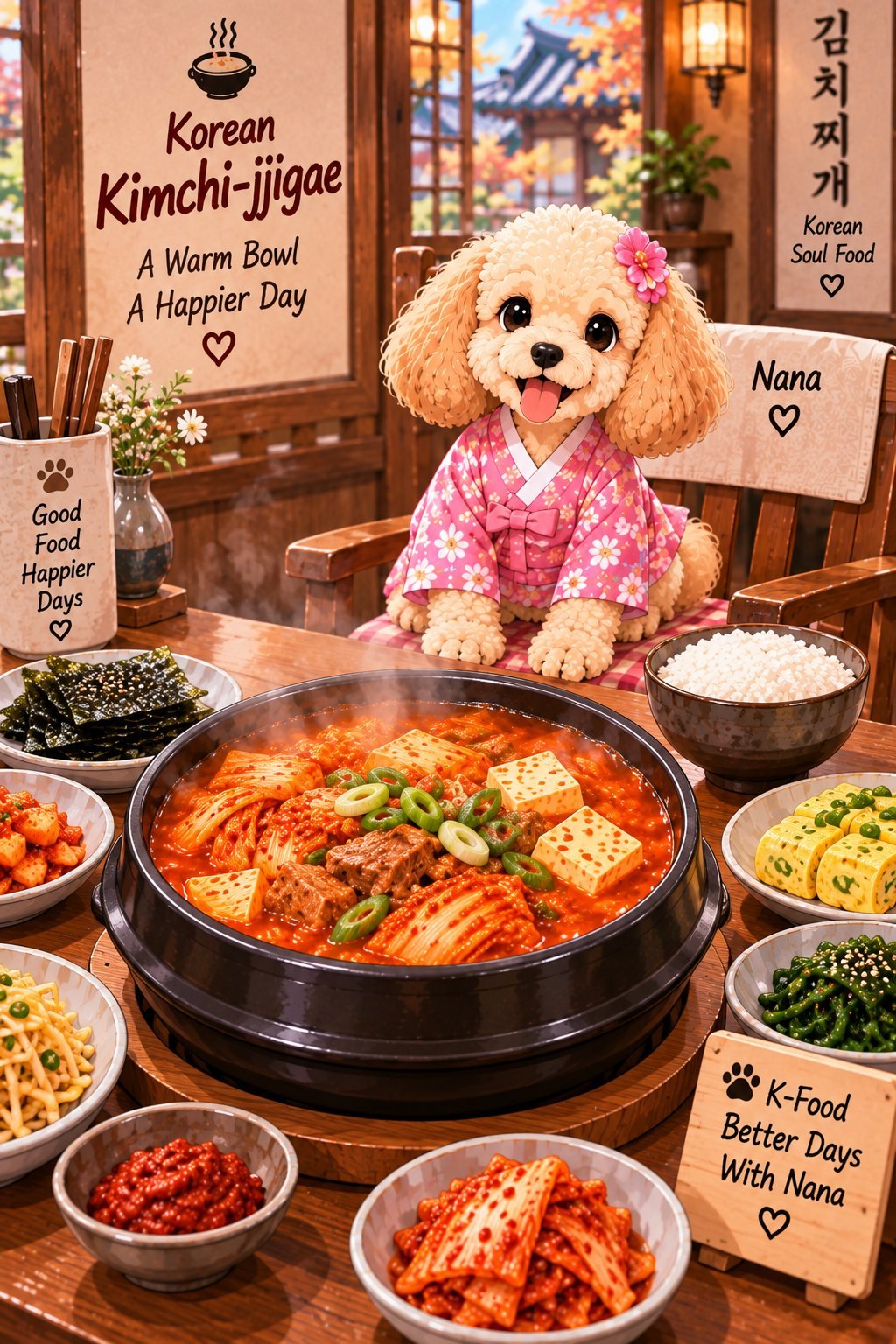
Fermented kimchi, bubbling broth, pork, tofu, rice, and simple banchan turn kimchi-jjigae into a deeply familiar Korean home-style meal.
How Kimchi-jjigae Connects with Other K-Food
Kimchi-jjigae builds directly on the fermentation story introduced in K-Nana Studio’s Kimchi Guide, showing how fermented kimchi can move from banchan to the center of a cooked meal.
Sundubu-jjigae provides the closest stew comparison: both can be red and bubbling, but one is defined by fermented kimchi and the other by exceptionally soft tofu.
Bibimbap provides a rice-centered contrast, while Korean BBQ, Samgyeopsal, and Bulgogi introduce different Korean meat preparations.
Naengmyeon, Jjajangmyeon, and Japchae demonstrate three very different noodle traditions: chilled noodles, thick chunjang-coated noodles, and seasoned glass noodles.
Mandu, Gimbap, and Tteokbokki introduce dumplings, portable rice rolls, and bunsik culture.
Korean Fried Chicken provides another modern contrast through crisp fried texture, sauces, takeout, and delivery culture.
Kimchi-jjigae & a Korea Travel Day
Kimchi-jjigae is an everyday Korean dish rather than a food restricted to one famous tourist neighborhood, so travelers can encounter it in many different dining areas.
Gwangjang Market provides a useful contrast between a sit-down home-style stew and Korea’s energetic traditional-market food culture.
For a traditional Seoul day, Insadong, Bukchon Hanok Village, and Gyeongbokgung Palace can connect Korean food with traditional streets, crafts, hanok architecture, and history.
For a contemporary itinerary, Hongdae combines casual restaurants with cafés, shopping, music, and youth culture.
FAQ
What is kimchi-jjigae?
Kimchi-jjigae is a Korean stew centered on fermented kimchi simmered with broth and additional ingredients such as pork, tofu, green onion, onion, or other recipe-dependent foods. It is commonly served very hot with steamed rice and banchan.
Why is well-fermented kimchi used for kimchi-jjigae?
As kimchi ferments, its acidity and fermented flavor become more pronounced. These stronger characteristics can remain noticeable after the kimchi is simmered with broth, meat, tofu, and seasonings. The preferred fermentation stage varies by cook and recipe.
Does kimchi-jjigae always contain pork?
No. Pork is one of the most familiar additions, but kimchi-jjigae can also be prepared with tuna, fish, ham, sausage, beef, or other ingredients. Broths and seasonings also vary between recipes.
Is kimchi-jjigae vegetarian or vegan?
Not automatically. Kimchi itself can contain recipe-dependent animal-derived ingredients, and the stew may use meat, seafood, fish-based seasoning, or animal-derived broth even when no obvious pieces of meat are visible. Vegetarian and vegan diners should confirm the complete preparation with the restaurant.
Is kimchi-jjigae spicy?
Kimchi-jjigae commonly contains chili seasoning and can be spicy, but the heat level varies according to the kimchi and additional seasoning. The stew can also have noticeable fermented acidity, so spicy heat and sourness should be understood as separate characteristics.
What is the difference between kimchi-jjigae and sundubu-jjigae?
Kimchi-jjigae is defined primarily by fermented kimchi, while sundubu-jjigae is defined by exceptionally soft tofu. Both can be red, spicy, and served bubbling hot, but their central ingredients and textures are different.
How do you eat kimchi-jjigae with rice?
Diners can alternate between stew and rice or combine small portions of kimchi, tofu, meat, and broth with individual spoonfuls of rice. There is no requirement to pour the entire stew over the rice.
Where to Try Kimchi-jjigae
Kimchi-jjigae is widely available at Korean home-style restaurants, jjigae restaurants, casual eateries, and other establishments serving everyday Korean meals.
Menus may offer pork, tuna, fish, or other variations. Before ordering, check the main protein, portion size, spice level, whether the dish is intended for one person or sharing, and whether rice is included.
Because kimchi-jjigae is an everyday food rather than a dish restricted to one tourist district, travelers can encounter different versions throughout Korea.
For a Seoul food itinerary, Gwangjang Market, Insadong, Bukchon Hanok Village, Gyeongbokgung Palace, and Hongdae provide different traditional and contemporary settings that can be combined with Korean dining.
Related K-Nana Guides
Start with the Kimchi Guide to understand fermentation, ingredients, kimjang culture, and the food that forms the foundation of kimchi-jjigae.
The Sundubu-jjigae Guide provides the closest stew comparison, explaining exceptionally soft tofu, spicy broth, ttukbaegi, rice, and several seafood and meat variations.
For Korean meat culture, continue with the Korean BBQ Guide, Samgyeopsal Guide, and Bulgogi Guide.
The Bibimbap Guide introduces a rice-centered Korean meal, while the Naengmyeon Guide, Jjajangmyeon Guide, and Japchae Guide explore three very different noodle traditions.
The Mandu Guide, Gimbap Guide, and Tteokbokki Guide cover dumplings, portable rice rolls, and bunsik culture, while the Korean Fried Chicken Guide explores another familiar Korean casual-food experience.
Food & Allergy Notes
Kimchi-jjigae can contain several ingredients that are not immediately obvious from the finished pot. Kimchi, broth, seasonings, protein, tofu, and additional ingredients all need to be considered when allergies or dietary restrictions are relevant.
Tofu introduces soy, while tuna and fish variations introduce fish allergens. Other versions can contain pork, beef, seafood, processed meats, egg, sesame, wheat-containing seasonings, or other recipe-dependent ingredients.
Kimchi itself can contain ingredients that vary by recipe, including seafood-derived seasonings. A kimchi-based dish should therefore not automatically be assumed to be vegetarian or vegan.
Ham and sausage variations can contain additional ingredients and allergens that are not obvious from appearance alone.
Travelers with allergies, intolerances, medical conditions, religious dietary restrictions, vegetarian or vegan requirements, or other dietary needs should confirm the kimchi, broth, tofu, protein, seasonings, and preparation directly with the restaurant.
Fermented Kimchi & Food Handling
Fermentation is fundamental to kimchi, but fermented food still requires appropriate handling and storage.
Kimchi used for stew should be stored according to appropriate food-safety practices before cooking. Its sour flavor should not be used by itself to determine whether other ingredients in a prepared stew have been handled safely.
Once kimchi is combined with meat, tofu, fish, vegetables, and broth, the finished dish should be treated as a cooked prepared meal containing perishable ingredients.
Raw Pork, Fish & Other Protein Safety
Raw pork, beef, fish, or other uncooked proteins used in kimchi-jjigae require appropriate handling and thorough cooking.
Raw ingredients should be kept appropriately separated from ready-to-eat foods such as cooked rice, gim, gyeran-mari, garnishes, and banchan.
Hands, knives, cutting boards, bowls, utensils, and preparation surfaces that contact raw meat or fish should be cleaned and handled appropriately before they are used with cooked or ready-to-eat foods.
Hot Pot & Burn Safety
Kimchi-jjigae can arrive at the table bubbling vigorously. Even after the visible bubbling slows, the broth and serving vessel can retain substantial heat.
Do not touch a hot ttukbaegi or other heat-retaining pot with bare hands. The rim, sides, base, and serving tray can remain hot enough to cause burns.
Kimchi, pork, tofu, and other solid ingredients can also retain heat internally. Take smaller first spoonfuls and allow them to cool sufficiently before eating.
Takeaway, Storage & Reheating
Kimchi-jjigae contains cooked broth and can include meat, fish, tofu, vegetables, and other perishable ingredients, so leftovers require appropriate storage.
For takeaway or delivery, follow any instructions provided by the restaurant and avoid leaving the prepared stew at room temperature for an extended period.
Store leftovers appropriately for the ingredients involved and reheat them thoroughly using suitable food-safety practices.
Flavor and texture can change during storage. Kimchi can soften further, tofu can become more fragile, and meat or fish can change after repeated heating.
Image Credits
Korean kimchi-jjigae family dining experience with bubbling fermented kimchi stew, pork, tofu, steamed rice, gim, gyeran-mari, and banchan with the K-Nana family and Nana in hanbok visual — K-Nana Studio original visual.
Traditional kimchi-jjigae ingredient preparation with Mom in hanbok cutting fermented napa cabbage kimchi and preparing pork, tofu, green onion, onion, and other ingredients while Nana watches from a separate seat visual — K-Nana Studio original visual.
Korean kimchi-jjigae cooking experience with Dad in hanbok simmering fermented kimchi and pork in a hot black pot before adding tofu and green onion while Nana watches from a separate safe chair visual — K-Nana Studio original visual.
Korean kimchi-jjigae home-style table with K-Nana daughter in hanbok enjoying fermented kimchi, pork, tofu, steamed rice, gim, gyeran-mari, and banchan while Nana sits separately without touching the food visual — K-Nana Studio original visual.
Nana in pink floral hanbok seated separately as a K-Food mascot beside bubbling Korean kimchi-jjigae with fermented napa cabbage kimchi, pork, tofu, green onion, rice, gim, gyeran-mari, and Korean banchan visual — K-Nana Studio original visual.
Disclaimer
This article is provided for general food, travel, and cultural information. Kimchi-jjigae ingredients, kimchi fermentation, broths, meats, fish, tofu, processed meats, seasonings, allergens, spice levels, preparation methods, restaurant recipes, serving formats, storage conditions, and dietary suitability can vary. Raw meat, fish, tofu, fermented foods, and other perishable ingredients require appropriate handling, cooking, storage, and reheating. Hot broth, steam, cooking equipment, and heat-retaining serving vessels can cause burns. Always follow appropriate food-handling and kitchen-safety practices and confirm ingredients and preparation directly with the restaurant, seller, or manufacturer when allergies, medical conditions, religious restrictions, vegetarian or vegan requirements, or other dietary needs are relevant.