
Jjimdak is a Korean braised chicken dish in which chicken, vegetables, and other ingredients are slowly cooked together in a deeply flavored sauce. One of its best-known forms is Andong Jjimdak, strongly associated with the city of Andong in Korea.
A typical Andong-style serving can combine chicken with potatoes, carrots, onions, green onions, mushrooms, and long glass noodles in a dark, glossy soy-sauce-based seasoning.
The result is very different from grilled or fried Korean chicken. Jjimdak develops its flavor through braising, allowing the chicken, vegetables, and noodles to absorb the sauce as they cook together.
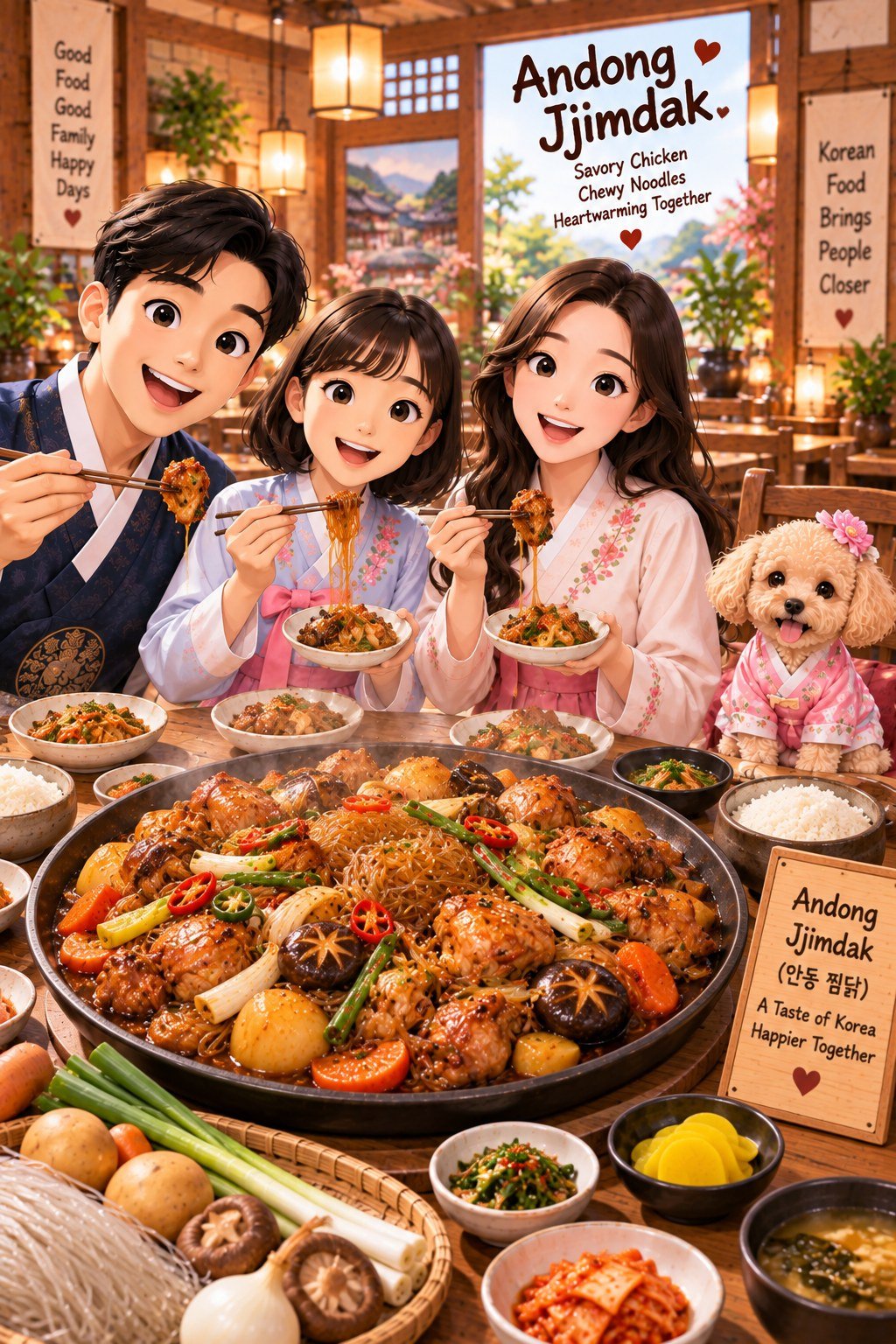
Braised chicken, vegetables, potatoes, and glossy glass noodles create the rich shared-table experience associated with Andong Jjimdak.
Quick Guide
| Korean name | 찜닭 |
| Romanization | Jjimdak |
| Common English description | Korean braised chicken |
| Famous regional style | Andong Jjimdak |
| Main protein | Chicken |
| Common vegetables | Potato, carrot, onion, green onion and mushrooms |
| Common noodle | Dangmyeon, or Korean glass noodles |
| Seasoning style | Dark soy-sauce-based braising sauce |
| Cooking method | Braising |
| Strong regional association | Andong, Gyeongsangbuk-do |
What Is Jjimdak?
Jjimdak is a Korean chicken dish prepared by cooking chicken with sauce, vegetables, and other ingredients until the flavors become deeply integrated.
The familiar Andong version is especially recognizable for its dark soy-based sauce, large pieces of chicken and vegetables, and long glass noodles.
It is commonly served as a large shared dish rather than as a small individual portion.
What Does Jjimdak Mean?
The name combines two useful Korean food concepts.
Jjim refers broadly to foods prepared through steaming or braising-style cooking, depending on the dish and context. Dak means chicken.
In jjimdak, the name refers to chicken cooked with seasoning and other ingredients until the sauce penetrates the meat, vegetables, and noodles.
What Is Andong Jjimdak?
Andong Jjimdak is the regional style most strongly associated with the name jjimdak.
It combines chicken with vegetables and glass noodles in a dark, savory-sweet soy-sauce-based seasoning and is closely connected with Andong’s local food identity.
Individual restaurants still vary in sauce balance, spice level, vegetables, noodle quantity, and serving style.
Why Is Andong Famous for Jjimdak?
Andong developed a particularly strong association with the dish, and jjimdak became one of the foods visitors connect with the city.
The concentration of restaurants serving the dish helped turn it into both a local specialty and a food-tourism experience.
For travelers, eating Andong Jjimdak can therefore provide regional context in addition to the meal itself.
Andong Old Market & Jjimdak Alley
Andong Old Market is closely associated with an area commonly known for jjimdak restaurants.
Multiple businesses serving their own versions of the dish allow visitors to encounter differences in sauce, portion size, spice level, ingredients, and presentation.
Individual restaurants can change menus, prices, locations, and operating hours, so current information should be checked when planning a specific visit.
What Chicken Is Used in Jjimdak?
Chicken is cut into pieces that can braise together with the vegetables and sauce.
Depending on the restaurant or recipe, servings can include bone-in pieces, boneless chicken, or different cuts.
The exact chicken format should therefore be checked when bones, portioning, or personal preference matters.
The Jjimdak Sauce
The sauce gives Andong-style jjimdak much of its recognizable dark color and savory flavor.
Soy sauce can form the seasoning foundation together with garlic, sweetness, aromatics, and other recipe-dependent ingredients.
As the dish cooks, the sauce becomes concentrated and coats the chicken, vegetables, and noodles rather than remaining a light clear broth.
Is Jjimdak Sweet, Salty, or Spicy?
Jjimdak can combine savory, salty, sweet, and spicy characteristics in the same dish.
Soy sauce contributes savory saltiness, sweetening ingredients can balance the sauce, and chili can add heat depending on the recipe.
The balance varies considerably between restaurants, so one serving does not define the flavor of every jjimdak.
Is Jjimdak Spicy?
Jjimdak does not have one universal spice level.
Some versions are relatively mild and emphasize soy-based savory-sweet flavor, while others include chili peppers or other ingredients that create noticeable heat.
People sensitive to spicy food should ask about the restaurant’s seasoning before ordering.
Preparing Jjimdak Ingredients
Chicken is prepared separately from vegetables such as potatoes, carrots, onions, green onions, and mushrooms.
Glass noodles and the ingredients for the braising sauce are also prepared according to the recipe.
Raw chicken and its juices should remain appropriately separated from clean vegetables, finished food, and ready-to-eat utensils during preparation.
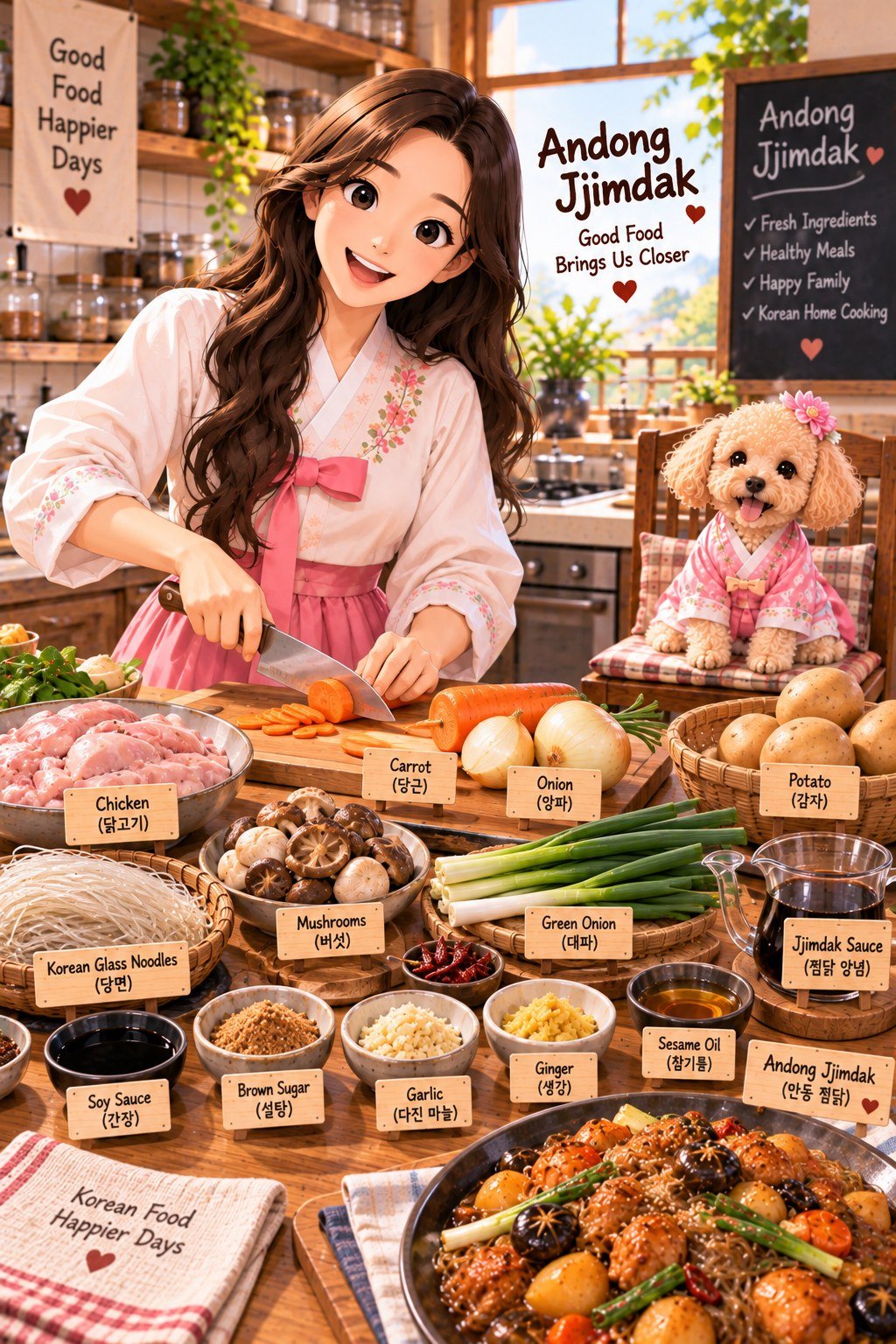
Chicken, potatoes, carrots, onions, mushrooms, glass noodles, and soy-based seasoning form the foundation of Andong-style jjimdak.
Potatoes in Jjimdak
Potatoes provide a soft, substantial texture that contrasts with chicken and chewy glass noodles.
As they braise, the pieces absorb some of the dark seasoning while retaining their own mild flavor.
Pieces should be cooked until appropriately tender without completely breaking apart into the sauce.
Carrots & Onions
Carrots add color, mild sweetness, and firmer vegetable texture, while onions soften significantly during cooking.
Onions can contribute additional sweetness and body to the braising liquid as they cook.
The exact quantity and cut of both vegetables vary by recipe.
Green Onions & Mushrooms
Green onions can contribute fresh aromatic flavor, while mushrooms add another savory element and a softer texture.
Different mushroom varieties can be used depending on the restaurant or home recipe.
These ingredients help make jjimdak a mixed braised dish rather than simply chicken covered in sauce.
What Are the Glass Noodles in Jjimdak?
The long translucent noodles commonly found in jjimdak are Korean glass noodles known as dangmyeon.
They are also strongly associated with Japchae, although their role in jjimdak is different.
In jjimdak, the noodles cook in or absorb the braising sauce, becoming darker, glossy, and intensely seasoned.
What Is Dangmyeon?
Dangmyeon is a type of Korean glass noodle commonly associated with starch-based noodle production.
The cooked noodles become translucent and have a springy, chewy texture.
Formulations can vary between products, so the specific ingredients should be checked when dietary restrictions or allergies matter.
Why Do Glass Noodles Absorb So Much Sauce?
As dangmyeon hydrates and cooks, it takes up moisture and seasoning from the surrounding liquid.
This is why pale dry noodles can become dark and glossy after spending time in jjimdak sauce.
The same absorption also means the noodles can continue changing in texture if they remain in the hot sauce for a long time.
Why Should You Eat the Noodles Early?
Glass noodles continue absorbing liquid after the dish reaches the table.
If left for too long, they can become increasingly swollen and softer while reducing the amount of free sauce in the dish.
For that reason, eating some of the dangmyeon relatively early can help diners experience its intended springy texture.
How Jjimdak Is Braised
The chicken and sauce begin cooking together so the meat can develop flavor while heating thoroughly.
Vegetables are incorporated according to their cooking requirements, and the sauce gradually seasons the entire dish.
Glass noodles can be added later so they absorb flavor without becoming excessively soft before serving.
Braising vs. Boiling
Jjimdak should not be understood simply as chicken boiled in a large quantity of water.
Braising emphasizes cooking ingredients with a flavorful liquid that becomes integrated with the meat and vegetables and can reduce or concentrate during cooking.
The finished dish therefore has a richer sauce coating the ingredients rather than the character of a light chicken soup.
Why the Sauce Becomes Glossy
As cooking progresses, water evaporates and the seasoning becomes more concentrated.
Starch from ingredients and the interaction between sauce, vegetables, and noodles can also affect the body of the liquid.
The finished sauce can therefore appear darker, thicker, and glossier than it did at the beginning of cooking.
Cooking Chicken Thoroughly
Chicken should be thoroughly cooked before jjimdak is served.
Pieces can vary in size and can include bone-in sections, so cooking requirements are not identical for every piece.
Dark soy-based sauce can also make exterior color an unreliable indicator of doneness, so appropriate cooking procedures are important.
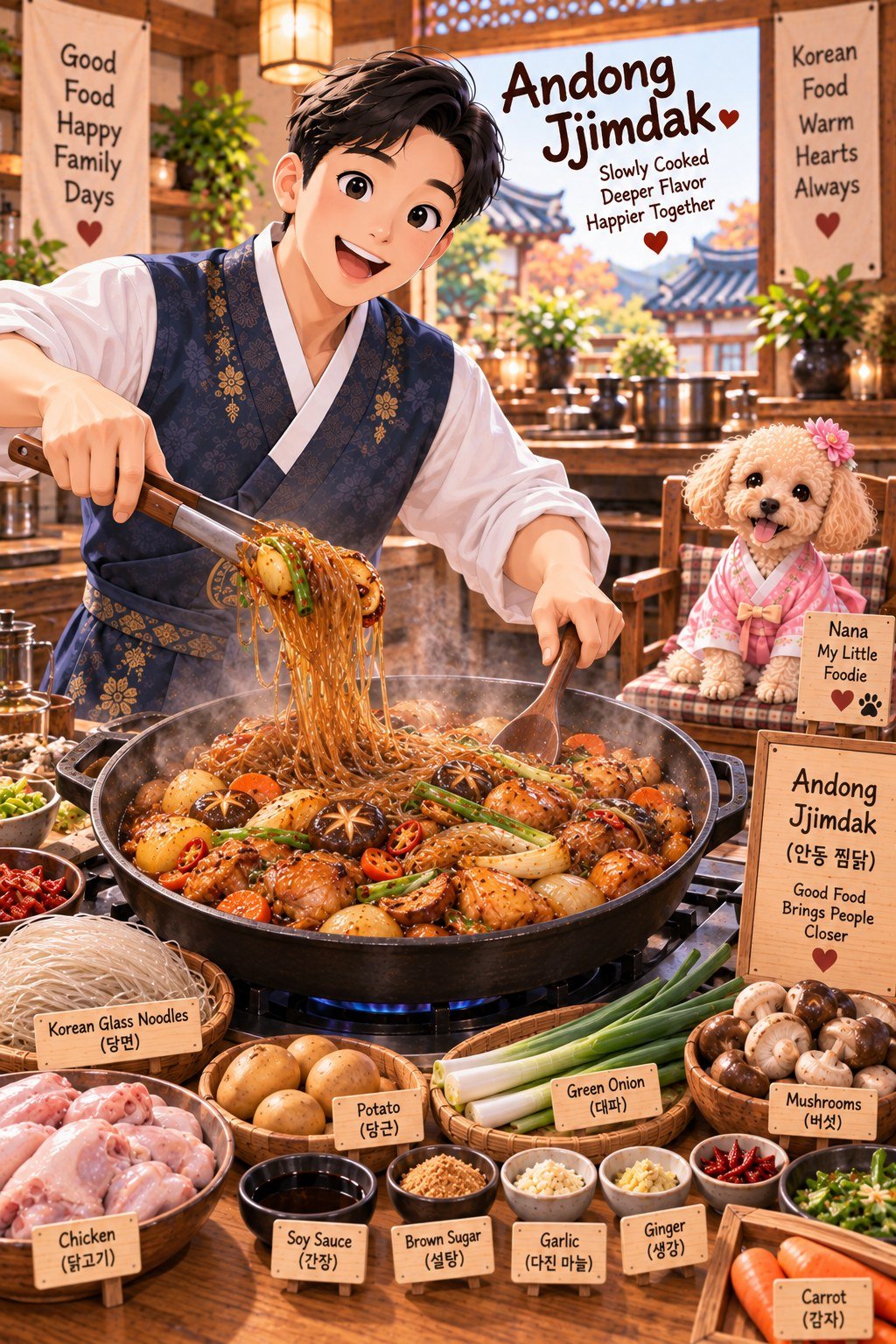
Slow braising allows chicken and vegetables to absorb the dark seasoning before glass noodles take on the remaining glossy sauce.
Jjimdak vs. Chicken Soup
Jjimdak is not primarily a soup dish.
Although liquid is required for braising, the goal is a deeply seasoned sauce surrounding and coating chicken, vegetables, and noodles.
Korean chicken soups such as Samgyetang place much greater emphasis on broth as part of the eating experience.
How to Eat Jjimdak
Jjimdak is commonly served in a large dish for sharing.
Chicken, vegetables, and glass noodles can be transferred to individual plates or bowls, while rice can be eaten alongside the strongly seasoned ingredients.
When bone-in chicken is used, diners should take additional care while eating and separating meat from bones.
Jjimdak with Rice
Plain steamed rice provides a useful contrast with the concentrated jjimdak sauce.
A small amount of sauce can be eaten with rice, while chicken and vegetables provide the main savory components.
The combination can also help balance a serving that is particularly salty, sweet, or spicy.
Glass Noodles with Rice?
Jjimdak can contain both glass noodles and be served with rice, giving the meal more than one carbohydrate component.
Diners do not need to eat every component in equal quantities.
Portioning the noodles, potatoes, and rice according to preference can make a large shared serving easier to manage.
Jjimdak Additions
Modern jjimdak restaurants can offer additional ingredients such as extra glass noodles, tteok, cheese, or other restaurant-specific options.
These additions are not required to define the dish and can substantially increase the portion size.
Checking what is already included before ordering extras can prevent unnecessary duplication.
Tteok in Jjimdak
Tteok can be added to some jjimdak preparations for another chewy texture.
The rice cakes absorb the dark seasoning differently from glass noodles and remain denser when cooked appropriately.
Because tteok can be sticky and highly chewy, manageable bites and thorough chewing are important.
Jjimdak vs. Dakgalbi
Dakgalbi and jjimdak both center on chicken, but their cooking styles and seasoning identities are very different.
Dakgalbi is strongly associated with spicy red seasoning and large-griddle cooking with cabbage, sweet potato, and rice cakes.
Jjimdak is a braised dish associated with dark soy-based sauce, potatoes, vegetables, and glass noodles.
Jjimdak vs. Korean Fried Chicken
Korean Fried Chicken relies on frying to create a crisp exterior.
Jjimdak develops tenderness and flavor through braising, so a crisp fried coating is not part of its defining texture.
These two dishes demonstrate very different approaches to Korean chicken cooking.
Jjimdak vs. Galbi
Galbi commonly centers on rib cuts and is strongly associated with marinating and grilling or other rib preparations.
Jjimdak centers on chicken braised together with vegetables and noodles in sauce.
Although both can use soy-based seasoning, the protein, cooking method, texture, and meal structure are different.
How to Experience Jjimdak for the First Time
Begin by trying a piece of chicken with a small amount of sauce, then compare it with potato or another vegetable that has absorbed the same seasoning.
Try the glass noodles while they are still springy and glossy rather than waiting until the end of a long meal.
Plain rice can then provide contrast with the concentrated sauce and help create a balanced shared meal.
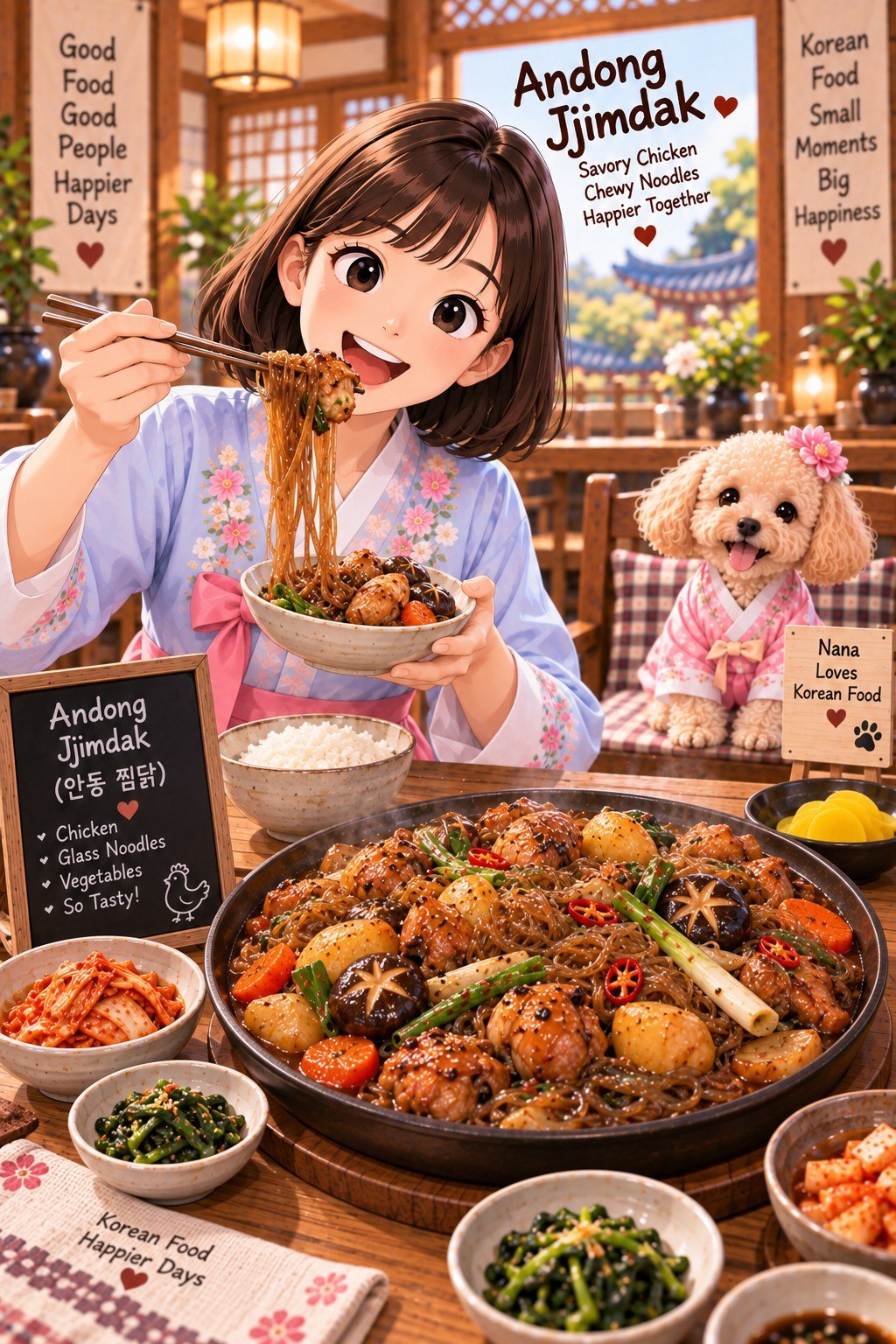
Trying the chicken, vegetables, glossy dangmyeon, and plain rice together reveals the different textures and concentrated flavors of Andong Jjimdak.
Jjimdak as a Shared Korean Meal
Jjimdak is naturally suited to group dining because chicken, vegetables, potatoes, and glass noodles are commonly served together in one large dish.
Each diner can transfer different ingredients to an individual plate while sharing the same braised sauce and side dishes.
The large serving format also makes portion size important when deciding how much rice, noodles, or additional ingredients to order.
What to Expect at a Jjimdak Restaurant
A jjimdak restaurant can offer different portion sizes based on the number of diners.
Menus can also provide selectable spice levels or additions such as extra dangmyeon, tteok, cheese, or other restaurant-specific ingredients.
Because the basic dish can already contain chicken, potatoes, vegetables, and noodles, first-time visitors should check what is included before adding extras.
How to Order Jjimdak for the First Time
Start by checking the serving size and whether the restaurant uses bone-in or boneless chicken.
Next, check the spice level and the ingredients included in the standard order.
If glass noodles are especially important to you, confirm whether dangmyeon is included or available as an additional option.
Choosing the Spice Level
Dark soy-based sauce does not mean that jjimdak is always mild.
Chili peppers or other spicy ingredients can be incorporated into the dish, and individual restaurants can offer noticeably different heat levels.
Spice labels such as mild, medium, and spicy are relative, so people sensitive to chili should ask the restaurant when possible.
Why Jjimdak Portions Can Be Large
A single serving dish can contain chicken, potatoes, carrots, onions, mushrooms, glass noodles, sauce, and optional additions.
Rice and side dishes can add even more food to the table.
For this reason, comparing only the number of chicken pieces can give an incomplete impression of the total portion.
Andong Jjimdak & Regional Food Culture
Andong Jjimdak is more than a recipe name because the dish is strongly connected with Andong’s regional identity.
Travelers can encounter concentrations of jjimdak restaurants and compare different interpretations of the same regional specialty.
This makes the dish useful for understanding how particular Korean foods become associated with specific cities and travel experiences.
Andong Old Market Food Culture
Traditional markets can preserve regional food identity while also adapting to contemporary visitors.
In Andong, the jjimdak restaurant area provides a setting where diners can experience the dish alongside the atmosphere of an established market district.
Specific restaurants, prices, menus, and operating hours change over time and should be checked when planning a visit.
Jjimdak & Global K-Food
Jjimdak introduces international diners to a Korean chicken style that differs from both fried chicken and spicy griddle cooking.
Its dark glossy sauce, large shared serving, vegetables, potatoes, and long glass noodles create an immediately recognizable combination.
The dish also provides a useful entry point into Korean braising techniques and regional food culture.
Why Jjimdak Works in Food Videos
Jjimdak provides several visually distinctive elements for food and travel content.
Long translucent noodles become dark and glossy with sauce, large pieces of chicken and vegetables fill the serving dish, and steam emphasizes the freshly cooked meal.
Lifting dangmyeon with chopsticks also makes the noodle texture and sauce absorption easy to see in photographs and short-form videos.
Jjimdak & Mukbang
Mukbang can highlight the contrast between tender chicken, soft potatoes, chewy glass noodles, vegetables, and rice.
However, entertainment videos can feature unusually large portions or rapid eating.
They should not be treated as guidance for serving size, eating speed, handling bones, or consuming very hot noodles and sauce.
Jjimdak vs. Japchae
Japchae and jjimdak can both contain Korean glass noodles, but the noodles play different roles.
Japchae centers on stir-fried or mixed dangmyeon with vegetables and seasoning, while jjimdak centers on braised chicken with noodles absorbing the surrounding sauce.
The shared use of dangmyeon therefore connects the foods without making their flavor, preparation, or meal structure similar.
Jjimdak vs. Dakgalbi
Dakgalbi emphasizes spicy red seasoning and large-griddle cooking.
Jjimdak emphasizes braising with dark soy-based seasoning and commonly includes potatoes and glass noodles.
Trying both demonstrates two substantially different Korean approaches to shared chicken dishes.
Jjimdak vs. Korean Fried Chicken
Korean Fried Chicken emphasizes a crisp fried exterior and can be served plain or coated with sauce.
Jjimdak has no defining fried crust because the chicken becomes tender through braising.
The contrast demonstrates how Korean chicken dishes extend far beyond frying.
Jjimdak vs. Samgyetang
Samgyetang provides another useful Korean chicken comparison.
Samgyetang centers on a whole chicken and broth, while jjimdak emphasizes chicken pieces, vegetables, glass noodles, and concentrated braising sauce.
The two dishes therefore differ significantly in seasoning, liquid, texture, and serving style.
Jjimdak vs. Galbi
Galbi and jjimdak can both use soy-oriented seasonings, but that similarity should not obscure their differences.
Galbi centers on rib cuts and is strongly associated with grilled or marinated meat preparations, while jjimdak centers on braised chicken, vegetables, and noodles.
The cooking methods and overall meal structures are clearly different.
Jjimdak & Tteok
Tteok can appear as an optional addition in some modern jjimdak.
Rice cakes add a dense, chewy texture that contrasts with springy glass noodles and tender vegetables.
Because both dangmyeon and tteok absorb seasoning, adding large quantities of both can make the dish substantially more filling.
Jjimdak & Korean Rice
Plain steamed rice is a simple accompaniment for the concentrated sauce.
Rather than competing with the seasoning, rice provides a relatively neutral base for chicken, vegetables, and small amounts of sauce.
Diners can adjust the amount according to the quantity of potatoes and noodles already present in the meal.
Modern Jjimdak Variations
Contemporary restaurants can adapt jjimdak with different spice levels, additional noodles, tteok, cheese, or other ingredients.
Some variations can emphasize extra sauce, different chicken preparations, or toppings designed for modern dining preferences.
These versions demonstrate how the dish continues to evolve but should not be treated as ingredients required in every traditional Andong-style jjimdak.
Cheese Jjimdak
Some modern jjimdak restaurants add melted cheese to the dark braised chicken.
The cheese introduces dairy richness and a mild flavor that contrasts with salty, sweet, or spicy seasoning.
Cheese is an optional modern variation rather than a defining ingredient of standard Andong Jjimdak.
Boneless vs. Bone-In Jjimdak
Chicken format can significantly change the eating experience.
Boneless pieces are easier to share and eat with noodles, while bone-in chicken requires diners to separate the meat carefully while eating.
The option depends on the restaurant, and customers should check the menu when they have a strong preference.
Why the Noodles Change During the Meal
Dangmyeon does not stop absorbing moisture immediately when the dish reaches the table.
As the meal continues, the noodles can become softer and more swollen while the amount of free sauce decreases.
This is why the noodle texture near the beginning of the meal can differ noticeably from the texture much later.
The Complete Jjimdak Experience
A complete jjimdak experience combines braised chicken, potatoes, vegetables, dark soy-based seasoning, glossy dangmyeon, and a shared serving style.
Andong’s regional connection adds another dimension by linking the dish with Korean market culture and food tourism.

Braised chicken, vegetables, potatoes, glossy dangmyeon, and dark soy-based sauce define the shared-table character of Andong Jjimdak.
How Jjimdak Connects with Other K-Food
Dakgalbi provides the closest chicken comparison through its spicy red seasoning and griddle cooking.
Korean Fried Chicken represents Korea’s crispy fried approach to chicken, while Samgyetang introduces broth-centered Korean chicken culture.
Japchae explains another major use of dangmyeon, while Tteok provides context for the rice cakes sometimes added to modern jjimdak.
Galbi, Bulgogi, Korean BBQ, and Samgyeopsal expand the collection into Korean meat and shared-table dining traditions.
Kimchi, Bibimbap, Gimbap, and Kimchi Fried Rice provide additional entry points into Korean fermentation and rice-based meals.
Tteokbokki, Korean Corn Dog, and Haemul Pajeon extend the collection into Korean street and casual shared foods.
Korean Ramyeon, Buldak Bokkeummyeon, Jjajangmyeon, and Naengmyeon provide contrasting Korean noodle traditions.
Kimchi-jjigae and Sundubu-jjigae expand the Wiki into Korean stew culture.
Jjimdak & an Andong Food Trip
Jjimdak gives travelers a reason to connect Korean food with Andong rather than viewing every major K-Food experience through Seoul alone.
Experiencing a regional specialty in the city most strongly associated with it can add market atmosphere, local restaurant culture, and travel context to the meal.
Transportation, restaurant menus, prices, operating hours, and current market information should be checked when planning a specific visit.
Jjimdak Outside Andong
Travelers do not need to visit Andong simply to taste jjimdak because the dish can also be found in Seoul, other Korean cities, and Korean restaurants abroad.
However, understanding the Andong connection provides important cultural context for the dish’s identity.
Recipes outside Andong can vary substantially in sweetness, spice level, noodles, vegetables, chicken cuts, and optional toppings.
FAQ
What is jjimdak?
Jjimdak is a Korean braised chicken dish made by cooking chicken with vegetables and other ingredients in a deeply flavored sauce. Andong Jjimdak is the best-known regional style and commonly includes potatoes, vegetables, and Korean glass noodles in a dark soy-based seasoning.
What is Andong Jjimdak?
Andong Jjimdak is a regional Korean chicken dish strongly associated with Andong. Chicken, vegetables, potatoes, and dangmyeon are braised together in a savory-sweet soy-sauce-based seasoning that can also contain spicy ingredients depending on the recipe.
Is jjimdak spicy?
Jjimdak can be mild, moderately spicy, or noticeably hot depending on the restaurant and recipe. Its dark color comes largely from soy-based seasoning and should not be used by itself to judge the spice level.
What are the noodles in jjimdak?
The long translucent noodles commonly served in jjimdak are dangmyeon, or Korean glass noodles. They absorb the braising sauce and become dark, glossy, springy, and deeply seasoned.
Why should you eat jjimdak glass noodles early?
Dangmyeon continues absorbing moisture and sauce after the dish reaches the table. Over time the noodles can become softer and more swollen, so eating some relatively early can provide a springier texture.
What is the difference between jjimdak and dakgalbi?
Jjimdak is braised and is strongly associated with dark soy-based sauce, potatoes, vegetables, and glass noodles. Dakgalbi is strongly associated with spicy red seasoning and griddle cooking with chicken, cabbage, sweet potato, and rice cakes.
Is jjimdak the same as Korean fried chicken?
No. Korean fried chicken develops a crisp exterior through frying, while jjimdak develops tenderness and flavor through braising chicken with sauce, vegetables, and other ingredients.
Where to Try Jjimdak
Jjimdak can be found in Andong, Seoul, other Korean cities, and Korean restaurants outside Korea.
Andong provides the strongest regional context for the dish, particularly through its traditional market and restaurant culture.
Individual restaurants can differ in chicken cuts, portion sizes, spice levels, glass noodles, vegetables, additional ingredients, and sauce balance.
What to Check Before Ordering
Start by checking the portion size because jjimdak is commonly served as a large shared dish.
Then check whether the chicken is bone-in or boneless, the available spice level, and whether dangmyeon is already included.
If considering extra noodles, tteok, cheese, or other additions, check the basic serving first because the standard dish can already be substantial.
First-Time Jjimdak Tips
- Try the chicken first — it provides the clearest reference for the braised sauce.
- Eat some dangmyeon early — the noodles continue absorbing sauce as they sit.
- Try a potato — it shows how vegetables absorb the same seasoning differently.
- Use rice for contrast — plain rice pairs naturally with the concentrated sauce.
- Check for bones — some servings use bone-in chicken.
- Ask about spice level — dark sauce does not automatically mean mild food.
- Check the portion — chicken, noodles, potatoes, vegetables, and rice can make the meal very filling.
Raw Chicken & Food Safety
Raw chicken requires appropriate handling because it can carry harmful microorganisms.
Chicken and its juices should remain separated from cooked food, clean utensils, ready-to-eat ingredients, and serving areas during preparation.
Hands, cutting boards, knives, containers, and other surfaces that contact raw chicken require appropriate handling before being used with finished food.
Cooking Chicken Thoroughly
Chicken in jjimdak should be thoroughly cooked before it is eaten.
Pieces can vary in size and can include bone-in sections, which can affect cooking requirements.
The dark braising sauce can make exterior color difficult to interpret, so color alone should not be treated as a universal indicator of doneness.
Cross-Contamination
Raw chicken utensils and preparation surfaces should not be casually reused for cooked food without appropriate handling.
Cross-contamination can also occur through hands, containers, sauces, and shared work surfaces.
Appropriate separation and cleaning remain important even when all ingredients will eventually appear in the same cooked dish.
Soy
Soy sauce is a major seasoning component in many jjimdak recipes.
Additional sauces, processed seasonings, side dishes, and optional ingredients can also contain soy.
People with soy allergies should confirm the complete sauce and accompaniments rather than relying only on the visible ingredients.
Wheat & Gluten
Chicken, potatoes, and vegetables do not determine whether the complete jjimdak dish is gluten-free.
Soy sauce and other processed seasonings can contain wheat, while noodle formulations and additional sauces can vary by product.
People who must strictly avoid gluten should confirm the sauce, dangmyeon, optional additions, and possible cross-contact with the restaurant or manufacturer.
Sesame
Sesame seeds or sesame oil can appear in seasoning, garnishes, side dishes, or other components of a jjimdak meal.
Sesame oil can be incorporated into a sauce and may not be visually obvious.
People with sesame allergies should check both the main dish and accompaniments.
Dangmyeon & Glass Noodles
Dangmyeon provides a long, springy, and chewy component to jjimdak.
The noodles can become softer as they continue absorbing hot braising liquid, so their texture changes during the meal.
Long noodles should be eaten at a comfortable pace and managed appropriately when serving them to children or anyone who has difficulty chewing or swallowing.
Tteok & Chewing Safety
Tteok can appear as an optional jjimdak addition.
Rice cakes can be dense, sticky, and highly chewy and should be eaten in manageable pieces and chewed thoroughly.
Extra care is important for young children, older adults, and people with chewing or swallowing difficulties.
Hot Sauce & Food Temperature
Freshly served jjimdak can remain extremely hot because chicken, potatoes, noodles, and vegetables are surrounded by hot braising sauce.
Dense potatoes, chicken pieces, and noodles can retain heat even after food has been transferred to an individual plate.
Allow food to cool to a comfortable temperature before taking a large bite.
Hot Pot & Serving Safety
Jjimdak can be served in or transferred from hot cookware or large serving dishes.
Cooking pots, handles, serving utensils, and hot sauce should be handled carefully.
Children and pets should remain appropriately separated from hot cooking equipment and freshly prepared food.
Chicken Bones
Bone-in jjimdak can contain small or irregular chicken bones.
Diners should eat carefully and identify bones before swallowing pieces of meat, particularly when sauce makes the shape of individual chicken pieces less obvious.
Extra care is appropriate when serving bone-in chicken to children or anyone who has difficulty managing bones.
Storage & Leftovers
Jjimdak contains cooked chicken and other perishable ingredients and requires appropriate food handling if stored for later.
Storage conditions and safe keeping time depend on preparation, temperature, packaging, ingredients, and applicable food-safety guidance.
Follow restaurant or manufacturer instructions where available and refrigerate or otherwise store leftovers appropriately.
Reheating Jjimdak
Stored jjimdak should be reheated appropriately before eating according to relevant food-safety guidance.
Glass noodles can become softer after storage and reheating because they continue interacting with the sauce.
Reheated chicken, potatoes, noodles, and sauce can become very hot, so allow the dish to cool sufficiently before eating.
Image Credits
Andong Jjimdak family restaurant visual with Dad, Mom, K-Nana daughter, and Nana in hanbok enjoying braised chicken, potatoes, vegetables, and Korean glass noodles in a dark soy-based sauce — K-Nana Studio original visual.
Andong Jjimdak preparation visual with Mom in hanbok preparing chicken, potatoes, carrots, onions, mushrooms, glass noodles, and soy-based seasoning while Nana watches from a separate safe seat — K-Nana Studio original visual.
Andong Jjimdak cooking visual with Dad in hanbok safely braising chicken, potatoes, vegetables, and Korean glass noodles in a deep pot while Nana remains separated from the hot cooking area — K-Nana Studio original visual.
Andong Jjimdak tasting visual with K-Nana daughter in hanbok enjoying glossy Korean glass noodles, braised chicken, potatoes, vegetables, and rice while Nana sits separately without touching the food — K-Nana Studio original visual.
Nana in pink floral hanbok seated separately as a K-Food mascot beside Andong Jjimdak with braised chicken, potatoes, carrots, onions, mushrooms, glossy Korean glass noodles, and dark soy-based sauce — K-Nana Studio original visual.
Disclaimer
This article is provided for general food, travel, and cultural information. Jjimdak ingredients, chicken cuts, sauces, spice levels, vegetables, glass noodles, tteok, optional toppings, allergens, serving sizes, and preparation methods can vary by restaurant, manufacturer, and recipe. Raw chicken requires appropriate handling and chicken should be thoroughly cooked before consumption. Recipes can contain soy, wheat, gluten, sesame, dairy, or other recipe-dependent ingredients, and shared utensils, cookware, work surfaces, or preparation areas can create cross-contact risks. Bone-in chicken requires careful eating, while tteok and long glass noodles can require additional care for people with chewing or swallowing difficulties. Hot sauce, chicken, potatoes, noodles, cookware, and serving equipment can cause burns. People with allergies, medical conditions, swallowing difficulties, religious dietary restrictions, or other individual requirements should confirm ingredients and preparation directly with the restaurant or manufacturer and follow appropriate professional guidance when necessary.