
Kalguksu is a Korean noodle dish known for its handmade, knife-cut noodles served in a warm broth. The noodles are commonly made from wheat-based dough that is rolled flat and cut into long strips with a knife.
Unlike factory-made noodles that can look almost perfectly uniform, handmade kalguksu noodles can vary slightly in width and thickness. This natural irregularity is part of the dish’s handmade character.
Kalguksu can be prepared with many different broths and ingredients, including anchovy, chicken, clams, seafood, or beef-bone-based styles, making it a broad Korean noodle category rather than one completely standardized recipe.
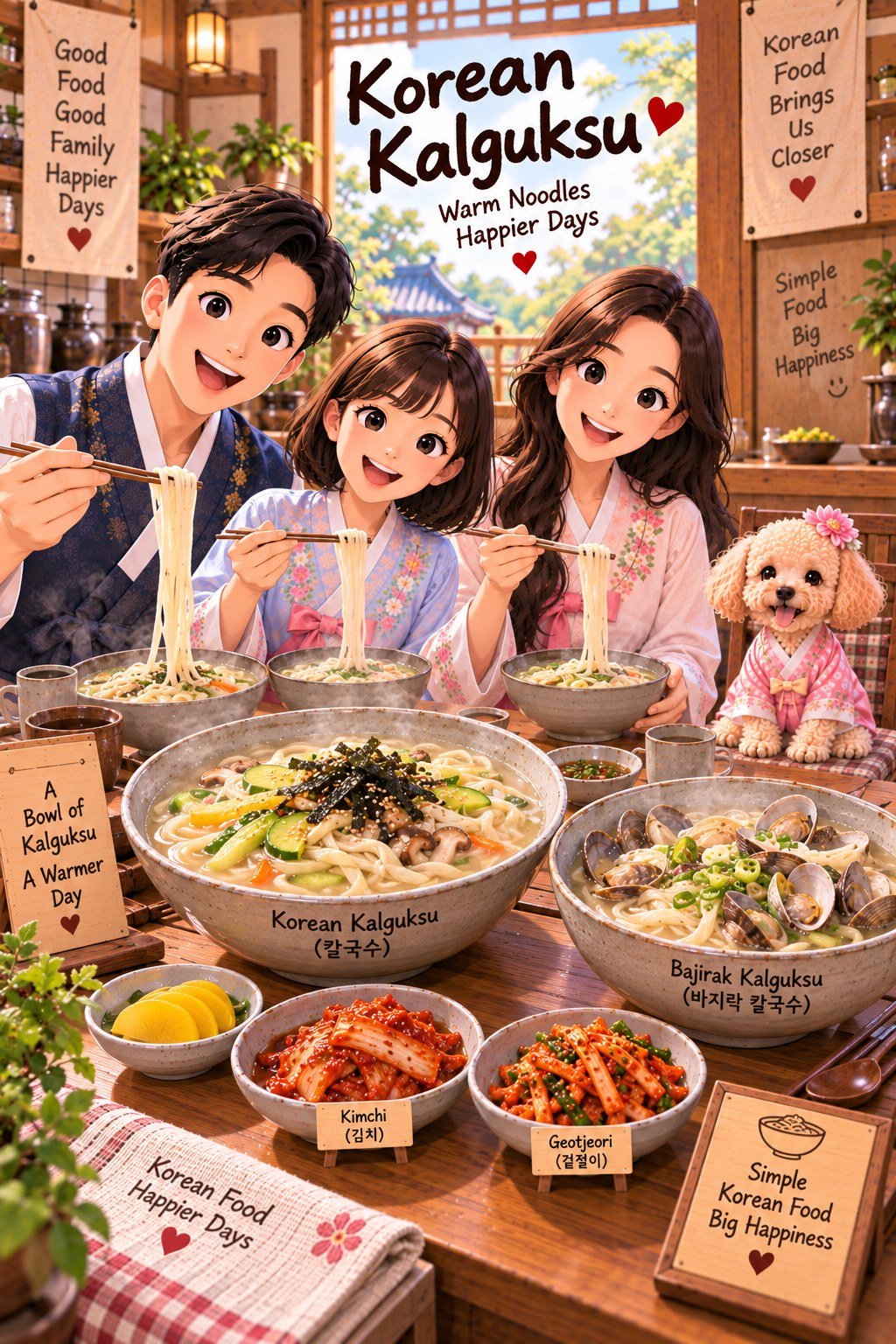
Handmade knife-cut noodles, warm broth, vegetables, and kimchi create the comforting Korean Kalguksu experience.
Quick Guide
| Korean name | 칼국수 |
| Romanization | Kalguksu |
| Common English description | Korean knife-cut noodle soup |
| Main noodle base | Commonly wheat-based dough |
| Noodle style | Rolled and cut by knife |
| Common broths | Anchovy, chicken, clam, seafood or beef-bone-based broth |
| Common vegetables | Zucchini, green onion and onion |
| Popular variation | Bajirak Kalguksu with clams |
| Common accompaniment | Kimchi or geotjeori |
| Serving style | Hot noodle soup |
What Is Kalguksu?
Kalguksu is a Korean noodle dish centered on noodles traditionally cut from rolled dough with a knife.
The noodles are cooked and served with broth and can be accompanied by vegetables, seafood, chicken, or other ingredients depending on the regional or restaurant style.
The combination of soft handmade noodles and hot broth makes kalguksu especially recognizable as a warm and substantial Korean noodle meal.
What Does Kalguksu Mean?
The name explains the traditional noodle-making method.
Kal means knife, while guksu means noodles.
Kalguksu therefore literally points to noodles cut with a knife, distinguishing the dish from noodles shaped primarily by extrusion, pulling, or factory production.
What Are Knife-Cut Noodles?
Knife-cut noodles begin with a dough that is kneaded and rolled into a relatively flat sheet.
The dough can then be folded or arranged for cutting before a knife is used to create long noodle strips.
The process gives the cook direct control over noodle width and thickness while naturally allowing small variations between individual strands.
Why Kalguksu Noodles Look Irregular
Hand-cut noodles do not need to be perfectly identical.
Small differences in the way dough is rolled, folded, and sliced can create noodles with slightly different widths and thicknesses.
These variations can contribute to the handmade appearance and texture associated with traditional-style kalguksu.
What Is Kalguksu Dough Made From?
Kalguksu noodles are commonly made from wheat flour combined with water and recipe-dependent additional ingredients.
Salt can be used in the dough, while some recipes can include other ingredients depending on the desired texture.
Because formulations vary, people with allergies or dietary restrictions should confirm the actual noodle ingredients rather than assuming every kalguksu dough is identical.
Kneading Kalguksu Dough
Kneading helps turn flour and water into a cohesive dough that can later be rolled and cut.
The dough needs enough structure to hold together during rolling and slicing without becoming unnecessarily difficult to handle.
Exact kneading and resting methods differ between restaurants and home recipes.
Rolling the Dough
The rested dough is rolled into a broad sheet before cutting.
Flour can be used as needed to reduce unwanted sticking between the dough, rolling surface, and rolling pin.
The thickness of the rolled sheet influences the final thickness and eating texture of the noodles.
Cutting Kalguksu Noodles
The rolled dough is cut into long strips using a kitchen knife.
Consistent cutting can create relatively even noodles, but slight variation is expected in handmade preparation.
Safe knife handling and a stable cutting surface are especially important because several long cuts are required across the dough.
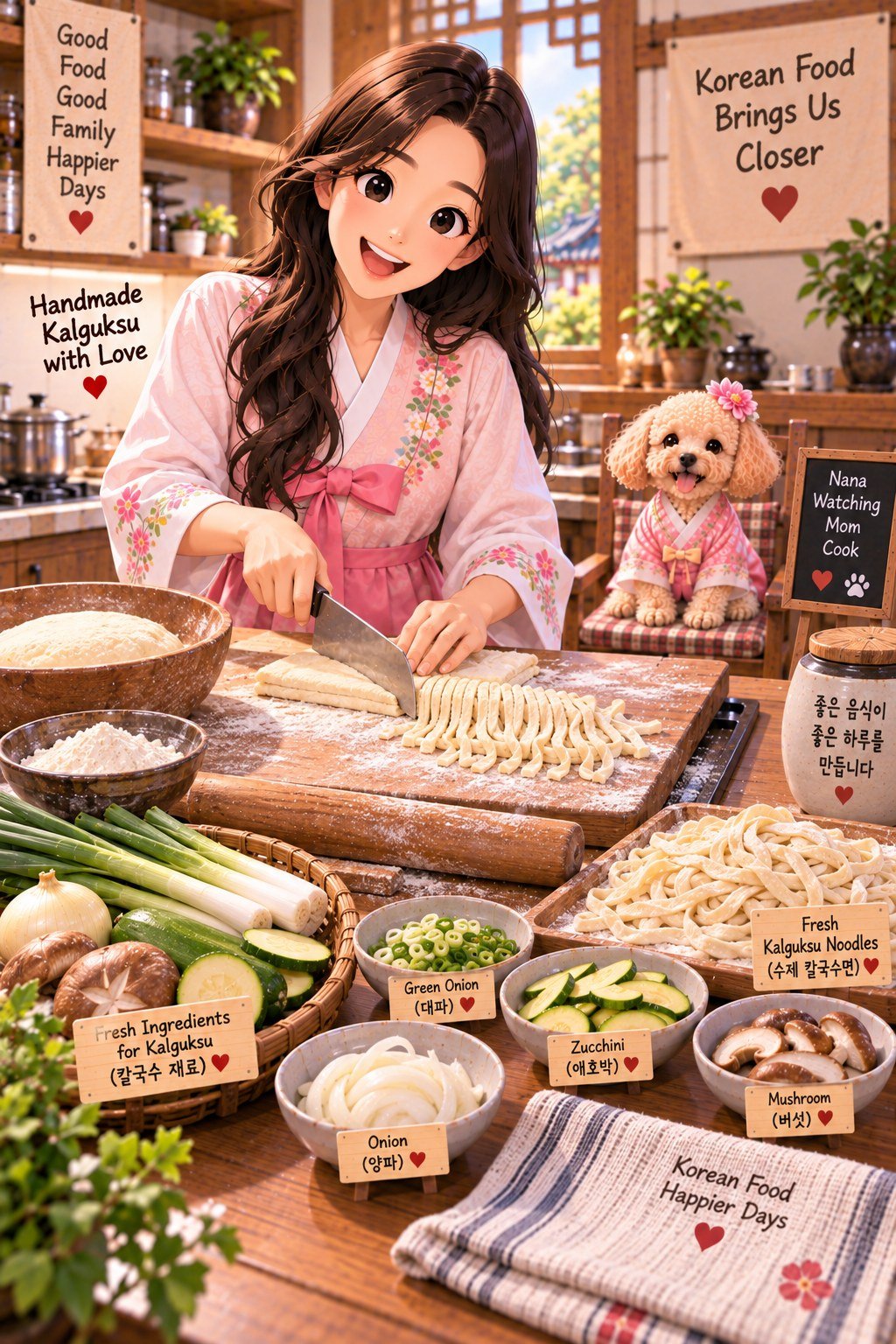
Rolling wheat dough and cutting it into long strips with a knife creates the handmade noodles that give Kalguksu its name.
Fresh Kalguksu Noodles
Freshly cut noodles can be dusted lightly with flour to help prevent individual strands from sticking together before cooking.
Because fresh noodles contain moisture and have not been dried like many packaged noodles, their cooking behavior can differ from dried noodle products.
The exact thickness of the noodles also affects how quickly they cook.
The Kalguksu Broth
Kalguksu does not have one universal broth.
Different versions can use anchovies, chicken, clams, seafood, beef bones, vegetables, or combinations of ingredients to build the soup base.
This broth flexibility is one reason kalguksu can taste noticeably different from one region or restaurant to another.
Anchovy Kalguksu
Anchovy-based broth can provide a clean, savory seafood character without requiring large pieces of seafood in the final bowl.
Dried anchovies and other broth ingredients can be simmered and then removed before noodles are cooked or served.
Because fish is involved in the broth, an apparently seafood-free bowl should not automatically be assumed to be suitable for someone with a fish allergy.
Chicken Kalguksu
Chicken Kalguksu uses chicken to create the broth or as part of the finished bowl.
The resulting soup can have a richer poultry character while retaining the soft handmade noodles that define kalguksu.
Preparation varies, so the amount and form of chicken differ between restaurants.
What Is Bajirak Kalguksu?
Bajirak Kalguksu is a popular variation made with clams.
The clams contribute a briny seafood flavor to the broth and can remain visible in their shells when the bowl is served.
Because clams are shellfish, this variation requires particular attention for diners with shellfish allergies.
Haemul Kalguksu
Haemul Kalguksu expands the seafood concept beyond one type of clam.
Depending on the recipe, the bowl can include shrimp, squid, shellfish, or other seafood together with handmade noodles and broth.
The seafood combination varies, so diners with allergies should confirm the complete ingredient list rather than relying only on what is visible on top.
Beef-Bone Kalguksu
Some kalguksu styles use beef-bone-based broth for a richer and fuller soup.
This creates a substantially different flavor from anchovy, clam, or lighter vegetable-oriented broths.
The diversity demonstrates why kalguksu is best understood through its knife-cut noodles rather than through one mandatory broth.
Vegetables in Kalguksu
Zucchini, green onion, and onion are common examples of vegetables that can appear in kalguksu.
They contribute color, aroma, sweetness, and additional texture to the bowl.
Other vegetables can be used according to season, region, restaurant, and recipe.
How Kalguksu Is Cooked
The broth is prepared before or alongside the noodles according to the recipe.
Fresh knife-cut noodles are then cooked until they become tender, with vegetables and other ingredients added according to their required cooking time.
Because fresh noodles can release starch during cooking, the broth can become slightly thicker or cloudier than it was at the beginning.
Why Kalguksu Broth Can Become Slightly Thick
Flour and starch from the fresh noodles can move into the broth while the noodles cook.
This can give the soup more body and a slightly cloudy appearance.
The effect varies depending on the amount of loose flour on the noodles, noodle composition, cooking method, and broth volume.
Cooking the Noodles Properly
Fresh noodles should be cooked until they reach an appropriate texture throughout.
Very thick strands can require more cooking than thinner pieces, particularly when handmade noodles vary slightly in width.
The noodles should remain pleasant to chew without having a raw floury center.
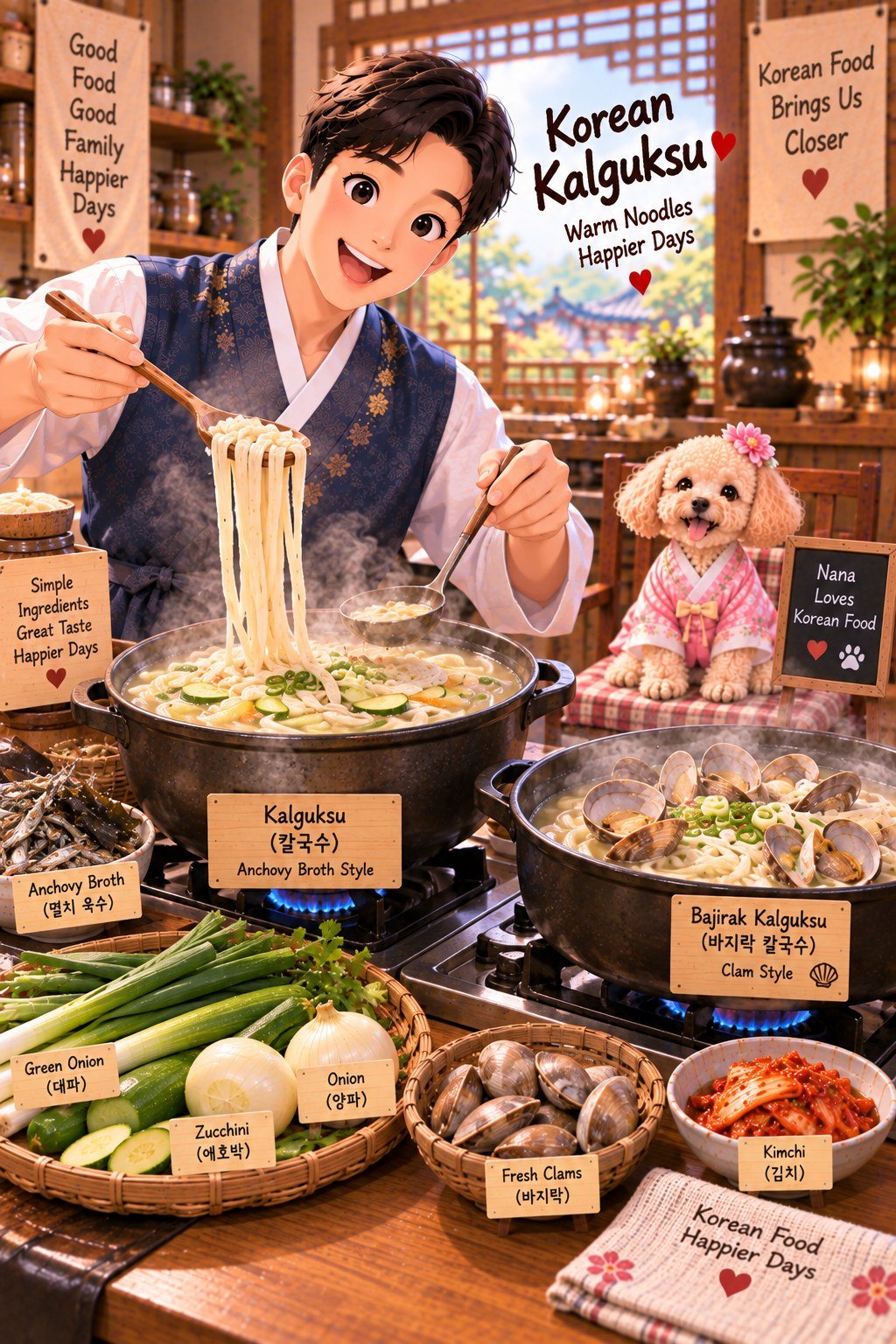
Fresh knife-cut noodles cook directly in warm broth, where they soften and can give Kalguksu its characteristic comforting texture.
Kalguksu & Kimchi
Kimchi is one of the most recognizable accompaniments for kalguksu.
The noodles and broth can be mild and comforting, while kimchi adds fermentation, acidity, chili seasoning, saltiness, and crunch.
Eating the two together creates a strong contrast between warm soft noodles and a more intensely seasoned side dish.
What Is Geotjeori?
Geotjeori is a fresh or lightly seasoned kimchi-style preparation commonly eaten without the long fermentation associated with some other kimchi.
Its fresher vegetable texture and bold seasoning can pair especially well with a warm bowl of noodles.
Recipes vary and can include seafood-derived seasonings or other allergens, so ingredients should be checked when necessary.
Kalguksu with Kimchi vs. Geotjeori
More fermented kimchi can provide deeper acidity and mature fermented flavor.
Geotjeori can feel fresher, crisper, and more immediate in its seasoning.
Both can accompany kalguksu, and restaurants can serve one style or several side dishes depending on their menu.
How to Eat Kalguksu
Begin by allowing the noodles and broth to cool enough to eat comfortably.
Try the broth and noodles before adding or combining several strongly flavored side dishes.
Then alternate bites of kalguksu with kimchi or geotjeori to experience the contrast between mild noodles and seasoned vegetables.
Why Long Noodles Need Care
Kalguksu noodles can be long, soft, and slippery after cooking.
Lift a manageable amount with chopsticks rather than trying to eat a large bundle at once.
Long noodles and hot broth require additional care for children and people with chewing or swallowing difficulties.
Kalguksu vs. Korean Ramyeon
Korean Ramyeon commonly uses factory-produced instant or packaged noodles with prepared seasoning.
Kalguksu is defined by its knife-cut noodle tradition and is commonly associated with fresh wheat-based dough and restaurant or home-prepared broth.
The noodle production, texture, broth, and overall dining experience are therefore substantially different.
Kalguksu vs. Naengmyeon
Naengmyeon is strongly associated with cold noodles and provides an almost opposite temperature experience from steaming Kalguksu.
The noodle ingredients and textures also differ, with kalguksu commonly emphasizing soft wheat-based knife-cut noodles.
Trying both demonstrates the broad range of temperature and texture found in Korean noodle culture.
Kalguksu vs. Jjajangmyeon
Jjajangmyeon centers on noodles covered with a thick black-bean-based sauce.
Kalguksu centers on knife-cut noodles served in broth rather than noodles coated in a dense sauce.
The flavor structure, noodle style, and serving format are therefore clearly different.
Kalguksu vs. Japchae
Japchae uses translucent dangmyeon rather than wheat-based knife-cut noodles.
Japchae is commonly stir-fried or mixed with vegetables and seasoning, while kalguksu is a hot broth-centered noodle dish.
The two foods demonstrate very different uses of noodles within Korean cuisine.
Kalguksu & Mandu
Mandu can provide another useful connection with Korean flour-based comfort foods.
Some restaurants and meals can pair noodles and dumplings, while other dishes combine dumplings directly with soup.
Kalguksu itself remains defined by the knife-cut noodles rather than by the presence of mandu.
How to Experience Kalguksu for the First Time
Start with a small spoonful of broth after it has cooled to a comfortable temperature.
Then try a manageable portion of noodles to notice their softness, thickness, and slight handmade variation.
Finally, alternate the noodles with kimchi or geotjeori to understand one of the most recognizable flavor contrasts in a Korean Kalguksu meal.
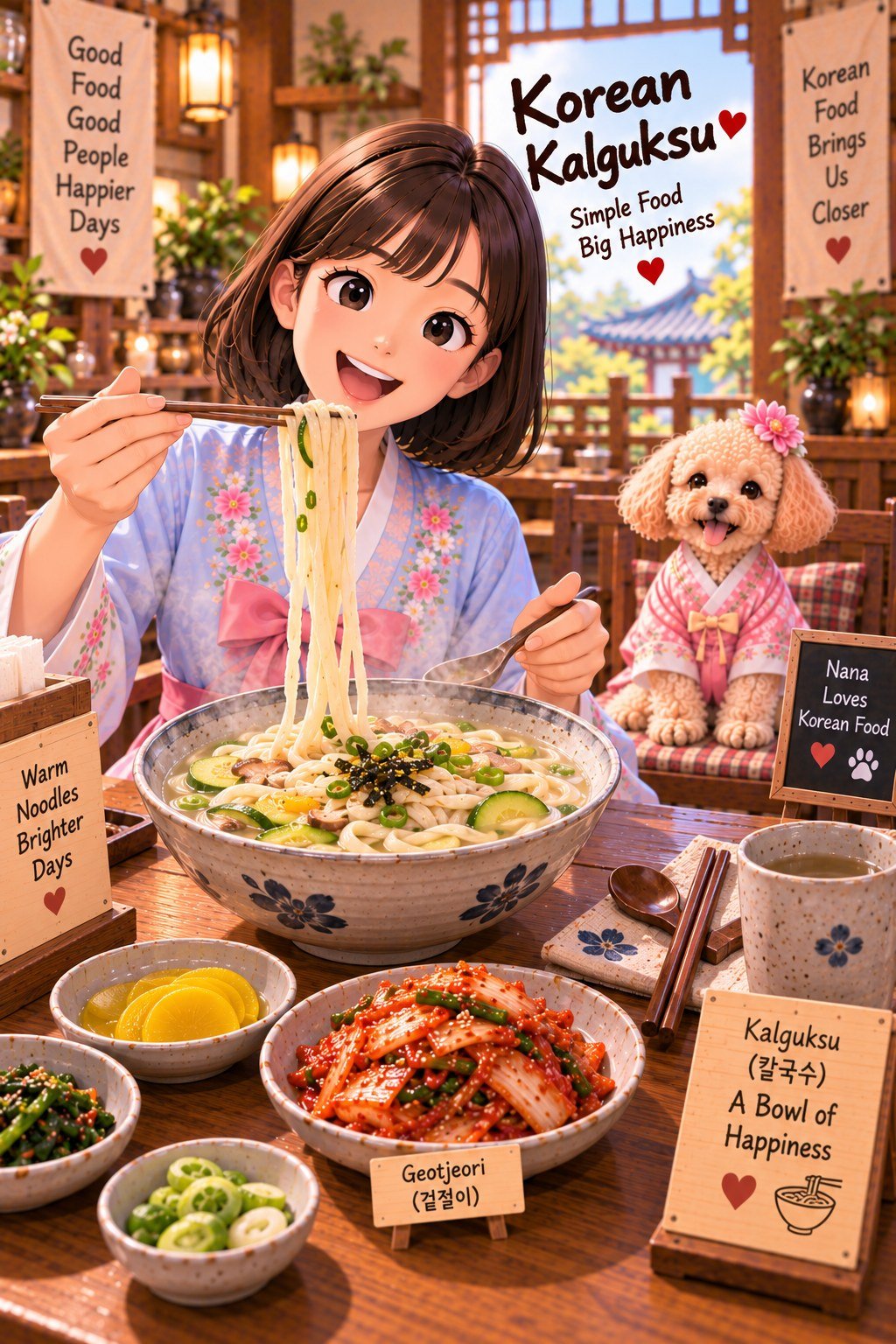
Soft handmade noodles, warm broth, and crisp seasoned kimchi or geotjeori create one of Kalguksu’s most recognizable Korean food combinations.
Kalguksu as a Korean Comfort Food
Kalguksu combines warm broth with soft, substantial noodles in a simple bowl that can feel especially satisfying during cool or rainy weather.
Different broths and toppings allow restaurants and regions to create their own versions while preserving the knife-cut noodle identity.
This balance of handmade texture, warm soup, and regional variation helps explain Kalguksu’s enduring place in Korean noodle culture.
What to Expect at a Kalguksu Restaurant
Kalguksu restaurants can specialize in one broth or offer several variations built around the same knife-cut noodle concept.
Menus can include anchovy, chicken, clam, seafood, or richer meat-based broths, with vegetables and garnishes changing according to the restaurant.
Kimchi or geotjeori is commonly served alongside the noodles, although side dishes and portion sizes vary.
How to Order Kalguksu for the First Time
Start by checking the broth because it determines much of the bowl’s flavor and can also reveal important seafood, fish, or meat ingredients.
Then check whether the menu offers classic Kalguksu, Bajirak Kalguksu, Haemul Kalguksu, Chicken Kalguksu, or another restaurant-specific version.
People with allergies or dietary restrictions should ask about both the noodles and broth rather than judging only from visible toppings.
Choosing a Kalguksu Broth
An anchovy-based broth can provide a lighter savory seafood character, while chicken can create a richer poultry flavor.
Bajirak Kalguksu emphasizes the briny character of clams, and mixed seafood versions can contain several marine ingredients.
Beef-bone-based preparations provide another direction with a fuller meat-oriented broth.
Why Broth Matters So Much
The noodles themselves can have a relatively mild wheat flavor, allowing the broth to become a major source of seasoning and aroma.
As the fresh noodles cook, starch can also interact with the broth and influence its final body.
This relationship between noodles and broth is one reason different Kalguksu restaurants can produce noticeably different bowls.
Daejeon & Kalguksu Culture
Daejeon is strongly associated with Kalguksu culture even though the dish itself is not limited to or defined as originating only from the city.
The city has developed a particularly dense restaurant culture around Kalguksu, with businesses serving different broths, toppings, and local interpretations.
For travelers, Daejeon provides an opportunity to compare multiple styles of the same broad noodle category.
Why Daejeon Has Different Kalguksu Styles
Kalguksu is flexible because its identity comes primarily from the knife-cut noodles rather than one mandatory broth.
This allows restaurants to build bowls around anchovy, chicken, clams, seafood, beef-based broth, or other regional and house styles.
The result is a local food culture where the same noodle name can lead to noticeably different eating experiences.
Namdaemun Market Kalguksu Alley
Seoul’s Namdaemun Market is associated with a Kalguksu Alley where visitors can encounter market-style noodle dining.
The setting connects a simple bowl of hot noodles with the fast-moving atmosphere of a traditional Korean market.
Individual stalls, menus, prices, side dishes, and operating hours can change, so current information should be checked before visiting a specific business.
Kalguksu & Korean Market Food
Kalguksu demonstrates that Korean market food extends well beyond fried snacks and portable street foods.
A hot noodle bowl can provide a seated meal within or near a busy market environment.
This makes Kalguksu useful for understanding another side of Korean casual food culture.
Kalguksu on Cold or Rainy Days
Warm broth and soft noodles can make Kalguksu especially appealing in cool or wet weather.
Steam, hot soup, and substantial noodles create a different experience from cold Korean noodle dishes.
The dish can of course be eaten throughout the year, so weather should be understood as an eating preference rather than a rule.
Kalguksu & Global K-Food
Kalguksu introduces international diners to Korean noodle culture beyond instant ramyeon and intensely seasoned noodle dishes.
Its handmade noodle process provides an easy-to-understand point of distinction: dough is rolled and cut with a knife before becoming part of a hot soup.
Different broths then connect the dish with Korean seafood, chicken, meat, and regional food traditions.
Why Kalguksu Works in Food Videos
The noodle-making process provides several visually clear stages.
Dough is kneaded, rolled into a sheet, cut into strips, separated into fresh noodles, and finally cooked in steaming broth.
The handmade variation in noodle width and the contrast with colorful vegetables and kimchi also work well in close-up food imagery.
Kalguksu & Mukbang
Mukbang can emphasize long noodles, steaming broth, kimchi, and the sound and texture of eating a fresh noodle soup.
However, entertainment content can show unusually large portions, rapid eating, or very hot food being consumed immediately.
These should not be treated as guidance for portion size, eating speed, or safe food temperature.
Why Kalguksu Noodles Feel Different from Instant Noodles
Fresh knife-cut noodles can be thicker, softer, and less uniform than many factory-produced instant noodles.
They also cook directly from fresh dough rather than beginning as a dried or pre-cooked instant noodle product.
The result is a different texture even before broth and toppings are considered.
Is Kalguksu Spicy?
Kalguksu does not need to be spicy.
Many bowls emphasize savory broth and soft noodles, while heat can come from kimchi, geotjeori, chili seasoning, or restaurant-specific condiments.
Some restaurants can also offer spicy variations, so the specific menu should be checked when spice level matters.
Is Kalguksu Always Seafood-Based?
No. Anchovy, clam, and mixed seafood versions are common examples, but chicken and meat-based broths also exist.
The word Kalguksu describes the knife-cut noodle tradition rather than requiring one particular seafood broth.
This distinction is especially important for diners with fish or shellfish allergies.
Bajirak Kalguksu vs. Haemul Kalguksu
Bajirak Kalguksu specifically emphasizes clams, while Haemul Kalguksu can include a broader mixture of seafood.
A mixed seafood bowl can contain shrimp, squid, shellfish, or other ingredients according to the recipe.
The two names therefore provide useful information but do not replace checking the restaurant’s actual ingredient list.
Kalguksu vs. Korean Ramyeon
Korean Ramyeon commonly emphasizes convenient packaged noodles and prepared seasoning.
Kalguksu is associated with rolled and knife-cut wheat noodles and a broth prepared as part of the dish.
The noodle-making process, texture, and cultural context make the two categories clearly different.
Kalguksu vs. Buldak Bokkeummyeon
Buldak Bokkeummyeon represents a very different modern Korean noodle experience centered on intense spicy seasoning and a stir-fried-style preparation.
Kalguksu is broth-centered and commonly emphasizes soft handmade noodles rather than extreme chili heat.
The comparison shows how broad contemporary Korean noodle culture has become.
Kalguksu vs. Naengmyeon
Naengmyeon emphasizes cold noodles, while Kalguksu is commonly served steaming hot.
The noodle ingredients, texture, broth temperature, and seasonal associations can all differ substantially.
Together they demonstrate opposite ends of Korea’s hot-and-cold noodle spectrum.
Kalguksu vs. Jjajangmyeon
Jjajangmyeon serves noodles with a thick black-bean-based sauce rather than a hot soup broth.
Kalguksu centers on knife-cut noodles surrounded by broth.
The dishes therefore differ in sauce structure, noodle style, texture, and overall eating experience.
Kalguksu vs. Japchae
Japchae uses translucent dangmyeon and is commonly mixed or stir-fried with vegetables and seasoning.
Kalguksu uses wheat-based knife-cut noodles and is strongly associated with hot broth.
The comparison separates two fundamentally different Korean noodle traditions.
Kalguksu & Mandu
Mandu can complement Kalguksu as another comforting flour-based Korean food.
Some restaurant menus offer noodles and dumplings together or allow diners to order them as separate dishes for sharing.
The presence of mandu is optional and does not define Kalguksu itself.
Kalguksu & Haemul Pajeon
Haemul Pajeon provides another connection with Korean seafood and flour-based food culture.
Haemul Pajeon uses batter, green onions, and seafood to create a pan-cooked savory pancake, while Kalguksu uses dough to create noodles served in broth.
Ordering both can demonstrate two very different ways Korean cuisine uses flour and seafood.
Kalguksu & Kimchi
Kimchi remains one of the strongest flavor contrasts for a mild bowl of Kalguksu.
The fermented vegetable side dish can contribute acidity, chili heat, saltiness, and crunch between bites of warm noodles.
Kimchi recipes vary and can contain seafood-derived seasonings, so dietary requirements should be checked when necessary.
The Complete Kalguksu Experience
A complete Kalguksu experience combines handmade knife-cut noodles, warm broth, vegetables, and a side of kimchi or geotjeori.
Anchovy, chicken, clam, seafood, and meat-based broths demonstrate how one noodle tradition can support many different regional and restaurant styles.
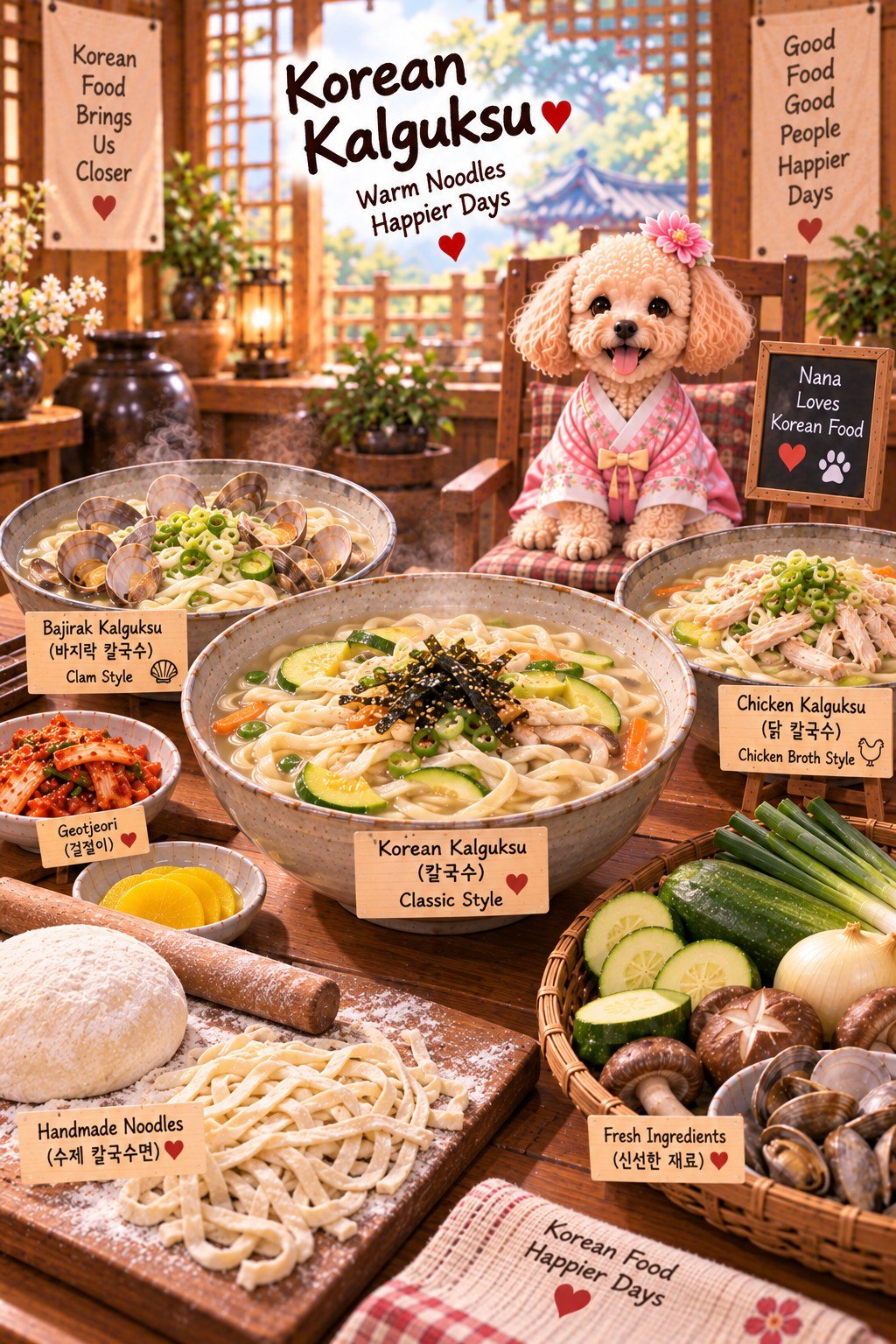
Classic Kalguksu, clam-based Bajirak Kalguksu, and Chicken Kalguksu show how handmade knife-cut noodles can adapt to many Korean broth traditions.
How Kalguksu Connects with Other K-Food
Korean Ramyeon provides the clearest comparison with packaged and instant Korean noodle culture.
Naengmyeon contrasts hot Kalguksu with Korea’s cold noodle tradition, while Jjajangmyeon provides a sauce-centered noodle comparison.
Japchae introduces translucent glass noodles, while Jjimdak demonstrates another use of dangmyeon inside a braised chicken dish.
Mandu expands the flour-based comfort-food connection, while Haemul Pajeon shows another way flour and seafood are used in Korean cooking.
Kimchi provides the most recognizable side-dish connection, while Sundubu-jjigae and Kimchi-jjigae extend the collection into hot Korean soup and stew culture.
Kalguksu & a Seoul Food Trip
Namdaemun Market provides a useful Seoul connection for travelers interested in market-style Kalguksu.
A visit can combine traditional market exploration with a hot noodle meal and other Korean foods available throughout the surrounding area.
Individual vendors, menus, prices, side dishes, and operating hours can change and should be checked when planning a specific visit.
Kalguksu & a Daejeon Food Trip
Daejeon provides another useful destination for exploring Kalguksu because the city has developed a strong culture around the dish.
Different restaurants can emphasize different broths, toppings, noodle textures, and accompanying foods.
Comparing several styles can demonstrate how flexible the Kalguksu category is while preserving its knife-cut noodle identity.
Kalguksu Outside Korea
Korean restaurants outside Korea can serve Kalguksu using locally available flour, vegetables, seafood, chicken, meat, and broth ingredients.
Noodle thickness, broth style, toppings, and kimchi can therefore differ between restaurants and countries.
The central identity remains the Korean tradition of knife-cut noodles served as a warm noodle dish.
FAQ
What is Kalguksu?
Kalguksu is a Korean noodle dish known for handmade noodles traditionally made by rolling dough flat and cutting it into long strips with a knife. The noodles are commonly served in warm broth with vegetables and recipe-dependent ingredients such as anchovies, chicken, clams, seafood, or meat.
What does Kalguksu mean?
The name comes from “kal,” meaning knife, and “guksu,” meaning noodles. It refers to the traditional method of cutting rolled dough into noodle strips with a knife.
What are Kalguksu noodles made from?
Kalguksu noodles are commonly made from wheat-based dough containing flour and water, with salt or other recipe-dependent ingredients sometimes added. The exact formulation can vary between restaurants, households, and commercial products.
Is Kalguksu spicy?
Kalguksu does not need to be spicy. Many versions emphasize savory broth and soft noodles, while heat can come from kimchi, geotjeori, chili seasoning, or restaurant-specific condiments.
What is Bajirak Kalguksu?
Bajirak Kalguksu is a clam-based variation. Clams contribute briny seafood flavor to the broth and can remain visible in their shells when served.
What is the difference between Kalguksu and Korean Ramyeon?
Kalguksu is associated with rolled and knife-cut wheat noodles served in prepared broth. Korean Ramyeon commonly uses factory-produced packaged noodles and prepared seasoning, creating a different noodle texture, preparation process, and dining experience.
What do you eat with Kalguksu?
Kimchi or geotjeori is a common accompaniment. Their acidity, chili seasoning, saltiness, and crisp vegetable texture provide a strong contrast with warm broth and soft knife-cut noodles.
Where to Try Kalguksu
Kalguksu can be found at specialized noodle restaurants, traditional markets, Korean restaurants, and businesses serving broader Korean menus.
Seoul’s Namdaemun Market provides a well-known market-food context, while Daejeon has developed a particularly strong restaurant culture around different styles of Kalguksu.
Menus, broths, noodle thickness, seafood, toppings, side dishes, prices, and operating hours can vary and should be checked when planning a visit to a specific restaurant.
What to Check Before Ordering
Start by identifying the broth because an apparently simple bowl can contain anchovies, shellfish, chicken, beef, or other ingredients that are not obvious from appearance alone.
Then check whether the restaurant serves classic Kalguksu, Bajirak Kalguksu, Haemul Kalguksu, Chicken Kalguksu, or another variation.
People with allergies or dietary restrictions should confirm the noodles, broth, toppings, kimchi, and shared preparation environment.
First-Time Kalguksu Tips
- Try the broth first — it reveals the main flavor direction of the bowl.
- Notice the noodles — handmade strands can vary slightly in width and thickness.
- Lift a small portion — long, slippery noodles are easier to manage in smaller amounts.
- Let it cool — both noodles and broth can remain extremely hot.
- Try the kimchi — its strong seasoning contrasts with mild noodles and broth.
- Check the broth ingredients — seafood or fish can be present even when not obvious visually.
- Compare variations — clam, chicken, anchovy, seafood, and meat-based styles can taste substantially different.
Wheat & Gluten
Kalguksu noodles are commonly wheat-based and therefore generally require particular attention from people who avoid wheat or gluten.
Additional ingredients in dough, broth, sauces, seasonings, dumplings, and side dishes can also vary.
People who must strictly avoid gluten should confirm the noodle formulation and possible cross-contact directly with the restaurant or manufacturer.
Egg
Egg is not a universal requirement for every Kalguksu noodle recipe, but recipes and commercial noodle formulations can vary.
Egg can also appear as a garnish or in other foods prepared in the same kitchen.
People with egg allergies should confirm the noodle ingredients, toppings, and preparation rather than relying on appearance alone.
Anchovy Broth & Fish
Dried anchovies can be used to make Kalguksu broth and can be removed before the bowl reaches the table.
This means a broth can contain fish-derived ingredients even when no visible fish remains in the finished dish.
People with fish allergies or fish-related dietary restrictions should confirm the broth base before ordering.
Bajirak Kalguksu & Shellfish
Bajirak Kalguksu contains clams and is therefore particularly important for people with shellfish allergies.
Clam shells can also remain in the bowl, so diners should separate the edible clam meat carefully and avoid biting hard shell fragments.
Shared pots, utensils, broth, and preparation areas can create additional cross-contact concerns.
Haemul Kalguksu & Mixed Seafood
Haemul Kalguksu can contain several seafood ingredients rather than one standardized combination.
Shrimp, squid, clams, mussels, or other seafood can appear according to the restaurant and recipe.
People with seafood or shellfish allergies should confirm the complete mixture rather than identifying only the visible toppings.
Chicken Kalguksu
Chicken Kalguksu can use chicken in the broth, as a topping, or both depending on the preparation.
Chicken should be appropriately handled and cooked before consumption.
People avoiding poultry should confirm the broth itself because chicken-derived ingredients may remain even when visible pieces of meat are absent.
Beef & Meat-Based Broths
Some Kalguksu preparations can use beef bones or other meat-based ingredients to create a richer broth.
The broth base may not be obvious from the appearance of the finished bowl.
People with religious, ethical, allergy-related, or other dietary requirements should confirm the broth ingredients directly with the restaurant.
Kimchi & Geotjeori Allergens
Kimchi and geotjeori recipes can contain fish sauce, fermented seafood, shrimp products, or other recipe-dependent seasonings.
The fact that cabbage or another vegetable is the main visible ingredient does not mean every preparation is free from seafood-derived ingredients.
People with allergies or vegetarian or vegan requirements should confirm the specific side dish.
Soy & Sesame
Soy sauce, soybean-based seasonings, sesame seeds, or sesame oil can appear in broth, garnishes, sauces, kimchi, or other side dishes depending on the restaurant.
These ingredients may not always be visually obvious in the finished bowl.
People with soy or sesame allergies should confirm the complete meal rather than checking only the noodles.
Hot Broth & Noodles
Kalguksu is commonly served extremely hot.
Long noodles can retain hot broth on their surface, while a deep bowl can keep the soup hot for an extended period.
Allow both broth and noodles to cool to a comfortable temperature before eating quickly or taking a large mouthful.
Long Noodles & Comfortable Eating
Cooked Kalguksu noodles can be long, soft, and slippery.
Lift manageable portions with chopsticks and chew thoroughly rather than attempting to eat a large bundle at once.
Additional care is appropriate for young children, older adults, and people with chewing or swallowing difficulties.
Clam Shells & Hard Pieces
Bajirak or other shellfish-based Kalguksu can be served with shells remaining in the bowl.
Shells should be handled separately from noodles and broth, and diners should avoid biting shell fragments.
Broken shells or other hard pieces should not be treated as edible components of the dish.
Knife Safety When Making Kalguksu
Traditional-style Kalguksu preparation involves cutting rolled dough repeatedly with a kitchen knife.
A stable cutting surface, appropriate knife technique, and adequate space are important during preparation.
Children and pets should remain appropriately separated from knives and active food-preparation areas.
Hot Pot & Cooking Safety
Cooking fresh noodles requires a hot pot containing broth or cooking liquid.
Steam, boiling liquid, pot handles, ladles, and other cooking equipment can cause burns if handled carelessly.
Appropriate kitchen practices should be used throughout cooking and serving.
Storage & Leftovers
Cooked Kalguksu can contain noodles, broth, seafood, chicken, meat, and vegetables with different food-handling requirements.
Noodles can continue absorbing broth during storage, causing them to become softer and changing the texture of both noodles and soup.
Follow restaurant or manufacturer instructions where available and store leftovers according to applicable food-safety guidance.
Reheating Kalguksu
Reheating can further soften Kalguksu noodles because they continue interacting with the broth.
Stored seafood, chicken, meat, broth, and noodles should be handled and reheated appropriately when reheating is required under applicable food-safety guidance.
Reheated broth can become extremely hot, so allow it to reach a comfortable temperature before eating.
Image Credits
Korean Kalguksu family restaurant visual with Dad, Mom, K-Nana daughter, and Nana in hanbok enjoying handmade knife-cut noodles, warm broth, vegetables, clams, and kimchi — K-Nana Studio original visual.
Korean Kalguksu noodle-making visual with Mom in hanbok rolling wheat dough and safely cutting it into handmade knife-cut noodles while Nana watches from a separate safe seat — K-Nana Studio original visual.
Korean Kalguksu cooking visual with Dad in hanbok safely cooking handmade knife-cut noodles, zucchini, green onion, and warm broth in a deep pot while Nana remains separated from the hot cooking area — K-Nana Studio original visual.
Korean Kalguksu tasting visual with K-Nana daughter in hanbok enjoying handmade knife-cut noodles and warm broth with kimchi or geotjeori while Nana sits separately without touching the food — K-Nana Studio original visual.
Nana in pink floral hanbok seated separately as a K-Food mascot beside Classic Kalguksu, Bajirak Kalguksu, Chicken Kalguksu, handmade knife-cut noodles, vegetables, and kimchi — K-Nana Studio original visual.
Disclaimer
This article is provided for general food, travel, and cultural information. Kalguksu noodle ingredients, broths, seafood, shellfish, fish, chicken, meat, vegetables, kimchi, geotjeori, toppings, allergens, serving sizes, and preparation methods can vary by restaurant, manufacturer, and recipe. Kalguksu noodles commonly contain wheat and may contain other recipe-dependent ingredients. Broths can contain anchovies, clams, mixed seafood, chicken, beef, soy, sesame, or other ingredients that may not be visually obvious. Kimchi and geotjeori can contain seafood-derived seasonings, and shared utensils, pots, work surfaces, or preparation areas can create cross-contact risks. Shellfish preparations can contain hard shell fragments, while long noodles can require additional care for people with chewing or swallowing difficulties. Hot broth, steam, pots, knives, and cooking equipment can cause injury or burns. People with allergies, medical conditions, swallowing difficulties, religious dietary restrictions, or other individual requirements should confirm ingredients and preparation directly with the restaurant or manufacturer and follow appropriate professional guidance when necessary.