
Budae Jjigae is a Korean stew that combines ingredients such as ham, sausage, kimchi, tofu, vegetables, and noodles in a hot, savory broth. Internationally, it is often known as Korean Army Stew.
The dish developed in the period after the Korean War, when processed foods associated with U.S. military bases, including ham and sausage, were combined with Korean ingredients and stew-making traditions.
Today, Budae Jjigae is a popular shared meal with many variations. Diners can add ramyeon, tteok, mandu, glass noodles, cheese, or other sari depending on the restaurant and personal preference.
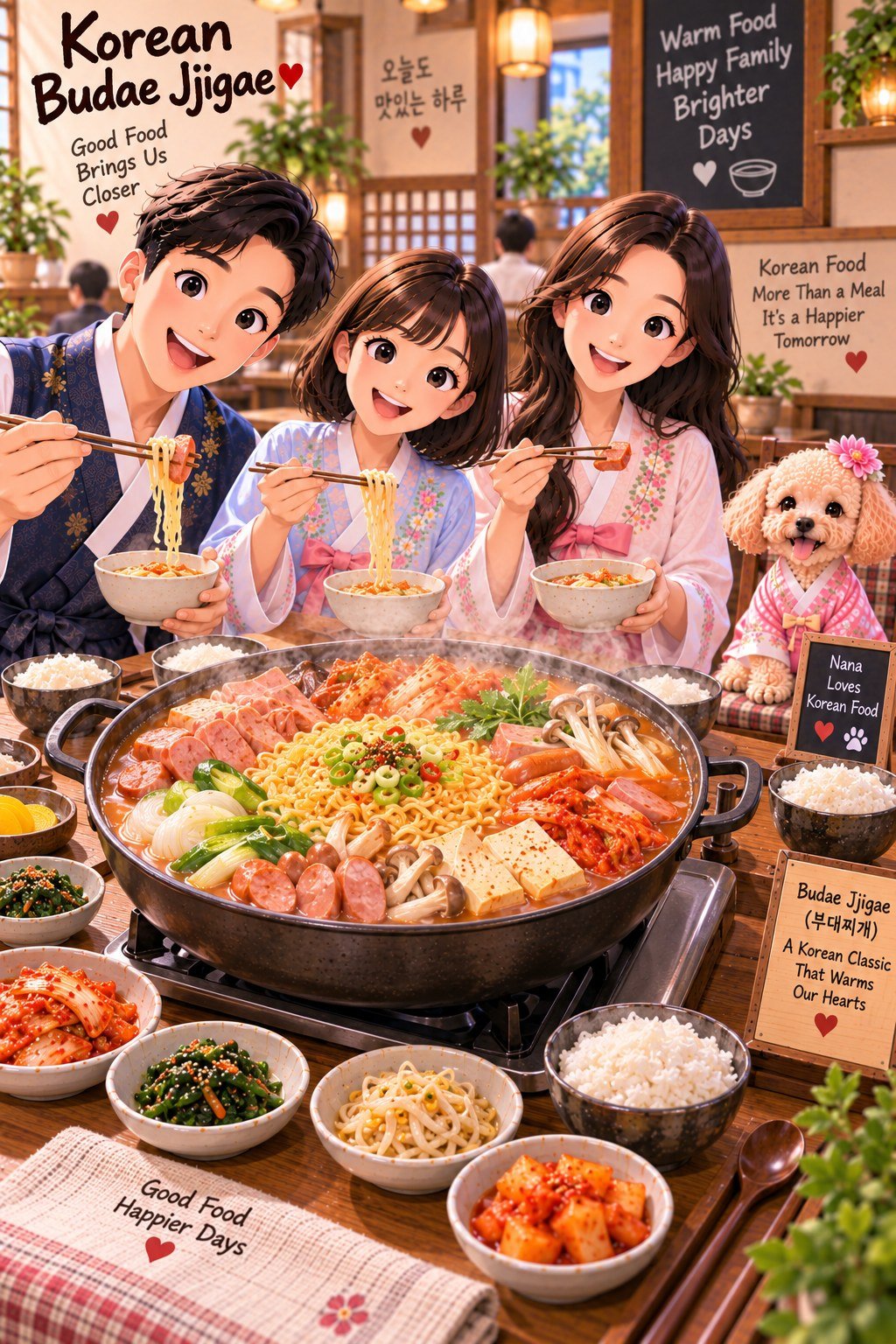
Ham, sausage, kimchi, tofu, vegetables, noodles, and a bubbling red broth create the recognizable shared-table experience of Budae Jjigae.
Quick Guide
| Korean name | 부대찌개 |
| Romanization | Budae Jjigae |
| Common English name | Korean Army Stew |
| Food category | Korean jjigae, or stew |
| Common ingredients | Ham, sausage, kimchi, tofu, green onion, onion and mushrooms |
| Popular noodle addition | Ramyeon |
| Other sari | Tteok, mandu, glass noodles and other restaurant-dependent additions |
| Serving style | Shared hot pot or stew |
| Strong regional association | Uijeongbu |
| Common accompaniment | Steamed rice |
What Is Budae Jjigae?
Budae Jjigae is a Korean stew built around a mixture of Korean ingredients and processed meats such as ham and sausage.
Kimchi, tofu, vegetables, seasonings, and broth create the Korean stew foundation, while ramyeon or other additions can make the meal more substantial.
The ingredients are commonly cooked together in a wide pot and shared at the table.
What Does Budae Jjigae Mean?
The name contains two Korean words that explain the dish directly.
Budae means a military unit or military base context, while jjigae means a Korean stew.
This is why Budae Jjigae is commonly translated into English as “Army Stew.”
Why Is It Called Korean Army Stew?
The English name reflects the dish’s historical connection with foods associated with U.S. military bases in Korea after the Korean War.
Processed meats such as ham and sausage became incorporated into Korean-style stew cooking with ingredients such as kimchi and chili seasoning.
The name therefore reflects a particular period of Korean history rather than describing a stew eaten only by military personnel today.
The Postwar History of Budae Jjigae
Budae Jjigae developed in difficult postwar conditions when food availability and everyday diets were affected by the aftermath of the Korean War.
Ingredients associated with U.S. military bases, particularly processed meats, were adapted into Korean cooking rather than simply eaten in their original forms.
Over time, the combination developed into an established Korean stew with regional restaurant traditions and many modern variations.
Uijeongbu & Budae Jjigae
Uijeongbu is particularly strongly associated with Budae Jjigae.
Restaurants specializing in the dish developed around the city, helping turn Budae Jjigae into an important part of Uijeongbu’s food identity.
For international travelers, this regional connection adds historical and local context beyond simply ordering Korean Army Stew in Seoul.
Uijeongbu Budaejjigae Street
Uijeongbu has an area known for restaurants specializing in Budae Jjigae.
Different businesses can serve their own combinations of ham, sausage, kimchi, vegetables, noodles, broth, and seasonings.
Restaurant menus, prices, ingredients, serving sizes, and operating hours can change, so current information should be checked when planning a specific visit.
What Goes into Budae Jjigae?
There is no single ingredient list used by every restaurant.
Common components can include ham, sausage, kimchi, tofu, green onion, onion, mushrooms, chili seasoning, broth, and noodles.
Additional ingredients can expand the dish further depending on restaurant style and customer preference.
Ham & Sausage
Ham and sausage are among the ingredients most strongly associated with Budae Jjigae.
As they cook in the broth, they contribute savory and salty flavors while taking on some of the surrounding Korean seasoning.
Specific processed-meat products and formulations vary, so ingredients such as pork, beef, chicken, sodium, allergens, and additives should not be assumed from appearance alone.
Kimchi in Budae Jjigae
Kimchi provides fermentation, acidity, chili flavor, and vegetable texture to the stew.
It also helps connect the processed meats with a distinctly Korean flavor foundation.
The type and maturity of kimchi can influence the final broth, so different restaurants can produce noticeably different results.
Tofu in Budae Jjigae
Tofu adds a soft texture that contrasts with sausage, ham, noodles, and vegetables.
As it heats in the stew, its mild flavor provides a break from more intensely seasoned ingredients.
Because tofu is soy-based, it is also important for diners with soy allergies.
Vegetables in Budae Jjigae
Green onion, onion, mushrooms, and other vegetables can add aroma, sweetness, texture, and volume to the stew.
Vegetable combinations differ according to restaurant and recipe.
The dish should therefore be understood as flexible rather than as having one mandatory vegetable mixture.
Preparing Budae Jjigae Ingredients
Ham, sausage, tofu, kimchi, vegetables, noodles, and seasoning ingredients are prepared so they can cook appropriately in the stew.
Ingredients that require cutting should be prepared in manageable pieces, while noodles and other sari can be kept separate until the appropriate stage of cooking.
Processed foods should be handled according to their storage and preparation instructions rather than assuming every product has identical requirements.
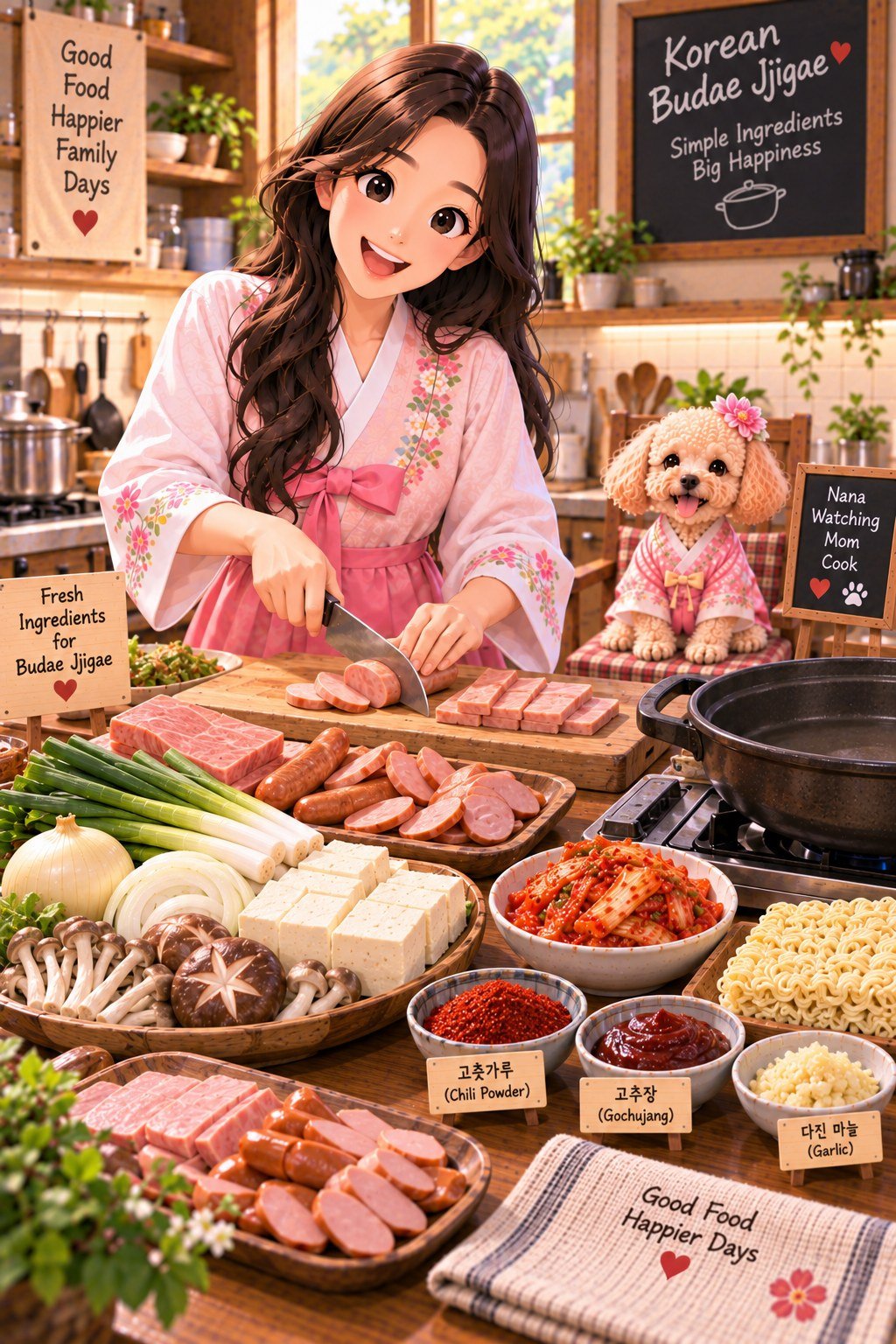
Ham, sausage, kimchi, tofu, vegetables, noodles, and Korean seasonings form the flexible foundation of Budae Jjigae.
The Budae Jjigae Broth
The broth brings together the flavors released by kimchi, processed meats, vegetables, seasonings, and other ingredients.
Depending on the recipe, the soup base can include stock or broth together with Korean chili seasoning, garlic, and other flavoring ingredients.
The exact saltiness, richness, and spice level vary significantly between restaurants.
Gochugaru & Gochujang
Gochugaru, or Korean chili flakes, and gochujang, or Korean fermented chili paste, can contribute red color, heat, and deeper seasoning to the stew.
Recipes do not necessarily use identical quantities or combinations of both ingredients.
Prepared gochujang can also contain soy, wheat, or other ingredients depending on the product.
Garlic & Aromatics
Garlic, green onion, onion, and other aromatics can help build the stew’s savory character.
They interact with kimchi, chili seasoning, processed meat, and broth rather than functioning as isolated flavors.
Exact combinations differ between restaurant and household recipes.
How Budae Jjigae Is Cooked
The main ingredients are arranged or added to a wide pot with broth and seasoning before being heated together.
The stew is cooked until ingredients requiring heating are appropriately hot and the flavors begin to combine.
Noodles and other sari can be added according to their cooking time so they do not become excessively soft before the rest of the meal is ready.
Why Budae Jjigae Is Often Served in a Wide Pot
A wide pot allows several ingredients to remain visible while cooking together.
Ham, sausage, tofu, kimchi, vegetables, and noodles can be distributed across the cooking surface rather than forming one compact pile.
The format also supports the dish’s shared-table style, allowing diners to transfer different ingredients into individual bowls.
When to Add Ramyeon
Ramyeon noodles cook relatively quickly compared with many of the other ingredients.
Adding them at an appropriate stage helps the noodles become tender without remaining in boiling broth unnecessarily long.
Once cooked, they continue absorbing liquid and can become softer as the meal progresses.
Why Ramyeon Should Be Eaten Early
Cooked ramyeon continues interacting with the hot broth after it reaches the desired texture.
If left in the pot for too long, the noodles can become increasingly soft and absorb more liquid.
Eating some of the noodles relatively early helps diners experience their intended texture while leaving other ingredients for later in the meal.
What Is Sari?
In this dining context, sari refers to additional ingredients that can be added to a dish.
For Budae Jjigae, sari can include ramyeon, glass noodles, tteok, mandu, or other restaurant-specific options.
Checking what is already included in the basic order helps avoid adding more food than the table needs.
Ramyeon Sari
Korean Ramyeon provides one of the most recognizable additions to Budae Jjigae.
The noodles absorb the spicy, savory broth and add another substantial component to a stew already containing meat, tofu, and vegetables.
Because packaged noodle formulations vary, wheat, gluten, soy, or other allergens should be checked when necessary.
Tteok Sari
Tteok can add a dense and chewy rice-cake texture to Budae Jjigae.
Rice cakes absorb some of the surrounding seasoning while retaining a very different texture from noodles or tofu.
Tteok can be sticky and highly chewy, so manageable bites and thorough chewing are important.
Mandu Sari
Mandu can be added to some Budae Jjigae preparations.
The dumplings introduce wrappers and fillings that make the stew even more substantial.
Mandu ingredients vary and can include meat, vegetables, tofu, wheat, soy, sesame, or other recipe-dependent components.
Dangmyeon & Glass Noodles
Glass noodles provide another possible sari option.
Like the dangmyeon used in Japchae or Jjimdak, they can absorb surrounding seasoning and change in texture as they remain in hot liquid.
Specific noodle formulations should be checked when dietary restrictions matter.
Cheese in Modern Budae Jjigae
Some modern Budae Jjigae preparations add sliced or melted cheese.
The cheese can soften the perceived chili heat and add dairy richness to the broth.
Cheese is an optional variation rather than an ingredient required to define every Budae Jjigae.
Cooking Budae Jjigae at the Table
Some restaurants bring the pot to the table and continue heating the stew on a tabletop burner.
Diners should wait until ingredients are appropriately heated and follow restaurant instructions about when the food is ready.
The pot, burner, broth, steam, and serving utensils can remain extremely hot throughout the meal.

A wide bubbling pot allows ham, sausage, kimchi, tofu, vegetables, and ramyeon to cook together while remaining easy to share.
Budae Jjigae with Rice
Plain steamed rice provides a relatively neutral accompaniment to the strongly seasoned stew.
Small amounts of broth and other ingredients can be eaten with rice to balance saltiness, spice, and richness.
The amount of rice can be adjusted according to how many noodles, tteok, dumplings, or other sari are already in the meal.
Budae Jjigae vs. Kimchi-jjigae
Kimchi-jjigae centers much more directly on kimchi as the defining ingredient.
Budae Jjigae uses kimchi as part of a broader mixture that prominently includes processed meats such as ham and sausage and often incorporates noodles or other sari.
The overlap in red broth and kimchi should therefore not obscure the different ingredient structures and historical identities of the two stews.
Budae Jjigae vs. Sundubu-jjigae
Sundubu-jjigae centers on very soft tofu as its defining ingredient.
Budae Jjigae can contain tofu, but ham, sausage, kimchi, noodles, and other mixed ingredients create a different stew structure.
The two dishes can both have red, spicy-looking broth while providing substantially different textures and ingredient combinations.
Budae Jjigae vs. Korean Ramyeon
Korean Ramyeon can be a complete noodle dish by itself, while ramyeon in Budae Jjigae functions as one component or sari inside a larger shared stew.
The Budae Jjigae broth is influenced by kimchi, processed meats, tofu, vegetables, and stew seasoning rather than only a packaged noodle seasoning base.
This makes the final eating experience different even when familiar ramyeon noodles are present.
How to Experience Budae Jjigae for the First Time
Start by allowing the bubbling stew to cool to a comfortable eating temperature after transferring a small portion to an individual bowl.
Try the broth with ham, sausage, kimchi, tofu, or vegetables before focusing on the noodles so you can understand how the different ingredients contribute to the stew.
Eat some of the ramyeon relatively early, then compare it with rice, tteok, mandu, or other sari if they are included in the meal.
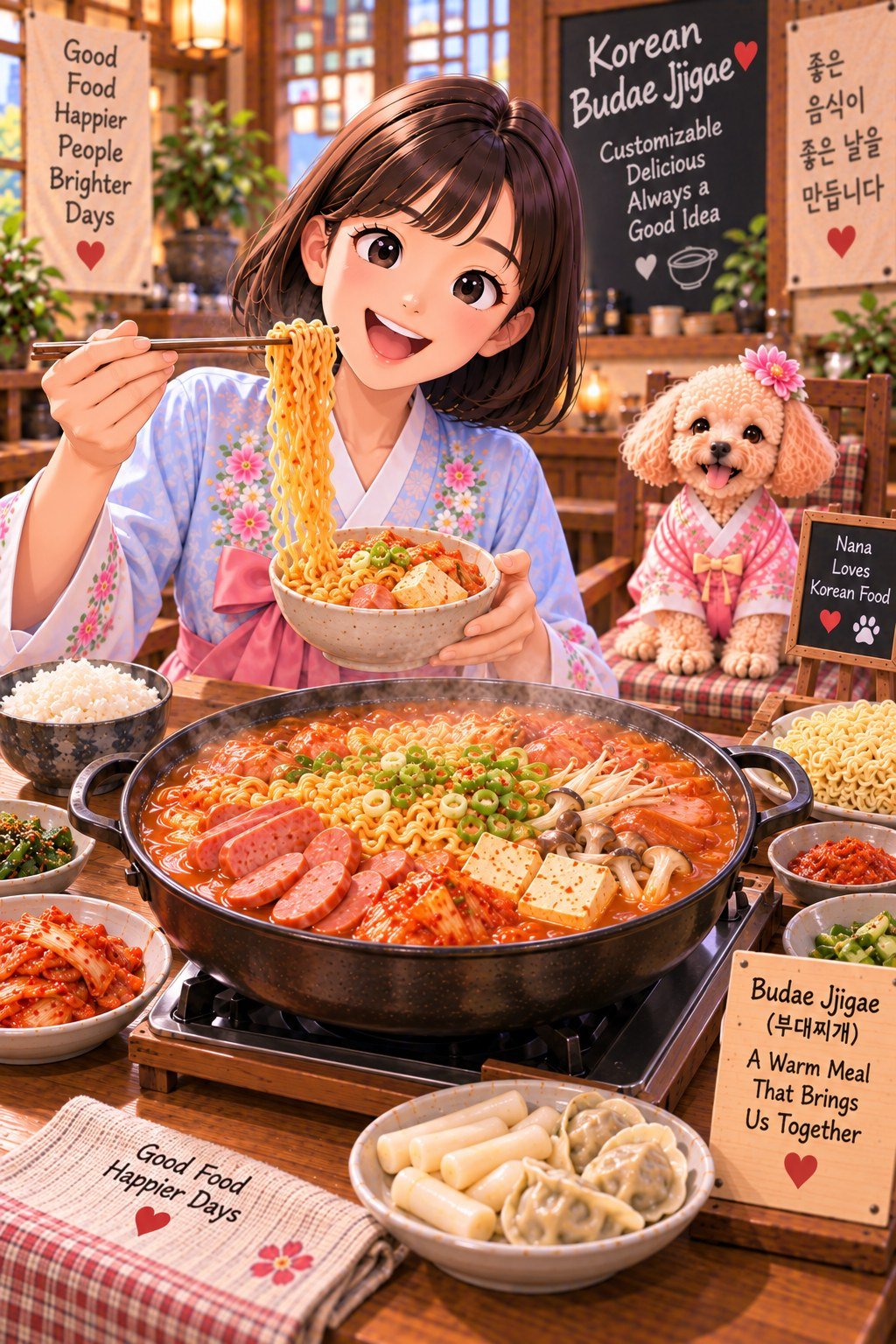
Trying the broth and main ingredients first, then enjoying ramyeon and optional sari, makes the different layers of Budae Jjigae easier to understand.
Budae Jjigae as a Shared Korean Meal
Budae Jjigae is naturally suited to group dining because a wide pot can hold several ingredients and remain at the center of the table.
Each diner can choose different combinations of ham, sausage, tofu, kimchi, vegetables, noodles, and other sari while sharing the same broth.
This flexible shared-pot format is an important part of the modern Budae Jjigae experience.
What to Expect at a Budae Jjigae Restaurant
Budae Jjigae restaurants commonly serve the stew in a wide pot designed for sharing at the table.
The basic order can include ham, sausage, kimchi, tofu, vegetables, and broth, while ramyeon or other sari may already be included or offered separately.
Serving sizes, ingredients, spice levels, and additional options vary, so first-time diners should check what comes with the standard order before adding extras.
How to Order Budae Jjigae for the First Time
Start by checking the recommended serving size and the ingredients included in the basic stew.
Then check whether ramyeon, tteok, mandu, glass noodles, cheese, or other sari are included or ordered separately.
If allergies or dietary restrictions matter, ask about the processed meats, broth, kimchi, tofu, noodles, sauces, and optional additions.
Choosing Sari
Sari allows diners to customize Budae Jjigae, but adding every available option can make the pot unnecessarily large and filling.
Ramyeon adds noodles, tteok adds a dense chewy texture, mandu adds dumpling wrappers and filling, and dangmyeon provides another noodle texture.
Choosing one or two additions first can make it easier to understand the original stew while keeping the portion manageable.
Why Sari Changes the Broth
Additional noodles, rice cakes, and dumplings do more than increase the amount of food.
Noodles can absorb broth, tteok can take on surrounding seasoning, and dumplings can release flavors from their wrappers and fillings.
The balance of liquid and ingredients can therefore change as more sari cooks in the pot.
Budae Jjigae & Uijeongbu Food Culture
Uijeongbu provides one of the strongest regional connections for Budae Jjigae.
The city’s concentration of restaurants specializing in the stew helped establish Budae Jjigae as both a local food identity and a destination for visitors interested in Korean food history.
Different restaurants can preserve their own combinations of broth, processed meats, vegetables, seasonings, and sari.
Budae Jjigae & Korean Food History
Budae Jjigae reflects a period when imported or military-base-associated processed foods were adapted into Korean cooking after the Korean War.
Ham and sausage were combined with ingredients and techniques familiar to Korean stew culture, including kimchi and chili seasoning.
The dish later developed beyond its postwar circumstances into an established part of contemporary Korean restaurant culture.
From Postwar Food to Modern K-Food
Modern Budae Jjigae can include ingredients and options that extend well beyond early versions of the dish.
Ramyeon, tteok, mandu, glass noodles, cheese, mushrooms, and other additions can appear according to restaurant style.
This evolution demonstrates how a food with a specific historical background can continue changing as dining preferences and ingredient availability change.
Budae Jjigae & Global K-Food
The English name “Korean Army Stew” gives international diners an immediately recognizable search term, while the Korean name preserves the dish’s cultural identity.
Its bubbling red broth, noodles, processed meats, tofu, kimchi, and customizable toppings also make the dish visually distinctive.
Understanding its postwar background adds important historical context beyond simply describing it as a spicy Korean stew.
Why Budae Jjigae Works in Food Videos
A wide pot allows many ingredients to remain visible at the same time.
Ham, sausage, tofu, kimchi, vegetables, and noodles can be arranged separately before gradually cooking together in the bubbling broth.
Adding ramyeon or cheese during cooking creates another clear visual stage for food photography and short-form video.
Budae Jjigae & Mukbang
Mukbang can emphasize bubbling broth, long noodles, stretchy cheese, and the large shared-pot format.
However, entertainment content can show unusually large portions, rapid eating, or extremely hot food being consumed immediately.
These should not be treated as guidance for serving size, eating speed, or safe food temperature.
Is Budae Jjigae Spicy?
Budae Jjigae can be spicy, but there is no universal heat level.
Kimchi, gochugaru, gochujang, chili peppers, and other seasonings can influence the intensity.
Restaurants can prepare noticeably different versions, so people sensitive to spicy food should check the available options before ordering.
Is Budae Jjigae Always Made with Pork?
No single processed-meat formulation defines every Budae Jjigae.
Ham and sausage can contain pork, beef, chicken, combinations of meats, or other product-dependent ingredients.
People who avoid particular meats for religious, ethical, allergy-related, or other reasons should confirm the actual products used by the restaurant.
Does Budae Jjigae Always Contain Ramyeon?
Ramyeon is one of the most recognizable modern additions, but it should not be treated as mandatory in every Budae Jjigae.
Some restaurants include noodles in the standard order, while others offer them as sari.
The stew remains Budae Jjigae because of its broader ingredient structure and historical identity rather than the presence of one noodle product.
Budae Jjigae vs. Kimchi-jjigae
Kimchi-jjigae places kimchi at the center of the stew’s identity.
Budae Jjigae combines kimchi with processed meats, tofu, vegetables, and frequently noodles or other additions.
The dishes can share ingredients and red broth while remaining historically and structurally different stews.
Budae Jjigae vs. Sundubu-jjigae
Sundubu-jjigae is defined primarily by its very soft tofu.
Budae Jjigae can contain tofu, but the tofu is only one component among processed meats, kimchi, vegetables, noodles, and other ingredients.
This produces a much more mixed hot-pot-style eating experience.
Budae Jjigae vs. Jjimdak
Jjimdak centers on chicken braised with vegetables and glass noodles in a dark soy-based sauce.
Budae Jjigae centers on a stew broth with processed meats, kimchi, tofu, vegetables, and optional sari.
Both can be shared and contain noodles, but their proteins, seasonings, cooking methods, and historical identities are different.
Budae Jjigae & Tteok
Tteok can be added as sari to provide a chewy rice-cake texture.
Rice cakes gradually absorb some of the spicy and savory broth while remaining denser than ramyeon noodles.
Because tteok can be sticky and highly chewy, manageable bites and thorough chewing are important.
Budae Jjigae & Mandu
Mandu can turn the stew into an even more substantial shared meal.
The dumpling wrapper softens in the hot broth while the filling contributes its own flavor and texture.
Ingredients differ by mandu variety, so meat, wheat, soy, sesame, and other allergens should be checked when necessary.
Budae Jjigae & Korean Ramyeon
Korean Ramyeon provides a familiar noodle texture inside the larger stew.
Unlike a standalone bowl of ramyeon, the noodles absorb broth already flavored by kimchi, ham, sausage, tofu, vegetables, and Korean seasonings.
This creates a different eating experience from preparing packaged ramyeon by itself.
Budae Jjigae & Kimchi
Kimchi is one of the ingredients that gives Budae Jjigae its distinctly Korean stew character.
Fermentation, acidity, chili seasoning, and vegetable texture help balance the richness and saltiness of processed meats.
Kimchi recipes vary and can contain seafood-derived ingredients or other recipe-dependent allergens.
The Complete Budae Jjigae Experience
A complete Budae Jjigae meal combines bubbling broth, ham, sausage, kimchi, tofu, vegetables, and a shared-table cooking style.
Ramyeon, tteok, mandu, dangmyeon, cheese, and other sari allow the basic stew to change according to the restaurant and diners’ preferences.
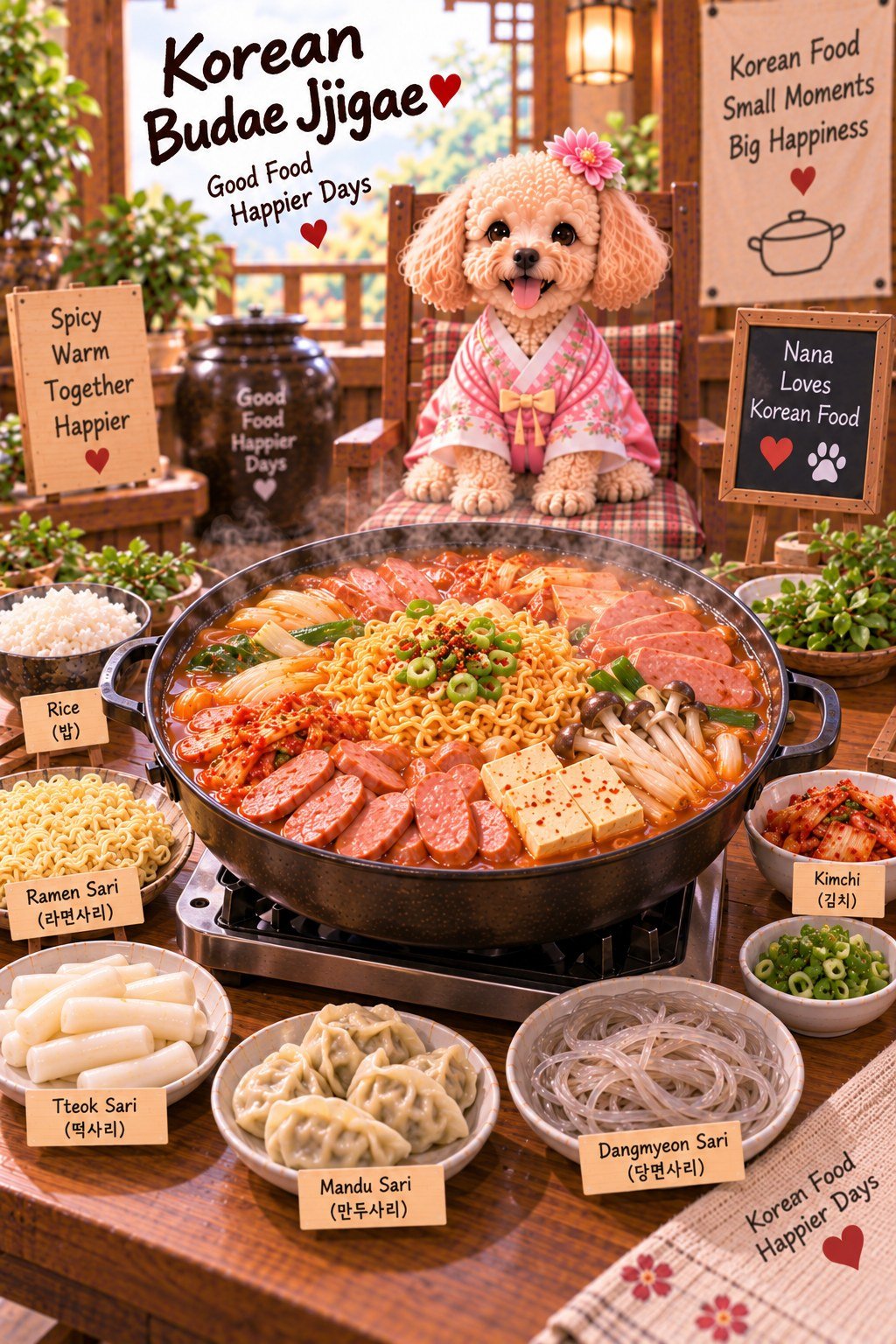
Budae Jjigae combines a distinctive postwar history with a modern shared-pot meal that can be customized with many different sari.
How Budae Jjigae Connects with Other K-Food
Kimchi-jjigae provides the closest stew comparison, while Sundubu-jjigae demonstrates Korea’s soft-tofu-centered stew tradition.
Kimchi explains the fermented ingredient that contributes acidity, spice, and Korean flavor to the broth.
Korean Ramyeon, Tteok, and Mandu explain three of the most recognizable sari options.
Japchae provides context for Korean dangmyeon, while Jjimdak demonstrates how glass noodles behave in another strongly seasoned Korean dish.
Tteokbokki provides another example of rice cakes absorbing a strongly seasoned Korean sauce.
Budae Jjigae & an Uijeongbu Food Trip
Uijeongbu provides the strongest regional travel connection for diners interested in the history and restaurant culture of Budae Jjigae.
Visiting the city can add local context to a dish that is now available throughout Korea and internationally.
Individual restaurant locations, menus, ingredients, prices, serving sizes, and operating hours can change and should be checked before a specific visit.
Budae Jjigae Outside Korea
Korean restaurants outside Korea can serve Budae Jjigae using locally available processed meats, kimchi, tofu, noodles, vegetables, and seasonings.
The brands and formulations of ham, sausage, noodles, cheese, and other ingredients can differ significantly between countries.
The dish should therefore be understood through its overall stew structure and historical context rather than one fixed commercial product.
FAQ
What is Budae Jjigae?
Budae Jjigae is a Korean stew commonly made with ingredients such as ham, sausage, kimchi, tofu, vegetables, and broth. Ramyeon and other sari can also be added, and the dish is commonly shared from a wide pot.
Why is Budae Jjigae called Korean Army Stew?
The English name reflects the dish’s historical connection with processed foods associated with U.S. military bases in Korea after the Korean War. These ingredients were adapted into Korean-style stew cooking with kimchi, chili seasoning, and other Korean ingredients.
Where is Budae Jjigae famous in Korea?
Uijeongbu is particularly strongly associated with Budae Jjigae and has a long-established restaurant culture centered on the dish. Budae Jjigae is now available throughout Korea and in Korean restaurants internationally.
Is Budae Jjigae spicy?
Budae Jjigae can be spicy, but the heat level varies. Kimchi, gochugaru, gochujang, chili peppers, and restaurant-specific seasonings can all influence the intensity of the broth.
Does Budae Jjigae always contain ramyeon?
No. Ramyeon is a popular modern addition, but it is not mandatory in every Budae Jjigae. Some restaurants include noodles in the basic order, while others offer ramyeon separately as sari.
What does sari mean in Budae Jjigae?
Sari refers to additional ingredients that can be added to the stew. Depending on the restaurant, options can include ramyeon, tteok, mandu, glass noodles, cheese, or other ingredients.
What is the difference between Budae Jjigae and Kimchi-jjigae?
Kimchi-jjigae centers primarily on kimchi, while Budae Jjigae combines kimchi with processed meats such as ham and sausage, tofu, vegetables, and often noodles or other sari. Their historical backgrounds and overall ingredient structures are different.
Where to Try Budae Jjigae
Budae Jjigae can be found at specialized restaurants, Korean stew restaurants, and businesses serving broader Korean menus.
Uijeongbu provides an especially important regional context because of its historical association and concentration of restaurants specializing in the dish.
Menus, ingredients, processed-meat products, portion sizes, sari, prices, and operating hours can change, so current information should be checked when planning a visit to a specific restaurant.
What to Check Before Ordering
Start by checking the serving size because Budae Jjigae is commonly designed for sharing.
Then check which ingredients and sari are already included before adding ramyeon, tteok, mandu, glass noodles, cheese, or other extras.
People with allergies, religious dietary requirements, or other food restrictions should confirm the processed meats, broth, kimchi, tofu, noodles, sauces, cheese, and optional additions.
First-Time Budae Jjigae Tips
- Check the basic ingredients — restaurant versions can differ considerably.
- Do not add every sari immediately — the basic stew can already be substantial.
- Eat some ramyeon early — noodles continue absorbing broth and soften as they remain in the pot.
- Try it with rice — plain rice provides contrast with the strongly seasoned broth.
- Check the spice level — red broth does not indicate one standardized level of heat.
- Confirm the processed meats — ham and sausage formulations can contain different meats and allergens.
- Let it cool — the pot, broth, noodles, tofu, and processed meats can remain extremely hot.
Processed Meat & Sodium
Ham, sausage, cheese, packaged noodles, sauces, and other processed ingredients can contribute substantial sodium to a Budae Jjigae meal.
The amount varies according to the products, broth, seasoning, serving size, and additional sari used by each restaurant.
People who monitor sodium intake for medical or dietary reasons should check available nutrition information where possible and follow guidance appropriate to their individual needs.
Pork, Beef & Other Meat Ingredients
The appearance of ham or sausage does not reliably identify every meat used in the product.
Processed meats can contain pork, beef, chicken, combinations of meats, or other recipe-dependent ingredients.
People with religious, ethical, allergy-related, or other dietary restrictions should confirm the specific processed meats rather than assuming their composition.
Wheat & Gluten
Ramyeon noodles commonly contain wheat, while mandu wrappers, sauces, gochujang, processed meats, and other ingredients can also contain wheat or gluten depending on the product.
Even when noodles are omitted, the complete stew should not automatically be assumed to be gluten-free.
People who must strictly avoid gluten should confirm the broth, seasonings, processed meats, sauces, sari, and possible cross-contact.
Soy
Tofu is made from soybeans and is a common Budae Jjigae ingredient.
Soy can also appear in gochujang, sauces, processed meats, noodles, dumplings, and other recipe-dependent components.
People with soy allergies should therefore check the complete stew rather than only the visible tofu.
Dairy & Cheese
Cheese is an optional modern addition to some Budae Jjigae preparations.
It introduces dairy into a stew that may otherwise appear not to contain an obvious dairy ingredient.
People with milk allergies or other dairy-related dietary restrictions should confirm whether cheese or dairy-containing processed products are used.
Kimchi & Hidden Ingredients
Kimchi recipes can contain fish sauce, fermented seafood, shrimp products, or other ingredients that are not obvious from appearance alone.
The presence of cabbage as the main visible ingredient does not mean every kimchi preparation is seafood-free or vegetarian.
People with allergies or vegetarian, vegan, or other dietary requirements should confirm the specific kimchi used in the stew.
Gochujang & Seasonings
Gochujang and other prepared seasonings can contain soy, wheat, sweeteners, or other recipe-dependent ingredients.
Different products can have different allergen profiles and sodium levels.
The red color of the broth does not reveal the complete seasoning formulation.
Ramyeon & Noodle Allergens
Ramyeon formulations vary by manufacturer and product.
Wheat, soy, sesame, or other ingredients can appear in noodles or accompanying seasoning products.
Restaurants can also use different noodle products over time, so current ingredients should be confirmed when allergies matter.
Tteok & Chewing Safety
Tteok can be dense, sticky, and highly chewy after cooking.
Rice cakes should be eaten in manageable pieces and chewed thoroughly.
Additional care is appropriate for young children, older adults, and people with chewing or swallowing difficulties.
Mandu & Filling Ingredients
Mandu can contain meat, vegetables, tofu, noodles, wheat-based wrappers, soy, sesame, or other recipe-dependent ingredients.
The filling is enclosed inside the wrapper, so all ingredients may not be visually obvious once the dumpling is added to the stew.
People with allergies or dietary restrictions should confirm the specific mandu rather than treating all dumplings as equivalent.
Dangmyeon & Long Noodles
Glass noodles and ramyeon can become long, slippery, and extremely hot after cooking in the stew.
Lift manageable portions and allow them to cool before eating rather than attempting to consume a large bundle at once.
Additional care is appropriate for people with chewing or swallowing difficulties.
Hot Pot & Tabletop Burner Safety
Budae Jjigae can continue cooking on a tabletop burner while diners are seated around the pot.
The burner, pot, handles, broth, steam, ladles, noodles, tofu, and other ingredients can remain hot enough to cause burns.
Children and pets should remain appropriately separated from the burner, hot cookware, and active serving area.
Hot Broth & Food Temperature
Transferring food to an individual bowl does not immediately make it cool enough to eat.
Tofu, sausage, rice cakes, dumplings, noodles, and other ingredients can retain hot broth internally or on their surfaces.
Allow each portion to cool to a comfortable temperature before taking a large bite.
Processed Food Handling
Ham, sausage, noodles, cheese, dumplings, and other packaged ingredients can have different storage and preparation instructions.
Products should be stored and handled according to applicable manufacturer guidance rather than assuming that all processed foods have identical requirements.
Restaurant preparation should also account for any ingredients requiring appropriate heating before service.
Storage & Leftovers
Budae Jjigae can contain processed meats, tofu, broth, noodles, dumplings, cheese, vegetables, and other perishable ingredients.
Noodles and rice cakes can continue absorbing broth during storage, changing both their texture and the amount of liquid remaining in the stew.
Follow restaurant or manufacturer instructions where available and store leftovers according to applicable food-safety guidance.
Reheating Budae Jjigae
Stored stew should be handled and reheated appropriately when reheating is required under applicable food-safety guidance.
Ramyeon, dangmyeon, tteok, tofu, and other ingredients can become softer after storage and reheating.
Reheated broth and dense ingredients can become extremely hot, so allow the food to reach a comfortable temperature before eating.
Image Credits
Korean Budae Jjigae family restaurant visual with Dad, Mom, K-Nana daughter, and Nana in hanbok enjoying a shared Korean Army Stew with ham, sausage, kimchi, tofu, vegetables, ramyeon, and rice — K-Nana Studio original visual.
Korean Budae Jjigae preparation visual with Mom in hanbok preparing ham, sausage, kimchi, tofu, green onion, onion, mushrooms, ramyeon, and Korean stew seasonings while Nana watches from a separate safe seat — K-Nana Studio original visual.
Korean Budae Jjigae cooking visual with Dad in hanbok safely cooking ham, sausage, kimchi, tofu, vegetables, and ramyeon in a wide bubbling pot while Nana remains separated from the hot cooking area — K-Nana Studio original visual.
Korean Budae Jjigae tasting visual with K-Nana daughter in hanbok enjoying ramyeon, ham, sausage, kimchi, and tofu beside rice, tteok, and mandu while Nana sits separately without touching the food — K-Nana Studio original visual.
Nana in pink floral hanbok seated separately as a K-Food mascot beside Korean Budae Jjigae with ham, sausage, kimchi, tofu, vegetables, ramyeon, tteok, mandu, glass noodles, and rice — K-Nana Studio original visual.
Disclaimer
This article is provided for general food, travel, and cultural information. Budae Jjigae ingredients, processed meats, broths, kimchi, tofu, noodles, tteok, mandu, cheese, vegetables, sauces, seasonings, allergens, sodium levels, serving sizes, and preparation methods can vary by restaurant, manufacturer, and recipe. Ham and sausage can contain different meats and other product-dependent ingredients. Recipes can contain wheat, gluten, soy, sesame, dairy, seafood-derived ingredients, or other allergens, and shared cookware, utensils, work surfaces, or preparation areas can create cross-contact risks. Tteok and long noodles can require additional care for people with chewing or swallowing difficulties. Hot broth, steam, tabletop burners, pots, utensils, and freshly cooked ingredients can cause burns. People with allergies, medical conditions, swallowing difficulties, religious dietary restrictions, or other individual requirements should confirm ingredients and preparation directly with the restaurant or manufacturer and follow appropriate professional guidance when necessary.