
Jokbal is a Korean pork dish made by cooking pig’s trotters in a seasoned liquid until the meat becomes tender and the skin develops a soft, chewy texture. The cooked pork is then sliced and commonly served as a large shared platter.
Its glossy brown appearance comes from the cooking process and seasonings, while the contrast between tender meat and chewy skin gives jokbal its distinctive texture.
Jokbal is commonly enjoyed with wrapping greens, garlic, chili peppers, ssamjang, saeujeot, and other Korean side dishes, allowing diners to create different combinations from the same platter.
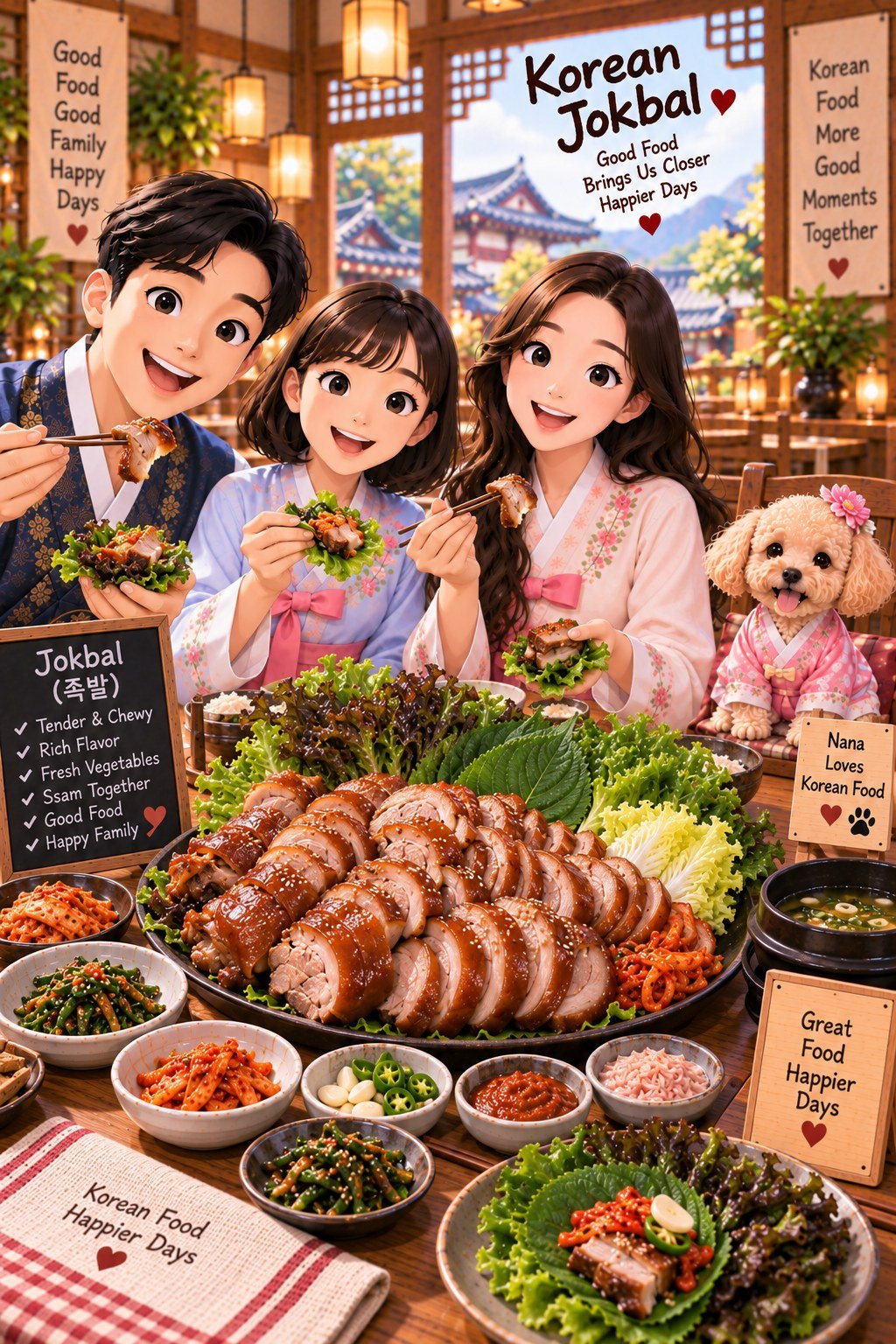
Glossy sliced pork, chewy skin, tender meat, wrapping greens, garlic, ssamjang, and saeujeot create the classic Korean jokbal experience.
Quick Guide
| Korean name | 족발 |
| Romanization | Jokbal |
| Common English description | Korean braised pig’s trotters |
| Main ingredient | Pig’s trotters |
| Cooking style | Simmered or braised in seasoned liquid |
| Typical appearance | Dark brown and glossy |
| Typical textures | Tender meat and soft, chewy skin |
| Common accompaniments | Wrapping greens, garlic, chili peppers, ssamjang and saeujeot |
| Popular variations | Spicy Jokbal and Naengchae Jokbal |
| Serving style | Shared sliced platter |
What Is Jokbal?
Jokbal is a Korean dish centered on cooked pig’s trotters.
The pork is prepared with a seasoned cooking liquid until the meat becomes tender and the exterior develops the dark, glossy appearance associated with the dish.
After cooking, the edible portions are sliced and arranged on a platter for sharing.
What Does Jokbal Mean?
The Korean name 족발 refers directly to the foot or trotter portion used for the dish.
This distinguishes jokbal from Korean pork dishes made primarily with belly, shoulder, ribs, or thin slices of meat.
For international diners, “Korean braised pig’s trotters” is a useful description, although individual cooking methods and seasonings vary.
What Are Pig’s Trotters?
Pig’s trotters are the lower leg and foot portions of the animal.
They contain meat, skin, connective tissue, fat, and bones, producing a combination of textures that differs significantly from a boneless pork cut.
Because bones remain part of many preparations, diners should eat sliced jokbal carefully and remain aware of small or irregular bone pieces.
Why Jokbal Has a Different Texture
The texture of jokbal comes from the structure of the cut and the long cooking process.
The meat becomes tender, while the skin and connective tissues develop a softer, springier, and chewier character.
This contrast is one of the main reasons jokbal feels very different from grilled pork belly or sliced bossam.
Jokbal Skin vs. Meat
A single slice of jokbal can contain more than one texture.
The interior meat can be soft and savory, while the outer skin can feel smooth, elastic, and noticeably chewier.
Some diners prefer slices containing both components because they provide the most characteristic jokbal texture.
Jokbal & Collagen
Pig skin and connective tissues naturally contain collagen-related proteins that change during extended cooking.
For a food guide, the most useful result to understand is the texture: long cooking helps tough connective tissues become softer and contributes to the characteristic gelatinous or chewy quality of jokbal.
Jokbal should not be treated as providing guaranteed cosmetic, skin, or medical benefits simply because collagen is present in the food.
Preparing Jokbal
Pig’s trotters require appropriate cleaning and preparation before cooking.
Seasoning ingredients such as soy sauce, garlic, ginger, green onion, onion, and other recipe-dependent aromatics can be prepared separately for the cooking liquid.
Raw pork and its juices should remain separated from cooked food, clean utensils, and ready-to-eat vegetables throughout preparation.
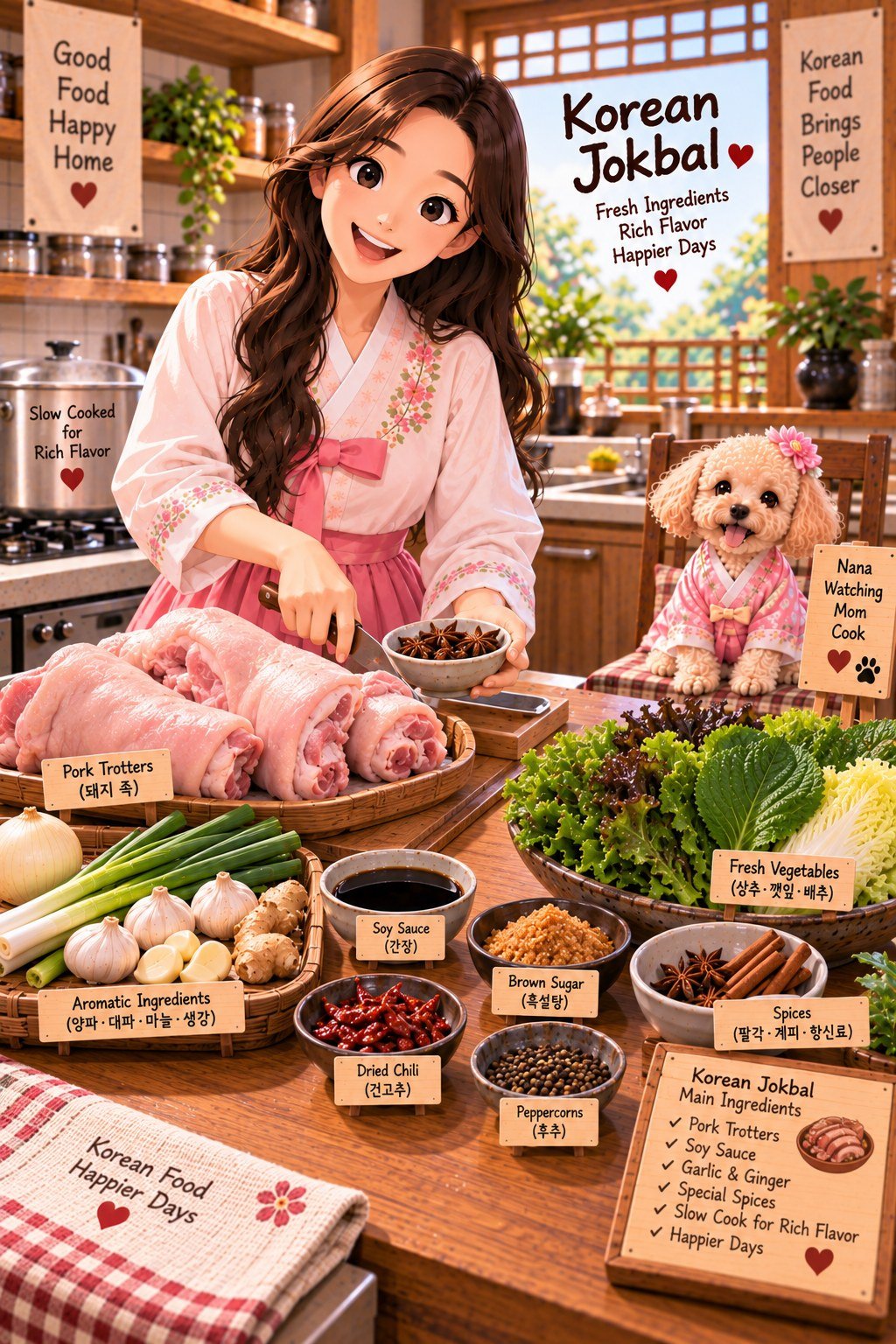
Pig’s trotters, soy sauce, garlic, ginger, green onion, onion, and other aromatics form the starting point for many Korean jokbal preparations.
The Jokbal Cooking Liquid
Jokbal is cooked in a seasoned liquid that can combine soy sauce with garlic, ginger, green onion, onion, sweetness, and other aromatics.
Restaurants and households can use different ingredient combinations, so there is no single universal jokbal seasoning formula.
The cooking liquid contributes color, aroma, saltiness, sweetness, and savory flavor as the pork cooks.
Why Soy Sauce Is Important
Soy sauce commonly contributes much of the dark color and savory character associated with jokbal.
Its flavor can be balanced with sweetness and aromatics rather than functioning as the only seasoning.
Because soy sauce formulations vary, diners with soy, wheat, or gluten-related restrictions should check the specific preparation.
Garlic & Ginger in Jokbal
Garlic and ginger can contribute strong aromatic notes to the cooking liquid.
They are commonly used with other ingredients rather than being expected to dominate the finished pork.
The exact balance varies considerably between recipes and restaurants.
Boiling vs. Braising Jokbal
Jokbal is sometimes described simply as boiled pig’s trotters, but the finished dish depends on more than cooking pork in plain water.
The meat is cooked with a seasoned liquid so flavor, aroma, color, and tenderness develop together.
Depending on the method, simmering and braising characteristics can overlap during the long cooking process.
Why Jokbal Turns Brown & Glossy
The dark appearance develops as the pork cooks with soy-based seasoning and other ingredients.
Extended cooking allows the exterior to take on deeper color while the surface becomes moist and glossy.
The exact shade varies according to the seasoning mixture, concentration, cooking time, and restaurant style.
Cooking Jokbal Thoroughly
Pork should be appropriately cooked before jokbal is sliced and served.
Pig’s trotters are thick, irregular cuts containing bones and connective tissues, so cooking requirements differ from thin pieces of pork.
Exterior color alone should not be treated as a universal indicator that every internal section has been appropriately cooked.
Why Jokbal Takes Time to Cook
The cut contains structures that need time to become tender.
Longer gentle cooking allows heat to penetrate the meat and helps connective tissues soften.
The goal is not simply to darken the outside but to develop tenderness and texture throughout the edible portions.
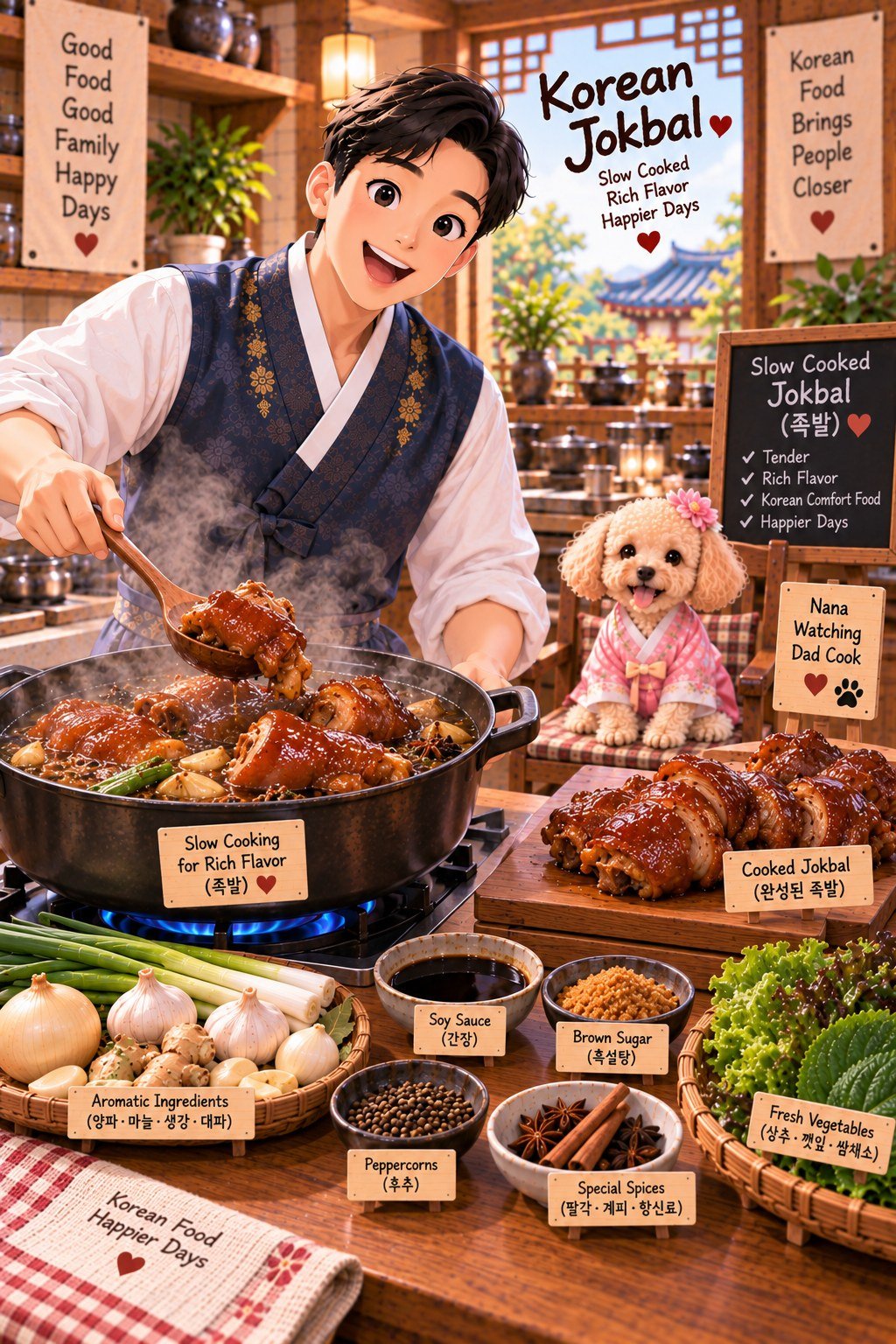
Slow cooking in seasoned liquid develops jokbal’s glossy brown exterior while tenderizing the meat and softening the chewy skin and connective tissues.
Resting Jokbal Before Slicing
Freshly cooked jokbal can be extremely hot and difficult to slice neatly.
Allowing it to rest briefly can make handling easier and help the cooked meat maintain a more stable shape during slicing.
Food-safety practices should still be followed while the pork is resting and being prepared for service.
How Jokbal Is Sliced
Cooked jokbal is commonly sliced into pieces that show both the meat and outer skin.
The exact thickness varies according to the restaurant, the section of the trotter, and serving preference.
Pieces should remain manageable enough to eat comfortably with chopsticks, wraps, and condiments.
Why Jokbal Is Served Sliced
Slicing makes a large, irregular cut easier to share among several diners.
It also allows different sections of meat and skin to be distributed across the serving platter.
Diners can then choose pieces according to their preferred balance of lean meat, fat, and chewy skin.
How to Eat Jokbal
Jokbal can be eaten directly as a sliced piece or combined with Korean wrapping greens and condiments.
A first bite without many additions can help a new diner understand the pork’s seasoning and texture.
Later bites can add garlic, chili pepper, ssamjang, saeujeot, or other accompaniments according to preference.
Jokbal & Korean Ssam
Jokbal can be placed inside lettuce, perilla leaf, or another available wrapping green to create a small ssam.
Garlic, chili pepper, ssamjang, saeujeot, or other side ingredients can be added in small amounts.
The finished wrap should remain manageable enough to eat comfortably rather than becoming an oversized bundle.
Saeujeot with Jokbal
Saeujeot is fermented salted shrimp and can provide concentrated saltiness and fermented seafood flavor alongside jokbal.
Only a small amount may be needed because its flavor can be intense.
Because it contains shrimp, saeujeot is an important shellfish consideration for people with allergies.
Ssamjang with Jokbal
Ssamjang provides a thick, fermented condiment option for jokbal wraps.
Its savory, salty, slightly sweet, or spicy characteristics depend on the formulation.
Because recipes can contain soy, wheat, or other ingredients, diners with allergies or dietary restrictions should check the specific product or restaurant preparation.
Garlic & Chili Peppers
Raw garlic and fresh chili peppers can add sharpness, aroma, and heat to a jokbal wrap.
Both can be strong, particularly for diners unfamiliar with eating them raw.
Starting with small amounts allows the flavor of the pork to remain noticeable.
What Is Spicy Jokbal?
Spicy Jokbal is a variation in which cooked pork is combined with or coated in a chili-based seasoning.
The sauce changes the experience from the more soy-forward, savory-sweet profile associated with classic jokbal.
Spice levels and sauce recipes vary, so a red appearance alone does not indicate one standardized heat level.
Classic Jokbal vs. Spicy Jokbal
Classic jokbal emphasizes the flavor of seasoned braised pork and its contrast between tender meat and chewy skin.
Spicy Jokbal adds a stronger chili-driven layer that can become one of the dominant flavors.
Trying both can demonstrate how the same basic pork preparation changes when a spicy sauce becomes part of the final dish.
What Is Naengchae Jokbal?
Naengchae Jokbal is a variation strongly associated with Busan.
It combines thinly sliced jokbal with refreshing ingredients such as cucumber and other vegetables and is commonly associated with a tangy mustard-based sauce.
Some preparations can also include jellyfish or other recipe-dependent ingredients, creating a cooler and more refreshing contrast with standard jokbal.
Why Naengchae Jokbal Feels Different
Classic jokbal emphasizes warm or room-temperature sliced pork with traditional wrapping accompaniments.
Naengchae Jokbal introduces cool vegetables and a sharp, tangy sauce that changes both the temperature and flavor balance.
The result demonstrates how a familiar pork dish can develop a distinct regional variation.
Jokbal & Busan Food Culture
Naengchae Jokbal provides a natural connection between jokbal and Busan’s regional food identity.
For travelers, encountering the variation in Busan can add local context beyond simply ordering standard jokbal.
Restaurant recipes, vegetables, sauces, seafood ingredients, prices, and serving styles vary and should be checked when planning a specific visit.
Jokbal vs. Bossam
Bossam and jokbal are both Korean pork dishes commonly served in slices for sharing, but they use different cuts and produce different textures.
Bossam commonly uses pork belly or shoulder and emphasizes tender cooked pork with cabbage, kimchi, and ssam accompaniments.
Jokbal uses pig’s trotters and is especially recognizable for its dark seasoned exterior, tender meat, and chewy skin.
Jokbal vs. Samgyeopsal
Samgyeopsal centers on pork belly slices grilled at the table.
Jokbal is cooked before reaching the table and does not depend on diners grilling individual slices.
The cuts, cooking methods, textures, and dining processes are therefore substantially different.
Jokbal vs. Korean BBQ
Korean BBQ emphasizes tabletop grilling, while jokbal is prepared through extended cooking before being sliced and served.
Both can be eaten with wrapping greens, garlic, sauces, and side dishes, but their central cooking experiences are different.
This comparison helps show that Korean ssam culture is not limited to grilled meat.
How to Experience Jokbal for the First Time
Begin with a small slice on its own to understand the seasoning and the contrast between meat and skin.
Next, try a piece with a small amount of saeujeot or ssamjang, then build a manageable lettuce or perilla-leaf wrap with garlic or chili if desired.
After understanding classic jokbal, a spicy or naengchae variation can provide a useful comparison.
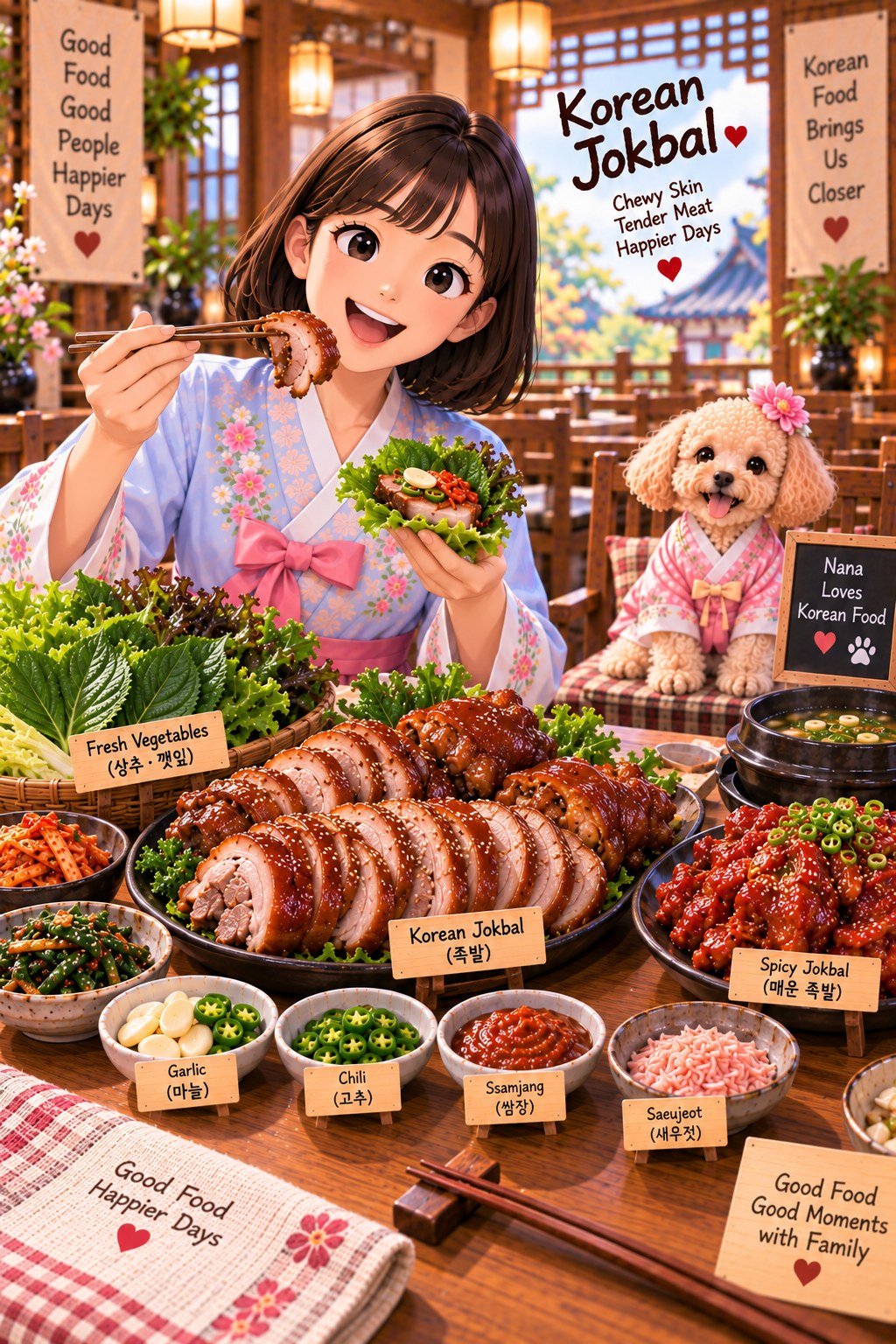
Trying classic jokbal first makes it easier to compare its tender meat and chewy skin with spicy variations and different Korean ssam combinations.
Jokbal as a Shared Korean Meal
Jokbal is naturally suited to group dining because a sliced platter can be placed at the center of the table with several accompaniments.
Each diner can choose different pieces and create individual combinations with greens, garlic, chili peppers, ssamjang, or saeujeot.
This shared but customizable format is an important part of the Korean jokbal experience.
What to Expect at a Jokbal Restaurant
Jokbal restaurants commonly serve sliced pork on a large platter designed for sharing.
The meal can include wrapping greens, garlic, chili peppers, ssamjang, saeujeot, kimchi, and other restaurant-specific side dishes.
Serving sizes can be substantial, so first-time diners should check how many people each portion is intended to serve before ordering additional dishes.
How to Order Jokbal for the First Time
Start by checking the available portion sizes and whether the restaurant offers classic jokbal, spicy jokbal, naengchae jokbal, or several styles.
Then check the included wrapping vegetables, sauces, condiments, and side dishes.
If shellfish allergies or other dietary restrictions matter, ask about saeujeot, naengchae ingredients, sauces, and shared preparation areas.
Choosing Classic or Spicy Jokbal
Classic jokbal is useful for understanding the meat, skin, and original seasoned flavor before adding a strongly flavored sauce.
Spicy jokbal provides a more chili-forward experience and can vary considerably in heat between restaurants.
For a first experience, trying classic jokbal before a spicy variation makes the textural comparison easier to understand.
Jokbal & Korean Ssam Culture
Jokbal demonstrates that Korean ssam culture extends beyond meat cooked directly on a tabletop grill.
A slice of prepared pork can be placed inside lettuce, perilla leaf, or another available green with garlic, chili pepper, ssamjang, or saeujeot.
Each diner can change the combination from one wrap to the next according to personal preference.
Jokbal & Kimchi
Kimchi can provide acidity, chili flavor, fermentation, and vegetable texture alongside rich jokbal.
The contrast is different from adding a concentrated condiment such as saeujeot or ssamjang because kimchi contributes both seasoning and substantial vegetable texture.
Kimchi recipes vary, so ingredients and flavor can differ between restaurants.
Jokbal & Korean Delivery Culture
Jokbal is well suited to shared delivery meals because the meat is already cooked, sliced, and commonly served with separate accompaniments.
Wrapping greens, sauces, garlic, kimchi, and other side dishes can be packaged separately so diners assemble combinations when eating.
Delivery presentation, portion sizes, side dishes, and food-handling practices vary by business.
Jokbal as a Korean Late-Night Food
Jokbal is also associated with casual evening and late-night group dining in Korea.
A large platter can be shared while diners choose their own combinations of pork, greens, and condiments.
This social context helps explain why jokbal is frequently discussed not only as a pork dish but also as a communal meal.
Jokbal & Global K-Food
Jokbal introduces international diners to a Korean pork cut and texture that differ significantly from familiar grilled pork belly or sliced bossam.
The contrast between tender meat and chewy skin, together with ssam and fermented condiments, gives the dish a distinctive identity.
Spicy jokbal and naengchae jokbal also demonstrate how one traditional-style pork preparation can develop very different modern and regional variations.
Why Jokbal Works in Food Videos
Jokbal has several visually distinctive characteristics.
The glossy brown exterior, layered slices of meat and skin, large serving platter, colorful wrapping vegetables, and different sauces are easy to distinguish in close-up imagery.
Spicy jokbal adds a red chili-based visual contrast, while naengchae jokbal can introduce colorful vegetables and a lighter presentation.
Jokbal & Mukbang
Mukbang and other Korean food videos can emphasize the chewy texture of jokbal skin and the variety of wrap combinations.
However, entertainment content can feature unusually large portions, oversized wraps, or rapid eating.
These should not be treated as guidance for portion size, bite size, chewing, or eating speed.
Why Jokbal Can Feel Chewy
Chewiness is an expected characteristic of parts of the dish, particularly the cooked skin and connective tissues.
Individual slices can differ depending on which part of the trotter they come from and how much skin, fat, and meat they contain.
Diners who prefer softer meat can choose pieces with a different balance of components when the platter allows.
Is Jokbal Spicy?
Classic jokbal does not need to be strongly spicy.
Heat can come from fresh chili peppers, spicy side dishes, ssamjang, or other accompaniments, while spicy jokbal deliberately adds a chili-based sauce.
The restaurant’s specific preparation should be checked when spice level matters.
Is Jokbal Served Hot or Cold?
Serving temperature can vary according to restaurant style, preparation timing, and the specific jokbal variation.
Classic jokbal can be served warm or at another suitable serving temperature, while naengchae jokbal deliberately emphasizes a cooler presentation.
Temperature should therefore not be used alone to determine whether a dish is authentic or correctly prepared.
What Is Naengchae Jokbal Sauce?
Naengchae jokbal is commonly associated with a tangy mustard-based sauce.
The sauce can combine sharp, sour, sweet, and spicy sensations that contrast strongly with the richer pork.
Recipes vary, so the precise ingredients and intensity should be checked when allergies or dietary restrictions matter.
Jellyfish in Naengchae Jokbal
Some naengchae jokbal preparations can include jellyfish along with cucumber and other vegetables.
Its texture and seafood origin make the variation substantially different from a simple plate of classic sliced jokbal.
Diners with seafood allergies or dietary restrictions should confirm the actual ingredients rather than assuming every naengchae jokbal has the same composition.
Naengchae Jokbal & Busan
Naengchae jokbal is strongly associated with Busan and provides a regional variation within Korean jokbal culture.
For travelers, trying the dish in Busan can connect local food exploration with a preparation that differs from standard jokbal.
Individual restaurants can vary in mustard sauce, vegetables, seafood ingredients, portion size, and presentation.
Jokbal vs. Bossam
Bossam provides the closest comparison because both dishes feature cooked Korean pork served in slices for sharing.
Bossam commonly uses pork belly or shoulder and emphasizes tender pork with cabbage, kimchi, and other ssam accompaniments.
Jokbal uses pig’s trotters and provides a distinctive combination of tender meat, chewy skin, bones, and a dark seasoned exterior.
Jokbal vs. Samgyeopsal
Samgyeopsal centers on pork belly grilled at the table.
Jokbal arrives after extended cooking and slicing, so diners do not grill the individual pieces themselves.
Both can be enjoyed as ssam, but the cut, texture, preparation, and dining process are very different.
Jokbal vs. Korean BBQ
Korean BBQ emphasizes grilling meat at or near the table.
Jokbal demonstrates another Korean shared-meat tradition in which cooking is completed before the platter reaches diners.
Wrapping greens and condiments can overlap, but the cooking experience is fundamentally different.
Jokbal vs. Galbi
Galbi commonly centers on rib cuts and is strongly associated with marinating and grilling or other rib preparations.
Jokbal centers on pig’s trotters cooked until the meat and connective tissues become tender enough for slicing.
The cut, texture, seasoning, and cooking process are therefore clearly different.
Jokbal vs. Jjimdak
Jjimdak also uses extended cooking with a dark soy-oriented seasoning, but it is a chicken dish with vegetables and glass noodles.
Jokbal centers on pig’s trotters and is sliced after cooking rather than served as chicken pieces braised together with noodles and vegetables.
The similarity in dark seasoning should therefore not obscure the major differences between the dishes.
Jokbal vs. Korean Fried Chicken
Korean Fried Chicken depends on frying to create a crisp exterior.
Jokbal develops tenderness and chewiness through extended moist cooking and does not depend on a fried crust.
The comparison demonstrates two very different approaches to Korean shared meat dishes.
Jokbal & Bossam as a Korean Pork Pair
Jokbal and Bossam are often useful to compare because both can appear as large sliced pork platters with Korean accompaniments.
Bossam emphasizes tender belly or shoulder meat, while jokbal introduces pig’s trotters, chewy skin, and a darker seasoned exterior.
Tasting the two separately makes the differences in cut and texture much easier to understand.
The Complete Jokbal Experience
A complete jokbal meal combines glossy sliced pig’s trotters, tender meat, chewy skin, wrapping greens, garlic, chili peppers, ssamjang, saeujeot, and a shared-table format.
Spicy jokbal and Busan-style naengchae jokbal expand that experience into substantially different flavor profiles while preserving jokbal as the central ingredient.
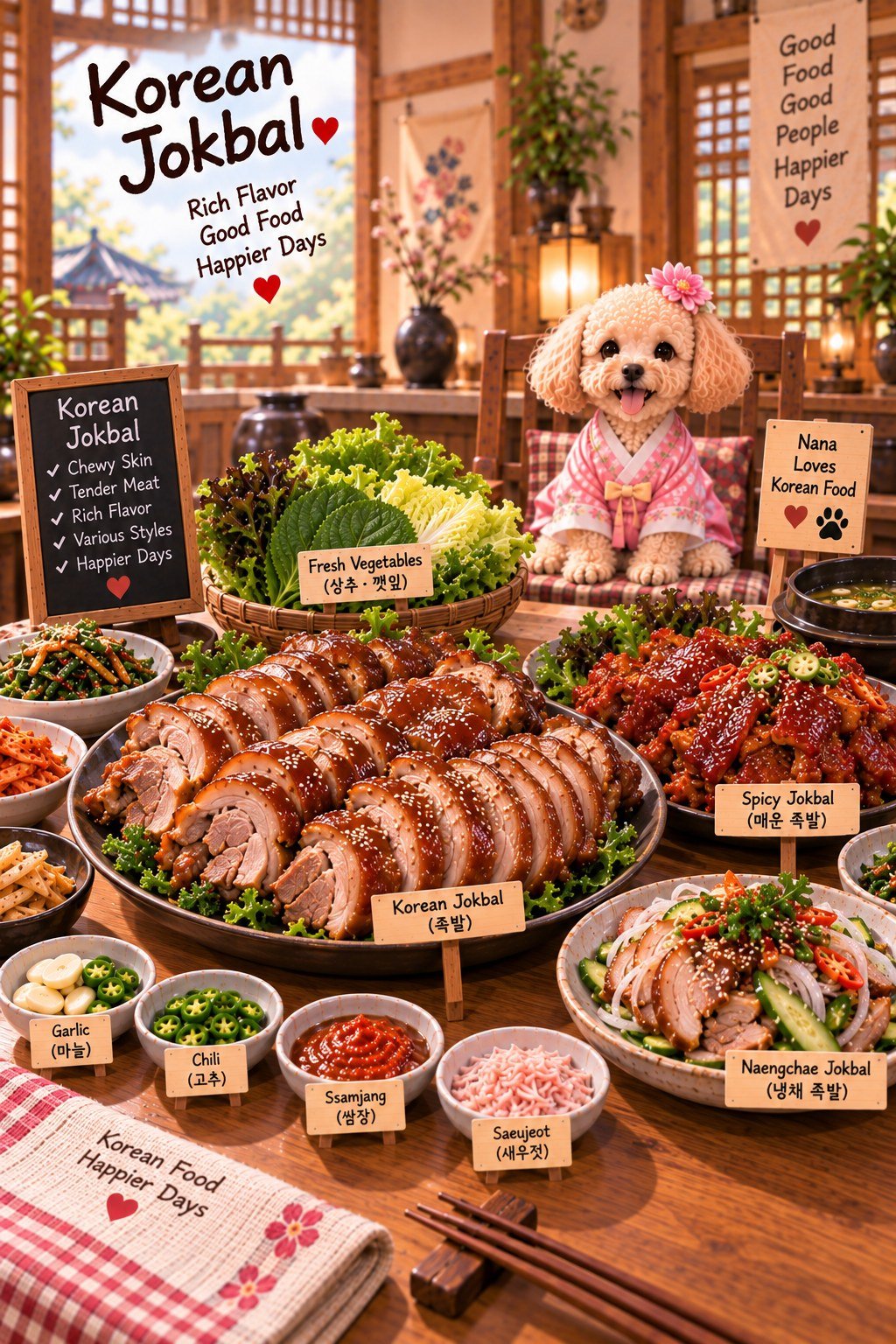
Classic Jokbal, Spicy Jokbal, and Naengchae Jokbal show how one Korean pork tradition can range from rich and savory to fiery or cool and tangy.
How Jokbal Connects with Other K-Food
Bossam provides the closest pork comparison through its tender sliced pork and Korean ssam culture.
Samgyeopsal and Korean BBQ expand the pork cluster into tabletop grilling.
Galbi and Bulgogi provide contrasting Korean meat cuts, seasonings, and cooking methods.
Kimchi provides fermented acidity, chili flavor, and vegetable texture that can accompany rich pork.
Jjimdak, Dakgalbi, and Korean Fried Chicken expand the collection into braised, griddle-cooked, and fried Korean chicken.
Haemul Pajeon provides another shareable Korean dish, while Tteok and Tteokbokki connect the collection with Korean rice-cake culture.
Jokbal & a Korean Food Trip
Jokbal can be found in Seoul, Busan, and many other parts of Korea through specialized jokbal restaurants and broader Korean dining businesses.
Travelers interested in regional variations can use Busan-style naengchae jokbal as a contrast with more familiar classic jokbal.
Restaurant menus, serving sizes, prices, variations, ingredients, and operating hours should be checked when planning a specific visit.
Jokbal Outside Korea
Korean restaurants outside Korea can serve classic jokbal or locally adapted variations.
Pork cuts, wrapping vegetables, sauces, condiments, and side dishes can differ according to ingredient availability and restaurant style.
The essential distinction remains the use of pig’s trotters and the characteristic contrast between tender meat and cooked skin.
FAQ
What is jokbal?
Jokbal is a Korean pork dish made by cooking pig’s trotters in seasoned liquid until the meat becomes tender and the skin develops a soft, chewy texture. It is commonly sliced and served as a large shared platter with Korean accompaniments.
What part of the pig is jokbal?
Jokbal uses pig’s trotters, the lower leg and foot portions of the animal. The cut contains meat, skin, connective tissue, fat, and bones, creating textures that differ significantly from pork belly or shoulder.
What does jokbal taste like?
Classic jokbal commonly has a savory, slightly sweet, aromatic flavor influenced by soy-based seasoning and ingredients such as garlic, ginger, green onion, and other recipe-dependent aromatics. The exact balance varies by restaurant.
Is jokbal spicy?
Classic jokbal does not need to be strongly spicy. Spicy Jokbal is a separate variation that adds chili-based seasoning, while fresh chili peppers or spicy condiments can also add heat to individual wraps.
What is the difference between jokbal and bossam?
Jokbal uses pig’s trotters and is known for the contrast between tender meat and chewy skin. Bossam commonly uses pork belly or shoulder and emphasizes tender sliced pork served with cabbage, kimchi, and other ssam accompaniments.
What is Spicy Jokbal?
Spicy Jokbal is a variation in which cooked jokbal is combined with or coated in a chili-based sauce. Spice levels and seasoning formulas vary between restaurants.
What is Naengchae Jokbal?
Naengchae Jokbal is a variation strongly associated with Busan. Thinly sliced jokbal is combined with cool vegetables and a tangy mustard-style sauce, and some preparations can also contain jellyfish or other recipe-dependent ingredients.
Where to Try Jokbal
Jokbal can be found at specialized jokbal restaurants, Korean restaurants serving pork dishes, delivery-focused businesses, and establishments offering broader Korean menus.
Classic Jokbal and Spicy Jokbal are available in different areas of Korea, while Naengchae Jokbal provides a particularly useful regional connection with Busan.
Menus, portion sizes, sauces, side dishes, prices, ingredients, and operating hours should be checked when planning a visit to a specific restaurant.
What to Check Before Ordering
Start by checking the portion size because jokbal is commonly served as a shared platter.
Then check whether the restaurant offers classic, spicy, or naengchae styles and which wrapping greens, sauces, condiments, and side dishes are included.
People with allergies should pay particular attention to saeujeot, soy-based seasoning, ssamjang, mustard sauces, seafood ingredients, and shared preparation areas.
First-Time Jokbal Tips
- Try classic jokbal first — taste a small piece before adding several condiments.
- Compare skin and meat — the contrast between chewy skin and tender meat is central to the dish.
- Build a small ssam — use one manageable slice with selected greens and condiments.
- Use saeujeot lightly — fermented salted shrimp can have an intense salty flavor.
- Watch for bones — pig’s trotters contain bones and irregular hard pieces can remain near edible meat.
- Check the spice level — Spicy Jokbal recipes can vary considerably.
- Try Naengchae Jokbal for contrast — its cool vegetables and tangy sauce create a very different experience.
Raw Pork & Food Safety
Raw pork requires appropriate handling because it can carry harmful microorganisms.
Raw meat and its juices should remain separated from cooked jokbal, wrapping vegetables, condiments, serving plates, and other ready-to-eat foods.
Hands, knives, cutting boards, containers, and work surfaces that contact raw pork require appropriate handling before reuse with cooked food.
Cooking Pork Thoroughly
Pig’s trotters should be appropriately cooked before they are sliced and served.
The cut is thick, irregular, and contains bones and connective tissues, so cooking requirements differ from thin pork slices.
Dark exterior color from the seasoning should not be treated as the only indicator that internal portions have been appropriately cooked.
Cross-Contamination
Utensils and work surfaces used for raw pork should not be casually reused for cooked jokbal or ready-to-eat accompaniments.
Wrapping greens, garlic, chili peppers, kimchi, sauces, and other foods served directly at the table require appropriate separation from raw meat and its juices.
Shared preparation equipment can also create allergen cross-contact.
Bones & Hard Pieces
Pig’s trotters naturally contain bones, and sliced jokbal can include pieces taken from areas close to bone.
Diners should chew carefully and check pieces before swallowing, particularly when the shape of the meat makes underlying hard structures difficult to see.
Extra care is appropriate when serving jokbal to children or anyone who has difficulty managing bones or chewy foods.
Chewy Skin & Comfortable Eating
Jokbal skin can be elastic and noticeably chewy.
Pieces should be eaten in manageable sizes and chewed thoroughly rather than swallowed quickly.
People with chewing or swallowing difficulties should choose appropriate pieces and take additional care.
Saeujeot & Shellfish
Saeujeot is fermented salted shrimp and is therefore a shellfish ingredient.
It can appear in a small condiment dish and may not be immediately recognizable as shrimp to an international diner.
People with shellfish allergies should confirm whether saeujeot is served or used elsewhere in the meal.
Naengchae Jokbal & Seafood Ingredients
Some Naengchae Jokbal preparations can include jellyfish or other seafood-related ingredients.
Recipes vary, so the name alone does not reveal the complete ingredient list.
People with seafood allergies or dietary restrictions should confirm the ingredients and preparation directly with the restaurant.
Mustard Sauce
Naengchae Jokbal commonly uses a sharp mustard-style sauce that contributes tangy, sweet, sour, and spicy sensations.
Prepared sauces can contain additional ingredients that are not obvious from appearance.
People with mustard or other food allergies should confirm the specific sauce formulation when necessary.
Soy
Soy sauce commonly contributes to the seasoning used for classic jokbal.
Ssamjang and other condiments can also contain soybean-based fermented ingredients.
People with soy allergies should confirm the cooking liquid, sauces, and condiments rather than checking only the sliced pork.
Wheat & Gluten
Pork itself does not determine whether the complete jokbal meal is gluten-free.
Soy sauce, ssamjang, processed seasonings, spicy sauces, mustard sauces, and other condiments can contain wheat or gluten depending on the recipe and product.
People who must strictly avoid gluten should confirm individual seasonings and possible cross-contact with the restaurant or manufacturer.
Sesame
Sesame seeds or sesame oil can appear in sauces, ssamjang, garnishes, side dishes, or other components served with jokbal.
Sesame oil can be incorporated into seasoning and may not be visible in the finished food.
People with sesame allergies should check the complete meal rather than only the pork.
Spicy Jokbal Sauce
Spicy Jokbal can use chili-based seasoning with recipe-dependent sauces and additional ingredients.
The red appearance does not reveal the exact heat level or allergen profile.
Diners sensitive to spicy food or specific sauce ingredients should check the restaurant’s preparation before ordering.
Hot Pork & Cooking Liquid
Freshly cooked jokbal and its cooking liquid can remain extremely hot.
Thick sections of meat and skin can retain heat after being removed from the pot.
The pork should be allowed to reach an appropriate handling and serving temperature before slicing and eating.
Knife & Slicing Safety
Jokbal requires careful slicing because pig’s trotters contain bones and irregular structures.
Cooked meat should be sliced on an appropriate clean surface using suitable utensils.
Equipment used for raw pork requires appropriate handling before it is used with the finished product.
Storage & Leftovers
Cooked jokbal and other perishable accompaniments require appropriate food handling when stored for later.
Pork, wrapping vegetables, sauces, kimchi, and naengchae ingredients can have different storage requirements.
Follow restaurant or manufacturer instructions where available and store leftovers according to applicable food-safety guidance.
Reheating Jokbal
Reheating can change the texture of both jokbal meat and skin.
Stored cooked pork should be handled and reheated appropriately when reheating is required under applicable food-safety guidance.
Fresh wrapping vegetables and cold naengchae components should be managed separately rather than automatically reheated with the pork.
Image Credits
Korean Jokbal family restaurant visual with Dad, Mom, K-Nana daughter, and Nana in hanbok enjoying glossy sliced pig’s trotters with wrapping greens, garlic, chili peppers, ssamjang, and saeujeot — K-Nana Studio original visual.
Korean Jokbal preparation visual with Mom in hanbok preparing pig’s trotters, soy sauce, garlic, ginger, green onion, onion, and other braising ingredients while Nana watches from a separate safe seat — K-Nana Studio original visual.
Korean Jokbal cooking visual with Dad in hanbok safely cooking pig’s trotters in a deep pot with soy-based seasoning and aromatics while Nana remains separated from the hot cooking area — K-Nana Studio original visual.
Korean Jokbal tasting visual with K-Nana daughter in hanbok enjoying sliced jokbal with wrapping greens, garlic, chili pepper, ssamjang, and saeujeot beside a small serving of Spicy Jokbal while Nana sits separately without touching the food — K-Nana Studio original visual.
Nana in pink floral hanbok seated separately as a K-Food mascot beside Classic Jokbal, Spicy Jokbal, Naengchae Jokbal, wrapping greens, garlic, chili peppers, ssamjang, and saeujeot — K-Nana Studio original visual.
Disclaimer
This article is provided for general food, travel, and cultural information. Jokbal ingredients, pork cuts, cooking liquids, seasonings, spice levels, wrapping vegetables, sauces, saeujeot, Naengchae Jokbal ingredients, allergens, serving sizes, and preparation methods can vary by restaurant, manufacturer, and recipe. Raw pork requires appropriate handling and pork should be appropriately cooked before consumption. Pig’s trotters contain bones and chewy skin that require careful eating. Saeujeot contains shrimp, while some Naengchae Jokbal preparations can contain jellyfish or other seafood-related ingredients. Recipes can also contain soy, wheat, gluten, sesame, mustard, or other recipe-dependent allergens, and shared utensils, cutting boards, work surfaces, cookware, or preparation areas can create cross-contact risks. Freshly cooked pork, cooking liquid, pots, and utensils can cause burns. People with allergies, medical conditions, chewing or swallowing difficulties, religious dietary restrictions, or other individual requirements should confirm ingredients and preparation directly with the restaurant or manufacturer and follow appropriate professional guidance when necessary.