
Introduction
This Deoksugung Palace guide introduces a historic royal site in central Seoul where visitors can examine Korean palace heritage alongside modern Western-style architecture. Its central location, surviving royal buildings, landscaped features, and adjacent stone-wall road make it useful for international visitors learning about Korea’s changing royal era.
Deoksugung is a registered Historic Site in Jung-gu. Although its surviving grounds and buildings are smaller than the former palace complex, the site retains important connections to royal history and Emperor Gojong’s period.
Quick Guide
| Planning point | Visitor guidance |
|---|---|
| Address | 99 Sejong-daero, Jung-gu, Seoul |
| Site identity | A registered Historic Site and former royal palace |
| Main appeal | Royal history, Korean and Western-style architecture, landscaped features, and the adjacent stone-wall road |
| Key features | Daehanmun Gate, Seokjojeon Hall, Jeonggwanheon, the Western garden, and the fountain |
| Approximate planning time | Allow roughly 45 to 60 minutes for a basic visit or about 90 minutes to two hours for a slower visit that includes the grounds and stone-wall road. These are planning estimates, not guaranteed visit times. |
| Check before visiting | Confirm current opening hours, last entry, closure days, admission fees, event schedules, and access conditions through official information. |
What Is Deoksugung Palace?
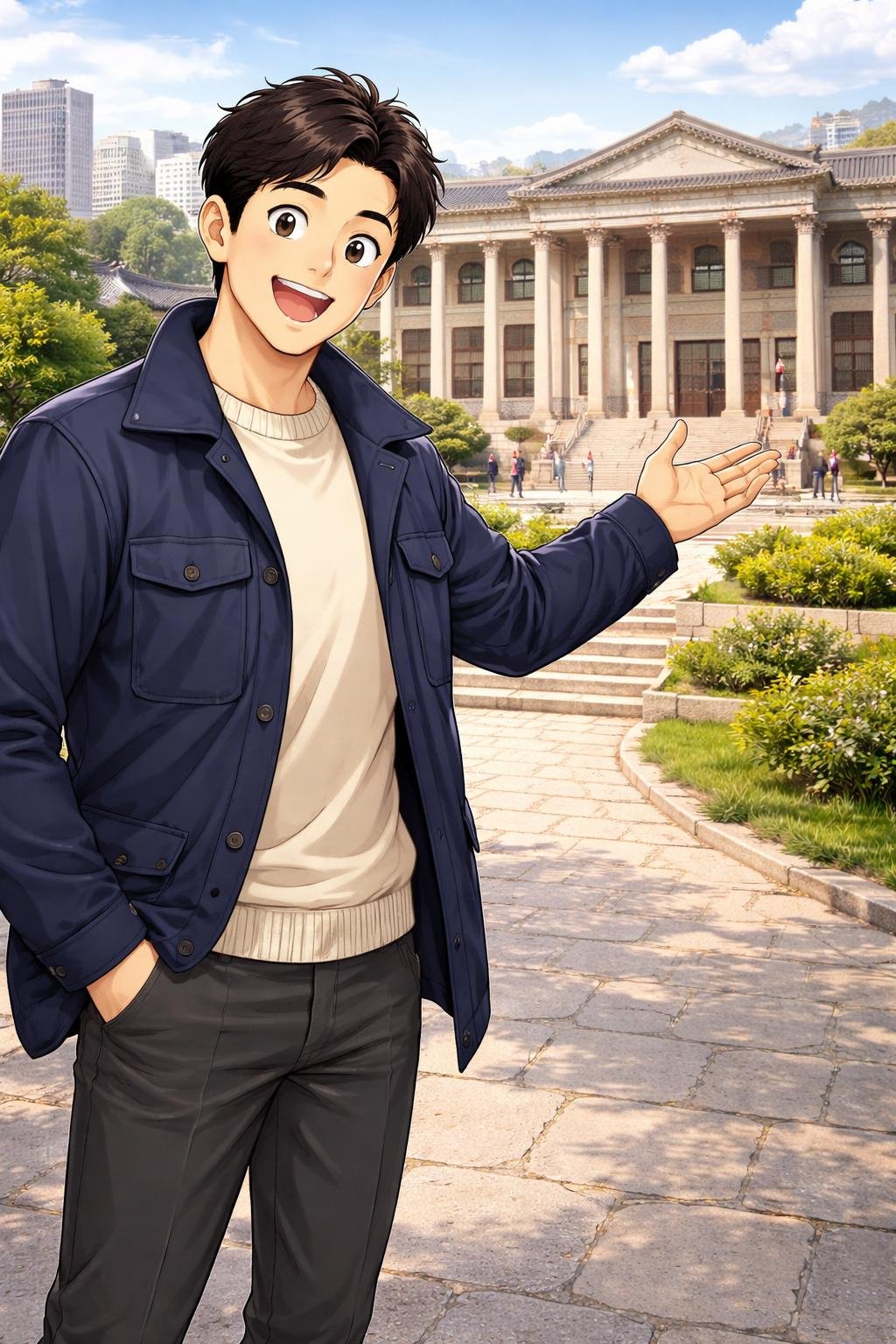
Deoksugung Palace is a former royal palace at 99 Sejong-daero in Seoul’s Jung-gu district. Official tourism sources identify it as a registered Historic Site near City Hall Station.
The surviving palace is smaller than the complex that existed in the past. One of its defining characteristics is the combination of traditional Korean buildings and modern Western-style architecture within the same historic setting.
This contrast is visible in features such as Seokjojeon Hall and Jeonggwanheon, together with the palace’s Korean architectural elements, Western garden, and fountain.
History and Background
The site was originally the residence of Grand Prince Wolsan. After royal residences were damaged and the royal family’s home burned during the Imjin War, it became a temporary royal palace in 1593.
King Gwanghaegun named the palace Gyeongungung in 1611. Emperor Gojong expanded the palace in 1897, a period reflected in the site’s mixture of Korean and Western architectural traditions.
In 1907, the palace was officially renamed Deoksugung, a name meaning “palace of virtuous longevity.” Its present grounds represent only a smaller surviving portion of the former palace complex.
Why Visit
Deoksugung gives visitors an opportunity to explore royal history without viewing Korean palace architecture in isolation. The presence of traditional and Western-style structures helps illustrate a period when Korea’s royal environment was undergoing significant change.
Daehanmun Gate provides a prominent entry feature, while Seokjojeon Hall, Jeonggwanheon, the Western garden, and the fountain offer different subjects for architectural and historical observation.
The adjacent stone-wall road can also be included in the outing. It extends the experience beyond individual buildings by placing the palace boundary within central Seoul’s present-day urban landscape.
Royal Buildings and Main Attractions
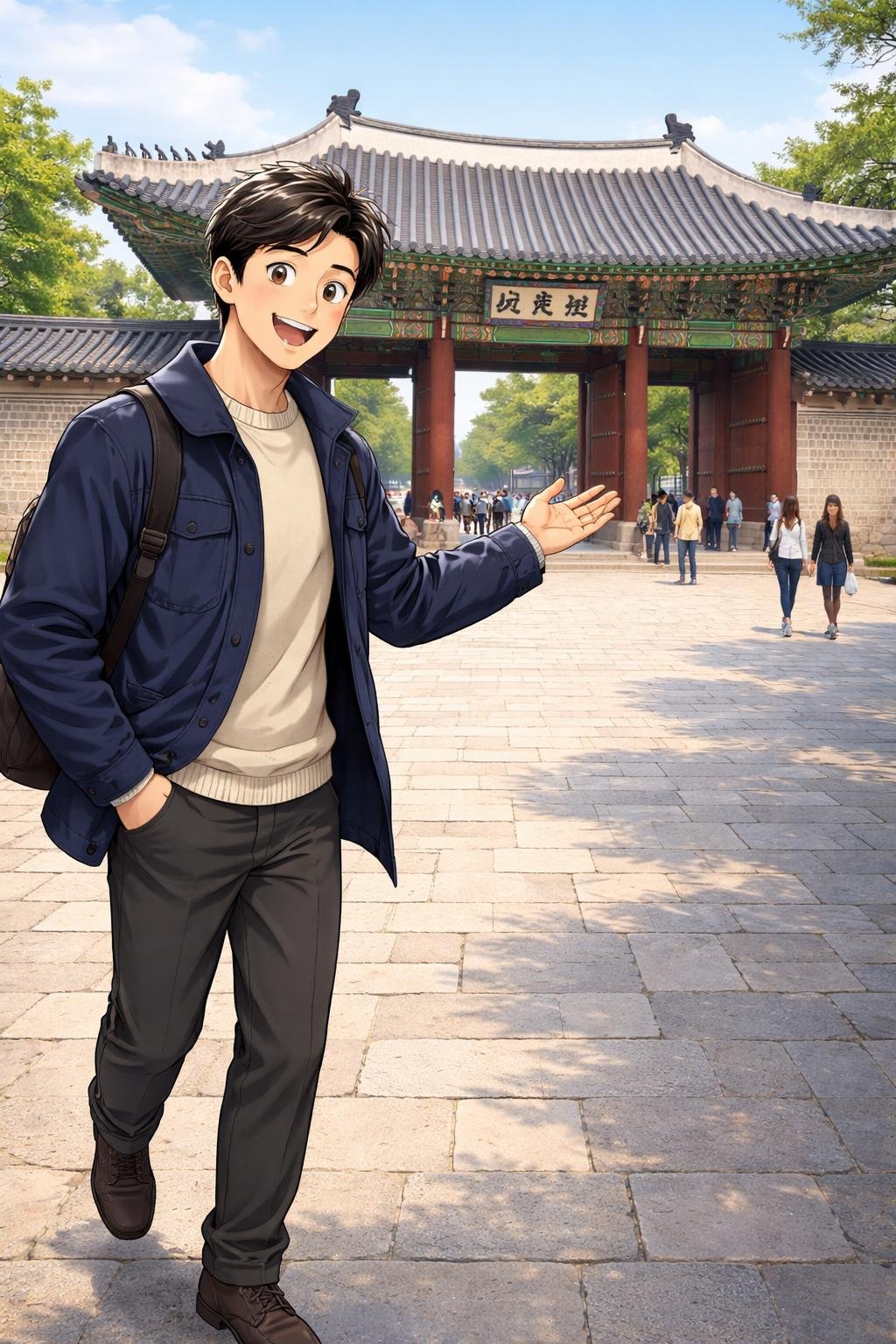
Daehanmun Gate
Daehanmun Gate is associated with the palace entrance and the Changing of the Royal Guard. Because the ceremony is an event rather than a continuously available attraction, visitors should confirm its current schedule and any weather-related or operational changes.
Seokjojeon Hall
Seokjojeon Hall is one of the palace’s principal Western-style architectural features. It is an important study point for understanding why Deoksugung differs visually from a palace setting composed only of traditional Korean buildings.
Jeonggwanheon
Jeonggwanheon is another named feature connected to the palace’s modern Western-style architectural character. Together with Seokjojeon, it contributes to the contrast between architectural traditions within the grounds.
Western Garden and Fountain
The Western garden and fountain form part of the landscaped palace environment. They help visitors recognize that the architectural transition represented at Deoksugung also affected the arrangement and visual character of its grounds.
Changing of the Royal Guard
The Changing of the Royal Guard offers an educational cultural presentation at Daehanmun Gate. Its availability should never be assumed, so visitors interested in seeing it need to check the current official schedule before traveling.
Deoksugung Stone Wall Road
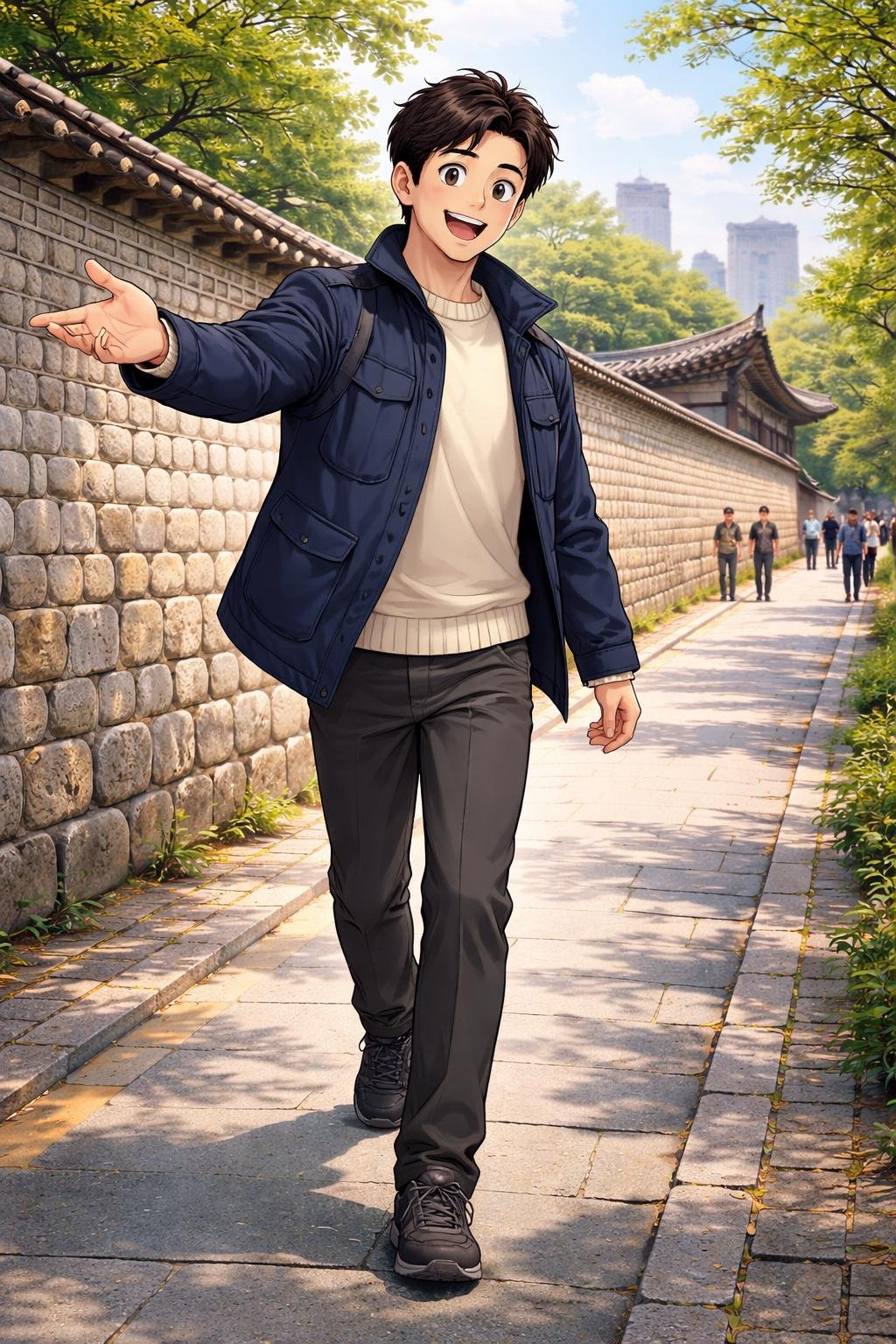
The stone-wall road runs beside the palace boundary and is commonly included as part of a Deoksugung visit. It allows visitors to experience the exterior relationship between the palace wall and the surrounding City Hall area.
The road can be added before or after entering the palace, depending on current access conditions and personal plans. Route length, walking time, facilities, and temporary restrictions should be checked separately rather than assumed.
Best Time to Visit
The most suitable time depends on the weather, preferred walking conditions, and whether a visitor wants to attend a scheduled event. Checking the forecast is useful because much of the experience involves moving between buildings and viewing outdoor grounds.
Visitors interested in architectural details may prefer enough daylight to compare buildings and landscaped features clearly. Those planning around the royal guard ceremony should prioritize the confirmed event schedule rather than relying on a general time-of-day recommendation.
Official tourism listings supplied for this guide state general hours of 09:00 to 21:00, with last entry at 20:00, and identify Monday as the regular closure day. These operational details can change, including around national holidays, so confirm current hours, last entry, closures, and event schedules before visiting.
How Long to Spend
Approximate planning estimate: A basic visit focused on the principal buildings and grounds may take about 45 to 60 minutes. This is not an official duration or a guaranteed completion time.
A more leisurely visit may take roughly 90 minutes to two hours when time is included for comparing architectural styles, examining the grounds, and walking along part of the adjacent stone-wall road.
Actual duration depends on walking pace, event attendance, access to particular areas, weather, crowd conditions, and personal interest.
Getting There
Deoksugung Palace is at 99 Sejong-daero, Jung-gu, Seoul. Official tourism information describes it as being near City Hall Station.
Check a current official Seoul transport source or journey planner before departure. Station exits, service conditions, fares, transfer arrangements, and journey times are not provided here because they may vary by starting point and can change.
First-Time Visitor Tips
- Check the current opening hours and last-entry time on the day of the visit.
- Confirm the regular Monday closure and any holiday-adjusted closure arrangement. A supplied VISITKOREA listing notes that when Monday is a national holiday, closure may move to the following business day.
- Verify the current admission charge rather than relying on older travel content. The supplied official tourism listings state an individual admission fee of 1,000 won, but prices can change.
- Check the royal guard ceremony schedule separately because event times, cancellations, and participation conditions may vary.
- Review the weather forecast and prepare comfortable footwear for walking through the grounds and along the stone-wall road.
- Follow posted instructions and behave respectfully around historic buildings, ceremonies, restricted areas, and other visitors.
- Confirm current photography and filming rules, especially for interiors, exhibitions, events, and restricted spaces.
- Ask the palace or consult current official information about step-free routes, accessible facilities, assistance, and temporary access conditions rather than assuming availability.
- Official tourism information states that parking is unavailable at the palace. Check current transport information before choosing how to arrive, without assuming that nearby parking will be available.
K-Culture Connection
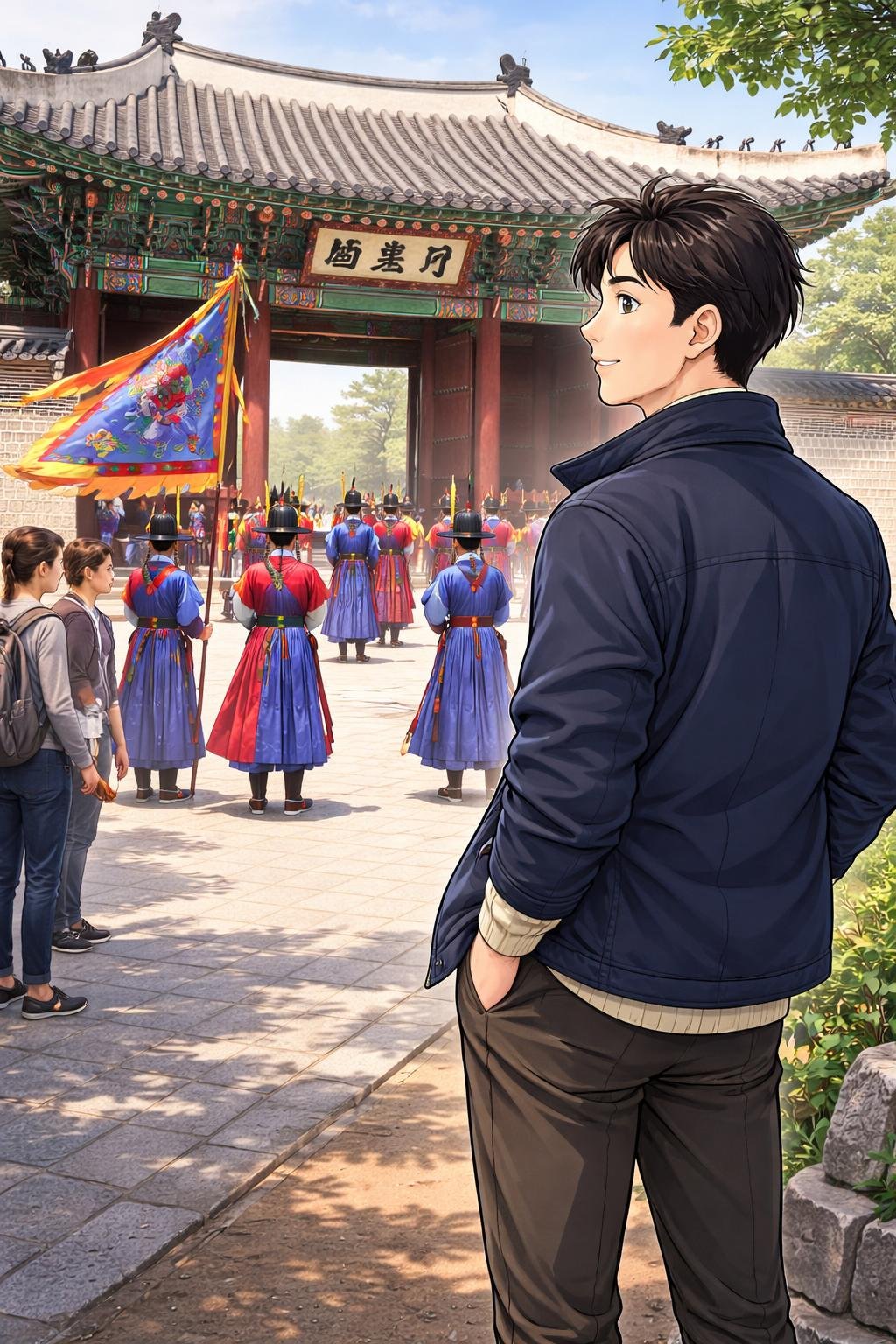
Deoksugung connects several parts of Korean history within one place. Its development from a residence into a temporary royal palace, its expansion under Emperor Gojong, and its later renaming reflect changes in the royal institution across different periods.
The combination of traditional Korean and modern Western-style architecture offers a visible way to discuss transition. It shows that Korea’s royal landscape was not architecturally static, while the palace’s position in central Seoul places that history within the contemporary city.
The Changing of the Royal Guard can support learning about royal symbols, ceremonial presentation, and public interpretation of history. It should be understood as a present-day cultural reenactment or educational presentation, not automatically treated as an unchanged continuation of a historical ceremony.
K-Nana Places Guide
Fictional educational example: Dad begins by confirming the current opening information, admission charge, closure arrangements, and guard ceremony schedule. This example demonstrates a sensible planning method; it does not describe a firsthand visit.
Fictional educational example: Inside the study scenario, Dad compares traditional Korean palace features with Seokjojeon Hall, Jeonggwanheon, the Western garden, and the fountain. He treats each as a learning subject rather than assuming that every building or interior will be accessible.
Fictional educational example: Dad finishes by considering the stone-wall road as an optional extension to the palace grounds. Before setting a route, he checks weather, walking conditions, and current access information instead of relying on an unverified travel time.
Frequently Asked Questions
Where is Deoksugung Palace?
It is at 99 Sejong-daero, Jung-gu, Seoul, near City Hall Station.
What makes its architecture distinctive?
The palace combines traditional Korean and modern Western-style architecture. Named features associated with this contrast include Seokjojeon Hall, Jeonggwanheon, the Western garden, and the fountain.
Is the stone-wall road inside the palace?
The stone-wall road is adjacent to the palace and follows its boundary as part of the surrounding visitor experience. Current access conditions should be checked when planning a walk.
How much time should I allow?
As a non-official estimate, allow around 45 to 60 minutes for a basic visit or roughly 90 minutes to two hours for a slower outing that includes architectural study, the grounds, and the stone-wall road.
What are the opening hours?
The supplied official tourism listings state general hours of 09:00 to 21:00, with last entry at 20:00. Confirm these times with a current official source because operating information can change.
Is Deoksugung closed on Mondays?
The supplied official tourism information identifies Monday as the regular closure day. One VISITKOREA listing states that closure may move to the following business day when Monday is a national holiday, so verify the applicable date before visiting.
Is there an admission fee?
The supplied official tourism listings state an individual admission charge of 1,000 won. Confirm the current fee, eligibility rules, and ticket conditions before visiting.
Is parking available at the palace?
VISITKOREA states that parking is unavailable. Visitors should use current transport information to plan their arrival and should not assume that alternative parking will be available nearby.
Can I see the Changing of the Royal Guard?
The ceremony is identified as a visitor attraction at Daehanmun Gate, but its current schedule and operating status must be confirmed. Weather, special events, or operational decisions may affect availability.
Official Information
Before traveling, verify opening hours, last entry, Monday and holiday-adjusted closures, admission fees, ticket conditions, and the current royal guard ceremony schedule through the palace or an official tourism source.
Visitors should also confirm whether reservations apply to any particular interior, exhibition, program, or event. Do not assume that general palace admission provides access to every building or activity.
Current official information should be used for accessibility arrangements, photography and filming rules, payment methods, participation requirements, restricted areas, temporary closures, weather-related changes, and other venue policies.
References
- Deoksugung Palace (덕수궁)- VISITKOREA — https://english.visitkorea.or.kr/svc/whereToGo/locIntrdn/rgnContentsView.do?menuSn=351&vcontsId=110650
- Deoksugung Palace (덕수궁)- VISITKOREA — https://english.visitkorea.or.kr/svc/contents/contentsView.do?vcontsId=110650
- Deoksugung Palace | The Official Travel Guide to Seoul — https://english.visitseoul.net/City-Hall-Area/Deoksugung-Palace/ENP002046
Final Takeaway
Deoksugung Palace is a centrally located Historic Site that combines royal history with traditional Korean and modern Western-style architecture. Daehanmun Gate, Seokjojeon Hall, Jeonggwanheon, the landscaped features, and the adjacent stone-wall road provide several ways to study the palace and its changing historical context.
Plan enough time for the grounds and any stone-wall road walk, but confirm current hours, closures, admission, event schedules, accessibility, and access conditions before traveling.
Image Credits
Images in this article are K-Nana Studio original educational illustrations. They are provided for visual guidance and may be AI-generated. They are not documentary photographs or official service materials.
- An educational illustration featuring Dad orienting readers to Deoksugung’s location in central Seoul and its relationship to the City Hall area.
- An educational illustration featuring Dad comparing traditional Korean palace architecture with the site’s modern Western-style architecture.
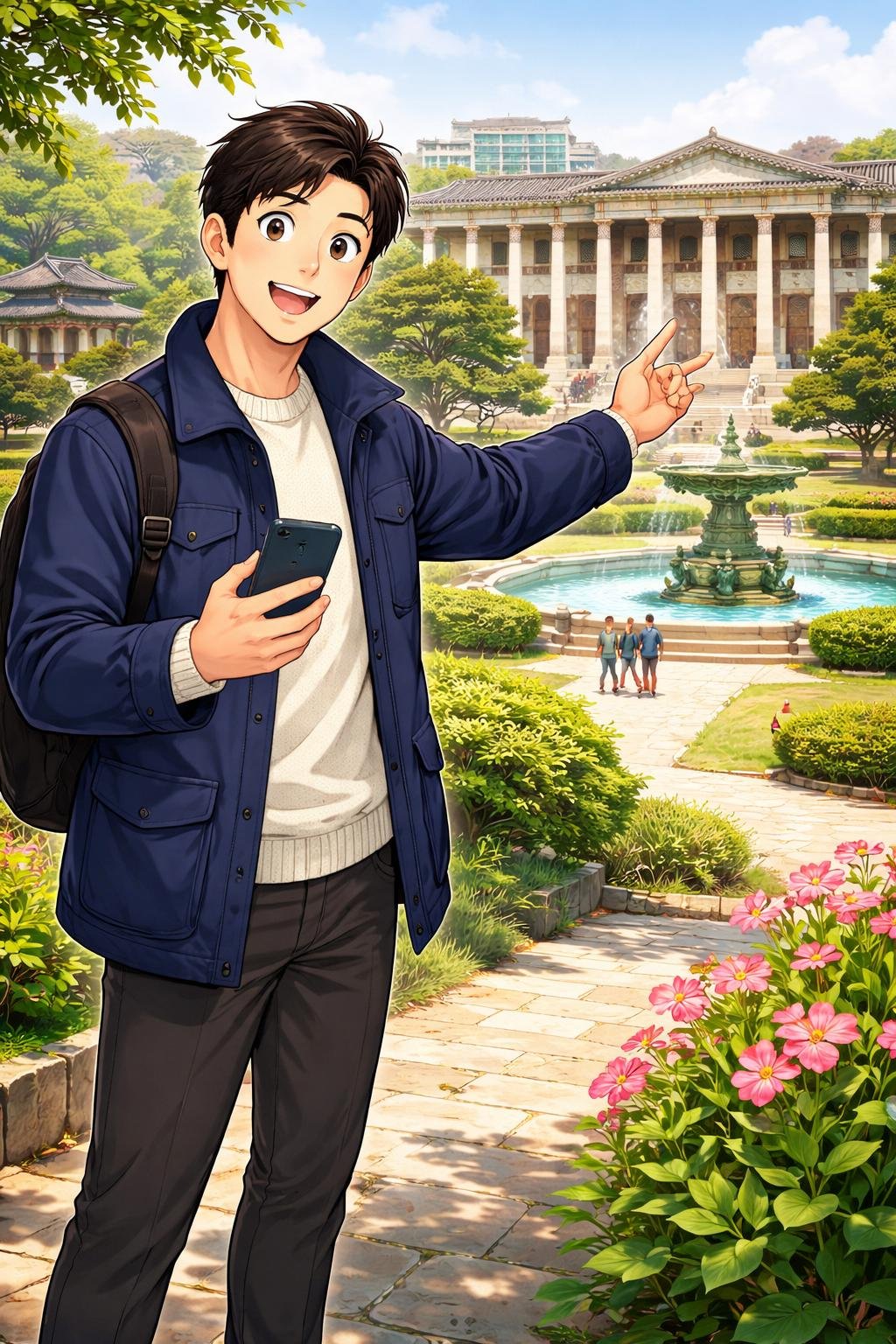
- An educational illustration featuring Dad identifying Seokjojeon Hall, Jeonggwanheon, and the Western garden as distinct subjects for architectural and historical study.
- An educational illustration featuring Dad explaining Daehanmun Gate and the royal guard ceremony as a cultural experience whose current schedule must be verified.
- An educational illustration featuring Dad using the adjacent stone-wall road to explain practical visit planning, including walking preparation and checks for current conditions.
Disclaimer
This guide provides general travel, cultural, and educational information. Although it is based on the supplied official tourism sources, opening hours, admission fees, closure days, reservations, payment methods, participation requirements, accessibility, photography rules, access conditions, event schedules, safety conditions, and venue policies may change. Confirm material details with the relevant official source or venue before visiting or purchasing tickets and services.
Follow current signs, staff instructions, safety notices, restricted-area rules, and applicable photography or copyright requirements. References to buildings, events, and visitor arrangements do not guarantee that every area, service, or activity will be available.
Dad appears only in fictional educational scenes and does not represent a documented visit, official guide, or real visitor experience. Illustrations may be AI-generated visual aids and may not exactly represent the real palace, buildings, facilities, events, access conditions, or visitor environment. Names, trademarks, official materials, and copyrighted content remain the property of their respective rights holders.