
Introduction to Suwon Hwaseong Fortress
This Suwon Hwaseong Fortress guide introduces a major Joseon-era heritage site in Suwon, Korea. The fortress walls extend for approximately 5.7 kilometers around Paldalsan Mountain, connecting historic gates and other fortress landmarks with the surrounding city.
Constructed from 1794 to 1796 under King Jeongjo, the fortress reflects Korean history, architecture, defense, and urban planning. It was designated a UNESCO World Cultural Heritage Site on December 12, 1997.
For international visitors, the site offers a flexible introduction to Korean heritage. A visit can focus on a few principal landmarks or include a broader walk along the fortress walls.
Quick Guide

| Topic | Visitor guidance |
|---|---|
| Location | Suwon, Korea, with the fortress walls extending around Paldalsan Mountain. |
| Wall length | Approximately 5.7 kilometers. |
| Main highlights | Fortress walls, major gates, historic points, elevated perspectives, cultural interpretation, and related visitor activities. |
| Visit scope | Choose a short highlights-focused outing or explore a larger portion of the walls. |
| General access | Official visitor sources describe the open fortress site as accessible year-round, without closing days, and with free admission. |
| Essential checks | Confirm current performances, festivals, paid activities, temporary access conditions, and interpretation services before visiting. |
Free access to the open fortress does not mean that every related attraction or activity is free, so check separate conditions for optional experiences.
What Is Suwon Hwaseong Fortress?
Suwon Hwaseong is a walled Joseon-era heritage site in Suwon. Its approximately 5.7-kilometer wall follows the setting around Paldalsan Mountain and links multiple gates and historic points.
The fortress is recognized as a representative heritage site of Suwon and as a UNESCO World Cultural Heritage property. It combines the identity of a historic defensive structure with that of a contemporary walking and cultural tourism destination.
Because the site covers a broad area rather than a single enclosed building, visitors can approach it from different points and adjust their route to match their available time and interests.
History and UNESCO Heritage
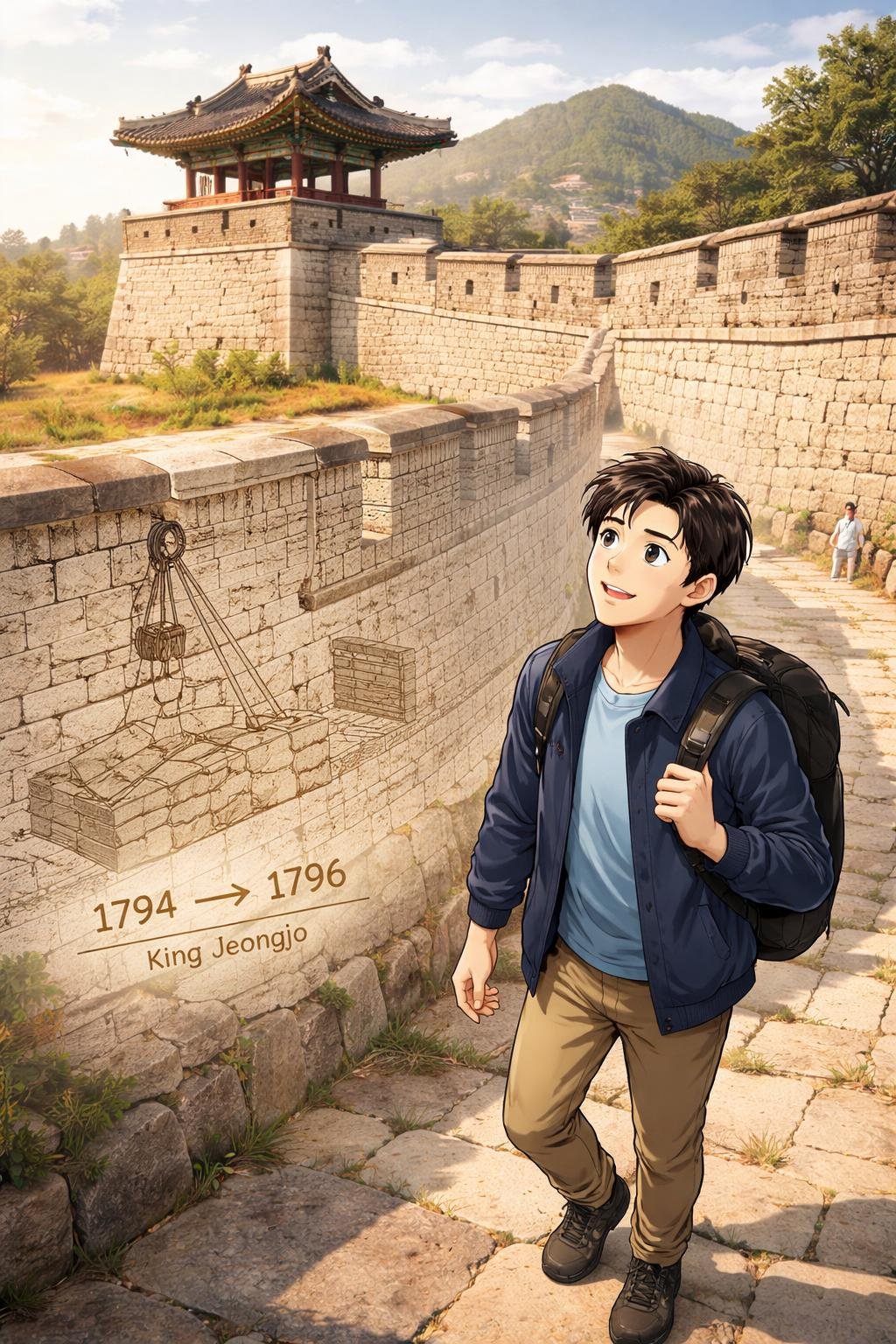
Suwon was one of four principal regional government centers during the Joseon dynasty. Hwaseong Fortress was constructed from 1794 to 1796 during the reign of King Jeongjo.
The stated purposes behind the project included protecting the city, expressing King Jeongjo’s filial piety toward his father, and establishing an economically independent pioneer city. These aims connect the fortress to royal history as well as to wider ambitions for Suwon’s development.
Suwon Hwaseong Fortress was designated a UNESCO World Cultural Heritage Site on December 12, 1997. Its heritage status makes it important not only as a local landmark but also as a place for understanding Joseon history and Korean architectural heritage.
Why Visit
The main appeal of Suwon Hwaseong lies in the combination of history, architecture, outdoor walking, and views toward both the terrain and the modern city. Following part of the wall allows visitors to experience the fortress as a connected site rather than as a collection of isolated monuments.
Major gates and interpretation points help beginners identify important parts of the complex. Audio guides and tourist information offices can provide additional context, subject to current availability.
The open layout also permits nighttime visits according to official visitor information. Evening conditions are different from daytime conditions, however, so visitors should check temporary access notices and use appropriate caution.
Traditional cultural programming adds another dimension to the site. Performances and the fall Suwon Hwaseong Cultural Festival are associated with the fortress, but their dates and programs can change.
Gates and Main Attractions
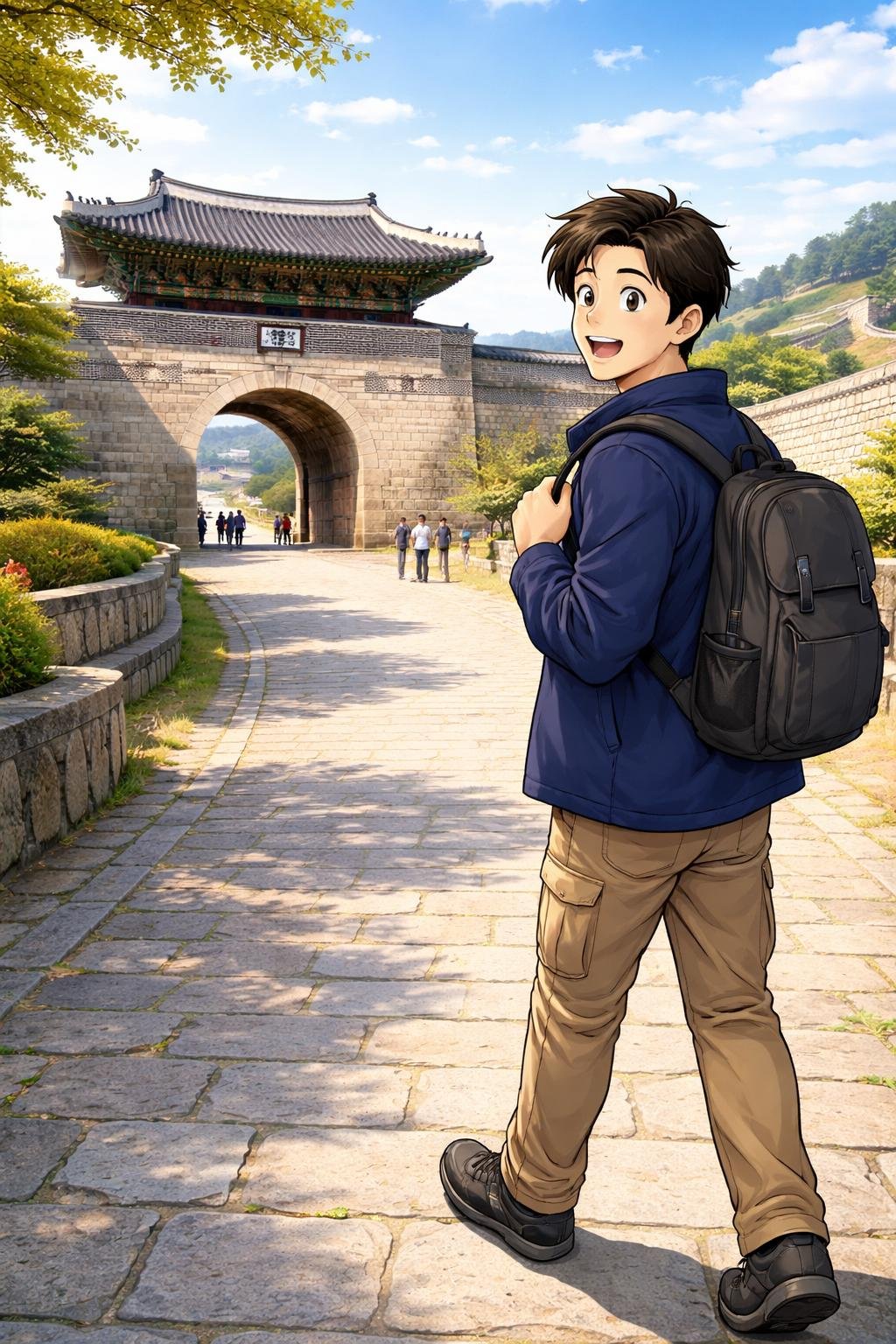
Paldalmun and Janganmun
Paldalmun and Janganmun are major fortress points and useful names to recognize when planning a visit. Official information identifies tourist information services at these locations, although current office hours and available services should be confirmed.
Yeonmudae and Hwahongmun
Yeonmudae and Hwahongmun are also identified as important visitor orientation and interpretation points. Tourist information facilities are listed at both locations, while paid traditional archery is among the activities associated with Yeonmudae.
Seojangdae
Seojangdae is another major fortress point with visitor interpretation services identified by the Suwon Cultural Foundation. It can serve as an orientation marker for visitors exploring the Paldalsan section of the fortress.
The walls and Paldalsan setting
The approximately 5.7-kilometer walls form the central visitor experience. Walking selected sections reveals how the fortress relates to Paldalsan Mountain and provides changing elevated and city-facing perspectives.
Interpretation and optional activities
Official visitor information lists audio guides covering Suwon Hwaseong Fortress and Hwaseong Haenggung. It also identifies the Hwaseong tourist train and traditional archery as paid activities.
Flying Suwon offers a view over Suwon Hwaseong according to the Suwon tourism portal. Operating schedules, prices, participation conditions, and weather-related availability for this and other optional activities require current confirmation.
Walking Routes and Route Planning
The fortress’s approximately 5.7-kilometer extent makes route selection important. Visitors do not have to treat the entire wall as a single required circuit.
Short highlights-focused outing
A shorter plan can concentrate on one or two principal gates, a nearby wall section, and an information point. Paldalmun, Janganmun, Yeonmudae, Hwahongmun, and Seojangdae are useful names for orientation, but the best starting point depends on current access and personal priorities.
Broader wall exploration
A broader plan can include a larger portion of the walls and several historic points. Visitors considering this approach should account for the site’s outdoor setting, changes in elevation, rest needs, weather, and the possibility of temporary restrictions.
Using information points
Tourist information or interpretation facilities are identified at major locations including Paldalmun, Janganmun, Yeonmudae, Hwahongmun, and Seojangdae. Visitors can use these points to request current orientation information, but office hours and language availability should not be assumed.
No single route is suitable for every visitor, and current conditions should guide the final choice of walking scope.
Best Time to Visit
Official visitor sources describe the open fortress as accessible throughout the year and without regular closing days. Its open layout also permits nighttime visits.
The best season depends on personal preferences for temperature, daylight, and outdoor walking. Weather can affect comfort and activity operations, so check the forecast and prepare for current conditions.
The Suwon Hwaseong Cultural Festival is associated with the fall season and combines history, performances, and traditional cultural experiences. Exact festival dates, event locations, performance programs, and participation arrangements are time-sensitive and should be verified through current official information.
Night visits can offer a different perspective, but lighting, weather, temporary restrictions, and individual walking conditions should be checked rather than assumed.
How Long to Spend
Visit length depends on how much of the fortress a visitor chooses to explore. The following are planning examples rather than verified route times or guarantees.
- Short outing: Focus on a principal gate, a nearby section of wall, and one interpretation point.
- Extended visit: Walk a larger wall section and include several gates or historic points.
- Broader heritage day: Combine substantial fortress exploration with interpretation at Hwaseong Haenggung or an optional activity.
Walking pace, elevation, weather, rest stops, temporary access conditions, and activity schedules can all change the amount of time required.
Getting There
Suwon Hwaseong Fortress is in Suwon and has multiple possible approach points around its walls. The most useful arrival point depends on the gate, wall section, information center, or activity included in the visit.
Because transport routes, stops, fares, and journey times can change, consult current official Suwon tourism and relevant transport information before departure. Search using the name of the intended starting point, such as Paldalmun, Janganmun, Yeonmudae, Hwahongmun, or Seojangdae, rather than relying only on the general fortress name.
Visitors should also confirm how they will leave the site if their walk ends at a different point from where it began.
First-Time Visitor Tips

- Choose a scope in advance: Decide whether the priority is a few landmarks or a broader wall walk.
- Wear suitable footwear: The visit can involve an extended outdoor walk and changes in elevation.
- Prepare for weather: Check current conditions and carry appropriate protection for heat, cold, rain, or strong sun.
- Use information centers: Major fortress points have listed visitor information or interpretation facilities, but current office hours and services should be checked.
- Take care at night: Nighttime access is possible, but visitors should remain attentive to lighting, surfaces, weather, and temporary restrictions.
- Respect the heritage site: Follow posted instructions and avoid touching, climbing on, or interfering with protected structures unless an area is clearly designated for visitor use.
- Verify optional activities: Tourist train services, traditional archery, audio guides, performances, and other programs may follow separate schedules and conditions.
- Check individual access needs: Do not assume that all wall sections, facilities, or activities have the same accessibility conditions.
Current on-site signs and official instructions should take priority over general planning advice.
What to Do Nearby
Hwaseong Haenggung interpretation
Official visitor information states that audio-guide coverage includes both the fortress and Hwaseong Haenggung. Visitors interested in additional historical interpretation can consider combining these subjects, while confirming current entry and operating arrangements separately.
Hwaseong tourist train
The Hwaseong tourist train is a paid visitor activity associated with the fortress area. Its current route, timetable, ticket price, boarding arrangements, and service status require official confirmation.
Traditional archery
Traditional archery is listed as a paid activity. Visitors should verify its operating schedule, price, participation requirements, age conditions, and weather-related availability before relying on it as part of an itinerary.
Flying Suwon
The Suwon tourism portal describes Flying Suwon as an experience offering a view over Suwon Hwaseong. Current prices, hours, reservations, participation rules, and operating conditions should be checked with the relevant official source.
These experiences complement a fortress visit, but their proximity, availability, and required travel time should not be assumed without current planning information.
K-Culture Connection
Suwon Hwaseong connects visitors with the political and cultural setting of the Joseon dynasty. Its construction under King Jeongjo reflects royal authority, city protection, and wider ambitions for Suwon.
Filial piety is central to the fortress’s historical explanation because one stated purpose of its construction was to demonstrate King Jeongjo’s devotion to his father. This places the site within a broader Korean historical context in which family duty and royal legitimacy could carry public significance.
The goal of creating an economically independent pioneer city also shows that the project was associated with urban development, not only defense. The walls, gates, and relationship with Paldalsan therefore support discussions of Korean architectural heritage and historical city planning.
Today, cultural interpretation, performances, the Suwon Hwaseong Cultural Festival, and related traditional experiences connect this history with Suwon’s modern heritage tourism identity.
K-Nana Places Guide
Fictional educational example: Dad is planning a first visit and decides that seeing every section of the approximately 5.7-kilometer wall is not essential. He chooses a smaller group of major points so that the walking scope matches the time and energy available.
Fictional educational example: Dad notes the names Paldalmun, Janganmun, Yeonmudae, Hwahongmun, and Seojangdae before choosing a starting point. He treats them as orientation and information locations, not as a guarantee that every office will be open or provide a particular language service.
Fictional educational example: Dad is interested in an audio guide, traditional archery, and the tourist train. He checks current official details before building them into the visit because schedules, prices, participation conditions, and availability can change.
These scenes are planning illustrations only and do not describe a real visit, personal review, or verified current access condition.
Frequently Asked Questions
Is Suwon Hwaseong Fortress a UNESCO site?
Yes. It was designated a UNESCO World Cultural Heritage Site on December 12, 1997.
Is the fortress open year-round?
The supplied official visitor sources describe the open fortress site as accessible year-round and without closing days. Temporary restrictions can still occur, so check current notices.
Is admission free?
Official visitor information states that admission to the open fortress is free. Separate attractions, activities, or services may charge fees.
Can I visit at night?
Yes. Official sources state that nighttime visits are possible because the fortress is an open site. Visitors should still check current access conditions and use appropriate caution.
How long are the fortress walls?
The walls extend for approximately 5.7 kilometers around Paldalsan Mountain.
Do I have to walk the entire circuit?
No. Visitors can choose a shorter highlights-focused visit or explore a broader portion of the walls according to their interests and circumstances.
Are audio guides available?
Official visitor information lists audio guides for Suwon Hwaseong Fortress and Hwaseong Haenggung. Current availability, language options, prices, and collection procedures should be confirmed.
Where are tourist information centers located?
Official sources identify visitor information or interpretation facilities at major points including Paldalmun, Janganmun, Yeonmudae, Hwahongmun, and Seojangdae. Current hours and services may vary.
Which activities may require payment?
The Hwaseong tourist train and traditional archery are identified as paid activities. Other related experiences may also have separate charges.
What should I confirm before visiting?
Confirm performances, festival dates, activity schedules, prices, transportation, interpretation services, accessibility, photography rules, weather-related operations, and temporary access conditions through current official information.
Official Information
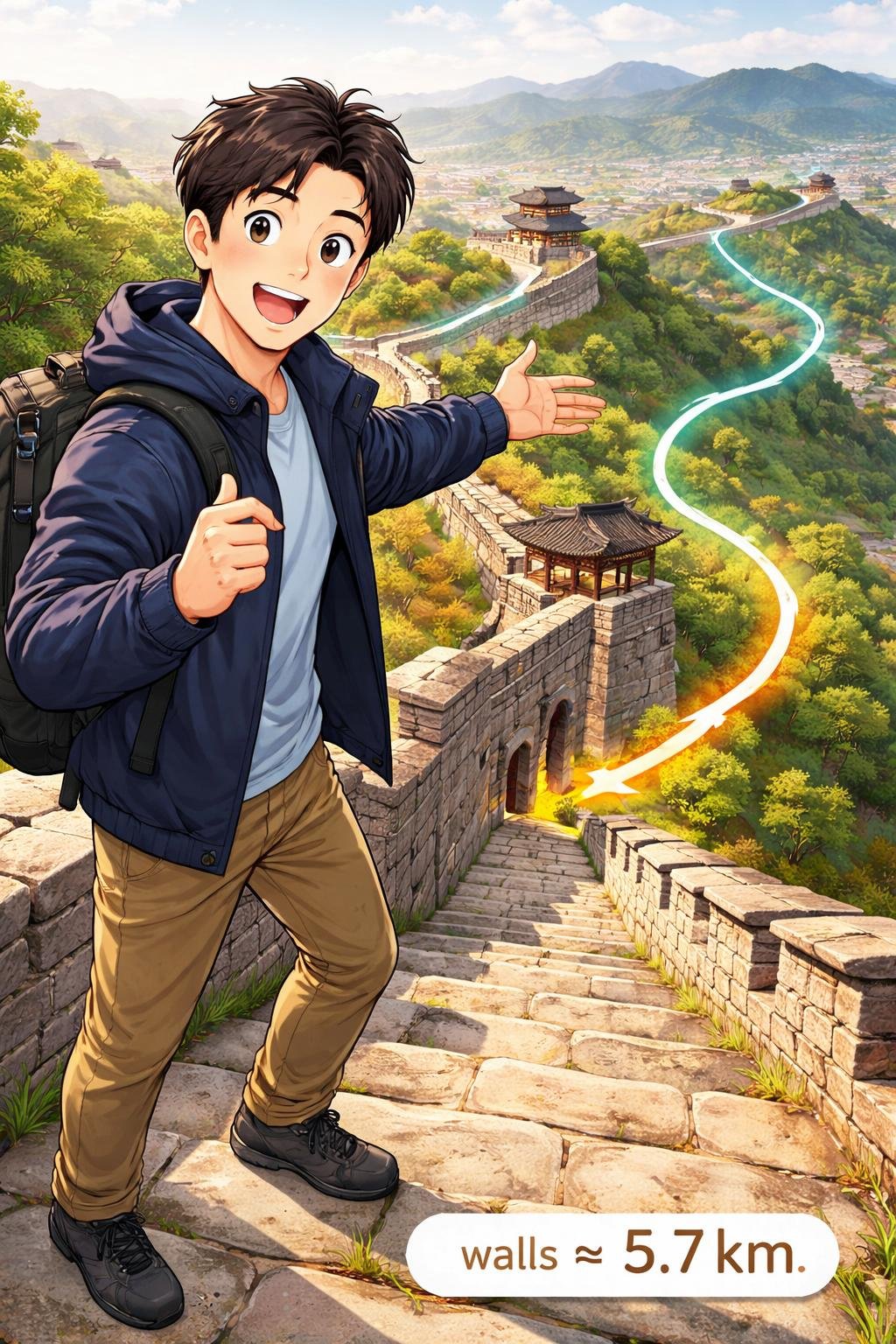
Official sources describe Suwon Hwaseong as an open, year-round site with free general admission and possible nighttime visits. These broad arrangements should still be checked against current notices before travel.
Visitors should use current Suwon tourism, Suwon Cultural Foundation, relevant venue, and official transport information to confirm:
- Opening arrangements and temporary closures or restricted sections.
- Performance programs and Suwon Hwaseong Cultural Festival dates.
- Tourist train, traditional archery, Flying Suwon, and audio-guide schedules.
- Prices, reservations, payment methods, and participation requirements for paid experiences.
- Transport routes, stops, fares, and journey times.
- Accessibility conditions for specific wall sections, facilities, and activities.
- Photography rules, visitor conduct requirements, and venue policies.
- Weather-related changes and current safety notices.
Current official notices and on-site instructions should take priority if they differ from this general guide.
References
- Suwon Hwaseong Fortress [UNESCO World Heritage] (수원 화성 [유네스코 세계유산])- VISITKOREA — https://english.visitkorea.or.kr/svc/contents/contentsView.do?vcontsId=94415
- 수원관광 — https://www.suwon.go.kr/web/visitsuwon/index.do
- 안내 | 이용안내 | 관람안내 | 수원화성관광 — https://www.visitsuwon.or.kr/base/contents/view?contentsNo=11&menuLevel=3&menuNo=19
- 수원화성관광 > 관람안내 > 안내 | 수원문화재단 — https://www.swcf.or.kr/?bxPage=0&p=65
These references provide the destination, historical, and visitor information used in this guide.
Final Takeaway
Suwon Hwaseong Fortress is a substantial Joseon-era UNESCO heritage site built from 1794 to 1796. Its approximately 5.7-kilometer walls, major gates, Paldalsan setting, and connections to King Jeongjo make it an important destination for understanding Korean history and architecture.
The site supports flexible visits, from a small selection of landmarks to a broader wall walk. Official sources describe the open fortress as accessible year-round, free to enter, and available for nighttime visits, while optional activities and cultural programs follow separate arrangements.
Choose a realistic walking scope and confirm current activity schedules, transport details, accessibility, weather conditions, and temporary restrictions before visiting.
Image Credits
- An original K-Nana Studio educational overview illustration explains the approximately 5.7-kilometer fortress walls and their relationship to the Paldalsan setting.
- An original K-Nana Studio historical illustration explains the construction of Suwon Hwaseong under King Jeongjo from 1794 to 1796.
- An original K-Nana Studio orientation illustration uses Dad as the only main character to explain how major gates and fortress landmarks can help visitors organize a visit.
- An original K-Nana Studio route-planning illustration uses Dad as the only main character to compare a short highlights-focused outing with a broader exploration of the walls.
- An original K-Nana Studio visitor-preparation illustration uses Dad as the only main character to explain weather preparation, suitable footwear, nighttime caution, and checking current official information.
Images in this article are K-Nana Studio original educational illustrations. They are provided as visual aids and may be AI-generated. They are not documentary p
Disclaimer
This guide provides general travel, cultural, and educational information based on the cited sources. Prices, opening hours, reservations, payment methods, participation requirements, accessibility, photography rules, access conditions, performances, festival schedules, transportation, and venue policies may vary or change. Confirm important details with the relevant official tourism, cultural foundation, venue, or transport source before visiting or purchasing an activity.
Suwon Hwaseong is an outdoor heritage site, and walking conditions may be affected by terrain, elevation, weather, lighting, maintenance, or temporary restrictions. Follow current signs and staff instructions, respect protected structures and applicable copyright or photography requirements, and make decisions appropriate to your own health, mobility, and safety needs.
Any scenes involving Dad are fictional educational examples rather than firsthand accounts or representations of current visitor conditions. AI-generated illustrations are illustrative visual aids and may not exactly represent the real fortress, facilities, services, activities, or operating conditions.