
Introduction
This Korean sunscreen guide explains how to read SPF, PA, broad-spectrum, and water-resistance labels. It also compares useful sunscreen categories, shows how to choose protection for different situations, and explains correct application and reapplication.
Sunscreen labels communicate different aspects of protection. Reading several label elements together is more reliable than choosing a product by its packaging, texture description, or marketing language alone.
Quick Guide
- SPF: Indicates the level of protection associated with UVB, the ultraviolet radiation linked to skin reddening.
- PA: Indicates a level of UVA protection under the Korean labeling system, ranging from PA+ to PA++++.
- Broad spectrum: Means the product is labeled to protect against both UVA and UVB radiation.
- Water resistance: Provides protection for a stated, limited period during swimming or sweating; it does not mean waterproof.
- Application: Sunscreen must be applied generously to all exposed skin and reapplied, especially after swimming or sweating.
What Korean Sunscreen Labels Mean
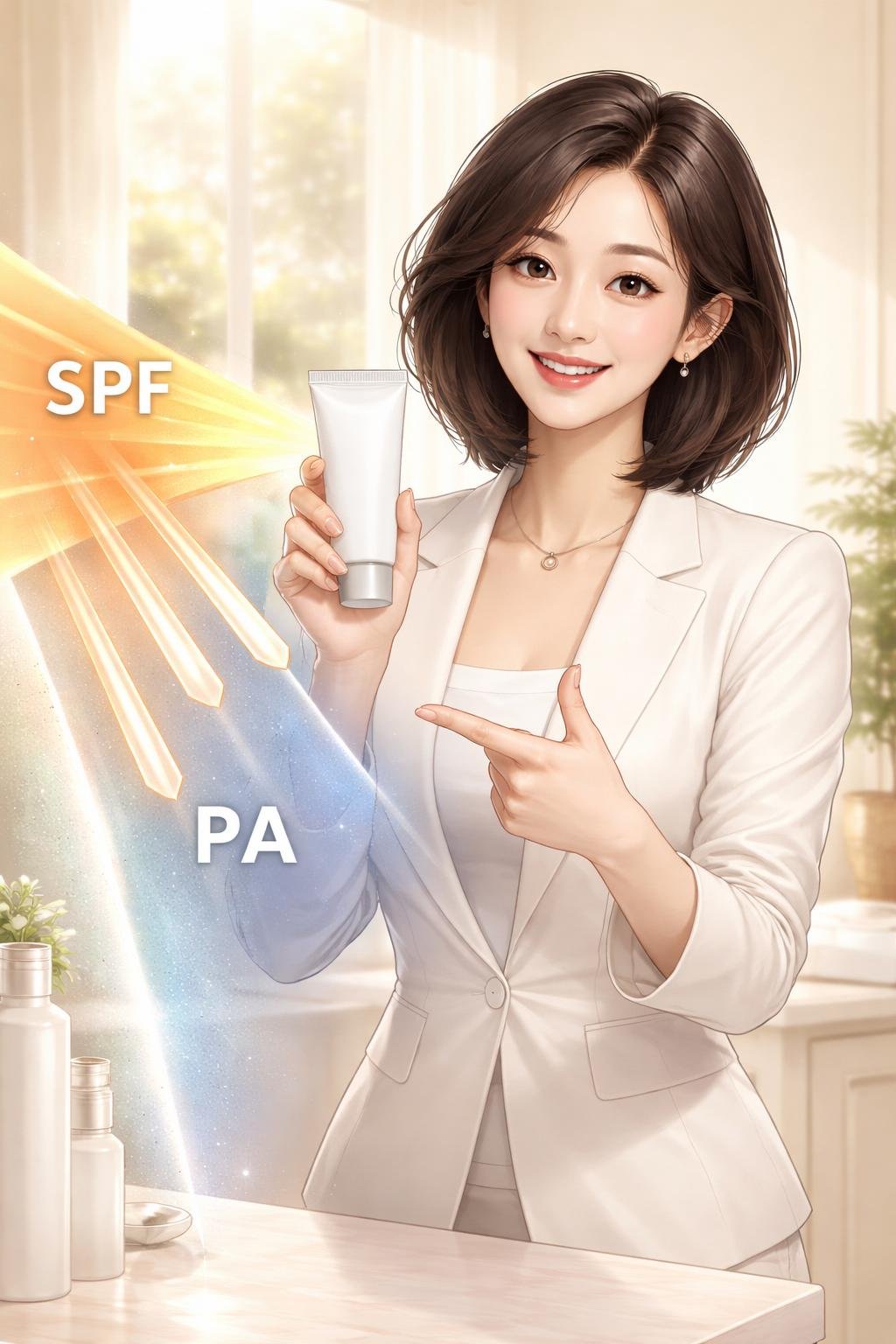
Sunscreen is a cosmetic product intended to help protect skin from ultraviolet radiation. UVA and UVB are both forms of ultraviolet radiation, but sunscreen labels describe their protection in different ways.
SPF and UVB
SPF relates primarily to UVB protection. The Korean Ministry of Food and Drug Safety describes SPF as indicating protection against UVB associated with skin reddening. A higher SPF number indicates a higher measured level of UVB protection, but no sunscreen blocks all ultraviolet radiation.
PA and UVA
PA indicates the level of UVA protection. The Korean PA categories are based on a measured UVA Protection Factor:
| PA label | Verified UVA Protection Factor range |
|---|---|
| PA+ | 2 or higher but below 4 |
| PA++ | 4 or higher but below 8 |
| PA+++ | 8 or higher but below 16 |
| PA++++ | 16 or higher |
More plus signs indicate a higher tested UVA protection category. PA should not be read as a replacement for SPF because the two labels address different portions of ultraviolet protection.
Korean functional-cosmetic classification
Korea classifies cosmetics that protect skin from ultraviolet rays as functional cosmetics. According to the MFDS approval-process information, responsible sellers manufacturing or importing these products must obtain an MFDS evaluation or submit a safety-and-effectiveness report for each product. Relevant evaluation materials include SPF, waterproof SPF, and UVA Protection Factor data.
Sunscreen Types, Formulations, and Label Claims
Broad-spectrum sunscreen
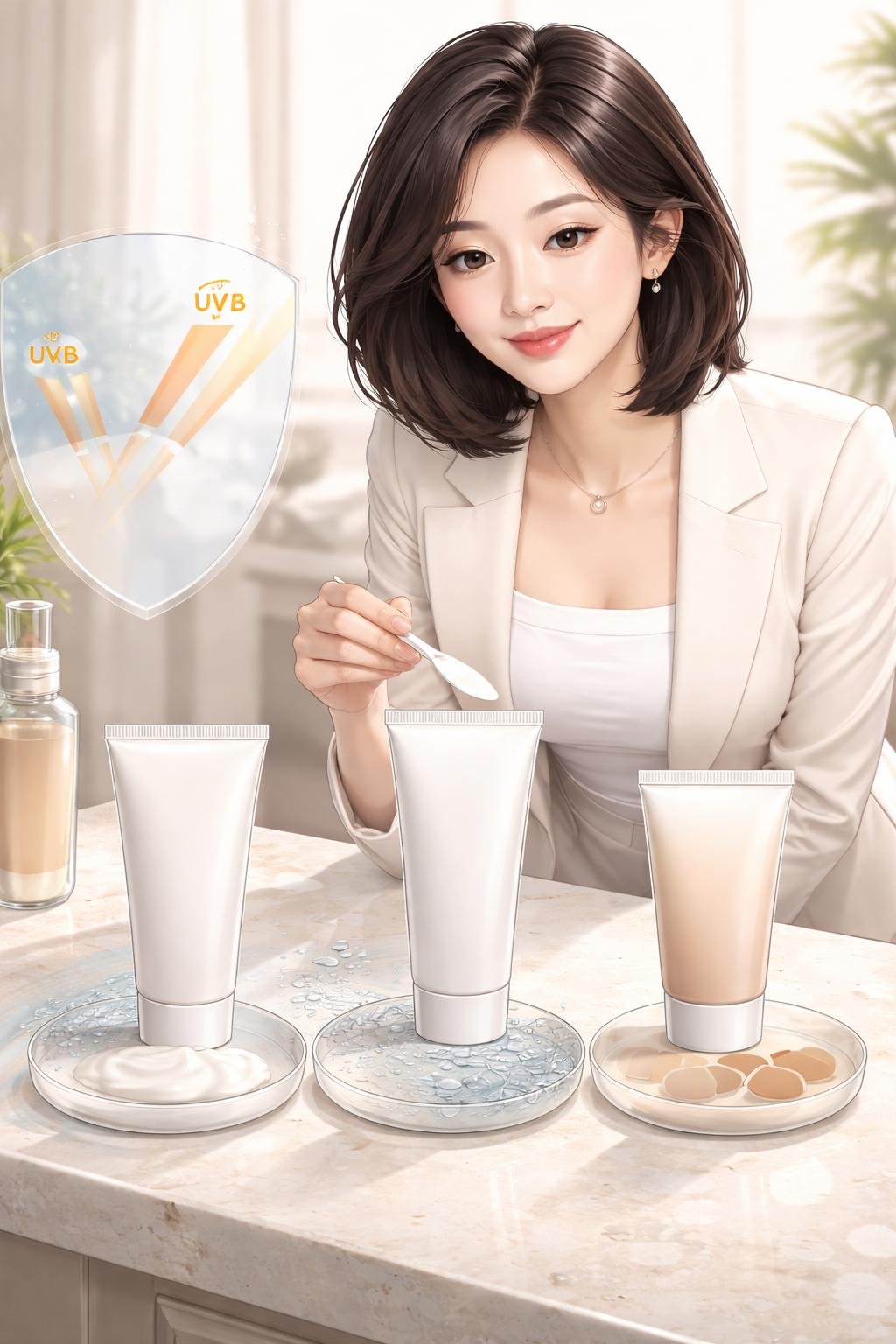
A broad-spectrum claim indicates protection against both UVA and UVB radiation. International shoppers should check which claims actually appear on the package because SPF, PA, and broad-spectrum terminology do not communicate exactly the same information.
Water-resistant sunscreen
Water-resistant sunscreen is intended to maintain labeled protection for a limited time while swimming or sweating. Under FDA labeling guidance, water resistance is identified as either 40 or 80 minutes. Labeling systems can vary by market, so check the time and directions printed on the specific product.
Water resistant does not mean waterproof or sweatproof. Reapplication is still necessary after swimming, sweating, or towel drying and when the stated period has passed.
Tinted sunscreen
Tinted sunscreen may contain pigments such as iron oxide. The American Academy of Dermatology notes that tinted sunscreen containing iron oxide can provide additional protection from visible light, which may be relevant for people concerned about dark spots. This feature does not remove the need to check SPF, UVA protection, and application directions.
Formulations and ingredient lists
Korean sunscreens can come in different textures and formulations, but texture alone does not establish the level of protection. Ingredient lists, tint, fragrance, finish, and other formulation details can differ between products and may change over time.
Check the current package rather than assuming that similarly named products have identical ingredients. A comfortable formulation can support consistent use, but performance claims should be based on the label rather than unsupported assumptions about an individual ingredient.
How to Apply and Reapply Sunscreen

- Apply it at the end of skincare. Use sunscreen after ordinary skincare products and before makeup.
- Allow time before exposure. The American Academy of Dermatology advises applying sunscreen about 15 minutes before going outdoors.
- Use enough product. Its guidance states that most adults need at least one teaspoon for the face and at least one ounce for exposed body skin. Follow the product directions while ensuring an even, generous layer.
- Cover every exposed area. Include the neck, ears, feet, legs, exposed scalp, and other uncovered skin. Use appropriate sun protection on the lips as well.
- Reapply regularly. Reapply at least every two hours outdoors and immediately after swimming or sweating. Follow any more specific directions on the label.
Common mistakes include applying only a thin cosmetic layer, missing the ears or neck, and treating one morning application as all-day protection. Makeup containing SPF also does not solve these problems if too little is applied or exposed areas remain uncovered.
How to Choose a Korean Sunscreen Safely
Match protection to expected exposure
MFDS guidance gives SPF 15 to 30 with PA+ or PA++ as examples for indoor life or brief outdoor activity. For prolonged exposure to strong ultraviolet radiation, such as hiking or going to the beach, it gives SPF 50+ with PA+++ or PA++++ as examples.
These are activity-based examples rather than guarantees for every person or condition. Exposure duration, location, weather, sweating, swimming, clothing, and individual needs can affect a practical choice.
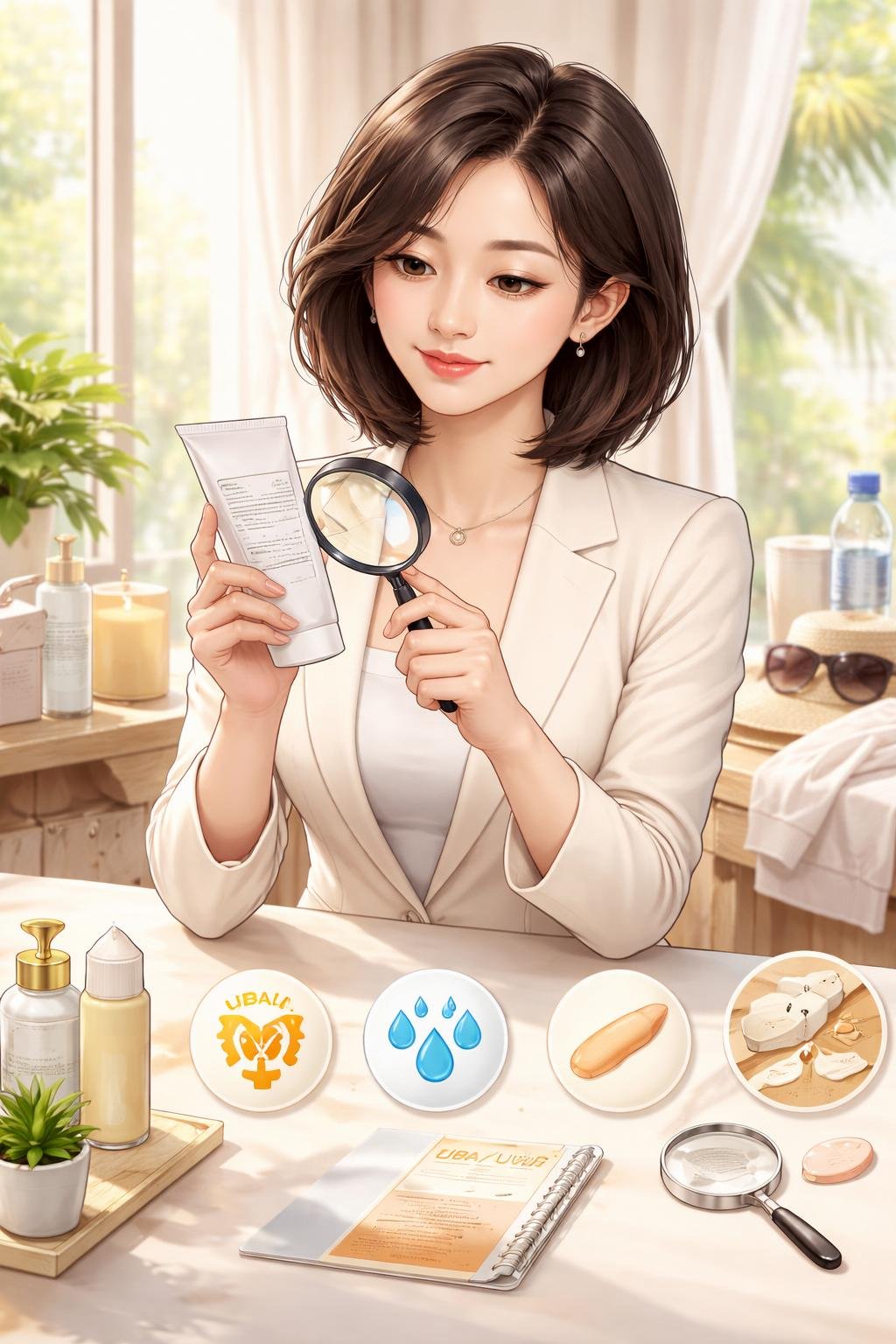
Use a label checklist
- Check the SPF for UVB protection.
- Check the PA rating or another stated measure of UVA protection.
- Look for a broad-spectrum claim when relevant to the market in which the product is sold.
- Choose water resistance when swimming or sweating, and note the stated time limit.
- Consider a tint containing iron oxide when visible-light protection is relevant to your needs.
- Read the full ingredient list and current use instructions.
Consider individual responses
A product that suits one person may irritate another. If you have sensitive skin or a history of reacting to cosmetics, review the ingredient list and consider testing a small area according to appropriate product guidance before broader use. Stop using a product if a concerning reaction occurs and seek professional advice when needed.
Sunscreen does not block all ultraviolet radiation. Combine it with shade, protective clothing, a hat, and sunglasses rather than relying on sunscreen as the only protective measure.
Korean Sunscreen Labels and Beauty Context
The verified Korean context is regulatory as well as cosmetic. UV-protective products are treated as functional cosmetics, and MFDS procedures involve evaluation or reporting supported by data such as SPF and UVA Protection Factor results.
The familiar SPF and PA markings therefore communicate tested protection categories rather than simply describing a beauty finish. However, a Korean-style package, product name, or lightweight texture does not by itself establish the level of UV protection.
International shoppers should read the actual label, confirm that it applies to the exact product and market version, and check current manufacturer information. Marketing terms such as daily, mild, watery, or outdoor do not replace SPF, PA, broad-spectrum, or water-resistance information.
K-Nana Beauty Guide
The following examples feature Mina, a fictional female K-Nana beauty guide. They illustrate a decision process and do not describe personal test results, reviews, or product endorsements.
Illustrative routine-day comparison
Mina expects to spend most of the day indoors with a brief period outside. She compares the SPF and PA labels rather than choosing by packaging. Using the MFDS activity examples as a starting point, she looks at options in the SPF 15 to 30 and PA+ to PA++ range while also checking whether the package states UVA and UVB coverage.
She then reads the ingredient list and directions to find a formulation compatible with her preferences. Before going outdoors, she applies an even layer to her face and other exposed areas instead of relying on a small amount mixed into makeup.
Illustrative prolonged-outdoor comparison
For a planned day with prolonged strong exposure, Mina compares products labeled SPF 50+ and PA+++ or PA++++. If swimming or heavy sweating is expected, she also looks for a stated water-resistance period rather than assuming that a product is waterproof.
She plans application before outdoor exposure and sets a reminder to reapply at least every two hours, as well as after swimming or sweating. She also includes shade, clothing, a hat, and sunglasses in the plan because sunscreen is not complete protection by itself.
Frequently Asked Questions
1. What do SPF and PA measure?
SPF relates primarily to UVB protection, while PA indicates a tested category of UVA protection. Read both because they describe different aspects of ultraviolet protection.
2. Does PA++++ replace broad-spectrum labeling?
No. PA++++ communicates a high UVA Protection Factor category under the PA system. A broad-spectrum claim indicates coverage against both UVA and UVB, while SPF separately communicates UVB protection. Check all relevant claims on the actual label.
3. How much sunscreen should I apply?
The supplied American Academy of Dermatology guidance recommends at least one teaspoon for the face and at least one ounce for the exposed body skin of most adults. Apply an even, generous layer and follow the specific product directions.
4. How often should I reapply sunscreen?
Reapply at least every two hours while outdoors and immediately after swimming or sweating. Reapplication may also be necessary after towel drying or other activity that removes the product.
5. Is water-resistant sunscreen waterproof?
No. Water resistance lasts only for the time stated on the label under applicable testing conditions. It does not provide unlimited protection in water or during sweating.

Final Takeaway
Choose sunscreen by checking both UVB and UVA protection, then match the label to the expected duration and intensity of exposure. Apply enough product to every exposed area, reapply as conditions require, and use sunscreen together with shade, clothing, a hat, and sunglasses.
References
- Ministry of Food and Drug Safety>Our Works>Bio&Cosmetics>Approval Process>Cosmetics | Ministry of Food and Drug Safety — https://www.mfds.go.kr/eng/wpge/m_24/de011014l001.do
- 식품의약품안전처>알림>언론홍보자료>언론보도 설명 | 식품의약품안전처 — https://www.mfds.go.kr/brd/m_100/view.do?itm_seq_1=0&itm_seq_2=0&multi_itm_seq=0&page=54&seq=33335
- How to apply sunscreen — https://www.aad.org/public/everyday-care/sun-protection/shade-clothing-sunscreen/how-to-apply-sunscreen
- Tips to Stay Safe in the Sun: From Sunscreen to Sunglasses | FDA — https://www.fda.gov/consumers/consumer-updates/tips-stay-safe-sun-sunscreen-sunglasses
Image Credits
Visual 01: An original educational introduction graphic comparing SPF and PA and showing their relationship to UVB and UVA.
Visual 02: An original label and formulation comparison showing broad-spectrum, water-resistance, tint, SPF, and PA information without depicting a real product.
Visual 03: An original sunscreen application map highlighting the face, neck, ears, exposed scalp, arms, legs, and feet.
Visual 04: An original selection and safety checklist covering expected exposure, label claims, ingredient checks, and additional sun-protection measures.
Visual 05: An original practical reminder placed after the FAQ, illustrating sufficient application, timed reapplication, shade, clothing, and sunglasses.
Images in this article are K-Nana Studio original educational illustrations. They are provided for visual guidance and may be AI-generated. They do not represent verified photographs of actual products, results, venues, facilities, operating conditions, or real events.
Disclaimer
This article is provided for general educational and informational purposes only and does not constitute medical advice, diagnosis, or treatment.
Cosmetic ingredients, formulations, product labels, availability, and prices may vary by product, manufacturer, and market. Individual skin responses can differ. Always check the current product label, ingredient list, and official manufacturer information before use.
Discontinue use if irritation occurs and consult an appropriate healthcare professional for persistent skin concerns or significant reactions.
AI-generated images are illustrative educational visuals. They may not accurately represent actual products, packaging, ingredients, application results, or clinical outcomes.