
Introduction to a Korean Skincare Routine
A Korean skincare routine is a customizable way to apply products in a practical sequence. It is often presented as a multi-step routine, but beginners do not need ten products or every optional category.
This guide explains the core steps, morning and evening product order, the purpose of common product types, ways to simplify the routine, selection considerations, and precautions for avoiding unnecessary irritation.
Quick Guide

The general layering principle is to apply lighter, more watery products before heavier creams. Product directions and prescribed treatment instructions take priority over this general rule.
| Routine | Practical product order |
|---|---|
| Simple morning | Gentle cleanser, moisturizer, sunscreen |
| Expanded morning | Gentle cleanser, toner, essence, serum, moisturizer, eye cream if used, sunscreen |
| Simple evening | Gentle cleanser, moisturizer |
| Expanded evening | Oil cleanser if needed, water-based cleanser, occasional mask, toner, essence, serum, moisturizer, eye cream if used |
Sunscreen is the final morning skincare step before makeup. A beginner can start with cleansing, moisturizing, and morning sunscreen, adding optional products only when each one has a clear purpose.
What Is a Korean Skincare Routine?
A Korean skincare routine is an adaptable sequence of cleansing, hydrating, targeted, moisturizing, and protective steps. Although it is frequently described through a ten-step format, ten steps are not mandatory.
Essential daily care can be much simpler. A gentle cleanser removes material from the skin, moisturizer supports comfortable hydration, and sunscreen provides the final protective morning layer. Optional categories include toner, essence, serum, masks, eye cream, and a separate oil-cleansing step.
The best number of steps depends on the individual, the products being used, and the purpose of the routine. Consistency with a simple routine can be more practical than using many products that overlap or cause irritation.
Products, Formulations, and Their Roles
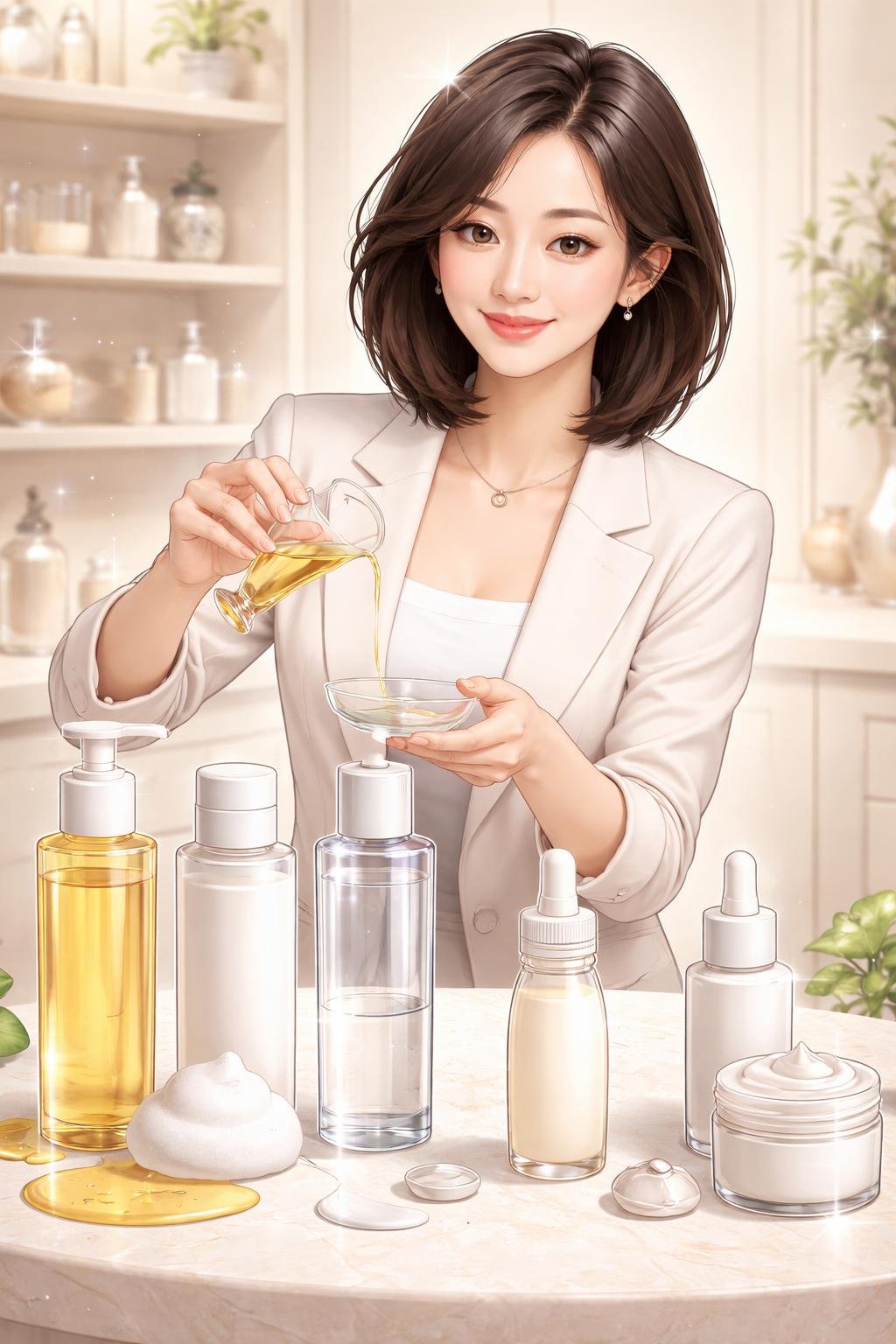
Product names do not always indicate one universal texture or formula. Check the label, ingredient list, directions, and stated purpose of each product rather than assuming that every item in a category works the same way.
| Product type | Typical place and role in the routine |
|---|---|
| Oil cleanser | Used as the first cleansing step when removing makeup, sunscreen, and oil-based residue. |
| Water-based cleanser | Used alone or after an oil cleanser to wash the skin. |
| Mask | An occasional step generally placed after cleansing and before leave-on toner or treatment layers. Directions vary by mask type. |
| Toner | Usually a light leave-on product applied after cleansing. Its exact purpose depends on its formulation. |
| Essence | Often a lightweight leave-on layer placed between toner and serum, although textures and category definitions can overlap. |
| Serum | A targeted leave-on product normally applied after toner and essence. Claims and ingredients vary by formula. |
| Moisturizer | A lotion, gel, or cream used after lighter leave-on products. A fragrance-free moisturizer may be a straightforward beginner consideration. |
| Eye cream | An optional product intended for the eye area. One published Korean beauty routine places it after moisturizer, but users should follow the product’s directions. |
| Sunscreen | The final morning skincare step, applied before makeup if makeup is worn. |
Watery toners, essences, and serums are generally layered before lotions and creams because the lighter-to-heavier sequence is easier to apply. This is a practical framework rather than a substitute for product-specific instructions.
How to Apply the Routine in the Correct Order
1. Begin with cleansing
Use a gentle cleanser and pat the skin dry. When wearing makeup, sunscreen, or substantial oil-based residue, an oil cleanser may be used first, followed by a water-based cleanser. This two-part process is commonly called double cleansing.
2. Use an occasional mask in its proper place
A wash-off or treatment mask may fit after cleansing and before toner. Masks are optional rather than automatic daily steps, and their frequency and placement should follow their directions.
3. Apply lighter leave-on layers
If they are part of the routine, apply toner, essence, and serum in that general order. Let each product spread evenly rather than adding several unnecessary layers simply to increase the step count.
4. Apply moisturizer and optional eye care
Follow lighter products with moisturizer. Eye-cream placement differs among published routines and product instructions; one verified Korean beauty routine places it after moisturizer. Follow the directions for the particular formula being used.
5. Finish the morning with sunscreen
Sunscreen is the last morning skincare layer, followed by makeup if desired. It is not an evening step.
Where treatments and medications belong
Dermatology guidance may place a treatment or medication immediately after cleansing. Prescribed or professionally recommended products should be used according to the instructions from the appropriate healthcare professional, even when those instructions differ from a general layering chart.
Common ordering mistakes
- Starting several new products at the same time.
- Using optional steps without knowing what each product contributes.
- Layering multiple products with overlapping purposes and continuing despite irritation.
- Applying sunscreen before leave-on skincare products instead of as the final morning skincare step.
- Following a generic routine instead of the directions for a mask, treatment, or prescribed product.
Using too many products, especially several targeted products together, may irritate the skin, so a longer routine is not automatically a better one.
Choosing Products and Using Them Safely

A beginner can first choose a gentle cleanser, a moisturizer, and a daily broad-spectrum, water-resistant SPF 30+ sunscreen. Optional products can be added later when there is a specific reason to use them.
- Read the full label: Check the intended use, application directions, warnings, ingredient list, and recommended frequency.
- Consider fragrance: A fragrance-free moisturizer may be a useful beginner option, particularly when trying to keep the routine uncomplicated.
- Add products gradually: Introducing one item at a time makes it easier to notice how an individual product fits the routine.
- Avoid unnecessary duplication: Multiple toners, serums, or other targeted products can make the routine harder to evaluate and may contribute to irritation.
- Respect individual variation: A texture or product order that feels suitable for one person may not suit another person’s skin or routine.
- Follow specific directions: Product labels and instructions from an appropriate healthcare professional take priority over general beauty guidance.
Stop using a product that appears to cause a concerning response and seek appropriate professional guidance for persistent irritation, a medical concern, or questions about prescribed treatment.
Korean Beauty Culture and the Multi-Step Routine
Korean beauty content commonly presents skincare as a sequence of distinct product categories, including an oil cleanser, water-based cleanser, toner, essence, serum, moisturizer, eye cream, and sunscreen. This format helps explain how different textures can be layered from lighter to heavier.
That presentation should not be interpreted as a rule that every Korean person follows the same routine or uses ten products. It is a flexible framework, and even a Korean beauty brand’s published routine describes customization according to skin needs.
For an international beginner, the multi-step format is best treated as a menu of possible categories. A simple cleanser-moisturizer-sunscreen routine can be a reasonable starting structure, while masks, essences, serums, eye products, and double cleansing remain optional choices.
K-Nana Beauty Guide
Nana is a fictional female K-Nana Studio beauty guide and family mascot. The following routines are clearly labeled educational examples, not personal reviews, endorsements, or claims about results.
Example 1: Nana’s simple morning chart
- Wash with a gentle cleanser.
- Apply moisturizer.
- Finish with broad-spectrum, water-resistant SPF 30+ sunscreen.
This example keeps the morning routine focused on three core categories rather than trying to fill every possible step.
Example 2: Nana’s basic evening chart
- Wash with a gentle cleanser.
- Apply moisturizer.
This example shows that an evening routine can remain short when no separate first cleanse or optional leave-on product is needed.
Example 3: Nana’s optional double-cleansing evening chart
- Use an oil cleanser to begin removing makeup, sunscreen, and oil-based residue.
- Follow with a water-based cleanser.
- Apply an optional toner, essence, or serum only if it has a defined role.
- Finish with moisturizer and use eye cream if desired and directed.
This fictional chart illustrates product order only and does not imply that double cleansing or every optional layer is necessary each evening.
Frequently Asked Questions
1. Are all ten steps necessary?
No. A Korean skincare routine is adaptable rather than a mandatory ten-step system. Beginners can start with gentle cleansing, moisturizer, and morning sunscreen.
2. Do I need to double cleanse every night?
Not necessarily. Double cleansing may be useful when removing makeup, sunscreen, or oil-based residue, but it does not have to be an automatic nightly requirement for everyone.
3. Are toner and essence the same type of step?
They are usually presented as separate categories, with toner before essence. However, their textures, purposes, and formulations can overlap, so the product label matters more than the category name alone.
4. Where do treatments or medications belong?
Dermatology guidance may place treatments or medications immediately after cleansing. Follow the directions supplied with the product and instructions from the appropriate healthcare professional, especially for prescribed treatment.
5. Is sunscreen still the final morning skincare step?
Yes. Sunscreen is applied after other morning skincare products and before makeup, if makeup is worn.
References
- This Is the Best Skincare Routine Order for All of Your Products
– Beauty of Joseon — https://beautyofjoseon.com/blogs/news/best-skincare-routine-order
- Should I apply my skin care products in a certain order? — https://www.aad.org/public/everyday-care/skin-care-basics/care/apply-skin-care-certain-order?pp=1
- A dermatologist’s guide to skincare from growing up to glowing up — https://www.aad.org/news/dermatologist-guide-skincare
These sources support the routine order, simplified beginner guidance, and precautions discussed in this article.
Final Takeaway
A beginner Korean skincare routine can remain simple: cleanse gently, apply moisturizer, and finish the morning with sunscreen. Add toner, essence, serum, masks, eye cream, or double cleansing only when the step has a clear purpose and suits the individual.
Use lighter formulations before heavier ones unless specific directions say otherwise, and prioritize a consistent, manageable routine over a high product count.
Image Credits
Images in this article are K-Nana Studio original educational illustrations. They are provided for visual guidance and may be AI-generated. They do not represent verified photographs of actual venues, facilities, products, people, results, operating conditions, or events.
- An introduction and routine-order overview showing a customizable sequence from cleansing to morning sunscreen.
- A product-types and formulations visual comparing watery leave-on layers with heavier moisturizing textures.
- An application-order visual showing simple morning, evening, and optional double-cleansing sequences.
- A product-selection and safety visual highlighting label checks, gradual product introduction, and simplified beginner choices.
- A final practical reminder after the FAQ illustrating gentle cleansing, moisturizing, morning sunscreen, and purposeful optional steps.
All five visuals are illustrative educational aids rather than evidence of real products, personal experiences, or skincare outcomes.
Disclaimer
This article is provided for general educational and informational purposes only and does not constitute medical advice, diagnosis, or treatment.
Cosmetic ingredients, formulations, product labels, availability, and prices may vary by product, manufacturer, and market. Individual skin responses can differ. Always check the current product label, ingredient list, and official manufacturer information before use.
Discontinue use if irritation occurs and consult an appropriate healthcare professional for persistent skin concerns or significant reactions.
AI-generated images are illustrative educational visuals. They may not accurately represent actual products, packaging, ingredients, application results, or clinical outcomes.