
Introduction to Seolleongtang
Seolleongtang Korean ox bone soup is made by simmering ox bones and selected beef cuts for many hours until the broth becomes milky. The dish is commonly served with rice and seasonings that diners can add according to taste.
This beginner’s guide explains the soup’s ingredients, preparation, seasoning, serving style, cultural background, and practical dietary and purchasing checks. The first featured K-Nana Studio illustration uses Mom as a fictional educational guide introducing the dish.
Quick Guide

| Feature | Quick explanation |
|---|---|
| Korean name | 설렁탕, romanized as seolleongtang. |
| Food category | Korean ox bone and beef soup. |
| Principal ingredients | Water, ox bones, and selected beef cuts, which vary by recipe. |
| Broth | A thick, creamy-looking, milky broth produced through prolonged simmering. |
| Typical serving style | Served with rice, which may be eaten alongside the soup or added directly to it. |
| Common seasonings | Salt, black pepper, chili peppers, and chopped green onions may be available for seasoning to taste. |
| Consumer checks | Confirm the exact recipe, beef cuts, dietary suitability, and current restaurant or packaged-product information when these details matter. |
What Is Seolleongtang?
Seolleongtang is a Korean soup prepared by simmering ox bones and beef cuts in water for an extended period. This process produces the dish’s characteristic milky broth.
Verified descriptions mention cuts and components such as ox knee, beef head meat, shank, brisket, gristle, tongue, knee cartilage, and intestines. These examples describe possible preparations; they do not mean that every bowl contains every listed item.
The beef components served in or used to prepare the soup therefore depend on the recipe. Diners with ingredient preferences or restrictions should ask the restaurant what its version contains.
History and Background
Seolleongtang is associated with Seoul and is described by VISITKOREA as originally being a Seoul delicacy. It is now sold in restaurants across Korea.
One origin theory connects the soup with Joseon-era royal farming rites held at Seoul’s Seonnongdan Altar. According to this account, participants shared soup made from an ox sacrificed during the rite. This should be understood as one theory about the dish’s origin, not as a conclusively established history.
Core Ingredients and Preparation Components
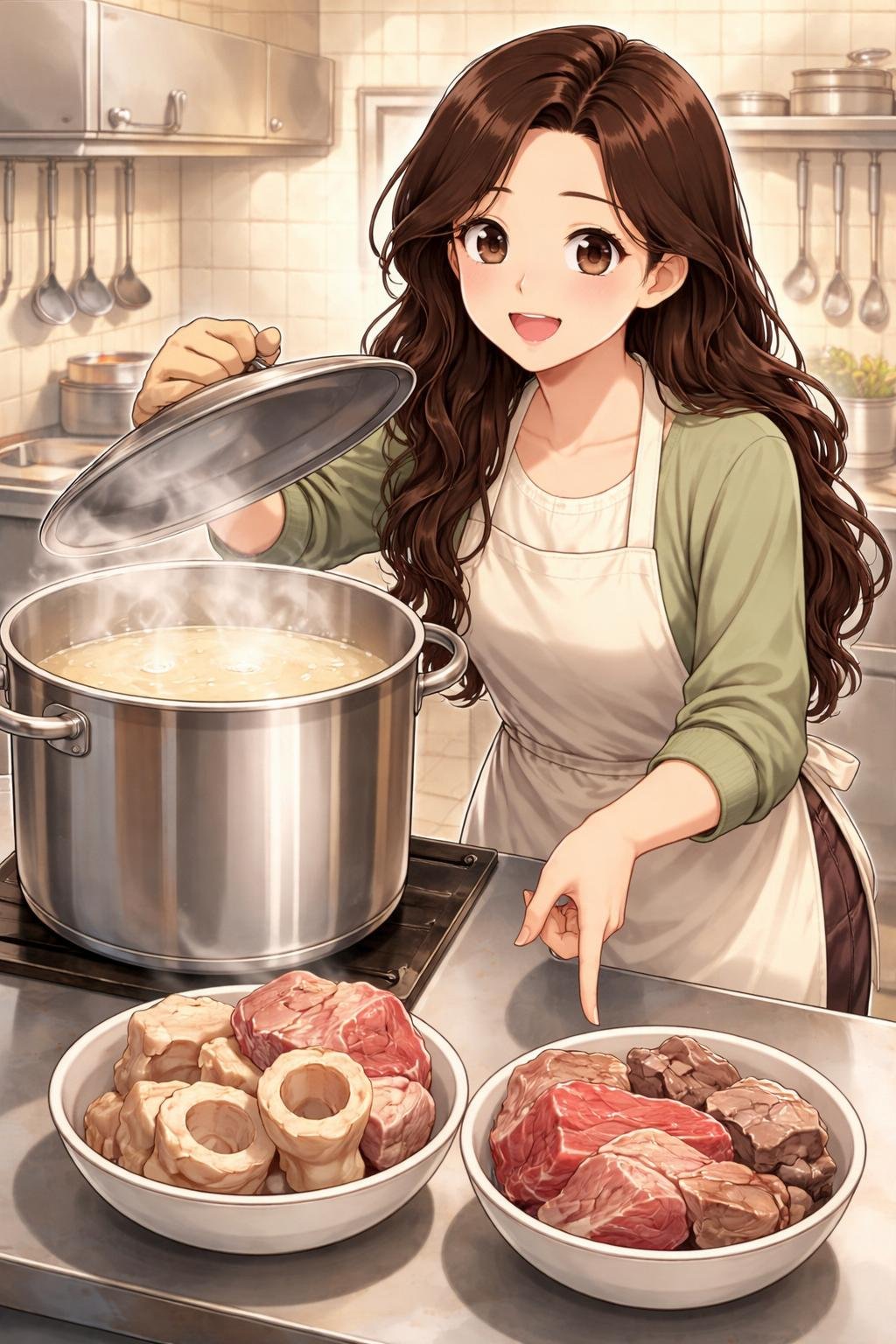
The verified foundation of seolleongtang is water, ox bones, and beef cuts. Depending on the preparation, those cuts may include items such as knee, head meat, shank, brisket, gristle, tongue, cartilage, or intestines. Recipes do not necessarily use an identical combination.
The bones and selected beef components are simmered for many hours until the liquid develops its milky appearance. This long simmering process is central to the soup’s identity.
It is useful to distinguish the cooking ingredients from the table seasonings. Bones, beef, and water form the soup, while salt, black pepper, chili peppers, and chopped green onions may be added when it is served. The second featured illustration uses Mom to explain these ingredient and preparation distinctions without presenting one recipe as universal.
Dietary, Allergen, Storage, and Safety Checks
Seolleongtang is a beef-based food, so it is not suitable for vegetarian or vegan diets. Because recipes can differ, the dish’s name alone does not provide a complete ingredient or allergen declaration.
At a restaurant, ask about the exact ingredients, included beef cuts, added seasonings, and relevant cross-contact concerns. Staff practices and recipes may vary, so a general description of seolleongtang cannot replace information from the establishment preparing the food.
For a packaged version, read the current label for its ingredient list, allergen information, nutrition information, quantity, storage directions, and heating instructions. Do not assume that a retail product has the same formulation as restaurant-made soup or another packaged version.
Follow the storage and heating directions supplied with the specific product. No universal storage period or reheating temperature should be inferred from this general guide. The second featured illustration reinforces these label and safety checks as part of Mom’s educational explanation.
Taste and Texture
Verified descriptions characterize seolleongtang as a thick, creamy-looking soup with a milky broth. Its appearance develops during the prolonged simmering of ox bones and beef components.
The final seasoning is commonly adjusted at the table rather than treated as identical for every diner. Salt, black pepper, chili peppers, and chopped green onions are among the documented options, although the selection provided can vary.
How to Season and Eat Seolleongtang
- First, identify which seasonings have been provided with the bowl.
- Add a small amount of salt, black pepper, chili pepper, or chopped green onion according to personal preference.
- Mix and adjust gradually rather than assuming that every bowl requires the same amount.
- Eat the rice alongside the soup or add the rice directly to the broth.
- Continue adjusting the seasoning only if desired, because individual choices and restaurant serving practices can differ.
These steps reflect documented serving customs while leaving the final balance of rice and seasoning to the diner.
Seolleongtang in Korean Food Culture

Seolleongtang has a strong association with Seoul, where it is described as having been a local delicacy. It is now available in restaurants across Korea, making it part of a broader restaurant food culture beyond its Seoul connection.
Its serving context commonly includes rice and table seasonings. Diners can eat the rice separately or place it in the broth, then use the available seasonings to adjust the bowl to taste.
The third featured illustration uses Mom to show this rice-and-seasoning context as an educational example of how the soup may be served. It does not represent the practices of every restaurant.
Varieties and Buying Guide
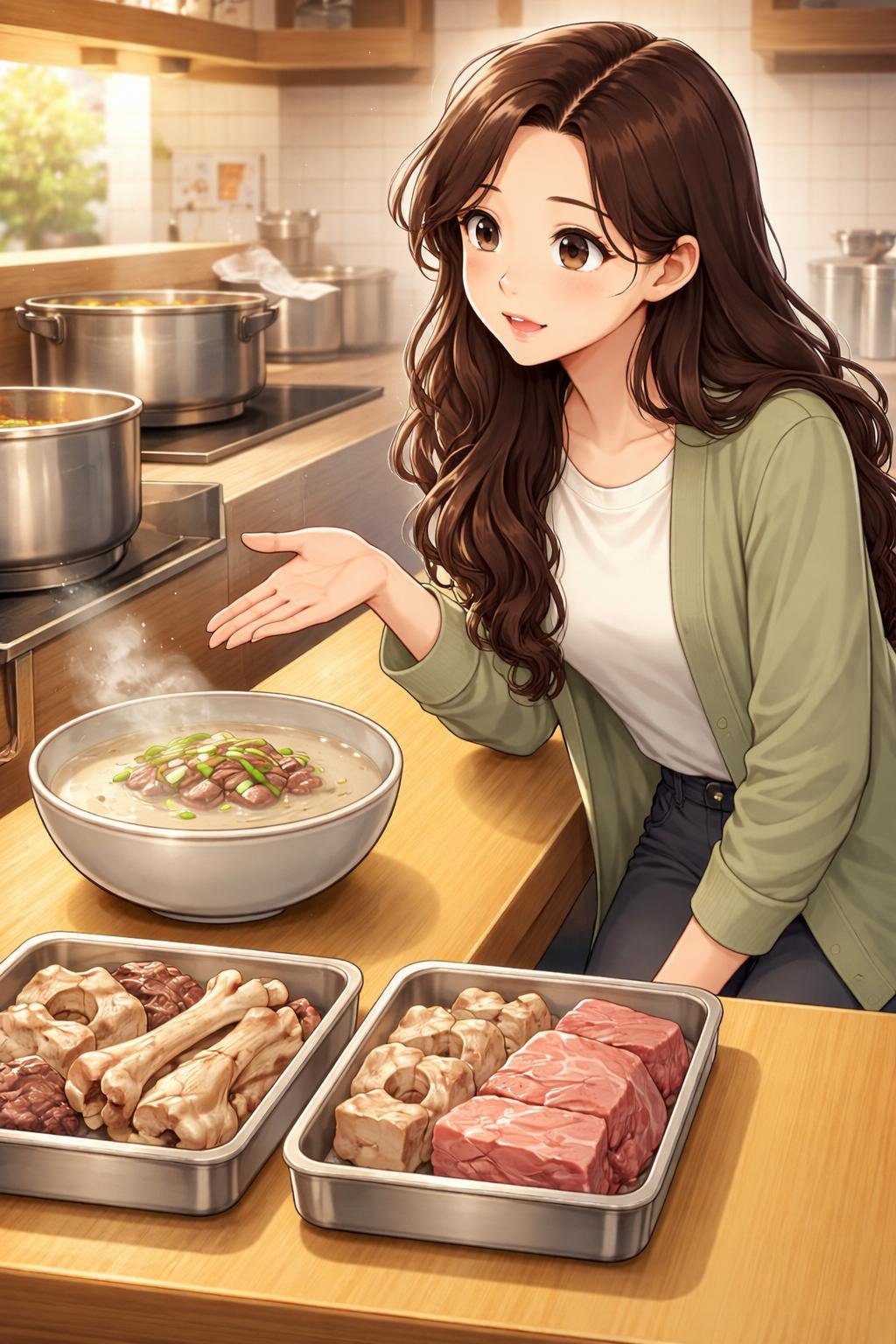
Variations in seolleongtang can arise from the selection of bones and beef cuts used by a restaurant or producer. The seasonings supplied with the finished soup may also differ. These variations should not be converted into fixed named categories without specific supporting information.
Choosing at a restaurant
- Check which beef cuts or other beef components are included.
- Confirm whether the soup is served with seasoning already added or with seasonings on the side.
- Discuss dietary restrictions, ingredient concerns, and cross-contact concerns directly with the restaurant.
- Check current menu information rather than assuming availability or preparation methods.
Checking a packaged option
- Read the current ingredient and allergen declarations.
- Check the stated quantity and nutrition information.
- Follow the package’s storage and heating directions.
- Do not assume that different brands or products use the same formulation.
Ox knee soup can appear as a distinct menu item rather than simply another name for seolleongtang. A supplied VISITKOREA restaurant listing, for example, names ox bone soup and ox knee soup separately.
The fourth featured illustration uses Mom to explain recipe variation and practical restaurant or label checks without endorsing a particular seller or product.
Frequently Asked Questions
1. What is seolleongtang made from?
It is made by simmering ox bones and selected beef cuts in water. Verified examples of possible components include knee, head meat, shank, brisket, gristle, tongue, cartilage, and intestines, but not every recipe contains all of them.
2. Why does seolleongtang broth look milky?
The broth develops its characteristic milky appearance while ox bones and beef components simmer for many hours.
3. Does seolleongtang arrive fully seasoned?
Not necessarily. Diners commonly season it to taste with options such as salt, black pepper, chili peppers, or chopped green onions. The seasoning provided and the amount already added can vary.
4. How is rice eaten with seolleongtang?
Rice may be eaten alongside the soup or added directly to the broth. Either approach fits the documented serving style.
5. What should I check before ordering or buying seolleongtang?
Confirm the exact ingredients, beef cuts, dietary suitability, and relevant cross-contact concerns. For a packaged product, also check the current allergen and nutrition information, quantity, storage directions, and heating instructions.
K-Nana Food Guide

Illustrative educational scene: Mom identifies seolleongtang as a beef-based soup and reminds beginners to add table seasonings gradually. She explains that rice can be eaten alongside the soup or placed directly in the broth.
Mom also points out that dietary concerns require current information from the restaurant or product label because recipes and packaged formulations can vary. This fictional scene is an educational reminder, not a personal review, product endorsement, or report of an actual dining experience.
Final Takeaway
Seolleongtang is a Korean ox bone and beef soup whose milky broth is produced through long simmering. It is commonly served with rice, and diners may adjust it to taste with seasonings such as salt, black pepper, chili peppers, and chopped green onions.
The exact beef cuts and formulation can vary between preparations. When ingredients, dietary suitability, allergens, storage, or heating requirements matter, consult the restaurant or the current product label rather than relying on a general description.
References
- Korean recipes: Ox bone soup, Seolleongtang (설렁탕) : Korea.net : The official website of the Republic of Korea — https://www.korea.net/NewsFocus/Culture/view?articleId=130875.
- Ox Bone Soup (설렁탕 / Seolleongtang)- VISITKOREA — https://english.visitkorea.or.kr/svc/contents/contentsView.do?vcontsId=178349.
- Yuil Seolleongtang (유일설렁탕)- VISITKOREA — https://english.visitkorea.or.kr/svc/contents/contentsView.do?vcontsId=45843.
Image Credits
Images featured in this article are K-Nana Studio original educational illustrations. They may be AI-generated and are visual aids rather than documentary photographs or official service materials.
- Mom introduces seolleongtang as Korean ox bone and beef soup with a characteristically milky broth.
- Mom explains the verified use of bones, varying beef cuts, prolonged simmering, and the need to check ingredients, storage directions, and heating instructions.
- Mom demonstrates the documented serving context of rice and optional table seasonings used with seolleongtang.
- Mom explains that recipes can differ and highlights restaurant questions and packaged-product label checks.
- Mom provides the final practical reminder after the FAQ: identify the dish as beef-based, season gradually, choose how to eat the rice, and verify current ingredients when dietary concerns apply.
These illustrations must not be treated as evidence of an exact recipe, packaged product, restaurant, menu, or real-world serving condition.
Disclaimer
This article provides general food, cultural, and educational information. Restaurant recipes, beef cuts, ingredients, allergens, nutrition information, availability, prices, serving practices, packaged formulations, storage directions, and heating instructions may vary or change.
Confirm important dietary and safety information with the restaurant, current product label, manufacturer, or relevant official source. This guide does not replace product-specific instructions or professional advice concerning allergies and individual dietary needs.
Mom is a fictional K-Nana Studio educational guide. AI-generated illustrations are illustrative visual aids, not documentary photographs, official product images, or proof of exact recipes, facilities, products, menus, or real-world conditions. K-Nana Studio original illustrations should not be reproduced or redistributed without confirming permission and applicable usage rights.