
Gimbap is one of Korea’s most familiar portable foods, made by spreading seasoned rice over a sheet of gim and rolling it around a colorful selection of fillings. The finished roll is sliced into bite-sized pieces, revealing layers of rice, vegetables, egg, meat, pickled radish, and other ingredients inside a dark seaweed exterior.
For international visitors, gimbap is especially useful because it appears in many different parts of everyday Korean food culture. It can be found at bunsik restaurants, markets, convenience-oriented takeaway shops, supermarkets, train stations, and other places where people want a practical meal or snack.
There is no single filling combination that defines every gimbap. Classic versions may include danmuji, carrot, spinach, egg, and meat, while other rolls can emphasize vegetables, tuna, cheese, egg, or restaurant-specific ingredients. What connects these variations is the basic structure of seasoned rice and fillings rolled inside gim.
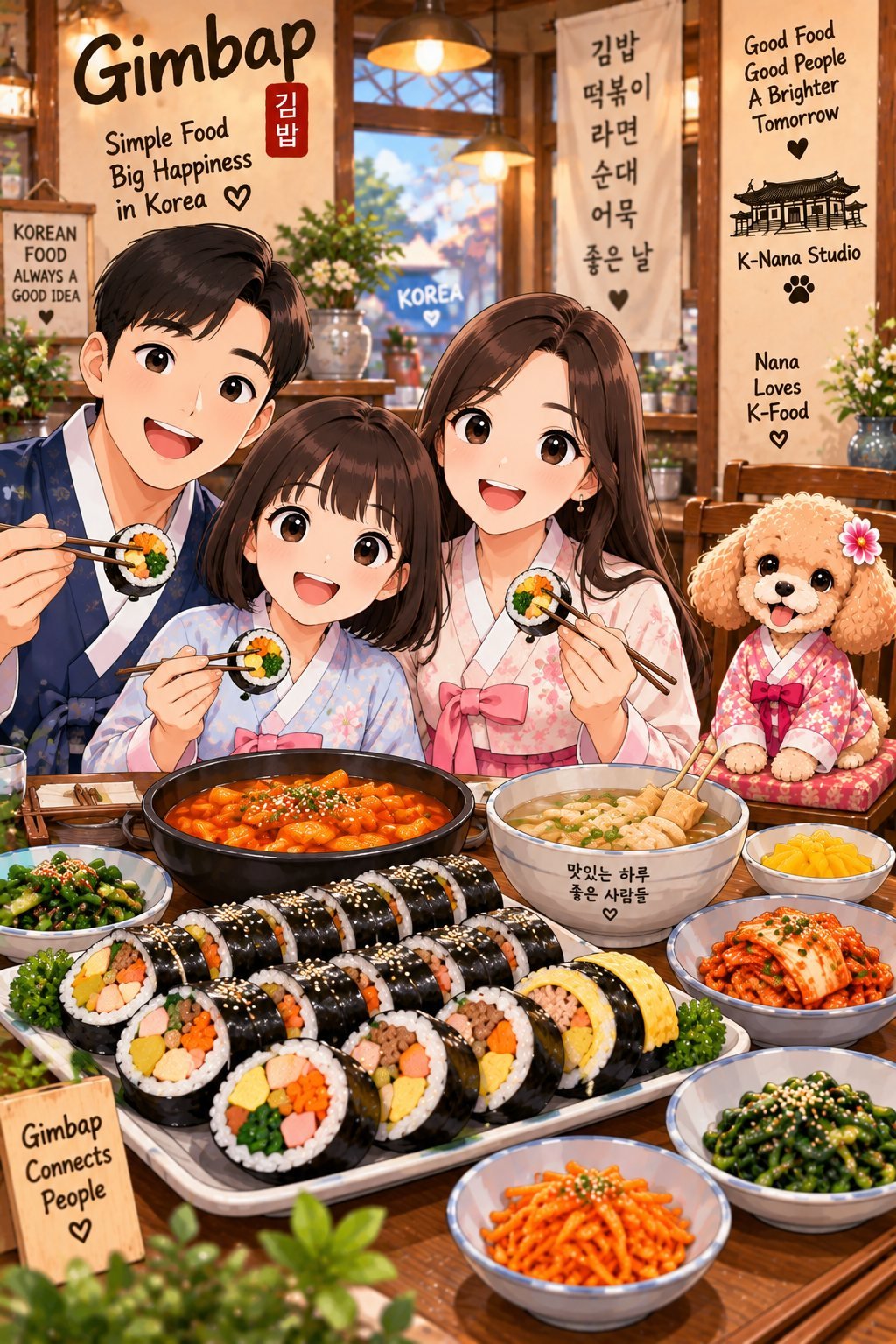
Colorful fillings, seasoned rice, roasted seaweed, and familiar bunsik side dishes make gimbap one of Korea’s most recognizable everyday foods.
Quick Guide
| Korean name | 김밥 |
| Basic structure | Seasoned rice and fillings rolled inside gim |
| Common fillings | Danmuji, carrot, spinach, egg, meat, and many recipe-dependent variations |
| Typical seasoning | Rice may be seasoned with salt and sesame oil or other recipe-dependent seasoning |
| How it is served | Rolled tightly and sliced into bite-sized rounds |
| Common setting | Bunsik restaurants, markets, takeaway shops, picnics, travel, and casual meals |
| Useful for first-time visitors | Check the filling because ingredients vary significantly between different types of gimbap |
What Is Gimbap?
The word gimbap combines “gim,” meaning edible seaweed, and “bap,” meaning cooked rice. At its simplest, the dish is built by placing rice and selected fillings on a sheet of gim, rolling everything into a cylinder, and cutting the roll into individual pieces.
The concept is simple, but the number of possible combinations is large. Different shops and households can change the vegetables, proteins, seasoning, amount of rice, and size of the roll.
This flexibility is one reason gimbap works in so many settings. It can be a quick meal, part of a picnic, a travel food, a school or work lunch, or one item on a larger bunsik table.
What Is Gim?
Gim is the Korean word for edible seaweed sheets commonly used around gimbap. The dark outer layer provides structure to the roll while adding its own roasted seaweed flavor.
Gim used for rolling needs to be flexible enough to wrap around rice and fillings without immediately breaking apart. Handling also matters because excessive moisture can make the sheet softer and more difficult to work with.
Once the gimbap has been rolled, the gim helps hold the rice and multiple fillings together so that the cylinder can be sliced into individual pieces.
The Rice in Gimbap
Rice forms the main body of a gimbap roll, but it is not simply placed onto the gim without consideration. Familiar preparations often season the cooked rice before rolling.
Salt and sesame oil are common flavor elements, although recipes differ. The goal is generally to give the rice enough flavor to work with the fillings without overwhelming them.
The rice also needs an appropriate texture. If it is excessively wet or packed too thickly, rolling can become difficult and the final gimbap may contain far more rice than filling.
Common Gimbap Fillings
One of the most recognizable features of sliced gimbap is its colorful cross-section. Yellow danmuji and egg, orange carrot, green spinach, and brown meat can create several distinct layers inside the white rice and dark gim.
Common ingredients can include:
- Danmuji — yellow pickled radish that adds crunch, acidity, sweetness, and color.
- Carrot — usually cooked until tender while retaining some texture.
- Spinach — provides a green vegetable component and softer texture.
- Egg — commonly cooked and cut into strips before rolling.
- Meat — seasoned beef or other meat preparations can appear depending on the type of gimbap.
- Other fillings — fish cake, imitation crab, burdock root, tuna, cheese, cucumber, or restaurant-specific ingredients may also appear.
The exact filling list should never be assumed from appearance alone, particularly when allergies or dietary restrictions are relevant.
Preparing the Ingredients
Like Japchae, gimbap often requires several ingredients to be prepared individually before they are assembled into one finished dish.
Carrots, spinach, egg, meat, and other fillings have different cooking requirements. Preparing them separately helps control their texture and seasoning before they are placed together inside the roll.
The ingredients are then arranged so that each sliced piece can contain a balanced cross-section rather than having all of one filling concentrated at one end.
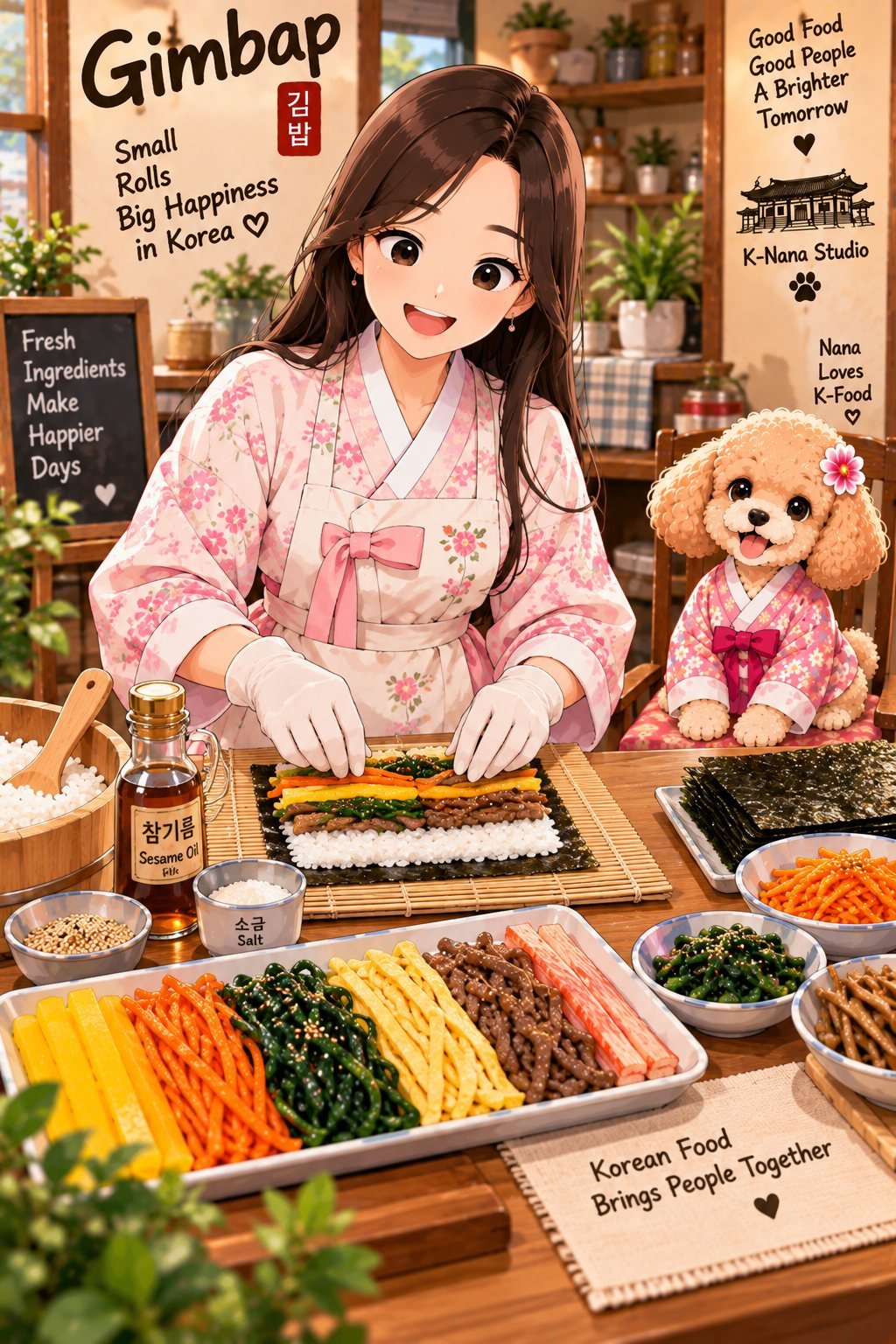
Preparing rice and colorful fillings separately makes it possible to build a balanced gimbap roll with several textures and flavors in every slice.
How Gimbap Is Assembled
A sheet of gim is placed on a clean work surface or bamboo rolling mat. Seasoned rice is then spread across much of the seaweed in a relatively even layer.
The fillings are arranged in lines across the rice. Keeping them organized helps create the colorful cross-section associated with gimbap and makes the roll easier to control.
Using too many fillings can make the roll difficult to close, while too little filling can leave the finished gimbap dominated by rice. The balance depends on the size and style of the roll.
What Is a Gimbal?
A gimbal is a bamboo rolling mat commonly used to help shape gimbap. It supports the gim while the cook rolls the rice and fillings into a compact cylinder.
The mat itself does not become part of the food. Instead, it provides even pressure and helps keep the roll tight as it is formed.
Experienced cooks may use different techniques or equipment, but the bamboo mat remains one of the most recognizable tools associated with traditional gimbap preparation.
Rolling Gimbap
Rolling is one of the most important stages because the finished cylinder needs to be tight enough to hold together without crushing the ingredients.
The edge closest to the cook is lifted over the fillings, and the roll is gradually tightened while moving forward. Even pressure helps prevent loose gaps inside the finished gimbap.
Once formed, the outside can be finished according to the recipe, and the long roll is prepared for slicing.
How Gimbap Is Sliced
A completed roll is usually cut into bite-sized pieces, revealing the arrangement of ingredients inside.
A clean, sharp knife makes slicing easier. A dull or sticky blade can compress the roll, drag the rice, or tear the gim rather than producing neat pieces.
The width of each slice varies, but the pieces should generally remain thick enough to hold together while being convenient to pick up with chopsticks.
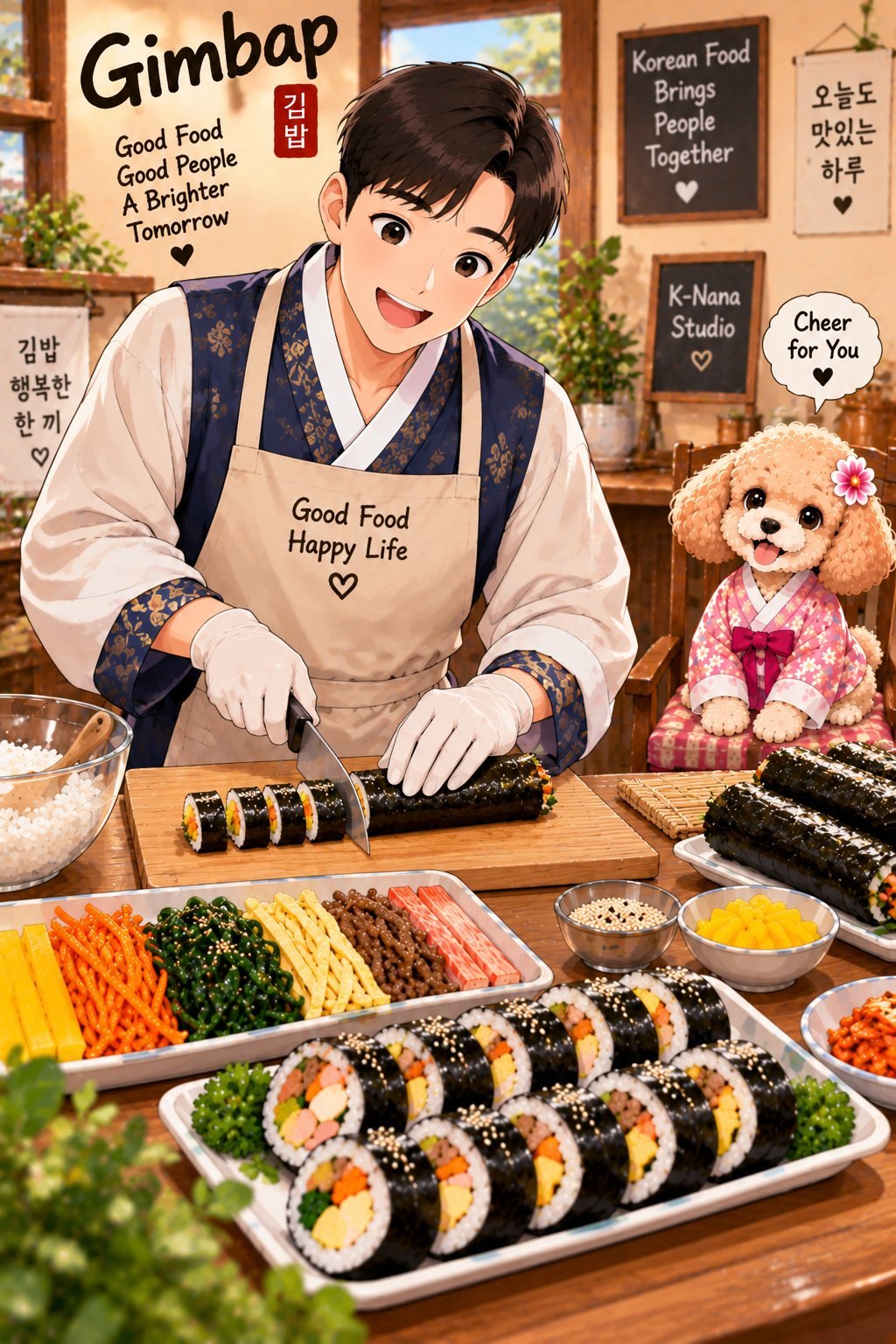
Rolling the ingredients firmly and slicing the finished cylinder into neat pieces creates gimbap’s familiar colorful cross-section.
Gimbap vs. Sushi
Gimbap and Japanese sushi rolls can look similar because both can combine rice, seaweed, and fillings in a rolled format, but they should not be treated as interchangeable foods.
Gimbap rice is commonly seasoned in a different way, with sesame oil and salt familiar in many preparations. Fillings also often include cooked vegetables, egg, pickled radish, seasoned meat, and other ingredients associated with Korean food culture.
Sushi encompasses its own broad range of Japanese preparations and rice-seasoning traditions. Visual similarity therefore does not mean that gimbap is simply another name for sushi.
Gimbap & Korean Bunsik Culture
Gimbap has a particularly strong connection with bunsik, Korea’s casual and affordable food culture. Bunsik restaurants commonly serve several familiar dishes that can be ordered separately or combined around one table.
Gimbap works especially well with Tteokbokki. The relatively mild rice-and-filling roll provides a contrast to the spicy-sweet gochujang sauce surrounding the rice cakes.
Fish cake and its warm broth are another familiar companion, while danmuji can provide a crisp and acidic contrast to richer or spicier foods.
Gimbap for Picnics, Travel & Everyday Life
Gimbap’s compact shape and pre-sliced portions make it practical for situations where a full restaurant meal is inconvenient.
It has long been associated with outings, picnics, school events, travel, and packed meals. Modern travelers can also encounter it as a convenient takeaway option during a busy sightseeing day.
This everyday practicality is an important part of gimbap’s identity. It can appear on a table surrounded by several Korean dishes, but it can also function as a simple meal that is easy to carry and share.
Gimbap & Tteokbokki Together
One of the most recognizable bunsik combinations is gimbap with tteokbokki. The two foods provide very different flavors and textures: gimbap is built around rice, gim, and multiple fillings, while tteokbokki is known for chewy rice cakes and a sauce that is often spicy and sweet.
Some diners alternate between the two foods, while others enjoy gimbap with a little tteokbokki sauce. There is no required method, and the heat and sweetness of the sauce vary considerably between shops.
K-Nana Studio’s Tteokbokki Guide explains rice cakes, gochujang-based sauce, fish cake, eggs, and the wider Korean bunsik experience.
Fish Cake Broth & Danmuji
Gimbap is also commonly seen with fish cake dishes and warm broth in casual Korean eateries. A hot, light broth can provide a useful contrast to the rice and multiple fillings inside the roll.
Danmuji, the bright yellow pickled radish found inside many gimbap rolls, can also be served separately. Its crisp texture and sweet-sour character help refresh the palate between bites.
These accompaniments vary by restaurant. Travelers should not assume that broth, danmuji, kimchi, or other side dishes are automatically included with every gimbap order.
A Classic Bunsik Table
A bunsik table can bring several inexpensive and casual foods together rather than focusing on one large main dish. Gimbap, tteokbokki, fish cake, fried foods, noodles, and other items can all appear depending on the shop.
This makes the experience particularly useful for travelers who want to sample several Korean casual foods in one meal. Sharing also makes it easier to compare spicy, savory, chewy, crisp, and mild foods side by side.
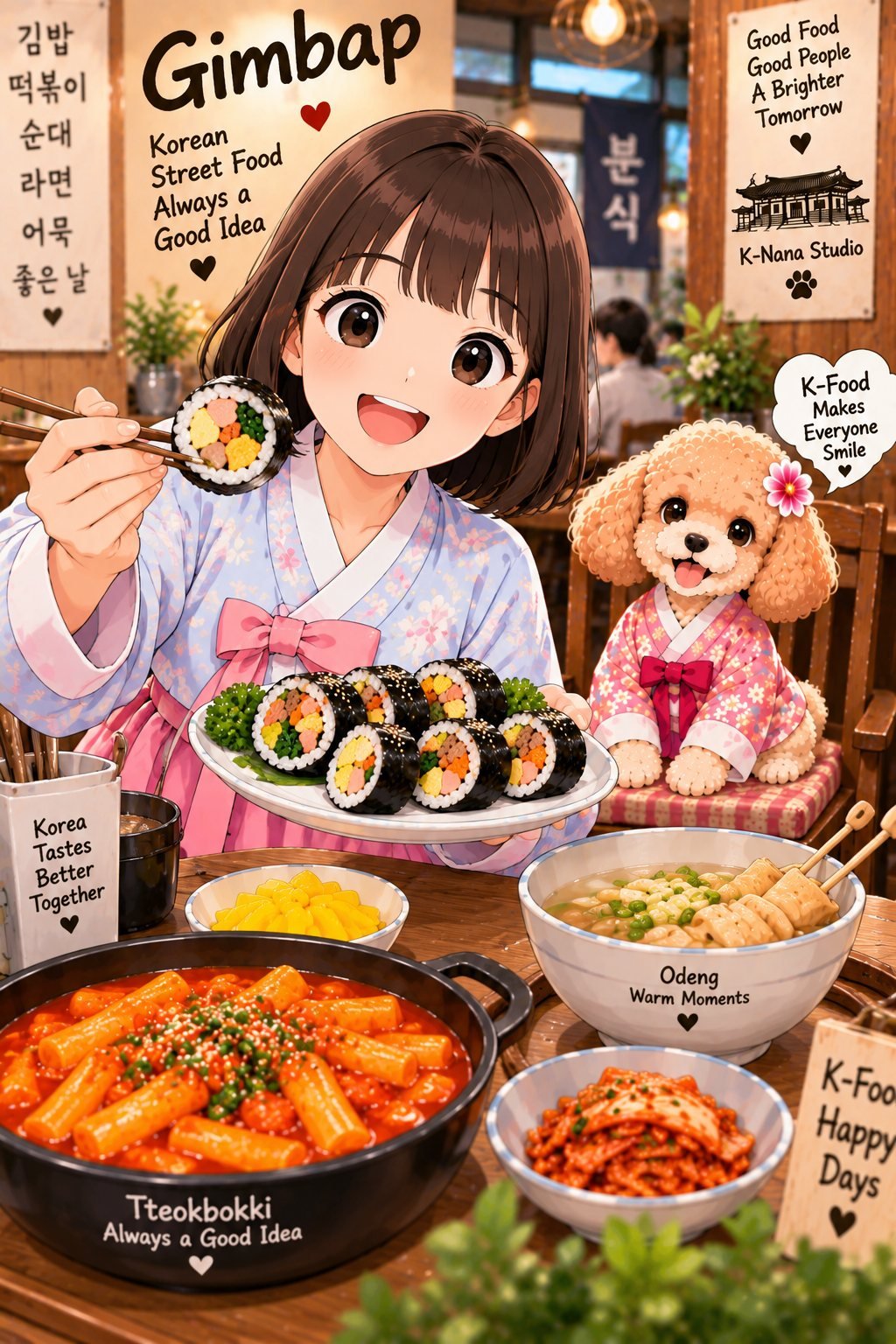
Gimbap, tteokbokki, danmuji, and warm fish cake broth show how different flavors and textures come together in Korean bunsik culture.
Different Types of Gimbap
Gimbap is a flexible format rather than one fixed recipe. Shops can change the fillings, size, amount of rice, exterior, and overall flavor while retaining the familiar rolled structure.
This means that travelers can encounter many names on a gimbap menu. The exact recipe behind each name can differ between businesses, so the filling list is more useful than assuming that every shop follows one standard formula.
Classic Gimbap
A familiar classic-style roll may contain danmuji, carrot, spinach, egg, and a meat or other savory filling. The combination creates the colorful cross-section many visitors associate with gimbap.
Vegetable Gimbap
Vegetable-focused gimbap can emphasize spinach, carrot, cucumber, burdock root, pickled radish, or other vegetables. However, a vegetable-heavy roll should not automatically be assumed to be vegetarian or vegan because egg, sauces, seasonings, or other animal-derived ingredients may still be present.
Tuna Gimbap
Tuna gimbap commonly adds a tuna-based filling, often creating a richer and softer center. Additional ingredients and sauces vary by shop, so travelers with egg or other allergies should confirm the recipe directly.
Cheese Gimbap
Cheese can be added to create a richer and creamier flavor. The type and amount of cheese differ between shops, and dairy-sensitive diners should confirm the ingredients before ordering.
Egg Gimbap
Some rolls emphasize egg more strongly than classic gimbap. The egg may occupy a larger portion of the cross-section or become the defining ingredient of the roll.
What Is Kkoma Gimbap?
Kkoma gimbap refers to small gimbap rolls. “Kkoma” literally suggests something small or little, and these rolls are generally narrower and more compact than standard gimbap.
The fillings can be simpler, and the smaller size makes the pieces easy to eat. Kkoma gimbap is particularly associated with casual snacking and market-style food culture.
Travelers visiting Gwangjang Market can experience a broader traditional-market environment where Korean street foods and prepared foods are concentrated within the same area.
What Is Chungmu Gimbap?
Chungmu gimbap is visually very different from the colorful filled rolls many international visitors first associate with gimbap.
The small rolls are characteristically simple, with rice wrapped in gim rather than a large assortment of colorful fillings inside. They are served with accompanying seasoned side dishes that provide much of the meal’s flavor.
This style demonstrates why “gimbap” should not be understood as one mandatory set of fillings. Korean regional and specialty preparations can change the structure of the meal considerably.
How to Order Gimbap
Gimbap is commonly ordered by the roll. A shop may offer a basic version alongside several specialty rolls identified by their main filling or style.
Before ordering, check the ingredient list when available. Tuna, cheese, egg, meat, fish cake, imitation crab, vegetables, spicy fillings, and other ingredients can all appear in different combinations.
One roll can already contain several sliced pieces, so consider how many other foods you plan to order. At a bunsik restaurant, sharing one gimbap with tteokbokki or another dish can provide more variety than ordering several rolls immediately.
Gimbap at Markets & Bunsik Restaurants
Traditional markets and bunsik restaurants provide two different environments for experiencing gimbap.
A market can offer compact stalls, prepared foods, and the opportunity to compare several Korean dishes within a relatively small area. A bunsik restaurant provides a casual setting where gimbap can be ordered alongside tteokbokki, fish cake, noodles, fried foods, and other familiar items.
Neither environment represents the only way Koreans eat gimbap. Dedicated gimbap shops, takeaway counters, supermarkets, and other casual food businesses also make the dish widely accessible.
Gimbap as Takeaway Food
Gimbap’s compact roll and pre-cut pieces make it naturally suited to takeaway. Travelers may choose it when they want a relatively convenient meal between sightseeing stops or before a train or bus journey.
However, portability should not be confused with unlimited storage stability. Rice, egg, meat, vegetables, and other moist fillings can all be perishable.
Freshly prepared gimbap is therefore best treated as prepared food rather than something that can automatically remain unrefrigerated for an extended period.
First-Time Gimbap Tips
- Check the fillings — different rolls can contain completely different ingredients.
- Start with a classic roll — it provides an easy introduction to the combination of rice, gim, vegetables, egg, and savory fillings.
- Try it with tteokbokki — the mild roll and spicy-sweet rice cakes create a familiar bunsik contrast.
- Use chopsticks gently — squeezing a slice too hard can push the fillings out.
- Do not assume vegetable gimbap is vegan — egg and other animal-derived ingredients may still be present.
- Check tuna and creamy fillings carefully — sauces and additional ingredients can introduce allergens.
- Consider portion size — one roll is already cut into multiple pieces.
- Eat takeaway gimbap promptly — it contains cooked rice and potentially perishable fillings.
The Complete Gimbap Experience
Gimbap demonstrates how a relatively simple rolled format can contain many different parts of Korean food culture. Rice, gim, vegetables, egg, pickled radish, meat, and other fillings are prepared separately and then organized into one portable meal.
The experience changes again when the roll is placed on a bunsik table with tteokbokki, fish cake broth, danmuji, kimchi, and other casual foods.
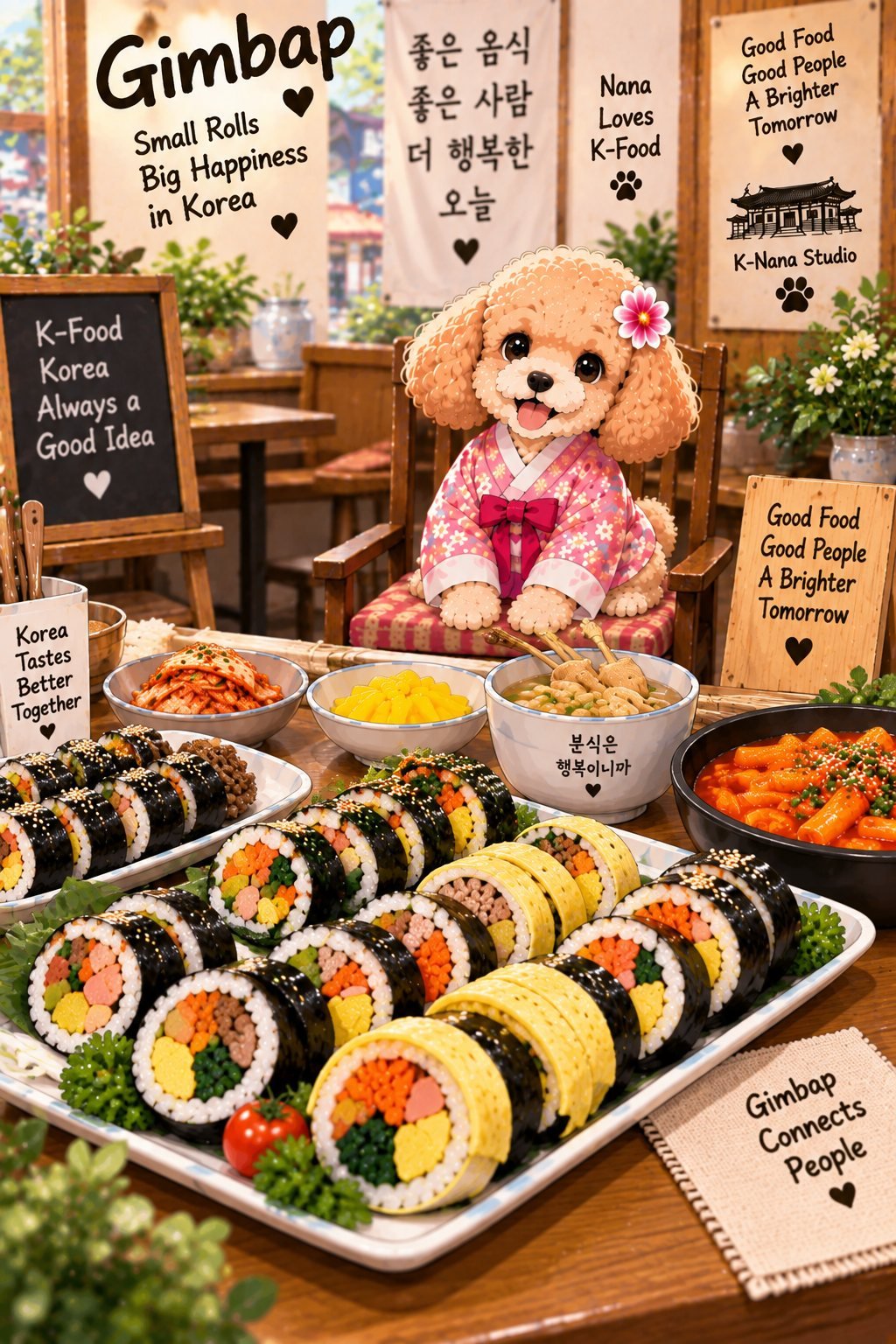
From colorful classic rolls to simple market-style variations, gimbap connects everyday meals, takeaway food, picnics, travel, and Korea’s casual bunsik culture.
How Gimbap Connects with Other K-Food
Gimbap adds an everyday portable-food category to K-Nana Studio’s growing K-Food collection.
Tteokbokki is one of its most natural partners, connecting gimbap directly with Korea’s bunsik and street-food culture.
Japchae provides an interesting preparation comparison. Both dishes can involve several ingredients cooked separately before assembly, but japchae combines them with chewy glass noodles while gimbap organizes them inside rice and gim.
Bibimbap also brings rice and multiple colorful ingredients together, but the ingredients are mixed in a bowl rather than rolled and sliced.
Kimchi can accompany a gimbap meal, while Bulgogi demonstrates how seasoned meat can become the center of a Korean meal rather than one possible component inside a roll.
For meat-focused shared dining, the Korean BBQ Guide and Samgyeopsal Guide provide a completely different experience built around tabletop cooking.
For modern casual food culture, Korean Fried Chicken explores fried chicken, sauces, chicken mu, takeout, and delivery.
Gimbap & a Korea Travel Day
Gimbap is particularly useful for travelers because it can fit around sightseeing rather than requiring every meal to become a long restaurant experience.
Gwangjang Market provides a direct connection to Korean market-food culture and is useful for understanding the wider environment in which small rolls and other prepared foods can be encountered.
Travelers spending a day around Hongdae can combine casual Korean food with cafés, shopping, music, and youth culture.
For a more traditional Seoul itinerary, Insadong, Bukchon Hanok Village, and Gyeongbokgung Palace provide natural connections between food, Korean architecture, crafts, and history.
FAQ
What is gimbap?
Gimbap is a Korean food made by spreading seasoned rice over a sheet of gim, arranging selected fillings on top, rolling everything into a cylinder, and slicing the roll into bite-sized pieces. Fillings vary widely and can include danmuji, vegetables, egg, meat, fish cake, tuna, cheese, and other ingredients.
Is gimbap the same as sushi?
No. Gimbap and Japanese sushi rolls can look similar because both may use rice, seaweed, and fillings, but they have different culinary traditions and typical seasoning approaches. Gimbap rice is commonly seasoned with ingredients such as salt and sesame oil, while its fillings frequently include cooked vegetables, egg, pickled radish, and seasoned proteins.
Is gimbap usually spicy?
Classic gimbap is not necessarily spicy. Many familiar fillings are mild, savory, sweet, or pickled rather than chili-hot. However, spicy specialty rolls exist, and gimbap is often eaten alongside spicy foods such as tteokbokki.
Is vegetable gimbap vegetarian or vegan?
Not automatically. A vegetable-focused roll may still contain egg, sauces, seasonings, or other animal-derived ingredients. Preparation on shared equipment can also be relevant. Travelers following vegetarian or vegan diets should confirm the ingredients directly with the shop.
What is kkoma gimbap?
Kkoma gimbap refers to smaller, narrower gimbap rolls. They can contain relatively simple fillings and are convenient for casual snacking. Small gimbap rolls are especially familiar within Korean market and casual-food culture.
What is Chungmu gimbap?
Chungmu gimbap is a distinctive style in which small rolls of rice wrapped in gim are served with seasoned accompanying dishes rather than containing the colorful assortment of fillings commonly seen inside standard gimbap.
Can gimbap be kept for later?
Gimbap is a prepared food containing cooked rice and potentially perishable ingredients such as egg, meat, seafood-based products, and cooked vegetables. Storage requirements depend on the ingredients and preparation, so travelers should follow the seller’s guidance and avoid assuming that a wrapped roll can remain unrefrigerated for an extended period.
Where to Try Gimbap
Gimbap is widely available in Korea. Travelers can encounter it at bunsik restaurants, dedicated gimbap shops, traditional markets, takeaway counters, supermarkets, and other casual food businesses.
Different settings provide different experiences. A bunsik restaurant makes it easy to combine gimbap with tteokbokki, fish cake, noodles, or fried foods, while a takeaway-oriented shop can be useful when travelers need a practical meal between destinations.
Traditional markets provide another perspective. Gwangjang Market introduces visitors to a dense market environment where Korean prepared foods, snacks, and street-food traditions can be explored together.
When choosing gimbap, compare the fillings rather than relying only on the name or appearance. Two rolls of similar size can contain very different proteins, vegetables, sauces, allergens, and seasonings.
Related K-Nana Guides
For the wider bunsik experience, continue with the Tteokbokki Guide, which explains Korean rice cakes, gochujang-based sauce, fish cake, eggs, and street-food culture.
The Japchae Guide explores sweet potato starch noodles, vegetables, mushrooms, soy-based seasoning, and sesame oil, while the Bibimbap Guide shows another way of combining rice with multiple colorful ingredients.
The Kimchi Guide explains fermentation and kimjang culture, and the Bulgogi Guide introduces thinly sliced seasoned meat and several cooking styles.
For Korean meat and shared-table culture, explore the Korean BBQ Guide and Samgyeopsal Guide. For another modern casual-food experience, the Korean Fried Chicken Guide covers fried, yangnyeom, and soy garlic chicken, chicken mu, takeout, and delivery culture.
Food & Allergy Notes
Gimbap can contain many ingredients within a single roll, making ingredient checking particularly important for travelers with food allergies or dietary restrictions.
Egg, soy, wheat, sesame, fish, shellfish, dairy, meat, imitation crab, fish cake, tuna-based fillings, sauces, and other ingredients may appear depending on the type of gimbap. Sesame oil and sesame seeds are also common in many preparations.
Imitation crab and fish cake can contain several ingredients that are not obvious from appearance alone. Tuna fillings may be combined with mayonnaise or other sauces, and cheese gimbap introduces dairy.
Even a vegetable-heavy roll may contain egg or seasonings that do not meet particular vegetarian or vegan requirements. Ingredient lists and preparation practices vary between shops.
Travelers with allergies, intolerances, medical conditions, religious dietary restrictions, vegetarian or vegan requirements, or other dietary needs should confirm the ingredients and preparation directly with the seller.
Takeaway, Storage & Food Safety
Gimbap is highly portable, but portability does not mean that it can be stored at room temperature indefinitely.
Cooked rice, egg, meat, seafood-based ingredients, and cooked vegetables can all require appropriate food handling. Temperature, preparation time, storage conditions, and the specific fillings affect how the food should be managed.
When purchasing packaged or takeaway gimbap, follow any storage or consumption instructions provided by the seller or manufacturer.
For travel or picnics, avoid leaving gimbap in a hot car, direct sunlight, or another warm environment for an extended period. When safe storage cannot be maintained, purchasing the food closer to the time it will be eaten is a more practical approach.
Preparation & Knife Safety
Homemade gimbap involves several preparation steps, including cooking rice, preparing vegetables and proteins, rolling, and slicing.
Raw meat and ready-to-eat ingredients should be handled appropriately to reduce cross-contact. Cutting boards, knives, utensils, and preparation surfaces used for raw ingredients should be managed carefully before they are used with cooked foods.
A sharp knife can produce cleaner gimbap slices, but it also requires careful handling. Use a stable cutting surface, keep fingers away from the blade, and follow normal kitchen-safety practices.
Image Credits
Korean gimbap family dining experience with colorful rolls, danmuji, kimchi, tteokbokki, fish cake soup, and banchan with the K-Nana family and Nana in hanbok visual — K-Nana Studio original visual.
Gimbap ingredient preparation with Mom in hanbok arranging seasoned rice, gim, danmuji, carrot, spinach, egg, meat, and other fillings while Nana watches from a separate seat visual — K-Nana Studio original visual.
Traditional gimbap rolling and slicing experience with Dad in hanbok using a bamboo rolling mat, cutting board, and knife while Nana watches from a separate chair visual — K-Nana Studio original visual.
Korean bunsik table with K-Nana daughter in hanbok enjoying colorful sliced gimbap, tteokbokki, danmuji, and fish cake broth while Nana sits separately without touching the food visual — K-Nana Studio original visual.
Nana in pink floral hanbok seated separately as a K-Food mascot beside classic, vegetable, and egg-focused gimbap with colorful fillings, danmuji, kimchi, and Korean bunsik dishes visual — K-Nana Studio original visual.
Disclaimer
This article is provided for general food, travel, and cultural information. Gimbap ingredients, fillings, seasonings, allergens, preparation methods, portion sizes, storage conditions, restaurant practices, and dietary suitability can vary. Prepared gimbap can contain cooked rice and perishable ingredients such as egg, meat, seafood-based products, and vegetables. Always follow appropriate food-handling and storage guidance, and confirm ingredients and preparation directly with the restaurant, seller, or manufacturer when allergies, medical conditions, religious restrictions, vegetarian or vegan requirements, or other dietary needs are relevant.