
Introduction
Learning how to read Korean cosmetics labels can be challenging when the packaging is mainly in Korean, the date format is unfamiliar, or several codes and symbols appear together. A batch number, expiration date, opening-period statement, and marketing claim do not serve the same purpose.
This guide explains the main information found on Korean cosmetic packaging, including required label details, dates, ingredients, precautions, and commonly encountered symbols. Because formats vary by product, package size, manufacturer, and export market, readers should not assume that every label will look identical. An educational label-overview visual can help beginners identify where these details are commonly placed without representing a particular product.
Quick Guide
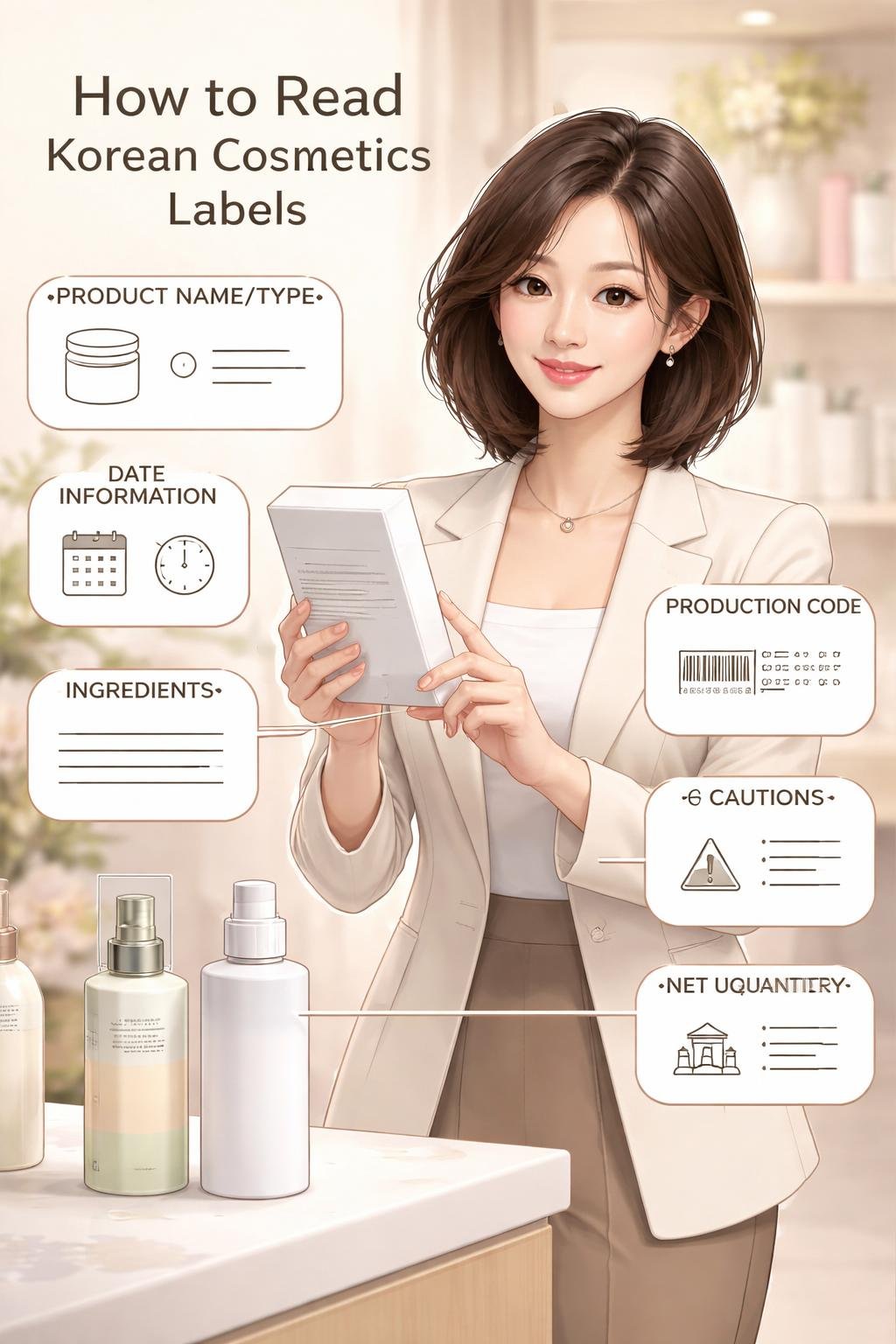
Use this checklist when examining a Korean cosmetic:
- Identify the product: Confirm the product name and intended product type.
- Find the batch or manufacturing number: Do not automatically treat an isolated code as an expiration date.
- Check date information: Look for an expiration date, a stated use period, or period-after-opening information.
- Read the ingredient list: Check the current package rather than relying only on an older online listing.
- Review directions and precautions: Follow any stated usage limits, warnings, or storage instructions.
- Confirm the net quantity: Check the stated volume or weight so that you know how much product the package contains.
- Verify unclear details: Consult the official manufacturer when a date, code, symbol, translation, or instruction is uncertain.
What Korean Cosmetics Labels Show
Guidance from Korea’s Ministry of Food and Drug Safety lists major categories of information that must be displayed for cosmetics. These include the product name; the relevant business name and address; a batch or manufacturing number; an expiration date or period after opening; price; all ingredients used; net volume or weight; the words identifying a functional cosmetic when applicable; precautions for use; and other items prescribed by the applicable rules.
| Label category | What it helps you check |
|---|---|
| Product name | The identity of the cosmetic. |
| Business details | The business associated with the labeled product and its address. |
| Batch or manufacturing number | The production batch or manufacturing record identifier. |
| Expiration or opening-period information | The stated time limit for storage or use, according to the label. |
| Price | Price information listed among the Korean labeling categories. |
| All ingredients | The substances declared for the current formulation. |
| Net volume or weight | The amount of product in the package. |
| Functional-cosmetic wording | A required designation when the product falls within an applicable functional-cosmetic category. |
| Precautions | Warnings and instructions intended to support appropriate use. |
Small-volume products and samples can be subject to special labeling provisions, so a miniature container may not display information in exactly the same way as a full-size package. When the immediate container has limited space, inspect the outer box, attached leaflet, or official manufacturer information as applicable.
Products, Ingredients, and Label Distinctions
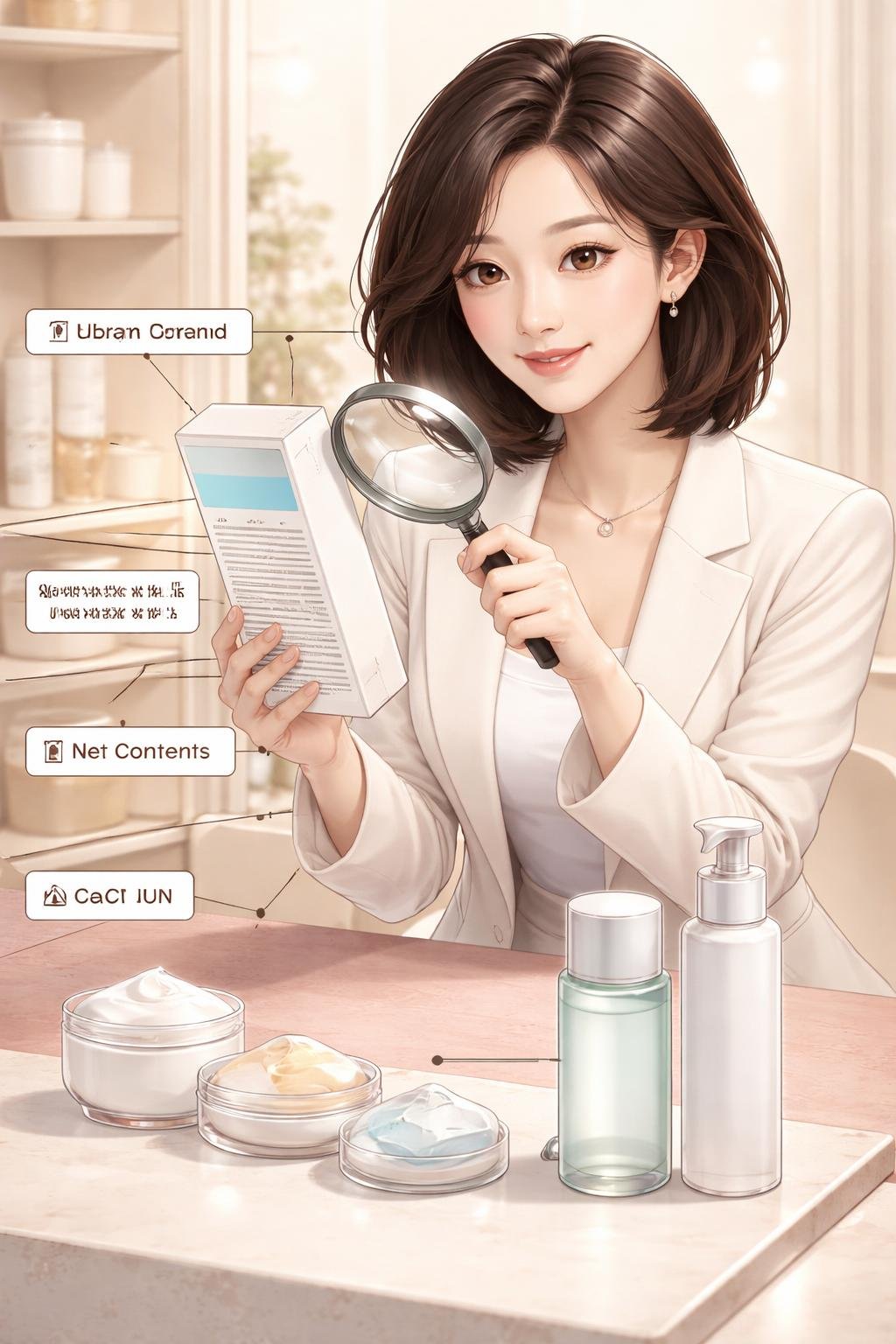
Begin by matching the product name on the container with the name on the outer packaging. This helps prevent confusion when several items in a product line use similar colors or designs. Then locate the net contents, which may be expressed as a volume or weight depending on the formulation.
The full ingredient declaration is different from the short ingredients highlighted on the front of a package. Front-label wording may emphasize selected ingredients or describe how the manufacturer positions the product, while the full declaration provides the broader formulation information required on the label. Do not treat a highlighted ingredient as proof that it will produce a particular result.
Product claims are also different from required wording. A claim describes an intended characteristic or use, while regulatory wording may identify a product category or provide mandatory precautions. Optional marketing phrases, design elements, and promotional names should not replace the full ingredient list or official directions when you are evaluating a product.
If a package carries an applicable functional-cosmetic designation, read that wording together with the directions and precautions. Do not infer that the designation guarantees a specific result for every user. Individual responses and suitability can differ.
An ingredient-list and product-information diagram can visually separate the product identity, net contents, complete ingredient declaration, required designation, and optional marketing copy. Such a diagram should use fictional packaging rather than imitate an actual commercial product.
Dates, Batch Codes, and Packaging Symbols
An expiration date or stated use period communicates time-related usage information. A batch or manufacturing number identifies a production record and is not, by itself, proof of the product’s expiration date. If a string of numbers or letters is not clearly labeled, do not guess which type of information it represents.
Period after opening refers to the stated period for using a product once it has been opened. On some packaging, this information may appear with an open-container-style icon and a number followed by a time unit. Symbols and layouts are not necessarily identical across all manufacturers or markets, so the nearby text and official directions remain important.
Shelf life is the period during which a cosmetic is expected to remain safe and perform normally under appropriate conditions. It can vary according to product type, use, and storage. Heat, sunlight, air, moisture, contamination, and temperature changes can accelerate deterioration, which means that a printed date should not be considered independently of the product’s condition and handling.
Recycling marks, material identifiers, opening-period icons, and other packaging symbols may appear close together. If a symbol has no clear explanation, consult the package leaflet or official manufacturer instead of assigning it a meaning based only on appearance.
How to Use the Label Information
Before Purchase
- Confirm the exact product identity and intended use.
- Inspect the package for damage, leakage, broken seals, or unclear over-labeling.
- Find the expiration or opening-period information and distinguish it from the batch number.
- Review the current ingredient list and precautions.
- Confirm the net contents and relevant business details.
Before First Use
Read the directions and precautions before applying the product. Check that the package and product appear consistent with the manufacturer’s current information. If you need to avoid a particular ingredient, examine the full declaration rather than relying on promotional text.
After Opening
Recording the opening date can be useful when a label gives a period after opening. Keep the cap, pump, or applicator clean, close the package as directed, and avoid introducing unnecessary moisture or contamination.
During Storage
Follow the labeled storage directions. Pay attention to exposure to heat, direct sunlight, air, moisture, contamination, and repeated temperature changes because these conditions can shorten useful shelf life. Stop and reassess a product if its appearance, odor, texture, or performance changes unexpectedly, even when the printed date has not passed.
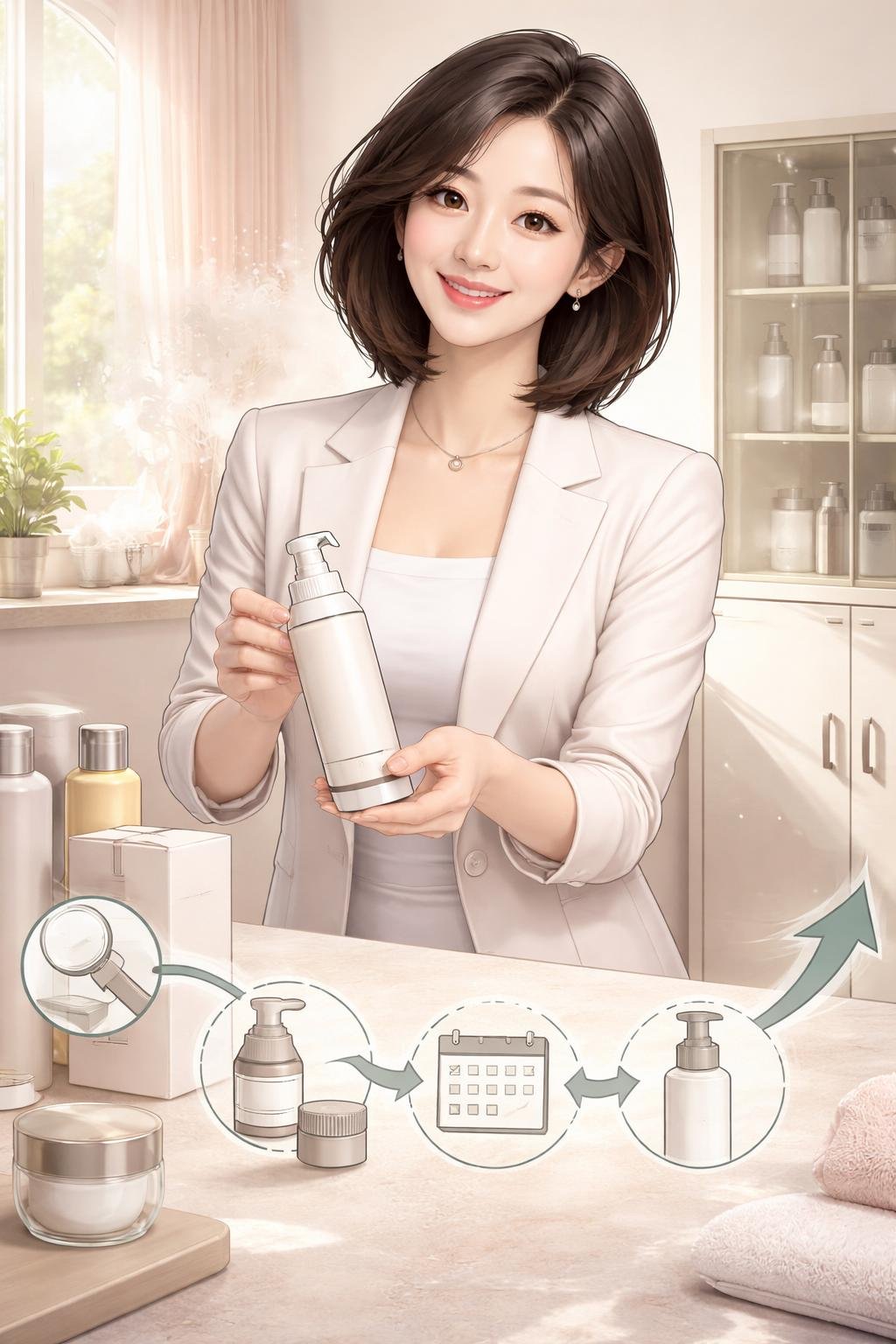
A step-by-step educational checklist can illustrate this sequence: inspect before purchase, read before use, note the opening date, store appropriately, and monitor the product during use.
Choosing Products and Making Safety Checks
When comparing cosmetics, use current package information. Formulas and labels can change, so an ingredient list from an old box, retailer image, review, or previous purchase may not match the item currently available.
- Compare ingredients: Read the complete declaration, especially if you already know that certain ingredients do not suit your skin.
- Read precautions: Check the areas of use, stated restrictions, and any directions concerning discontinuation.
- Review dates: Identify the expiration or use-period information without confusing it with a batch code.
- Inspect package condition: Avoid relying on date information alone when a package is damaged, leaking, unsealed, or visibly contaminated.
- Confirm official details: Use the manufacturer’s current information when packaging and online descriptions differ.
Skin responses vary between individuals, and a product that is comfortable for one person may irritate another. A printed date does not guarantee that a cosmetic has remained unaffected by poor storage, contamination, or damage. Conversely, this guide cannot determine whether a specific product is suitable for an individual.
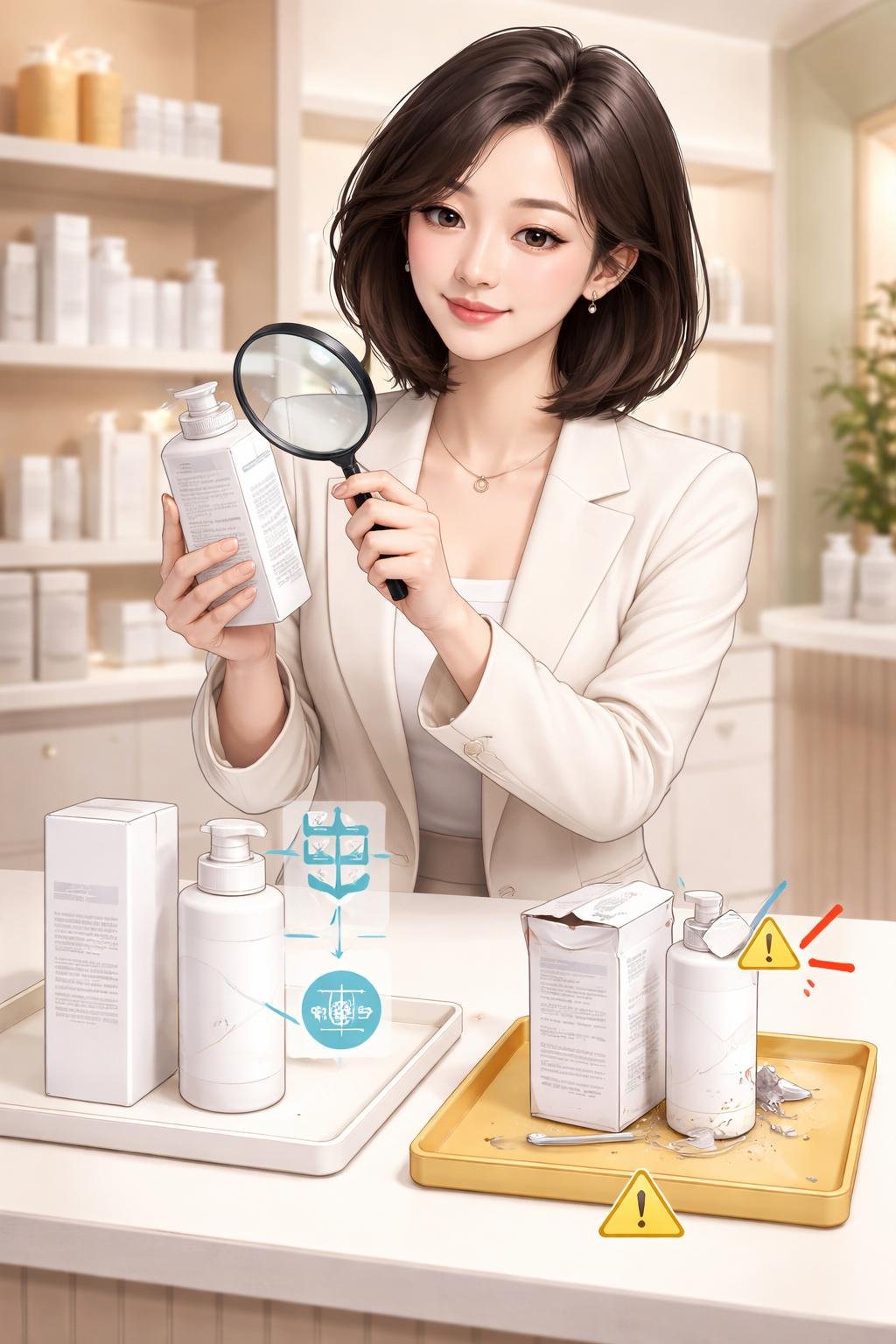
If significant or persistent irritation or another skin concern occurs, stop using the product and seek advice from an appropriate healthcare professional. A selection-and-safety illustration can reinforce the need to examine the formula, precautions, dates, package condition, and official information together.
Korean Beauty Labels in Shopping Context
In the Korean retail context, shoppers may encounter required Korean-language packaging details covering product identity, responsible business information, ingredients, quantity, dates or opening-period information, and precautions. These details provide a more reliable starting point than front-of-package promotional language alone.
Samples and small-volume products deserve additional attention because special labeling provisions may apply. Check any outer wrapper, accompanying material, or official product page when the small container does not provide enough space for complete details.
Export packaging may differ from domestic Korean packaging. An imported product can carry an added label, translated directions, or market-specific information. Compare the original container, outer box, authorized local label, and official manufacturer details rather than assuming that every market uses the same design.
The regulatory context also differs by country. In the United States, cosmetics generally are not required to carry expiration dates, although products regulated as drugs, including certain products with drug claims, have different requirements. This contrast is one reason international shoppers should read the actual package instead of applying the labeling expectations of one market to another.
K-Nana Beauty Guide
Fictional educational example: K-Nana is comparing a boxed Korean cosmetic with its inner container. She first confirms that the product names match and checks the stated net contents.
Next, she locates the time-related information. She does not assume that the nearby production code is an expiration date. If an opening-period statement is present, she plans to note the day she opens the product so she can track that period more easily.
K-Nana then reads the full ingredient declaration and the usage precautions. She keeps these separate from highlighted ingredients and promotional phrases on the front of the box. She also checks whether applicable functional-cosmetic wording appears.
One packaging symbol is unclear, so she does not guess what it means. She checks the package instructions and the official manufacturer’s current information. This fictional example demonstrates a verification routine and does not represent a personal review, product result, or effectiveness claim.
Frequently Asked Questions
1. How can I distinguish an expiration date from a batch code?
Look for nearby wording that clearly identifies the date or use period. A batch or manufacturing number identifies a production record and may appear as an otherwise unexplained code. If the label does not make the distinction clear, ask the official manufacturer rather than decoding the number yourself.
2. What does period after opening mean?
It is the stated period for using the cosmetic after it has been opened. Because the period begins at opening, writing down the opening date can make it easier to track.
3. Is a cosmetic automatically safe until its printed date?
No. Storage conditions, package damage, contamination, air, heat, sunlight, moisture, and temperature changes can affect deterioration. Check both the date and the product’s condition, and follow the stated storage and use instructions.
4. How can I check ingredients when the packaging is mainly in Korean?
Start with the complete ingredient declaration on the package, outer box, or accompanying material. If you cannot confidently interpret it, use the official manufacturer’s current information or request clarification. Do not rely solely on a retailer image or an older translated list because formulations can change.
5. What should I do when a date, symbol, or instruction is unclear?
Do not guess. Keep the package, photograph the relevant information for reference, and contact the official manufacturer or authorized local representative. Avoid using the product until any uncertainty that affects appropriate use has been resolved.
Final Takeaway
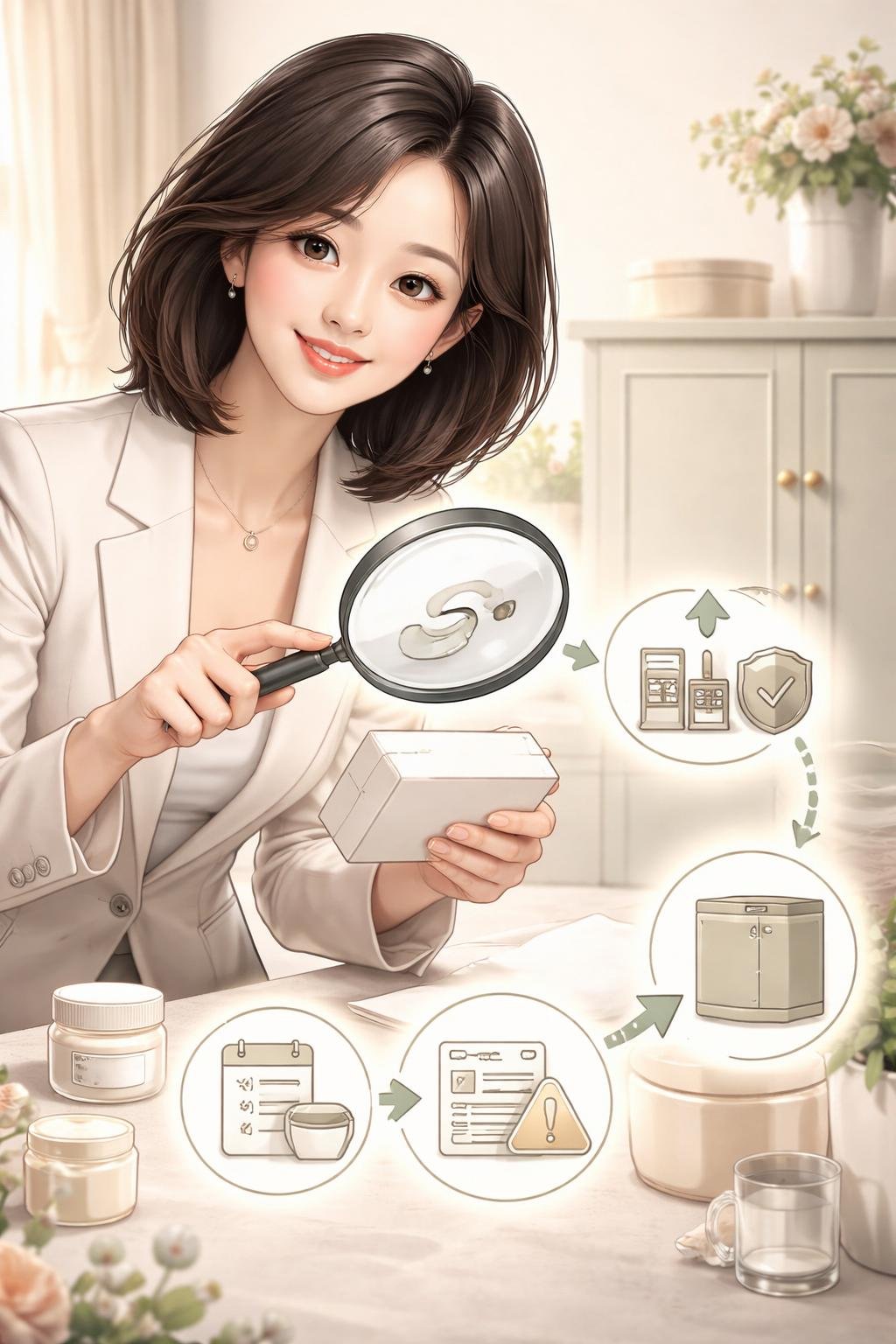
The safest reading order is to confirm the product identity, locate the expiration or opening-period information, distinguish the batch number, review the complete ingredients and precautions, check the net quantity, and identify the relevant business or manufacturer details.
Storage and handling influence shelf life, so a printed date is only one part of the assessment. Verify unclear symbols, changing formulations, translations, and conflicting information with the official manufacturer. A final educational reminder can present this order as a compact label-reading checklist for use while shopping or organizing cosmetics at home.
Image Credits
- Visual 01: An original AI-generated educational overview showing labeled areas on a fictional Korean cosmetic package, including identity, date information, ingredients, quantity, and precautions.
- Visual 02: An original AI-generated diagram separating a fictional product’s complete ingredient list, net contents, required information, and optional marketing text.
- Visual 03: An original AI-generated step-by-step checklist covering package inspection, directions, opening-date tracking, storage, and condition monitoring.
- Visual 04: An original AI-generated selection and safety-check illustration featuring ingredients, precautions, date information, package condition, and manufacturer verification.
- Visual 05: An original AI-generated final reminder presenting the recommended order for reading cosmetic label information.
All five visuals are educational illustrations. They do not depict actual products, packaging, personal experiences, or real events.
References
- 행정규칙 > 화장품 사용기한 및 사용상의 주의사항 표시에 관한 규정 | 국가법령정보센터 — https://www.law.go.kr/LSW/admRulLsInfoP.do?admRulSeq=2000000015031
- 식품의약품안전처>정책정보>화장품 정책정보>화장품정책자료>화장품업 관련 주요 규정>화장품의 기재, 표시 사항 | 식품의약품안전처 — https://www.mfds.go.kr/wpge/m_645/de050601l0024.do
- Shelf Life and Expiration Dating of Cosmetics | FDA — https://www.fda.gov/cosmetics/cosmetics-labeling/shelf-life-and-expiration-dating-cosmetics
- Do I need to label my cosmetics products with expiration dates? | FDA — https://www.fda.gov/industry/fda-basics-industry/do-i-need-label-my-cosmetics-products-expiration-dates
Disclaimer
This article provides general educational information and is not medical advice, diagnosis, or treatment. Cosmetic formulations, ingredients, labels, availability, and prices may change, and individual skin responses vary. Verify current product details with the official manufacturer and consult an appropriate healthcare professional about significant or persistent skin concerns. AI-generated images are illustrative and may not accurately represent actual products, packaging, ingredients, application results, or clinical outcomes.