
Introduction
A Korean sheet mask is a face-shaped sheet saturated with a cosmetic liquid commonly described as an essence, serum, or ampoule. It offers a temporary, targeted step for goals such as adding moisture or soothing skin, depending on the formula.
This Korean sheet mask guide explains common sheet materials, serum types, ingredient categories, selection, application, and basic precautions. Sheet masks can complement a regular skincare routine, but they do not replace daily care or treatment for a skin condition.
Educational visual 01 introduces the basic format by showing a single-use facial sheet, its liquid formula, and where the mask fits within a simple routine.
Quick Guide
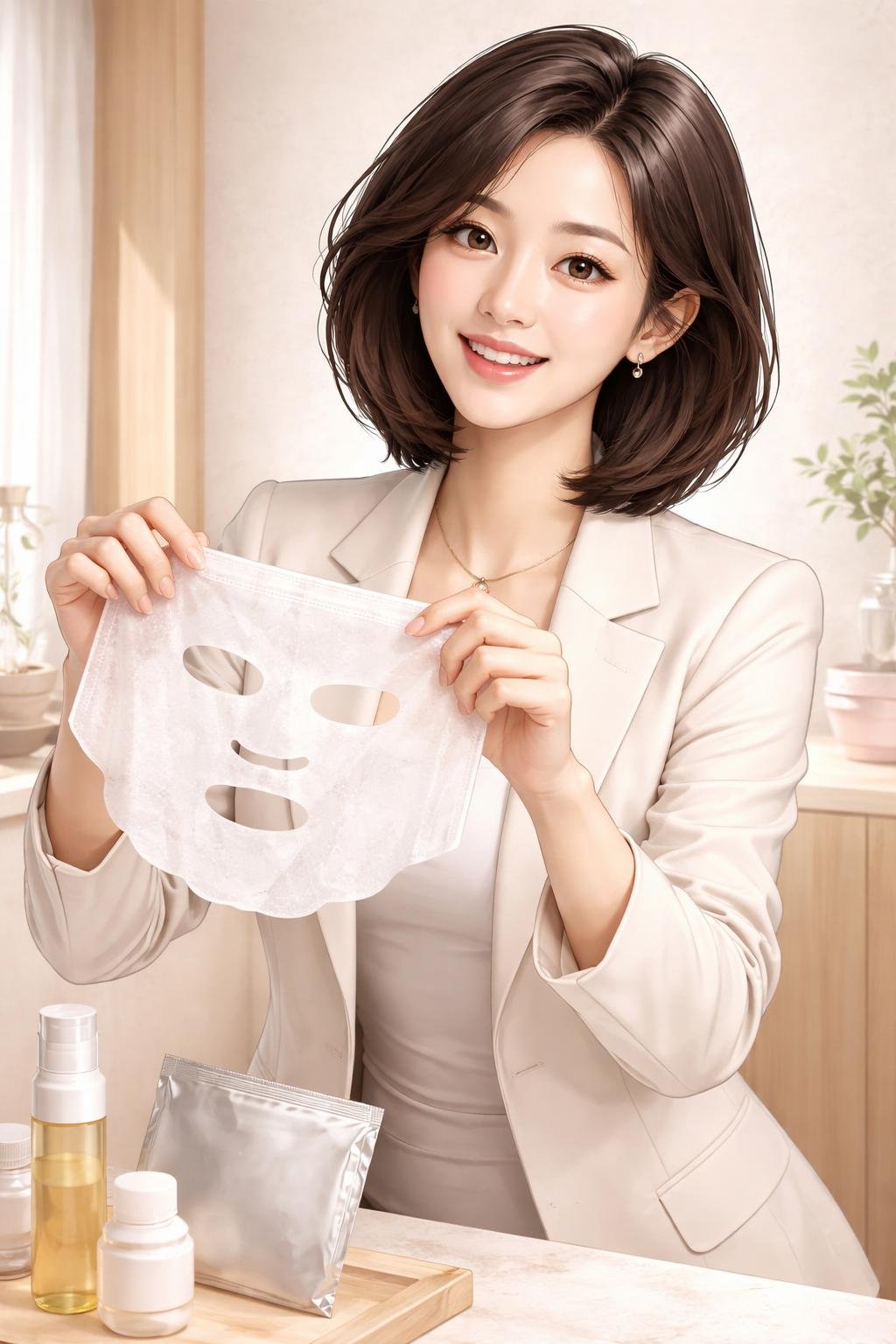
- What it is: A single-use facial sheet saturated with a cosmetic essence, serum, or ampoule formula.
- How to choose: Match the formula to your current skin need and check the complete ingredient list rather than relying only on front-label claims.
- Routine position: It generally goes after cleansing and optional toner but before moisturizer.
- Timing: Follow the time printed on the product label and remove the sheet while it is still damp.
- Safety: Remove the mask immediately if itching, burning, stinging, redness, or another unexpected reaction develops.
What Is a Korean Sheet Mask?
A sheet mask consists of a thin face covering with openings for the eyes, nose, and mouth. The sheet holds a liquid cosmetic formula against the skin for the application period stated by the manufacturer.
Most sheet masks are designed for one application. The material affects how the mask fits, feels, and holds liquid, while the formula determines which ingredients reach the skin. Fit and ingredient content can vary considerably between products.
A hydrating or soothing formula may temporarily support dry or uncomfortable-feeling skin. However, a mask is an optional cosmetic step rather than a replacement for cleansing, moisturizing, sun protection, or professional care for acne, eczema, or another skin condition.
Sheet Materials, Serum Types, and Ingredients
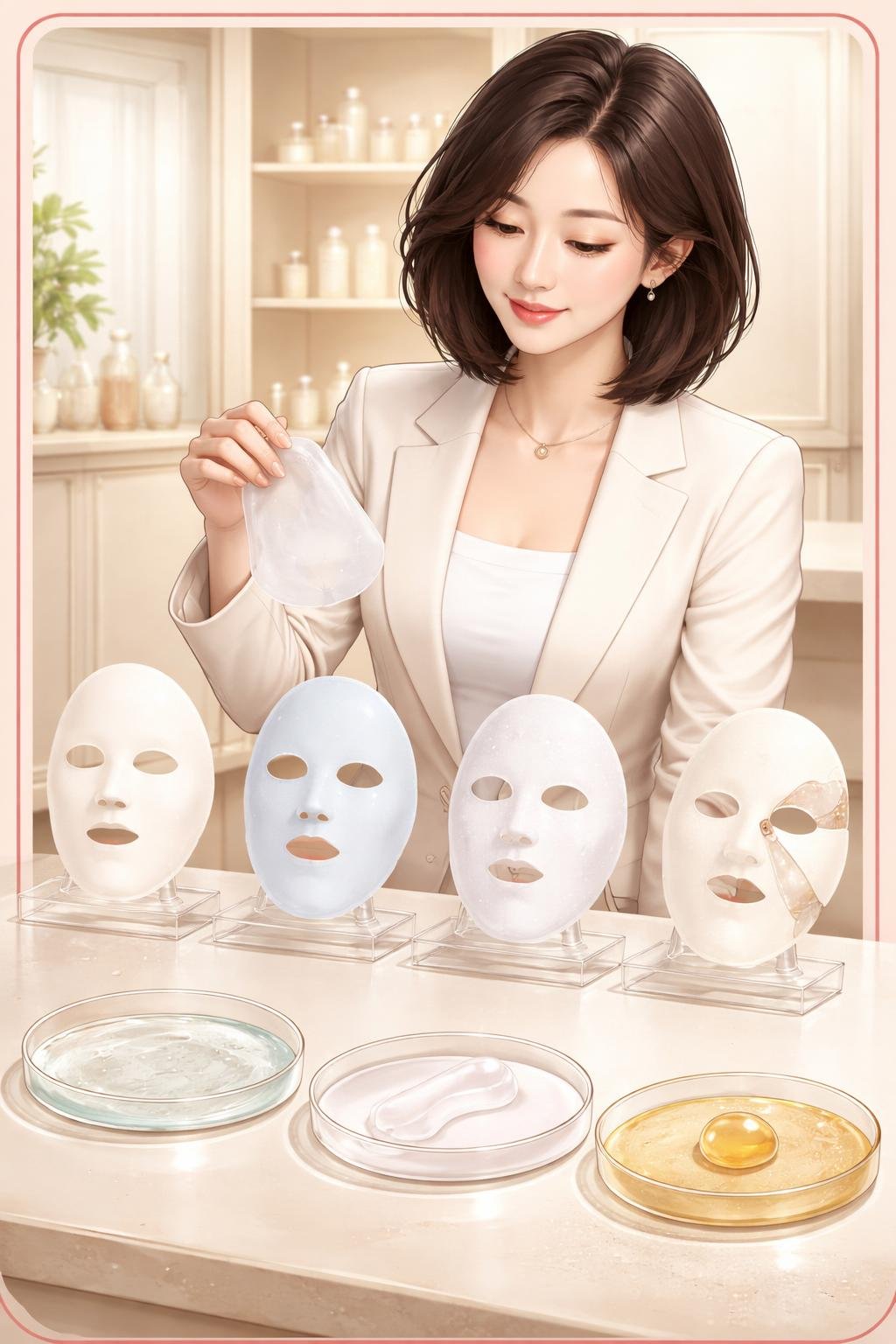
Common sheet materials
| Material | Typical characteristics | Selection consideration |
|---|---|---|
| Cotton or microfibre | Soft, absorbent, and widely used, although fit and dripping can vary. | Check whether the cut sits comfortably without pulling around the eyes or mouth. |
| Hydrogel | A gel-like material that can feel cooling and conform closely to parts of the face. | Consider the formula as well as the cooling sensation, because material alone does not determine performance. |
| Bio-cellulose | A close-fitting material made from fermented coconut fibres. | Its close adherence may be useful when fit is a priority, but the ingredient list still matters. |
| Hybrid construction | Combines materials or uses different constructions across facial areas. | Evaluate the product’s fit, liquid formula, directions, and warnings together. |
Essence, serum, and ampoule formats
A watery formula may be marketed as an essence, while a thicker formula may be called a serum. An ampoule mask is generally positioned as containing a more concentrated formula. These names do not represent a universal formulation standard, so “ampoule” does not automatically mean that a product is stronger, safer, or more effective.
Read the ingredient list and directions to understand the actual formula. Two products using the same serum-type term can contain different ingredients and require different application times.
Ingredient examples by skin need
| Current need | Ingredient examples | What to check |
|---|---|---|
| Temporary dryness or dehydration | Hyaluronic acid and glycerin, which are humectants that help attract and hold water. | Look for a compatible moisturizer to apply afterward. |
| Barrier support | Ceramides, which are lipid components used in barrier-supporting skincare. | Check the full formula for other ingredients that may not suit your skin. |
| Skin that feels sensitive or uncomfortable | Colloidal oatmeal, green tea, aloe, or a simple hydrating formula. | Avoid assuming that botanical ingredients are automatically non-irritating. |
| Oiliness or clogged-pore concerns | Niacinamide, clay, alpha hydroxy acids, or beta hydroxy acids may appear in relevant formulas. | Exfoliating acids can be irritating, especially when combined with similar products. |
| Appearance-focused care | Vitamin C, peptides, bakuchiol, or hyaluronic acid may be included in products marketed for visible signs of aging. | Do not expect a single mask to produce lasting or clinical results. |
Alpha hydroxy acids, often shortened to AHAs, and beta hydroxy acids, or BHAs, are exfoliating ingredients. Using them alongside other exfoliants or strong active formulas can create unnecessary overlap and increase the chance of irritation.
Educational visual 02 compares cotton or microfibre, hydrogel, bio-cellulose, and hybrid sheets alongside watery essence, serum, and ampoule-style formulas without presenting the categories as universal quality rankings.
How to Apply a Korean Sheet Mask
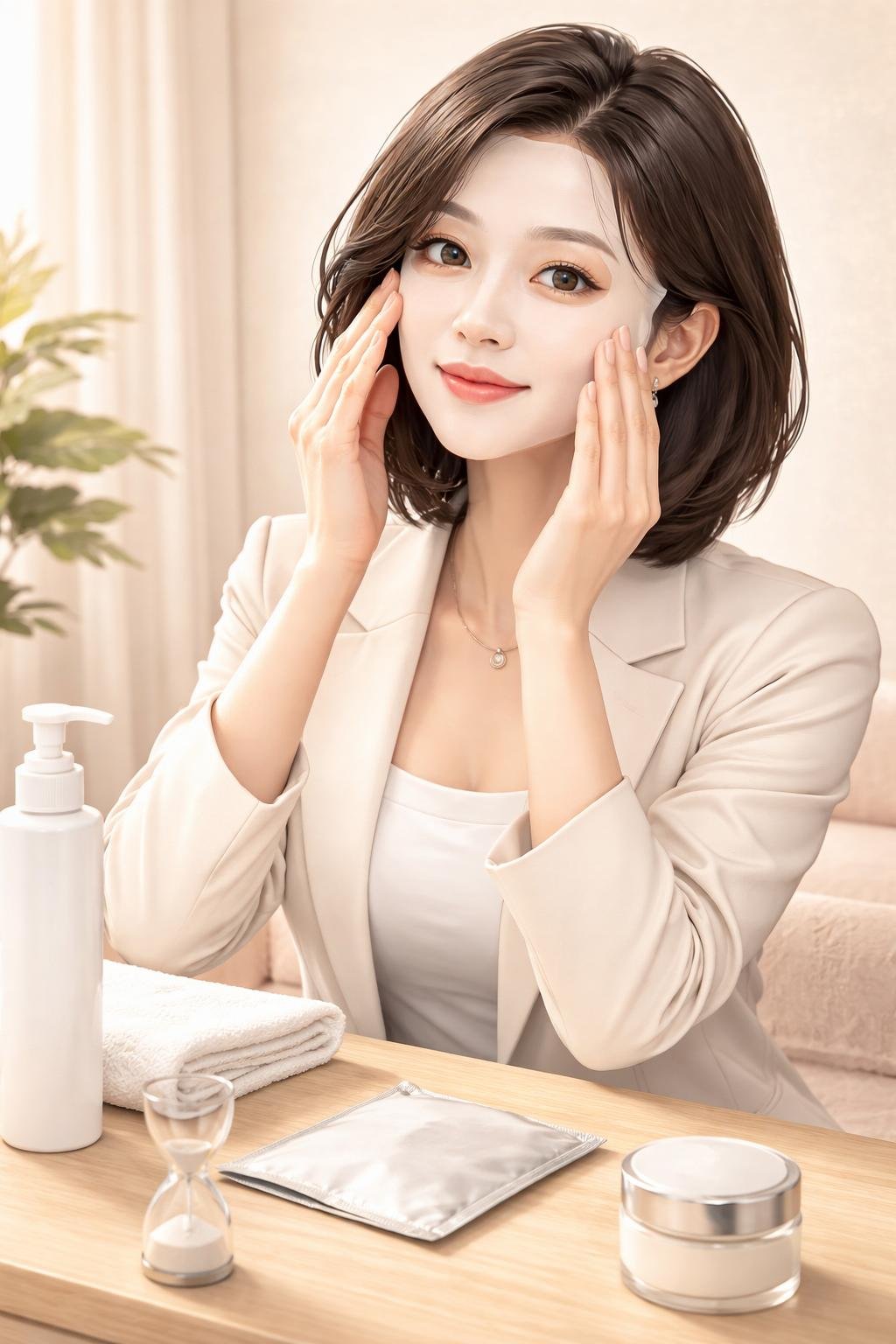
- Read the label. Check the ingredients, warnings, stated application time, and recommended frequency before opening the package.
- Wash your hands. Clean hands reduce unnecessary contact between the mask and dirt on your fingers.
- Cleanse your face. Apply the mask to clean skin unless the manufacturer gives different directions.
- Use toner if desired. Toner is optional and should be compatible with both your skin and the mask formula.
- Place the sheet gently. Align the openings and smooth the material with your fingertips without rubbing or pulling.
- Observe the labeled time. Do not assume that leaving the mask on longer will provide a better result.
- Remove it while damp. Peel the sheet away gently and discard it after its single use.
- Pat in the remaining liquid. Use clean fingertips and avoid aggressive rubbing.
- Apply moisturizer. A compatible moisturizer can complete the routine and help reduce moisture loss.
Frequency depends on the formula, label directions, and individual response. A simple hydrating mask and a mask containing exfoliating or concentrated active ingredients should not automatically be used on the same schedule.
Common mistakes include leaving the sheet on until it dries, reusing the sheet, ignoring the stated timing, or applying a strong active mask immediately after exfoliation when the skin already feels reactive. A sheet mask should also not be treated as a replacement for a consistent skincare routine.
One supplied practical guide suggests that unused liquid may be transferred to a sterilized airtight container, refrigerated, and used within 48 hours. This is not universal manufacturer guidance. Because safe storage depends on the formula and packaging, follow the current product instructions and discard excess liquid when storage is not explicitly supported.
Educational visual 03 presents the application order from label check and cleansing through mask removal and moisturizer.
How to Choose a Mask and Use It Safely
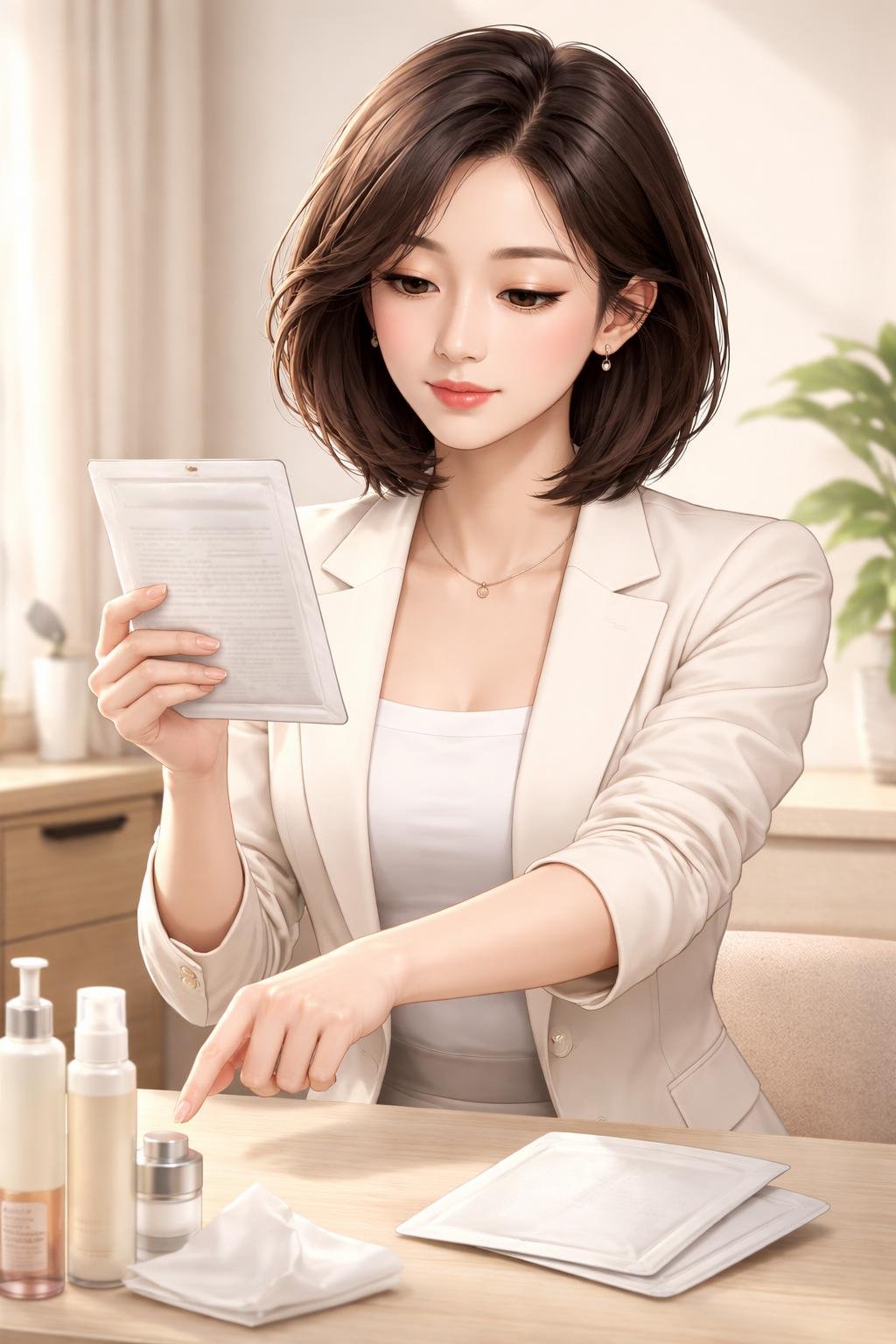
Start with what your skin needs now rather than choosing the most intensive-looking package. A basic hydrating formula may suit temporary dryness, including dryness after travel, while skin that feels irritated may be better served by avoiding exfoliating acids, fragrance, essential oils, rubbing alcohol, and other known personal triggers.
For oily skin, do not assume that a drying or highly active mask is necessary. Review the complete formula and avoid duplicating exfoliating ingredients already present in cleansers, toners, or leave-on treatments. Stronger or more concentrated does not automatically mean more appropriate.
Patch-test a new product before full facial use, particularly if your skin is reactive. Follow any manufacturer instructions for testing, timing, and frequency. A patch test cannot guarantee that a reaction will not occur during later use.
Read the directions and warnings every time you try a new mask. In the United States, most cosmetic products and ingredients do not require FDA approval before marketing, with certain color additives as an exception. Marketers remain legally responsible for the safety of their products and ingredients under labeled or customary conditions of use.
Terms such as “natural,” “organic,” and “hypoallergenic” do not automatically make a cosmetic safer. Ingredient preferences and reactions differ, so marketing language should not replace a review of the ingredient list and warnings.
Keep unopened masks within the storage conditions stated on the package and protect cosmetics from extreme temperatures. Do not use a product if its color or smell has changed. Remove the mask immediately if itching, burning, or stinging occurs. Stop using it and seek appropriate healthcare advice if you develop a rash, redness, a burn, or another unexpected reaction.
Educational visual 04 illustrates full-label checks, clean handling, proper timing, changed-product warnings, and signs that mean the mask should be removed.
Sheet Masks in Korean Beauty Routines
Within a Korean beauty routine, a sheet mask can function as an optional targeted step rather than a mandatory daily product. The practical approach is to choose a formula for a current need instead of adding a mask simply because a routine contains many steps.
A common sequence is cleansing, optional toner, sheet mask, and moisturizer. Applying moisturizer afterward helps finish the routine rather than leaving the remaining serum as the final step by default.
International shoppers should check the full ingredient list, directions, warnings, application time, and product condition. If the label is not in a language they understand, they should seek reliable manufacturer information rather than guessing from package images or unfamiliar marketing terms.
Country of origin does not by itself establish that a formula will suit every person. Material, ingredients, storage, current skin condition, and individual response are more useful selection factors than assumptions about product superiority.
K-Nana Beauty Guide
Fictional educational example: Nana is a fictional beauty guide used only to demonstrate decision-making. She does not represent personal testing, a product review, or a medical outcome.
If Nana’s skin feels temporarily dehydrated after travel, she first checks for a straightforward hydrating formula and reads the complete label. She compares the ingredients and directions rather than selecting a mask solely because the package uses words such as “intensive” or “natural.”
In another example, Nana notices that her skin already feels irritated after exfoliation. She postpones a mask containing additional exfoliating acids instead of layering another active formula onto reactive-feeling skin.
When she uses a suitable mask, Nana washes her hands, cleanses, follows the labeled application time, removes the sheet while it is damp, discards it, and applies moisturizer afterward. These examples illustrate a cautious process and do not promise a particular result.
Frequently Asked Questions
1. How often can I use a sheet mask?
Use frequency depends on the formula, manufacturer directions, and your skin’s response. Do not apply an exfoliating or concentrated formula as often as a basic hydrating mask unless the current label specifically supports that use.
2. Should I rinse my face after removing the mask?
Many sheet masks direct users to pat in the remaining liquid rather than rinse, but instructions vary. Follow the label, and rinse the product off if the directions require it or if discomfort develops.
3. Can I leave a sheet mask on overnight?
Do not leave a conventional sheet mask on overnight unless the manufacturer explicitly designed and labeled it for that purpose. Standard sheet masks should be removed at the stated time and while the sheet remains damp.
4. Can I reuse the sheet?
No. A single-use sheet should be discarded after removal. Putting a used mask back into its package or applying it again is not supported by the intended single-use format.
5. Where does a sheet mask belong in a skincare routine?
It generally follows cleansing and optional toner and comes before moisturizer. Follow the product label if it specifies a different order, and continue using the regular skincare steps appropriate for your needs.
References
- Do facial masks work, and should I add one to my skin care routine? — https://www.aad.org/public/everyday-care/skin-care-secrets/routine/facial-masks-and-skin-care
- Cosmetic Ingredients | FDA — https://www.fda.gov/cosmetics/cosmetic-products-ingredients/cosmetic-ingredients
- Using Cosmetics Safely | FDA — https://www.fda.gov/cosmetics/resources-consumers-cosmetics/using-cosmetics-safely
- Korean sheet masks — types, timing and how to use every drop of essence — Litsy Journal — https://www.litsy.co.za/blog/korean-sheet-masks-guide
Final Takeaway
Choose a sheet material and formula that match your current skin need, then verify the ingredients, warnings, timing, and storage directions. Use the mask for the labeled period, discard the used sheet, and apply a compatible moisturizer afterward.
As summarized in educational visual 05, a sheet mask is best approached as an optional cosmetic step with realistic expectations—not as an overnight product, reusable treatment, or substitute for regular skincare.
Image Credits
- Educational visual 01: An original AI-generated diagram introducing a face-shaped sheet saturated with cosmetic liquid and its optional place in a routine.
- Educational visual 02: An original AI-generated comparison of cotton or microfibre, hydrogel, bio-cellulose, and hybrid materials with essence, serum, and ampoule-style textures.
- Educational visual 03: An original AI-generated sequence showing label review, hand washing, cleansing, placement, timed removal, gentle patting, and moisturizer.
- Educational visual 04: An original AI-generated safety guide illustrating ingredient-list review, storage checks, changed color or smell, and irritation warning signs.
- Educational visual 05: An original AI-generated final reminder to match the mask to the current skin need, follow the label, discard the sheet, and keep expectations realistic.
All five visuals are illustrative. They do not depict verified products, packaging, ingredients, application results, clinical outcomes, or real events.
Disclaimer
This guide provides general educational information and is not medical advice, diagnosis, or treatment. Cosmetic formulations, ingredients, labels, availability, and prices can change, and individual skin responses vary. Verify current product information with the official manufacturer and consult an appropriate healthcare professional about significant or persistent skin concerns or unexpected reactions. AI-generated images are illustrative and may not accurately represent actual products, packaging, ingredients, application results, or clinical outcomes.