
Introduction: Why the History of K-Pop Matters
K-Pop is both a form of popular music and a broader cultural and industrial ecosystem. Its development connects recorded music, entertainment companies, performance, fashion, media distribution, and organized fan engagement.
Understanding the history of K-Pop requires more than identifying a single debut or artist. Its deeper roots lie in the long development of Korean popular music, while the modern idol system took shape much later and digital platforms subsequently expanded its international reach.
This distinction helps explain why K-Pop is considered a major part of the Korean Wave, the growth of international interest in South Korean popular culture that began during the 1990s.
What Is K-Pop?
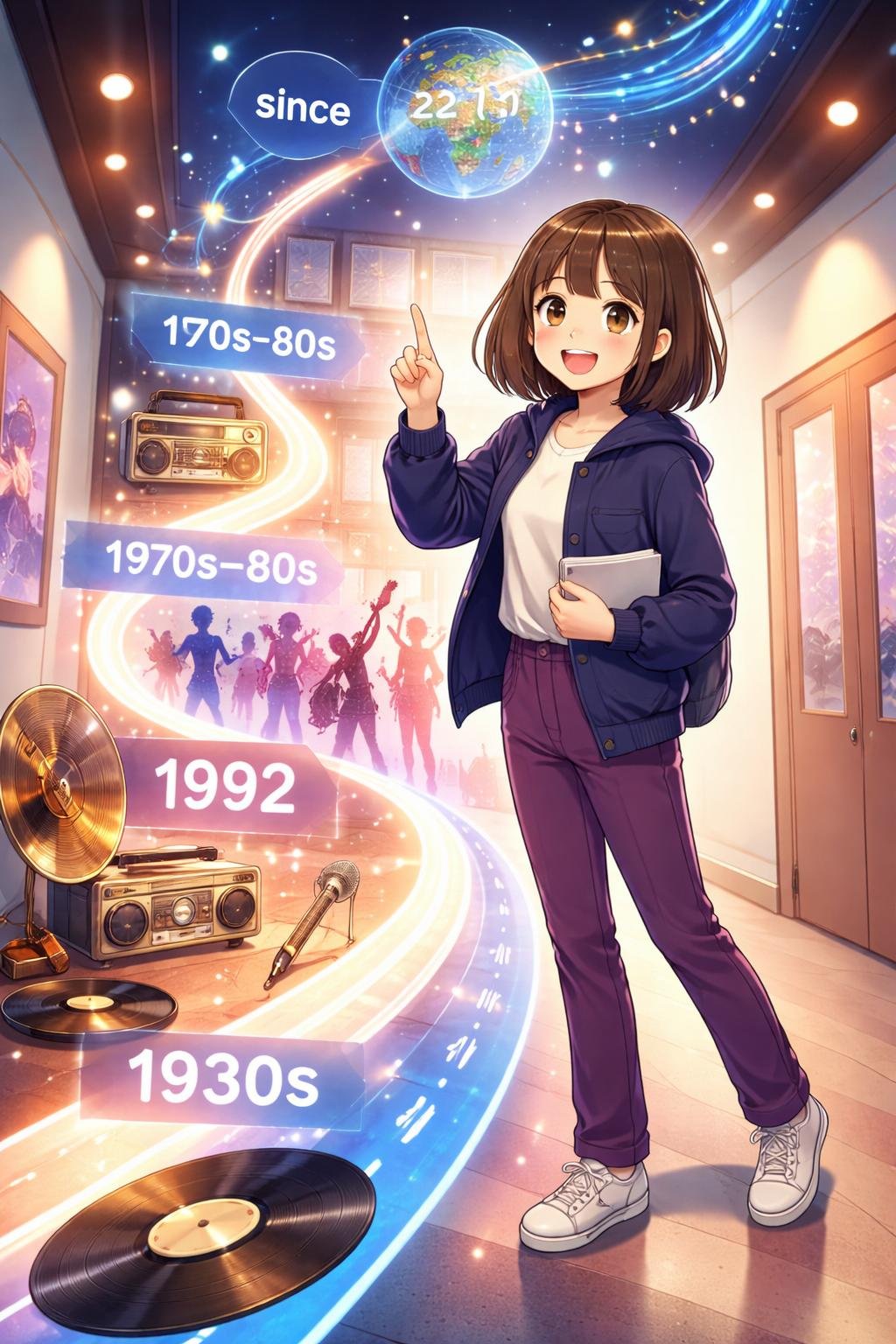
K-Pop is an international term for popular music associated with South Korea. Although it can be used broadly, it is often linked specifically to dance-oriented idol music and the industry built around trained performers, coordinated performances, visual presentation, fashion, branding, and fan participation.
The label developed over time. According to the Library of Congress research guide, it evolved from a general description of popular music in Korea into a name for a wider cultural and industrial system. The term likely emerged during the late 1990s and became widely used internationally after 2000.
K-Pop does not represent one fixed musical style. Modern releases can draw from hip-hop, R&B, rock, electronic music, and other influences. What often connects them is the way music is combined with performance, visual identity, media production, and audience engagement.
The Historical Roots and Major Eras of K-Pop
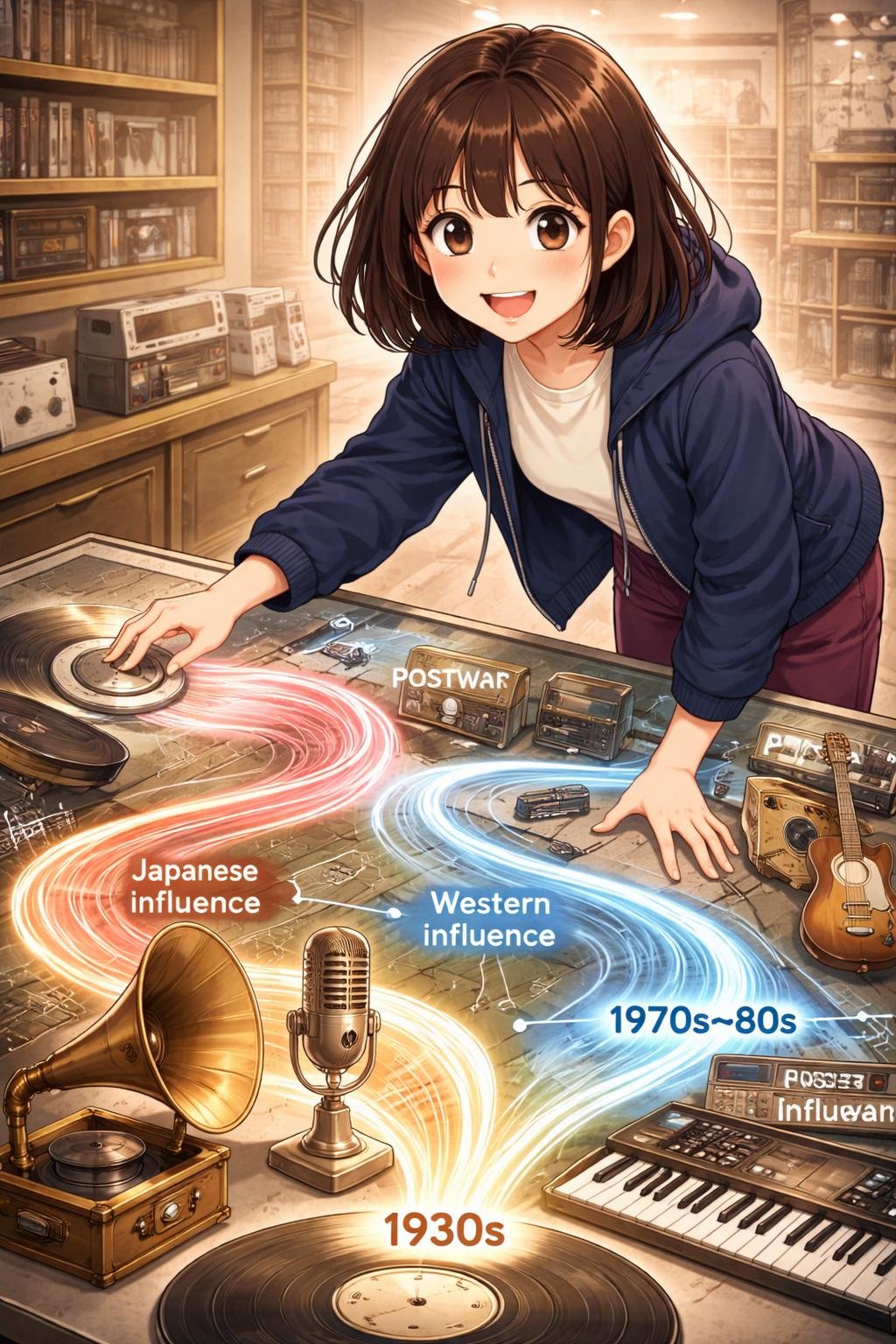
The history of K-Pop can be organized into broad periods, but these periods should be treated as learning tools rather than universally accepted boundaries. Different researchers may emphasize different starting points depending on whether they are discussing Korean recorded music, modern dance music, the idol industry, or international use of the term K-Pop.
| Broad period | Verified development | Historical significance |
|---|---|---|
| Early recorded-music history | Commercial recordings in Korea can be traced to 1907. Korean popular music later developed amid Japanese and Western influences, with a recording industry flourishing during the 1930s. | These developments form part of the deeper history behind contemporary Korean popular music. |
| Postwar development | Western music reached Korean audiences through channels that included United States military stages and broadcasting. | This exposure contributed to a changing musical environment rather than immediately producing the modern idol system. |
| 1970s and 1980s | Korean popular music became more diverse across multiple genres. | This period shows that Korean popular music had a substantial history before modern idol-centered K-Pop. |
| 1990s transformation | Dance-oriented music incorporating Western genres became increasingly prominent. Seo Taiji and Boys became a major cultural turning point after debuting in 1992. | The group helped establish Korean rap in the mainstream and made teenage listeners increasingly central consumers. |
| Late 1990s and 2000s | Entertainment companies developed structured trainee programs, group branding, and agency-led idol production. | These systems helped form the modern idol industry commonly associated with K-Pop. |
| Digital and global era since 2011 | Downloads, streaming, and social media transformed production, distribution, consumption, fan engagement, and talent discovery. | Digital circulation gave international audiences more direct ways to encounter and follow South Korean music. |
The 1990s are often treated as the beginning of modern K-Pop because dance-oriented music, Korean rap, youth marketing, and idol production came together in influential ways. However, this does not erase the earlier history of Korean popular music that made those changes possible.
How the Modern K-Pop System Developed
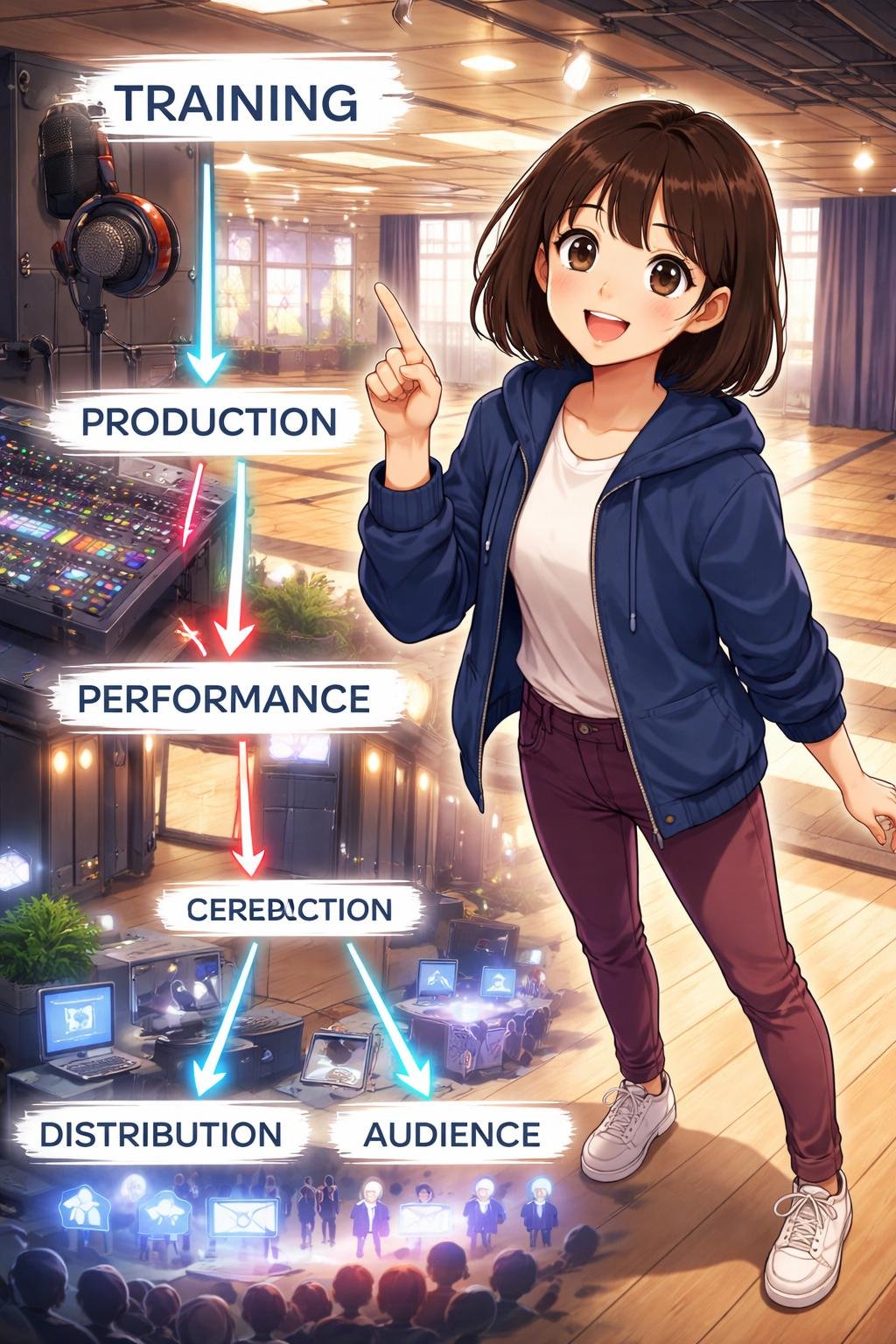
After the period associated with Seo Taiji and Boys, companies including SM, YG, and JYP established influential agency-based idol models. Under this general model, trainees received extensive preparation in areas such as singing and dance before being presented as performers.
The developing system connected several activities that had previously been easier to discuss separately: performer preparation, group branding, music production, coordinated performance, promotion, and audience communication. Smaller agencies later adopted related training structures, contributing to the increased prominence of idols within the mainstream music market.
Digital technology added another layer to this system. Downloads and streaming changed how music could be distributed and consumed, while social media created additional routes for promotion, fan interaction, and talent discovery.
This description is a broad historical model, not a universal rule. The verified sources do not establish that every company, group, soloist, or independent musician follows an identical training or production process.
Key Characteristics of K-Pop’s Development
- Adaptation of multiple genres: K-Pop developed through engagement with hip-hop, R&B, rock, electronic music, and other musical forms rather than through one unchanging genre.
- Localization: Outside influences were adapted within South Korea’s own musical, linguistic, performance, and media environment.
- Coordinated visual performance: Music became closely connected with choreography, fashion, elaborate staging, and other elements of visual presentation.
- Youth-centered consumption: The 1990s transformation made teenagers increasingly important as music consumers.
- Integrated cultural production: Music, performer training, branding, fashion, performance, and fan engagement became interconnected parts of the modern K-Pop ecosystem.
Rap was especially important to the development of modern K-Pop. Research on Korean rap identifies Seo Taiji’s 1992 debut as a major moment in its formation, followed by other singers incorporating hip-hop into their work.
That adaptation was selective. The cited musicology research explains that K-Pop largely retained rap while often marginalizing other elements associated with hip-hop culture, including resistance, graffiti, DJing, and B-boying. K-Pop’s use of hip-hop should therefore not be treated as the complete transfer of every part of hip-hop culture.
Industry, Media, Fandom, and the Korean Wave

The agency-based idol system expanded during the late 1990s and 2000s. As more companies adopted training and branding strategies, idol groups became increasingly prominent in mainstream Korean popular music.
This expansion also affected the wider music environment. The Korea.net source notes that some other genres and non-idol musicians lost mainstream visibility as idols became more dominant. K-Pop history is therefore not only a story of growth; it also involves changes in which performers and genres received the most public attention.
Broadcasting was important throughout earlier stages of Korean popular-music history, while downloads, streaming, and social media later changed how audiences discovered, consumed, and discussed music. These digital channels also enabled international fans to engage with artists and other listeners without relying only on traditional domestic distribution.
K-Pop consequently became a cornerstone of the Korean Wave. Its international role extends beyond sound alone because audiences may also encounter South Korean performance styles, fashion, language, and other cultural forms through the wider K-Pop ecosystem.
Verified Milestones in K-Pop’s Global Growth
Example: Seo Taiji and Boys. Their 1992 debut is widely treated in the supplied sources as a cultural turning point. Their work helped establish Korean rap and represented the growing importance of dance-oriented music and teenage consumers.
Example: Agency-led idol models. Following that era, SM, YG, and JYP were associated with the development of structured training and branding systems that shaped the modern idol industry. Smaller companies later adopted related approaches.
Examples of international visibility. The Library of Congress timeline identifies BoA, PSY, Blackpink, and BTS among the artists who helped bring K-Pop to global audiences. These examples illustrate different stages of international expansion, but they do not establish that any one artist created global K-Pop alone.
K-Pop’s international growth resulted from the interaction of artists, entertainment systems, changing distribution methods, digital platforms, performances, and fan engagement over time.
Common Misunderstandings About K-Pop History
“K-Pop has one universally accepted starting date.”
There is no single date that answers every version of this question. A history of Korean commercial recording can begin in the early twentieth century, a history of modern dance-oriented K-Pop may emphasize the 1990s, and a history of the modern idol system may focus on the late 1990s and later.
“All Korean popular music is idol music.”
Korean popular music includes a broader range of performers and genres than the idol industry. International usage often associates K-Pop with idols, but that usage should not erase non-idol music or the longer development of popular music in Korea.
“K-Pop simply copies Western music.”
K-Pop has incorporated outside influences, including hip-hop, R&B, rock, and electronic music. However, these influences were adapted and localized within South Korea’s own industry, language, media, and performance environment.
“One artist or platform made K-Pop global.”
Individual artists and digital platforms contributed to international visibility, but K-Pop’s globalization developed through multiple performers, companies, technologies, media channels, and fan communities. Reducing that process to one cause obscures its historical complexity.
“Generation labels are settled historical facts.”
Labels that divide K-Pop into generations can help organize discussion, but their boundaries may vary. They should be presented as interpretive classifications rather than universal historical rules.
K-Nana K-Pop Guide
Fictional educational example: Daughter organizes K-Pop history into three learning layers. This framework is an illustrative study method and does not represent a personal experience or artist interaction.
- Layer one: Earlier Korean popular-music roots. Daughter begins with early commercial recording, outside musical influences, postwar exposure to Western music, and diversification during the 1970s and 1980s. This layer prevents the history from beginning abruptly with idols.
- Layer two: Formation of the modern idol system. Daughter then studies the 1990s rise of dance-oriented music, the importance of Seo Taiji and Boys, and the structured trainee and branding systems developed from the late 1990s.
- Layer three: Digital global expansion. Daughter finishes by examining how downloads, streaming, social media, artists, and international fan engagement expanded the circulation of K-Pop after 2011.
Using these three layers allows beginners to distinguish long-term musical history from the development of idol production and the later growth of global digital distribution.
Practical Tips for K-Pop Beginners
- Define the history you are studying. Decide whether a source is discussing all Korean popular music, dance-oriented K-Pop, idol production, or international expansion.
- Verify dates and milestones. Check important claims against reliable research, government, library, or academic sources instead of relying only on unsourced summaries.
- Treat generation labels cautiously. They can be useful shortcuts, but their exact boundaries may be debated.
- Separate official terms from fan usage. A label frequently used by fans is not automatically an official or universally accepted industry classification.
- Use timelines as guides. Musical and industrial changes usually overlap, so a timeline boundary should not imply that every change occurred at one exact moment.
- Keep artist examples in proportion. An influential performer can illustrate one part of K-Pop’s development without accounting for the entire history.
Responsible study depends on comparing definitions, checking evidence, and recognizing where historical classification remains open to interpretation.
Frequently Asked Questions
When did K-Pop begin?
The answer depends on the definition. Korean commercial recording has roots reaching back to 1907, while modern dance-oriented K-Pop is commonly traced to the 1990s. The agency-led idol system developed from the late 1990s, and the term K-Pop became widely used internationally after 2000.
Why are Seo Taiji and Boys considered important?
Their 1992 debut marked a major cultural turning point. The group helped establish Korean rap in the mainstream, contributed to the rise of dance-oriented music, and reflected the increasing importance of teenage consumers.
When did the modern trainee system develop?
Entertainment companies began developing structured trainee programs and branding strategies from 1997, following the transformation of the earlier 1990s. These systems became central to the modern idol industry during the late 1990s and 2000s.
When did the term K-Pop become internationally common?
The term likely emerged during the late 1990s, appeared in Billboard in 1999, and became widely used internationally after 2000.
How did social media affect K-Pop’s global growth?
Since 2011, social media has helped transform promotion, consumption, fan interaction, and talent discovery. Alongside downloads and streaming, it created additional ways for international audiences to find and follow South Korean music.
Should all South Korean popular music be called K-Pop?
The term can be used broadly, but international usage often focuses on dance-oriented idol music. South Korea also has non-idol performers and genres that should not automatically be reduced to the modern idol model.
Final Takeaway

The history of K-Pop combines a long Korean popular-music tradition, a major transformation during the 1990s, the growth of structured idol production, and digital international expansion. Early recording, outside musical influences, postwar media exposure, genre diversification, youth-centered dance music, trainee systems, streaming, social media, and fandom all contributed to that development.
No single date, artist, genre, company, or platform fully explains K-Pop’s rise. Historical periods and generation labels can support learning, but debated boundaries should not be presented as universally settled facts.
References
- Introduction – Researching K-pop – Research Guides at Library of Congress — https://guides.loc.gov/k-pop
- K-pop’s beginning, setbacks (part 1) : Korea.net : The official website of the Republic of Korea — https://www.korea.net/NewsFocus/Opinion/view?articleId=144894
- History & Timeline – Researching K-pop – Research Guides at Library of Congress — https://guides.loc.gov/k-pop/history-timeline
- 한국 랩의 형성과 케이팝의 발전 (The Formation of Korean Rap and Development of K-Pop) — https://journal.kci.go.kr/musicology/archive/articleView?artiId=ART001722695
These references provide the historical and definitional evidence used in this article.
Image Credits
Images in this article are K-Nana Studio original educational illustrations. They are provided for visual guidance and may be AI-generated. They are educational artwork rather than documentary photographs or official artist, agency, or platform materials.
- Broad K-Pop history timeline: An educational illustration featuring Daughter as the guide to the major stages connecting earlier Korean popular music, the modern idol era, and digital international growth.
- Early roots and outside influences: An educational illustration featuring Daughter to distinguish early recording history, Japanese and Western influences, postwar musical exposure, and later genre diversification.
- Agency and trainee-system development: An educational illustration featuring Daughter to explain the relationship among structured preparation, group branding, production, and coordinated performance.
- Digital distribution and global engagement: An educational illustration featuring Daughter to connect downloads, streaming, social media, international circulation, and fan engagement.
- Three-layer beginner framework: An educational illustration featuring Daughter to compare earlier popular-music roots, formation of the modern idol system, and digital global expansion as separate but related historical layers.
Daughter is the only main character used in these educational illustrations.
Disclaimer
This article is for educational purposes. Interpretations of K-Pop history, era boundaries, and generation labels may differ, while current industry information can change and should be checked through authoritative sources.
K-Nana Studio is not affiliated with or endorsed by any artist, agency, platform, or rights holder mentioned here. Trademarks, names, music, performances, and other copyrighted materials remain the property of their respective owners.
Illustrations may be AI-generated and are fictional educational visuals, not documentary evidence, official artist imagery, or official agency or platform materials.