
K-Pop Music Videos Explained
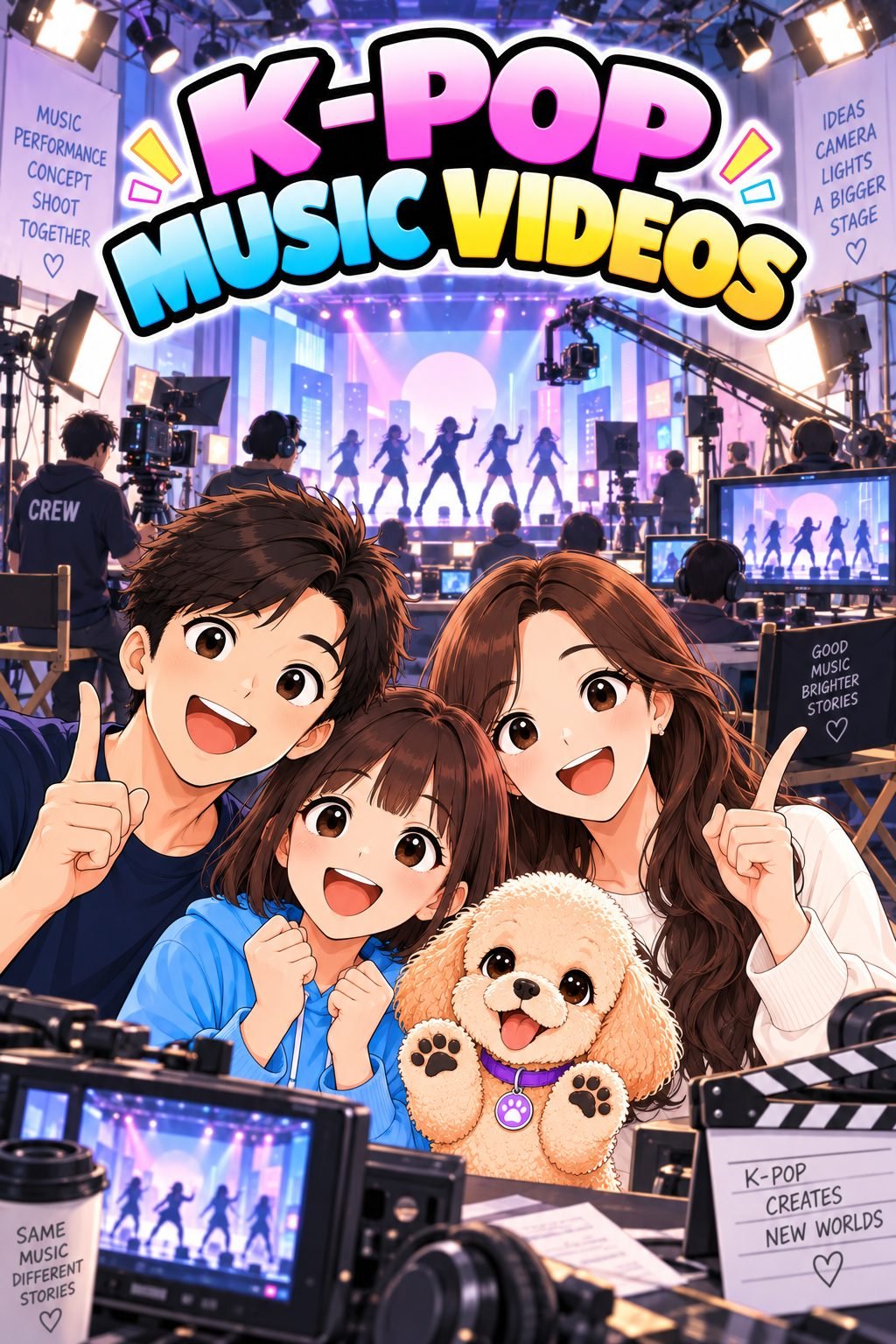
K-Pop music videos, often shortened to MVs, are visual productions created to accompany songs and present artists through music, performance, styling, concepts, sets, cinematography, storytelling, or other creative elements.
For many international fans, a music video can be one of the first ways they discover a K-Pop artist.
But an MV is more than simply a recording of idols performing a song. Depending on the project, it can introduce a new concept, highlight choreography, create a fictional story, establish a visual identity, or combine several of these elements.
Not every K-Pop music video follows the same formula.
If you are completely new to the genre, start with What Is K-Pop? for the broader relationship between music, performance, media, artists, and fandom.
What Does MV Mean in K-Pop?
MV is simply a common abbreviation for music video.
You may see the abbreviation in release announcements, fan discussions, video titles, promotional schedules, and K-Pop articles.
When fans say that an “MV dropped,” they generally mean that the official music video was released.
The term itself is not unique to K-Pop, but it appears frequently in K-Pop release culture.
Is a K-Pop MV Just a Dance Video?
No.
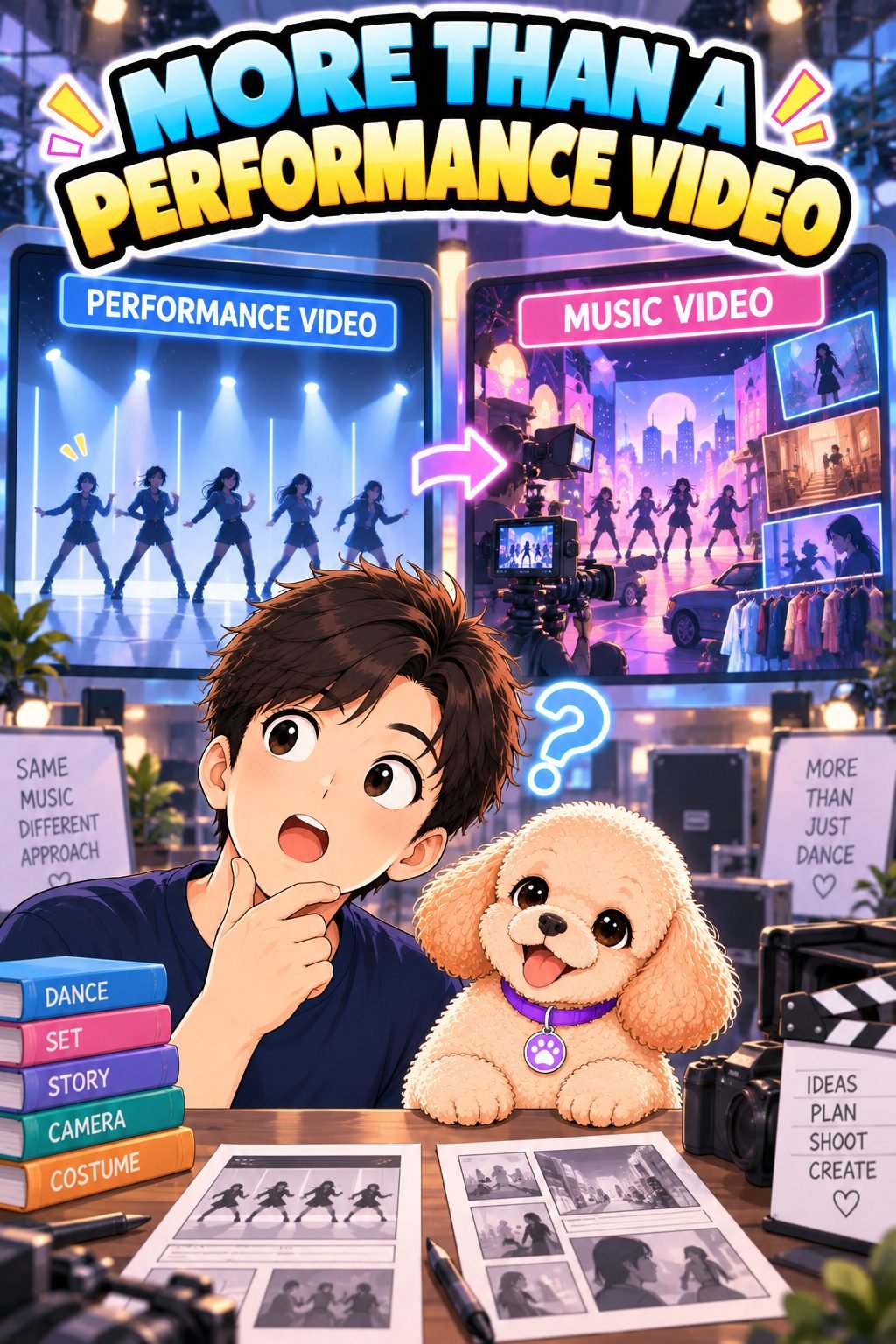
Dance and choreography can be major parts of a K-Pop music video, but an MV can contain much more.
Depending on the project, it may combine:
- Choreography
- Individual member shots
- Group performance scenes
- Multiple sets or locations
- Fashion and styling
- Visual effects
- Storytelling
- Symbolic imagery
- Cinematic scenes
- Concept-focused visuals
Some music videos emphasize performance. Others emphasize narrative or visual atmosphere. Many combine several approaches.
Why Are Music Videos Important in K-Pop?
K-Pop combines music with performance and visual presentation, so the music video can become an important part of how a new release is introduced.
An MV can show the song’s choreography, styling, member presentation, visual concept, and overall mood in one piece of content.
It can also give international audiences immediate access to a new release without needing to watch Korean television.
This became increasingly important as online video and global digital fandom expanded, a change connected with the development discussed in K-Pop Generations.
What Is a K-Pop Concept?
A concept is the creative direction surrounding a release or promotional period.
It can influence styling, photography, sets, colors, visual mood, choreography, promotional materials, and the music video.
A concept might feel bright, dramatic, playful, elegant, futuristic, nostalgic, mysterious, or take many other forms.
These descriptions are not fixed official categories. K-Pop concepts can mix several ideas at once.
Does Every K-Pop MV Tell a Story?
No.
Some music videos use clear narrative storytelling with characters, events, locations, and a recognizable sequence.
Others rely more on performance, atmosphere, symbolism, visual design, or abstract imagery.
A viewer should not assume that every unusual object, color, or camera shot has one officially intended hidden meaning.
Fan interpretations can be enjoyable, but they should be distinguished from explanations actually confirmed by the artist or production team.

What Is Choreography’s Role in a Music Video?
Choreography can provide some of the most recognizable moments in a K-Pop music video.
The MV may show the full group performing together, highlight a memorable point move, focus on individual members, or alternate performance scenes with other visual content.
However, music-video editing can cut between cameras, sets, close-ups, and story scenes.
This means the official MV may not be the easiest video for someone who wants to study the complete choreography from beginning to end.
What Is a Performance Video?
A performance video generally places greater emphasis on showing the artist’s performance or choreography than a standard music video does.
It may use a simpler setting, fewer narrative scenes, longer dance shots, or camera work designed to make the performance easier to follow.
There is no single format used for every performance video.
A performance video is also not necessarily the same thing as a dance practice.
What Is a Dance Practice Video?
A dance practice video generally shows choreography in a rehearsal or practice-style setting.
These videos can make formations, synchronization, transitions, and full-body movement easier to see than heavily edited music videos.
Some are relatively simple fixed-camera recordings, while others use moving cameras, special costumes, themed versions, or more elaborate production.
The label therefore describes the video’s focus more than one mandatory filming style.
MV vs. Performance Video vs. Dance Practice
The simplest way to separate the three is:
- Music Video: presents the song through a broader visual production that can combine concept, performance, story, styling, sets, and cinematography.
- Performance Video: places stronger emphasis on the artist’s performance or choreography.
- Dance Practice: generally makes the choreography and formations easier to observe in a practice-oriented setting.
Individual releases can blur these boundaries, so the official title and context of the video still matter.
What Is an MV Teaser?
An MV teaser is a short promotional preview released before the full music video.
It may reveal part of the visual concept, a brief section of music, a set, a member shot, choreography, or another element designed to build anticipation.
A teaser usually does not show everything that will appear in the final MV.
Some teaser footage or audio may also be edited in a way that makes the final video feel different from what viewers expected.
Why Are Teasers Released Before the MV?
Teasers can be part of the promotional buildup surrounding a new release.
They give fans small pieces of information before the full song and video become available.
This can happen alongside concept photos, track information, album previews, schedules, and other promotional content.
The broader process is explained in What Is a K-Pop Comeback?.
How Does an MV Fit Into a K-Pop Comeback?
A music video is often one important part of a larger release cycle.
A comeback can involve new music, physical albums, concept photos, teasers, an MV, music-show performances, fan content, interviews, dance videos, and other promotional activities.
The MV may be one of the most visible moments of the release, but it should not be confused with the entire comeback itself.
Different artists also use different promotional strategies, so not every release includes exactly the same sequence of content.
How Does an MV Fit Into a K-Pop Debut?
A debut music video can help introduce a new artist’s music, members, performance style, and visual identity to the public.
It may therefore become one of the first major pieces of official content associated with the artist.
However, a K-Pop Debut is broader than the music video alone.
Debut can include the music release, promotional activities, performances, media appearances, and other official artist activities.
Teaser → MV → Performance Content
Beginners may encounter several videos connected with the same song.
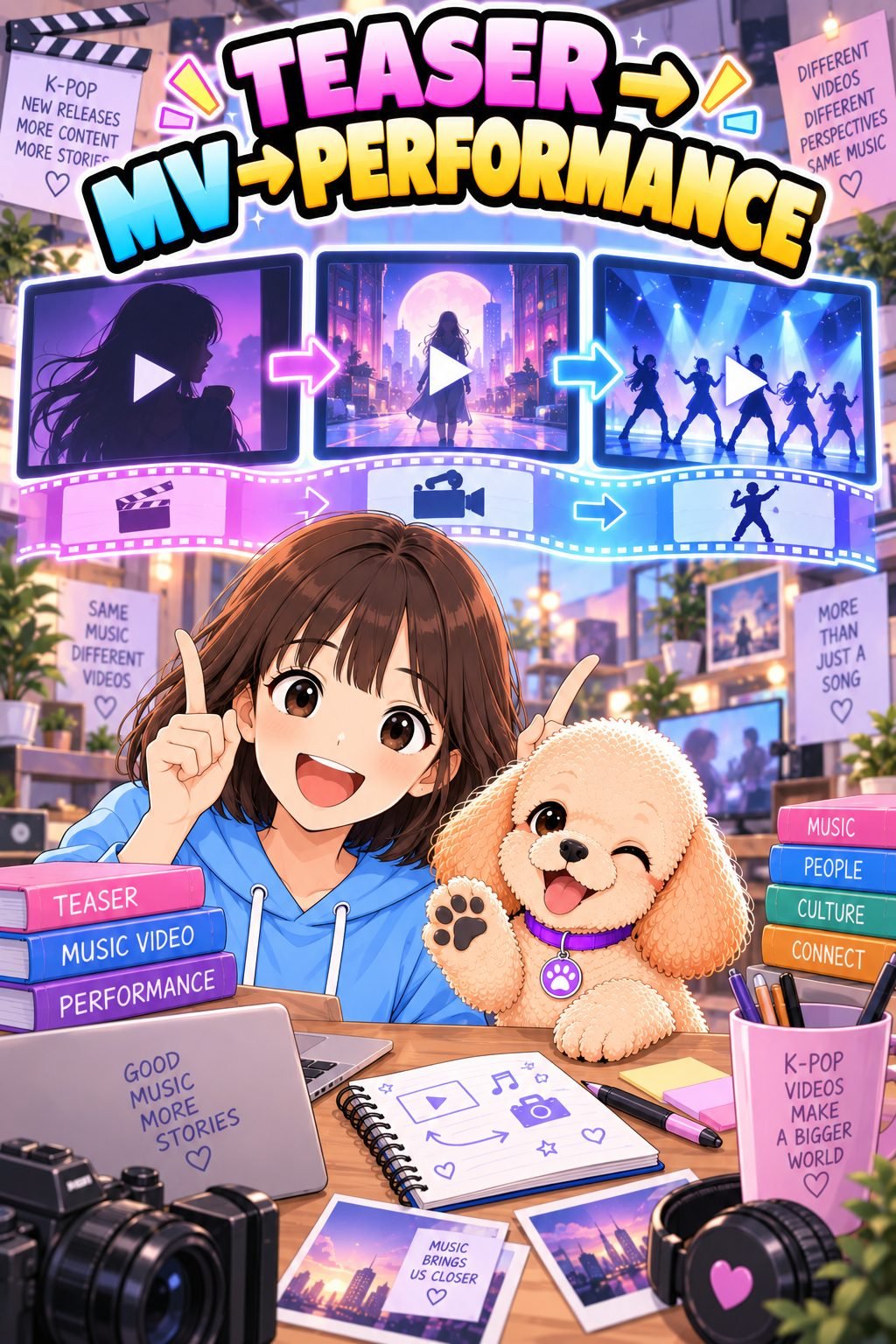
A simple example could look like this:
- Teaser: previews part of the upcoming release.
- Music Video: presents the main visual production for the song.
- Performance Content: gives viewers additional ways to watch the choreography or stage performance.
This is an example, not a mandatory release order.
Some artists publish many additional videos, while others use a much simpler promotional plan.
What Is Behind-the-Scenes MV Content?
Artists may release behind-the-scenes content showing parts of the music-video production process.
Depending on the project, viewers might see filming sets, costume changes, rehearsals, camera preparation, member comments, or other moments from production.
Behind-the-scenes content can help fans understand how much work occurs outside the final edited video.
It should still be understood as produced official content rather than a complete record of everything that happened during filming.
Does Every Title Track Have a Music Video?
Music videos are common for major promoted K-Pop songs, but beginners should avoid turning that pattern into an absolute rule.
Release strategies vary, and artists can publish videos for title tracks, pre-release songs, B-sides, special projects, collaborations, or other music.
Likewise, not every track on an album receives a full music video.
If you are trying to understand how title tracks and physical releases fit together, see K-Pop Albums.
What Do K-Pop MV Views Mean?
Music-video views show how many views a video platform has counted according to its own systems and policies.
Because K-Pop releases can attract large global audiences, MV view counts often become highly visible in fan discussions.
Views can reflect many factors, including audience size, repeat viewing, promotion, advertising, platform reach, release timing, fan activity, and general public interest.
For that reason, one view count should not be treated as a complete measurement of a song’s quality, an artist’s popularity, or the success of an entire release.
Do More MV Views Mean a Better Song?
No.
A view count is a platform metric, not an objective review of musical or artistic quality.
Two music videos can have very different view totals because they were released in different periods, promoted differently, targeted different audiences, or appeared under different platform conditions.
Listeners can enjoy a song regardless of how many views its music video has.
Why Do Fans Talk About MV View Milestones?
View milestones can become part of fan celebration around a release.
Fans may celebrate when a video reaches a particular number of views or compare how quickly different milestones were reached.
This can be a fun community activity, but it should not turn into pressure to prove that someone is a genuine fan.
Listening to music or watching a video should remain a personal choice.
Can the Same Song Have Several Official Videos?
Yes.
A single K-Pop song can be connected with several different official video formats.
- Official music video
- Performance video
- Dance practice
- Choreography version
- Stage performance
- Behind-the-scenes content
- Special clip
- Vertical or short-form content
These videos can serve different purposes even though they feature the same song.
Do not assume that every video using the song is another version of the official MV.
What Is a Performance Version of an MV?
Some releases use labels such as performance version or choreography version for videos that focus more heavily on the performance side of the song.
These versions may show more complete choreography, use different camera angles, or reduce the amount of narrative content compared with the main music video.
Naming conventions vary between artists and companies.
Use the video’s official title and description when identifying a specific version.
Why Are Subtitles Important for International Fans?
Subtitles can make music-video content more accessible to viewers who do not understand Korean.
Official videos may provide subtitles in Korean, English, or other languages depending on the release and platform.
Availability is not universal, and translations can differ between official and fan-created versions.
If an exact lyric meaning matters, distinguish official subtitles or authorized translations from unofficial interpretations.
Do You Need to Understand Every Lyric to Enjoy an MV?
No.
Music videos communicate through sound, performance, facial expression, choreography, styling, sets, editing, and visual atmosphere as well as language.
International fans may first enjoy a song or video before understanding the lyrics in detail.
Translations can add another layer of understanding later, but language fluency is not a requirement for enjoying K-Pop.
Who Makes a K-Pop Music Video?
A K-Pop music video is generally the result of work by many people rather than only the artists appearing on screen.
Depending on the production, contributors can include:
- Directors
- Producers
- Cinematographers
- Editors
- Production designers
- Lighting teams
- Stylists
- Hair and makeup teams
- Choreographers and dancers
- Visual-effects teams
- Production staff
- Artist and entertainment-company teams
The exact production structure varies by project.
When specific creative credits matter, check the official video credits or other authorized production information.
Are Music Video Concepts Created by the Idols?
Sometimes artists contribute creatively, but the level and type of involvement vary widely.
A music video’s concept can involve directors, creative teams, entertainment-company staff, producers, stylists, artists, and other collaborators.
Do not assume that every visual decision was personally created by the performer appearing on screen.
Likewise, do not assume that artists never contribute to their own concepts or production.
Check verified credits or interviews when specific creative involvement matters.
Can Fans Interpret Music Video Symbolism?
Yes. Discussing symbolism and possible meanings can be an enjoyable part of fandom.
Fans may connect objects, colors, lyrics, earlier videos, album concepts, or story elements when developing interpretations.
The important distinction is between interpretation and confirmed information.
A theory can be interesting without being presented as the artist’s official explanation.
Music Videos and Copyright
Official music videos are copyrighted audiovisual works.
Watching or sharing a link to an official video is different from downloading and re-uploading the complete video as your own content.
Music, footage, choreography recordings, artwork, logos, and other elements can involve separate rights and permissions.
If you create commentary, reaction, educational, or other derivative content, applicable copyright rules and platform policies can depend on how copyrighted material is used and on the relevant jurisdiction.
Do not assume that adding a credit automatically gives permission to reproduce copyrighted video or music.
Be Careful With Unofficial Reuploads
Search results and social platforms can contain videos uploaded by accounts that are not the artist, entertainment company, broadcaster, or other authorized source.
If you want the official MV, check the uploader and source rather than relying only on the title or thumbnail.
Unofficial uploads can be edited, incomplete, mislabeled, or removed later.
Using the official source also makes it easier to identify the correct version of the video.
How Does an MV Connect With Music Shows?
The music video and music-show stage serve different purposes.
An MV is a produced audiovisual work that can use multiple sets, editing, effects, and repeated filming.
A music-show performance presents the song within a television performance environment and can highlight choreography and live-stage promotion differently.
Use Korean Music Shows to understand prerecordings, broadcasts, rankings, and performance promotion.
How Does an MV Connect With the Album?
A music video often promotes a song connected with a larger release, but the album and MV are different products.
The physical album may include multiple songs, photobooks, photocards, posters, and other inclusions that do not appear in the video.
Likewise, an MV can develop visual ideas beyond what is physically included in an album package.
K-Nana Family Guide
Dad: Initially thinks a K-Pop MV is simply a video of the group dancing to the song.
Mom: Notices that concept, story, performance, sets, styling, filming, editing, and many production teams can contribute to the final video.
K-Nana Daughter: Explains how teasers, the main MV, performance videos, dance practices, behind-the-scenes content, and music-show stages can all show different sides of the same release.
Nana: Keeps the lesson simple: the MV is important, but it is one part of the larger K-Pop release.
Practical Tips for K-Pop Beginners
- Remember that MV means music video.
- Do not assume every K-Pop MV is primarily a dance video.
- Do not assume every MV tells a literal story.
- Separate fan theories from officially confirmed explanations.
- Use performance videos or dance practices when you want to study choreography more clearly.
- Remember that teaser footage does not reveal the entire final MV.
- Do not assume every K-Pop release follows the same teaser-to-MV schedule.
- Separate the music video from the entire comeback or debut process.
- Do not use MV views as an automatic measurement of musical quality.
- Check the official uploader when looking for the original MV.
- Use official credits when identifying directors or other production contributors.
- Distinguish official subtitles from unofficial translations when accuracy matters.
- Do not assume crediting a source gives permission to re-upload copyrighted footage.
- Remember that several official video formats can exist for the same song.
FAQ
What does MV mean in K-Pop?
MV is a common abbreviation for music video.
Are K-Pop music videos just dance videos?
No. They can combine choreography, concepts, storytelling, styling, sets, cinematography, visual effects, and other creative elements.
Does every K-Pop MV have a story?
No. Some emphasize narrative, while others focus more heavily on performance, visual atmosphere, symbolism, or concept.
What is an MV teaser?
An MV teaser is a short promotional preview released before the full music video.
What is the difference between an MV and a performance video?
A music video generally presents a broader visual production, while a performance video places greater emphasis on the artist’s performance or choreography.
What is the difference between a performance video and dance practice?
Both can emphasize choreography, but dance practice generally presents the routine in a rehearsal-oriented format, while performance videos can use more deliberate production and camera presentation.
Why do K-Pop MVs have so many different sets?
Multiple sets can support the concept, visual variety, storytelling, member presentation, or different parts of the song. Not every MV uses many sets.
Are K-Pop MV theories official?
Not necessarily. Fan theories are interpretations unless the artist, director, company, or another authorized source confirms the meaning.
Do more MV views mean a song is better?
No. Views are a platform metric influenced by many factors and do not objectively measure artistic quality.
Can one K-Pop song have several official videos?
Yes. A song can have an MV, performance video, dance practice, special clip, stage video, behind-the-scenes content, or other official videos.
Do K-Pop music videos have English subtitles?
Some do, but subtitle availability and languages vary by artist, release, and platform.
Can I re-upload a K-Pop music video if I credit the artist?
Credit alone does not automatically grant permission to reproduce copyrighted video or music. Copyright and platform rules still apply.
Is a K-Pop music video the same as a comeback?
No. The MV can be an important part of a comeback, but a comeback can also involve music releases, albums, teasers, performances, interviews, fan content, and other promotions.

Final Takeaway
K-Pop music videos combine music with visual presentation and can include performance, choreography, styling, concepts, storytelling, sets, cinematography, and many other creative elements.
They also exist within a larger ecosystem of teasers, performance videos, dance practices, albums, music-show stages, and promotional content.
Views can show audience activity on a platform, but they should not be treated as an objective measurement of musical quality or an artist’s complete success.
The easiest idea to remember is simple: the MV can be one of the most visible parts of a K-Pop release, but it is still only one part of the release.
Continue Exploring K-Pop
Start with What Is a K-Pop Comeback? to understand how teasers, releases, music videos, albums, and promotions can fit into a comeback cycle.
For television performance promotion, explore Korean Music Shows.
For the historical changes that helped K-Pop videos reach international audiences, read K-Pop Generations.
Continue With K-Pop Beginner Guides
Next, K-Pop Awards & Year-End Shows explains award ceremonies, year-end music festivals, major awards, special stages, voting, and eligibility.
For the wider structure surrounding artists and their activities, use the K-Pop Idol System.
For unfamiliar terminology, use the K-Pop Glossary for Beginners.
References
Image Credits
K-Pop music-video family visual with Dad, Mom, K-Nana daughter, and Nana discovering a fictional production environment combining cameras, lighting, sets, and performance — K-Nana Studio original visual.
K-Pop music-video beginner visual with Dad and Nana learning that an MV can include much more than a simple dance performance — K-Nana Studio original visual.
K-Pop music-video structure visual with Mom and Nana exploring fictional concept, storytelling, performance, and production elements — K-Nana Studio original visual.
K-Pop release-video visual with K-Nana daughter and Nana explaining the relationship between teasers, a main music video, and additional performance content — K-Nana Studio original visual.
Nana as the K-Nana Studio K-Pop mascot explaining that a music video is an important but individual part of a larger K-Pop release and promotional cycle — K-Nana Studio original visual.
Disclaimer
This article is provided for general cultural and educational information about K-Pop music videos and related promotional content. Music-video production, teasers, performance videos, dance practices, concepts, storytelling, subtitles, credits, release schedules, promotional strategies, and other audiovisual content vary by artist, entertainment company, production team, platform, and release and may change over time.
K-Nana Studio is not affiliated with or endorsed by any K-Pop artist, group, entertainment company, record label, director, production company, broadcaster, video platform, fandom, or other organization discussed in this guide.
Music-video views and other platform metrics should not be interpreted as objective measurements of musical quality, artistic value, popularity, or overall commercial success. Platform counting methods and promotional conditions can also change.
Music videos, songs, choreography recordings, album artwork, logos, photographs, performances, and related audiovisual materials may be protected by copyright, trademark, publicity, or other rights. Crediting a rights holder does not by itself grant permission to reproduce, redistribute, or re-upload protected material. Applicable rights and exceptions vary by jurisdiction and use.
Fan interpretations of music-video symbolism or storylines should be distinguished from meanings officially confirmed by artists, directors, entertainment companies, or other authorized sources.
All K-Nana family and Nana illustrations used in this article are K-Nana Studio original editorial visuals. They are not intended to depict or reproduce any specific real K-Pop artist, group, entertainment company, official logo, music video, choreography, costume, set, promotional image, or other protected official design.