What Is K-Pop Fandom Culture?
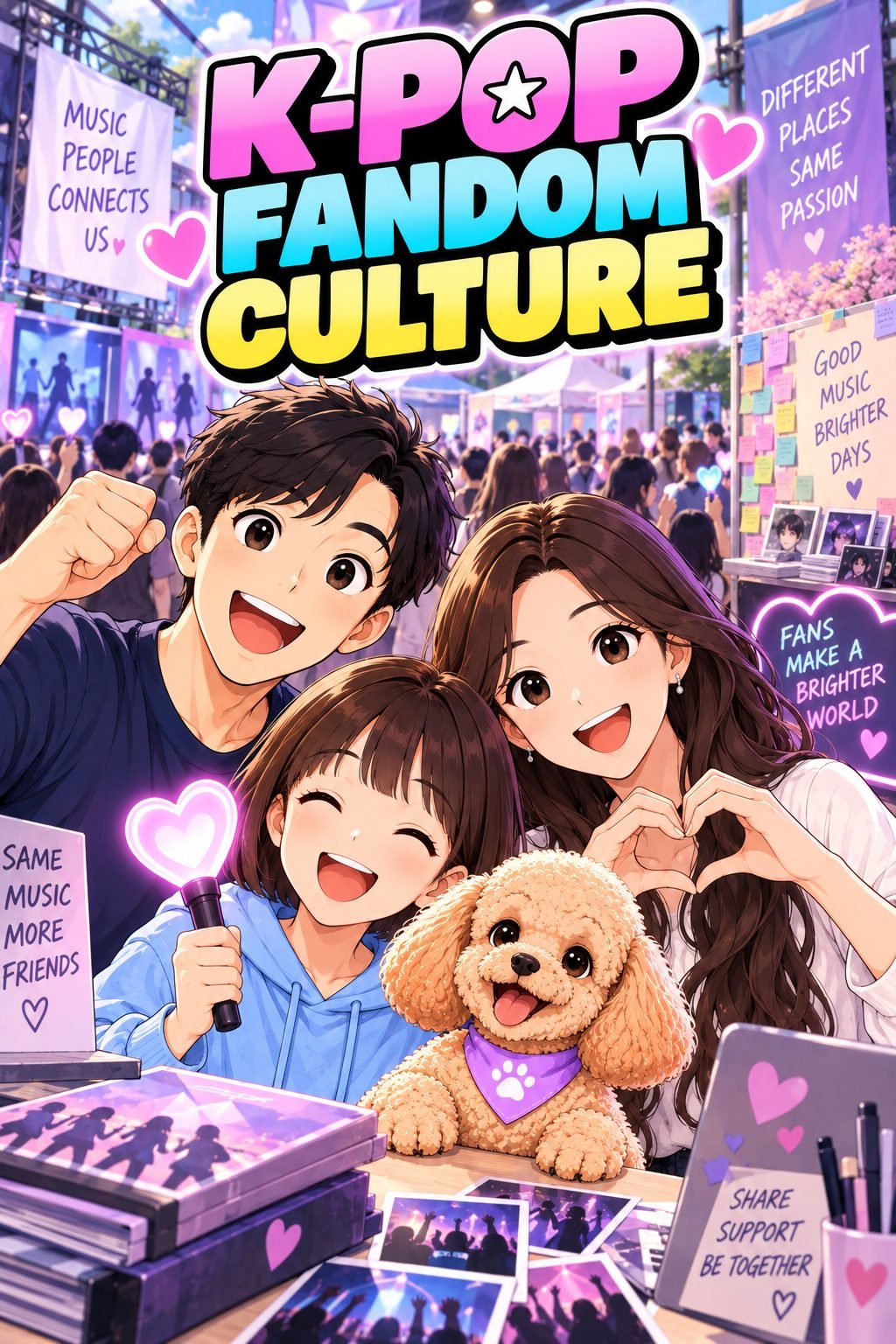
K-Pop fandom culture refers to the communities, customs, activities, and shared experiences that develop around K-Pop artists and their fans.
A fandom can begin with something simple: people enjoying the same artist or music. Over time, fans may communicate with one another, follow releases, attend performances, learn fan chants, collect albums or merchandise, participate in fan projects, and build communities across countries and languages.
Fandom is therefore an important part of the wider K-Pop culture, but there is no single correct way to be a K-Pop fan.
You can enjoy the music without buying merchandise, attending concerts, collecting photocards, voting, or participating in organized fan activities.
What Is a K-Pop Fandom?
A fandom is a community of fans who share an interest in an artist or group.
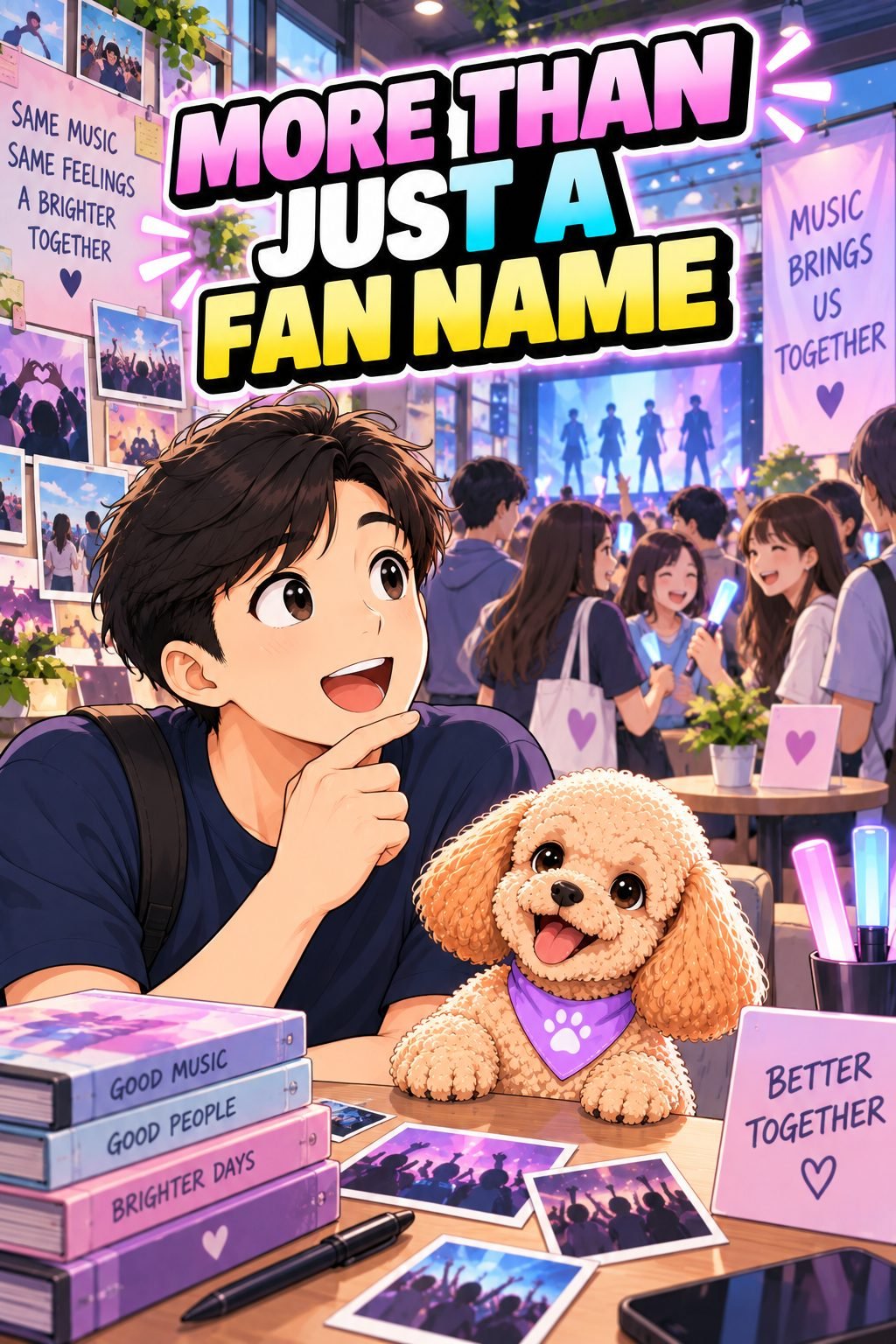
In K-Pop, many artists have official fandom names. These names can help create a shared identity and make it easier for fans to recognize themselves as part of a larger community.
However, knowing or using a fandom name is only one small part of fan culture.
Fans may interact through official communities, social platforms, concerts, events, local fan groups, and informal online spaces. International fandoms can connect people who live thousands of kilometers apart and may not even speak the same language.
The difference between official fandom names, informal fan nicknames, and memberships is explained in K-Pop Fandom Names.
What Does “Bias” Mean in K-Pop?
New international fans often encounter the word bias.
In K-Pop fan language, a bias generally means a fan’s favorite member of a group. Some fans may also use related informal expressions when talking about other members they especially like.
You do not need to choose a bias to enjoy a group, and your favorite member can change over time.
It is fan vocabulary rather than a formal industry requirement, so the way people use these expressions can vary across communities.
Bias, ultimate bias, and bias wrecker are explained in What Does Bias Mean in K-Pop?.
How Do K-Pop Fans Participate?
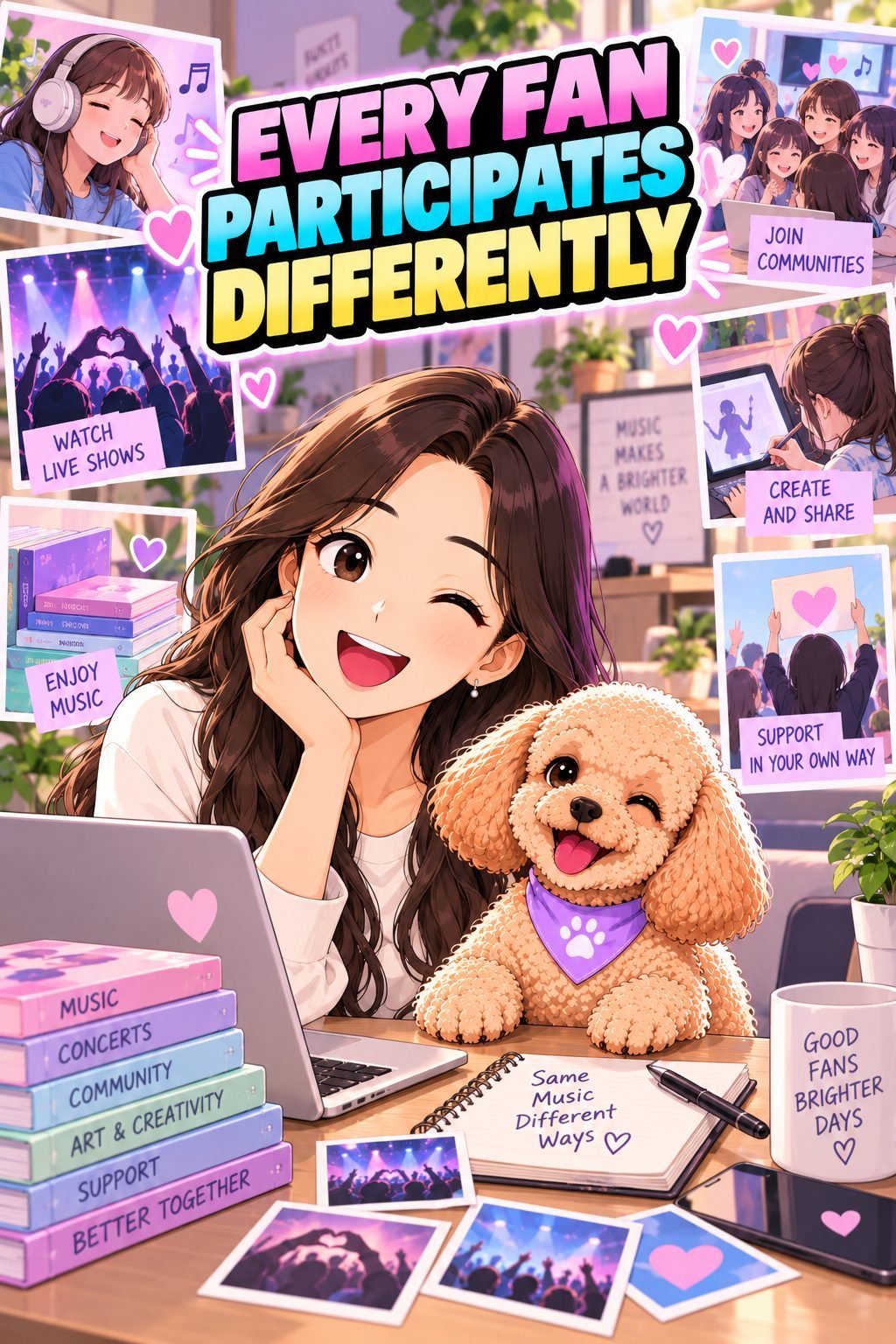
Fans can participate in K-Pop culture in many different ways.
Some simply listen to music and watch performances. Others may follow a K-Pop comeback, purchase albums, collect merchandise, attend concerts, join fan events, learn fan chants, or communicate with other fans online.
Fans may also organize projects for artist birthdays, debut anniversaries, concerts, or other occasions. Depending on the fandom and project, these can include advertisements, support projects, charitable activities, or other community efforts.
None of these activities is a requirement for being a fan.
What Are Fan Chants?
Fan chants are organized cheering patterns that fans may perform during songs or live performances.
Depending on the artist and song, fans may call out names, repeat particular words, sing selected parts, or follow another established cheering pattern.
Fan chants can create a strong feeling of participation between the audience and the performance.
They are especially associated with concerts and Korean music-show culture, although the exact practices differ by artist, song, venue, and event.
If you attend a real performance, follow current venue and event rules rather than assuming that every form of cheering is permitted everywhere.
For a detailed explanation, continue with K-Pop Fan Chants.
Why Are Light Sticks Important?
Official light sticks have become one of the most recognizable visual symbols of K-Pop fandom.
Many artists or groups have their own official light-stick designs. At concerts, large numbers of fans holding lights can transform the audience into part of the visual experience.
Some modern concert systems can also synchronize compatible official light sticks to create coordinated colors or lighting effects.
However, a light stick is merchandise, not proof that someone is a “real fan.” You do not need to own one to enjoy K-Pop.
Purchasing, versions, concert use, synchronization, batteries, and practical considerations are explained in K-Pop Light Sticks.
Albums, Photocards and Fan Collecting
Physical albums and collectible items are another visible part of K-Pop fan culture.
Depending on the release, an album may contain items such as photobooks, photocards, posters, stickers, or other inclusions.
Some fans enjoy collecting particular members, versions, or items and may trade duplicates with other collectors.
Collecting can be fun, but it is optional. Buying multiple albums or completing a collection is not a requirement for supporting an artist.
The collecting side is explained further in K-Pop Photocards.
Online K-Pop Communities
Digital communication has helped K-Pop fandoms connect internationally.
Fans may use official fan platforms, social networks, video platforms, community forums, and other online spaces to follow information, discuss music, share fan-created content, or communicate with other fans.
Fan communities can also help information travel quickly across languages and countries.
That speed has a downside: rumors, mistranslations, edited images, false schedules, fake accounts, and unverified claims can spread quickly too.
When information concerns an artist’s schedule, health, contract, event, ticket sale, official merchandise, or another factual matter that can change, check the relevant official source before treating a fan post as confirmed information.
Fan Projects and Community Activities
K-Pop fandom activity can extend beyond music consumption.
Fans sometimes organize birthday or anniversary projects, advertisements, support events, charity donations, environmental projects, and other activities in an artist’s name.
Birthday celebrations can also take the form of temporary fan-organized café events. K-Pop Birthday Cafes in Korea explains how these events generally work and what visitors should check before going.
These projects demonstrate how fandoms can function as communities rather than simply groups of individual listeners.
At the same time, projects are usually organized by particular groups of fans. One project should not automatically be treated as representing every person in a fandom.
Fandom Does Not Mean Everyone Thinks the Same
A fandom can contain people from many countries, age groups, languages, and backgrounds.
They may disagree about music, collecting, streaming, voting, concerts, social issues, or the best way to support an artist.
For that reason, statements such as “this fandom always does this” should be treated cautiously.
A fandom name creates a shared identity, but it does not make millions of individual fans behave or think in exactly the same way.
Do You Have to Spend Money to Be a K-Pop Fan?
No.
You do not need to own every album, photocard, light stick, concert ticket, or piece of merchandise to be a fan.
K-Pop can involve a large commercial ecosystem, so it is easy for beginners to feel pressure when they see other fans displaying collections or attending many events.
Set your own budget and decide which activities are meaningful to you. Listening to music or enjoying performances without purchasing anything is still a valid way to enjoy K-Pop.
Respect and Fan Etiquette
Fan etiquette can depend on the event, venue, artist, and community.
At a concert, practical etiquette may include following venue rules, avoiding actions that unnecessarily block another person’s view, using permitted items correctly, and respecting staff and other attendees.
Online, good fan behavior includes avoiding harassment, respecting other artists and fandoms, checking information before spreading it, and remembering that disagreement does not justify personal attacks.
Official event rules should always take priority over assumptions based on previous concerts or fan posts.
What International Fans Should Know
International fans can participate in K-Pop fandom without living in Korea.
However, some activities may have specific membership, identity-verification, purchase, residency, language, ticketing, or application requirements.
Fan-club membership benefits and event eligibility can also differ by artist and can change between membership periods.
If money, travel, tickets, memberships, or personal information are involved, check the current official instructions before taking action.
Be cautious of unofficial sellers, impersonation accounts, suspicious direct messages, fake giveaways, and anyone claiming guaranteed access to tickets, fansigns, artists, or exclusive events.
K-Nana Family Guide
Dad: Wonders whether “fandom” is simply another word for a group of fans.
Mom: Notices the practical side of fandom — albums, merchandise, memberships, tickets, events, and the importance of setting a personal budget.
K-Nana Daughter: Explains how fandom names, fan chants, online communities, fan projects, light sticks, and collecting can connect fans around an artist.
Nana: Keeps the most important lesson simple: enjoy K-Pop in the way that works for you.
Practical Tips for K-Pop Beginners
- You do not need to buy merchandise to be a K-Pop fan.
- Do not feel pressured to participate in every streaming, voting, or collecting activity.
- Set a personal budget before buying albums, merchandise, memberships, or concert tickets.
- Check official sources when information affects money, travel, tickets, or event participation.
- Learn venue rules before using light sticks, banners, cameras, or other items at an event.
- Do not assume one fan account represents an entire fandom.
- Be cautious when trading or purchasing collectibles from unknown individuals.
- Respect artists, other fandoms, event staff, and fellow fans.
FAQ
What is a K-Pop fandom?
A K-Pop fandom is a community of people who share an interest in a K-Pop artist or group. Fandoms can develop names, customs, communities, projects, and different forms of fan participation.
What does “bias” mean in K-Pop?
In common K-Pop fan language, a bias is usually a fan’s favorite member of a group. You do not need to choose one.
Do I need to join an official fan club?
No. Official memberships may offer particular benefits depending on the artist, but membership is not required to enjoy the music or consider yourself a fan.
Do K-Pop fans have to buy albums and merchandise?
No. Purchasing albums, photocards, light sticks, or merchandise is optional.
What is a K-Pop fan chant?
A fan chant is an organized cheering pattern that fans may use during particular songs or performances. The exact chant and event rules vary.
Why do K-Pop fandoms have names?
A fandom name can create a shared identity and symbolize the connection between an artist and the fan community.
Are all fans in one fandom the same?
No. A fandom can include people from many countries and backgrounds with very different opinions and ways of participating.
Can international fans participate in K-Pop fandom culture?
Yes. Digital platforms and international events allow fans around the world to participate, although specific official events or memberships may have their own eligibility requirements.
Final Takeaway
K-Pop fandom culture is more than a fandom name or a collection of fan products. It can include communities, shared traditions, concert participation, online communication, collecting, fan events, and many other ways of supporting and enjoying artists.
At the same time, there is no single correct way to be a K-Pop fan. You do not need to buy every album, own merchandise, collect photocards, attend concerts, or participate in every fan activity.
The simplest rule is to enjoy K-Pop in a way that fits your interests, time, and budget while respecting artists, other fans, and different fandoms.
Continue Exploring K-Pop
For direct interaction between artists and fans, explore K-Pop Fan Meetings & Fansigns to understand fan meetings, fansigns, video-call events, and participation basics.
For live events, the K-Pop Concert Guide in Korea explains ticketing, venues, concert preparation, and practical considerations for international visitors.
Fans may also encounter smaller artist combinations during promotions and performances. K-Pop Subunits explains how a subunit differs from a full group, solo activity, or temporary collaboration.
For unfamiliar K-Pop terminology, use the K-Pop Glossary for Beginners as the central reference guide.
Experience K-Pop Fandom in Seoul
Fans visiting Korea can experience K-Pop alongside Seoul’s neighborhoods, shopping areas, cafés, performances, and temporary events. K-Pop in Seoul provides a practical starting point for planning these experiences.
Hongdae is especially relevant for visitors interested in youth culture, music, dance, cafés, shopping, and temporary fan activities.
Nearby Yeonnam-dong offers another café- and neighborhood-focused area that can fit naturally into the same Seoul outing.
For another side of Seoul’s contemporary entertainment and K-culture environment, explore Apgujeong Rodeo & Cheongdam-dong.
Specific birthday cafés, pop-ups, advertisements, and fan projects are temporary, so always check current event information before traveling to a particular location.
References
- Korea.net — The Structure and Activities of K-Pop Fandoms
- Korea.net — Music Shows and Fan Support Culture
Image Credits
K-Pop Fandom Culture family visual with Dad, Mom, K-Nana daughter, and Nana exploring the atmosphere of a K-Pop fan community together — K-Nana Studio original visual.
K-Pop fandom beginner visual with Dad and Nana discovering that fandom can mean more than simply having a fan name — K-Nana Studio original visual.
K-Pop fan participation visual with Mom and Nana exploring different ways people can enjoy music, performances, albums, and fan communities — K-Nana Studio original visual.
K-Pop community visual with K-Nana daughter and Nana exploring how fans can connect, communicate, and enjoy K-Pop together — K-Nana Studio original visual.
Nana as the K-Nana Studio K-Pop mascot reminding beginners that there is no single required way to enjoy K-Pop fandom culture — K-Nana Studio original visual.
Disclaimer
This article is provided for general cultural and educational information. K-Pop fandom practices, official fandom names, fan platforms, concert procedures, fan chants, event rules, merchandise, membership programs, voting systems, and artist activities can vary between artists and may change over time.
K-Nana Studio is not affiliated with or endorsed by any K-Pop artist, entertainment company, broadcaster, concert organizer, ticketing service, fandom, fan platform, album retailer, or merchandise seller discussed in this guide.
For current information about a specific artist, official fandom, fan membership, concert, fan event, merchandise release, voting event, or participation rule, check the relevant artist’s and entertainment company’s official announcements and authorized services.
Fan participation and purchasing are optional. Readers should make their own decisions about albums, merchandise, memberships, events, and other spending based on their interests, budget, and circumstances.
All K-Nana family and Nana illustrations used in this article are K-Nana Studio original visuals created for educational and editorial use. They are not intended to depict or reproduce any specific real K-Pop artist, group, fandom, entertainment company, official logo, album artwork, photocard, light stick, concert image, or other protected official design.