
What Are K-Pop Fandom Names?
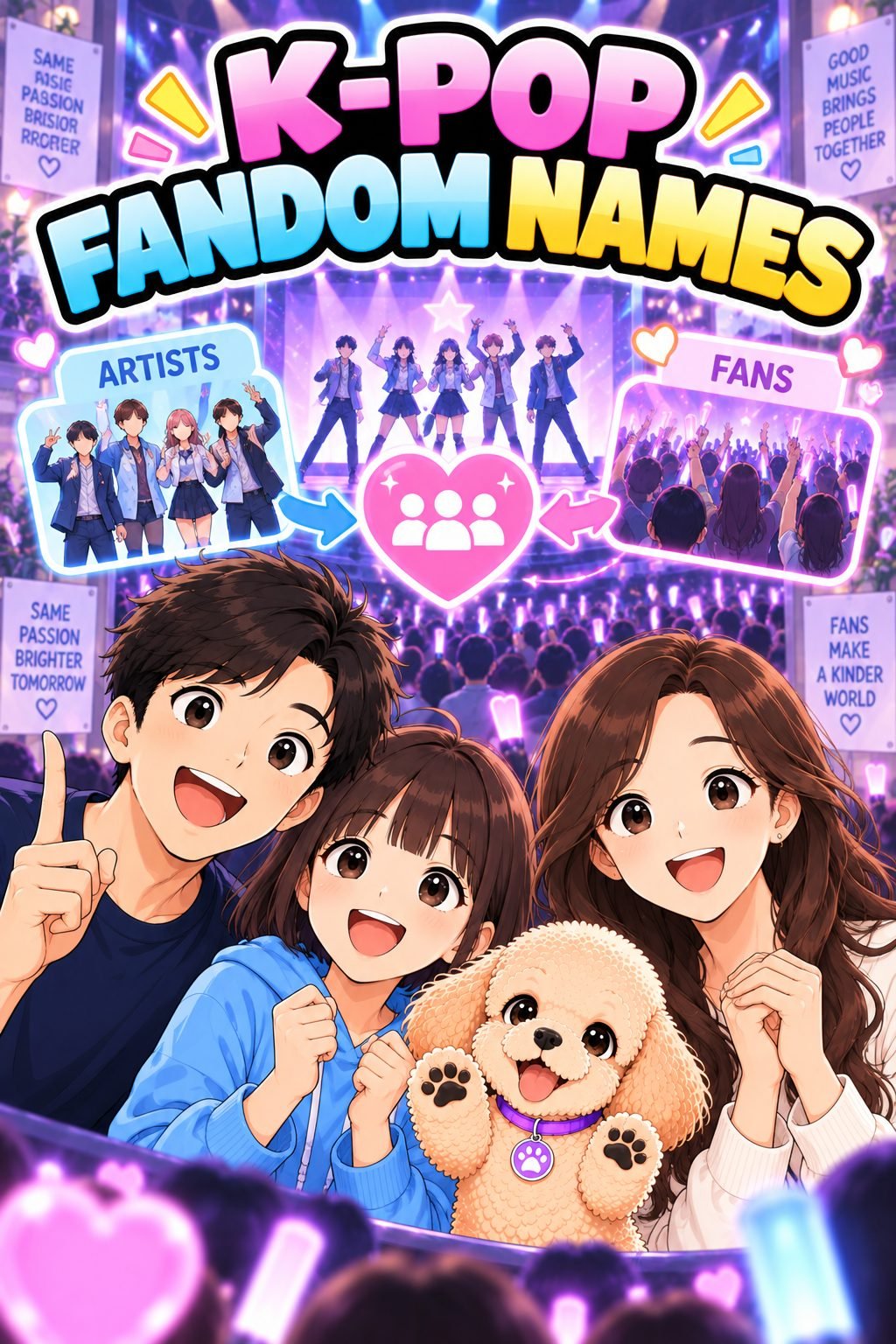
K-Pop fandom names are names used to identify the fan communities associated with particular K-Pop artists or groups.
Instead of referring only to “fans of this group,” an artist may have an official fandom name that gives the wider fan community a shared identity.
These names can become an important part of K-Pop culture and may appear in artist messages, concerts, fan meetings, official memberships, merchandise, anniversary celebrations, and other fan activities.
However, knowing or using a fandom name is not a requirement for enjoying K-Pop.
If you first want to understand the wider relationship between artists and fan communities, read K-Pop Fandom Culture.
Why Do K-Pop Fandoms Have Names?
A fandom name gives a fan community a recognizable way to refer to itself and to be addressed by the artist.
Instead of describing millions of individual listeners separately, one shared name can represent a broader community connected with the artist.
The name can also become part of the language used between artists and fans.
This does not mean every person using the fandom name participates in K-Pop culture in exactly the same way. A fandom can include casual listeners, long-time fans, collectors, concertgoers, international fans, and many other types of supporters.
Is a Fandom Name Official?
Some fandom names are officially announced by the artist, entertainment company, or another authorized channel.
When discussing an official fandom name, the safest source is the artist’s or entertainment company’s official announcement.
Fans may also create nicknames or informal labels for themselves, but those should not automatically be described as official fandom names.
The distinction becomes particularly important when a new artist has recently debuted and fans are waiting for an official name to be announced.
Who Chooses a K-Pop Fandom Name?
There is no single selection process used by every K-Pop artist.
Depending on the artist or entertainment company, a fandom name may be developed internally, selected from suggestions, involve fan participation, or be introduced through another process.
The final official name is generally confirmed through an authorized announcement.
Do not assume that a popular name used by fans before an announcement will automatically become the official fandom name.

When Is a Fandom Name Announced?
There is no universal schedule.
An artist can debut before an official fandom name is announced.
Some fandom names may be introduced relatively early, while others can be announced after the artist has already been active for some time.
This means a newly debuted group does not need to have every part of its fandom system established immediately.
For the difference between pre-debut and official artist activities, see What Is a K-Pop Debut?.
What Does a K-Pop Fandom Name Mean?
Many fandom names are chosen with a particular meaning or relationship in mind.
The explanation may connect the fans with the artist’s name, music, identity, message, concept, or another idea.
Some names use wordplay, abbreviations, symbolic meanings, or combinations of words.
Because meanings can be specific to the artist, use the official explanation when you want to know why a particular real fandom name was chosen.
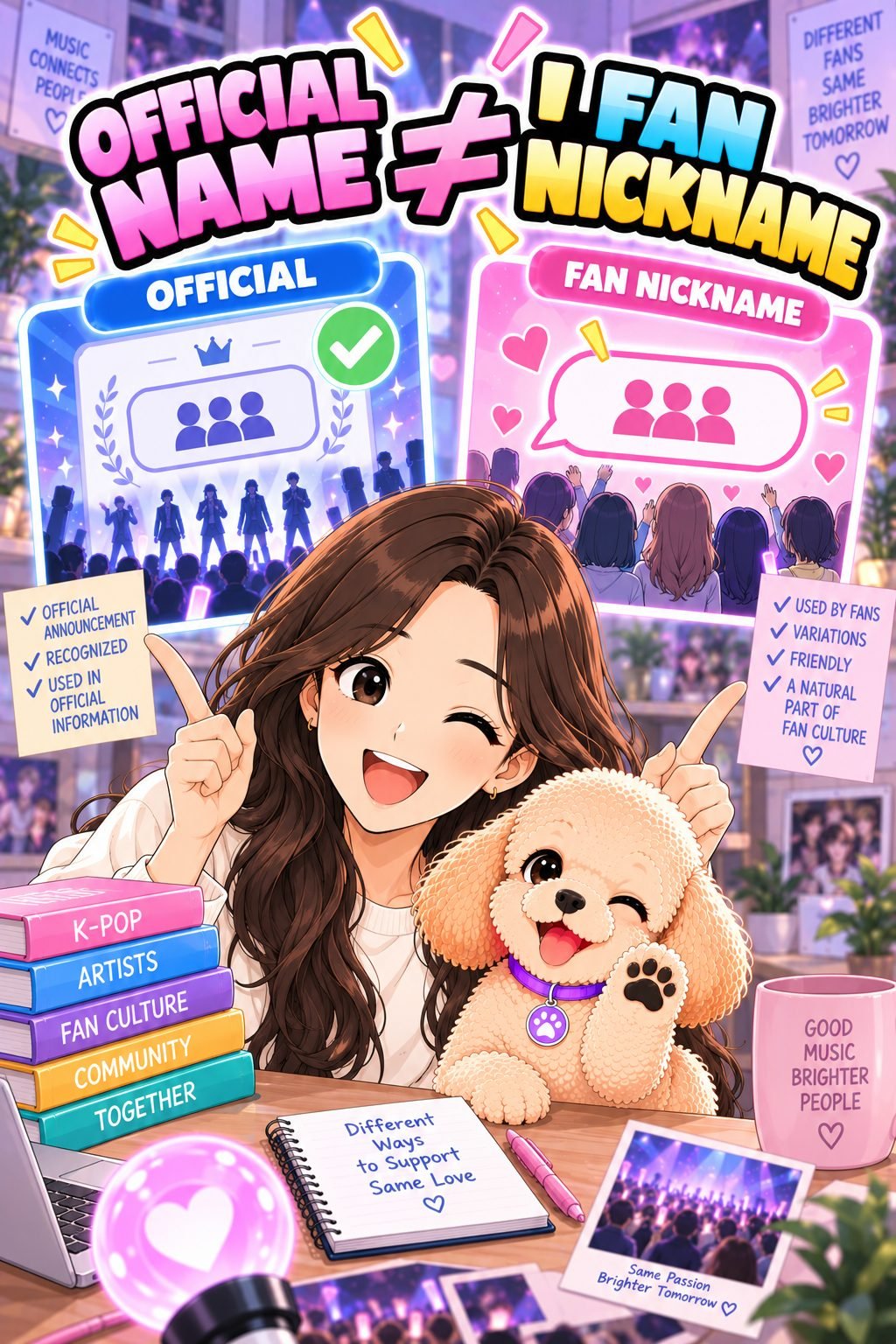
Official Fandom Name vs. Fan Nickname
An official fandom name is announced or recognized through the artist’s authorized channels.
A fan nickname can develop informally within a community without being the artist’s official fandom name.
Both can be used in fan conversations, but they do not have the same status.
An unofficial nickname is not automatically wrong or inappropriate simply because it is unofficial. The important point is to describe it accurately.
Fandom Name vs. Official Fan Club
A fandom name and an official fan club or membership are not the same thing.
Fandom name: a name used to identify the broader fan community.
Official fan club or membership: a separate organized program that may require registration, payment, a membership period, or other conditions depending on the artist.
You can consider yourself part of a fandom without purchasing an official membership.
Likewise, simply knowing a fandom name does not automatically enroll you in an official fan club.
What Can an Official Fan Club Membership Include?
Benefits and systems vary by artist and membership program.
Depending on the program, membership may provide access to particular content, presale opportunities, applications, membership products, fan events, or other benefits.
These should never be assumed to be identical across artists or membership periods.
Membership terms, prices, benefits, eligibility, renewal periods, and availability can change.
Check the current official membership notice before purchasing anything.
Do You Need Official Membership to Be Part of a Fandom?
No.
Official membership is a product or organized participation system, not a test of whether someone is a genuine fan.
A person can listen to music, watch performances, participate in fan discussions, attend concerts, or support an artist without purchasing a fan-club membership.
Membership can be useful for fans who want its particular benefits, but it remains a personal choice.

Is a Fandom Name the Same as a Fan’s Personal Username?
No.
A fandom name refers to a wider community connected with an artist.
A username, display name, account name, or nickname identifies an individual person or account.
Thousands or millions of fans can identify with the same fandom name while using completely different personal usernames.
Can One Person Be Part of Several K-Pop Fandoms?
Yes.
Fans can enjoy and support more than one artist or group.
Someone may identify with several fandom names because they follow several artists.
There is no general K-Pop rule requiring a person to support only one group.
This is similar to the flexibility discussed in What Does Bias Mean in K-Pop?, where fans can have different favorite members across multiple groups.
Does Every K-Pop Artist Have an Official Fandom Name?
No universal rule requires every artist to have one.
A newly debuted artist may not have announced a fandom name yet, and different artists can organize their fan communities in different ways.
Do not invent a fandom name or assume that a commonly used online nickname is official when no authorized announcement confirms it.
Can a Fandom Name Change?
It can happen, although the circumstances vary.
A name may be reconsidered because of branding, legal, linguistic, organizational, or other issues.
If conflicting names appear in older and newer sources, check the artist’s current official information before deciding which name is presently used.
Older articles and fan posts may continue displaying a previous name after a change.
Fandom Names and Fan Identity
A fandom name can create a sense of shared identity among people who may live in different countries, speak different languages, and participate in K-Pop in very different ways.
It gives artists a convenient way to address their fan community and gives fans a shared term for talking about themselves collectively.
That shared identity is one reason fandom names can become emotionally meaningful.
At the same time, using a fandom name should not create pressure to behave, spend money, collect products, or participate in every activity in the same way as other fans.
Fandom Names and Fan Chants
Fandom identity can also appear in live participation culture.
Fans may use coordinated cheering, artist names, member names, or other established responses during performances.
This is related to fandom culture but separate from the fandom name itself.
The K-Pop Fan Chants guide explains names, timing, rhythm, and cheering guides in more detail.
Fandom Names and Light Sticks
Official fandom names and official light sticks can both become recognizable symbols associated with an artist’s fan community.
However, they are different things.
A fandom name identifies the community, while a K-Pop Light Stick is a physical fan product used particularly in live-event culture.
You do not need to own a light stick in order to identify with a fandom name.
Fandom Names and Official Colors
Some K-Pop artists and fandoms are also associated with official colors or other visual symbols.
These can help create a recognizable identity at concerts, fan events, merchandise, or other activities.
However, an official fandom name does not automatically mean that an artist also has one fixed official color.
Some artists may use one color, several colors, a color combination, another symbolic system, or no strongly emphasized official color at all.
If the official status of a color or symbol matters, check the artist’s current authorized information rather than relying only on fan graphics or older profiles.
Fandom Names and Symbols
A fandom can become associated with many visual or cultural elements beyond its name.
Depending on the artist, these may include official logos, colors, light sticks, characters, slogans, membership designs, or other symbols.
Not every fandom uses the same combination of elements.
The fandom name itself should therefore be understood as one part of a larger fan identity rather than a guarantee that every other fandom feature exists.
How Do International Fans Use Fandom Names?
Official fandom names can be used internationally as shared identifiers for fans of the same artist.
This allows people from different countries and language backgrounds to recognize the same fan community even when their everyday fan activities are very different.
An international fan might use the fandom name when discussing an artist online, attending a concert, joining a fan community, or talking with other fans.
There is no requirement to use the fandom name every time you discuss the artist.
Do You Have to Call Yourself by the Fandom Name?
No.
Some fans strongly identify with an official fandom name, while others simply say that they like or follow the artist.
A person may also enjoy an artist casually without considering themselves part of a particular fandom community.
Fan identity is personal. An official fandom name provides shared vocabulary, not a mandatory label.
Does Using a Fandom Name Require Official Membership?
No.
An official fandom name and a paid or registered fan-club membership are separate concepts.
A fan can identify with the broader fandom without purchasing membership.
Likewise, membership benefits should not be treated as proof that one fan is more genuine or important than another.
Membership can provide particular benefits under its current terms, but it does not define the value of a person’s interest in the artist.
Fandom Names and Concert Culture
At concerts, fandom identity can become especially visible.
Thousands of people connected by the same artist may use light sticks, participate in coordinated cheering, wear merchandise, display fan-made items, or simply enjoy the performance together.
The fandom name can provide a shared way for the artist to address that audience.
However, none of these activities is required in order to attend and enjoy a concert.
Fandom Names and Birthday Events
Fan communities can also organize celebrations around birthdays, debut anniversaries, releases, and other occasions.
These activities may use the fandom name as part of the wider community identity.
If you are visiting Korea, K-Pop Birthday Cafes in Korea explains one recognizable form of fan-organized celebration.
Fan-organized events should still be distinguished from official artist or entertainment-company events unless official involvement has been confirmed.
Can Fandom Names Create Rivalries?
A fandom name can create community, but strong group identity can also contribute to disagreements between fan communities.
Differences over artists, awards, charts, performances, or online discussions can sometimes become competitive.
The existence of different fandom names does not require fans to treat one another as opponents.
Supporting one artist does not require attacking another artist or fandom.
Do Fandom Names Show How Popular an Artist Is?
No.
Having an official fandom name does not by itself measure the size or popularity of an artist’s audience.
Likewise, the amount of online activity using a fandom name should not automatically be treated as a complete measurement of real-world popularity.
Fan communities differ in size, geography, platform use, organization, and participation style.
A fandom name identifies a community; it is not a popularity score.
What If You Support Several Artists?
You can identify with several fandoms if that reflects the artists you enjoy.
K-Pop does not have a general rule requiring fans to choose only one artist or fan community.
You may follow one group closely, listen casually to another, attend concerts for several artists, or change your interests over time.
Fandom names are tools for describing communities, not contracts requiring exclusive loyalty.
K-Nana Family Guide
Dad: Is surprised that the fans themselves can have an official name and initially thinks it might work like an individual username.
Mom: Checks whether a name is officially announced and separates the broader fandom identity from paid fan-club membership.
K-Nana Daughter: Explains how fandom names can connect fans across countries and become part of concerts, fan chants, light sticks, anniversaries, and other community traditions.
Nana: Keeps the lesson simple: a fandom name can connect the community, but membership is not required to be a fan.
Practical Tips for K-Pop Beginners
- Think of a fandom name as a shared name for an artist’s fan community.
- Check an official artist or company source when you need to confirm an official fandom name.
- Do not assume a popular fan nickname is automatically the official fandom name.
- Remember that newly debuted artists may not have announced a fandom name yet.
- Use the artist’s official explanation when you want to understand the meaning behind a real fandom name.
- Separate a fandom name from an official fan-club membership.
- Do not assume paid membership is required to identify as a fan.
- Check current membership benefits and terms before purchasing.
- Do not assume every fandom has one official color or symbol.
- Remember that fandom names can be used by fans around the world.
- You do not need to use a fandom name to enjoy an artist.
- You can participate in more than one fandom.
- Do not use fandom identity as a reason to attack other artists or fans.
- Do not treat a fandom name as a measurement of artist popularity.
- Check current official information if an older and newer fandom name appear to conflict.
FAQ
What is a K-Pop fandom name?
A K-Pop fandom name is a name used to identify the fan community associated with a particular artist or group.
Are K-Pop fandom names official?
Many are officially announced by artists, entertainment companies, or authorized channels. Fan-created nicknames can also exist but should not automatically be described as official.
Who chooses a K-Pop fandom name?
The process varies. A name may be developed internally, involve fan suggestions, or use another selection process before being officially announced.
Does every K-Pop group have a fandom name?
No universal rule requires every artist to have one, and newly debuted artists may not have announced one yet.
What is the difference between a fandom name and a fan nickname?
An official fandom name is recognized through authorized artist channels, while a fan nickname can develop informally within the community.
Is a fandom name the same as official fan-club membership?
No. A fandom name identifies the broader fan community, while an official membership is a separate program that can involve registration, payment, benefits, and specific terms.
Do I need to buy official membership to be part of a fandom?
No. Paid or registered membership is optional and is not a requirement for being a fan.
Can I be part of several K-Pop fandoms?
Yes. Fans can enjoy and support multiple artists and identify with several fandom communities.
Can a K-Pop fandom name change?
It can. If older and newer information conflicts, check the artist’s current official sources.
Do fandom names have meanings?
Many do. The meaning may involve the artist’s identity, music, message, wordplay, symbolism, or relationship with fans. Check the official explanation for a specific fandom.
Does every fandom have an official color?
No. Some fandoms or artists use official colors or other visual symbols, while others may not emphasize one fixed color.
Do I have to call myself by the fandom name?
No. Using a fandom name is optional. You can enjoy an artist without adopting a particular fan label.
Is a fandom name a measure of popularity?
No. A fandom name identifies a community and does not by itself measure an artist’s popularity or audience size.

Final Takeaway
A K-Pop fandom name gives an artist’s fan community a shared identity and a recognizable way for artists and fans to refer to that community.
Official fandom names should be distinguished from informal fan nicknames, and fandom identity should also be separated from paid or registered fan-club membership.
A fandom name can connect people across countries, languages, concerts, fan chants, celebrations, and other activities, but it does not require every fan to participate in the same way.
Most importantly, you can enjoy an artist, support several artists, and participate in K-Pop without purchasing membership or proving that you belong to a fandom.
Continue Exploring K-Pop
For the broader community surrounding artists and fan activities, continue with K-Pop Fandom Culture.
To understand another common fan term, What Does Bias Mean in K-Pop? explains bias, ultimate bias, and bias wrecker.
If you want to understand how fan identity becomes visible during performances, K-Pop Fan Chants explains coordinated cheering and audience participation.
Continue With K-Pop Beginner Concepts
Next, K-Pop Generations explains what people mean by first, second, third, fourth, and later generations and why their boundaries are not rigid official categories.
For the history of an individual artist’s career beginning, What Is a K-Pop Debut? explains debut, rookie, solo debut, subunit debut, and re-debut.
For unfamiliar terminology across the series, use the K-Pop Glossary for Beginners.
References
- Korea.net — Korean Culture and K-Pop Information
- Korea.net — The Structure and Activities of K-Pop Fandoms
Image Credits
K-Pop fandom-name family visual with Dad, Mom, K-Nana daughter, and Nana learning how a shared fandom name can identify a fictional artist’s fan community — K-Nana Studio original visual.
K-Pop fandom-name beginner visual with Dad and Nana learning that a fandom name refers to a broader fan community rather than an individual username — K-Nana Studio original visual.
K-Pop fandom-name comparison visual with Mom and Nana distinguishing an officially announced fandom name from an informal fan nickname without reproducing any real fandom identity — K-Nana Studio original visual.
K-Pop fandom-system visual with K-Nana daughter and Nana explaining that a fandom name and an official paid or registered fan-club membership are different