
What Does Bias Mean in K-Pop?
In K-Pop fan culture, a bias usually means a member of a group that a fan especially likes, supports, or feels particularly drawn to.
For example, you might enjoy an entire K-Pop group but have one member whose voice, personality, performances, style, humor, or other qualities especially appeal to you. Fans may call that member their bias.
Bias is a fan term. It is not an official position assigned by an entertainment company, and it does not mean that one member is objectively better than the others.
You also do not need to choose a bias to enjoy K-Pop.
If you are new to the wider fan community, K-Pop Fandom Culture explains how fans, fandom names, light sticks, collecting, fan events, and other activities fit together.
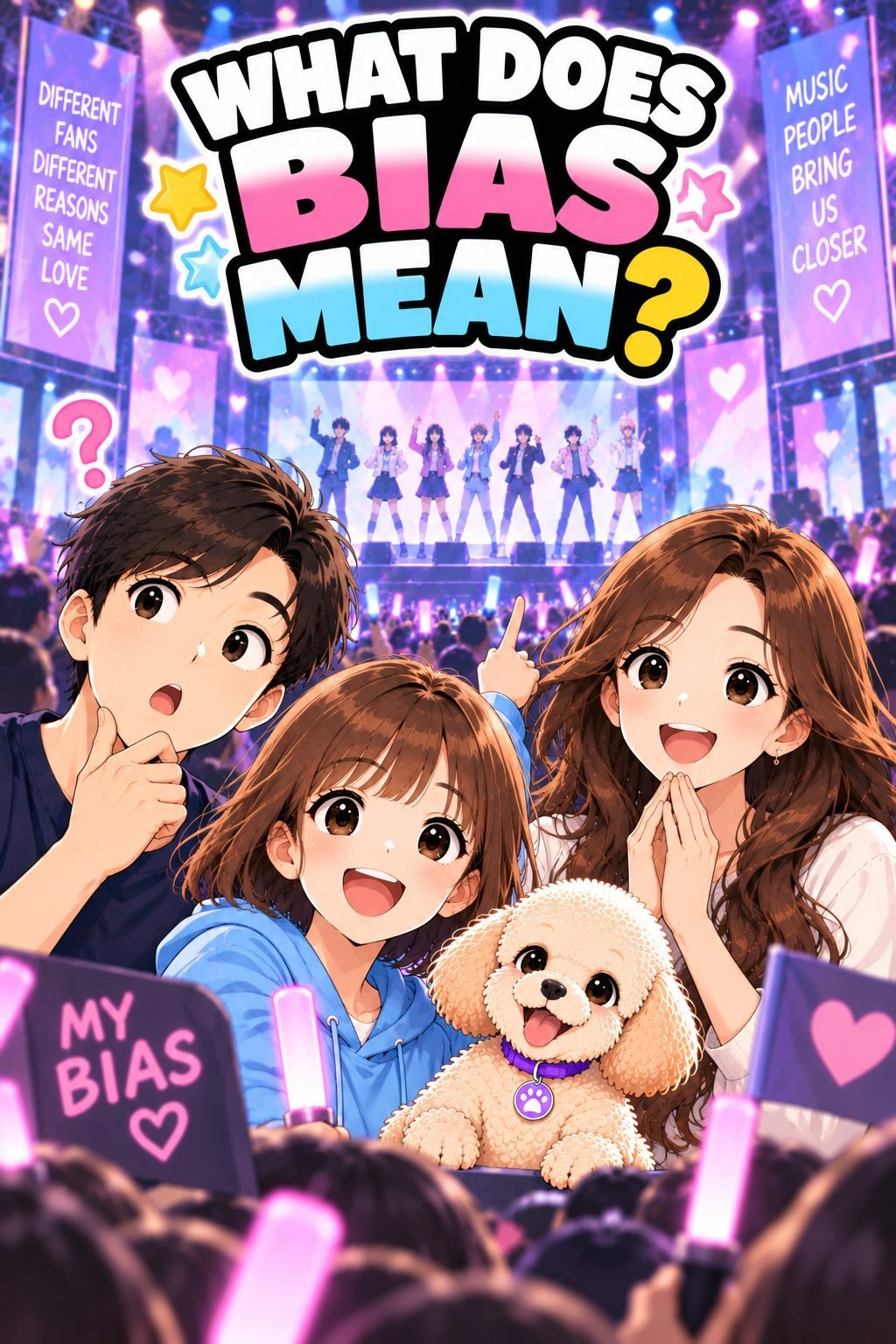
Why Is the Word “Bias” Used Differently in K-Pop?
In ordinary English, the word bias often refers to a preference, tendency, or prejudice.
In international K-Pop fan language, however, the word developed a more specific informal meaning.
When someone says, “She is my bias,” they are usually saying that she is the member they especially like within the group.
This can sound unusual to an English speaker encountering K-Pop vocabulary for the first time, so the surrounding fan context matters.
Is a Bias the Most Talented Member?
No.
Calling someone your bias expresses a personal preference. It is not an objective ranking of singing, dancing, popularity, appearance, or any other quality.
Two fans of the same group can have completely different biases, and both choices are equally understandable as personal preferences.
A fan can also admire different members for different reasons.
Why Do Fans Choose a Bias?
There is no single reason.
A fan may become especially interested in a member because of:
- Vocals
- Dance or stage performance
- Rap
- Personality
- Humor
- Fashion or styling
- Interviews or variety content
- Creative work
- A memorable performance
- Simply a personal connection or preference
A bias does not need to be chosen according to a checklist.
Sometimes fans begin liking one member naturally as they watch more performances and content.
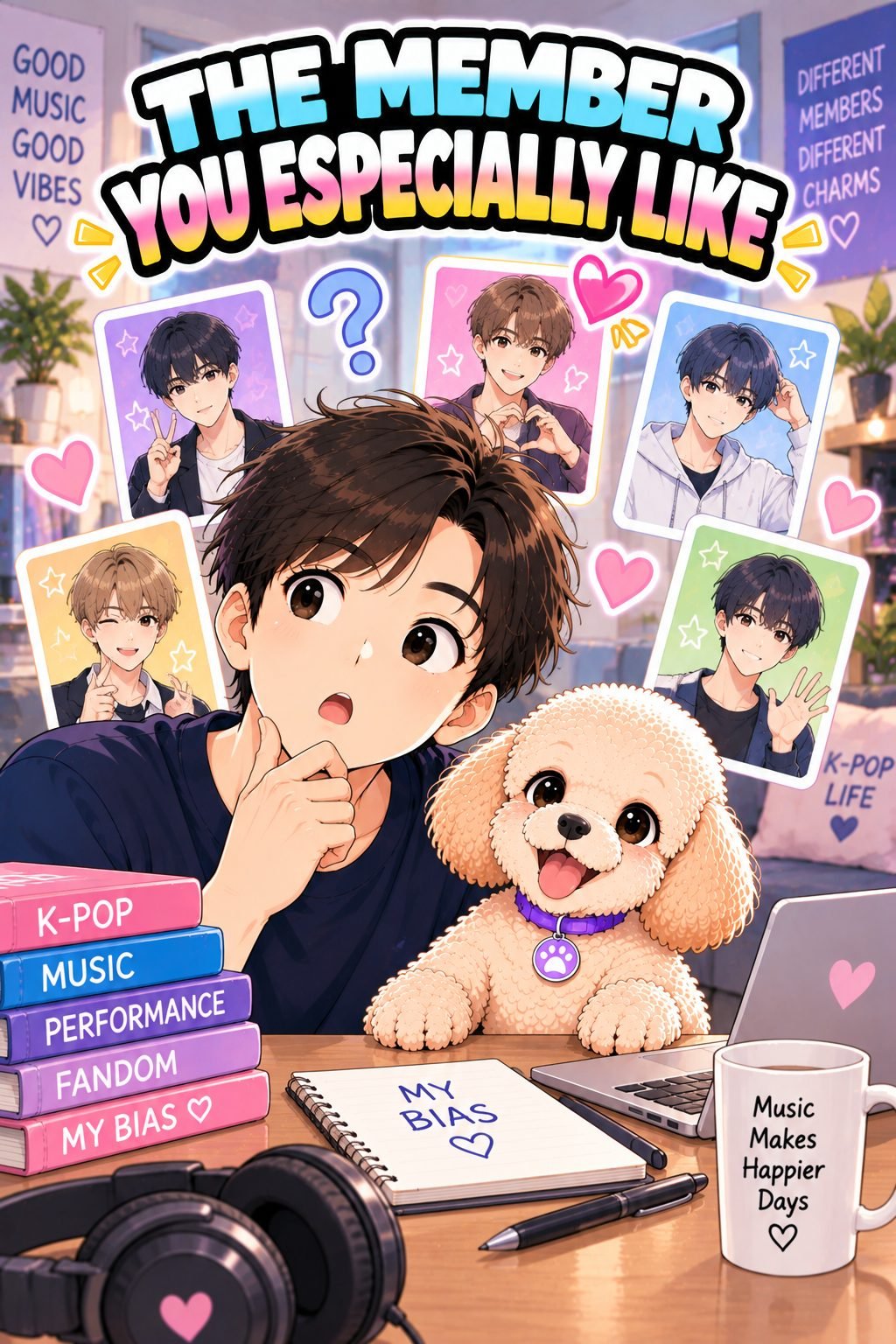
Do You Have to Choose One Bias?
No.
Some fans have one clear favorite member. Others especially like two or more members, and some prefer the entire group without choosing an individual favorite.
Fan vocabulary is descriptive rather than a set of membership rules.
You do not become a more serious fan by choosing one member, and you do not become less of a fan because you cannot choose.
What Does “OT” Mean?
In K-Pop fandom conversations, you may encounter expressions such as OT5, OT7, or another number.
The expression is commonly used to refer to supporting or discussing the full lineup of a group, with the number corresponding to the number of members being referenced.
Its exact use can depend on fandom context, particularly when a group’s lineup has changed or when fans are discussing different periods of the group’s history.
Because those situations can become complicated, do not assume that an OT expression has exactly the same implication in every fandom.

Can You Have More Than One Bias?
Yes.
Fans use the term flexibly, and some people have more than one favorite member in the same group.
Others have a different bias in every group they follow.
There is no official rule limiting how many biases a fan can have.
Can Your Bias Change?
Yes.
A fan’s preferences can change as they discover more music, performances, interviews, or other content.
Someone who first noticed one member may later become more interested in another member.
This is normal fan behavior and does not require an explanation or apology.
What Is an Ultimate Bias?
An ultimate bias, sometimes shortened informally to ult bias, generally means a fan’s strongest favorite among the K-Pop artists or members they follow.
For example, a fan may follow several groups and have a bias in each one, while considering one particular person their ultimate bias across all of those groups.
This is still a personal fan expression rather than an official K-Pop category.
Not every fan uses the term or feels the need to choose an ultimate bias.
What Is a Bias Wrecker?
A bias wrecker is an informal fan term for another member who strongly catches a fan’s attention and makes their original bias choice feel less certain.
The expression is usually playful.
It does not mean that the second member has literally replaced the original bias or that the fan must choose between them.
A memorable performance, personality moment, new hairstyle, interview, or other content might lead a fan to jokingly call another member their bias wrecker.
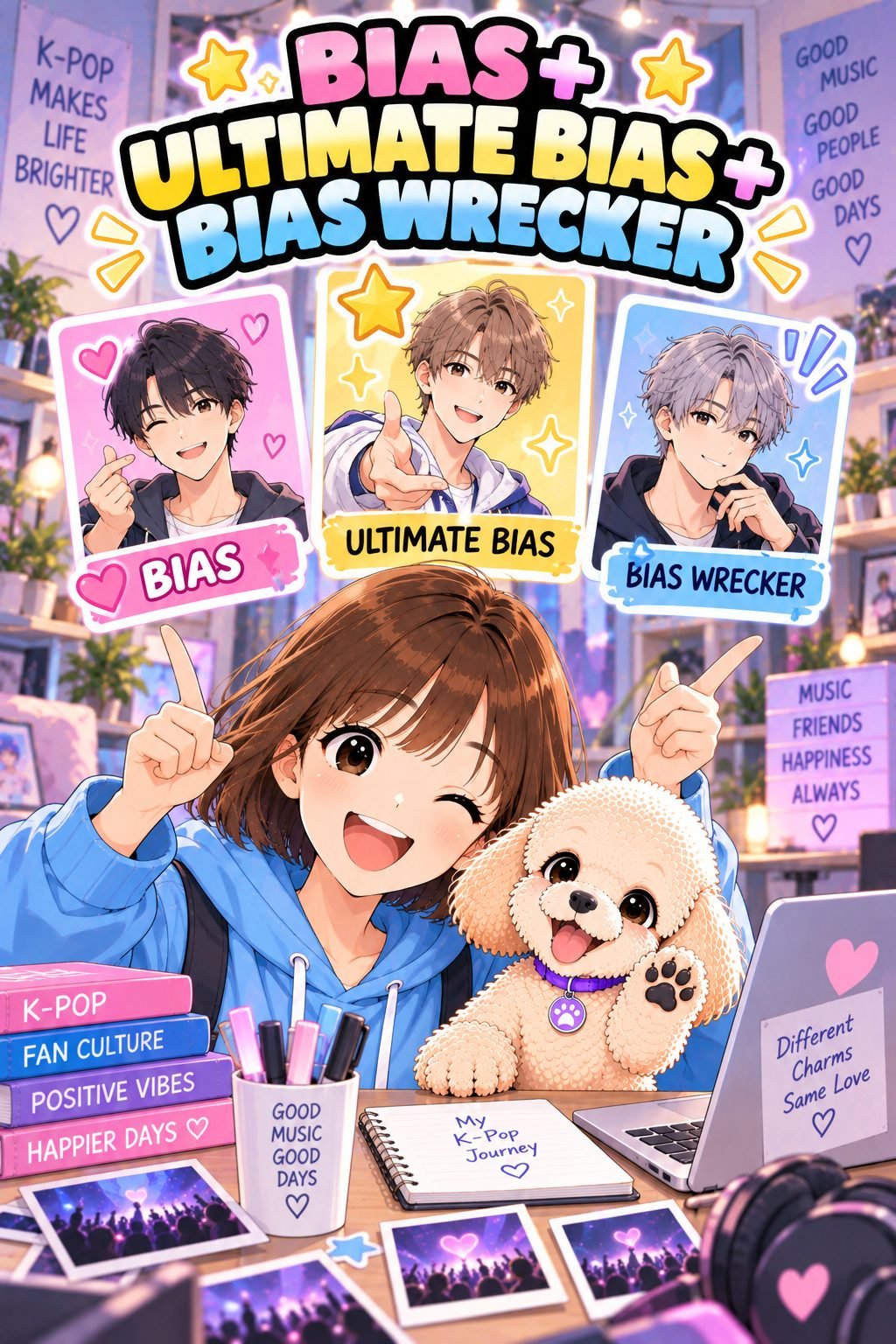
Bias vs. Ultimate Bias vs. Bias Wrecker
The easiest way to separate the three terms is:
- Bias: a member you especially like.
- Ultimate Bias: a particularly strong favorite across the artists or groups you follow.
- Bias Wrecker: another member who strongly catches your attention and playfully challenges your current favorite.
These are informal fan expressions, not official rankings.
Different fans can also use them somewhat differently.
Is Bias the Same as a K-Pop Group Role?
No.
Bias describes a fan’s personal preference.
Terms such as leader, vocalist, rapper, dancer, or maknae describe different kinds of positions, functions, or characteristics associated with members within a group context.
A group’s leader is not automatically everyone’s bias, and a fan’s bias does not gain a special official position because fans prefer that member.
This distinction becomes important when you begin learning more K-Pop terminology. K-Pop Group Roles explains commonly used role terms separately.
Does Your Bias Determine What You Collect?
It can influence collecting, but it does not have to.
Some fans focus their K-Pop Photocard collections on their bias because collecting every member can become expensive or difficult.
Other fans collect the full group, particular album concepts, cards they simply like, or no photocards at all.
Having a bias does not create an obligation to buy that member’s merchandise or collectibles.
Does Having a Bias Mean You Support Only One Member?
No.
A fan can have a favorite member while still enjoying and supporting the group as a whole.
Bias is generally a way to express personal preference, not a requirement to dislike or ignore other members.
Healthy fandom participation does not require turning personal preferences into attacks or competitions between members.
Do You Need a Bias to Join a Fandom?
No.
There is no requirement to select a favorite member before listening to a group, attending a concert, buying an album, joining a fan community, or describing yourself as a fan.
You may develop a bias later, have several biases, change your bias, or never choose one at all.
The term is useful because it helps fans talk about personal favorites. It is not a rule for participating in K-Pop fandom.
How Is Bias Used in Everyday K-Pop Fan Conversation?
Bias vocabulary appears frequently in casual K-Pop conversations, especially when fans introduce the groups they follow or discuss individual members.
You might see questions such as “Who is your bias?” or comments about someone becoming a new bias after a memorable performance.
Fans may also talk about an ultimate bias or jokingly describe another member as a bias wrecker.
These expressions are generally informal ways of sharing personal preferences. They should not be interpreted as official rankings or positions within a group.
Bias and K-Pop Photocards
Bias preferences often become visible in collecting culture.
Because many physical albums contain random member inclusions, a fan may open an album hoping to receive a photocard of their bias.
If another member appears instead, some collectors trade cards with other fans. Others simply keep whichever card they receive.
You do not need to collect your bias or trade away cards of other members.
Bias and K-Pop Merchandise
Some merchandise is designed around individual members, while other products represent an entire group.
A fan with a bias may choose member-specific merchandise when it is available, particularly when buying every version would be expensive or unnecessary.
Other fans prefer full-group merchandise or simply choose products based on the design they like.
If you are shopping in Korea, K-Pop Merchandise in Seoul explains official goods, pop-ups, limited products, and practical buying considerations.
Having a bias does not mean you need to purchase every product connected with that member.
Bias at Concerts and Fan Events
Bias vocabulary can also appear around concerts, fan meetings, fansigns, and other K-Pop activities.
A fan may be especially excited when their bias performs a particular part, interacts with the audience, or appears nearby during a concert.
At a fansign or other artist-interaction event, a fan may be particularly interested in meeting their bias.
However, personal preference does not change the event rules or give a fan special access to a particular member.
For more information about structured artist-fan events, see K-Pop Fan Meetings & Fansigns.
Bias and Fan Etiquette
Having a favorite member can be a fun part of fandom, but it does not need to become a competition.
Different fans will naturally prefer different members.
A useful approach is to separate personal preference from claims about who is objectively more talented, important, attractive, or deserving of attention.
It is also possible to celebrate your bias without insulting another member or another fan’s favorite.
The wider K-Pop Fandom Culture includes many different ways of supporting and enjoying artists.
What Is Solo Stanning?
In fan discussions, you may encounter the expression solo stan.
It generally refers to someone whose fandom interest is focused primarily on one member rather than the full group.
This is not exactly the same as simply having a bias.
A fan can have a bias while still enjoying and supporting the entire group.
The way terms such as solo stan are used can vary between fan communities, so context matters.
Can Bias Vocabulary Be Used for Solo Artists?
The most familiar use of bias is within groups, where a fan chooses or naturally develops a particular favorite among several members.
When discussing solo artists, the same comparison between group members does not exist.
Fans may still use broader favorite-artist language or describe a solo artist as an ultimate favorite, but bias terminology is most useful when distinguishing personal favorites within or across groups.
Can You Have Biases in Several Groups?
Yes.
A fan who follows several K-Pop groups may have a different bias in each group.
They may then use the expression ultimate bias for one particularly strong favorite across all of the artists they follow.
Again, none of these choices are official or permanent.
What If You Cannot Choose?
Nothing is wrong.
You may like the entire group equally, prefer different members for different qualities, or simply not be interested in ranking your preferences.
You may also need more time to learn about the members before having a favorite.
K-Pop fan vocabulary exists to help fans describe their experiences. You do not need to change your experience to fit the vocabulary.
K-Nana Family Guide
Dad: Hears the word “bias” and initially wonders whether fans are talking about unfair prejudice or an official member ranking.
Mom: Realizes that choosing one favorite member is optional and that fans can like several members or the entire group.
K-Nana Daughter: Explains bias, ultimate bias, and bias wrecker as playful fan terms for describing different kinds of personal favorites.
Nana: Keeps the lesson simple: like the member you like — and your bias can change.
Practical Tips for K-Pop Beginners
- Think of bias as a personal favorite, not an official group position.
- Do not treat a bias as proof that one member is objectively better than another.
- You do not need to choose a bias.
- You can have more than one bias.
- You can have different biases in different groups.
- Your bias can change over time.
- Ultimate bias generally describes an especially strong favorite across the artists you follow.
- Bias wrecker is usually a playful term for another member who strongly catches your attention.
- Do not confuse bias with roles such as leader, vocalist, rapper, dancer, or maknae.
- You do not need to collect merchandise or photocards of your bias.
- Respect other fans’ preferences.
- Avoid using personal favorites as a reason to attack other members.
- Remember that fan vocabulary can be used somewhat differently across communities.
FAQ
What does bias mean in K-Pop?
A bias is generally a member of a K-Pop group that a fan especially likes or feels particularly drawn to.
Is bias an official K-Pop position?
No. Bias is informal fan vocabulary, not a position assigned by an entertainment company.
Do I need a bias to be a K-Pop fan?
No. You can enjoy and support a group without choosing an individual favorite.
Can I have two biases in the same group?
Yes. There is no official rule limiting fans to one bias.
Can my K-Pop bias change?
Yes. Fans’ preferences can change as they discover more performances, music, interviews, and other content.
What is an ultimate bias?
An ultimate bias is generally a fan’s particularly strong favorite across the different K-Pop artists or groups they follow.
What is a bias wrecker?
A bias wrecker is an informal and usually playful term for another member who strongly catches a fan’s attention and challenges their current favorite.
Is a bias wrecker supposed to replace my bias?
No. The expression is playful and does not require you to change your favorite member.
What does OT7 or OT5 mean?
OT followed by a number is commonly used in fandom conversations when referring to a full lineup or a particular member configuration. Its exact implication can depend on the group’s history and fandom context.
Is having a bias the same as being a solo stan?
No. Having a bias generally means having a favorite member while you may still support the full group. Solo stan usually describes a stronger focus on one individual member.
Do I need to collect photocards of my bias?
No. Collecting is optional. Some fans collect their bias, some collect the full group, and others do not collect photocards at all.
Can I have a bias in every K-Pop group I like?
Yes. Fans commonly have different favorite members in different groups, but you are never required to choose one.
Final Takeaway
In K-Pop, a bias is simply a fan’s personal favorite member or someone they especially like within a group.
Ultimate bias and bias wrecker add playful ways to describe particularly strong favorites or other members who catch your attention.
None of these terms are official rankings, and none are requirements for participating in K-Pop fandom.
You can have one bias, several biases, change your bias, support the entire group equally, or never choose one at all.
Continue Exploring K-Pop
To understand the wider community and traditions surrounding these fan terms, continue with K-Pop Fandom Culture.
If your favorite member influences what you collect, K-Pop Photocards explains random inclusions, collecting, trading, storage, and buying considerations.
For structured artist-fan interaction, K-Pop Fan Meetings & Fansigns explains fan meetings, fansigns, video-call events, applications, and participation rules.
Continue With K-Pop Beginner Terms
Next, K-Pop Group Roles explains commonly used terms such as leader, vocalist, rapper, dancer, and maknae without confusing them with fan preferences like bias.
K-Pop Fandom Names explains how official fandom names differ from individual fan terms.
For unfamiliar terminology across the whole series, use the K-Pop Glossary for Beginners.
References
- Korea.net — Korean Culture and K-Pop Information
- Korea.net — The Structure and Activities of K-Pop Fandoms
Image Credits
K-Pop bias family visual with Dad, Mom, K-Nana daughter, and Nana learning how fans use the word bias for a favorite member — K-Nana Studio original visual.
K-Pop bias beginner visual with Dad and Nana learning that bias describes a member a fan especially likes rather than an official member ranking — K-Nana Studio original visual.
K-Pop fandom visual with Mom and Nana illustrating that fans do not need to choose one bias and can enjoy an entire group — K-Nana Studio original visual.
K-Pop fan-vocabulary visual with K-Nana daughter and Nana explaining bias, ultimate bias, and bias wrecker using fictional member imagery — K-Nana Studio original visual.
Nana as the K-Nana Studio K-Pop mascot explaining that choosing a bias is optional and personal preferences can change — K-Nana Studio original visual.
Disclaimer
This article is provided for general cultural and educational information about common K-Pop fan vocabulary. Terms such as bias, ultimate bias, bias wrecker, OT, and solo stan are informal expressions whose exact use and implications can vary between fans, communities, groups, and contexts.
K-Nana Studio is not affiliated with or endorsed by any K-Pop artist, group, entertainment company, fandom, fan platform, retailer, event organizer, or other organization discussed in this guide.
This guide does not rank or evaluate real K-Pop artists or group members. Personal preferences within fandom are subjective, and readers should interpret fan terminology according to the relevant community and context.
Purchasing albums, photocards, merchandise, memberships, tickets, or other fan products is optional and is not required to have a bias or participate in K-Pop fandom.
All K-Nana family and Nana illustrations used in this article are K-Nana Studio original editorial visuals. They are not intended to depict or reproduce any specific real K-Pop artist, group, fandom, entertainment company, official logo, photocard, album artwork, merchandise product, costume, promotional image, or other protected official design.