
How to Enjoy K-Pop in Seoul
K-Pop in Seoul can be much more than visiting one store or taking a photo in front of an entertainment company building. For international fans, the city offers different ways to connect music with shopping, fandom culture, performances, events, neighborhoods, and hands-on experiences.
You might spend one day browsing albums and official merchandise, another exploring fan culture in Hongdae, and another taking a K-Pop dance class or attending a concert or fan event.
The best approach is not to try to visit every K-Pop-related place in Seoul. Decide what part of K-Pop interests you most and build your itinerary around that.
If you are completely new to the culture, start with What Is K-Pop? before planning your Seoul experience.
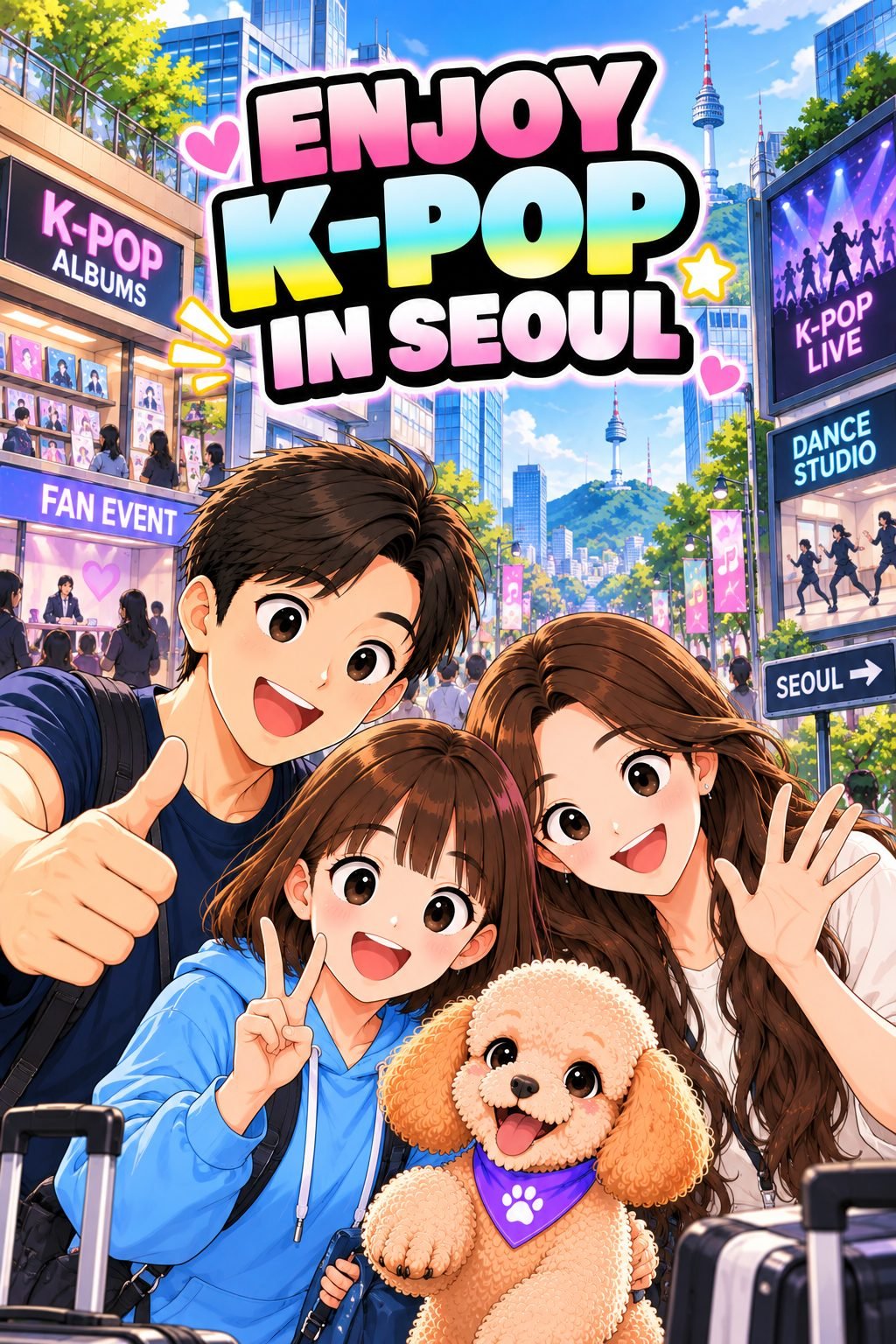
What Can K-Pop Fans Do in Seoul?
There is no single K-Pop itinerary that fits every fan.
Depending on your interests and what is available during your visit, a K-Pop day in Seoul might include:
- Browsing physical albums and official merchandise
- Visiting temporary pop-up stores
- Exploring birthday cafés and other fan-organized events
- Taking photos at K-Pop-related locations
- Joining a K-Pop dance or vocal experience
- Attending a concert, fan meeting, or other official event if you have valid access
- Exploring neighborhoods with active K-Pop and youth culture
Some experiences are permanent or relatively stable, while others exist only for a few days or weeks. Pop-ups, birthday cafés, concerts, fan events, and promotional installations are especially time-sensitive.
Where Should a K-Pop Fan Start in Seoul?
For a first visit, it is usually more practical to think in terms of neighborhoods rather than trying to chase individual K-Pop locations across the entire city.
Hongdae is one of the easiest areas to connect K-Pop with youth culture, shopping, cafés, street activity, and fan events.
VISITKOREA has specifically highlighted Hongdae for birthday cafés and K-Pop shopping, including stores carrying albums, light sticks, photocards, and other official merchandise.
Nearby Yeonnam-dong can also be combined with a Hongdae day if you want cafés and a more relaxed neighborhood atmosphere between K-Pop stops.
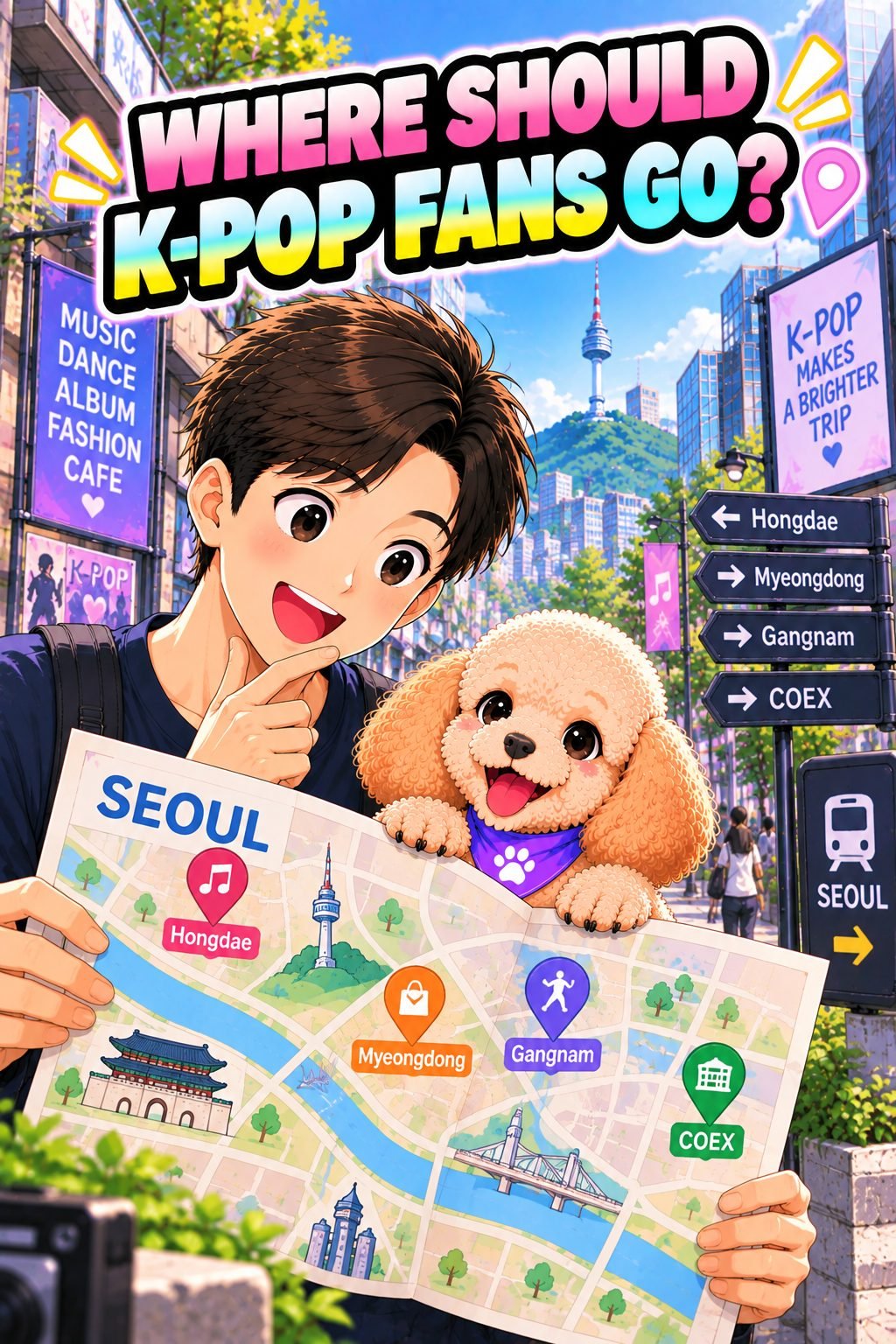
K-Pop in Hongdae
Hongdae is useful for beginners because several types of fan experiences can appear within one general area.
You may find album and merchandise shopping, birthday cafés, fan-made events, advertisements, photo spots, and other temporary K-Pop activities depending on the date.
Birthday cafés are a particularly recognizable part of Korean fan culture. Fans may decorate participating cafés for an artist’s birthday or anniversary and prepare special displays, cup holders, photocards, postcards, or other event items.
These events are temporary. A café that hosts one artist’s event this week may have a completely different event later or no K-Pop event at all.
For that reason, do not treat an old birthday-café list as a permanent directory. Check current event information close to your visit.
K-Pop in Gangnam and COEX
Gangnam offers a different K-Pop experience from Hongdae.
The broader Gangnam Station & Gangnam-daero area is a major commercial district, while the COEX area provides another useful base for K-Pop-oriented activities.
VISITKOREA currently describes Ktown4u COEX as a K-culture complex where visitors can encounter K-Pop merchandise, albums, light sticks, photocards, pop-up events, fan events, and dance or vocal classes.
If you are already visiting the area, you can also connect the K-Pop portion of your day with COEX Starfield Library rather than making a separate trip across Seoul.
The important point is that individual shops, pop-ups, classes, and events can change. Check the current official schedule before traveling specifically for one activity.
What About Apgujeong and Cheongdam?
Apgujeong Rodeo & Cheongdam-dong are often associated with Korean entertainment, fashion, luxury shopping, and parts of the entertainment-company landscape.
For K-Pop fans, this can make the area interesting as part of a broader Seoul culture itinerary.
However, an entertainment-company office is a workplace, not automatically a tourist attraction or fan-access facility.
Do not block entrances, enter private property, follow staff or artists, wait in restricted areas, or assume that visiting a company building will lead to seeing an artist.
A respectful K-Pop trip should treat public streets and officially accessible spaces as public experiences while respecting private workplaces and personal boundaries.
Where Can You Buy K-Pop Albums?
Seoul has stores that sell current K-Pop releases, older albums, and related merchandise, although inventory varies by store and date.
If you are buying physical albums, first understand how versions and inclusions work. The K-Pop Albums guide explains different versions, photobooks, random inclusions, and preorder or store benefits.
Do not assume that a particular album, version, or benefit will be available simply because a store carried it previously.
For limited products or a specific release, check current stock information when possible before making a special trip.
What About K-Pop Photocards and Light Sticks?
Albums are only one part of K-Pop shopping in Seoul.
Fans may also look for official light sticks, photocards, accessories, apparel, stationery, and other merchandise.
If you are new to collecting, read K-Pop Photocards before spending heavily on resale cards or trades.
If you are preparing for a concert, the K-Pop Light Sticks guide explains official products, versions, concert synchronization, and what to check before buying.
Buying merchandise is optional. A Seoul K-Pop trip does not need to become a shopping challenge.
Can You Experience K-Pop Without Shopping?
Yes.
K-Pop experiences in Seoul can include much more than buying albums and merchandise.
Depending on your schedule, you may explore fan culture, see public advertisements or temporary displays, visit neighborhoods associated with contemporary Korean culture, take a dance class, sing at a noraebang, or attend an official performance or event.
VISITKOREA currently lists K-Pop dance experiences in Seoul for international visitors, including beginner-friendly classes. Availability, price, language support, and booking conditions can change, so check the current provider information before booking.
This is where K-Pop travel becomes more personal: you can choose whether your Seoul experience is mainly about shopping, fandom, dancing, performances, neighborhoods, or a combination of several activities.
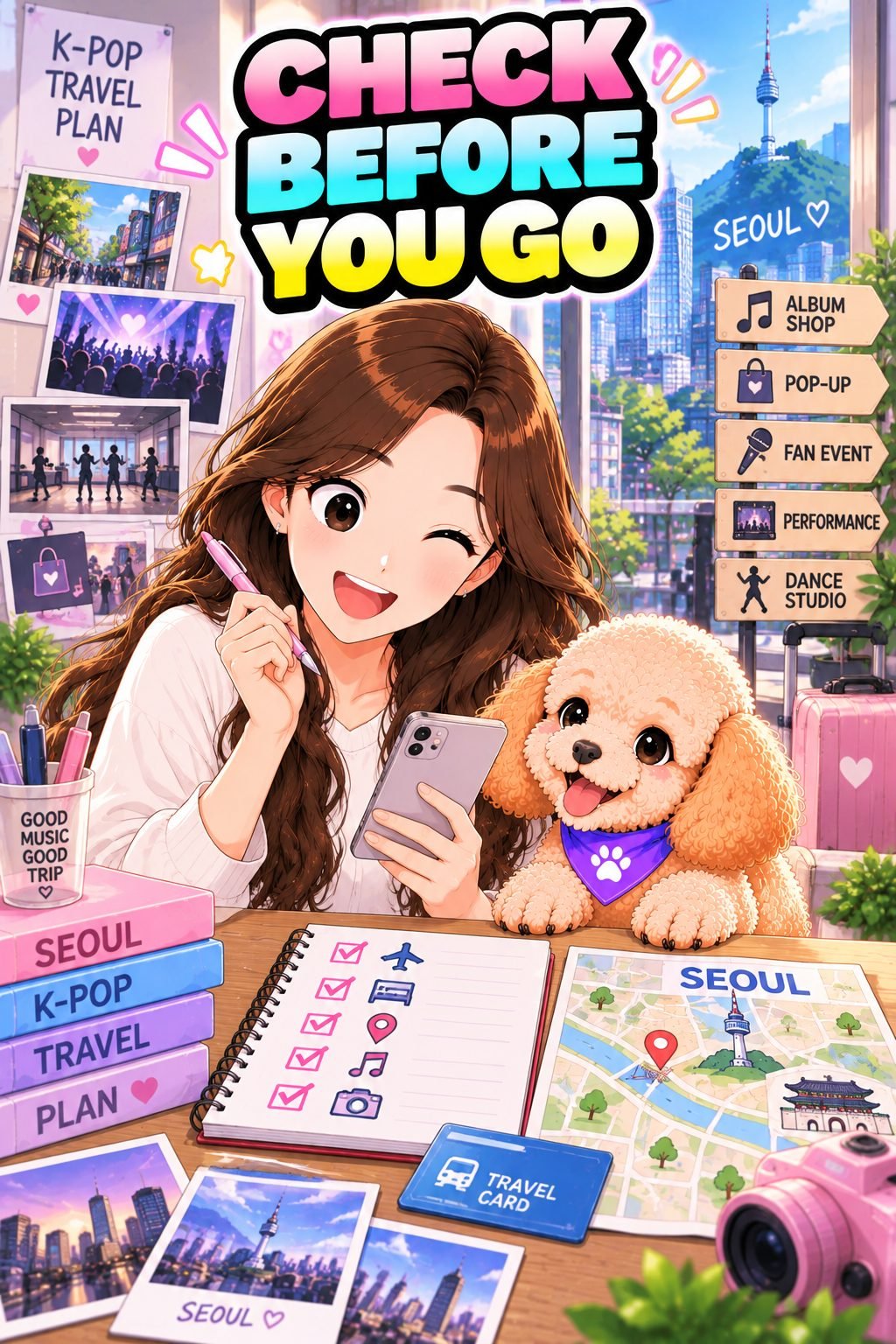
How Should You Plan a K-Pop Day in Seoul?
Start with geography.
Seoul is large, and crossing the city repeatedly can waste a significant part of your day. Group activities that are in the same general area whenever possible.
For example, you might create a Hongdae-centered day for fan culture and shopping or a Gangnam-and-COEX day for shopping, pop-ups, and other available K-Pop activities.
Then separate your plans into two groups:
- Flexible stops: neighborhoods, general shopping areas, cafés, and places you can visit within a broad time window.
- Fixed-time activities: concerts, classes, reservations, fan events, pop-ups with timed entry, or other scheduled experiences.
Build the flexible activities around anything that has a confirmed reservation or fixed start time.
Check Before You Go
K-Pop travel information can become outdated quickly.
Before leaving your hotel or accommodation, recheck anything that depends on a particular date or business.
Important details can include:
- Current opening hours
- Temporary closures
- Pop-up dates
- Reservation requirements
- Event eligibility
- Ticket or entry procedures
- Product availability
- Class schedules
- Age or identity requirements
- Last-entry times
A social-media post from several months ago may be useful for inspiration but should not be treated as confirmation that the same event or store arrangement still exists.
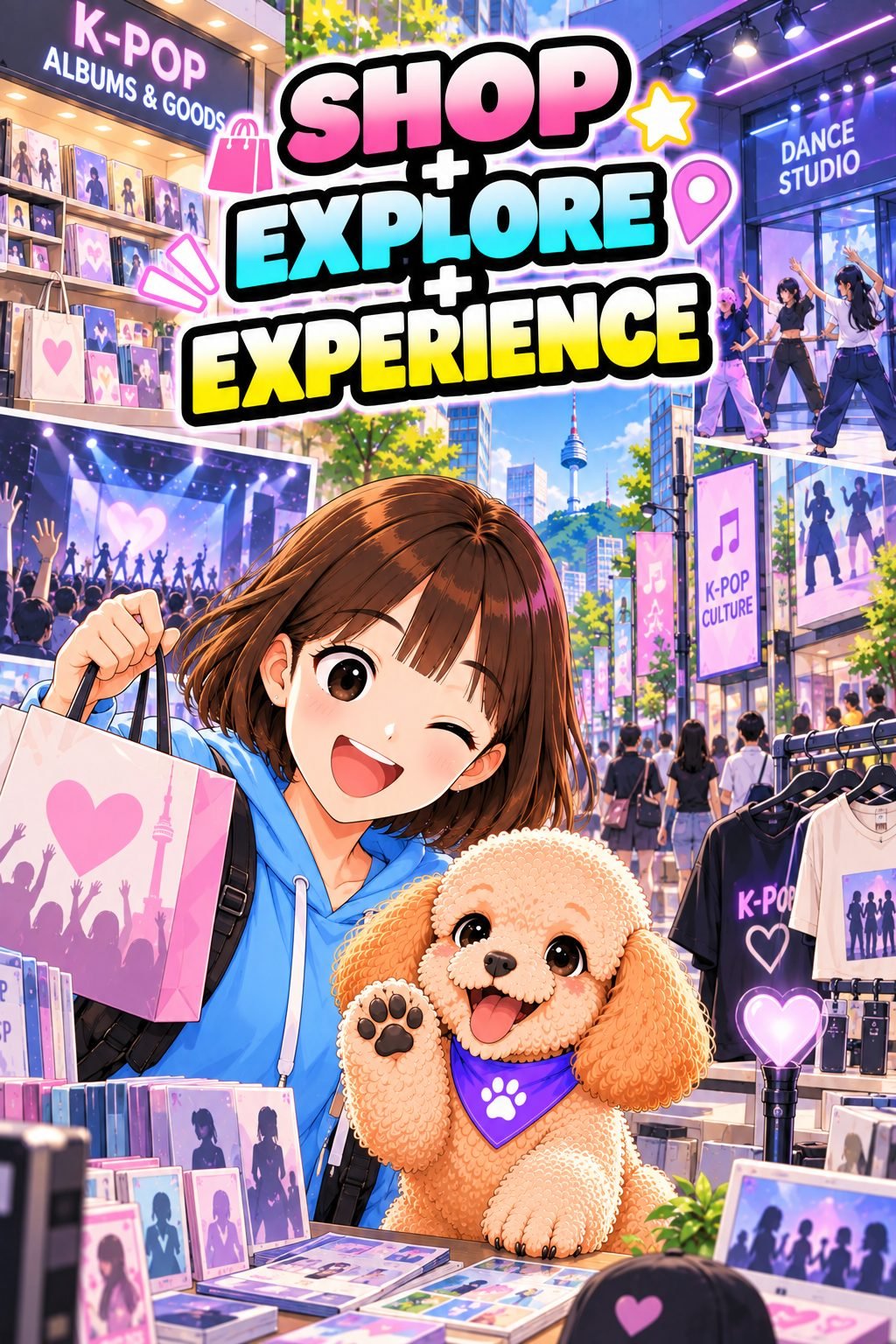
What International Visitors Should Know
A K-Pop trip in Seoul becomes much easier when you separate permanent places from temporary events.
Neighborhoods such as Hongdae and Gangnam will still be there after a particular comeback or fan event ends. Pop-up stores, birthday cafés, promotional displays, concerts, fan meetings, and special merchandise events may exist only for a limited period.
Before traveling across Seoul for one K-Pop activity, check whether it is still operating on the date of your visit.
Language can also be a practical consideration. Some stores and tourist-oriented experiences may provide English information, while other notices, event instructions, reservation systems, or fan activities may primarily use Korean.
Keep screenshots or saved copies of important reservation information when appropriate, but use the latest official source when schedules or participation rules may have changed.
Getting Around Seoul for K-Pop Activities
Public transportation is usually the most practical way to move between major K-Pop areas in Seoul.
Instead of planning your day around individual shops scattered across the city, group stops by neighborhood and nearby subway areas.
A Hongdae-centered day can be combined with nearby Yeonnam-dong, while a Gangnam-centered day can combine Gangnam Station & Gangnam-daero, the COEX area, and other nearby activities depending on your schedule.
If your itinerary includes a concert, fan event, class, or timed reservation, plan to arrive with extra time rather than scheduling another distant activity immediately beforehand.
How Much Should You Budget?
There is no standard budget for a K-Pop day in Seoul.
Your spending can range from almost nothing beyond transportation and food to significantly more if you buy albums, merchandise, concert tickets, classes, café event items, or other products.
Decide which experiences matter most before you start shopping.
If you collect albums or merchandise, setting a personal spending limit can help prevent temporary excitement from turning into purchases you did not originally plan to make.
You do not need to buy something at every K-Pop stop.
Respect Entertainment Companies and Artists
Some international fans are interested in seeing entertainment-company buildings or neighborhoods associated with the Korean entertainment industry.
Remember that company offices, studios, dormitories, private vehicles, backstage areas, and employee entrances are not automatically tourist attractions.
Stay in publicly accessible areas, follow posted rules, and do not interfere with employees, residents, artists, or other visitors.
Do not follow artists, wait in restricted areas, attempt to enter private buildings, or photograph people in situations where doing so violates rules or personal boundaries.
A good K-Pop experience should respect the people who live and work in the places you visit.
What About Concerts and Fan Events?
If your Seoul trip includes an official concert, fan meeting, or fansign, treat that activity as a fixed part of your itinerary.
Ticketing, identity verification, check-in, permitted items, event times, and entry rules can differ significantly.
The K-Pop Fan Meetings & Fansigns guide explains why current official event rules should always come before assumptions based on previous events.
If you are hoping to attend a Korean television music program, read Korean Music Shows before planning around a studio visit. Knowing where a program is recorded does not guarantee audience access.
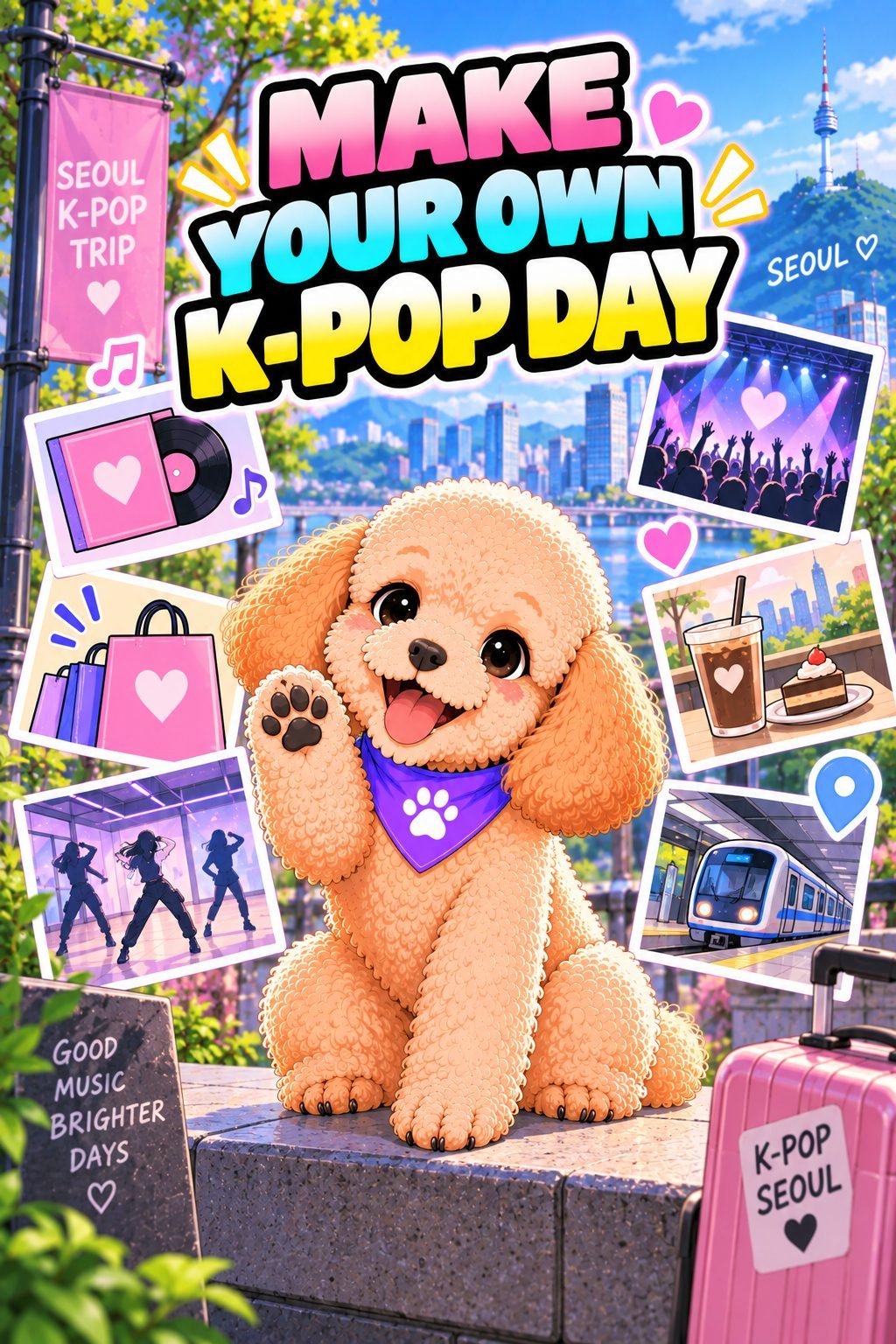
Build Your Own K-Pop Day
You do not need to follow the same Seoul itinerary as another fan.
A shopping-focused visitor might spend more time browsing albums and merchandise. Someone interested in fan culture might prioritize birthday cafés and temporary events. A performance-focused fan might build the trip around a concert or dance class.
You can also mix K-Pop with ordinary Seoul sightseeing rather than spending the entire day on one theme.
For example, a COEX K-Pop stop can be combined naturally with COEX Starfield Library, while a Hongdae K-Pop day can include the wider Hongdae neighborhood.
The goal is not to complete a checklist. It is to build a Seoul experience around the parts of K-Pop you genuinely enjoy.
K-Nana Family Guide
Dad: Arrives in Seoul and wonders whether there is one famous K-Pop place where every fan should go.
Mom: Checks opening hours, reservations, transportation, event dates, costs, and official information before the family travels across the city.
K-Nana Daughter: Explains that Seoul offers different K-Pop experiences — shopping, fan culture, pop-ups, performances, dance, events, and neighborhoods — so the best itinerary depends on the fan.
Nana: Keeps the lesson simple: choose what you actually want to experience and make your own K-Pop day in Seoul.
Practical Tips for K-Pop Beginners
- Choose your main K-Pop interests before building your itinerary.
- Group activities by neighborhood to reduce unnecessary travel across Seoul.
- Check current opening hours before visiting a specific store.
- Confirm pop-up and birthday-café dates close to your visit.
- Book classes, concerts, and other reservation-based activities through appropriate official or authorized channels.
- Check the latest participation rules for fan events and music shows.
- Do not assume merchandise will still be in stock when you arrive.
- Set a personal shopping budget before visiting album and merchandise stores.
- Respect private entertainment-company property and artist boundaries.
- Allow extra travel and waiting time for fixed-time events.
- Do not rely on old social-media posts for time-sensitive information.
- Remember that you can enjoy K-Pop in Seoul without buying merchandise.
FAQ
Where should a K-Pop fan go in Seoul?
There is no single required destination. Hongdae, Gangnam, COEX, and other areas can offer different combinations of shopping, fan culture, events, and experiences. Choose areas based on what you want to do.
Is Hongdae good for K-Pop fans?
Hongdae can be useful for fans interested in youth culture, album and merchandise shopping, cafés, birthday events, and other temporary fan activities. Specific events and stores can change.
Is Gangnam good for K-Pop fans?
Gangnam and the wider COEX area can be useful for K-Pop shopping, pop-ups, fan events, classes, and other activities depending on what is currently available.
Can I visit K-Pop entertainment-company buildings?
You can use public streets and officially accessible public spaces, but company offices and private areas should be treated as workplaces. Do not enter restricted property or interfere with staff, artists, or residents.
Where can I buy K-Pop albums in Seoul?
Seoul has specialist K-Pop stores, music retailers, company-related shops, and other sellers. Stock, versions, benefits, and operating details vary, so check current information if you are looking for a specific release.
Can I find K-Pop birthday cafés in Seoul?
Yes, birthday and anniversary café events are part of Korean fan culture, especially in areas such as Hongdae. They are temporary events, so check current dates and locations before visiting.
Can tourists take K-Pop dance classes in Seoul?
Yes, some providers offer K-Pop dance experiences for international visitors. Class schedules, prices, language support, booking procedures, and skill levels vary.
Can tourists attend K-Pop music shows?
Some audience opportunities may be available, but participation rules vary by broadcaster, artist, recording, and date. Do not assume that tourists can simply arrive at a studio and enter.
Do I need to buy K-Pop merchandise in Seoul?
No. Shopping is optional. You can enjoy neighborhoods, fan culture, performances, dance experiences, cafés, and other aspects of K-Pop without purchasing merchandise.
How many K-Pop areas should I visit in one day?
There is no ideal number. Seoul is large, so one or two well-planned areas can often be more enjoyable than repeatedly crossing the city to complete a long checklist.
Final Takeaway
Seoul offers many ways to experience K-Pop beyond simply listening to music. Fans can explore albums and merchandise, birthday cafés, pop-ups, neighborhoods, dance experiences, concerts, fan events, and other activities depending on what is available during their visit.
The best K-Pop itinerary is not the one with the most stops. It is the one that matches your interests, schedule, and budget.
Choose a few experiences you genuinely care about, group them by area, check time-sensitive information before you go, and leave enough flexibility to enjoy Seoul itself.
Continue Exploring K-Pop
For K-Pop shopping in the city, continue with K-Pop Merchandise in Seoul for practical information about albums, photocards, light sticks, and other fan products.
If you want to experience fan-organized events during your trip, K-Pop Birthday Cafes in Korea explains how temporary birthday cafés work and what international visitors should check before going.
For live events, use the K-Pop Concert Guide in Korea and How to Attend a Korean Music Show for more detailed planning.
If you want a hands-on experience rather than only shopping or watching performances, K-Pop Dance Classes in Seoul explains beginner-friendly dance-class experiences and practical booking considerations.
Explore Seoul by K-Pop Area
For youth culture, music, dance, cafés, shopping, and street activity, start with Hongdae. You can also combine it with nearby Yeonnam-dong for a more café- and neighborhood-focused extension of the same outing.
For a Gangnam-side itinerary, Gangnam Station & Gangnam-daero can be combined with COEX Starfield Library.
For another perspective on Seoul’s contemporary entertainment, fashion, and K-culture environment, explore Apgujeong Rodeo & Cheongdam-dong.
If shopping is a major part of your trip, Myeongdong can also fit naturally into a wider Seoul itinerary.
Temporary pop-ups, birthday cafés, merchandise events, and artist-related activities can change quickly. Always check current dates, locations, operating information, and participation requirements before traveling to a specific event.
References
- VISITKOREA — K-Pop Experiences, Shopping and Fan Culture in Seoul
- VISITKOREA — Ktown4u COEX K-Pop Cultural Complex
- VISITKOREA — K-Pop Birthday Café Culture
Image Credits
How to Enjoy K-Pop in Seoul family visual with Dad, Mom, K-Nana daughter, and Nana beginning their K-Pop experience in Seoul — K-Nana Studio original visual.
Seoul K-Pop planning visual with Dad and Nana exploring where international K-Pop fans can go in the city — K-Nana Studio original visual.
K-Pop travel-planning visual with Mom and Nana checking schedules, transportation, reservations, and current information before visiting — K-Nana Studio original visual.
Seoul K-Pop experience visual with K-Nana daughter and Nana exploring shopping, fan culture, and hands-on K-Pop activities — K-Nana Studio original visual.
Nana as the K-Nana Studio K-Pop mascot encouraging international visitors to create a Seoul K-Pop itinerary based on their own interests — K-Nana Studio original visual.
Disclaimer
This article is provided for general cultural, educational, shopping, and travel-planning information. Store locations, opening hours, pop-up events, birthday cafés, merchandise availability, class schedules, reservations, concert information, fan-event rules, prices, and other K-Pop activities in Seoul can change over time.
K-Nana Studio is not affiliated with or endorsed by any K-Pop artist, entertainment company, store, shopping complex, café, class provider, event organizer, broadcaster, ticketing service, fandom, tourism business, or other commercial organization discussed in this guide.
Before traveling to a specific store, event, class, pop-up, concert, fan activity, or other K-Pop destination, check the current information from the relevant official operator, organizer, artist, entertainment company, retailer, broadcaster, or authorized booking service.
Access to private entertainment-company facilities, artist spaces, studios, backstage areas, offices, residences, and restricted locations should never be assumed. Visitors should respect private property, staff instructions, local rules, artist privacy, and other people’s personal boundaries.
Purchasing albums, merchandise, tickets, classes, food, or other products and experiences is optional. Readers should make their own purchasing and travel decisions based on their interests, budget, schedule, and circumstances.
All K-Nana family and Nana illustrations used in this article are K-Nana Studio original visuals created for educational and editorial use. They are not intended to depict or reproduce any specific real K-Pop artist, group, entertainment company, official logo, album artwork, merchandise design, light stick, photocard, event poster, store branding, or other protected official design.