
Insadong is one of Seoul’s best-known cultural neighborhoods, bringing together traditional crafts, art galleries, tea houses, souvenir shops, small restaurants, and lively pedestrian streets. Located in central Jongno, it is an easy place for first-time visitors to experience Korean tradition while remaining close to some of Seoul’s most important historic attractions.
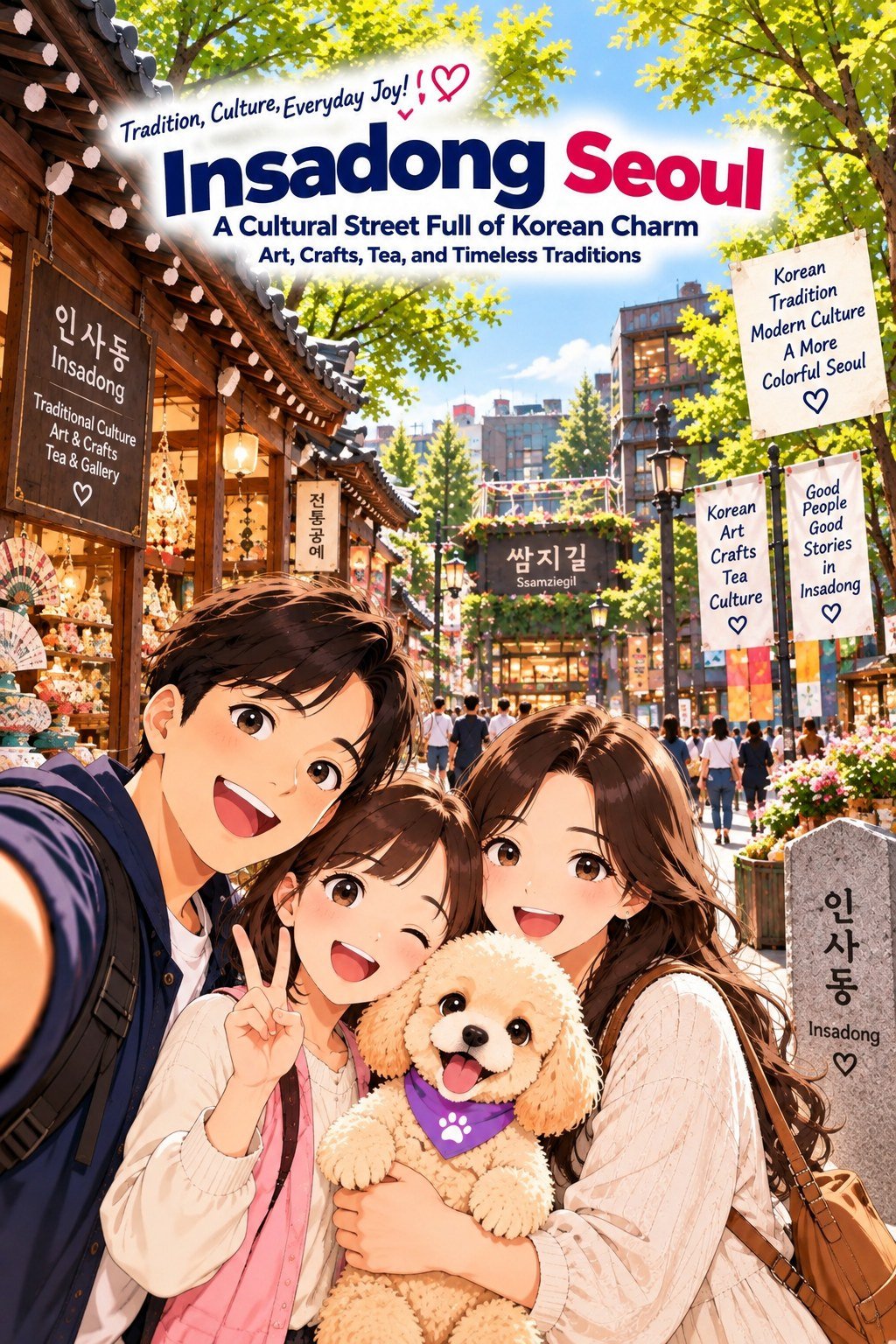
Explore traditional culture, crafts, tea, and everyday Seoul with the K-Nana family.
Quick Guide
| Location | Jongno-gu, Seoul |
| Best for | Traditional culture, crafts, tea, galleries, souvenirs, walking |
| Recommended time | About 2–3 hours |
| Nearest subway | Anguk Station (Line 3) |
| Admission | The main streets are free to explore |
| Good to combine with | Bukchon, Gyeongbokgung, Changdeokgung, and Jongno |
What Is Insadong?
Insadong is a cultural and commercial neighborhood where visitors can explore traditional Korean crafts and art alongside cafés, restaurants, galleries, and contemporary shops.
The main street is easy to walk, but much of Insadong’s character can also be found in the smaller alleys branching away from it. These side streets contain tea houses, restaurants, workshops, galleries, and small stores that can feel very different from the busier central road.
Why Visit?
Insadong works especially well for first-time visitors because several aspects of Korean culture can be experienced within a relatively compact area.
- Browse traditional Korean crafts and handmade goods.
- Visit art galleries and small cultural spaces.
- Experience a traditional tea house.
- Shop for souvenirs and Korean-inspired gifts.
- Explore side streets and small local businesses.
- Combine Insadong with nearby palaces and Bukchon Hanok Village.
Korean Crafts & Traditional Art
Traditional crafts are one of the defining features of Insadong. Visitors may encounter ceramics, stationery, paintings, calligraphy-related items, decorative objects, textiles, accessories, and other Korean-inspired products.
The exact mix of shops changes over time, so exploring without a rigid shopping list can be part of the experience.
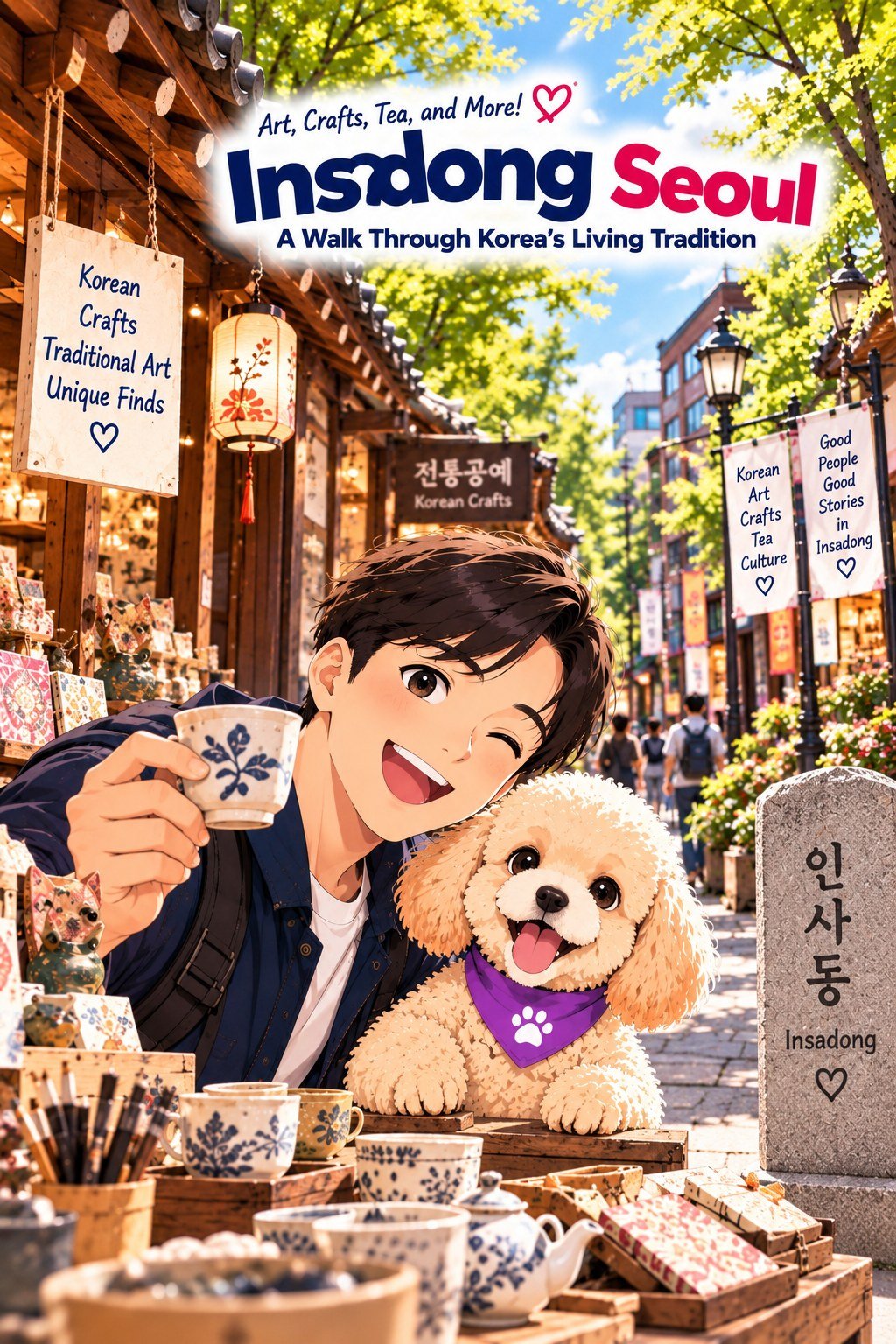
Traditional crafts and small shops are an important part of the Insadong experience.
Traditional Tea Houses
A tea house can provide a welcome change of pace after walking through Insadong’s shops and galleries. Traditional-style interiors, courtyards, wooden architecture, ceramics, and Korean teas can create a quieter experience within the busy neighborhood.
Menus vary by business, but visitors may encounter different Korean teas as well as traditional sweets and snacks.
Opening hours, menus, prices, and reservation policies differ between individual tea houses, so check the specific business if there is somewhere you particularly want to visit.
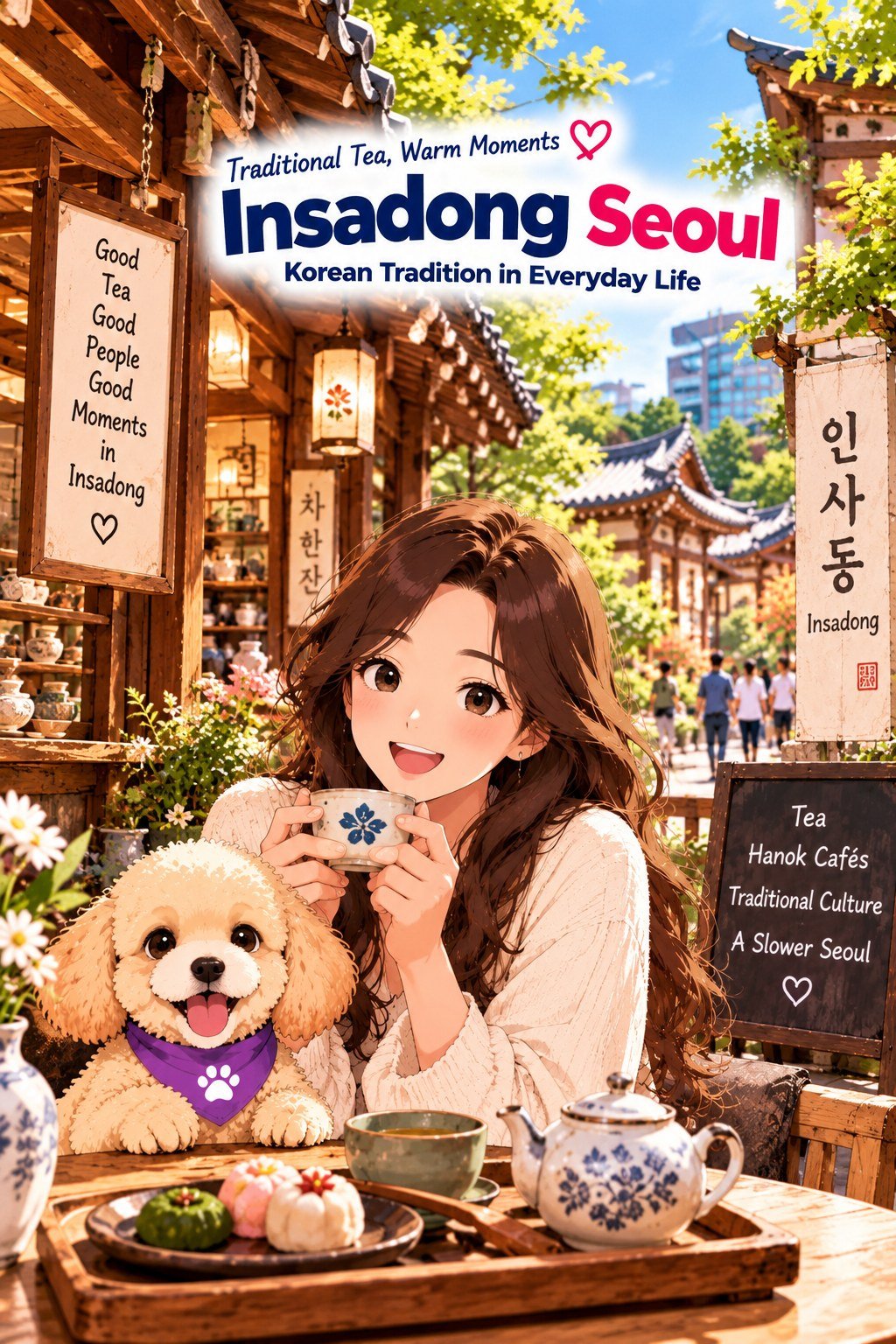
A traditional tea break offers a slower and quieter side of Insadong.
Art Galleries & Cultural Spaces
Insadong has long been associated with art and culture. Galleries and exhibition spaces can be found throughout the area, ranging from small independent venues to larger cultural facilities.
Exhibitions change regularly, so visitors can encounter different styles of traditional and contemporary Korean art depending on when they visit.
Ssamziegil
Ssamziegil is one of the most recognizable shopping and cultural spaces in the Insadong area. Its distinctive multi-level layout allows visitors to move gradually upward through shops, craft stores, small businesses, and creative spaces.
It provides a more contemporary interpretation of Insadong’s arts-and-crafts identity and is easy to include while walking along the main street.
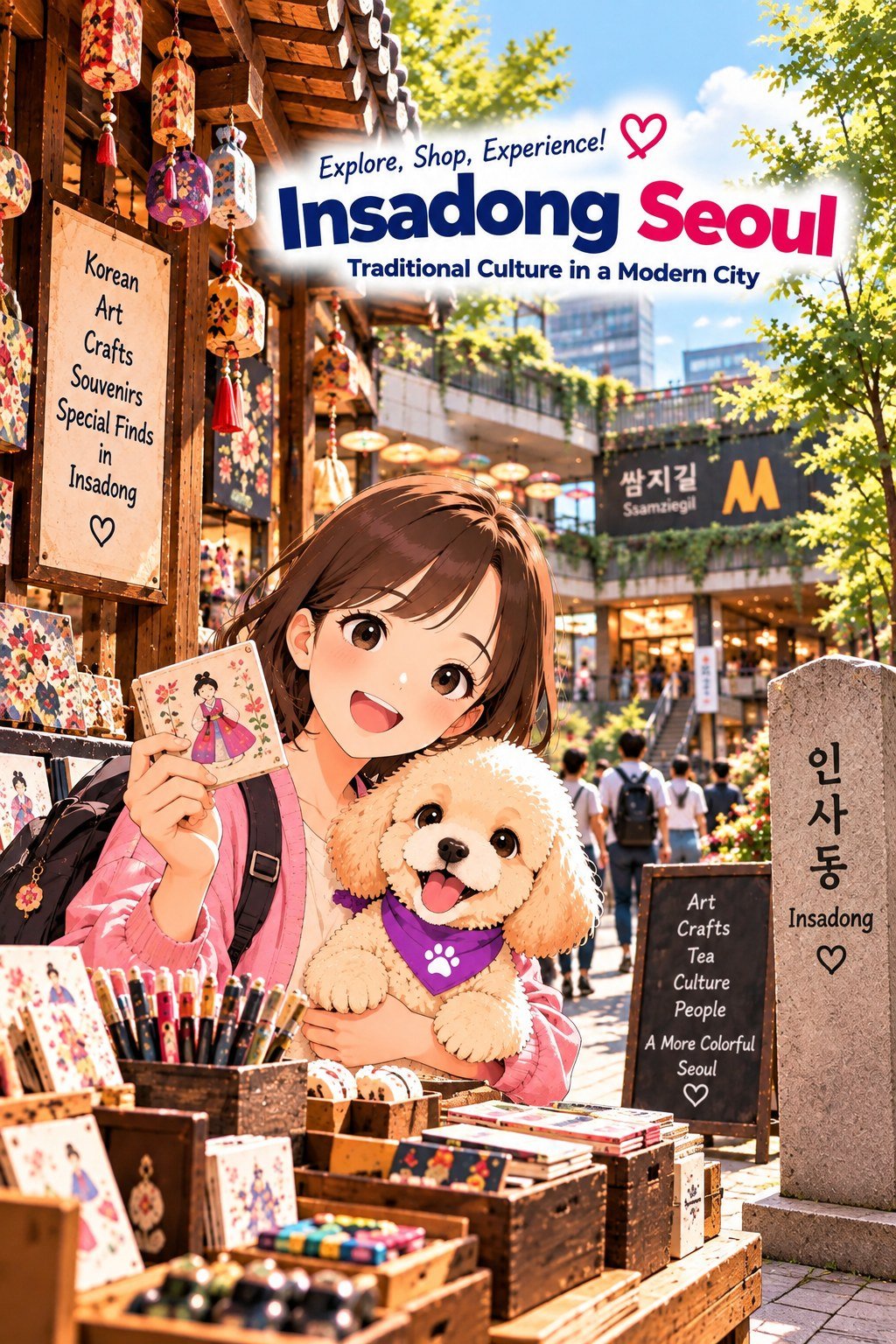
Art, crafts, souvenirs, and modern cultural spaces add another layer to Insadong.
Explore the Side Streets
The main Insadong street is only part of the neighborhood. Smaller alleys can reveal traditional-style buildings, restaurants, cafés, craft shops, galleries, and quieter corners.
Instead of walking directly from one famous point to another, take time to look down the side streets. Some of the most memorable parts of Insadong can be found away from the busiest pedestrian route.
Souvenir Shopping
Insadong is a convenient place to look for gifts connected with Korean culture. Products range from inexpensive souvenirs to handmade crafts and more specialized artwork.
Quality and prices vary significantly between stores, so compare items before buying if craftsmanship or authenticity is important to you.
Food in Insadong
Insadong and the surrounding Jongno area contain a wide range of places to eat. Visitors can find Korean meals, snacks, desserts, tea, cafés, and restaurants hidden in side alleys.
Rather than expecting one specific “Insadong food,” think of the neighborhood as a useful base for exploring several kinds of Korean dining experiences.
For a very different food-focused experience in central Seoul, Gwangjang Market combines traditional market culture with food stalls, textiles, and busy indoor passages.
A Neighborhood Made for Walking
Insadong is best explored slowly. Store displays, signs, pottery, artwork, narrow lanes, hanok-inspired architecture, galleries, and small courtyards create details that are easy to miss when moving too quickly.
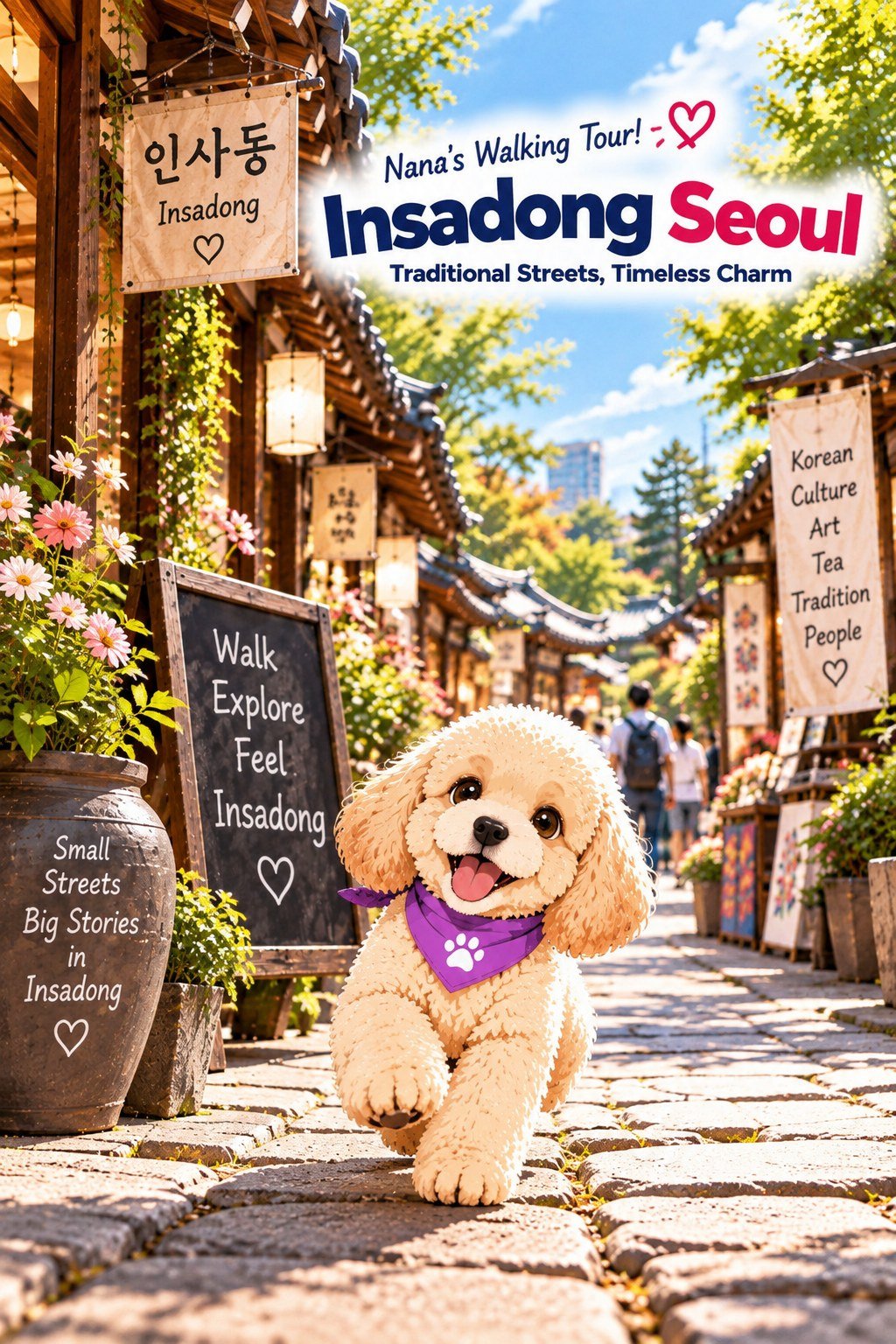
Walk slowly through Insadong and discover small streets with their own stories.
Combine Insadong with Bukchon
Bukchon Hanok Village is one of the easiest places to combine with Insadong. Bukchon adds traditional hanok architecture, tiled roofs, hillside alleys, stone walls, and historic residential scenery.
Bukchon remains a living residential neighborhood, so visitors should follow current access rules and keep noise low while exploring.
Continue to Changdeokgung Palace
Nearby Changdeokgung Palace adds Joseon royal architecture, wooded grounds, courtyards, and the famous Secret Garden to the itinerary.
The palace and Insadong provide complementary experiences: one focuses on royal heritage and landscape, while the other brings traditional crafts, tea, art, shopping, and everyday cultural businesses together.
Add Gyeongbokgung Palace
Visitors planning a longer historic Seoul route can also include Gyeongbokgung Palace.
Its large ceremonial courtyards, royal halls, gates, pavilions, gardens, and mountain backdrop provide another perspective on Joseon history.
Walk Toward Ikseon-dong
For a transition from traditional cultural shopping to contemporary hanok cafés and restaurants, continue toward Ikseon-dong.
Its compact alleys combine renovated hanok buildings with cafés, restaurants, shops, and modern lifestyle culture, creating a useful contrast with Insadong.
Best Time to Visit
Late morning through the afternoon is a practical period for exploring Insadong because shops, galleries, cafés, and cultural businesses are more likely to be operating.
Weekends can feel livelier but may also bring larger crowds. Weekdays can offer a calmer walking experience.
Individual shops and galleries maintain their own schedules, so there is no single opening time that applies to the entire neighborhood.
How Long to Spend
About 2–3 hours is a comfortable starting point for a first visit.
A simple walk can take less time, while visitors who stop for tea, browse galleries, shop for crafts, eat, or explore nearby attractions can easily spend half a day in the wider area.
How to Get There
Anguk Station on Seoul Subway Line 3 is one of the most convenient starting points for visiting Insadong.
Jonggak Station on Line 1 can also be useful depending on your route and which part of the neighborhood you plan to explore.
Because Insadong is a district rather than a single attraction, it is better to treat the subway station as a starting point and explore the area on foot.
First-Time Visitor Tips
- Explore side streets instead of staying only on the main road.
- Compare prices and quality when shopping for crafts and souvenirs.
- Allow time for a traditional tea house if you want a slower experience.
- Check individual gallery and shop hours when visiting a specific venue.
- Wear comfortable shoes because Insadong is best explored on foot.
- Combine the area with Bukchon or one of Seoul’s royal palaces.
- Leave some free time instead of planning every stop in advance.
What to Do Nearby
- Bukchon Hanok Village — traditional hanok architecture and historic residential streets.
- Changdeokgung Palace — UNESCO-listed royal architecture and gardens.
- Gyeongbokgung Palace — one of Seoul’s most important Joseon royal palaces.
- Ikseon-dong — narrow streets filled with cafés, restaurants, and renovated hanok spaces.
- Jogyesa Temple — an important Buddhist temple near the Insadong area.
K-Culture Connection
Insadong is useful for understanding how traditional Korean culture continues to appear in everyday Seoul. Crafts, tea, calligraphy, ceramics, art, traditional architecture, contemporary design, and tourism all overlap within a relatively small neighborhood.
For international visitors, it can serve as a bridge between the royal heritage of nearby palaces and the modern commercial culture found elsewhere in Seoul.
FAQ
Is Insadong worth visiting on a first trip to Seoul?
It is particularly convenient for visitors interested in Korean crafts, tea, art, souvenirs, and traditional culture, especially when combined with nearby historic attractions.
Is Insadong free to visit?
Walking through the neighborhood is free. Individual exhibitions, experiences, cafés, restaurants, and shops set their own prices.
What is Insadong famous for?
Insadong is widely associated with traditional crafts, art galleries, tea houses, souvenirs, cultural shops, and pedestrian streets.
How long should I spend in Insadong?
About 2–3 hours is suitable for many first-time visitors. Allow longer if you plan to shop, eat, visit galleries, or combine the area with nearby attractions.
Which subway station is best for Insadong?
Anguk Station on Line 3 is one of the most convenient choices. Jonggak Station on Line 1 is another useful option depending on your route.
Is Ssamziegil in Insadong?
Yes. Ssamziegil is a well-known arts, crafts, shopping, and cultural space located in the Insadong area.
Related K-Nana Guides
Continue exploring historic central Seoul with the K-Nana Studio guides to Gyeongbokgung Palace, Bukchon Hanok Village, Changdeokgung Palace, and Ikseon-dong. For a traditional market and food experience, continue to Gwangjang Market.
Official Information
Individual shops, galleries, tea houses, cultural facilities, exhibitions, events, and restaurants have their own operating schedules. Check current Seoul tourism information and individual businesses before visiting when a particular venue is important to your itinerary.
Image Credits
Insadong family travel visual — K-Nana Studio original visual.
Insadong Korean crafts with Dad and Nana visual — K-Nana Studio original visual.
Insadong traditional tea with Mom and Nana visual — K-Nana Studio original visual.
Insadong Ssamziegil with K-Nana daughter and Nana visual — K-Nana Studio original visual.
Nana walking through Insadong visual — K-Nana Studio original visual.