
Japchae is one of Korea’s best-known noodle dishes, recognized for its glossy noodles and colorful combination of vegetables, mushrooms, and often meat. Unlike noodle dishes served in a large amount of broth, japchae is usually mixed and seasoned so that the noodles and individual ingredients remain clearly visible on the plate.
The noodles are one of the dish’s most distinctive features. Korean dangmyeon used for japchae is commonly made from sweet potato starch, giving the cooked noodles a translucent appearance and a pleasantly chewy texture. When combined with soy-based seasoning and sesame oil, the noodles become glossy and absorb the flavors of the surrounding ingredients.
Japchae is also strongly associated with sharing. It can appear as part of a Korean meal, at family gatherings, celebrations, holidays, and special occasions. Recipes vary widely, but the contrast between chewy noodles, colorful vegetables, savory seasoning, and sesame aroma remains central to many familiar versions.
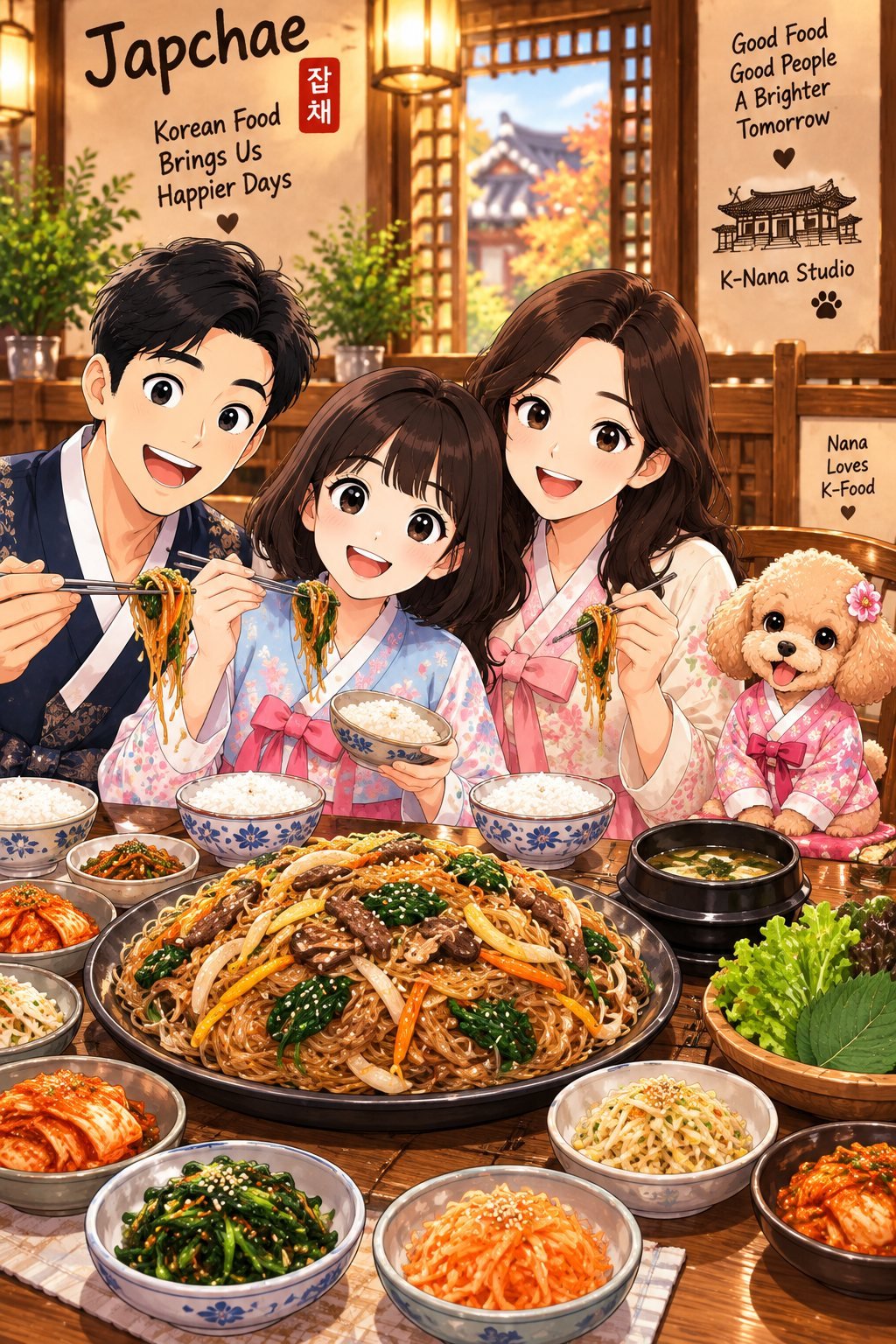
Glossy noodles, colorful vegetables, mushrooms, meat, sesame, rice, and banchan make japchae one of Korea’s most visually distinctive shared dishes.
Quick Guide
| Korean name | 잡채 |
| Main noodle | Dangmyeon, commonly made from sweet potato starch |
| Texture | Translucent, smooth, and pleasantly chewy |
| Common vegetables | Spinach, carrot, onion, mushrooms, and recipe-dependent additions |
| Common seasoning | Soy-based seasoning, sesame oil, and other recipe-dependent ingredients |
| Common additions | Beef, sesame seeds, egg garnish, or other ingredients depending on the recipe |
| Typical role | Shared dish, side dish, celebration food, or part of a larger Korean meal |
What Is Japchae?
Japchae is a Korean dish built around seasoned dangmyeon and a mixture of other ingredients. Modern versions commonly combine the noodles with vegetables such as spinach, carrot, onion, and mushrooms, while beef or another protein may also be included.
The ingredients are mixed together, but japchae is different from a dish in which everything becomes one uniform mixture. Ideally, the diner can still notice the texture and flavor of the noodles, vegetables, mushrooms, and meat individually.
This balance is part of what makes japchae distinctive. The noodles provide chewiness, vegetables add color and contrasting textures, mushrooms contribute their own savory character, and sesame-related seasoning adds aroma.
What Are Dangmyeon?
Dangmyeon are Korean glass noodles. The type commonly associated with japchae is made from sweet potato starch, although travelers should check product or restaurant information when the exact ingredients matter.
Before cooking, the noodles can appear firm and relatively opaque. After they are properly cooked, they become more translucent, flexible, and chewy.
This texture is very different from wheat noodles used in many other dishes. Dangmyeon do not provide the same soft or springy bite as ordinary wheat noodles; their appeal comes from a smoother, more elastic chew.
Why Sweet Potato Starch Matters
The starch-based structure of dangmyeon helps explain both their appearance and texture. Once hydrated and cooked, the noodles become translucent and can absorb seasoning across their surface.
Because the noodles themselves have a relatively neutral flavor, the final character of japchae depends heavily on seasoning and the ingredients mixed with them.
Cooking time also matters. Noodles that are insufficiently cooked can remain too firm, while excessive cooking or poor handling can affect their desired chewy texture.
The Colorful Ingredients in Japchae
One of japchae’s most recognizable characteristics is its range of colors. Orange carrot, green spinach, pale onion, brown mushrooms, dark noodles, and pieces of meat can all appear in the same dish.
The ingredient list is not fixed. Restaurants and households can use different vegetables, mushrooms, proteins, garnishes, and seasoning ratios.
This flexibility means that two plates of japchae can look noticeably different while still sharing the same basic idea of seasoned dangmyeon mixed with complementary ingredients.
Why Are Japchae Ingredients Often Prepared Separately?
Different ingredients require different amounts of cooking. Spinach can soften quickly, carrots need enough heat to become tender while retaining texture, mushrooms release moisture, and meat has its own cooking requirements.
Preparing ingredients separately or in stages gives the cook greater control over their texture and color before everything is combined.
This is especially useful for a dish such as japchae, where the final presentation depends on the individual ingredients remaining recognizable rather than becoming overcooked together.
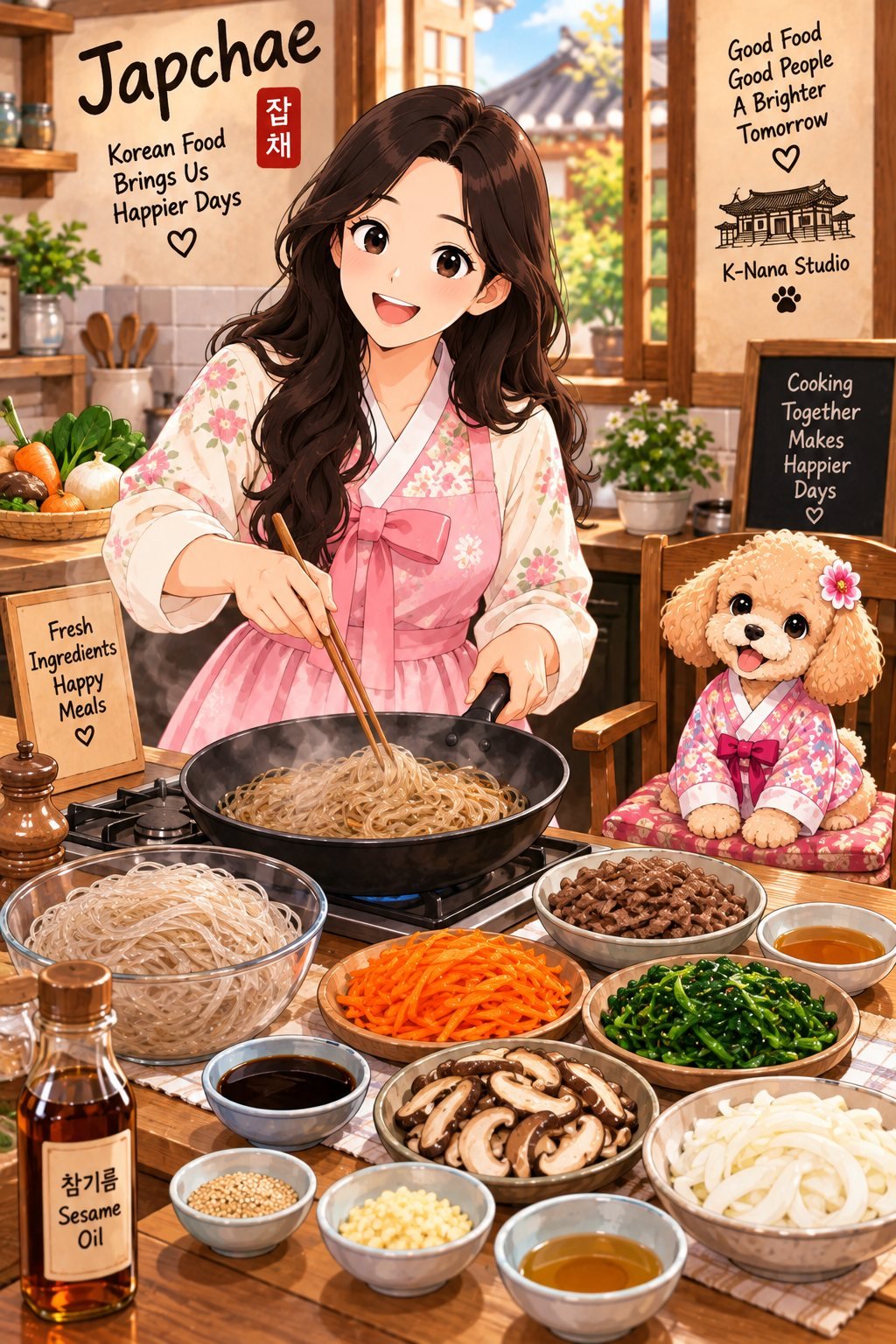
Preparing noodles and vegetables according to their individual cooking needs helps preserve the colors and contrasting textures that define japchae.
Seasoning Japchae
A familiar japchae seasoning commonly includes soy-based seasoning and sesame oil, creating a savory flavor and characteristic nutty aroma. Sweetness can also be present, although the balance varies by recipe.
The noodles absorb seasoning well, so the amount used can significantly change the final dish. Too little seasoning may leave the noodles bland, while too much can overwhelm the vegetables and other ingredients.
Sesame seeds are frequently used as a finishing garnish, adding another layer of sesame aroma and a visual contrast to the glossy noodles.
Why Japchae Looks Glossy
The glossy appearance comes from the combination of cooked starch noodles and the seasoning coating their surface. Sesame oil can further enhance that shine.
A glossy appearance does not necessarily mean that the dish contains a large amount of sauce. Japchae is commonly seasoned rather than served swimming in liquid.
This allows the noodles to remain separate enough to pick up with chopsticks while still carrying the flavor of the seasoning.
Mixing the Noodles & Ingredients
Once the noodles and other ingredients have been prepared, they are brought together and seasoned. The goal is to distribute vegetables, mushrooms, meat, and seasoning throughout the noodles without destroying their individual textures.
The final mixture should make it possible to pick up noodles together with several different ingredients in one bite.
Depending on the recipe, mixing can take place in a large bowl, pan, or other cooking vessel. Some preparations involve additional heating after the ingredients are combined.
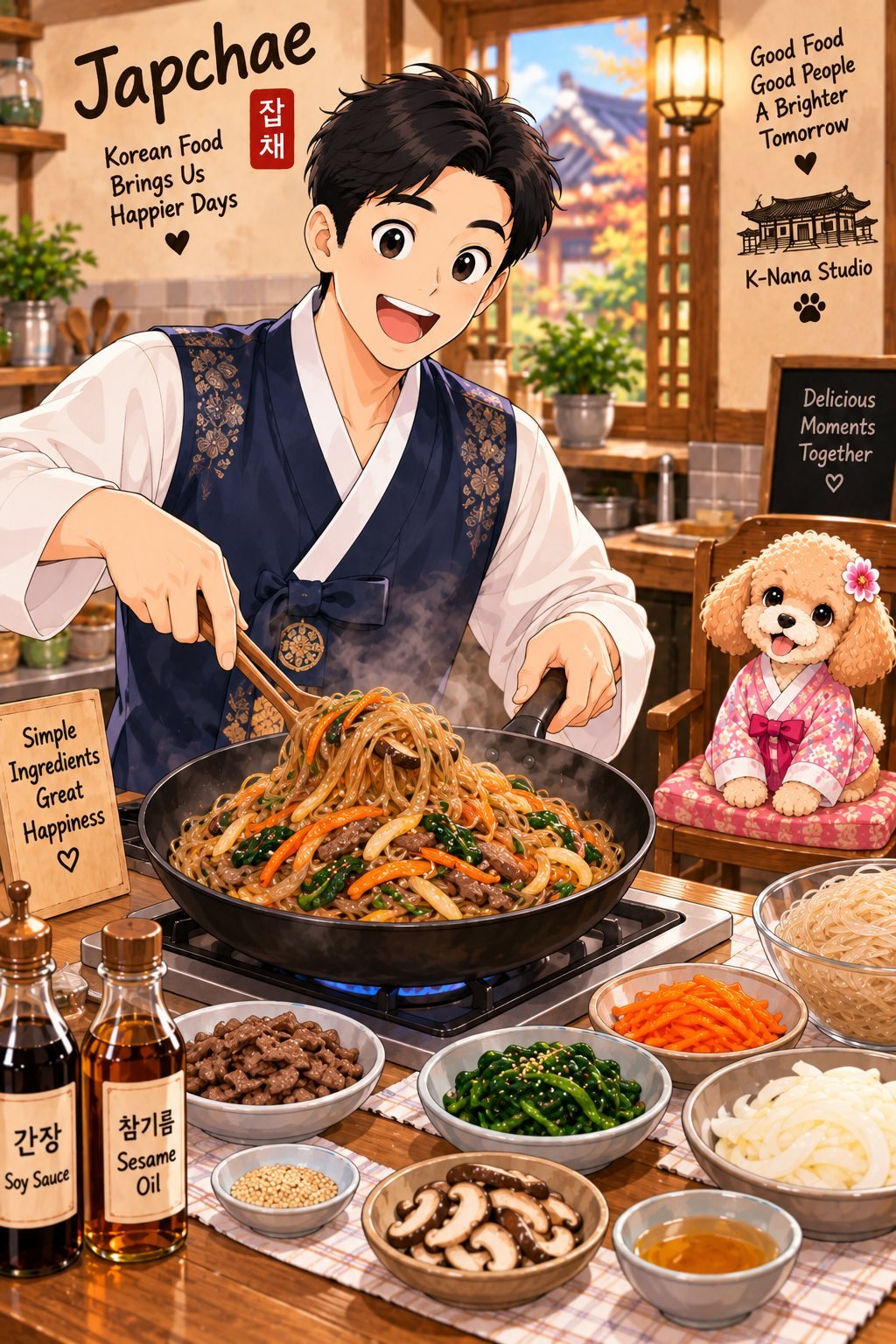
Combining cooked dangmyeon with vegetables, meat, soy-based seasoning, and sesame oil creates japchae’s familiar glossy finish and layered texture.
What Does Japchae Taste Like?
Japchae is generally more savory than spicy. Familiar versions combine soy-based seasoning, sesame aroma, mild sweetness, vegetables, mushrooms, and sometimes seasoned meat.
Because chili heat is not essential to the basic dish, japchae can be approachable for travelers who are cautious about spicy Korean food. However, recipes and accompanying side dishes vary, so individual restaurant preparations should still be checked.
The texture is just as important as the flavor. The chewy noodles contrast with softer mushrooms, tender vegetables, and any meat included in the dish.
Is Japchae a Main Dish or a Side Dish?
Japchae can play several roles depending on the meal. It may appear as one dish among many on a shared Korean table, as part of a set meal, at a buffet, or as a substantial dish served in a larger portion.
This flexibility can surprise visitors expecting every Korean food to fit neatly into a “main dish” or “side dish” category.
In a shared meal, japchae may sit alongside rice, soup, Kimchi, other banchan, meat dishes, and additional foods, with diners taking portions throughout the meal.
Japchae & Korean Celebrations
Japchae has a strong association with gatherings and special meals in Korea. It can appear at celebrations, holidays, family events, and other occasions where several dishes are prepared for sharing.
The colorful appearance makes it well suited to a table designed to offer variety, while a large batch can be divided among several diners.
This does not mean japchae is reserved only for special occasions. It can also be found at restaurants, markets, prepared-food counters, and everyday meals. Its connection with celebrations is one part of its broader place in Korean food culture.
How to Eat Japchae
Japchae does not require a complicated eating method. It can be picked up with chopsticks and eaten by itself, or combined with rice and other foods already on the table.
For a first taste, try the noodles together with some of the vegetables and mushrooms. This makes it easier to understand the contrast between the chewy dangmyeon and the differently textured ingredients.
After that, try japchae with rice or alternate bites with kimchi and other banchan. Because japchae is already seasoned, additional sauce is usually unnecessary unless the restaurant provides or recommends one.
Japchae with Rice & Kimchi
Although japchae is a noodle dish, it can be served as part of a meal that also includes rice. The two starches have very different textures: rice is soft and relatively neutral, while dangmyeon is smooth, chewy, and seasoned.
Kimchi provides another contrast. Its fermented, acidic, salty, and potentially spicy character can break up the sweeter and more sesame-forward flavors found in many japchae recipes.
K-Nana Studio’s Kimchi Guide explains the fermentation, kimjang traditions, and different roles kimchi can play at a Korean table.
Understanding Japchae’s Texture
Texture is one of the most important parts of japchae. Properly cooked dangmyeon should remain pleasantly chewy rather than dissolving into a soft mass.
The vegetables create additional contrasts. Carrots can retain a slight bite, spinach becomes tender, onions soften, and mushrooms provide a different chew from both the noodles and vegetables.
When meat is included, it adds another texture and savory element. A well-balanced plate therefore offers much more than noodles alone.
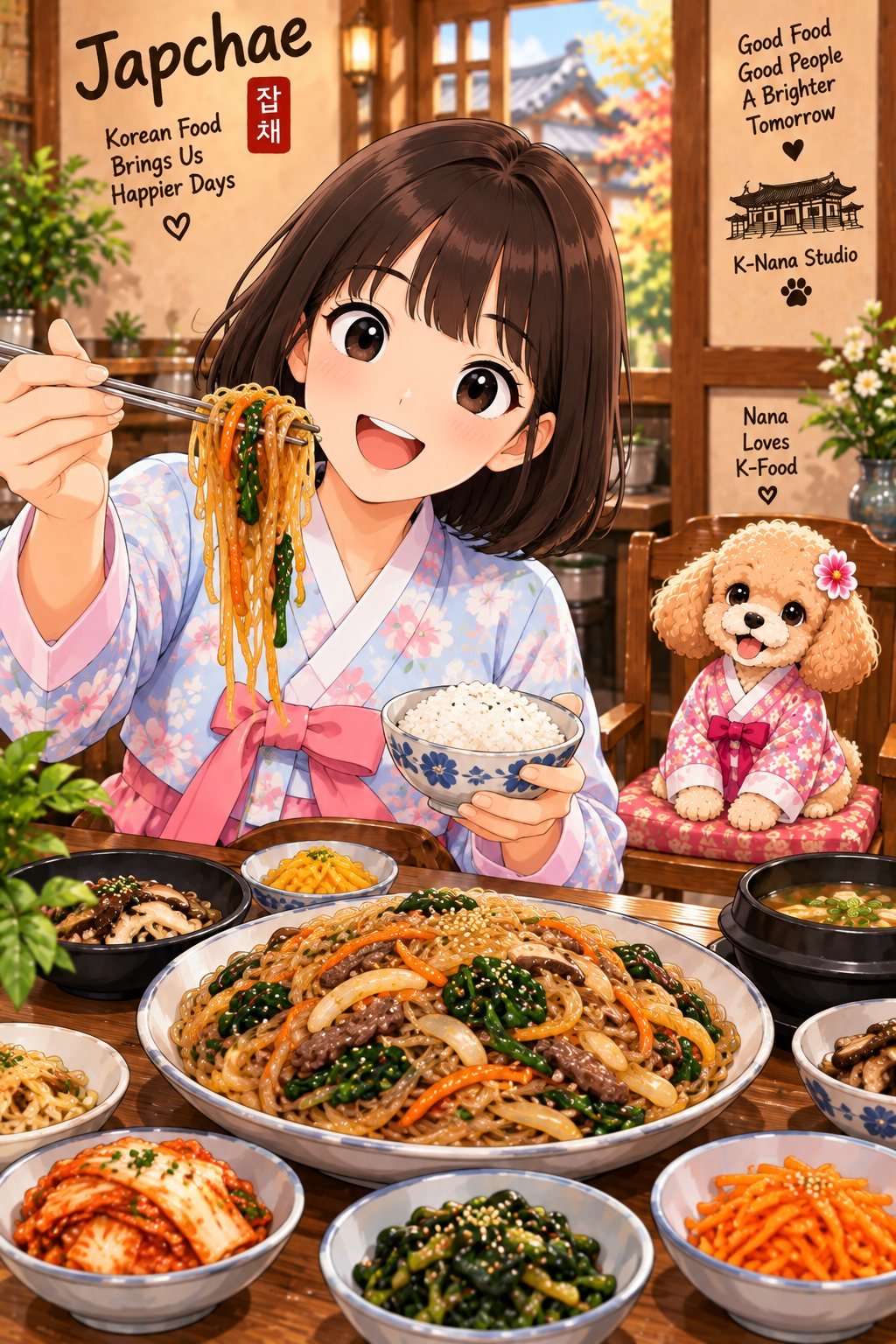
Japchae combines chewy glass noodles with colorful vegetables and can be enjoyed alongside rice, kimchi, soup, and other Korean side dishes.
Warm Japchae vs. Room-Temperature Japchae
Japchae does not always arrive piping hot. Depending on where and when it is served, it may be warm, at room temperature, or reheated after being prepared earlier.
Freshly cooked japchae can have a particularly fragrant sesame aroma and soft, warm vegetables. As it cools, the texture of the noodles and seasoning can feel different.
This is especially relevant at large gatherings, buffets, markets, and prepared-food counters, where japchae may not be cooked individually for each diner immediately before serving.
Serving temperature alone is therefore not a reliable way to judge whether a dish is “authentic.” Preparation and serving practices vary according to the setting.
Does Japchae Always Contain Meat?
No. Beef is familiar in many versions of japchae, but meat is not required in every recipe. Some preparations emphasize noodles, mushrooms, and vegetables instead.
However, a japchae that appears to contain only vegetables should not automatically be assumed to be vegetarian or vegan. Seasonings, cooking oils, sauces, or other ingredients may vary, and meat could have been prepared with other components.
Travelers following a vegetarian or vegan diet should confirm the ingredients and preparation directly with the restaurant or seller.
Egg Garnish & Other Variations
Some versions of japchae include thin strips of cooked egg as a garnish, while others do not. Additional mushrooms, vegetables, meat cuts, or decorative ingredients can also change according to the recipe.
The proportions can vary just as much as the ingredient list. One plate may contain a large amount of noodles with relatively few vegetables, while another may be packed with spinach, carrots, mushrooms, onions, and other ingredients.
These differences are normal and reflect the flexibility of the dish rather than one version automatically being incorrect.
How to Order Japchae
Before ordering, check how the restaurant serves japchae. A menu may offer it as a shared plate, part of a set meal, an individual dish, or one component of a larger Korean meal.
Portion sizes can therefore vary significantly. A large shared plate may be too much for one traveler when several other foods have already been ordered.
If dietary restrictions matter, ask whether the japchae contains meat, egg, soy-based seasoning, sesame ingredients, or other relevant components. Visual inspection alone may not reveal everything used in the recipe.
Japchae at Korean Markets & Prepared-Food Shops
Japchae is not limited to sit-down restaurants. Travelers may also encounter it at traditional markets, prepared-food counters, supermarkets, buffets, and shops selling Korean side dishes.
This makes japchae useful for experiencing another side of Korean food culture: foods prepared in larger quantities and purchased to take home or eat as part of a broader meal.
Traditional markets can be especially interesting because visitors can encounter several Korean foods within the same area. K-Nana Studio’s Gwangjang Market guide introduces one of Seoul’s best-known market environments for exploring Korean food and market culture.
Japchae & Korean Home-Style Food
Japchae also demonstrates an important feature of Korean home-style cooking: several ingredients can be prepared individually before being brought together into one finished dish.
This approach requires more preparation than simply placing every ingredient into the same pan at the beginning. The benefit is greater control over the texture, color, and seasoning of each component.
The result is a dish that feels unified while still allowing spinach, carrot, mushrooms, onion, noodles, and meat to retain their own identities.
First-Time Japchae Tips
- Notice the noodles — dangmyeon should provide a distinctly chewy texture compared with ordinary wheat noodles.
- Try a mixed bite — pick up noodles together with vegetables or mushrooms rather than tasting only the noodles.
- Expect sweetness to vary — seasoning ratios differ between restaurants and recipes.
- Do not expect strong chili heat — familiar japchae is generally savory rather than spicy, although accompanying foods may be spicy.
- Check the serving size — japchae may be intended for sharing.
- Do not assume it is vegetarian — meat and animal-derived ingredients can be present even when they are not immediately obvious.
- Check sesame and soy ingredients — both are common considerations for people with relevant allergies.
- Expect different serving temperatures — japchae may be served hot, warm, or closer to room temperature depending on the setting.
The Complete Japchae Table
A complete japchae experience is built around color, texture, and contrast. Translucent noodles provide chewiness, spinach and other vegetables add freshness and color, mushrooms add savory depth, and meat can contribute another layer of richness.
Rice, kimchi, soup, and banchan expand the meal further. Instead of treating japchae as an isolated bowl of noodles, diners can experience it as one part of a larger Korean table.
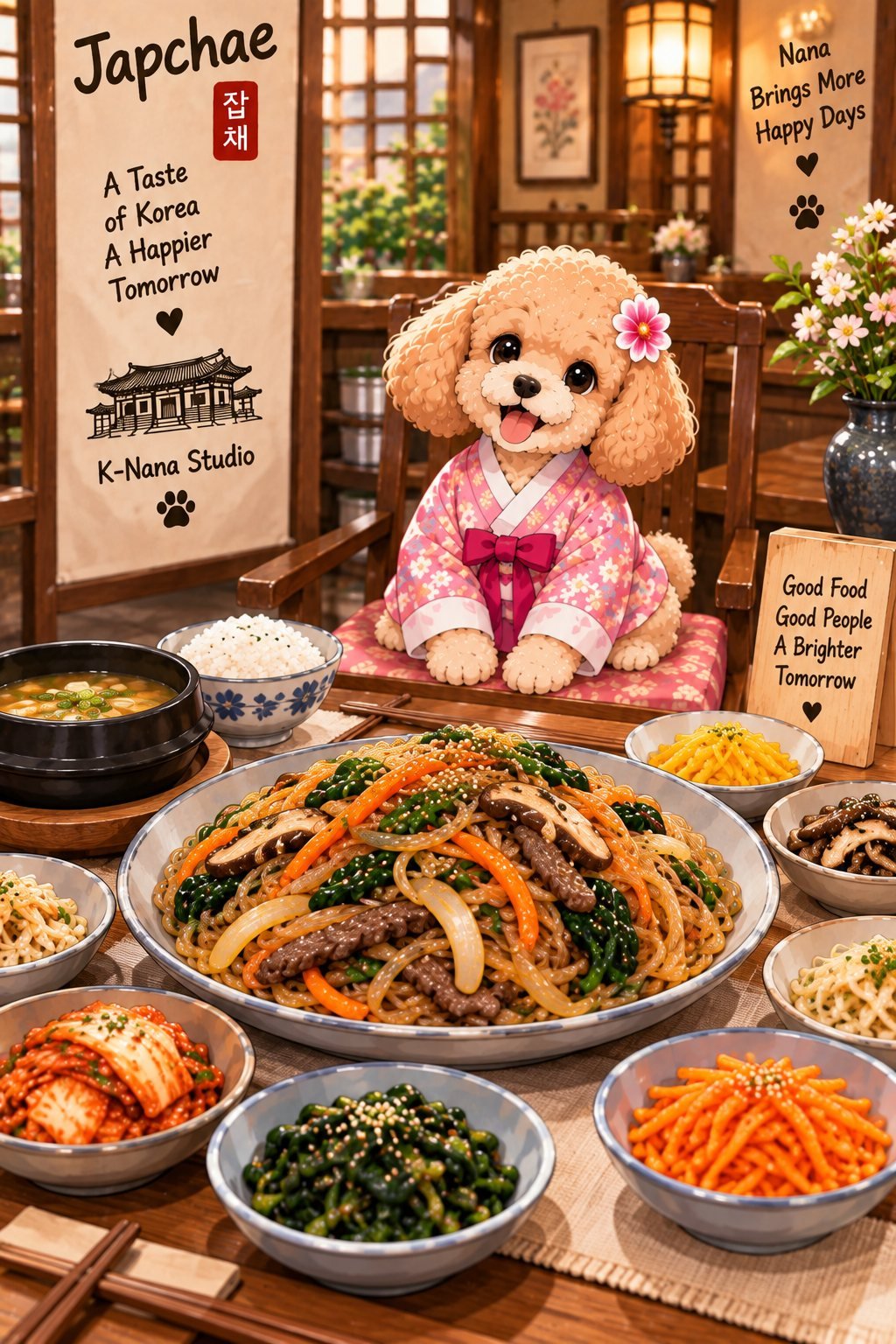
Japchae brings glossy glass noodles, vegetables, mushrooms, sesame, and optional meat together in a colorful dish that fits naturally into a larger Korean meal.
How Japchae Connects with Other K-Food
Japchae introduces a different side of Korean cuisine from the meat-focused dishes in K-Nana Studio’s earlier guides.
Bulgogi focuses on thinly sliced seasoned meat, while Samgyeopsal centers on grilled pork belly, ssam, ssamjang, kimchi, and garlic.
The broader Korean BBQ Guide explores shared tabletop grilling, while japchae demonstrates a completely different preparation built around starch noodles and individually prepared ingredients.
Bibimbap also combines several colorful ingredients, but does so around rice and gochujang rather than glass noodles and soy-sesame seasoning.
Kimchi provides a fermented contrast that can accompany japchae, while Tteokbokki introduces a much spicier and chewier rice-cake experience associated with bunsik and street-food culture.
For a modern casual dining contrast, Korean Fried Chicken explores crispy chicken, yangnyeom, soy garlic flavors, takeout, and delivery culture.
Japchae & a Korea Travel Day
Because japchae can appear in restaurants, markets, buffets, and prepared-food shops, travelers can encounter it during many different kinds of Korea itineraries.
Gwangjang Market connects food with the energy of a traditional Seoul market and provides a useful setting for understanding Korea’s broader prepared-food and street-food culture.
Travelers exploring traditional Seoul can combine a Korean meal with Insadong, known for its traditional cultural atmosphere, crafts, tea houses, shops, and restaurants.
Bukchon Hanok Village and Gyeongbokgung Palace can extend the day into Korean architecture and history, creating a natural connection between K-Food and K-Culture.
FAQ
What is japchae?
Japchae is a Korean dish commonly made with dangmyeon, vegetables, mushrooms, and seasonings such as soy-based sauce and sesame oil. Beef or other ingredients may also be included depending on the recipe. The finished dish is known for glossy noodles, colorful ingredients, and a chewy texture.
What are japchae noodles made from?
The dangmyeon commonly used for japchae are Korean glass noodles made from sweet potato starch. After cooking, they become translucent, flexible, and chewy. Products can vary, so travelers with specific dietary requirements should still check the ingredient information.
Is japchae spicy?
Familiar japchae is generally savory and mildly sweet rather than chili-hot. Soy-based seasoning and sesame oil are common flavor elements. However, recipes and accompanying side dishes vary, so individual preparations should be checked when spice is a concern.
Does japchae always contain beef?
No. Beef is common in many versions, but japchae can be prepared with different proteins or without visible meat. A meat-free appearance does not automatically mean a dish is vegetarian or vegan because sauces, seasonings, cooking methods, and other ingredients can vary.
Is japchae eaten with rice?
It can be. Japchae may be served as one dish within a larger Korean meal that also includes rice, soup, kimchi, and banchan. It can also be eaten by itself or served as part of a shared spread.
Is japchae served hot or cold?
Serving temperature varies. Japchae may be served hot or warm soon after cooking, while versions prepared for gatherings, buffets, markets, or prepared-food counters may be closer to room temperature. Serving temperature alone does not define the dish.
Why is japchae associated with Korean celebrations?
Japchae is colorful, easy to prepare in larger quantities, and suitable for sharing with several people. It has therefore become familiar at family gatherings, celebrations, holidays, and special meals, although it is also widely available as an everyday food.
Where to Try Japchae
Japchae can be found in many different Korean food settings. Traditional restaurants, Korean set-meal restaurants, markets, buffets, supermarkets, prepared-food counters, and shops specializing in banchan may all offer their own versions.
When comparing japchae, look at the noodle texture, vegetable selection, amount of seasoning, sweetness, presence of meat or egg, portion size, and serving temperature. There is no requirement for every version to contain exactly the same ingredients.
For travelers interested in experiencing Korean market food culture, Gwangjang Market provides a useful introduction to the atmosphere of a traditional Seoul market and the wide variety of foods available in one area.
For a broader traditional-culture itinerary, Insadong, Bukchon Hanok Village, and Gyeongbokgung Palace can connect Korean food with crafts, architecture, history, and cultural sightseeing.
Related K-Nana Guides
Continue exploring Korean food with the Kimchi Guide for fermentation and kimjang culture, or the Bibimbap Guide for rice, namul, vegetables, protein, egg, and gochujang.
The Korean BBQ Guide introduces shared tabletop grilling, while the Samgyeopsal Guide focuses specifically on pork belly, ssam, ssamjang, grilled kimchi, and garlic.
The Bulgogi Guide explains thinly sliced seasoned meat and different cooking styles. Japchae provides a useful contrast because its central ingredient is chewy glass noodles rather than grilled or marinated meat.
For casual Korean food culture, explore the Tteokbokki Guide for rice cakes and bunsik, or the Korean Fried Chicken Guide for fried, yangnyeom, and soy garlic chicken, chicken mu, takeout, and delivery culture.
Food & Allergy Notes
Japchae ingredients vary considerably between restaurants, households, packaged products, and prepared-food sellers. Soy-based seasoning can introduce soy and wheat, while sesame oil and sesame seeds are common considerations for people with sesame allergies.
Beef, egg, mushrooms, vegetables, sweeteners, garlic, and other ingredients may also be included depending on the recipe. Sauces or seasonings can contain ingredients that are not obvious from looking at the finished dish.
A vegetable-heavy japchae should not automatically be considered vegetarian or vegan. Meat, meat-based seasonings, egg, or other animal-derived ingredients may be present, and shared cooking equipment can also be relevant.
Travelers with allergies, intolerances, medical conditions, religious dietary restrictions, vegetarian or vegan requirements, or other dietary needs should confirm ingredients and preparation directly with the restaurant or seller.
Storage & Reheating
Japchae is often prepared in quantities large enough for sharing, and some versions may be prepared before they are served. As with other cooked foods, appropriate storage and handling are important.
Prepared japchae should not be assumed to be safe indefinitely simply because it contains no broth. Cooked noodles, vegetables, meat, and other ingredients can still require appropriate temperature control and storage.
When purchasing prepared japchae from a market, supermarket, or takeaway counter, follow the seller’s storage and reheating instructions when provided.
If reheating japchae, heat it appropriately for the ingredients it contains and avoid repeatedly warming and cooling the same portion unnecessarily. Texture can also change during storage and reheating, particularly because dangmyeon can become firmer or stick together as they cool.
Cooking Safety
When preparing japchae, raw meat should be handled separately from cooked noodles, vegetables, and other ready-to-eat ingredients until it has been properly cooked.
Knives, cutting boards, utensils, bowls, and preparation surfaces used for raw meat should be managed carefully to reduce unnecessary cross-contact with cooked ingredients.
Hot pans, boiling water, cooking oil, and freshly cooked noodles can cause burns. Follow normal kitchen safety practices and take particular care when draining or transferring hot dangmyeon.
Image Credits
Korean japchae family dining experience with sweet potato starch noodles, spinach, carrots, mushrooms, onions, beef, rice, and banchan with the K-Nana family and Nana in hanbok visual — K-Nana Studio original visual.
Japchae ingredient preparation with Mom in hanbok preparing dangmyeon, spinach, carrots, mushrooms, onions, and other ingredients while Nana watches from a separate seat visual — K-Nana Studio original visual.
Japchae cooking experience with Dad in hanbok combining cooked dangmyeon, vegetables, beef, soy-based seasoning, and sesame oil while Nana watches from a separate chair visual — K-Nana Studio original visual.
Korean japchae table with K-Nana daughter in hanbok enjoying chewy glass noodles, colorful vegetables, rice, kimchi, and banchan while Nana sits separately without touching the food visual — K-Nana Studio original visual.
Nana in pink floral hanbok seated separately as a K-Food mascot beside Korean japchae with glass noodles, spinach, carrots, mushrooms, onions, beef, sesame, rice, soup, and banchan visual — K-Nana Studio original visual.
Disclaimer
This article is provided for general food, travel, and cultural information. Japchae ingredients, noodles, meats, vegetables, seasonings, allergens, preparation methods, storage practices, serving temperatures, restaurant practices, and dietary suitability can vary. Always confirm ingredients and preparation directly with the restaurant, seller, or manufacturer when allergies, medical conditions, religious restrictions, vegetarian or vegan requirements, or other dietary needs are relevant. Follow appropriate food-handling, storage, reheating, and kitchen-safety practices.