
Bulguksa Temple is one of Korea’s most important historic Buddhist temples and one of the defining cultural landmarks of Gyeongju. Stone terraces, stairways, traditional wooden halls, colorful dancheong decoration, pagodas, courtyards, and surrounding forest scenery create a place where visitors can experience both Korean Buddhist culture and the artistic heritage of the Silla period.
For international visitors, Bulguksa offers a very different experience from Korea’s modern city districts, beaches, and natural landscapes. Walking through the temple grounds introduces traditional architecture, Buddhist symbolism, historic stonework, religious spaces, and centuries of Korean cultural history within one compact complex.
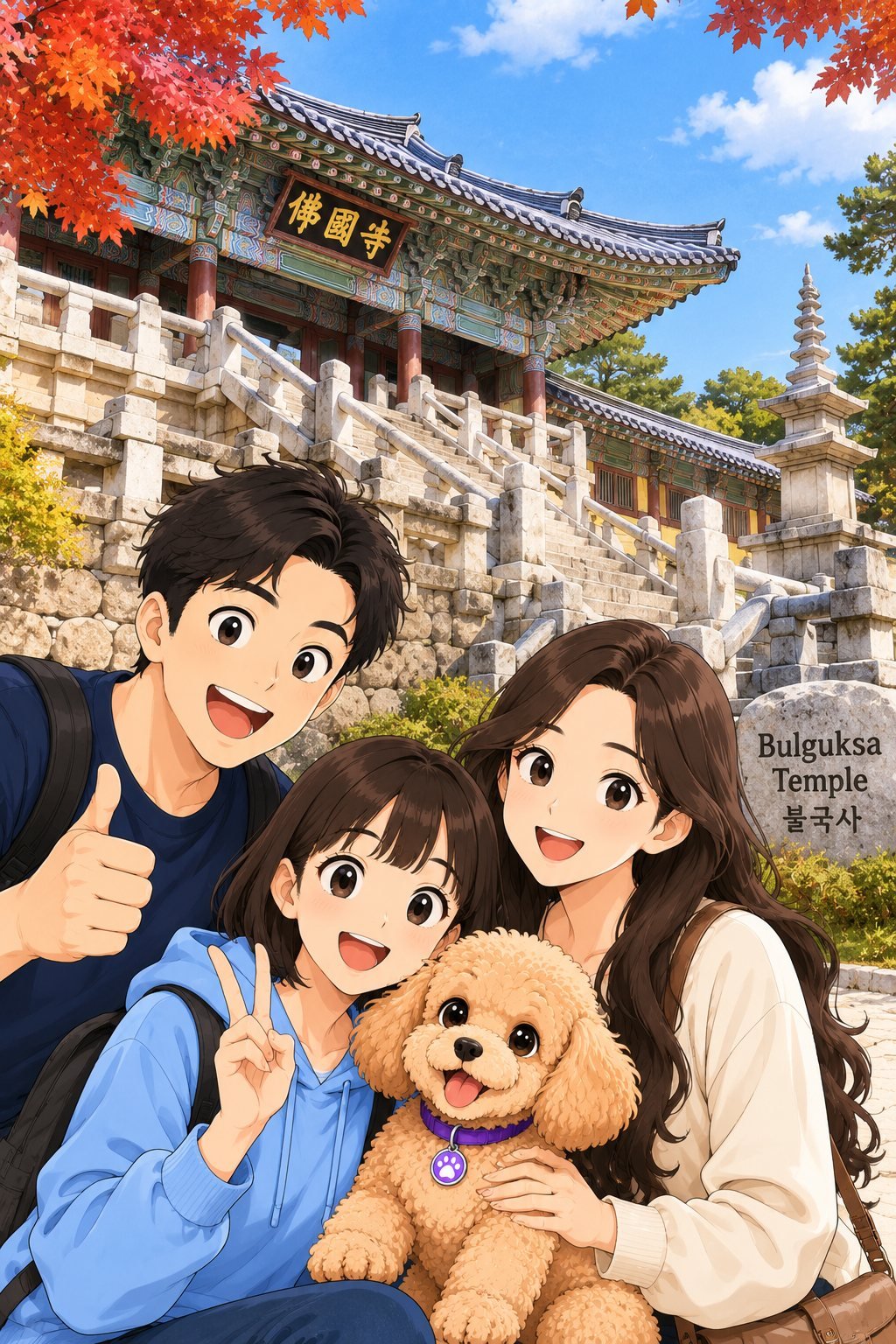
Traditional halls, stone terraces, historic stairways, and seasonal scenery make Bulguksa Temple one of Gyeongju’s most recognizable cultural landscapes.
Quick Guide
| Location | Gyeongju, southeastern South Korea |
| Best for | Korean history, Buddhist culture, traditional architecture, UNESCO heritage, photography, seasonal scenery |
| Recommended time | About 2–3 hours |
| Main experience | Exploring historic temple halls, stone terraces, bridges, pagodas, courtyards, and Buddhist cultural heritage |
| Atmosphere | Historic, spiritual, architectural, and surrounded by nature |
| Important | Bulguksa remains an active Buddhist temple, so visitors should respect religious spaces, worshippers, posted rules, and restricted areas |
What Is Bulguksa Temple?
Bulguksa is a historic Buddhist temple closely associated with the cultural achievements of the Silla period. The temple complex contains traditional halls, stone terraces, stairways, bridges, pagodas, courtyards, and religious spaces arranged across a hillside setting.
The site is internationally recognized as part of the UNESCO World Heritage property that includes Bulguksa Temple and Seokguram Grotto. Its significance comes not only from individual buildings or monuments, but also from the way architecture, stonework, Buddhist ideas, landscape, and artistic craftsmanship come together throughout the complex.
Visitors should also remember that Bulguksa is not simply an archaeological attraction. It continues to function as a Buddhist temple, and religious practice remains part of the environment visitors encounter.
Why Visit?
- Experience one of Korea’s best-known historic Buddhist temple complexes.
- Explore architecture and stonework connected with the heritage of the Silla period.
- See traditional Korean wooden buildings decorated with colorful dancheong patterns.
- Discover historic stone terraces, stairways, bridges, courtyards, and pagodas.
- Learn how Buddhist culture influenced Korean architecture, art, and history.
- Enjoy seasonal scenery surrounding the temple, especially during spring and autumn.
- Begin a wider Gyeongju journey focused on Korea’s ancient history and cultural heritage.
Stone Terraces & Historic Architecture
One of Bulguksa’s most distinctive features is the relationship between its wooden temple buildings and the large stone structures beneath them. Terraces, stairways, bridges, walls, and platforms create different levels across the complex and give the temple its recognizable architectural form.
The historic stone stairways traditionally known as Cheongungyo and Baegungyo are among the best-known features associated with Bulguksa. Their carefully constructed stonework demonstrates the architectural and engineering skill connected with the temple’s historic development.
Traditional wooden halls above the stone terraces add another layer of detail. Curved tiled roofs, painted brackets, wooden columns, courtyards, and decorative patterns create strong contrasts with the pale stone structures below.
Access to historic structures may be restricted for preservation and safety. Visitors should use designated routes, respect barriers, and avoid climbing on protected stonework or entering areas that are not open to the public.
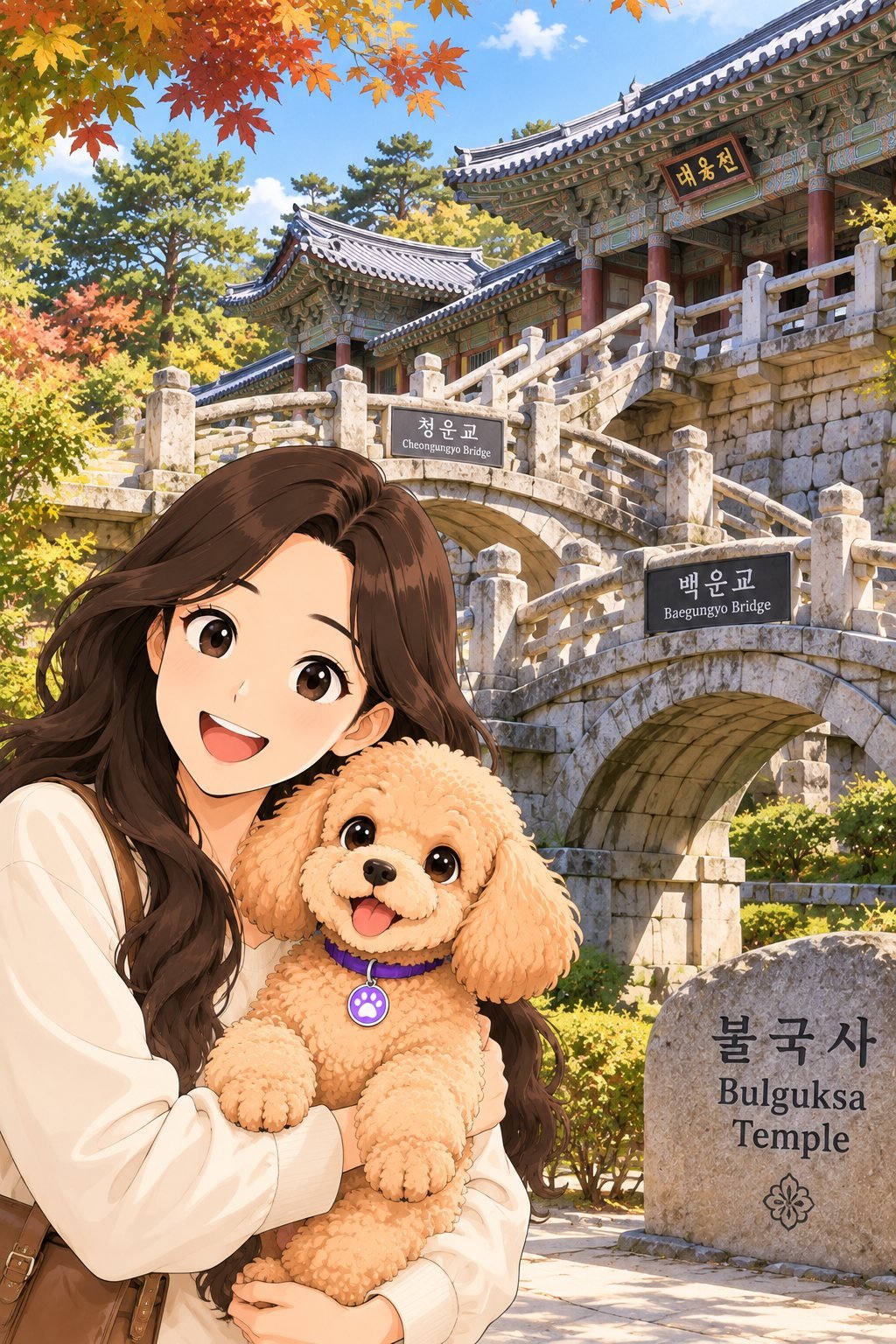
Historic stone terraces and bridges meet richly decorated traditional architecture throughout the Bulguksa Temple complex.
Dabotap & Seokgatap
Dabotap and Seokgatap are two of the most recognizable stone pagodas within Bulguksa Temple. Standing in the main courtyard, the two pagodas provide visitors with an opportunity to compare different approaches to Buddhist stone architecture from the Silla period.
Dabotap is immediately noticeable for its elaborate and highly detailed structure. Multiple levels, carved stone elements, railings, and decorative forms give the pagoda a complex appearance that distinguishes it from many simpler stone pagodas found elsewhere in Korea.
Seokgatap presents a contrasting design. Its balanced proportions, clean lines, and restrained three-story structure create a simpler appearance. Seeing the two pagodas within the same courtyard makes their architectural differences especially clear.
Both pagodas are important cultural heritage objects and should be viewed from permitted areas. Visitors should follow barriers and preservation rules rather than approaching protected stone structures for photographs.
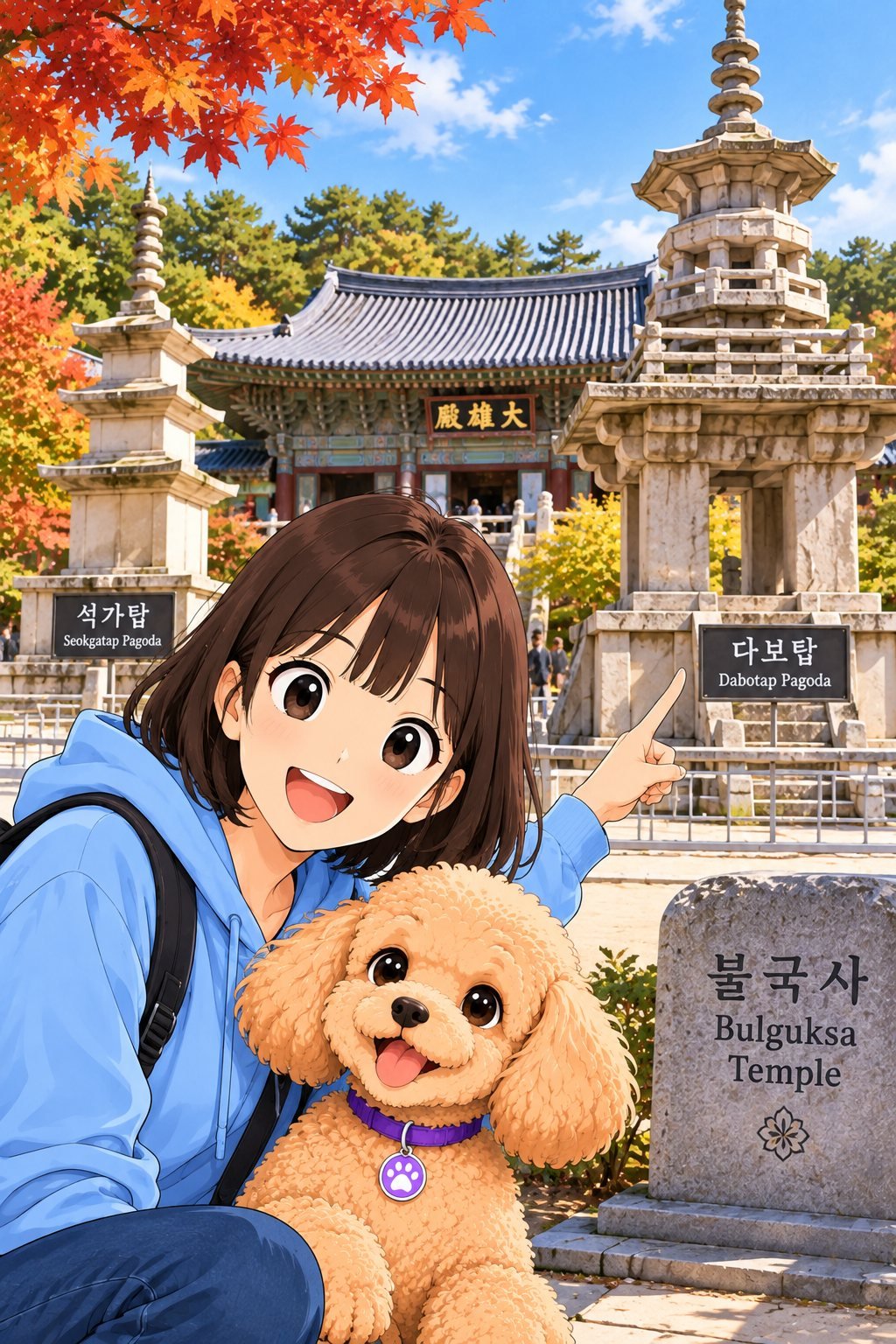
Dabotap and Seokgatap reveal two contrasting expressions of Silla-period stone architecture within Bulguksa Temple.
Silla Heritage
Gyeongju was the capital of the Silla kingdom for centuries, and Bulguksa is one of the places where visitors can encounter the artistic and religious achievements associated with that period.
The temple’s stone structures, pagodas, architectural layout, Buddhist symbolism, and surviving cultural properties provide a physical connection with a period that played an important role in the development of Korean history and culture.
This historical context makes Bulguksa especially valuable for international visitors beginning a Gyeongju journey. Rather than learning about Silla only through museum displays or written explanations, visitors can walk through a historic environment where architecture, religion, landscape, and cultural heritage remain closely connected.
Korean Buddhist Culture
Bulguksa remains a place of Buddhist religious practice. Temple halls, Buddha images, lanterns, offerings, ceremonies, and visitors engaged in worship may all form part of the experience depending on the time of your visit.
Visitors do not need to be Buddhist to appreciate the temple, but respectful behavior is important. Speak quietly around worship areas, follow photography restrictions, avoid interrupting ceremonies, and do not touch religious objects unless clearly permitted.
Observing how people move through the temple can also help first-time visitors understand the space. Some areas function primarily as cultural heritage attractions, while others continue to serve active religious purposes.

Bulguksa is both a historic cultural landmark and a living Buddhist temple where architecture, religion, and everyday practice continue to meet.
Dancheong & Temple Details
Colorful dancheong decoration is one of the most visually striking features of Bulguksa’s wooden architecture. Painted patterns appear across beams, brackets, ceilings, and other architectural elements, adding layers of color and detail beneath the curved tiled roofs.
Visitors looking closely can notice how painted decoration works together with wooden columns, roof structures, stone foundations, doors, lanterns, and courtyard layouts. These smaller details are easy to miss when focusing only on the temple’s largest buildings and monuments.
The appearance of the temple also changes with light and season. Green summer vegetation, spring blossoms, autumn foliage, winter snow, and different weather conditions can create very different visual relationships with the painted architecture.
Photography is an enjoyable way to record these details, but visitors should always follow posted restrictions, particularly inside religious halls or around active worship areas.
Bulguksa in Autumn
Autumn is one of the most visually memorable seasons at Bulguksa Temple. Red, orange, and yellow foliage surrounds traditional roofs, stone terraces, stairways, courtyards, and forested slopes, creating strong contrasts with the temple’s colorful dancheong decoration.
The exact timing and intensity of autumn colors vary each year according to temperature, weather, and seasonal conditions. Visitors planning a trip specifically for foliage should check current conditions rather than relying only on previous years.
Autumn is also a popular travel period in Gyeongju, so the temple can become busier during weekends and peak foliage periods. Visiting earlier in the day can provide a calmer experience when schedules allow.
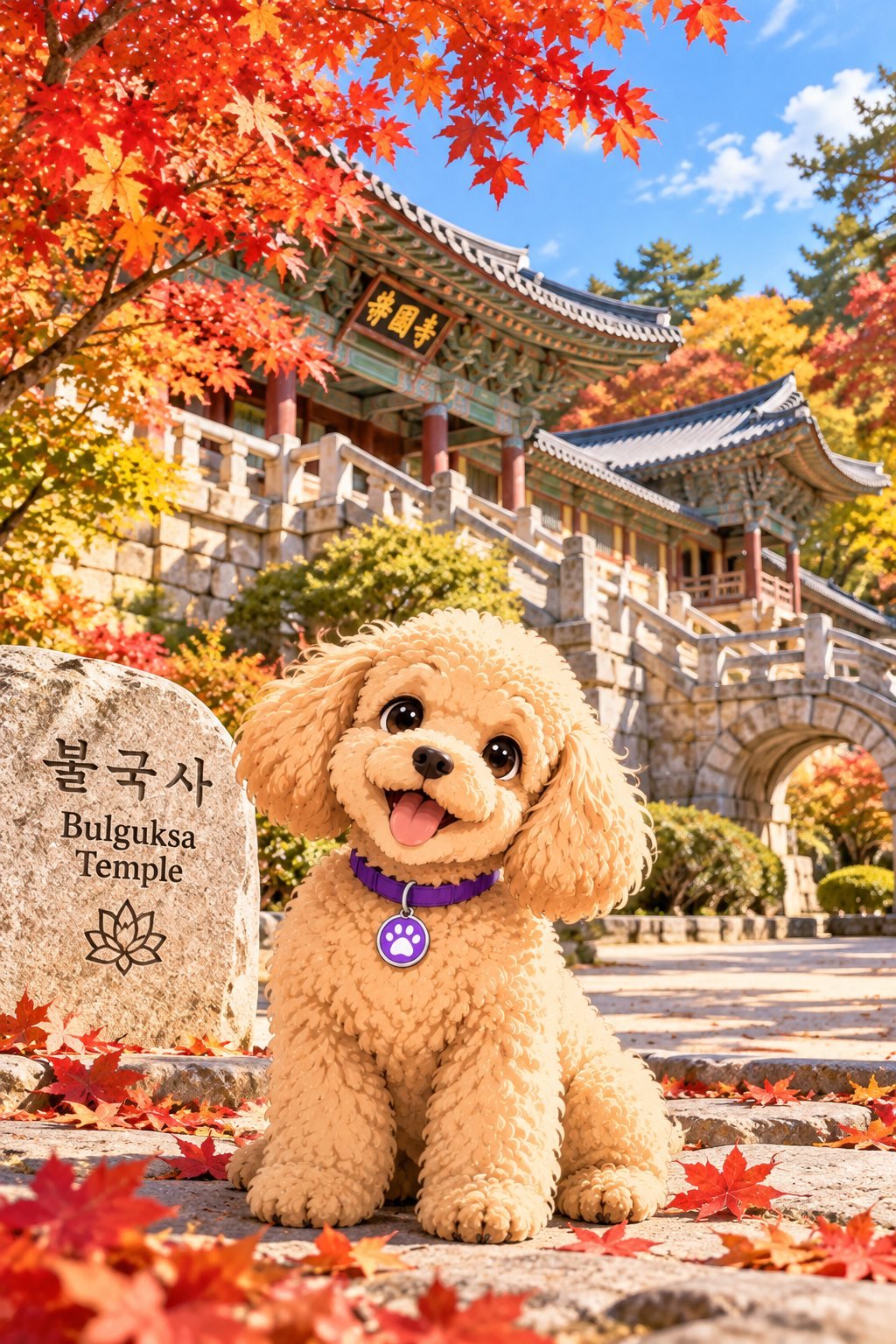
Autumn foliage adds vivid red, orange, and yellow colors to Bulguksa’s historic stonework and traditional temple architecture.
Best Time to Visit
Bulguksa Temple can be visited throughout the year, and each season creates a different atmosphere around the historic complex.
Spring brings fresh vegetation and seasonal blossoms, summer surrounds the temple with dense greenery, autumn is especially popular for colorful foliage, and winter can create a quieter landscape around the stone terraces and traditional buildings.
Morning can be a good choice for visitors who prefer a calmer walk and softer light for photography. Weekends, holidays, school trips, and peak seasonal periods may bring larger crowds.
How Long to Spend
About 2–3 hours works well for many first-time visitors who want to explore the main temple grounds, stone terraces, bridges, pagodas, courtyards, and traditional halls without rushing.
Visitors interested in architecture, Buddhist culture, photography, or seasonal scenery may want additional time to examine smaller details throughout the complex.
A wider Gyeongju itinerary can also combine Bulguksa with other historic destinations, so transportation time between attractions should be considered when planning the day.
Getting to Bulguksa Temple
Bulguksa Temple is located in Gyeongju, away from the central historic areas of the city. Visitors can travel by public transportation, taxi, rental vehicle, or another suitable option depending on their starting point and itinerary.
Because Gyeongju’s major heritage sites are spread across different parts of the city, travel time should be included when combining Bulguksa with other attractions on the same day.
Bus routes, schedules, parking arrangements, road conditions, admission procedures, and visitor access can change. Check current navigation and official visitor information on the day of your visit.
First-Time Visitor Tips
- Wear comfortable shoes because the temple complex includes stone surfaces, steps, slopes, and walking paths.
- Allow enough time to explore the temple slowly rather than moving only between major photo spots.
- Speak quietly around worship areas and avoid disturbing religious ceremonies.
- Follow current photography restrictions, particularly inside temple halls.
- Do not touch or climb on historic stone structures, pagodas, barriers, or protected cultural properties.
- Check current opening and access information before visiting.
- Expect larger crowds during weekends, holidays, school-trip periods, and peak autumn foliage.
- Bring appropriate sun, rain, or cold-weather protection according to the season.
What to Do Nearby
- Seokguram Grotto — explore another major Buddhist heritage site closely associated with Bulguksa and the UNESCO World Heritage property.
- Gyeongju Historic Areas — continue into central Gyeongju to experience royal tombs, archaeological remains, traditional landscapes, and Silla-period heritage.
- Daereungwon Tomb Complex — walk among the large grass-covered royal tombs that create one of Gyeongju’s most recognizable historic landscapes.
- Cheomseongdae — see one of Korea’s best-known ancient astronomical structures within the wider historic district.
- Donggung Palace & Wolji Pond — experience a reconstructed palace landscape that becomes especially atmospheric after sunset.
- Hwangnidan-gil — combine Gyeongju’s ancient heritage with cafés, restaurants, shops, traditional-style buildings, and contemporary travel culture.
Gyeongju K-Culture Connection
Bulguksa Temple introduces a different layer of Korean culture from the modern streets of Seoul, the coastal atmosphere of Busan, and the volcanic landscapes of Jeju. Here, the focus shifts toward ancient history, Buddhist culture, architecture, craftsmanship, and the legacy of the Silla kingdom.
For international visitors, Gyeongju provides an opportunity to experience Korean history through places that still shape the physical landscape of the city. Temples, royal tombs, archaeological sites, stone monuments, traditional architecture, and historic landscapes appear across the region rather than being confined to a single museum.
Bulguksa begins K-Nana Studio’s Gyeongju journey with Korean Buddhist heritage and Silla-period culture. The journey now continues through Donggung Palace & Wolji Pond, Daereungwon Tomb Complex, Cheomseongdae, Hwangnidan-gil, Woljeonggyo Bridge, and Gyeongju National Museum, connecting Buddhist heritage with royal culture, archaeology, ancient science, traditional architecture, contemporary city life, and surviving Silla artifacts.
FAQ
What is Bulguksa Temple known for?
Bulguksa Temple is known for its Silla-period Buddhist heritage, historic stone terraces and stairways, traditional wooden architecture, colorful dancheong decoration, Dabotap and Seokgatap pagodas, and its connection with Seokguram Grotto as part of a UNESCO World Heritage property.
How long should I spend at Bulguksa Temple?
About 2–3 hours works well for many first-time visitors. This allows time to explore the main temple grounds, stone terraces, pagodas, courtyards, traditional halls, and architectural details without rushing.
Is Bulguksa Temple still an active Buddhist temple?
Yes. Bulguksa is both an important historic cultural site and an active Buddhist temple. Visitors may encounter worshippers, religious ceremonies, Buddha images, lanterns, offerings, and other elements of contemporary Buddhist practice, so respectful behavior is important.
What are Dabotap and Seokgatap?
Dabotap and Seokgatap are historic stone pagodas located within Bulguksa Temple. Dabotap is known for its elaborate and highly decorative structure, while Seokgatap has a simpler and more restrained three-story design. Together they provide a striking comparison of Silla-period stone architecture.
When is the best time to visit Bulguksa Temple?
Bulguksa can be visited throughout the year. Spring brings fresh vegetation and blossoms, summer provides dense greenery, autumn is especially popular for colorful foliage, and winter can offer a quieter atmosphere. Morning can be useful for visitors who prefer softer light and fewer crowds.
Can I visit Bulguksa Temple and Seokguram Grotto on the same day?
Yes. Bulguksa Temple and Seokguram Grotto are closely associated historic Buddhist heritage sites and can be included in the same Gyeongju itinerary. Travel time, transportation, operating hours, access conditions, and the amount of time you want to spend at each site should be considered when planning the day.
Related K-Nana Guides
Continue exploring Gyeongju with Donggung Palace & Wolji Pond for Silla royal palace heritage and illuminated reflections, Daereungwon Tomb Complex for royal tombs and archaeology, Cheomseongdae for ancient astronomy and scientific heritage, Hwangnidan-gil for hanok cafés, food, shopping, and contemporary Gyeongju culture, Woljeonggyo Bridge for traditional bridge architecture and evening scenery, and Gyeongju National Museum for Silla gold, archaeology, Buddhist art, and ancient treasures.
Together, these guides connect Bulguksa Temple with Gyeongju’s royal palaces, burial culture, ancient science, traditional architecture, museum collections, and contemporary travel experiences.
Official Information
Bulguksa Temple is an active Buddhist temple and protected cultural heritage site. Opening hours, admission procedures, access routes, parking, public transportation, religious ceremonies, photography rules, restricted areas, visitor facilities, preservation work, and individual services can change. Check current official information when a specific operating time, cultural property, religious activity, route, or facility is important to your visit. Always follow posted signs, preservation barriers, temple rules, and staff instructions, and behave respectfully around worshippers and religious spaces.
Image Credits
Bulguksa Temple, traditional architecture, stone terraces, and Gyeongju family travel visual — K-Nana Studio original visual.
Bulguksa Temple stone bridges and traditional architecture with Mom and Nana visual — K-Nana Studio original visual.
Dabotap, Seokgatap, and Silla cultural heritage with K-Nana daughter and Nana visual — K-Nana Studio original visual.
Bulguksa Temple halls, dancheong, and Korean Buddhist culture with Dad and Nana visual — K-Nana Studio original visual.
Nana enjoying Bulguksa Temple autumn foliage and traditional temple scenery visual — K-Nana Studio original visual.