
Donggung Palace and Wolji Pond is one of Gyeongju’s most atmospheric historic destinations, combining the remains of a Silla royal palace complex with a landscaped pond and reconstructed traditional buildings. The site is especially memorable after sunset, when illuminated pavilions and trees are reflected across the water and the historic landscape takes on a completely different character.
For international visitors, Donggung Palace and Wolji Pond offers an accessible introduction to Gyeongju’s royal history while also providing one of the city’s most distinctive evening experiences. Visitors can walk around the pond, view traditional architecture from different angles, learn about the site’s Silla-period origins, and watch the scenery change from daylight into night.
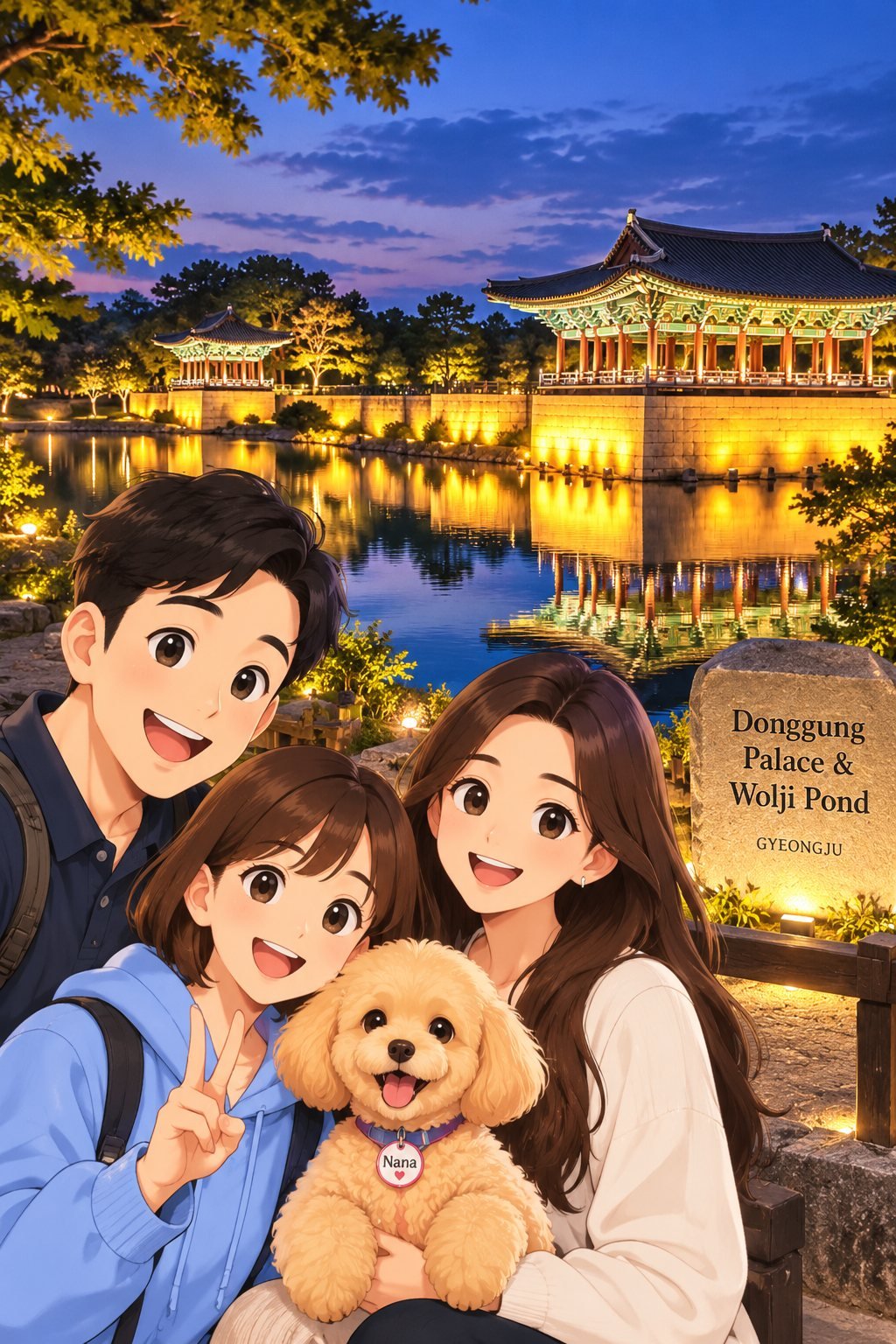
Illuminated traditional pavilions and their reflections across Wolji Pond create one of Gyeongju’s most memorable evening landscapes.
Quick Guide
| Location | Gyeongju, southeastern South Korea |
| Best for | Silla history, palace heritage, night views, traditional architecture, photography, evening walks |
| Recommended time | About 1.5–2.5 hours |
| Main experience | Walking around Wolji Pond and viewing illuminated palace architecture and reflections |
| Best atmosphere | Late afternoon through evening, when visitors can experience both daylight and night illumination |
| Good to combine with | Central Gyeongju historic attractions and Bulguksa Temple within a wider Gyeongju itinerary |
What Is Donggung Palace & Wolji Pond?
Donggung Palace and Wolji Pond formed part of a royal palace complex during the Silla period. Donggung served as a palace associated with the crown prince, while the landscaped pond and surrounding buildings created an important royal space within the ancient capital.
The pond was historically known by another name for a long period, but the name Wolji reflects its historical identity. Archaeological investigation of the site has revealed building foundations and numerous artifacts that provide important evidence about life, architecture, craftsmanship, and court culture during the Silla period.
Today, visitors encounter a combination of archaeological remains, reconstructed traditional buildings, landscaped grounds, and the pond itself. Together they help illustrate how this part of ancient Gyeongju may have functioned as a royal environment rather than simply as an isolated monument.
Why Visit?
- Experience one of Gyeongju’s most distinctive Silla royal heritage landscapes.
- Walk beside a historic pond surrounded by traditional-style architecture and archaeological remains.
- See illuminated pavilions reflected across the water after sunset.
- Experience Gyeongju during the evening rather than limiting sightseeing to daytime attractions.
- Learn about royal life and palace culture during the Silla period.
- Enjoy photography combining architecture, water, reflections, trees, and changing evening light.
- Connect the site with Bulguksa Temple to experience both Silla royal heritage and Korean Buddhist culture within a wider Gyeongju journey.
Evening Walk & Palace Views
Walking around Wolji Pond is one of the easiest ways to experience the site because the perspective changes continuously along the water. Traditional buildings, trees, stone features, archaeological areas, and reflections appear differently as visitors move around the pond.
Late afternoon can be especially useful for a first visit. Arriving before darkness allows visitors to see the landscape and architectural details in natural light before the atmosphere gradually changes as illumination becomes more prominent.
After sunset, warm lighting emphasizes the curved roofs and architectural outlines of the reconstructed pavilions. When the water is relatively calm, these lights can create long reflections across Wolji Pond and make the landscape appear almost symmetrical.
Night conditions can also make some paths and surfaces less visible than during the day. Visitors should remain on designated walking routes, follow barriers and signs, and take additional care while concentrating on photography.
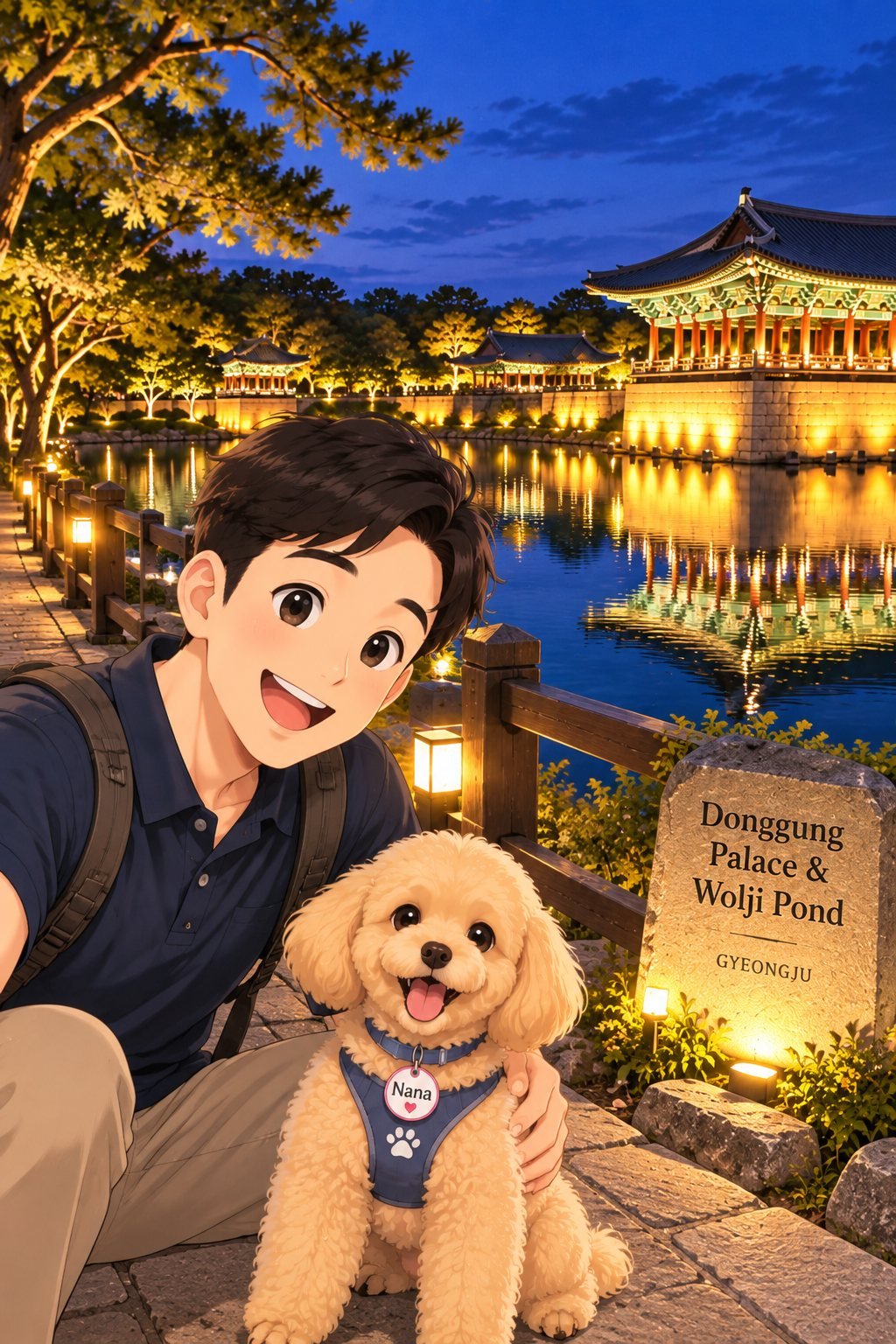
An evening walk around Wolji Pond reveals changing views of illuminated pavilions, trees, historic scenery, and reflections across the water.
Wolji Pond Reflections
Reflections across Wolji Pond are one of the most recognizable parts of the evening experience. Traditional pavilions, illuminated walls, trees, and surrounding lights can appear again on the surface of the water, creating a second version of the palace landscape below the real buildings.
The appearance of the reflections changes according to wind, weather, lighting, and movement on the water. Calm conditions can produce clearer architectural reflections, while small ripples break the lights into softer patterns across the pond.
Visitors do not need to remain at a single viewpoint. Walking around the pond reveals different combinations of buildings, water, trees, and reflections, making the entire route part of the visual experience.

Warm palace lights reflected across the dark blue water give Wolji Pond its distinctive nighttime atmosphere.
Silla Royal Heritage
Donggung Palace and Wolji Pond provides a different perspective on Silla history from Bulguksa Temple. Bulguksa introduces Buddhist architecture and religious heritage, while Donggung and Wolji help visitors explore the royal and palace culture of the ancient capital.
Archaeological discoveries from the site have helped researchers understand aspects of Silla court life, architecture, craftsmanship, decorative arts, and the use of the palace environment. The pond and surrounding structures were part of a carefully designed royal landscape rather than a naturally formed recreational lake.
For international visitors, experiencing these different sites together makes Gyeongju’s history easier to understand. The city’s heritage is spread across temples, palace sites, royal tombs, archaeological remains, monuments, and landscapes rather than concentrated within one attraction.
Night Photography
Donggung Palace and Wolji Pond is especially popular for evening photography because illuminated architecture and water reflections create strong contrasts after sunset.
The blue hour shortly after sunset can provide a particularly balanced scene. Deep blue sky, warm architectural lighting, trees, and reflections can remain visible at the same time before the sky becomes completely dark.
Wide compositions can include both the pavilions and their reflections, while closer photographs can focus on curved roofs, illuminated columns, stone foundations, trees, and patterns of light across the water.
Visitors should avoid blocking narrow walking areas or remaining in one busy viewpoint for an unnecessarily long time. Tripods, photography equipment, and access rules may also be subject to current site regulations, so follow posted guidance.

Illuminated palace architecture, dark blue evening skies, and glowing reflections make Donggung Palace and Wolji Pond one of Gyeongju’s memorable night photography settings.
Gyeongju at Night
Many of Gyeongju’s historic landscapes are impressive during daylight, but Donggung Palace and Wolji Pond demonstrates how the city’s atmosphere changes after sunset. Illuminated architecture, darker tree silhouettes, reflections, and quieter evening colors create a different experience from daytime sightseeing.
This makes the site useful for building a full-day Gyeongju itinerary. Visitors can explore temples, tombs, monuments, museums, or traditional streets during the day and then continue to Donggung Palace and Wolji Pond as evening approaches.
The night setting also shows that Gyeongju is not only a destination for studying ancient history. Historic heritage remains part of a contemporary travel experience that includes walking, photography, seasonal scenery, cafés, local food, and evening sightseeing.
Wolji Pond After Dark
After the sky becomes fully dark, Wolji Pond takes on its strongest nighttime character. Warm lighting around the traditional pavilions stands out against the deep blue and black tones of the surrounding landscape, while reflections stretch across the water.
The experience is different from simply viewing an illuminated building. Because visitors continue walking around the pond, the position of the pavilions, trees, lights, and reflections changes throughout the route.
Weather can significantly affect the scene. Wind may disturb reflections, rain can change walking conditions, and clouds or seasonal conditions can alter the color of the evening sky. The exact appearance of the site is therefore different on every visit.
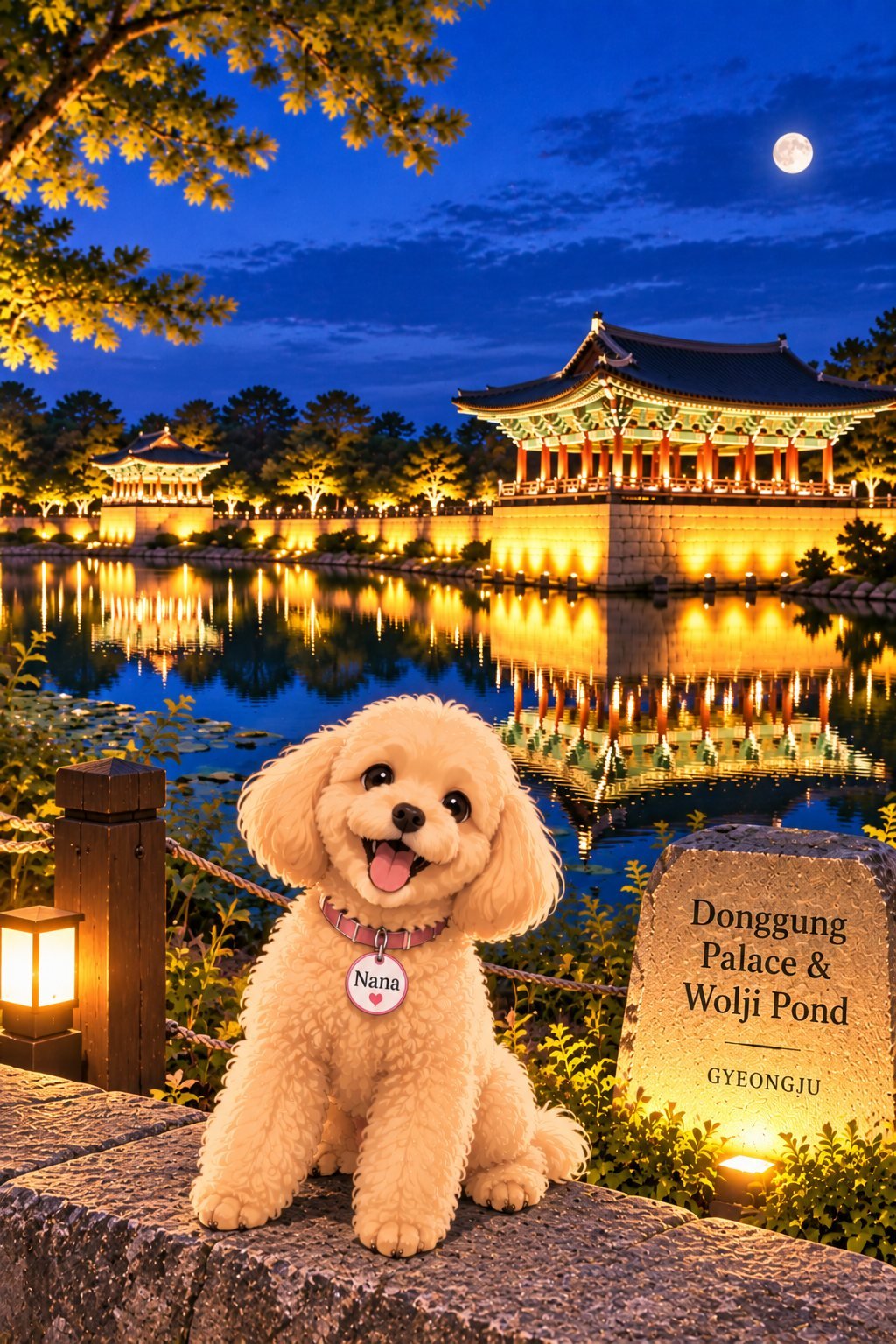
Deep blue evening skies, illuminated pavilions, and reflections across Wolji Pond create a peaceful ending to a day of exploring Gyeongju.
Best Time to Visit
Donggung Palace and Wolji Pond can be visited during the day, but late afternoon and evening provide the most complete experience for many first-time visitors.
Arriving before sunset allows time to see the archaeological landscape and traditional architecture in daylight. Visitors can then remain as the sky darkens and the illuminated pavilions begin to reflect across the pond.
The exact sunset time changes throughout the year, and lighting schedules, operating hours, weather, seasonal conditions, and visitor access can change. Check current information when evening illumination is the main reason for your visit.
How Long to Spend
About 1.5–2.5 hours works well for many first-time visitors who want to walk around Wolji Pond, explore the main viewpoints, experience the changing light, and take photographs without rushing.
A shorter visit is possible if you focus only on the main nighttime views, while photography, slower walking, seasonal scenery, or arriving before sunset can extend the visit.
When combining several Gyeongju attractions in one day, allow enough time for transportation and avoid scheduling the evening visit so tightly that you miss the transition from daylight to illumination.
Getting to Donggung Palace & Wolji Pond
Donggung Palace and Wolji Pond is located within Gyeongju’s wider historic area and can be combined naturally with several central cultural attractions.
Visitors may use public transportation, taxi, rental vehicle, walking routes, or another suitable option depending on their starting point and itinerary. Some nearby historic attractions may also be connected as part of a longer walking or sightseeing route.
Bus schedules, parking arrangements, road access, operating hours, admission procedures, and transportation conditions can change. Check current navigation and official visitor information on the day of your visit.
First-Time Visitor Tips
- Consider arriving before sunset so you can experience both daylight and nighttime scenery.
- Check the current sunset time and operating hours before planning an evening visit.
- Wear comfortable shoes because exploring the site involves walking around the pond and historic grounds.
- Take extra care on darker paths and uneven surfaces after sunset.
- Follow barriers and designated routes around archaeological and landscaped areas.
- Keep photography equipment secure and avoid blocking narrow paths or popular viewpoints.
- Check current rules before using a tripod or other larger photography equipment.
- Prepare for seasonal temperatures because evenings can feel cooler than daytime.
- Expect larger crowds during weekends, holidays, festivals, and popular evening periods.
What to Do Nearby
- Cheomseongdae — see one of Korea’s best-known ancient astronomical structures within Gyeongju’s historic district.
- Daereungwon Tomb Complex — walk among large grass-covered royal tombs connected with the history of Silla.
- Hwangnidan-gil — explore cafés, restaurants, shops, traditional-style architecture, and contemporary Gyeongju travel culture.
- Gyeongju National Museum — discover artifacts and archaeological material that provide additional context for Silla history and the ancient capital.
- Woljeonggyo Bridge — experience another atmospheric Gyeongju evening landscape centered on illuminated traditional architecture.
- Bulguksa Temple — explore Silla Buddhist heritage, historic stonework, Dabotap and Seokgatap, and traditional temple architecture.
Gyeongju K-Culture Connection
Donggung Palace and Wolji Pond introduces the royal side of Gyeongju’s Silla heritage. While Bulguksa Temple focuses on Buddhist culture, temple architecture, and religious heritage, Donggung and Wolji reveal another part of the ancient capital through palace history, archaeology, landscaped space, and royal culture.
For international visitors, this contrast helps explain why Gyeongju is more than a collection of isolated monuments. Temples, royal tombs, palace sites, ancient structures, archaeological discoveries, traditional streets, and historic landscapes together reveal different parts of the city’s long history.
The evening experience adds another dimension. Illuminated pavilions and reflections across Wolji Pond allow visitors to experience historic Korean architecture within a contemporary night-travel setting, connecting ancient heritage with walking, photography, seasonal scenery, and modern tourism.
Together with Bulguksa Temple, Daereungwon Tomb Complex, Cheomseongdae, Hwangnidan-gil, Woljeonggyo Bridge, and Gyeongju National Museum, Donggung Palace and Wolji Pond now forms part of a connected Gyeongju collection covering Buddhist heritage, royal culture, archaeology, ancient science, contemporary travel culture, traditional architecture, and Silla artifacts.
FAQ
What is Donggung Palace and Wolji Pond known for?
Donggung Palace and Wolji Pond is known for its Silla royal heritage, landscaped pond, reconstructed traditional pavilions, archaeological remains, and especially its illuminated evening scenery. Reflections of the pavilions and surrounding lights across Wolji Pond create one of Gyeongju’s most recognizable nighttime landscapes.
Is Donggung Palace and Wolji Pond better during the day or at night?
Both provide different experiences, but late afternoon through evening works especially well for many first-time visitors. Arriving before sunset allows you to see the historic landscape in daylight and then remain as the pavilions are illuminated and reflections become more visible across the pond.
How long should I spend at Donggung Palace and Wolji Pond?
About 1.5–2.5 hours works well for many visitors. This allows time to walk around the pond, explore different viewpoints, experience the transition into evening, and take photographs without rushing.
What is the connection between Donggung Palace and the Silla kingdom?
Donggung formed part of the royal palace environment of Silla’s ancient capital and was associated with the crown prince. Wolji Pond and the surrounding palace structures formed part of a carefully designed royal landscape, while archaeological discoveries from the site provide important evidence about Silla court life, architecture, craftsmanship, and culture.
Is Donggung Palace and Wolji Pond good for night photography?
Yes. Illuminated traditional architecture, reflections across the pond, trees, and the evening sky create strong photography opportunities. The period around sunset and blue hour can be especially attractive because both the color of the sky and the architectural lighting may remain visible at the same time.
Can I visit Bulguksa Temple and Donggung Palace and Wolji Pond on the same day?
Yes. Bulguksa Temple can be visited earlier in the day for Silla Buddhist heritage and traditional temple architecture, followed by Donggung Palace and Wolji Pond in the evening for royal history and illuminated night scenery. Allow sufficient transportation and sightseeing time between the two locations.
Related K-Nana Guides
Continue exploring Gyeongju with Bulguksa Temple for Silla Buddhist heritage, Daereungwon Tomb Complex for royal tombs and archaeology, Cheomseongdae for ancient astronomy and scientific heritage, Hwangnidan-gil for hanok cafés, food, shopping, and contemporary Gyeongju culture, Woljeonggyo Bridge for traditional bridge architecture and evening reflections, and Gyeongju National Museum for Silla gold, archaeology, Buddhist art, and ancient treasures.
Together, these guides connect Donggung Palace and Wolji Pond with Gyeongju’s Buddhist heritage, royal tombs, ancient science, traditional architecture, museum collections, and contemporary travel culture.
Official Information
Donggung Palace and Wolji Pond is a protected historic and archaeological destination. Opening hours, admission procedures, evening illumination, access routes, parking, public transportation, photography rules, visitor facilities, preservation work, events, and individual services can change. Weather, maintenance, seasonal conditions, and safety requirements may also affect particular areas or experiences. Check current official information when a specific operating time, evening illumination period, event, route, or facility is important to your visit, and always follow posted signs, preservation barriers, and staff instructions.
Image Credits
Donggung Palace and Wolji Pond illuminated night scenery and Gyeongju family travel visual — K-Nana Studio original visual.
Donggung Palace and Wolji Pond evening walking path with Dad and Nana visual — K-Nana Studio original visual.
Wolji Pond reflections and traditional palace architecture with Mom and Nana visual — K-Nana Studio original visual.
Donggung Palace Silla royal heritage and nighttime scenery with K-Nana daughter and Nana visual — K-Nana Studio original visual.
Nana enjoying Donggung Palace and Wolji Pond under the blue evening sky with illuminated pavilion reflections — K-Nana Studio original visual.