
Cheomseongdae is one of Gyeongju’s most recognizable ancient monuments and a remarkable symbol of scientific knowledge during the Silla period. Built from carefully arranged stone blocks, the compact tower stands within the open historic landscape of central Gyeongju and is traditionally understood as an astronomical observatory connected with observing the sky.
For international visitors, Cheomseongdae adds a completely different dimension to Gyeongju’s Silla heritage. Bulguksa Temple introduces Buddhist culture, Donggung Palace & Wolji Pond reveals royal palace heritage, and Daereungwon Tomb Complex explores royal burial culture. Cheomseongdae adds ancient astronomy, scientific heritage, and distinctive stone construction to that wider story.
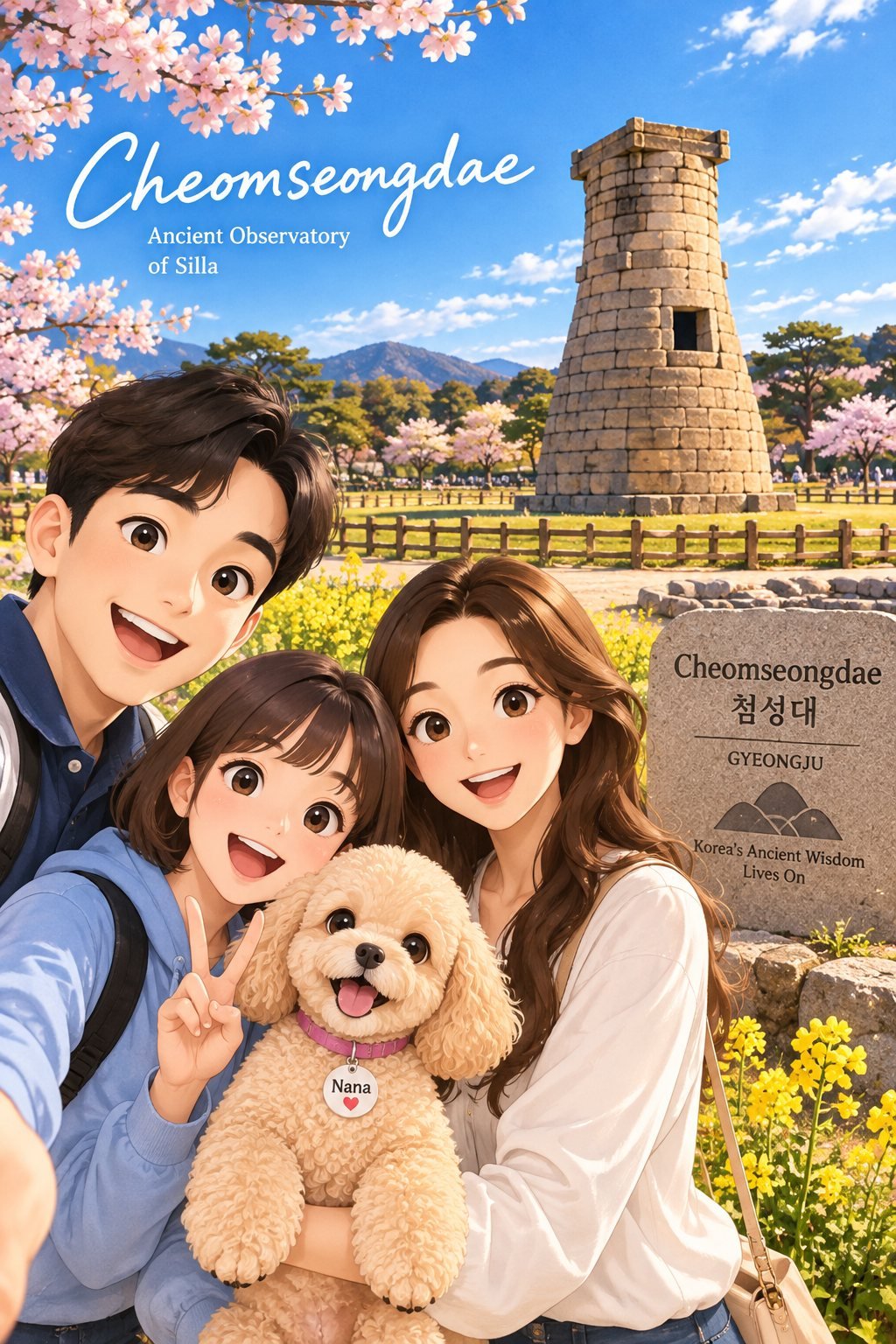
Cheomseongdae stands within Gyeongju’s open historic landscape as one of the most distinctive surviving monuments associated with Silla astronomy and scientific heritage.
Quick Guide
| Location | Central Gyeongju, southeastern South Korea |
| Best for | Silla history, ancient astronomy, stone architecture, walking, photography, seasonal scenery |
| Recommended time | About 30 minutes–1 hour for Cheomseongdae itself, longer when exploring the surrounding historic area |
| Main experience | Viewing the ancient stone structure and walking through the surrounding Gyeongju historic landscape |
| Atmosphere | Open, historic, peaceful, and strongly connected with the wider Silla heritage district |
| Good to combine with | Daereungwon Tomb Complex and Donggung Palace & Wolji Pond |
What Is Cheomseongdae?
Cheomseongdae is a stone structure dating to the Silla period and traditionally identified as an astronomical observatory. Its name is commonly understood in connection with observing the stars, reflecting the monument’s long association with astronomy and the study of the sky.
The structure is relatively small compared with Gyeongju’s enormous royal tombs or temple complexes, but its distinctive shape makes it immediately recognizable. A curved stone body rises from a square base, with a rectangular opening partway up the tower and a squared stone structure at the top.
Cheomseongdae is especially significant because it provides visitors with another way to understand the ancient capital. Silla heritage was not limited to palaces, temples, royal tombs, and religious art. Knowledge of astronomy, calendars, seasons, agriculture, and observations of the natural world also formed part of life in the kingdom.
Why Visit?
- See one of Gyeongju’s most recognizable ancient stone monuments.
- Discover a different side of Silla history centered on astronomy and scientific knowledge.
- Observe the distinctive stone construction and unusual curved form of Cheomseongdae.
- Enjoy an easy walking stop within central Gyeongju’s wider historic district.
- Photograph the monument with open fields, flowers, trees, and seasonal landscapes.
- Combine the visit naturally with Daereungwon Tomb Complex for Silla royal tomb heritage.
- Continue to Donggung Palace & Wolji Pond later in the day for Silla palace history and evening scenery.
Ancient Astronomy & Stone Architecture
Cheomseongdae is closely associated with astronomical observation during the Silla period. Understanding exactly how the structure was used has been the subject of historical and scholarly interpretation, so visitors should be careful about treating every modern explanation of its design as a confirmed historical fact.
What can be seen directly is its distinctive stone construction. Individual stone blocks form a gently curved tower that narrows and then changes toward the upper section, while a rectangular opening interrupts the otherwise continuous stone surface.
The monument’s compact scale makes close visual observation especially useful. Visitors can notice the texture of the stone, the arrangement of the blocks, the proportions of the tower, and the contrast between the ancient structure and the open landscape surrounding it.
Cheomseongdae is a protected cultural heritage structure. Visitors should remain outside preservation barriers, follow designated routes, and never touch, climb, or enter restricted areas around the monument.
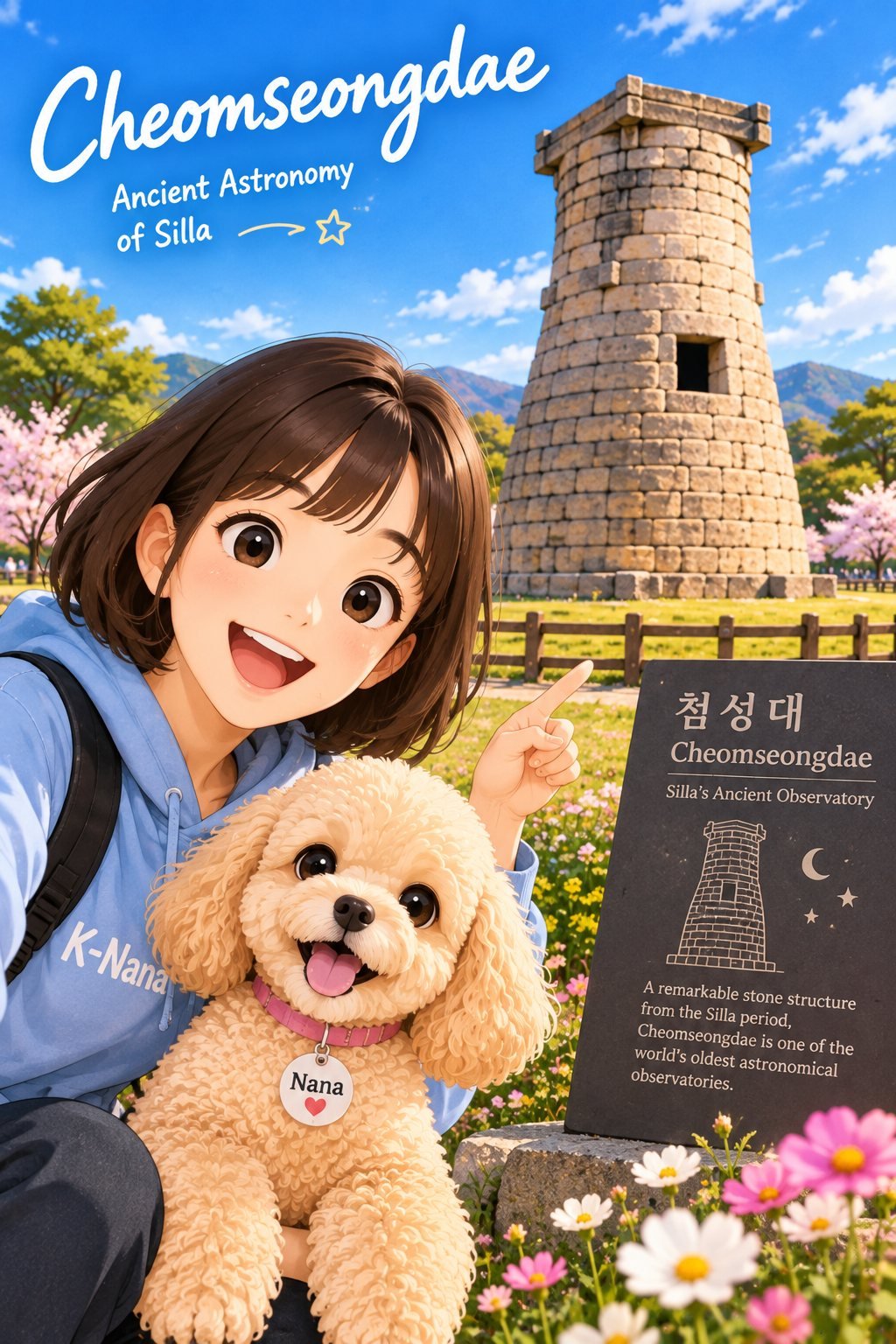
Cheomseongdae’s distinctive stone form connects the landscape of modern Gyeongju with the astronomical and scientific heritage associated with ancient Silla.
Silla Science & the Historic Landscape
Cheomseongdae helps visitors see that Silla heritage includes more than royal tombs, Buddhist temples, and palace sites. The monument is closely associated with the observation of the sky and provides a starting point for understanding how astronomy, calendars, seasons, and knowledge of the natural world mattered within an ancient society.
Its location also makes the experience especially interesting. Cheomseongdae stands within a wider historic landscape where ancient monuments and archaeological areas remain close to one another rather than being separated into isolated attractions.
Visitors can therefore move from the royal burial landscape of Daereungwon Tomb Complex toward Cheomseongdae and continue through other parts of central Gyeongju’s historic district. This makes walking through the area itself part of the cultural experience.
The contrast between the compact stone observatory and the nearby grass-covered tombs is particularly useful for understanding how different forms of Silla heritage continue to shape modern Gyeongju.
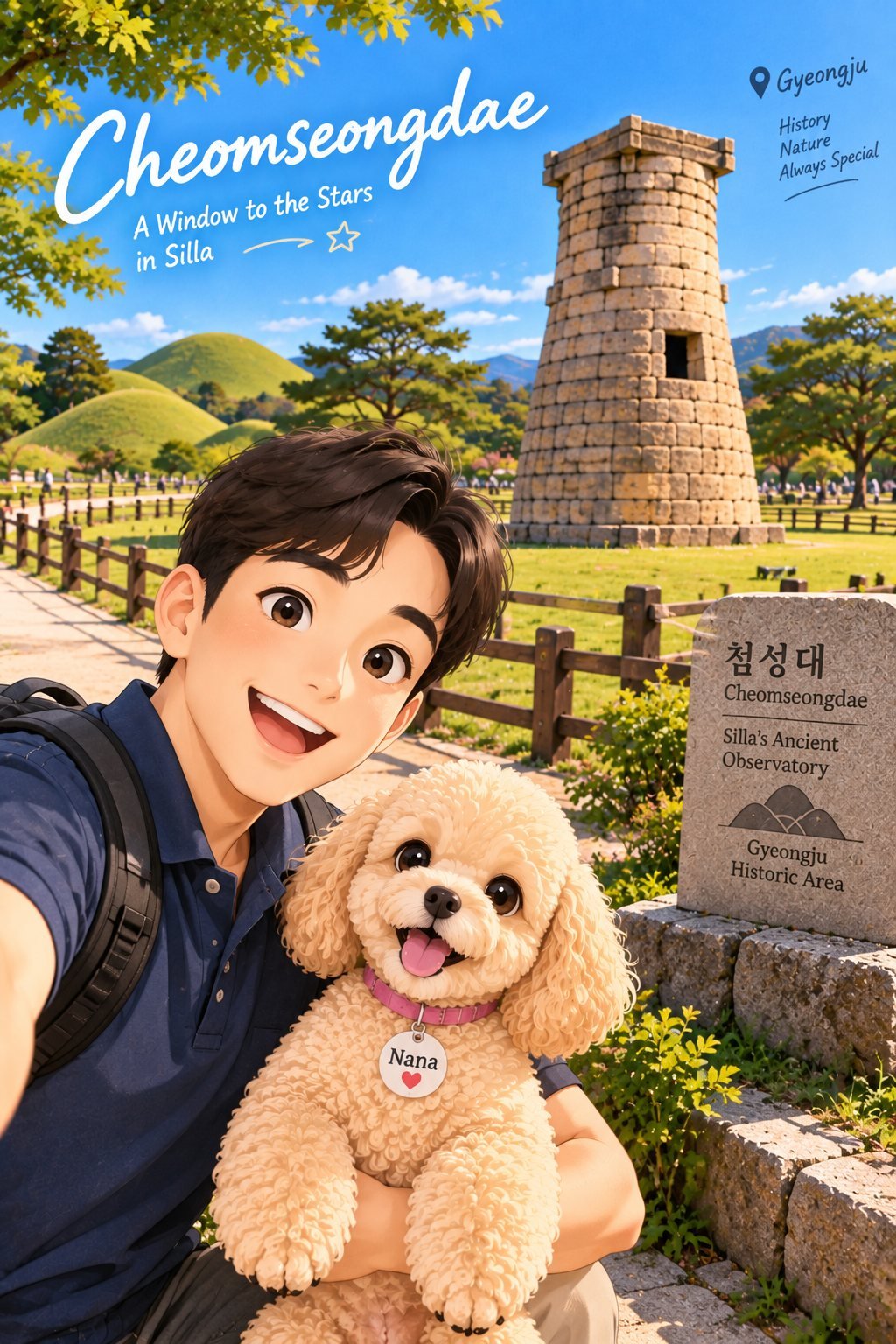
Cheomseongdae sits within a wider historic landscape where ancient astronomy, royal tombs, walking routes, and Silla heritage remain closely connected.
Seasonal Scenery
The landscape around Cheomseongdae changes significantly throughout the year. Seasonal flowers, green fields, trees, changing foliage, and different sky conditions can transform the appearance of the monument even though the ancient stone structure itself remains unchanged.
Spring can bring blossoms and fresh greenery, while summer creates vivid green surroundings under stronger sunlight. Autumn adds warmer colors to the wider landscape, and winter can reveal a quieter and more restrained view of the stone monument.
Flower displays and landscaped areas around the wider historic district may also vary according to season and local management. Visitors traveling specifically for a particular flower or seasonal scene should check current conditions rather than assuming that the same landscape appears throughout the year.

Seasonal flowers and open fields add changing colors to the ancient stone silhouette of Cheomseongdae throughout the year.
Photography & Walking Around Cheomseongdae
Cheomseongdae is easy to recognize in photographs because its stone silhouette is simple and distinctive. Different viewpoints can place the tower against blue sky, seasonal flowers, trees, distant hills, nearby tomb landscapes, or changing evening light.
Wide compositions are useful for showing how the monument sits within the open historic area, while closer views can emphasize the individual stone blocks, rectangular opening, curved walls, and upper stone structure.
The surrounding area also works well for a slower walking itinerary. Instead of visiting Cheomseongdae only for a quick photograph, travelers can continue through nearby historic landscapes and experience how several different Silla sites exist within the same part of central Gyeongju.
A practical route can combine Daereungwon Tomb Complex, Cheomseongdae, surrounding historic areas, and later Donggung Palace & Wolji Pond as evening approaches.
Always remain on designated paths and respect preservation barriers while taking photographs. The goal is to experience the historic landscape without entering protected areas or damaging cultural heritage.
Cheomseongdae at Sunset
Late afternoon and early evening bring a different atmosphere to Cheomseongdae. As the sun moves lower, warmer light can emphasize the texture of the stone blocks while the surrounding fields, trees, and distant landscape gradually become softer in color.
The transition toward evening is especially meaningful at a monument associated with observing the sky. Visitors can experience the structure under changing natural light before the surrounding historic area takes on a quieter nighttime character.
Sunset time, weather, clouds, seasonal conditions, and illumination can all affect the experience. Visitors planning specifically for evening photography should check current sunset and access information before arriving.
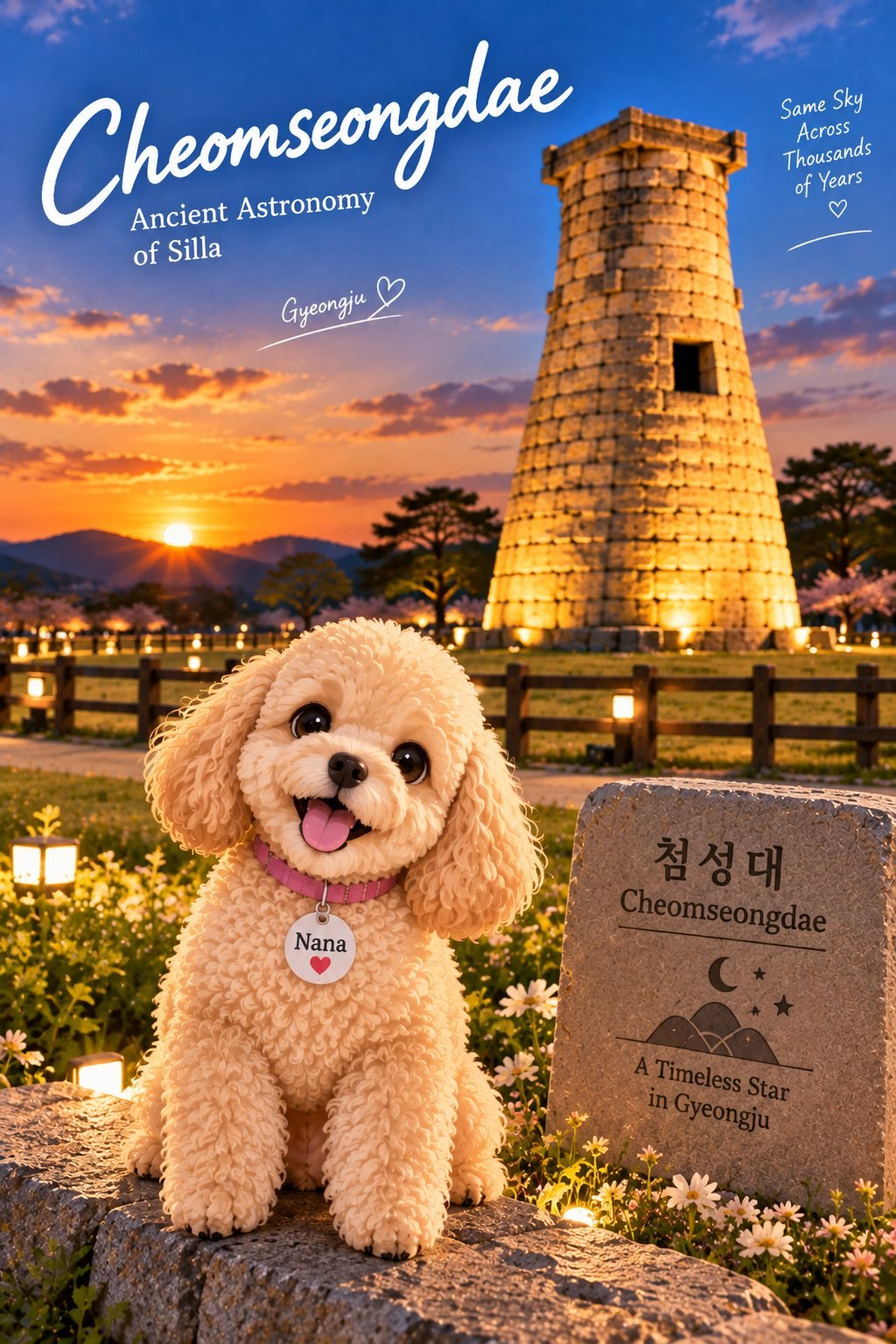
Sunset and evening light give Cheomseongdae a peaceful atmosphere that connects its ancient astronomical heritage with the changing sky above modern Gyeongju.
Best Time to Visit
Cheomseongdae can be visited throughout the year, and each season creates a different setting around the ancient stone structure.
Spring brings fresh greenery and seasonal blossoms, summer offers vivid fields and longer daylight, autumn adds warmer colors to the surrounding landscape, and winter can provide a quieter and more restrained atmosphere.
Morning is comfortable for relaxed walking, while late afternoon and early evening can provide softer light and changing sky colors. Visitors planning a wider Gyeongju itinerary can also continue toward Donggung Palace & Wolji Pond as evening approaches.
How Long to Spend
About 30 minutes–1 hour is enough for many visitors who want to view Cheomseongdae, walk around the immediate area, read visitor information, and take photographs.
However, Cheomseongdae works best as part of a wider central Gyeongju walking itinerary rather than as an isolated stop. Visitors exploring nearby tombs, historic landscapes, seasonal flower areas, and other cultural sites may spend several hours in the surrounding district.
Combining Cheomseongdae with Daereungwon Tomb Complex is especially convenient for travelers who want to experience several different forms of Silla heritage within the same part of Gyeongju.
Getting to Cheomseongdae
Cheomseongdae is located within central Gyeongju’s historic area and is close to several other major heritage attractions.
Visitors may arrive by public transportation, taxi, rental vehicle, walking, or another suitable option depending on their accommodation and wider itinerary. Walking can be particularly useful when combining Cheomseongdae with nearby historic sites.
Bus schedules, parking arrangements, road access, pedestrian routes, visitor conditions, and transportation services can change. Check current navigation and official visitor information on the day of your visit.
First-Time Visitor Tips
- Allow time to view Cheomseongdae from several angles rather than taking only one photograph.
- Remain outside preservation barriers and never touch or climb the historic stone structure.
- Wear comfortable shoes if combining the monument with other central Gyeongju attractions on foot.
- Bring sun protection and water during warmer months because the surrounding landscape includes open areas.
- Check current seasonal conditions if flowers or autumn scenery are an important part of your visit.
- Consider late afternoon if you want softer light and an easy transition into Gyeongju’s evening attractions.
- Check current sunset time and access information when planning evening photography.
- Follow all preservation signs and designated walking routes around the monument.
What to Do Nearby
- Daereungwon Tomb Complex — walk among monumental Silla royal tombs and explore Cheonmachong and ancient burial heritage.
- Hwangnidan-gil — combine Gyeongju’s ancient history with cafés, restaurants, shops, traditional-style architecture, and contemporary travel culture.
- Donggung Palace & Wolji Pond — experience Silla royal palace heritage, illuminated pavilions, water reflections, and nighttime scenery.
- Gyeongju National Museum — explore Silla artifacts and archaeological discoveries that provide additional context for the ancient capital.
- Woljeonggyo Bridge — enjoy traditional-style architecture and an atmospheric illuminated evening landscape.
- Bulguksa Temple — explore Silla Buddhist heritage, historic stone terraces, Dabotap, Seokgatap, and traditional temple architecture.
Gyeongju K-Culture Connection
Cheomseongdae adds ancient astronomy and scientific heritage to K-Nana Studio’s Gyeongju journey. Its compact stone structure demonstrates that the legacy of Silla extends beyond temples, royal palaces, and burial mounds into knowledge of the sky and the natural world.
The Gyeongju collection now introduces several clearly different aspects of the ancient capital. Bulguksa Temple represents Buddhist culture and religious architecture, Donggung Palace & Wolji Pond introduces royal palace heritage and nighttime scenery, and Daereungwon Tomb Complex reveals royal burial culture and archaeology. Cheomseongdae adds astronomy, scientific knowledge, and ancient stone engineering, while Hwangnidan-gil, Woljeonggyo Bridge, and Gyeongju National Museum extend the journey into contemporary culture, traditional bridge architecture, and Silla artifacts.
For international visitors, these different sites make Gyeongju easier to understand as a complete historic landscape. Ancient monuments remain connected through walking routes, open fields, archaeological areas, modern streets, cafés, museums, and contemporary city life.
Cheomseongdae is therefore more than a quick photo stop. It helps connect Silla’s intellectual heritage with the physical landscape of modern Gyeongju and provides another perspective on how Korea’s ancient capital developed.
FAQ
What is Cheomseongdae known for?
Cheomseongdae is known as an ancient Silla-period stone structure traditionally associated with astronomical observation. Its distinctive curved form and location within Gyeongju’s historic landscape make it one of the city’s most recognizable ancient monuments.
Was Cheomseongdae really used as an astronomical observatory?
Cheomseongdae has long been associated with astronomy and the observation of the sky. Scholars have discussed how the structure may have been used and how particular architectural features should be interpreted, so visitors should distinguish the monument’s established astronomical association from modern explanations that may remain debated.
How long should I spend at Cheomseongdae?
About 30 minutes–1 hour works well for many visitors who want to view the monument from several angles, explore the immediate surroundings, read visitor information, and take photographs. More time is useful when combining Cheomseongdae with other central Gyeongju heritage sites.
Can I go inside Cheomseongdae?
Cheomseongdae is a protected cultural heritage structure and visitors should remain within permitted viewing areas. Access conditions and preservation arrangements can change, so always follow current barriers, signs, and staff instructions rather than attempting to approach or enter restricted areas.
What is the best time to visit Cheomseongdae?
Cheomseongdae can be visited throughout the year. Spring and summer provide green landscapes and seasonal flowers, autumn adds warmer colors, and winter can create a quieter atmosphere. Late afternoon and early evening are especially useful for visitors interested in softer light and changing sky colors.
Can I visit Cheomseongdae and Daereungwon on the same day?
Yes. Cheomseongdae and Daereungwon Tomb Complex fit naturally into the same central Gyeongju itinerary. Visitors can explore the royal tomb landscape and Cheonmachong before continuing toward Cheomseongdae and other nearby historic attractions.
Related K-Nana Guides
Continue exploring Gyeongju with Bulguksa Temple for Silla Buddhist heritage, Donggung Palace & Wolji Pond for royal palace history and illuminated night scenery, Daereungwon Tomb Complex for royal tombs and archaeology, Hwangnidan-gil for hanok cafés, food, shopping, and contemporary Gyeongju culture, Woljeonggyo Bridge for traditional bridge architecture and evening scenery, and Gyeongju National Museum for Silla gold, archaeology, Buddhist art, and ancient treasures.
Together, these guides connect Cheomseongdae’s astronomy and scientific heritage with Gyeongju’s temples, royal palaces, burial culture, traditional architecture, museum collections, and contemporary travel experiences.
Official Information
Cheomseongdae is a protected historic cultural property within Gyeongju’s wider heritage landscape. Access routes, preservation barriers, walking areas, illumination, parking, public transportation, visitor facilities, events, seasonal landscaping, and individual services can change. Weather, maintenance, conservation work, and safety requirements may also affect the visitor experience. Check current official information when a particular access condition, event, evening experience, or facility is important to your visit, and always follow posted signs, preservation barriers, and staff instructions.
Image Credits
Cheomseongdae, open historic landscape, and Gyeongju family travel visual — K-Nana Studio original visual.
Cheomseongdae stone structure and Silla astronomy heritage with K-Nana daughter and Nana visual — K-Nana Studio original visual.
Cheomseongdae, royal tombs, and Gyeongju historic-area walking scenery with Dad and Nana visual — K-Nana Studio original visual.
Cheomseongdae seasonal flowers and peaceful Gyeongju scenery with Mom and Nana visual — K-Nana Studio original visual.
Nana enjoying Cheomseongdae sunset, evening illumination, and historic Gyeongju scenery visual — K-Nana Studio original visual.