
Gyeongju National Museum is one of the most important places for understanding the history, art, archaeology, and everyday culture of Silla. While Gyeongju’s royal tombs, temples, palace sites, and ancient monuments reveal history through the landscape, the museum brings together artifacts that help visitors understand the people who created and used those places.
For international visitors, the museum provides valuable context for the wider Gyeongju journey. Objects connected with royal culture, burial traditions, Buddhism, craftsmanship, architecture, and daily life help explain what visitors encounter at Bulguksa Temple, Donggung Palace & Wolji Pond, Daereungwon Tomb Complex, and Cheomseongdae.
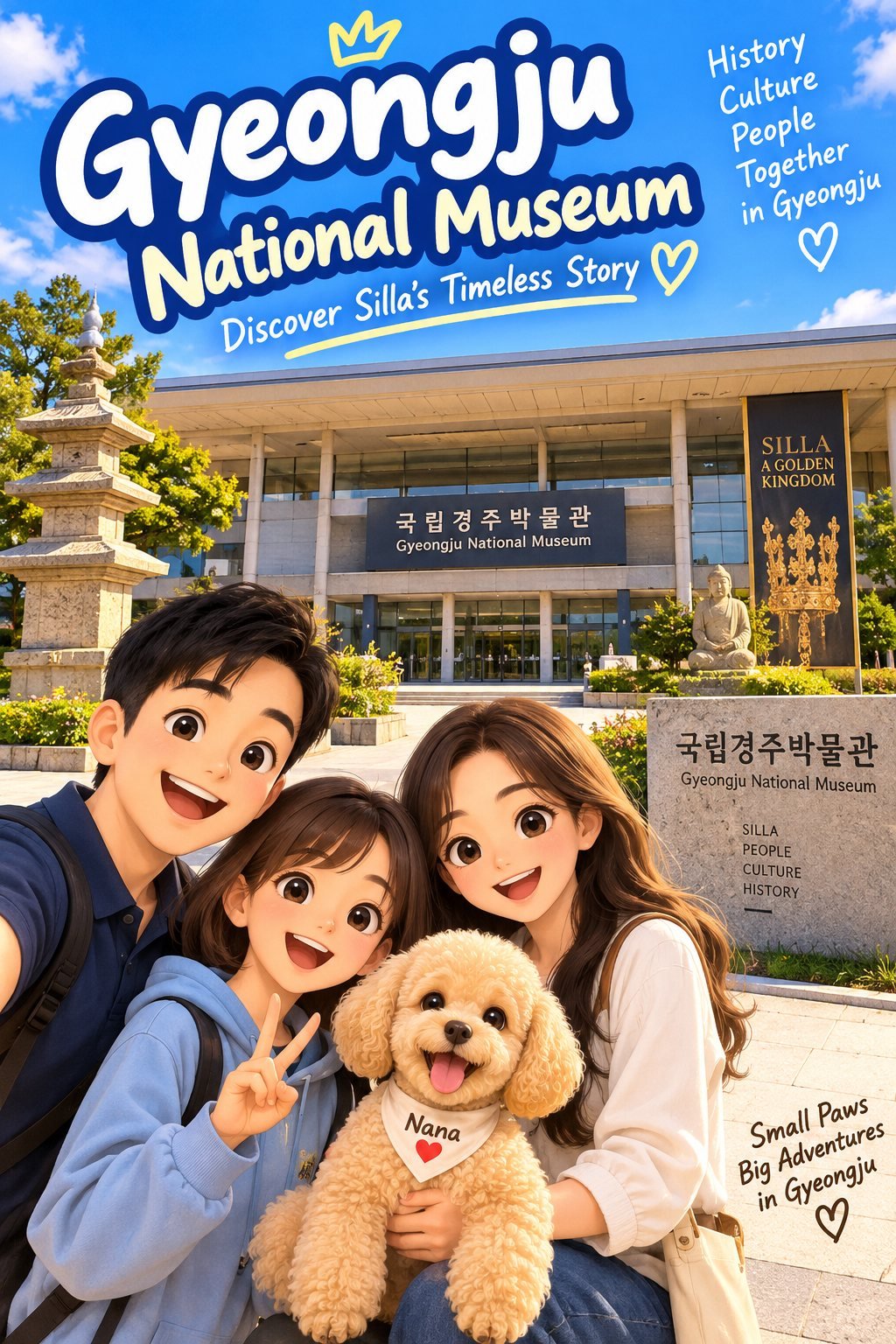
Gyeongju National Museum brings Silla history together through archaeology, royal treasures, Buddhist art, everyday objects, and cultural heritage from Korea’s ancient capital.
Quick Guide
| Location | Gyeongju, southeastern South Korea |
| Best for | Silla history, archaeology, gold artifacts, Buddhist art, royal culture, museums, Korean heritage |
| Recommended time | About 2–3 hours, longer for visitors interested in archaeology and detailed exhibitions |
| Main experience | Exploring Silla artifacts and connecting museum collections with Gyeongju’s historic sites |
| Atmosphere | Educational, cultural, archaeological, family-friendly, and historically focused |
| Good to combine with | Donggung Palace & Wolji Pond, Cheomseongdae, and Woljeonggyo Bridge |
What Is Gyeongju National Museum?
Gyeongju National Museum is a major museum dedicated to the cultural heritage of Gyeongju and the Silla kingdom, which ruled much of the Korean Peninsula for centuries and established its capital in the Gyeongju area.
The museum preserves and presents archaeological objects and works of art associated with the ancient capital and surrounding region. Rather than focusing on a single monument, its collections help visitors examine many aspects of Silla society through objects discovered at royal tombs, palace sites, Buddhist locations, settlements, and archaeological excavations.
This makes the museum especially useful after visiting outdoor heritage sites. A grass-covered burial mound at Daereungwon Tomb Complex becomes easier to understand when visitors can also examine the types of ornaments, pottery, equipment, and ceremonial objects associated with Silla burial culture.
Why Visit?
- See important artifacts connected with Silla history and archaeology.
- Learn how Gyeongju functioned as the capital of an ancient Korean kingdom.
- Explore royal ornaments, pottery, Buddhist art, sculpture, and archaeological objects.
- Connect museum collections with nearby tombs, palace sites, temples, and monuments.
- Gain deeper context before or after visiting Daereungwon Tomb Complex.
- Experience an indoor cultural destination that can complement outdoor sightseeing.
- See the famous Bell of King Seongdeok and explore additional heritage in the museum grounds.
Silla Gold & Royal Treasures
Gold artifacts are among the most visually memorable objects associated with Silla. Elaborate crowns, earrings, belts, pendants, necklaces, and other ornaments demonstrate sophisticated metalworking techniques and provide evidence about status, royal culture, symbolism, and craftsmanship.
These objects are especially meaningful when viewed in connection with Gyeongju’s royal tombs. Archaeological discoveries from burial sites have helped researchers understand how members of Silla’s elite society expressed authority, identity, and wealth through carefully crafted objects.
The delicate shapes and decorative details also reveal the skill of ancient craftspeople. Gold, curved jade ornaments, intricate metalwork, and suspended decorations created objects that were both technically complex and visually distinctive.
Exhibitions can change because museums rotate objects, conduct conservation work, lend artifacts, or reorganize galleries. Visitors hoping to see a particular crown or artifact should check current museum information before their visit.
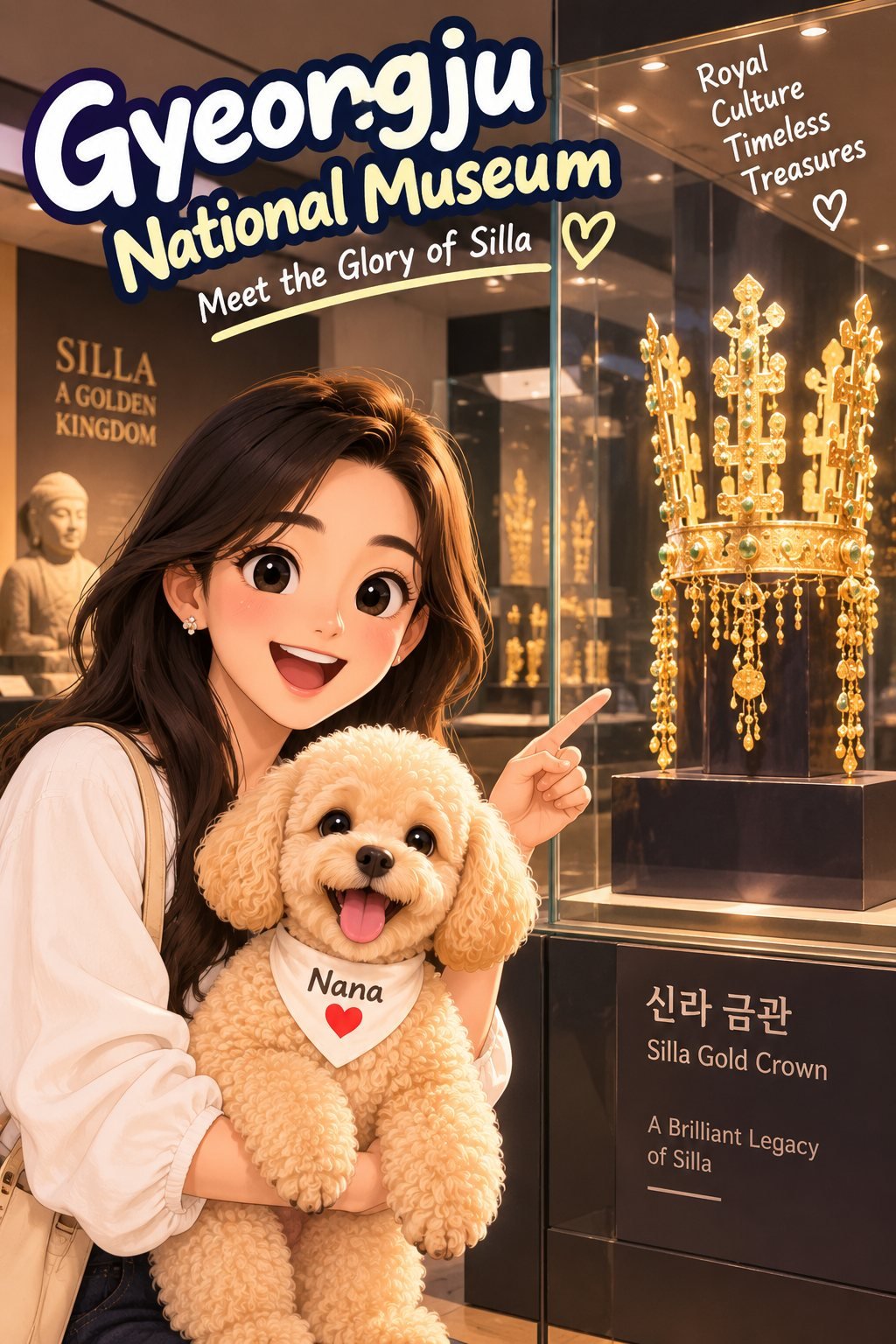
Silla gold crowns and ornaments reveal the extraordinary craftsmanship, royal culture, and archaeological heritage of Korea’s ancient capital.
Archaeology & Everyday Silla
Archaeology allows visitors to understand Silla through more than royal monuments and famous treasures. Pottery, roof tiles, tools, weapons, household objects, horse equipment, decorative items, and other excavated materials provide evidence about how people lived, worked, traveled, worshipped, and organized their society.
These everyday objects are important because history is not created only by kings and royal families. Archaeological discoveries can reveal information about craftspeople, soldiers, merchants, religious communities, and other people who lived in and around the ancient capital.
Pottery is particularly useful for understanding changes in technology, daily life, burial customs, and artistic style. Different shapes, materials, firing techniques, and decorative patterns help researchers study how Silla society developed over time.
Buddhist Art & Sculpture
Buddhism became deeply connected with Silla culture, leaving an important legacy in sculpture, architecture, religious objects, and artistic traditions. Museum galleries can help visitors examine Buddhist heritage at a much closer scale than is usually possible at large outdoor monuments.
Stone and metal Buddhist images, architectural fragments, ritual objects, and other surviving works demonstrate how religion influenced both artistic production and the cultural identity of the kingdom.
This collection also provides useful context for Bulguksa Temple. After seeing Buddhist sculpture and archaeological material inside the museum, visitors can better understand how temple architecture, religious art, craftsmanship, and Silla history belong to the same wider cultural story.
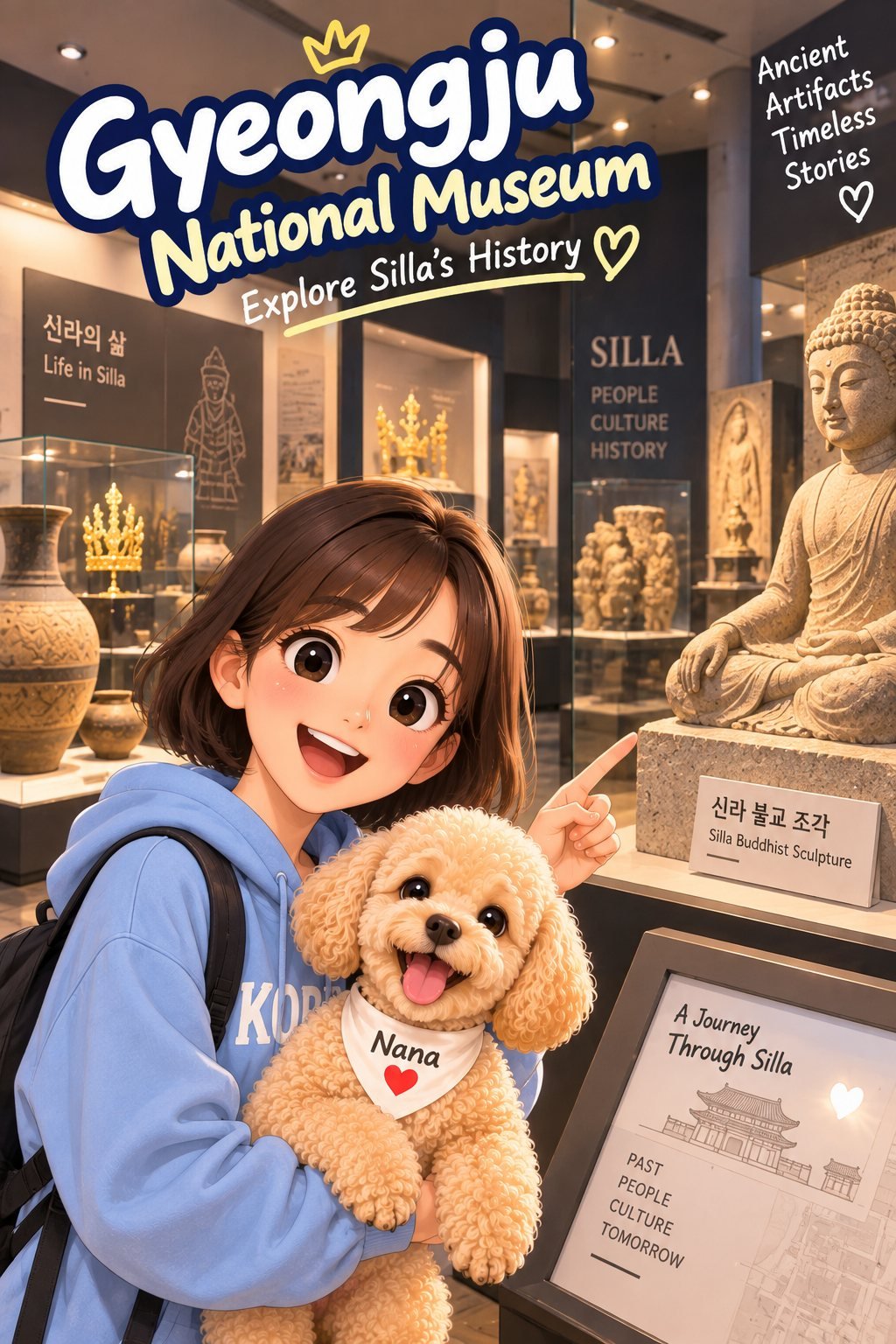
Pottery, Buddhist sculpture, and archaeological objects reveal how religion, craftsmanship, and everyday life shaped the world of ancient Silla.
Bell of King Seongdeok
One of the most famous cultural treasures associated with Gyeongju National Museum is the Bell of King Seongdeok, also widely known as the Emille Bell. The enormous bronze bell is an outstanding example of Unified Silla metalworking and Buddhist cultural heritage.
The bell was completed during the Unified Silla period and is remarkable for both its scale and detailed decoration. Its surface includes elaborate designs and figures that demonstrate the technical and artistic skill required to produce such a large bronze object.
The popular name “Emille Bell” is connected with a later legend surrounding the bell. Visitors should distinguish this well-known story from the archaeological and historical evidence surrounding the actual artifact.
Viewing the bell also helps demonstrate that Silla craftsmanship extended far beyond gold ornaments. Large-scale bronze casting required sophisticated knowledge of materials, design, production, and engineering.
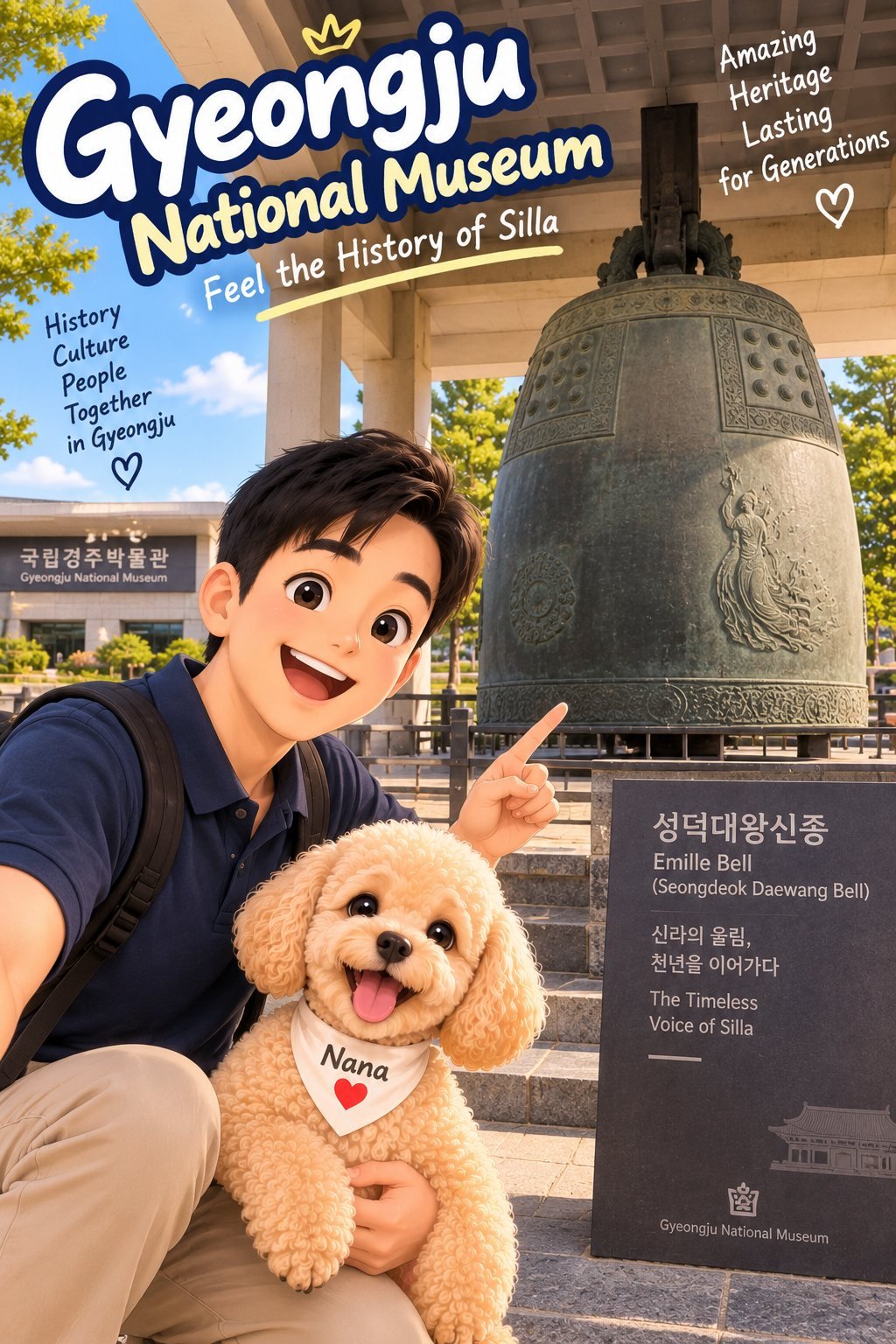
The Bell of King Seongdeok demonstrates the extraordinary scale, bronze-casting skill, Buddhist heritage, and artistic achievement of Unified Silla.
Connecting the Museum with Gyeongju
Gyeongju National Museum becomes especially valuable when it is connected with the historic sites visitors have already explored around the city. Objects inside the museum provide physical evidence that helps explain the landscapes outside.
The royal ornaments and burial objects connect naturally with Daereungwon Tomb Complex. Buddhist sculpture and religious objects provide additional context for Bulguksa Temple, while archaeological discoveries associated with palace culture help visitors better understand Donggung Palace & Wolji Pond.
The museum also fits naturally with Cheomseongdae and Woljeonggyo Bridge, helping visitors see ancient science, transportation, architecture, religion, royal culture, and everyday objects as parts of one larger Silla capital.
This is why the museum can work well either near the beginning or toward the end of a Gyeongju trip. Visiting early provides historical context for later sightseeing, while visiting after several heritage sites helps travelers connect what they have already seen with the artifacts preserved inside the museum.
Museum Gardens & Outdoor Heritage
The Gyeongju National Museum experience is not limited to indoor galleries. The museum grounds provide additional space to encounter stone cultural objects, architectural elements, landscaped areas, and other heritage within a quieter outdoor setting.
Walking outside after exploring the galleries also provides a useful change of pace. Visitors can move from detailed indoor displays into open spaces where larger objects and stone heritage can be viewed within the wider landscape of Gyeongju.
The outdoor areas can be particularly pleasant in softer morning or late-afternoon light. Seasonal vegetation, trees, flowers, stone objects, and museum architecture create a different visual experience from the darker exhibition spaces inside.
Outdoor displays, walking routes, landscaping, restoration work, and access conditions can change. Follow current museum signs and preservation guidance around cultural objects.
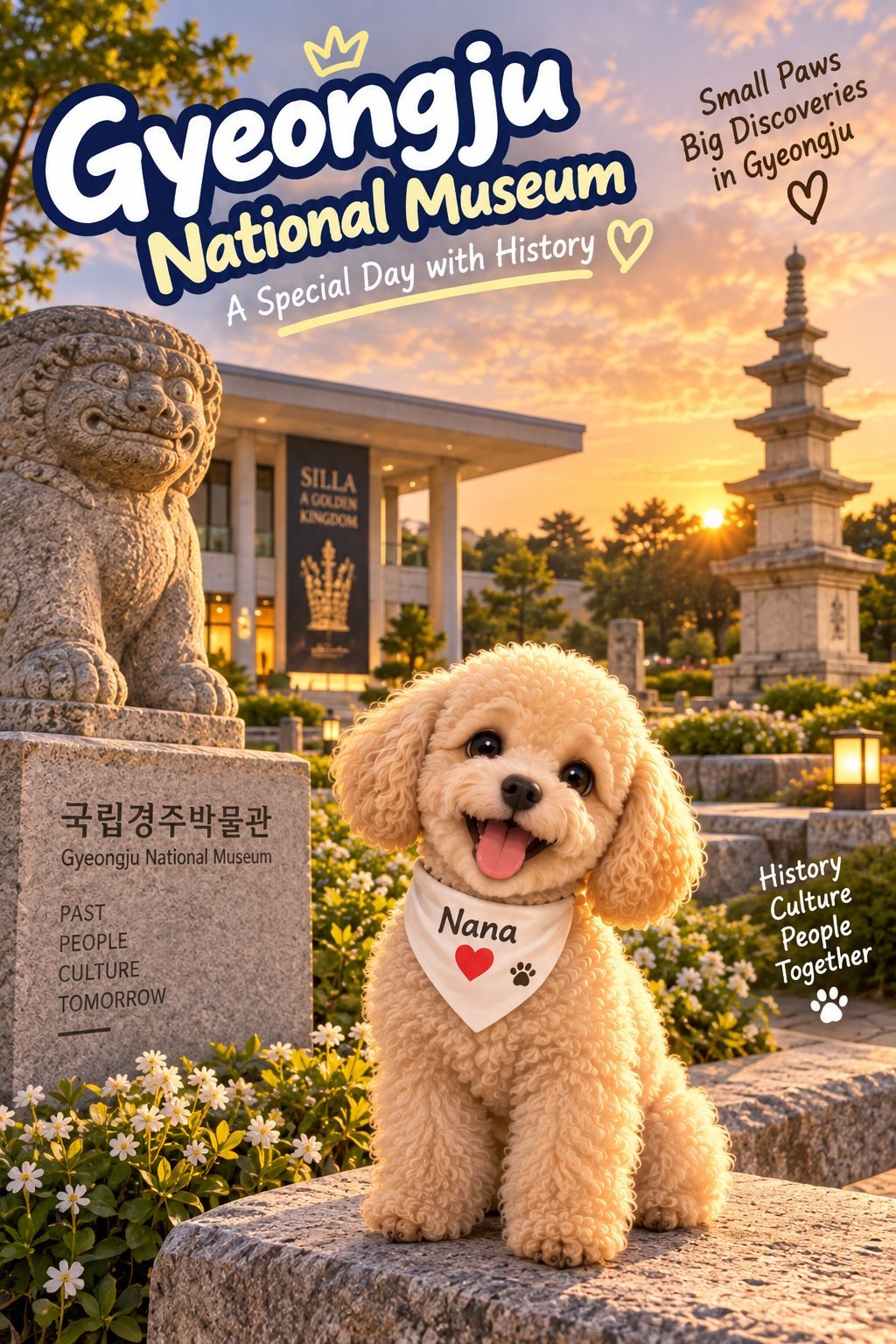
Outdoor gardens and stone cultural heritage extend the museum experience beyond the galleries and into Gyeongju’s historic landscape.
Best Time to Visit
Gyeongju National Museum can be useful throughout the year because much of the main visitor experience takes place indoors. This makes the museum especially practical during hot summer afternoons, colder winter days, or periods of less comfortable outdoor weather.
Morning can work well for visitors who want historical context before exploring Gyeongju’s archaeological sites. An afternoon visit is useful for travelers who have already spent several hours outdoors and want to continue learning in a more controlled indoor environment.
The museum can also fit naturally before an evening itinerary that includes Woljeonggyo Bridge or Donggung Palace & Wolji Pond.
How Long to Spend
About 2–3 hours works well for many first-time visitors who want to explore the major galleries, examine important Silla artifacts, see the Bell of King Seongdeok, and spend some time in the outdoor areas.
Visitors with a strong interest in Korean history, archaeology, Buddhist art, ancient craftsmanship, or museum exhibitions may want additional time.
A shorter visit can focus on major highlights, but moving too quickly can reduce the value of the museum because much of its importance comes from connecting individual objects with the wider history of Gyeongju.
Getting to Gyeongju National Museum
Gyeongju National Museum is located within the wider historic area of Gyeongju and can be combined conveniently with several major heritage attractions.
Visitors may arrive by public transportation, taxi, rental vehicle, walking, or another suitable option depending on their accommodation and itinerary. Its location works particularly well for a route that also includes Donggung Palace & Wolji Pond, Cheomseongdae, and Woljeonggyo Bridge.
Bus schedules, parking conditions, pedestrian routes, museum access, and transportation services can change. Check current navigation and official museum information on the day of your visit.
First-Time Visitor Tips
- Allow at least a few hours if you want more than a quick look at the major artifacts.
- Use the museum to connect objects with the Gyeongju heritage sites you have already visited.
- Check current exhibition information if a particular crown, artifact, or gallery is important to your trip.
- Remember that exhibitions may change because of conservation, loans, or gallery reorganization.
- Read the available object descriptions to understand archaeological context rather than focusing only on appearance.
- Include the outdoor heritage areas if weather and time allow.
- Follow photography rules because restrictions can vary between exhibitions and objects.
- Do not touch artifacts, display cases, stone heritage, or restricted cultural objects.
- Check current opening hours, closing days, admission conditions, and visitor notices before traveling.
What to Do Nearby
- Donggung Palace & Wolji Pond — connect museum artifacts with Silla royal palace heritage and return in the evening for illuminated reflections.
- Cheomseongdae — explore Silla astronomy, ancient stone architecture, and the open historic landscape of central Gyeongju.
- Woljeonggyo Bridge — enjoy traditional bridge architecture, the Namcheon riverside, evening illumination, and water reflections.
- Daereungwon Tomb Complex — walk among Silla royal tombs and connect archaeological artifacts with the burial landscape where similar objects have been discovered.
- Hwangnidan-gil — take a break from historical sightseeing with hanok cafés, food, desserts, shopping, and contemporary Gyeongju culture.
- Bulguksa Temple — experience Silla Buddhist architecture and connect the temple landscape with Buddhist art and cultural objects seen in the museum.
Gyeongju K-Culture Connection
Gyeongju National Museum brings together many of the historical themes introduced throughout K-Nana Studio’s Gyeongju collection. Instead of representing only one type of heritage, the museum connects royal culture, burial traditions, Buddhism, craftsmanship, archaeology, art, technology, and everyday life through surviving objects.
The seven Gyeongju guides now work as a connected cultural journey. Bulguksa Temple introduces Buddhist heritage, Donggung Palace & Wolji Pond explores royal palace culture, Daereungwon Tomb Complex focuses on royal tombs and archaeology, Cheomseongdae adds astronomy and scientific heritage, Hwangnidan-gil introduces contemporary lifestyle culture, and Woljeonggyo Bridge adds traditional bridge architecture and riverside scenery. Gyeongju National Museum connects these themes through the objects and archaeological evidence left by Silla.
For international visitors, this connection can make the ancient capital much easier to understand. A royal tomb is no longer simply a green hill when the visitor has seen the objects associated with burial culture, and a temple becomes more meaningful after examining Buddhist sculpture and religious art at close range.
The museum therefore works as both an introduction and a conclusion to a Gyeongju journey: a place to learn before exploring the city and a place to connect the history after experiencing its monuments and landscapes.
FAQ
What is Gyeongju National Museum known for?
Gyeongju National Museum is known for its extensive collection of cultural heritage associated with Gyeongju and the Silla kingdom. Visitors can explore archaeological artifacts, royal ornaments, pottery, Buddhist art, sculpture, everyday objects, and other materials that help explain the history of Korea’s ancient capital.
How long should I spend at Gyeongju National Museum?
About 2–3 hours works well for many first-time visitors who want to explore the major galleries, examine important Silla artifacts, see the Bell of King Seongdeok, and spend some time around the outdoor heritage areas. Visitors with a strong interest in archaeology or Korean history may want longer.
Can I see Silla gold crowns at Gyeongju National Museum?
The museum is an important place for learning about Silla goldwork and royal culture, and its collections and exhibitions can include gold crowns, ornaments, jewelry, and other archaeological treasures associated with the ancient kingdom. Individual objects may be rotated, moved for conservation, loaned, or displayed differently, so check current exhibition information if seeing a particular artifact is important to your visit.
What is the Bell of King Seongdeok?
The Bell of King Seongdeok is a monumental bronze bell from the Unified Silla period and one of Korea’s most famous historic bells. It is also widely known as the Emille Bell, although visitors should distinguish the later legend associated with that name from the documented history and cultural significance of the actual artifact.
Should I visit the museum before or after Gyeongju’s historic sites?
Either approach works well. Visiting the museum first provides useful historical and archaeological context before exploring Gyeongju, while visiting later allows travelers to connect artifacts with places they have already experienced, including Daereungwon Tomb Complex, Bulguksa Temple, and Donggung Palace & Wolji Pond.
What can I visit near Gyeongju National Museum?
The museum fits naturally into a central Gyeongju heritage itinerary. Visitors can continue to Donggung Palace & Wolji Pond, Cheomseongdae, Woljeonggyo Bridge, Daereungwon Tomb Complex, and other historic areas depending on available time and transportation.
Related K-Nana Guides
Continue exploring Gyeongju with Bulguksa Temple for Silla Buddhist heritage, Donggung Palace & Wolji Pond for royal palace history and illuminated reflections, Daereungwon Tomb Complex for royal tombs and archaeology, Cheomseongdae for ancient astronomy, Hwangnidan-gil for cafés, food, shopping, and contemporary culture, and Woljeonggyo Bridge for traditional architecture, riverside walks, and evening scenery.
Together, these guides connect museum collections with the temples, royal tombs, palace sites, monuments, reconstructed heritage, and modern neighborhoods that make Gyeongju one of Korea’s most distinctive cultural destinations.
Official Information
Gyeongju National Museum is an active museum where opening hours, closing days, admission procedures, exhibitions, individual artifacts, gallery access, photography rules, educational programs, outdoor displays, parking, visitor facilities, and special events can change. Objects may also be temporarily removed or relocated for conservation, research, loans, or exhibition changes. Check current official museum information when a particular artifact, exhibition, operating time, program, or facility is important to your visit, and always follow gallery signs, photography restrictions, preservation rules, and staff instructions.
Image Credits
Gyeongju National Museum, museum architecture, and Silla cultural heritage family travel visual — K-Nana Studio original visual.
Silla gold crown, royal ornaments, and ancient treasures with Mom and Nana visual — K-Nana Studio original visual.
Silla pottery, Buddhist sculpture, and archaeological heritage with K-Nana daughter and Nana visual — K-Nana Studio original visual.
Bell of King Seongdeok and Gyeongju National Museum heritage experience with Dad and Nana visual — K-Nana Studio original visual.
Nana enjoying Gyeongju National Museum outdoor gardens, stone cultural heritage, and warm evening scenery visual — K-Nana Studio original visual.