
Hwangnidan-gil is one of Gyeongju’s most popular contemporary travel streets, where hanok-style buildings, cafés, restaurants, dessert shops, boutiques, souvenir stores, and small lifestyle businesses create a lively neighborhood beside the city’s ancient heritage areas.
For international visitors, Hwangnidan-gil shows a very different side of Gyeongju from its temples, royal tombs, palace sites, and ancient monuments. After exploring Bulguksa Temple, Donggung Palace & Wolji Pond, Daereungwon Tomb Complex, and Cheomseongdae, travelers can experience cafés, food, shopping, design, photography, and everyday leisure culture within a neighborhood that still reflects Gyeongju’s traditional visual character.
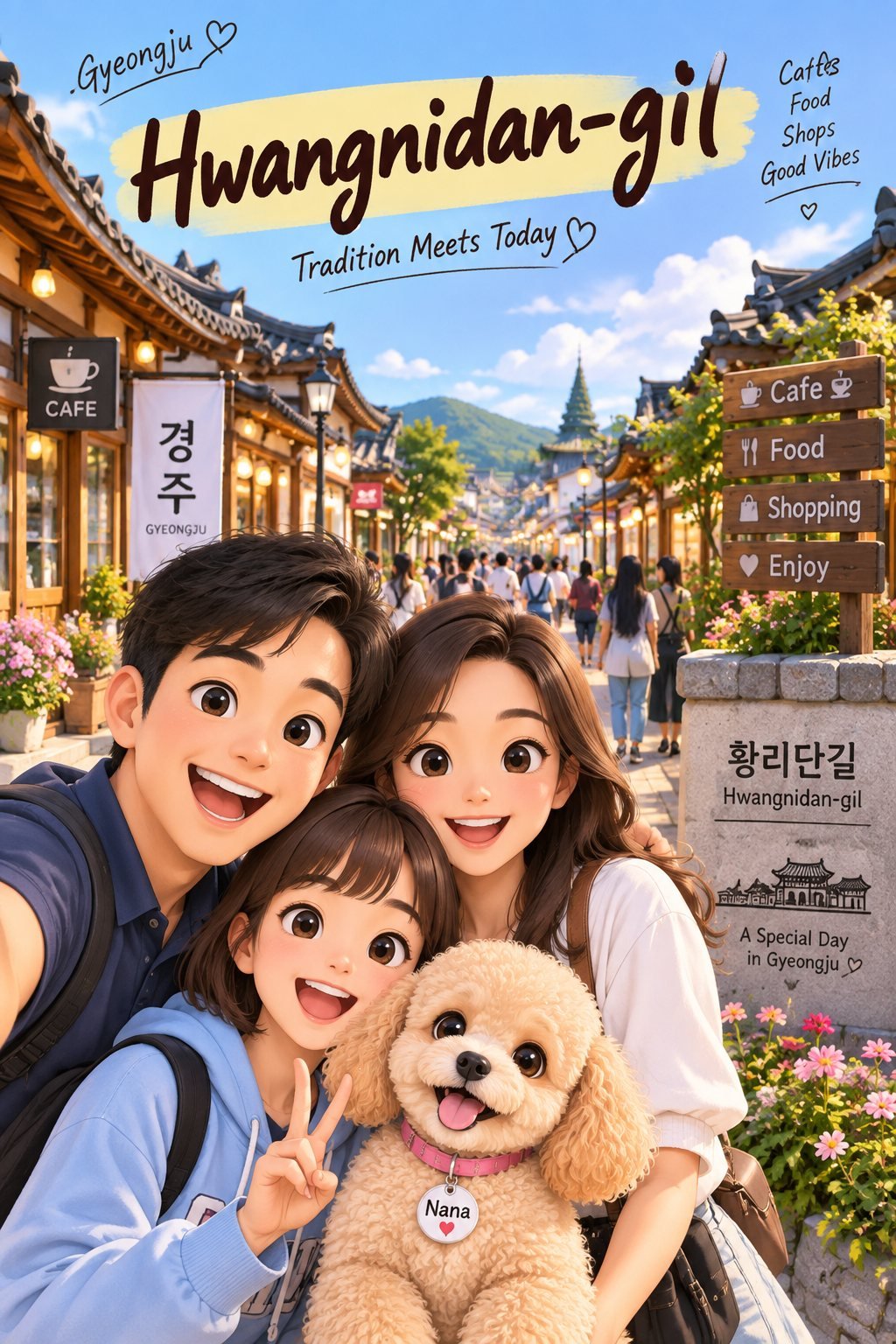
Hanok-style buildings, cafés, restaurants, shops, and lively pedestrian streets bring ancient Gyeongju and contemporary travel culture together at Hwangnidan-gil.
Quick Guide
| Location | Central Gyeongju, southeastern South Korea |
| Best for | Hanok cafés, local food, desserts, shopping, souvenirs, photography, contemporary Gyeongju culture |
| Recommended time | About 2–4 hours, depending on cafés, dining, and shopping |
| Main experience | Walking through hanok-style streets while exploring cafés, restaurants, shops, and local travel culture |
| Atmosphere | Lively, youthful, photogenic, traditional-inspired, and contemporary |
| Good to combine with | Daereungwon Tomb Complex and Cheomseongdae |
What Is Hwangnidan-gil?
Hwangnidan-gil is a popular area in central Gyeongju known for combining the visual character of traditional Korean architecture with modern cafés, restaurants, boutiques, dessert shops, souvenir stores, and other visitor-oriented businesses.
The neighborhood has become especially popular with younger travelers and visitors looking for a slower break between Gyeongju’s major historic attractions. Instead of focusing on one monument, the experience comes from walking through the streets, discovering small businesses, stopping for food or coffee, browsing shops, and enjoying the atmosphere.
Individual businesses change over time, so Hwangnidan-gil should not be understood as a fixed collection of specific cafés or stores. Its appeal comes from the wider neighborhood experience and the continuing mix of traditional-inspired architecture and contemporary travel culture.
Why Visit?
- Experience a contemporary side of Gyeongju after visiting major Silla heritage sites.
- Explore cafés and restaurants inside or around hanok-style buildings.
- Try Korean desserts, drinks, snacks, and local food experiences.
- Browse souvenirs, lifestyle goods, accessories, and small independent shops.
- Enjoy street photography combining traditional roofs with modern signs and storefronts.
- Take a relaxing break between nearby historic attractions.
- Combine the neighborhood naturally with Daereungwon Tomb Complex and Cheomseongdae.
Hanok Streets & Modern Gyeongju
One of Hwangnidan-gil’s most distinctive features is the visual contrast between traditional-inspired architecture and contemporary businesses. Tiled roofs, wooden details, low-rise buildings, courtyards, and narrow streets appear alongside modern café interiors, shop signs, desserts, fashion, souvenirs, and photography spots.
This combination makes the area useful for international visitors who want to see how traditional Korean visual elements can remain part of a modern commercial neighborhood rather than existing only inside preserved heritage sites.
The experience also changes from one street to another. Busy sections may contain popular cafés and shops with waiting visitors, while smaller side streets can feel quieter and reveal different architecture, gardens, signs, and local businesses.
Because individual cafés and shops can open, close, relocate, or change operating hours, visitors should check current information when a particular business is an important part of the trip.

Hanok cafés and Korean desserts offer a slower, contemporary way to experience Gyeongju between visits to the city’s ancient heritage sites.
Hanok Cafés & Desserts
Cafés are an important part of the Hwangnidan-gil experience. Many visitors use the neighborhood as a place to slow down after walking through Gyeongju’s historic areas, combining coffee, tea, desserts, and conversation with traditional-inspired architecture.
Some cafés incorporate tiled roofs, wooden beams, courtyards, gardens, or other hanok-style elements, while others reinterpret the traditional atmosphere through more contemporary interiors. This creates a wide range of spaces rather than one standardized café style.
Korean sweets, seasonal desserts, baked goods, coffee, tea, and visually creative menu items can all appear throughout the area. Menus, prices, opening hours, reservations, waiting systems, and individual businesses change frequently, so travelers looking for a particular café or dessert should check current information before visiting.
Shopping & Souvenirs
Hwangnidan-gil is also useful for travelers who want to browse beyond conventional souvenir stores. Small shops may offer accessories, stationery, postcards, character goods, ceramics, lifestyle items, locally themed products, fashion, and gifts inspired by Gyeongju or Korean culture.
The shopping experience is generally casual. Visitors can move between cafés and stores while exploring the streets rather than planning a separate shopping trip.
For international travelers, locally themed souvenirs can provide a contemporary memory of Gyeongju alongside photographs of the city’s ancient monuments. Products and shops change over time, making exploration part of the experience.

Small shops, souvenirs, accessories, and lifestyle goods add a youthful shopping experience to Hwangnidan-gil’s traditional-inspired streets.
Local Food
Food is another major reason to spend time around Hwangnidan-gil. Restaurants and smaller food businesses provide opportunities to combine sightseeing with Korean meals, snacks, desserts, and contemporary interpretations of familiar flavors.
The area should not be treated as a single destination for one specific dish. Its strength is variety: travelers can choose a meal according to their schedule and preferences while remaining close to central Gyeongju’s historic attractions.
Popular restaurants may have waiting times during weekends, holidays, lunch, dinner, and peak travel periods. Menus, prices, reservation policies, operating hours, and closing days can also change, so current information is more useful than relying on an older list of individual restaurants.
Visitors with allergies, dietary restrictions, or specific ingredient requirements should confirm ingredients directly with the restaurant whenever necessary.
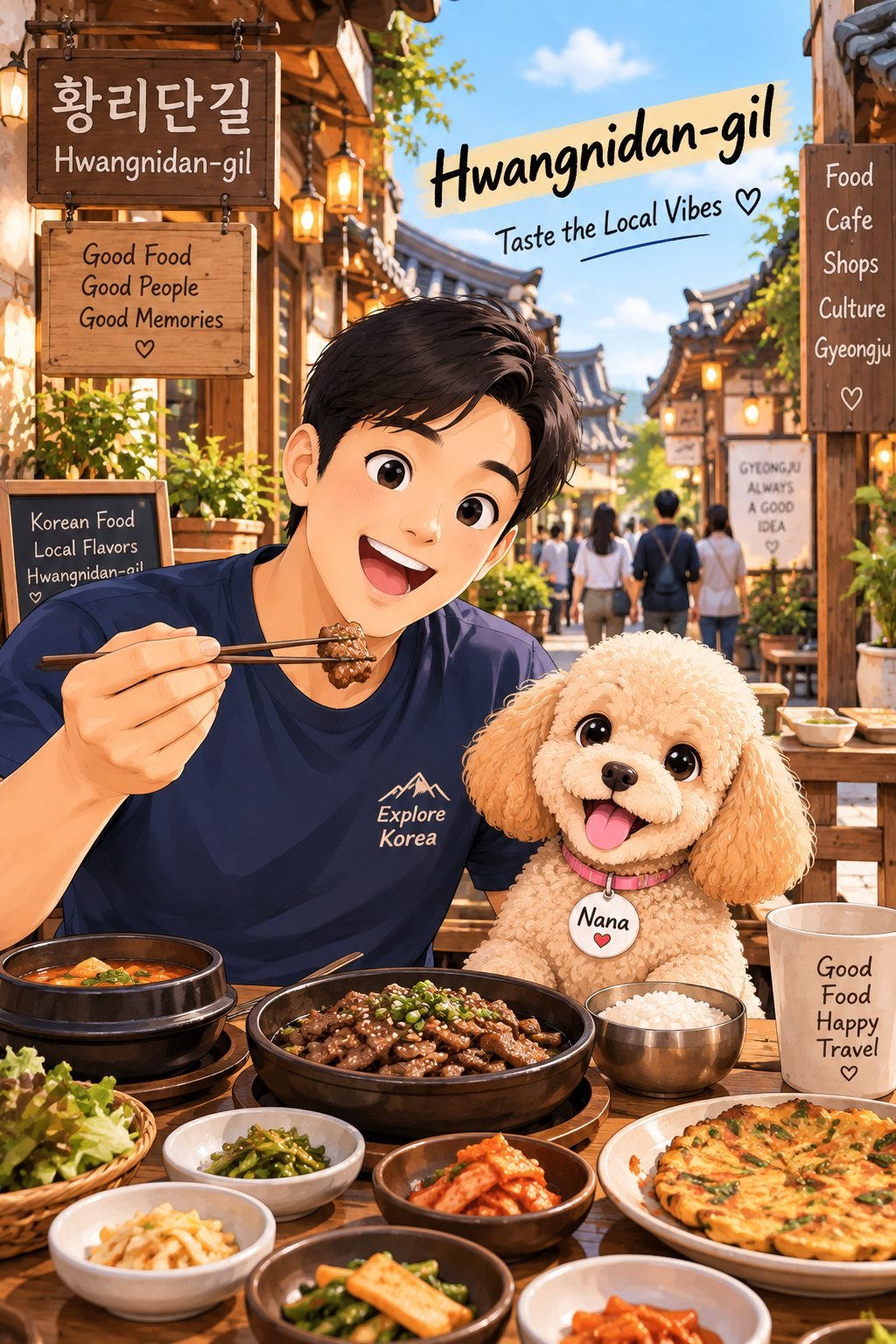
Korean meals, local flavors, and small restaurants make Hwangnidan-gil an easy place to add food exploration to a day of sightseeing in Gyeongju.
Contemporary Gyeongju Culture
Hwangnidan-gil helps balance Gyeongju’s ancient identity with the way people experience the city today. Visitors can move from centuries-old monuments into a neighborhood filled with coffee, food, design, shopping, photography, and social activity without leaving the wider historic center.
This contrast is particularly useful for international visitors. Gyeongju is often introduced primarily through Silla history, but modern cafés, independent shops, restaurants, young travelers, and changing lifestyle trends are also part of the contemporary city.
The neighborhood therefore works as a bridge between heritage tourism and everyday leisure culture. A traveler might begin the day among the royal tombs of Daereungwon Tomb Complex, walk toward Cheomseongdae, spend time eating and shopping around Hwangnidan-gil, and later continue to Donggung Palace & Wolji Pond for evening scenery.
Hwangnidan-gil After Dark
Hwangnidan-gil develops a warmer atmosphere as daylight fades and lights begin to appear around cafés, restaurants, shops, signs, and hanok-style buildings. The traditional rooflines remain visible while modern storefront lighting adds a distinctly contemporary character to the streets.
Evening is especially useful for travelers who want to combine dining with a relaxed walk after visiting Gyeongju’s historic attractions during the day. Restaurants and cafés can become busier around popular meal times, particularly on weekends and holidays.
The atmosphere varies from street to street. Some sections remain lively with visitors, while smaller side streets may feel quieter and more intimate. Individual business hours also differ, so not every café or shop remains open late.
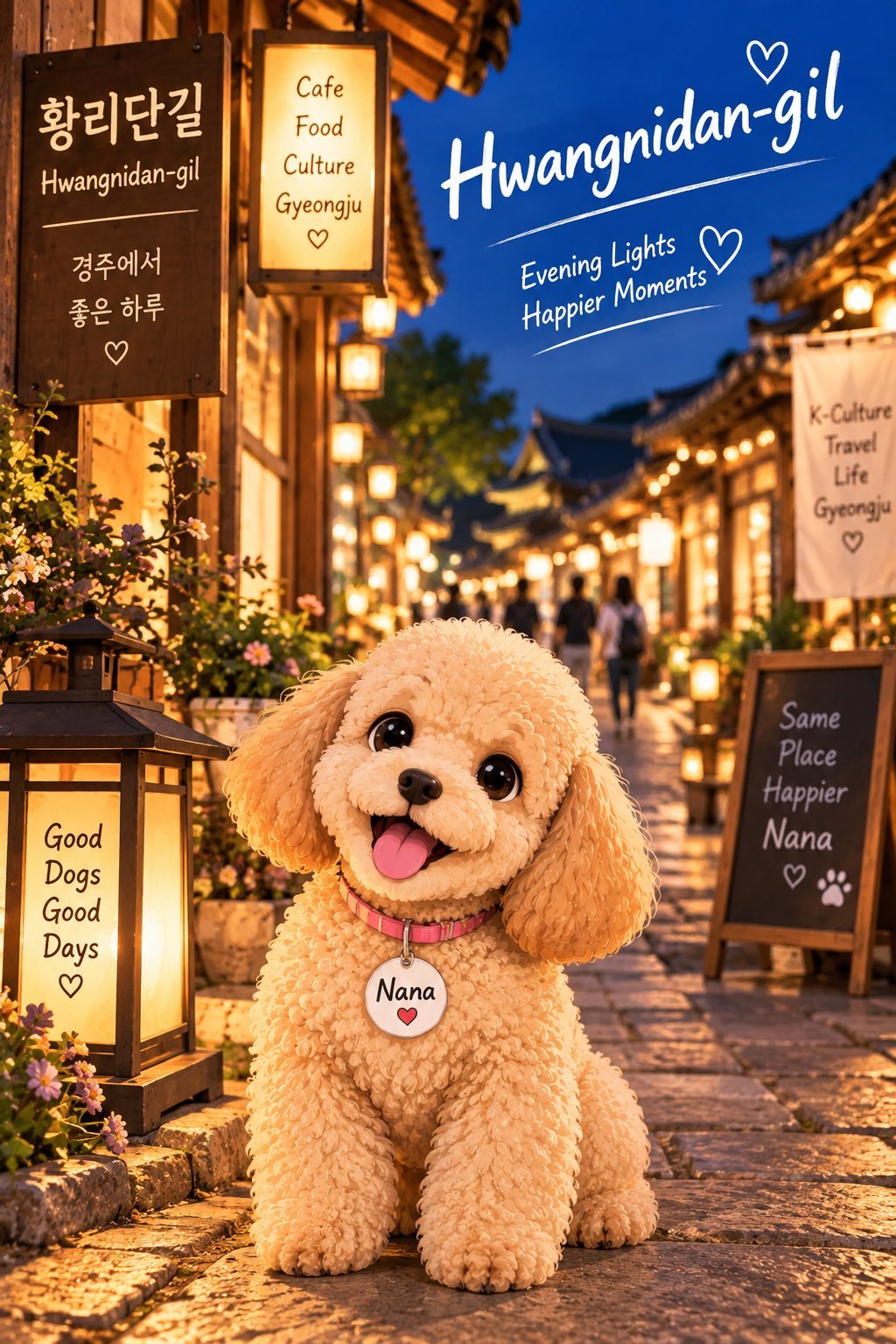
Warm lights, hanok-style streets, cafés, restaurants, and evening visitors give Hwangnidan-gil a cozy atmosphere after sunset.
Best Time to Visit
Hwangnidan-gil can be enjoyed throughout the year, but the experience depends more on your preferred activities and crowd levels than on a single best season.
Daytime is useful for seeing architectural details, browsing shops, and combining the neighborhood with nearby historic attractions. Late afternoon works well for travelers who want to explore in daylight, stop for food or coffee, and remain as the street lights begin to appear.
Evening provides a warmer atmosphere for dining and street photography. Weekends, holidays, festival periods, and popular travel seasons can be considerably busier, so visitors who prefer quieter streets may want to arrive earlier.
How Long to Spend
About 2–4 hours works well for many first-time visitors who want to walk through the area, visit a café, browse several shops, enjoy a meal or snack, and take photographs without rushing.
A shorter visit can focus on one café or a quick walk, while travelers interested in shopping, multiple food stops, photography, or a slower café experience can easily spend longer.
Because Hwangnidan-gil is close to several central Gyeongju attractions, the neighborhood also works well as a flexible break between heritage sites rather than requiring a completely separate day.
Getting to Hwangnidan-gil
Hwangnidan-gil is located in central Gyeongju near several major historic areas, making it convenient to include within a walking-focused itinerary.
Visitors may arrive by public transportation, taxi, rental vehicle, walking, or another suitable option depending on their accommodation and wider travel plan. Walking can be particularly convenient when combining the area with Daereungwon Tomb Complex and Cheomseongdae.
Traffic, parking, pedestrian conditions, bus schedules, and road access can change, especially during weekends, holidays, festivals, and busy travel periods. Check current navigation and transportation information on the day of your visit.
First-Time Visitor Tips
- Explore smaller side streets as well as the busiest main sections.
- Allow extra time if you plan to visit a popular café or restaurant during peak periods.
- Check current opening hours when a particular café, shop, or restaurant is important to your visit.
- Wear comfortable shoes if combining Hwangnidan-gil with nearby historic attractions on foot.
- Compare menus and prices before choosing restaurants or cafés if you have specific preferences.
- Confirm ingredients directly with businesses when allergies or dietary restrictions are important.
- Respect private property and avoid entering residential spaces simply for photographs.
- Take care around vehicle traffic because some streets may include both pedestrians and cars.
- Consider late afternoon if you want to experience both daytime streets and evening lights.
What to Do Nearby
- Daereungwon Tomb Complex — walk among monumental Silla royal tombs and explore Cheonmachong and ancient burial heritage.
- Cheomseongdae — discover Silla astronomy, ancient stone architecture, seasonal scenery, and the surrounding historic landscape.
- Donggung Palace & Wolji Pond — continue into the evening with Silla royal palace heritage, illuminated pavilions, and pond reflections.
- Woljeonggyo Bridge — experience traditional-style architecture, the Namcheon riverside, illuminated night scenery, and water reflections.
- Gyeongju National Museum — explore Silla artifacts, gold treasures, Buddhist art, and archaeological discoveries that provide deeper historical context for the ancient capital.
- Bulguksa Temple — experience Silla Buddhist culture, traditional temple architecture, historic stonework, Dabotap, and Seokgatap.
Gyeongju K-Culture Connection
Hwangnidan-gil adds contemporary lifestyle culture to K-Nana Studio’s Gyeongju collection. After temples, royal palaces, burial mounds, archaeology, and ancient astronomy, the neighborhood shows how modern cafés, food, shopping, design, and social trends now exist alongside the city’s historic identity.
The Gyeongju collection now reveals different layers of the city. Bulguksa Temple introduces Buddhist heritage, Donggung Palace & Wolji Pond focuses on royal palace culture and night scenery, Daereungwon Tomb Complex explores royal tombs and archaeology, and Cheomseongdae adds astronomy and ancient scientific heritage. Hwangnidan-gil introduces the cafés, food, shopping, design, and leisure culture of contemporary Gyeongju, while Woljeonggyo Bridge and Gyeongju National Museum extend the journey into traditional bridge architecture, riverside scenery, Silla artifacts, and museum heritage.
For international visitors, this contrast is important because Korean culture is not divided neatly into “traditional” and “modern.” At Hwangnidan-gil, hanok-inspired architecture can contain contemporary cafés and shops, while ancient Silla heritage remains only a short walk away.
This makes Hwangnidan-gil a natural place to rest, eat, shop, and experience everyday travel culture while continuing a wider journey through Korea’s ancient capital.
FAQ
What is Hwangnidan-gil known for?
Hwangnidan-gil is known for its mix of hanok-style architecture, cafés, restaurants, dessert shops, boutiques, souvenir stores, and contemporary travel culture. Its location near major Gyeongju heritage sites makes it a popular place to combine sightseeing with food, shopping, and relaxation.
How long should I spend at Hwangnidan-gil?
About 2–4 hours works well for many first-time visitors who want to walk through the neighborhood, visit a café, browse shops, enjoy food or dessert, and take photographs. A quick visit can be shorter, while café hopping, dining, and shopping can easily extend the stay.
Is Hwangnidan-gil close to Gyeongju’s historic attractions?
Yes. Hwangnidan-gil is conveniently located near several central Gyeongju heritage areas. It can be combined naturally with Daereungwon Tomb Complex and Cheomseongdae as part of a walking-focused itinerary.
Are there hanok cafés on Hwangnidan-gil?
Hanok-style cafés and traditional-inspired buildings are an important part of the neighborhood’s visual character. Individual cafés, menus, opening hours, waiting systems, and businesses can change, so check current information when a particular café is important to your visit.
Is Hwangnidan-gil good for shopping?
Yes. Visitors can find a changing mix of souvenir shops, accessories, stationery, lifestyle goods, locally themed products, fashion, gifts, and other small retail businesses. The area is especially useful for casual browsing between cafés, restaurants, and nearby historic attractions.
When is the best time to visit Hwangnidan-gil?
Daytime is useful for shopping, architecture, and combining the neighborhood with nearby heritage sites, while late afternoon and evening provide a warmer atmosphere as cafés, restaurants, and street lights become more prominent. Weekends, holidays, and popular travel periods can be significantly busier.
Related K-Nana Guides
Continue exploring Gyeongju with Bulguksa Temple for Silla Buddhist heritage, Donggung Palace & Wolji Pond for royal palace history and night scenery, Daereungwon Tomb Complex for royal tombs and archaeology, Cheomseongdae for ancient astronomy and Silla scientific heritage, Woljeonggyo Bridge for traditional bridge architecture, riverside walks, and evening reflections, and Gyeongju National Museum for Silla gold, archaeology, Buddhist art, and ancient treasures.
Together, these guides connect Hwangnidan-gil’s contemporary cafés, food, shopping, and hanok-inspired streets with Gyeongju’s ancient temples, royal palaces, burial culture, scientific heritage, traditional architecture, and museum collections.
Official Information
Hwangnidan-gil is a neighborhood containing independently operated cafés, restaurants, shops, accommodations, and other businesses rather than a single controlled attraction. Opening hours, menus, prices, reservations, waiting systems, closing days, parking, traffic conditions, pedestrian access, events, and individual services can change. Check current information when a particular café, restaurant, shop, product, or service is important to your visit, and respect private property, residential areas, local traffic rules, and individual business policies.
Image Credits
Hwangnidan-gil hanok streets, cafés, shops, and Gyeongju family travel visual — K-Nana Studio original visual.
Hwangnidan-gil hanok café and Korean dessert experience with Mom and Nana visual — K-Nana Studio original visual.
Hwangnidan-gil souvenir shops, lifestyle goods, and youthful travel culture with K-Nana daughter and Nana visual — K-Nana Studio original visual.
Hwangnidan-gil Korean food, local flavors, and hanok street experience with Dad and Nana visual — K-Nana Studio original visual.
Nana enjoying Hwangnidan-gil evening lights, hanok streets, cafés, and nighttime Gyeongju scenery visual — K-Nana Studio original visual.