
Hyaluronic Acid in Korean Skincare
Hyaluronic acid is a hydration-focused ingredient found in several Korean skincare formats, including serums and sunscreens. On ingredient lists, shoppers may also encounter related terminology such as sodium hyaluronate.
This beginner’s guide explains what hyaluronic acid does in a cosmetic formula, how to read relevant labels, where different product types fit into a routine, and what to consider when choosing and using them. It also places the ingredient in a Korean beauty shopping context without suggesting that every Korean formula follows the same approach.
Educational visual 1: An illustrative overview introduces the core concept of a hydration-focused ingredient appearing across several skincare formats.
Quick Guide

- Primary role: Hyaluronic acid is commonly included in skincare formulas designed to support hydration and moisture retention.
- Label terminology: A product may list sodium hyaluronate, a related form, rather than using the words hyaluronic acid in its complete ingredient list.
- Product formats: Verified official examples include a COSRX serum containing 3% sodium hyaluronate and Korean sunscreen products from INNISFREE and Beauty of Joseon that incorporate hyaluronic acid ingredients.
- Routine placement: A serum normally goes before moisturizer, while a sunscreen containing hyaluronic acid remains the daytime sun-protection step.
- Label check: Product names and promotional wording are not substitutes for the complete ingredient list and current manufacturer directions.
What Hyaluronic Acid Is
In skincare, hyaluronic acid is associated with hydration and moisture retention. It is used as part of a complete cosmetic formulation rather than as a stand-alone guarantee of how a product will perform for every person.
Sodium hyaluronate is a related name that frequently appears on cosmetic ingredient lists. It should not be assumed that every product promoted with “hyaluronic acid” contains the same form, amount, texture, or supporting ingredients. The full ingredient list provides more useful information than the front label alone.
Terms such as “multiple types” of hyaluronic acid describe a particular formulation strategy. They do not automatically establish that one product is better for an individual than another. Texture, the product’s main purpose, the rest of the formula, and personal skin response also matter.
Product Types, Formulations, and Ingredient Labels
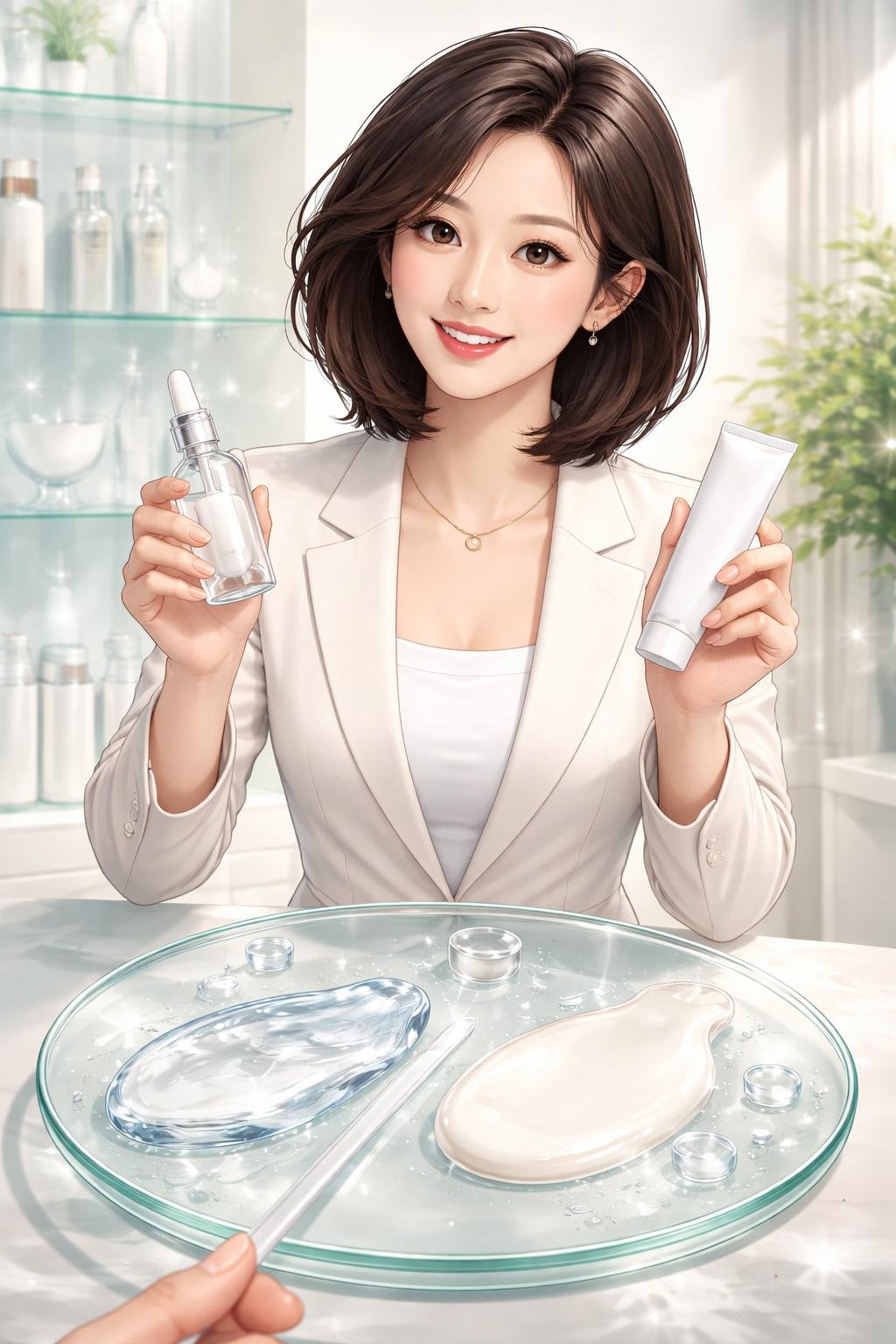
Hyaluronic acid in Korean skincare is not limited to one product category. Official manufacturer pages provide examples in both concentrated serum and sunscreen formats, but the formats have different primary jobs.
| Verified example | Format and listed details | Primary routine role |
|---|---|---|
| COSRX Hyaluronic Acid 3 Serum | The official page states that the serum contains 3% sodium hyaluronate, an amino acid complex, and ceramide. It is described as lightweight and non-greasy. | A hydration-focused serum used as a treatment step within a broader routine. |
| INNISFREE Hyaluronic Acid Moisturizing Watery Sunscreen | The official Taiwan page describes a Korean-made watery SPF50+ PA++++ sunscreen formulated with eight types of hyaluronic acid. It is described as lightweight, colorless, easily absorbed, non-sticky, and hydrating. | A daytime sunscreen whose formula also contains hydration-focused ingredients. |
| Beauty of Joseon Day Dew Sunscreen | The official page presents a lightweight SPF 50 sunscreen with sodium hyaluronate in the ingredient list and describes a hydrating, dewy finish. | A daytime sunscreen rather than a dedicated serum replacement. |
A serum is formulated around a leave-on skincare step and is generally layered before a moisturizer. A sunscreen is designed primarily to provide labeled sun protection and belongs at the end of the morning skincare sequence. The presence of sodium hyaluronate in both formats does not make their purposes interchangeable.
Texture descriptions also differ. A watery or lightweight sunscreen may suit someone who prefers fewer heavy layers, while a dedicated serum provides a separate hydration-focused step. These are formulation distinctions, not promises that either option will suit every skin type.
Educational visual 2: An illustrative label-reading chart compares a serum bottle and sunscreen tubes while highlighting “hyaluronic acid” and “sodium hyaluronate” as terms to check.
How to Use Hyaluronic Acid in a Skincare Routine

For a simple routine, follow the directions printed on the specific product. A typical order for a hyaluronic acid serum is cleanser, optional toner, serum, and moisturizer. During the day, sunscreen follows the other skincare steps.
- Cleanse according to the needs of your skin and routine.
- Apply toner if it is already part of your routine.
- Apply the hyaluronic acid serum as directed on its packaging.
- Follow with moisturizer when needed.
- In the morning, finish with sunscreen according to its labeled directions.
The verified COSRX serum is presented by its manufacturer as suitable for morning or evening use. This does not mean every hyaluronic acid product has identical directions, so the instructions for the exact formula remain important.
A sunscreen containing hyaluronic acid should still be treated as sunscreen. Do not move it earlier in the routine simply because it includes a familiar skincare ingredient. Its sun-protection function determines its placement as the final skincare step in the morning.
Beginners do not need to add several hyaluronic acid products at once. Using a serum, moisturizer, and sunscreen that all contain related ingredients may create unnecessary duplication without revealing which formula is responsible if discomfort occurs. Introduce products gradually and pay attention to how the complete routine feels.
Educational visual 3: An illustrative morning and evening routine diagram places serum before moisturizer and shows sunscreen as the final morning skincare step.
How to Choose a Product and Use It Carefully
Choose the format according to the missing step in your routine. Someone seeking a separate hydration-focused layer may consider a serum. Someone comparing daytime sun-protection products may evaluate a sunscreen that also includes hyaluronic acid, while remembering that its primary purpose is sun protection.
Texture preference can help narrow the options. Official descriptions such as watery, lightweight, non-greasy, or dewy can offer useful context, but they are manufacturer descriptions rather than guarantees of an identical experience for every user.
Read the complete ingredient list instead of relying only on large front-label words. Check whether the formula lists hyaluronic acid, sodium hyaluronate, or other specifically named derivatives, and consider the rest of the formula as well. Fragrance, botanical ingredients, preservatives, filters, and supporting ingredients may also affect whether a product suits an individual.
Cosmetic formulations and labels can change. Verify the current ingredient list, directions, and product details with the official manufacturer or the packaging received from an authorized seller.
Any cosmetic can be unsuitable for a particular person. If you are concerned about sensitivity, consider testing a small amount according to appropriate product guidance before broader use. Stop using a product if it causes concerning irritation, and discuss significant or persistent symptoms with an appropriate healthcare professional rather than attempting to diagnose the problem yourself.
Educational visual 4: An illustrative selection checklist shows the product purpose, complete ingredient list, texture description, manufacturer directions, and individual response as separate points to review.
Hyaluronic Acid in the Korean Beauty Market
The verified manufacturer examples show how Korean brands place hyaluronic acid ingredients in more than one category. COSRX offers a serum centered on sodium hyaluronate, while INNISFREE and Beauty of Joseon include related ingredients in lightweight sunscreen products.
Hydration-focused wording, dewy finish descriptions, multiple forms of hyaluronic acid, and multifunctional formulas all appear in these official product descriptions. These examples illustrate available Korean beauty marketing and formulation approaches; they do not establish a rule followed by every Korean brand or consumer.
For international shoppers, category and label differences are especially important. A product promoted for hydration may still primarily be a serum, moisturizer, or sunscreen, and that primary category determines how it should be used. Regional websites, packaging, availability, and formulations may also differ, so shoppers should confirm details for the version they plan to use.
K-Nana Beauty Guide
Fictional educational example: Nana is a fictional beginner reading two product labels. The first product is identified as a serum and lists sodium hyaluronate. The second is labeled as a sunscreen and also contains a hyaluronic acid ingredient.
Nana does not treat the products as duplicates solely because they share a related ingredient. She first identifies their main purposes: the serum is an optional hydration-focused step, while the sunscreen is the daytime sun-protection step.
For a simple fictional morning routine, Nana organizes the steps as cleanser, serum if desired, moisturizer if needed, and sunscreen. For an evening routine, she leaves out sunscreen and follows the serum with moisturizer. She checks each manufacturer’s directions rather than assuming that every formula should be applied in the same amount or at the same frequency.
This scenario demonstrates label reading and routine order only. It does not claim that Nana tested the products or experienced particular results.
Frequently Asked Questions
Is hyaluronic acid the same as sodium hyaluronate on a label?
They are closely related ingredient terms, but they are not identical wording. Sodium hyaluronate is a form shoppers may see in ingredient lists, including the verified COSRX and Beauty of Joseon examples. Check the complete list to identify what the specific formula contains.
Can a hyaluronic acid serum be used in the morning and at night?
Some can. The verified COSRX Hyaluronic Acid 3 Serum is presented for morning or evening use. Follow the directions for your particular serum because formulations and recommended use can differ.
Is a sunscreen containing hyaluronic acid a replacement for a separate serum?
Not automatically. A sunscreen’s primary role is labeled sun protection, while a serum is a separate skincare step. Whether you also want a serum depends on your routine needs, texture preferences, and how your skin responds.
Can different hyaluronic acid products be used in one routine?
They can appear in several products within the same routine, but more layers are not necessarily more useful. Avoid adding several new formulas simultaneously, follow their directions, and simplify the routine if layering feels uncomfortable.
What should someone do if a product causes irritation?
Stop using the suspected product if it causes concerning irritation. Review its directions and complete ingredient list, and seek advice from an appropriate healthcare professional for significant or persistent symptoms.
Final Takeaway

Hyaluronic acid is used in hydration-focused Korean skincare formulas, and sodium hyaluronate may appear on ingredient lists. The product category matters: a serum is a hydration-focused layer, while a sunscreen containing the ingredient remains the final daytime sun-protection step.
Choose products by their primary purpose, complete formulation, texture, and directions rather than by one highlighted ingredient. Confirm current labels through official manufacturer information and remember that individual responses vary.
Educational visual 5: An illustrative final reminder combines a simple routine order with prompts to check the product category, full ingredient list, current directions, and personal skin response.
Image Credits
- Core hydration concept: An original AI-generated educational illustration showing a hydration-focused ingredient across generic skincare formats.
- Product formats and labels: An original AI-generated comparison of generic serum and sunscreen packaging with ingredient-label terminology highlighted.
- Routine application order: An original AI-generated morning and evening sequence showing the general placement of serum, moisturizer, and sunscreen.
- Selection and safety checks: An original AI-generated checklist covering product purpose, texture, full ingredient list, directions, and individual response.
- Final practical reminder: An original AI-generated routine and label-check summary placed after the FAQ.
All five visuals are illustrative educational images. They are not photographs of actual products, packaging, ingredients, application results, or clinical outcomes.
References
- Hyaluronic Acid Moisturizing Watery Sunscreen SPF50+ PA++++ 50ml
| INNISFREE Taiwan — https://tw.innisfree.com/en/products/hyaluron-moist-sunscreen-spf50-pa-en - (Free Gift $60+) The Hyaluronic Acid 3 Serum – COSRX Official — https://www.cosrx.com/products/free-gift-60-the-hyaluronic-acid-3-serum
- Day Dew Sunscreen | Beauty of Joseon Official Store — https://beautyofjoseon.com/products/day-dew-sunscreen?okeReviewsNextUrl=https%253A%252F%252Fapi.okendo.io%252Fv1%252Fstores%252F121d630c-0612-42f9-8f88-70cb5ef6a19b%252Fproducts%252Fshopify-14752901890420%252Freviews%253Flimit%253D5%2526orderBy%253Drating%252520desc%2526lastEvaluated%253D%25257B%252522subscriberId%252522%25253A%252522121d630c-0612-42f9-8f88-70cb5ef6a19b%252522%25252C%252522_rating_dateCreated%252522%25253A%2525225%25253A2026-03-29T21%25253A48%25253A02.863Z%252522%25252C%252522subscriberId_productId%252522%25253A%252522121d630c-0612-42f9-8f88-70cb5ef6a19b%25253Ashopify-14752901890420%252522%25252C%252522reviewId%252522%25253A%252522eba4b274-7e13-4cb1-ac2c-c165e114f983%252522%25257D&okeReviewsPageNum=2
Disclaimer
This article provides general educational information and is not medical advice, diagnosis, or treatment. Cosmetic formulas, ingredients, labels, availability, and prices may change, and individual skin responses vary. Verify current product details and directions with the official manufacturer. Consult an appropriate healthcare professional about significant or persistent skin concerns.
AI-generated images are illustrative and may not accurately represent actual products, packaging, ingredients, application results, or clinical outcomes.