
Introduction to Jagalchi Market
Jagalchi Market Busan is a major seafood destination where international visitors can observe an active market, browse live and dried seafood, and find fresh raw fish served on-site.
Located in Busan’s Jung-gu district, the market is closely connected with the Nampo-dong and Chungmu-dong area. Its working-market character, postwar background, seafood trade, and association with the vendors known as Jagalchi Ajumeoni make it relevant to visitors interested in both food and local culture.
Quick Guide

| Planning point | Visitor guidance |
|---|---|
| Verified address | 52 Jagalchihaean-ro, Jung-gu, Busan |
| Market identity | One of Korea’s largest seafood markets, selling live and dried seafood and offering fresh raw fish on-site |
| Main experiences | Browsing seafood displays, exploring the dried-fish section, eating raw fish, and learning about Busan’s seafood commerce |
| Approximate duration | As planning guidance, allow about 30–60 minutes for a brief look, 1–2 hours for broader browsing, or longer if including a meal. These are illustrative estimates, not official visit times. |
| Schedule check | Supplied VISITKOREA pages list conflicting opening times of 02:00 and 05:00. They agree on a 22:00 closing time and closures on the first and third Tuesdays, but visitors should verify the current schedule. |
| Other details to confirm | Check current prices, dining arrangements, payment methods, parking, facility availability, accessibility, photography rules, and access conditions before visiting. |
What Is Jagalchi Market?
Jagalchi Market is one of Korea’s largest seafood markets. It is located in Busan’s Jung-gu district and connects with the Nampo-dong and Chungmu-dong area.
The market handles live seafood, dried seafood, and other marine products. Visitors can also find fresh raw fish on-site. Individual purchasing and dining procedures may differ, so arrangements and prices should be confirmed directly before ordering.
Jagalchi is both a visitor destination and a place of seafood commerce. This means visitors should remain aware that vendors and other workers are carrying out regular market activities around them.
History and Background
The market developed from stalls established by people returning after Korea’s liberation and by refugees who arrived after the Korean War began. It subsequently became established as a fish market after the war.
This background connects Jagalchi Market with Busan’s postwar development and its role as a center of seafood trade. The supplied sources do not establish additional dates or milestones, so more detailed historical claims should be checked against authoritative historical information.
Why Visit
Jagalchi offers a practical opportunity to see how seafood is displayed and sold in a working Busan market. Live seafood, dried products, and raw-fish dining represent different parts of the market’s commercial and food-related identity.
The market can also help visitors understand the place of seafood in Busan’s everyday food culture. Rather than functioning only as a sightseeing site, it remains associated with vendors, wholesale and retail activity, and prepared food.
Its range is another reason to visit. A single market experience can include fresh products, dried goods, raw fish, visitor facilities, and the wider seafood-market environment around Nampo-dong and Chungmu-dong.
Seafood, Dining, and Market Highlights
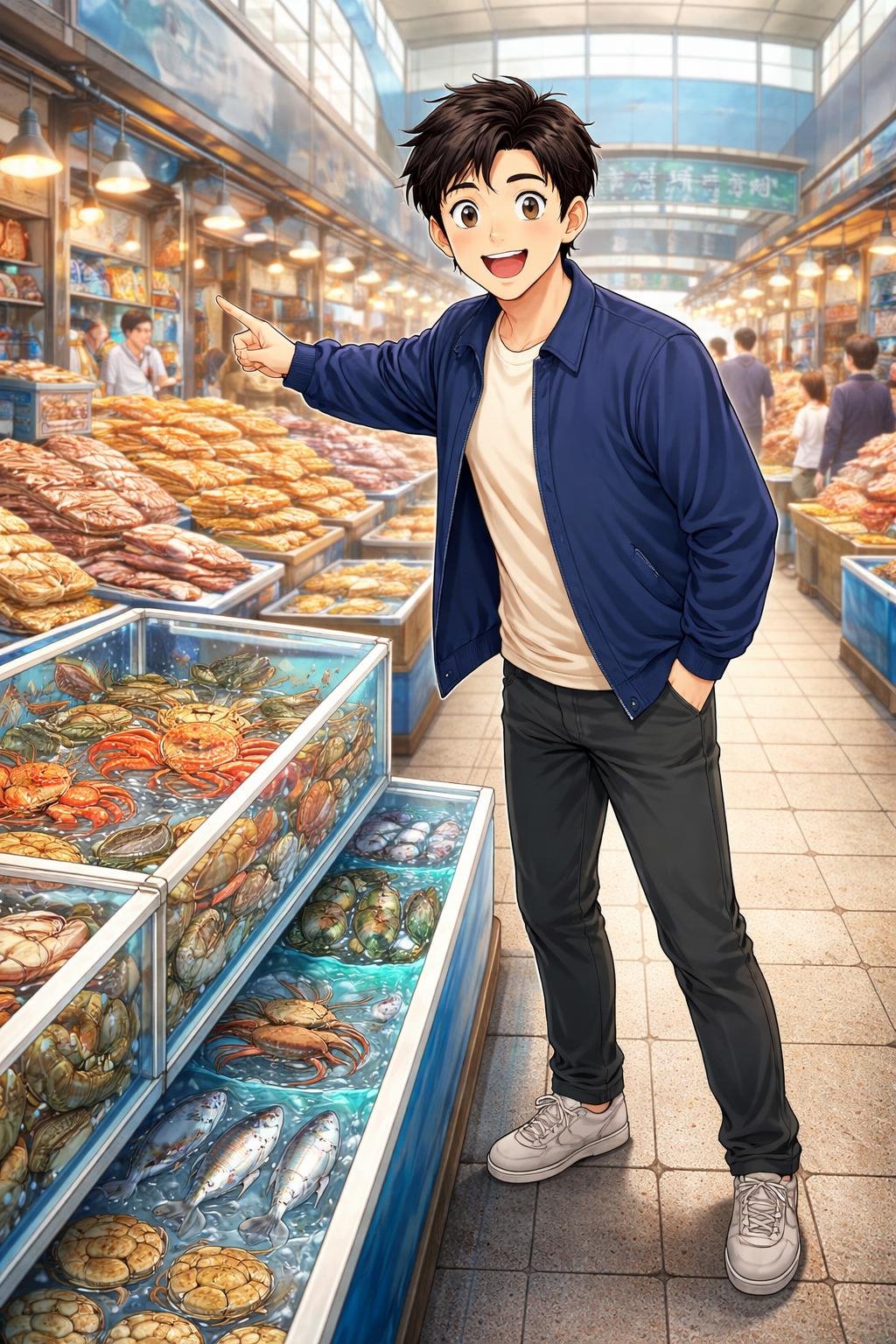
Live seafood and raw fish
Live seafood is a central part of the market’s identity. Fresh raw fish is also available on-site, although the supplied information does not establish one universal ordering or dining procedure. Visitors should check the price, portion, preparation, ingredients, and dining arrangement directly before agreeing to an order.
Second-floor dried-fish section
The second-floor dried-fish section serves both wholesale buyers and general consumers. Verified product categories include dried anchovies, dried squid, shrimp, fish slices, laver, seaweed, and shellfish.
This section helps beginners distinguish preserved seafood products from the live seafood commonly associated with the market. Product availability can vary, so the categories should not be treated as a guarantee that every item will be available during a particular visit.
Visitor areas and the surrounding market environment
VISITKOREA lists a tourist information center, exhibition room, terrace, rest area, and sky park. Parking and restrooms are also listed. Availability, access conditions, and operating arrangements for these facilities should be confirmed before relying on them.
Jagalchi Market is also associated with an adjacent seafood and dried-goods market environment. The nearby New East Asia Seafood Market and dried-fish market expand the area’s connection with marine products, but visitors should not assume that all neighboring businesses follow the same hours or policies.
Best Time to Visit
The supplied official tourism listings do not support a specific best season or least-crowded time. They also conflict on the market’s published opening time: one VISITKOREA listing gives 02:00, while other supplied listings give 05:00.
All three supplied listings give 22:00 as the closing time and identify the first and third Tuesdays as closure days. Because schedules can change and the opening-time information is inconsistent, confirm the current hours and closure date through official tourism or venue information before making plans.
Visitors planning a meal should also confirm when the relevant dining area or vendor is operating. A general market schedule does not necessarily establish the availability of every individual service.
How Long to Spend
The following times are illustrative planning estimates rather than verified or guaranteed visit durations:
- Brief market walk: About 30–60 minutes may be enough for a general look at the seafood displays and market atmosphere.
- Broader browse: About 1–2 hours may suit visitors who want to compare live and dried products and look at several market areas.
- Visit with a meal: Allow additional time if eating raw fish or arranging another meal on-site, because ordering, preparation, and dining conditions can vary.
The appropriate duration depends on personal interest, current access, market activity, and whether food is included.
Getting There
The verified address is 52 Jagalchihaean-ro, Jung-gu, Busan. The market is connected with the Nampo-dong and Chungmu-dong area.
Use current official transport information or a current map service to plan the route from your actual starting point. Station names, fares, timetables, travel times, and step-by-step routes are not stated here because they require current transport verification.
Visitors driving to the market should confirm parking availability and access conditions before departure. Although parking is listed by VISITKOREA, this does not guarantee a space or establish current fees and operating rules.
First-Time Visitor Tips

- Treat it as a working market: Keep passages and active work areas clear, pay attention to vendor instructions, and avoid interfering with seafood handling or deliveries.
- Confirm the total price: Before ordering, ask what the stated price covers, including preparation or dining components. Do not assume that every seller uses the same arrangement.
- Ask about ingredients: Visitors with food allergies or dietary restrictions should communicate their needs directly and should not rely only on appearance or general dish names.
- Compare information before deciding: Product types, portions, availability, and prices may differ among sellers.
- Request permission for photography: Photography rules and vendor preferences may vary. Ask before photographing people, stalls, products at close range, or working areas.
- Prepare for changing conditions: Confirm payment options rather than assuming that a particular card, cash method, or international payment service will be accepted.
- Verify facilities: Restrooms, parking, a tourist information center, an exhibition room, a terrace, a rest area, and a sky park are listed, but current availability and access conditions may change.
- Check access needs in advance: Do not assume that every market area, dining space, or neighboring business has the same accessibility features.
Comfort, access, and service conditions can differ across an active market, so current information is more reliable than assumptions based on a general destination description.
What to Do Nearby
Jagalchi Market is connected with the Nampo-dong and Chungmu-dong area. These are the relevant surrounding areas identified in the supplied tourism information.
The New East Asia Seafood Market and a dried-fish market are also identified as adjacent parts of the seafood-market environment. Operating schedules, entrances, and business conditions should be checked independently rather than assumed to match Jagalchi Market.
No walking times or exact routes are provided here because those details were not established by the supplied sources.
K-Culture Connection

Jagalchi Market reflects Busan’s postwar development and longstanding seafood commerce. Its growth from stalls associated with returnees and refugees gives the market a historical context beyond its present role as a place to buy and eat seafood.
The market is also known for its mostly female vendors, called Jagalchi Ajumeoni. In Korean, ajumeoni is a respectful general term for a middle-aged or older woman. In this market context, the expression identifies women vendors associated with Jagalchi’s commercial identity.
The term should be understood in its specific market setting rather than used to make general assumptions about Korean women or vendors. For visitors, it provides a useful connection between the market’s people, seafood trade, and local cultural recognition.
K-Nana Places Guide
Illustrative educational example: Dad begins by noting the verified address and checking the current operating schedule. He remembers that the supplied official tourism pages disagree about the opening time, so he does not rely on an unconfirmed early arrival.
Inside the educational example, Dad separates the visit into three themes: live seafood, fresh raw fish available on-site, and dried seafood. This approach helps him understand that the market includes both fresh and preserved products rather than treating every display as the same type of seafood.
Dad then looks for verified product categories in the second-floor dried-fish section, such as dried anchovies, dried squid, shrimp, fish slices, laver, seaweed, and shellfish. The example does not imply that every product will be available or that a particular purchasing procedure applies.
If Dad considers a meal, he confirms the price, ingredients, portion, and dining arrangement before ordering. He also checks current payment, photography, facility, and access conditions instead of treating them as fixed.
This is a fictional planning example for education, not a record of a firsthand visit or a review of any vendor.
Frequently Asked Questions
What does Jagalchi Market sell?
The market sells live and dried seafood and other marine products. Verified dried-product categories include dried anchovies, dried squid, shrimp, fish slices, laver, seaweed, and shellfish.
Can visitors eat raw fish at the market?
Yes. VISITKOREA states that fresh raw fish is available on-site. Prices, preparation methods, ingredients, portions, and dining procedures should be confirmed directly because the supplied sources do not establish one standard arrangement.
Where is Jagalchi Market?
The verified address is 52 Jagalchihaean-ro, Jung-gu, Busan. The market is connected with the Nampo-dong and Chungmu-dong area.
What visitor facilities are listed?
Listed facilities include parking, restrooms, a tourist information center, an exhibition room, a terrace, a rest area, and a sky park. Confirm current availability, access, and operating conditions before relying on a particular facility.
When does the market close?
The three supplied VISITKOREA listings give 22:00 as the closing time. This is time-sensitive information and should be verified before visiting.
Which Tuesdays are listed as closure days?
The supplied listings identify the first and third Tuesdays of each month. Confirm the applicable date and any temporary schedule changes through current official information.
Why does the opening time require confirmation?
The supplied official tourism pages conflict: one lists 02:00, while two list 05:00. This discrepancy makes direct schedule verification important, especially for an early visit.
Are prices and payment methods fixed?
The supplied evidence does not establish current prices or a market-wide payment policy. Confirm the total price and accepted payment method before making a purchase or ordering food.
Is accessibility information available?
The supplied sources do not provide enough detail to establish accessibility across the market. Visitors with specific access requirements should contact an appropriate official source or the venue before visiting.
What should visitors with food allergies do?
Ask directly about ingredients, preparation, and possible contact with other seafood or allergens. This guide cannot confirm the suitability of a dish or market environment for a particular allergy.
Official Information
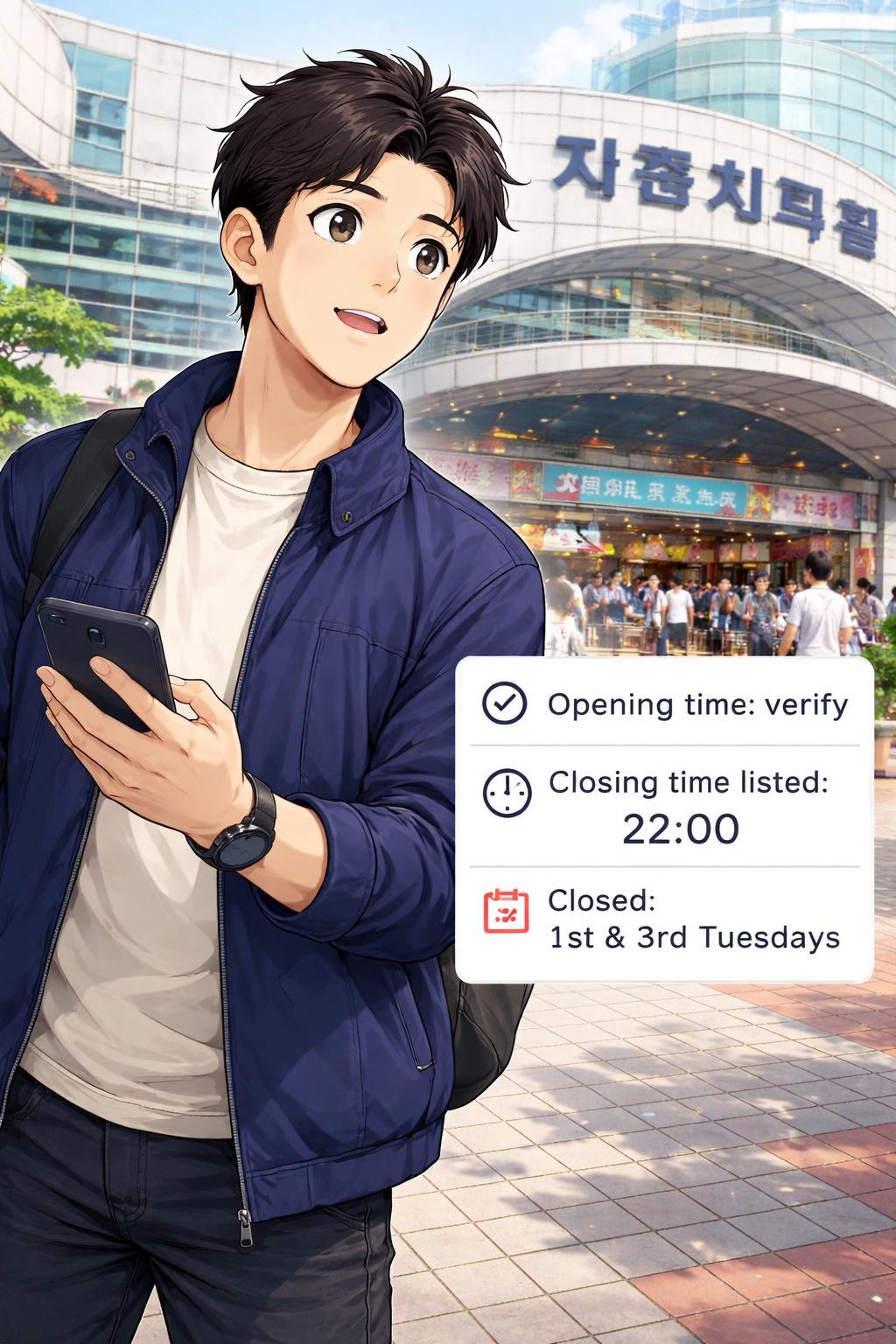
Before visiting, confirm current opening hours, closure dates, dining arrangements, prices, ingredients, payment methods, facility availability, accessibility, photography rules, parking, and general access conditions through official tourism or venue information.
This check is particularly important because the supplied VISITKOREA pages disagree about the opening time. One page lists 02:00, while the other supplied pages list 05:00. Although they consistently list a 22:00 closing time and first-and-third-Tuesday closures, none of these time-sensitive details should be assumed to remain unchanged.
Individual vendors and neighboring markets may also have arrangements that differ from the general destination listing.
References
- 釜山札嘎其市场 부산 자갈치시장- VISITKOREA — https://chinese.visitkorea.or.kr/svc/contents/contentsView.do?vcontsId=217975
- Jagalchi Market (부산 자갈치시장)- VISITKOREA — https://english.visitkorea.or.kr/svc/whereToGo/locIntrdn/rgnContentsView.do?menuSn=459&vcontsId=69318
- 釜山札嘎其市场 부산 자갈치시장- VISITKOREA — https://chinese.visitkorea.or.kr/svc/contents/contentsView.do?dataSetId=233&menuSn=977&vcontsId=60343
These references support the destination information used in this guide. Their time-sensitive operational details still require current verification.
Final Takeaway
Jagalchi Market is a working Busan seafood market where visitors can browse live and dried products and find fresh raw fish on-site. Its postwar background, seafood commerce, and Jagalchi Ajumeoni connect a practical market visit with Busan’s cultural and food history.
The verified location is 52 Jagalchihaean-ro in Jung-gu. Before visiting, check current operating hours, closure dates, dining arrangements, prices, payment options, facilities, and access conditions, especially because the supplied official tourism listings give conflicting opening times.
Image Credits
Images featured in this article are K-Nana Studio original educational illustrations. They may be AI-generated visual aids and are not documentary photographs or official venue, product, facility, or service materials.
- Location orientation: An educational illustration using Dad as the only main character to explain Jagalchi Market’s setting in Busan and the Jung-gu district.
- Seafood-market categories: An educational illustration with Dad that distinguishes the market’s live seafood from its dried seafood products.
- Raw-fish dining: An educational illustration with Dad explaining that fresh raw fish is available on-site without representing a specific vendor or ordering system.
- Dried-seafood learning guide: An educational illustration with Dad introducing verified second-floor product categories, including dried anchovies, dried squid, shrimp, fish slices, laver, seaweed, and shellfish.
- Visitor planning: An educational illustration with Dad emphasizing the need to check the current schedule and other changeable visitor information before going to the market.
Disclaimer
This guide provides general travel, cultural, and educational information. Opening hours, closure dates, prices, ingredients, dining arrangements, reservations, payment methods, facilities, accessibility, photography rules, parking, access conditions, and venue policies may vary or change. Confirm important details with the relevant official source or venue before visiting or purchasing food.
The supplied official tourism listings conflict on the opening time, with one listing 02:00 and others listing 05:00. Even details on which the listings agree, including the stated 22:00 closing time and first-and-third-Tuesday closures, require current verification.
Confirm prices, portions, preparation charges, ingredients, and payment terms before ordering. People with food allergies or dietary restrictions should seek direct ingredient and preparation information; no dish can be assumed to be free from allergens or cross-contact. Follow current venue instructions, remain aware of active market work, and make personal safety decisions based on actual conditions.
Dad’s scenes are fictional educational examples and do not document a real visit, vendor, purchase, or dining experience. AI-generated illustrations may not exactly represent the real market, seafood products, facilities, services, access arrangements, or current visitor conditions.
Market names, destination names, and referenced materials remain the property of their respective rights holders. K-Nana Studio’s original illustrations and editorial presentation may not be reused without appropriate permission, while third-party rights are not transferred by their inclusion or discussion in this guide.