
Taejongdae Park is one of Busan’s distinctive coastal nature destinations, located on Yeongdo Island and known for its forested landscape, rocky cliffs, open sea views, walking routes, observatory areas, and Yeongdo Lighthouse. Instead of a sandy beach surrounded by city buildings, Taejongdae offers a more rugged side of Busan where dense greenery meets dramatic coastal scenery.
For international visitors, Taejongdae provides a useful change of pace from Busan’s busy waterfront districts. Visitors can walk through forested areas, stop at viewpoints, look across the sea, explore the lighthouse area, and experience how the natural coastline shapes another side of the city.
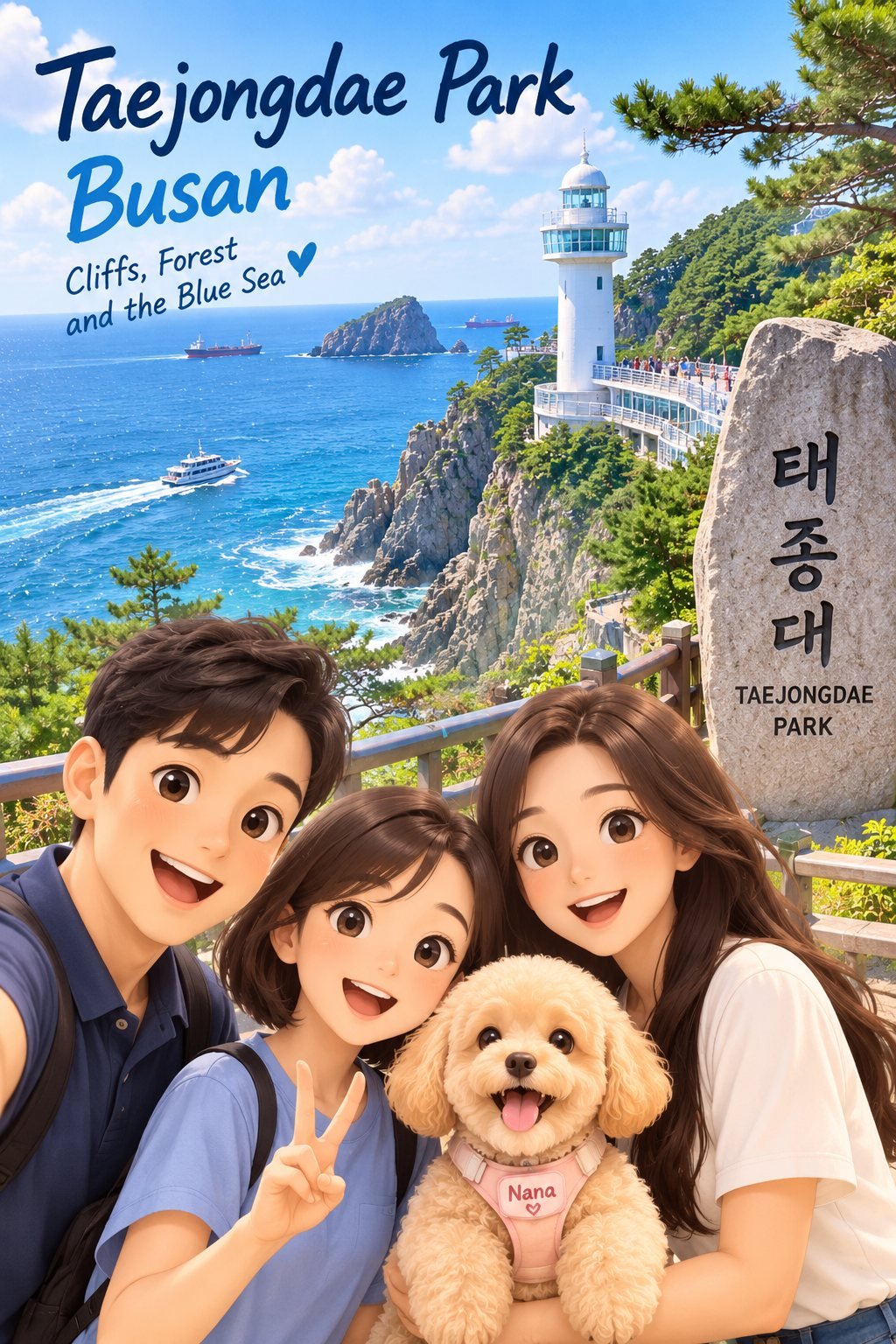
Forested cliffs, rocky coastline, lighthouse scenery, and the open sea reveal a dramatic natural side of Busan at Taejongdae Park.
Quick Guide
| Location | Yeongdo-gu, Busan |
| Best for | Coastal cliffs, forest walks, ocean views, lighthouse scenery, photography, nature |
| Recommended time | About 2–4 hours |
| Terrain | Slopes, paved roads, walking paths, stairs, and coastal viewpoints |
| Getting around | Walking routes and the Danubi Train when operating |
| Good to combine with | Yeongdo attractions, central Busan, Nampo-dong, Jagalchi area, and other coastal destinations |
What Is Taejongdae Park?
Taejongdae Park is a large coastal park on the southern side of Yeongdo Island. Its landscape combines forest, rocky cliffs, walking routes, viewpoints, and broad views across the sea.
The park feels noticeably different from Busan’s major urban beaches. Buildings and commercial streets are less dominant here, allowing forests, cliffs, waves, islands, ships, and the horizon to become the main visual elements.
Visitors can explore different sections of the park on foot, while transportation within the park may also be available depending on current operating conditions. Because the park covers a relatively large and hilly area, planning your route before starting can make the visit more comfortable.
Cliffs, Forest & Sea
The combination of forest and coastline is one of Taejongdae’s defining features. Pine trees and dense greenery cover much of the landscape, while steep rocky sections drop toward the sea below.
From elevated viewpoints, visitors can look across open water and watch ships moving through the surrounding sea. On clear days, the long horizon creates a very different visual experience from Busan’s densely developed waterfront districts.
Weather has a major influence on the scenery. Bright sunlight can produce vivid blue ocean colors, while clouds, mist, wind, and stronger waves can create a more dramatic coastal atmosphere.
Why Visit?
- Experience one of Busan’s best-known coastal nature areas.
- See dramatic cliffs, forests, rocky shoreline, and open ocean views.
- Visit the Yeongdo Lighthouse area and surrounding viewpoints.
- Enjoy a slower nature-focused experience away from dense shopping districts.
- Photograph ships, islands, cliffs, forest scenery, and the changing sea.
- Combine walking, sightseeing, photography, and coastal scenery in one visit.
- Discover another side of Busan beyond beaches, cafés, markets, and city nightlife.
Yeongdo Lighthouse
Yeongdo Lighthouse is one of the most recognizable landmarks within Taejongdae. Its position near the coastline gives visitors broad views of the sea, surrounding cliffs, and rocky landscape.
The lighthouse area also provides a strong visual contrast between the white structure, green forest, dark coastal rocks, and blue water. This makes it one of the most memorable photography locations during a Taejongdae visit.
Access conditions around viewpoints and coastal areas can change because of weather, maintenance, safety restrictions, or other operational reasons. Follow current signs and staff instructions when exploring the lighthouse area.

Yeongdo Lighthouse adds a distinctive landmark to Taejongdae’s combination of forested cliffs and open sea.
Forest & Coastal Walks
Walking through Taejongdae allows visitors to experience both forest scenery and the sea during the same trip. Tree-lined paths and shaded sections provide a quieter atmosphere before the landscape opens toward cliffs, viewpoints, and the coastline.
The park is hilly, so walking can require more effort than exploring a flat waterfront district. Comfortable shoes are recommended, and visitors should allow enough time for uphill sections, stops, photographs, and rest breaks.
The scenery changes throughout the route. Some sections feel enclosed by trees, while others reveal wide ocean views, rocky cliffs, ships, and distant coastal landscapes.

Forest paths and coastal viewpoints give Taejongdae a slower, nature-focused atmosphere within Busan.
Taejongdae Observatory
Taejongdae’s elevated viewpoints provide broad panoramas across the sea and surrounding coastline. From these higher areas, visitors can appreciate the scale of the cliffs and watch ships moving across the water.
Clear weather can provide long-distance views, while changing clouds, haze, wind, and sea conditions create different scenery throughout the year.
The observatory experience is especially useful for visitors who want a wide coastal perspective without focusing only on the lower rocky shoreline. Take time to look in different directions because the landscape changes significantly around the peninsula.

Elevated viewpoints reveal Taejongdae’s cliffs, blue sea, ships, and wide coastal horizon.
Danubi Train
The Danubi Train is a sightseeing transport option used to move between major areas of Taejongdae Park when it is operating. It can be particularly useful for visitors who want to reduce the amount of uphill walking required during their visit.
The train does not remove the need for walking entirely. Visitors may still need to walk between stops, viewpoints, the lighthouse area, and other sections of the park.
Operating hours, ticket conditions, boarding procedures, waiting times, service intervals, and temporary suspensions can change. Weather or operational conditions may also affect service, so check the latest official information on the day of your visit.
Photography & Ocean Views
Taejongdae offers a very different photography environment from Busan’s urban beaches. Instead of high-rise buildings and cafés forming the main background, photographs can focus on cliffs, pine trees, rocky coastline, lighthouse scenery, ships, islands, and the open sea.
Wide-angle views work well from elevated viewpoints, while smaller details such as rock formations, forest paths, waves, and lighthouse architecture can provide additional subjects throughout the park.
Light and visibility can change considerably during the day. Clear conditions may produce vivid blue water and distant views, while clouds or mist can give the coastline a more dramatic appearance.
Remain behind safety barriers around cliffs and viewpoints. Do not climb onto rocks, railings, or restricted areas simply to obtain a photograph.
Taejongdae vs Busan’s Beaches
Taejongdae provides a different coastal experience from Haeundae Beach and Gwangalli Beach.
Haeundae emphasizes a broad sandy beach, modern skyline, cafés, restaurants, shopping, and nightlife. Gwangalli combines its beach with Gwangandaegyo Bridge, ocean-view cafés, social spaces, and evening scenery.
Taejongdae replaces much of that urban waterfront atmosphere with forests, cliffs, walking routes, lighthouse scenery, viewpoints, and open sea.
Experiencing these locations together shows how varied Busan’s coastline can be, from modern city beaches to rugged natural landscapes.
Taejongdae at Sunset
Late afternoon can give Taejongdae a warmer and more dramatic atmosphere as the light changes across the sea, cliffs, forest, and surrounding coastline.
Visitors who arrive earlier in the afternoon can explore the forest paths, lighthouse area, and viewpoints before enjoying the changing colors toward the end of the day. Ships moving across the water and the wide horizon can add another layer to the scenery.
The exact sunset view depends on season, weather, cloud cover, visibility, and your location within the park. Visitors planning to stay late should also check current park access, transportation, and Danubi Train operating information in advance.

Warm evening light transforms Taejongdae’s cliffs, lighthouse, forest, and open sea into a memorable Busan coastal landscape.
Best Time to Visit
Morning and late afternoon are both good choices for exploring Taejongdae. Morning can provide cooler walking conditions and a quieter start, while late afternoon offers changing light across the cliffs and sea.
Spring and autumn are generally comfortable for longer walks. Summer can be hot and humid, especially on uphill sections, while winter may bring stronger coastal winds and colder temperatures.
Weather and visibility are particularly important at Taejongdae because much of the experience depends on coastal scenery. Check the forecast before visiting if clear ocean views and photography are priorities.
How Long to Spend
About 2–4 hours works well for many first-time visitors who want to see the main viewpoints, explore the lighthouse area, walk through forested sections, and enjoy the coastal scenery.
Visitors who plan to walk much of the park rather than use available transportation may need additional time. Photography, rest stops, crowds, waiting for the Danubi Train, and exploring smaller routes can also extend the visit.
How to Get There
Taejongdae Park is located on Yeongdo Island in Yeongdo-gu, Busan. It is not directly beside a subway station, so visitors commonly combine public transportation with a local bus, taxi, or another suitable transport option.
Travel time can vary considerably depending on your starting point in Busan. Visitors coming from Haeundae, Gwangalli, or eastern Busan should allow additional time because Taejongdae is located on a different side of the city.
Bus routes, stops, traffic conditions, and transportation schedules can change. Check a current navigation or public transportation app on the day of your visit.
First-Time Visitor Tips
- Wear comfortable shoes suitable for hills, stairs, and longer walking routes.
- Check the weather and visibility before visiting for ocean views or photography.
- Bring water during warm weather, especially if you plan to walk much of the park.
- Check current Danubi Train operating information before relying on it for transportation.
- Allow additional time for uphill walking, viewpoints, photography, and rest stops.
- Stay behind safety barriers around cliffs and coastal viewpoints.
- Take extra care on wet paths, stairs, and stone surfaces.
- Check transportation options in advance if you plan to remain until late afternoon or evening.
What to Do Nearby
- Yeongdo coastal areas — explore more of Busan’s island scenery, local neighborhoods, cafés, and waterfront landscapes.
- Huinnyeoul Culture Village — a hillside coastal neighborhood known for narrow streets, sea views, cafés, and colorful urban scenery.
- Nampo-dong — a central Busan district with shopping streets, restaurants, cafés, and easy access to several major attractions.
- Jagalchi Market — one of Busan’s best-known market areas and an important place to experience the city’s seafood culture.
- Gamcheon Culture Village — colorful hillside streets, public art, viewpoints, and local history.
- Haedong Yonggungsa Temple — traditional Korean Buddhist culture combined with dramatic coastal scenery on the eastern side of Busan.
Busan K-Culture Connection
Taejongdae adds a nature-focused experience to K-Nana Studio’s growing Busan collection. Rather than emphasizing shopping, nightlife, cafés, or dense urban streets, the park shows how strongly Busan’s identity is connected with cliffs, forests, islands, ships, lighthouses, and the sea.
This natural landscape also helps explain why coastal scenery appears so frequently in Busan’s visual culture. The ocean is not simply a background for the city; it influences local neighborhoods, transportation, food, recreation, viewpoints, and the overall character of Busan.
Combined with Haeundae Beach, Gamcheon Culture Village, Gwangalli Beach, and Haedong Yonggungsa Temple, Taejongdae gives international visitors another perspective on Busan — this time centered on forests, cliffs, lighthouse scenery, and the open sea.
FAQ
Is Taejongdae Park free to visit?
General access to Taejongdae Park is typically available without a standard admission fee, while transportation services, individual facilities, activities, or other services may have separate charges. Check current official information before visiting.
What is Taejongdae Park known for?
Taejongdae Park is known for its forested coastal landscape, dramatic rocky cliffs, open ocean views, walking routes, observatory areas, and Yeongdo Lighthouse. It offers a more nature-focused experience than Busan’s major urban beach districts.
How long should I spend at Taejongdae Park?
About 2–4 hours works well for many first-time visitors. Walking more of the park, visiting several viewpoints, exploring the lighthouse area, taking photographs, or waiting for transportation within the park can extend the visit.
What is the Danubi Train?
The Danubi Train is a sightseeing transport option that can help visitors move between major areas of Taejongdae Park when operating. Schedules, ticket conditions, service intervals, boarding procedures, and temporary suspensions can change, so check the latest official information before relying on it.
Is Taejongdae Park difficult to walk around?
The park includes slopes, paved roads, walking paths, stairs, and different elevations. Comfortable shoes are recommended, and visitors who prefer to reduce uphill walking can check whether the Danubi Train is operating during their visit.
When is the best time to visit Taejongdae?
Morning and late afternoon are both good options. Morning can provide cooler walking conditions, while late afternoon can offer warmer light across the cliffs and sea. Weather and visibility are important because much of Taejongdae’s appeal comes from its coastal views.
Related K-Nana Guides
Continue exploring Busan with Haeundae Beach for a modern beachfront district, Gamcheon Culture Village for colorful hillside streets and local art, Gwangalli Beach for bridge views and nightlife, and Haedong Yonggungsa Temple for Korean Buddhist culture beside the sea.
Official Information
Taejongdae Park is a large coastal nature destination, and operating conditions can change according to weather, maintenance, safety requirements, seasonal conditions, and local management. Danubi Train schedules, ticket conditions, boarding procedures, walking-route access, observatory facilities, lighthouse access, transportation, and individual visitor facilities may change. Check current official information when a particular service, viewpoint, route, or transportation option is important to your visit, and always follow safety barriers and posted instructions around cliffs and coastal areas.
Image Credits
Taejongdae Park coastal cliffs and Busan family travel visual — K-Nana Studio original visual.
Yeongdo Lighthouse and ocean views with K-Nana daughter and Nana visual — K-Nana Studio original visual.
Taejongdae forest and coastal walk with Mom and Nana visual — K-Nana Studio original visual.
Taejongdae Observatory and panoramic ocean views with Dad and Nana visual — K-Nana Studio original visual.
Nana enjoying Taejongdae sunset, lighthouse, and coastal scenery visual — K-Nana Studio original visual.