
Gamcheon Culture Village is one of Busan’s most distinctive hillside neighborhoods, known for its colorful houses, narrow alleys, stairways, murals, small art spaces, viewpoints, and layered views toward the surrounding city and coast. Rather than feeling like a single attraction, the village unfolds gradually as visitors walk through its sloping streets and discover different scenes around each corner.
For first-time visitors to Busan, Gamcheon offers a strong contrast with the modern beachfront atmosphere of Haeundae. Its appeal comes from the combination of local history, hillside architecture, community life, public art, small shops, and panoramic scenery.
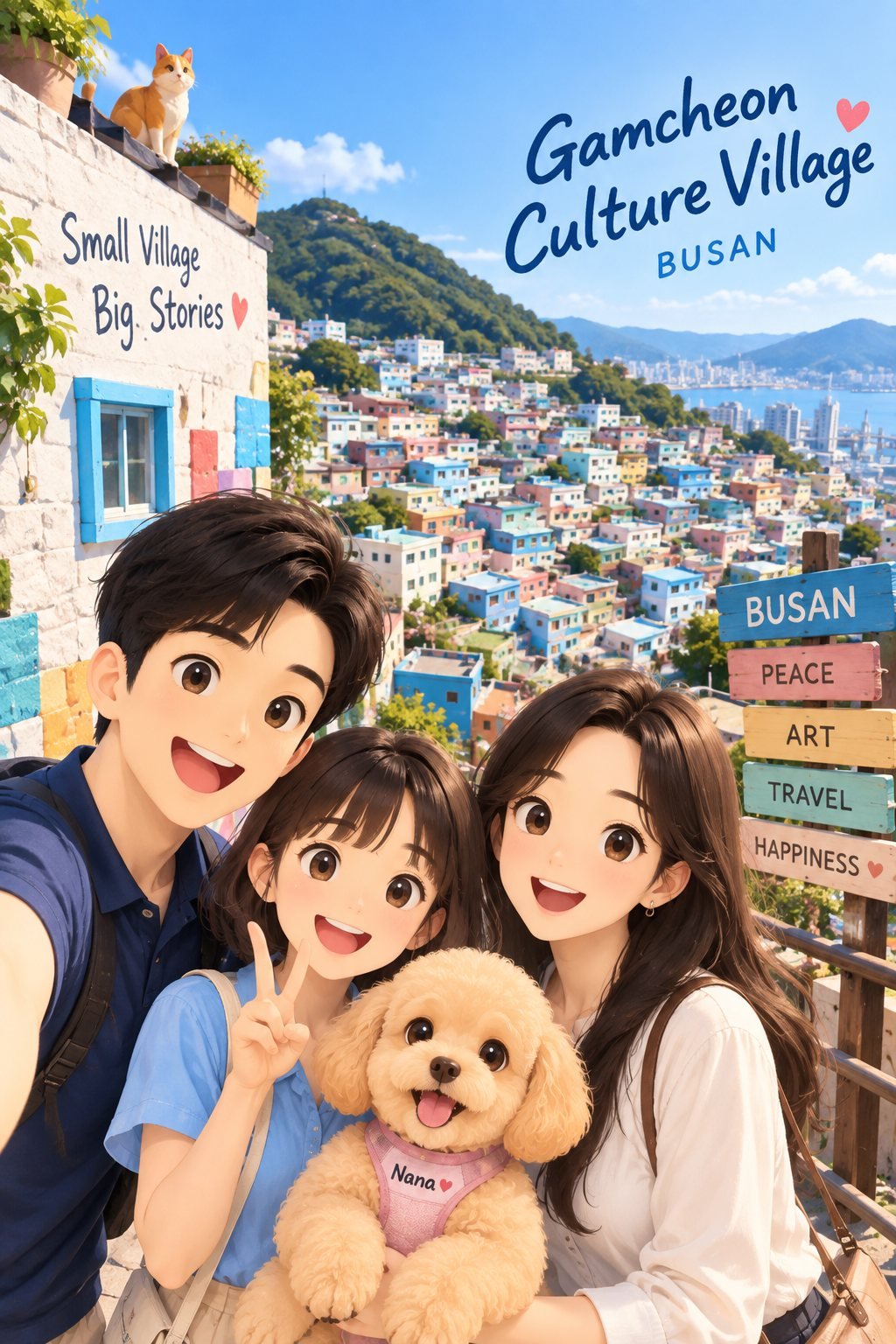
Colorful hillside homes, winding alleys, art, and coastal views create the distinctive landscape of Gamcheon Culture Village.
Quick Guide
| Location | Saha-gu, Busan |
| Best for | Colorful streets, local history, public art, photography, viewpoints, walking, Busan culture |
| Recommended time | About 2–3 hours |
| Terrain | Hilly streets, slopes, stairs, and narrow alleys |
| Admission | General access to the village streets is free; individual facilities may charge separately |
| Good to combine with | Jagalchi area, BIFF Square, Gukje Market, Nampo-dong, and other central Busan attractions |
What Is Gamcheon Culture Village?
Gamcheon Culture Village is a residential hillside neighborhood in Busan that has become widely known for its tightly arranged houses, colorful streets, public artworks, viewpoints, and maze-like walking routes.
The village rises along the slopes, so buildings appear in layers when viewed from higher points. This unusual landscape creates some of the most recognizable photographs associated with the neighborhood.
Despite its popularity as a visitor destination, Gamcheon is not simply an outdoor theme park. People live and work within the neighborhood, and visitors share many of its streets and alleys with local residents.
History & Transformation
Gamcheon’s modern history is closely connected with Busan’s growth during and after the Korean War, when people seeking a place to live settled in hillside areas of the city.
Over time, community-based cultural and urban regeneration projects introduced art, murals, creative spaces, improved walking routes, and other visual elements that helped transform the area into a well-known cultural destination.
Understanding this background adds an important layer to a visit. The colorful appearance seen today exists alongside the history of a real residential community shaped by Busan’s changing urban landscape.
Why Visit?
- See one of Busan’s most recognizable hillside neighborhoods.
- Walk through colorful alleys, stairways, and residential streets.
- Discover murals, public art, small galleries, and creative spaces.
- Photograph layered houses and panoramic views across Busan.
- Experience a neighborhood with a different atmosphere from Haeundae’s modern coastline.
- Explore small cafés, shops, workshops, and local businesses.
- Learn about another side of Busan’s modern urban history and community culture.
Colorful Alleys & Local Art
Exploring the alleys is one of the central experiences at Gamcheon Culture Village. Colorful walls, painted stairs, murals, signs, small art installations, flowerpots, workshops, and shops appear throughout different sections of the neighborhood.
The experience is best approached slowly. Instead of trying to move directly from one famous photo spot to another, visitors can notice smaller details along the route and see how art has been incorporated into the existing hillside environment.
Individual artworks, shops, displays, murals, and businesses can change over time. A location shown in an older photograph or travel guide may therefore look different when you visit.

Murals, workshops, colorful walls, and small creative details turn a walk through Gamcheon into an exploration of local art and neighborhood culture.
Walking the Hillside Village
Walking through Gamcheon Culture Village is very different from exploring a flat shopping district or beachfront. The neighborhood follows the natural slope of the hillside, creating a network of stairs, narrow lanes, uphill streets, and changing viewpoints.
Comfortable shoes are especially important here. Some routes involve repeated climbs and descents, and visitors who have difficulty with steep terrain may prefer to focus on the main streets and easily accessible viewpoints rather than trying to explore every alley.
The hillside layout is also part of Gamcheon’s character. As you move higher or lower through the village, the relationship between the colorful houses, surrounding mountains, city, and distant coastline continually changes.
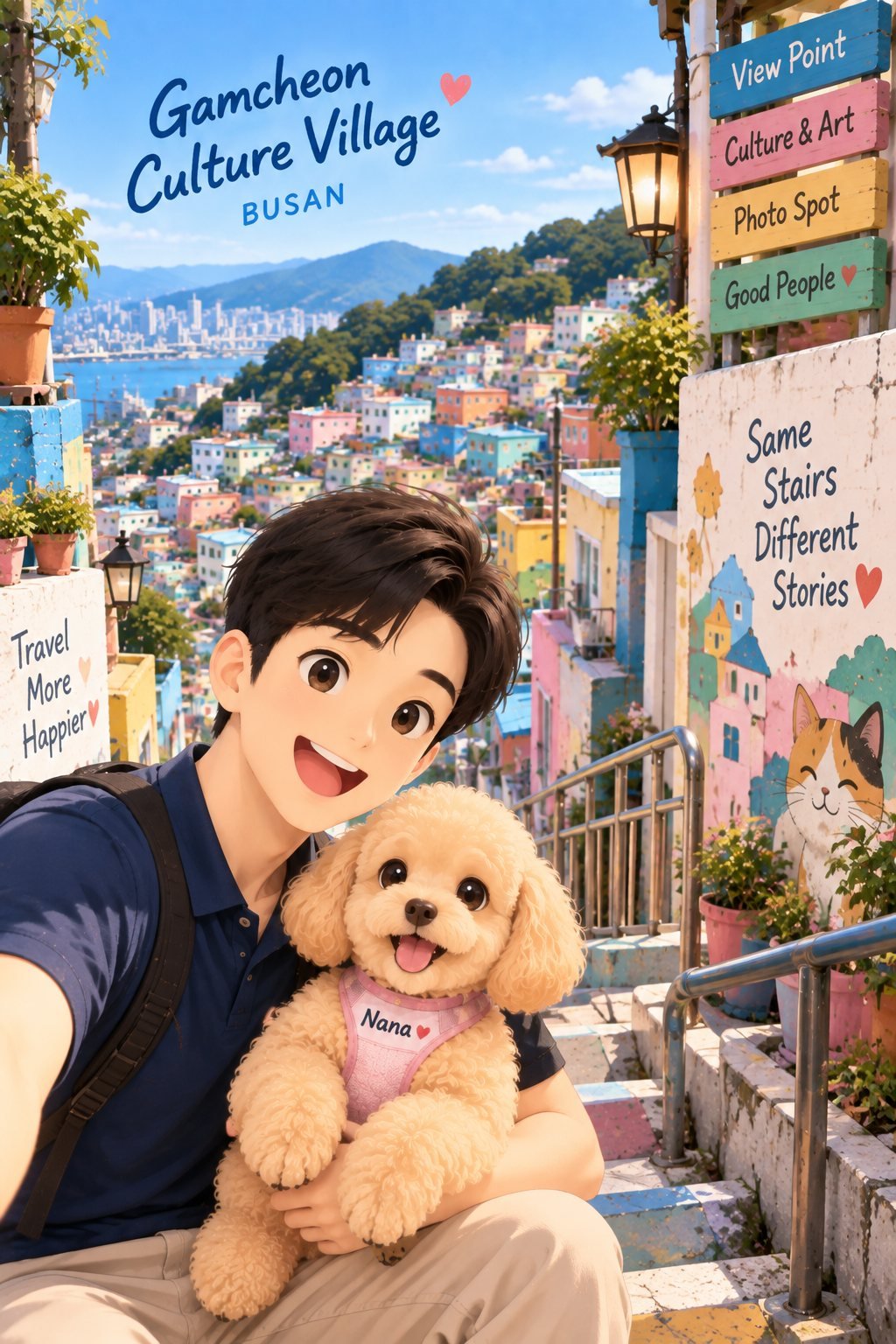
Stairs, slopes, narrow streets, and layered houses make walking through Gamcheon part of the experience itself.
Viewpoints & Photography
Gamcheon Culture Village offers many opportunities for photography because the scenery changes considerably depending on elevation and viewing direction.
Higher viewpoints can reveal layers of pastel-colored houses spreading across the hillside, while smaller alleys provide closer views of murals, stairs, doors, signs, plants, workshops, and everyday neighborhood details.
Morning and late afternoon can provide softer light, while sunset can add warmer colors to the hillside and surrounding cityscape. Weather and visibility will affect how clearly distant coastal and urban scenery can be seen.
Popular photo locations may become crowded, particularly on weekends and holidays. Allow other visitors space and avoid blocking narrow walking routes while waiting for photographs.
Art & Busan K-Culture
Gamcheon Culture Village represents a side of Busan culture that is very different from the high-rise beachfront environment of Haeundae. Here, the visual identity comes from hillside architecture, community history, public art, small creative spaces, colorful streets, and local businesses.
Visitors may encounter murals, sculptures, handmade goods, souvenirs, cafés, workshops, galleries, and changing artistic displays while exploring the neighborhood.
This combination makes Gamcheon useful for travelers interested in how contemporary Korean culture can develop within an older residential environment rather than only through large commercial districts.
Artworks, photo zones, shops, and creative spaces can change over time, so the village should be treated as an evolving neighborhood rather than a fixed collection of attractions.
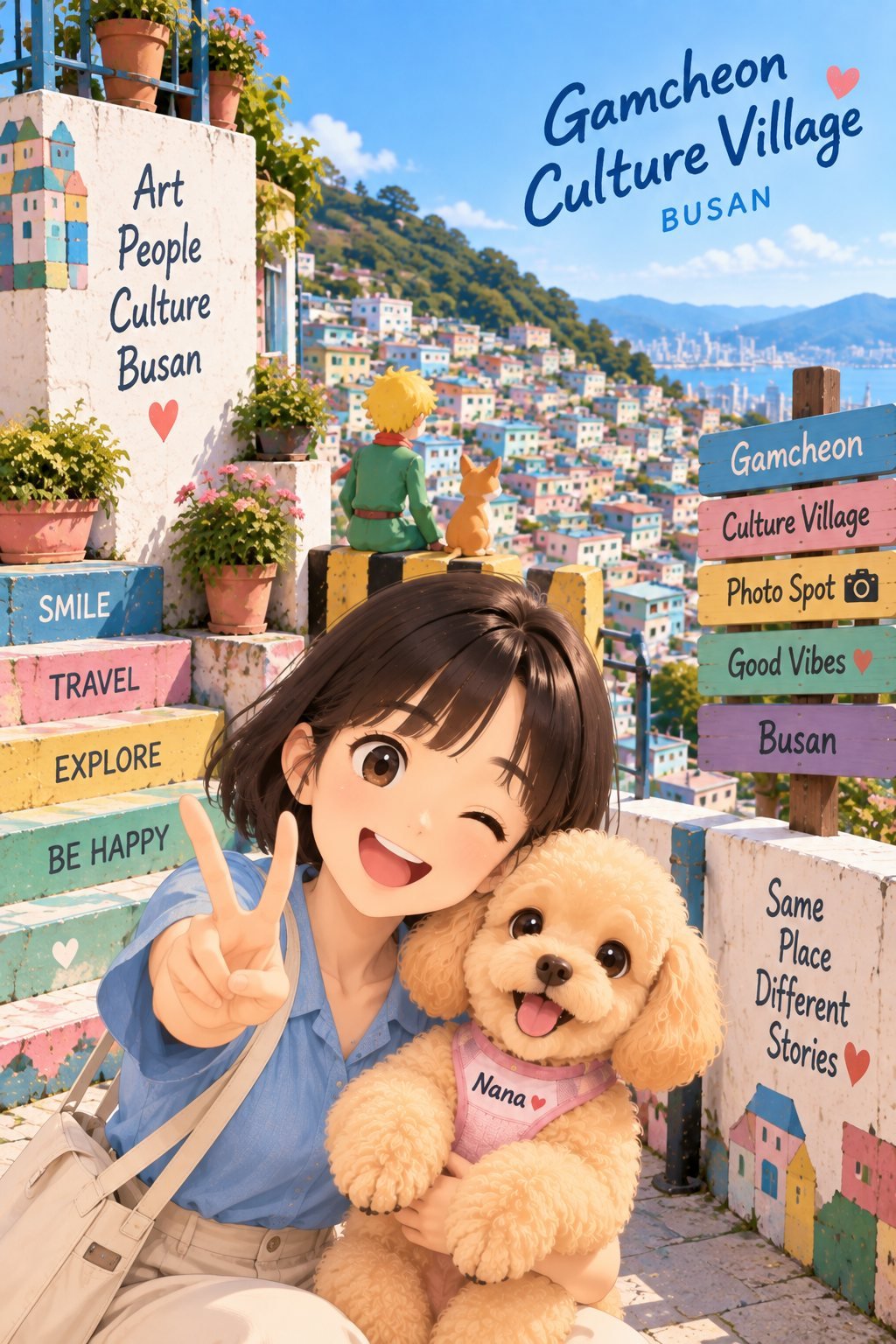
Public art, colorful photo spots, small creative spaces, and local streets reveal another side of contemporary Busan culture.
Respecting the Residential Community
One of the most important things to remember is that Gamcheon Culture Village remains a residential neighborhood. Many of the buildings and narrow alleys visitors see are located beside people’s homes and everyday living spaces.
Keep voices at a reasonable level, especially in quieter residential lanes. Do not enter private property, open gates, look through windows, or use private stairs and rooftops simply to take photographs.
Visitors should also follow local signs regarding restricted areas, photography, noise, and pedestrian routes. A colorful wall or doorway does not automatically mean that it is a public photo zone.
Respecting residents helps preserve the balance between tourism and everyday community life and makes the village a better place for both visitors and the people who live there.
Gamcheon vs Haeundae
Gamcheon Culture Village and Haeundae Beach show two very different sides of Busan.
Haeundae emphasizes the sea, sandy coastline, modern high-rise architecture, cafés, restaurants, shopping, and an energetic beachfront atmosphere.
Gamcheon is defined by hillside streets, layered houses, community history, public art, narrow alleys, viewpoints, and a more intimate neighborhood environment.
Experiencing both helps first-time visitors understand that Busan is not defined by a single coastal image. The city combines beaches and modern skylines with historic hillside communities, markets, local neighborhoods, art, and regional culture.
Gamcheon at Sunset
Late afternoon and sunset can give Gamcheon Culture Village a completely different atmosphere. As the light becomes warmer, the pastel-colored houses, surrounding hills, distant cityscape, and coastal scenery take on softer colors.
Visitors who arrive earlier in the afternoon can explore the alleys and art spaces first, then move toward a viewpoint as the sun begins to set. This creates an easy transition from daytime sightseeing to evening scenery within the same visit.
The exact sunset view depends on season, weather, cloud cover, and visibility. Some shops, cafés, workshops, and visitor facilities may also close before the surrounding city becomes fully dark, so check current operating information if you plan to stay late.
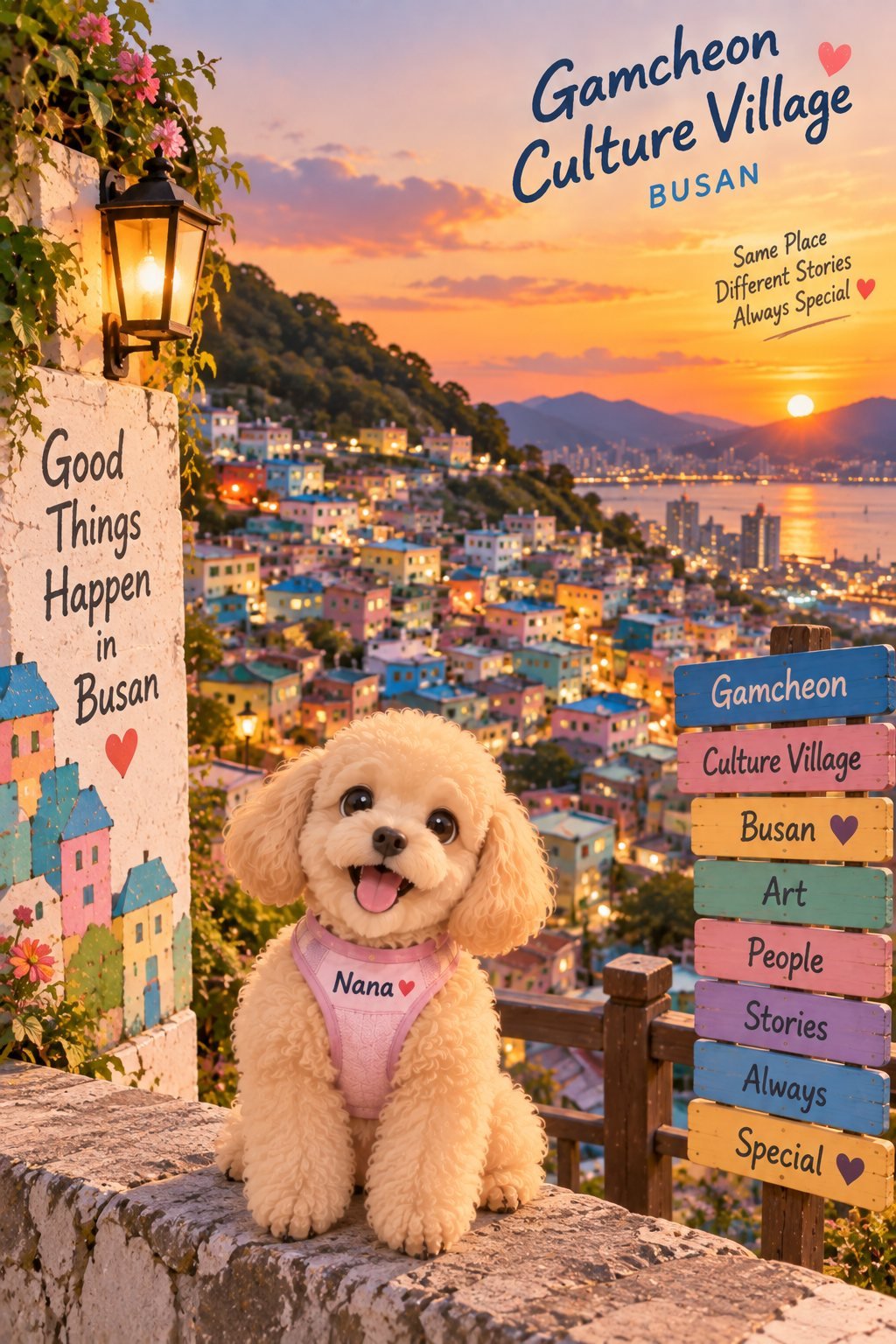
Warm sunset light reveals another side of Gamcheon’s colorful hillside landscape and surrounding Busan scenery.
Best Time to Visit
Morning and late afternoon are practical times for exploring Gamcheon Culture Village. Morning can provide a quieter start, while late afternoon offers warmer light and the possibility of seeing the village around sunset.
Spring and autumn are comfortable seasons for walking, although the village can be visited throughout the year. Summer heat and humidity can make the steep streets and stairs more tiring, while winter weather may require warmer clothing.
Weekends, holidays, and popular travel periods can bring larger crowds to major viewpoints and photo spots. Visitors who prefer a slower experience may benefit from arriving earlier in the day.
How Long to Spend
About 2–3 hours works well for many first-time visitors who want to explore the main streets, viewpoints, art areas, shops, and several smaller alleys without rushing.
A shorter visit can focus on a few major viewpoints and photo locations, while visitors interested in cafés, workshops, shopping, photography, and slower neighborhood exploration may want additional time.
Remember that the steep terrain can make a relatively short distance take longer than expected.
How to Get There
Gamcheon Culture Village is located in Saha-gu and is not directly beside a subway station. Visitors commonly travel to a nearby subway area and continue toward the village by local bus, taxi, or another suitable transport option.
Because routes, stops, and transportation conditions can change, check a current navigation or transit app on the day of your visit rather than relying only on an older route description.
The hillside location also means that choosing the correct arrival point can reduce unnecessary uphill walking.
First-Time Visitor Tips
- Wear comfortable shoes suitable for slopes and stairs.
- Allow more walking time than the map distance alone may suggest.
- Bring water during warm weather, especially if you plan to explore many hillside routes.
- Visit earlier if you prefer fewer people at popular viewpoints and photo spots.
- Check current opening hours for cafés, shops, workshops, galleries, and visitor facilities.
- Keep noise low in residential alleys and respect local signs.
- Do not enter private homes, rooftops, stairs, or doorways for photographs.
- Check sunset time and transportation options if you plan to remain into the evening.
What to Do Nearby
- Jagalchi Market — one of Busan’s best-known market areas, closely associated with seafood and the city’s maritime character.
- BIFF Square — a lively central Busan area connected with cinema, street food, shopping, and urban culture.
- Gukje Market — a large traditional market district with shops, food, and a long connection to Busan’s modern history.
- Nampo-dong — shopping streets, restaurants, cafés, markets, and central Busan city life.
- Yongdusan Park area — an elevated central-city area that can be combined with other Nampo attractions.
- Haeundae Beach — Busan’s modern beachfront experience with ocean scenery, cafés, food, high-rise architecture, and nighttime views.
- Taejongdae Park — forested coastal cliffs, Yeongdo Lighthouse, walking routes, and open ocean views.
Busan K-Culture Connection
Gamcheon Culture Village shows how Busan’s contemporary cultural identity can grow from local history and an existing residential community. Its appeal is not based only on colorful buildings but on the relationship between hillside architecture, residents, public art, small businesses, creative spaces, and the city’s historical development.
This creates a different type of K-culture experience from large shopping districts or entertainment complexes. Visitors encounter culture at street level through murals, workshops, local shops, architecture, neighborhood stories, and everyday spaces.
Together with Haeundae Beach, Gamcheon begins to show the range of experiences available beyond Seoul. One presents Busan as a modern seaside city, while the other reveals a layered hillside community shaped by history, art, and local life.
FAQ
Is Gamcheon Culture Village free to visit?
Yes. General access to the streets and public areas of Gamcheon Culture Village is free. Individual attractions, workshops, exhibitions, cafés, shops, activities, and other facilities may have separate charges.
What is Gamcheon Culture Village known for?
Gamcheon Culture Village is known for its colorful hillside houses, narrow alleys, stairways, murals, public art, viewpoints, small creative spaces, and distinctive views across Busan. The neighborhood also has an important history connected with the city’s development and residential communities.
How long should I spend at Gamcheon Culture Village?
About 2–3 hours works well for many first-time visitors. A shorter visit can focus on major viewpoints and photo spots, while cafés, workshops, shopping, photography, and slower exploration can extend the visit.
Is Gamcheon Culture Village difficult to walk around?
The village is built on a hillside and includes slopes, stairs, and narrow alleys. Comfortable shoes are recommended, and visitors who have difficulty with steep terrain may prefer to focus on the main streets and more accessible viewpoints.
When is the best time to visit Gamcheon Culture Village?
Morning and late afternoon are practical choices. Morning can be quieter, while late afternoon provides warmer light and the possibility of sunset views. Weather, season, and crowd levels can affect the experience.
Do people still live in Gamcheon Culture Village?
Yes. Gamcheon remains a residential neighborhood as well as a visitor destination. Visitors should keep noise reasonable, respect local signs, avoid entering private property, and remember that many alleys, doors, stairs, and buildings are part of residents’ everyday living environment.
Related K-Nana Guides
Continue exploring Busan with Haeundae Beach for ocean scenery, beach walks, cafés, food, modern architecture, and nighttime views, Gwangalli Beach for Gwangandaegyo Bridge, waterfront cafés, and nightlife, Haedong Yonggungsa Temple for Korean Buddhist culture beside the sea, Taejongdae Park for forests, cliffs, lighthouse scenery, and open ocean views, and BUSAN X the SKY & Green Railway for panoramic Haeundae views and coastal walking.
Official Information
Gamcheon Culture Village is both a visitor destination and a residential neighborhood. Shops, cafés, workshops, galleries, exhibitions, visitor facilities, photo zones, and other businesses may have different operating hours and conditions. Walking routes, artworks, access restrictions, transportation options, events, and individual facilities can also change. Check current official information when a particular attraction, shop, event, route, or facility is important to your visit, and always respect signs protecting residents’ privacy and private property.
Image Credits
Gamcheon Culture Village family travel visual — K-Nana Studio original visual.
Gamcheon colorful alleys and local art with Mom and Nana visual — K-Nana Studio original visual.
Gamcheon hillside village walk with Dad and Nana visual — K-Nana Studio original visual.
Gamcheon photo spots and Busan K-culture with K-Nana daughter and Nana visual — K-Nana Studio original visual.
Nana enjoying Gamcheon Culture Village at sunset visual — K-Nana Studio original visual.