
Haedong Yonggungsa Temple is one of Busan’s most distinctive Buddhist temples, known for its dramatic location beside the sea. Traditional temple buildings, stone paths, statues, lanterns, rocky coastline, pine-covered hills, and open ocean views come together in a setting that feels very different from temples surrounded mainly by mountains or dense city neighborhoods.
For international visitors exploring Busan, Haedong Yonggungsa offers a chance to experience Korean Buddhist culture alongside the city’s coastal landscape. The journey through the temple grounds combines traditional architecture, religious spaces, walking paths, viewpoints, and changing views of the sea.
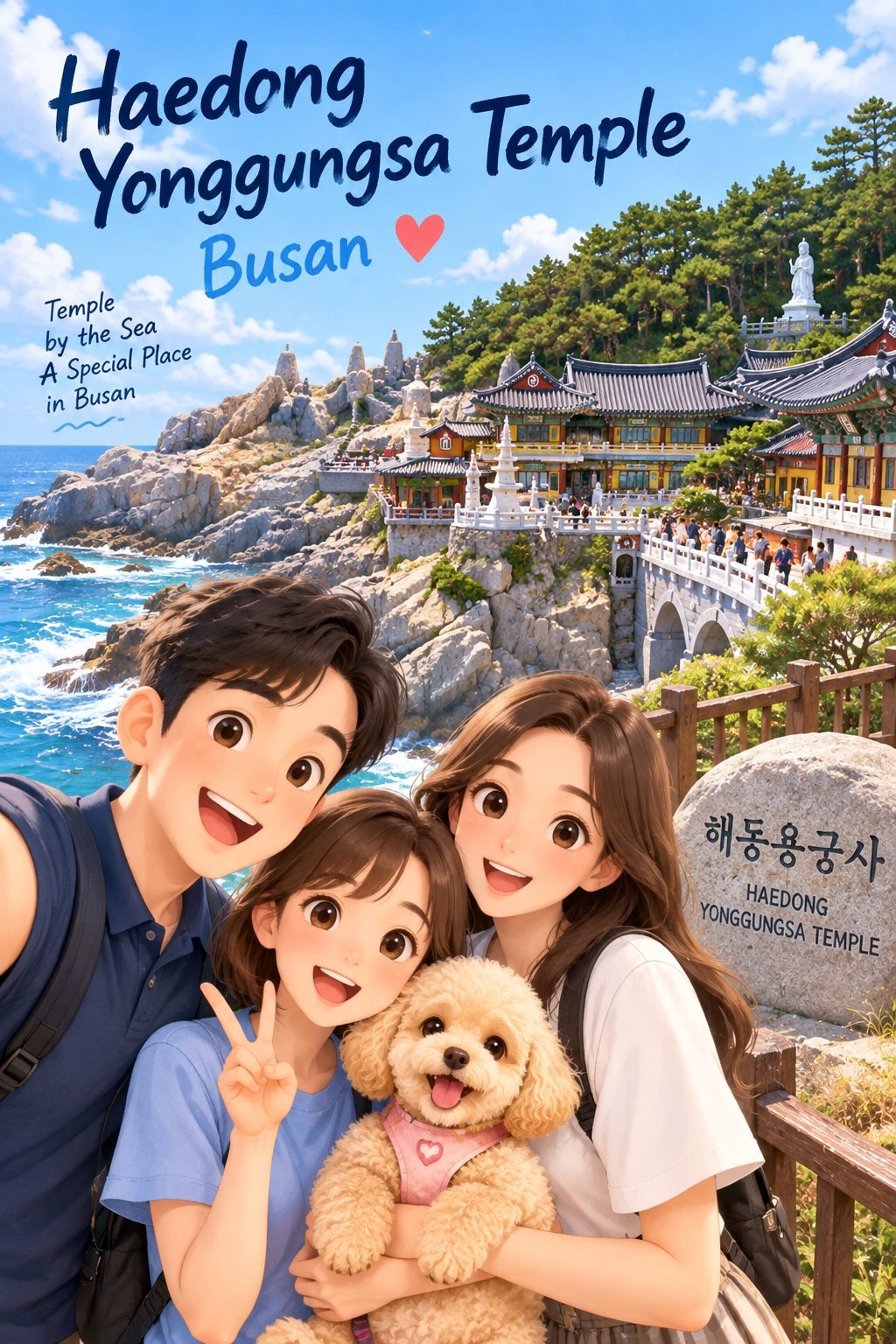
Traditional Korean temple architecture meets Busan’s rocky coastline and open sea at Haedong Yonggungsa.
Quick Guide
| Location | Gijang-gun, Busan |
| Best for | Korean Buddhist culture, traditional architecture, ocean views, photography, coastal scenery, walking |
| Recommended time | About 1.5–3 hours |
| Terrain | Stairs, stone paths, slopes, and coastal walking areas |
| Visitor style | Active Buddhist temple and cultural sightseeing destination |
| Good to combine with | Eastern Busan coastal attractions, Haeundae, Songjeong, and the wider Gijang area |
What Is Haedong Yonggungsa Temple?
Haedong Yonggungsa is a Buddhist temple located along the rocky coast of eastern Busan. Its seaside setting is the feature that immediately distinguishes it from many Korean temples located deeper in mountainous landscapes.
The temple grounds contain traditional buildings, Buddhist statues, stone structures, lanterns, stairways, prayer spaces, and viewpoints overlooking the ocean. Visitors move through several levels rather than experiencing the site from a single viewing area.
Haedong Yonggungsa is also an active religious site. Although it is widely visited as a tourist destination, its halls, statues, ceremonies, and prayer areas should be approached with the same respect expected at other Buddhist temples in Korea.
Temple by the Sea
The relationship between the temple and the ocean is central to the Haedong Yonggungsa experience. Waves meet the rocky coastline directly below parts of the temple complex, while traditional roofs and stone structures appear against the open sea.
Different walking routes reveal different perspectives. From higher areas, visitors can look across the temple buildings and coastline, while lower viewpoints bring the rocky shore and ocean much closer.
Weather can significantly change the atmosphere. Clear days provide bright coastal colors, while clouds, wind, mist, and stronger waves can create a more dramatic seaside landscape.
Why Visit?
- Experience a Korean Buddhist temple in a distinctive seaside setting.
- See traditional architecture beside Busan’s rocky coastline.
- Explore Buddhist statues, lanterns, prayer spaces, and temple details.
- Walk through multiple viewpoints overlooking the ocean.
- Photograph the contrast between traditional buildings and the blue sea.
- Experience a quieter cultural side of Busan beyond its modern beach districts.
- Combine Korean heritage, religious culture, nature, and coastal scenery in one visit.
Traditional Architecture & Buddhist Culture
Colorful dancheong patterns, tiled roofs, wooden structures, stone lanterns, Buddhist statues, and decorative details give visitors many opportunities to observe traditional Korean temple architecture at close range.
Lanterns and other religious decorations may appear throughout the grounds, especially around important Buddhist celebrations and seasonal events. Their number, colors, placement, and surrounding displays can change throughout the year.
Visitors should remember that many of these elements have religious meaning rather than existing only as decorations. Keep voices reasonable around prayer areas, avoid interrupting worshippers, and follow any posted photography or access rules.

Temple roofs, dancheong colors, lanterns, stone structures, and Buddhist spaces reveal the traditional cultural character of Haedong Yonggungsa.
Walking the Coastal Temple
Exploring Haedong Yonggungsa involves more walking than simply entering a single temple courtyard. Stairs, stone paths, bridges, slopes, and different levels connect the major parts of the temple complex.
The changing elevation is part of the experience. As visitors move through the grounds, traditional roofs appear from different angles while the rocky coastline and open sea repeatedly come back into view.
Comfortable walking shoes are recommended, especially for visitors who want to explore several viewpoints. Wet weather can also make some stone surfaces more slippery, so move carefully around stairs and coastal areas.
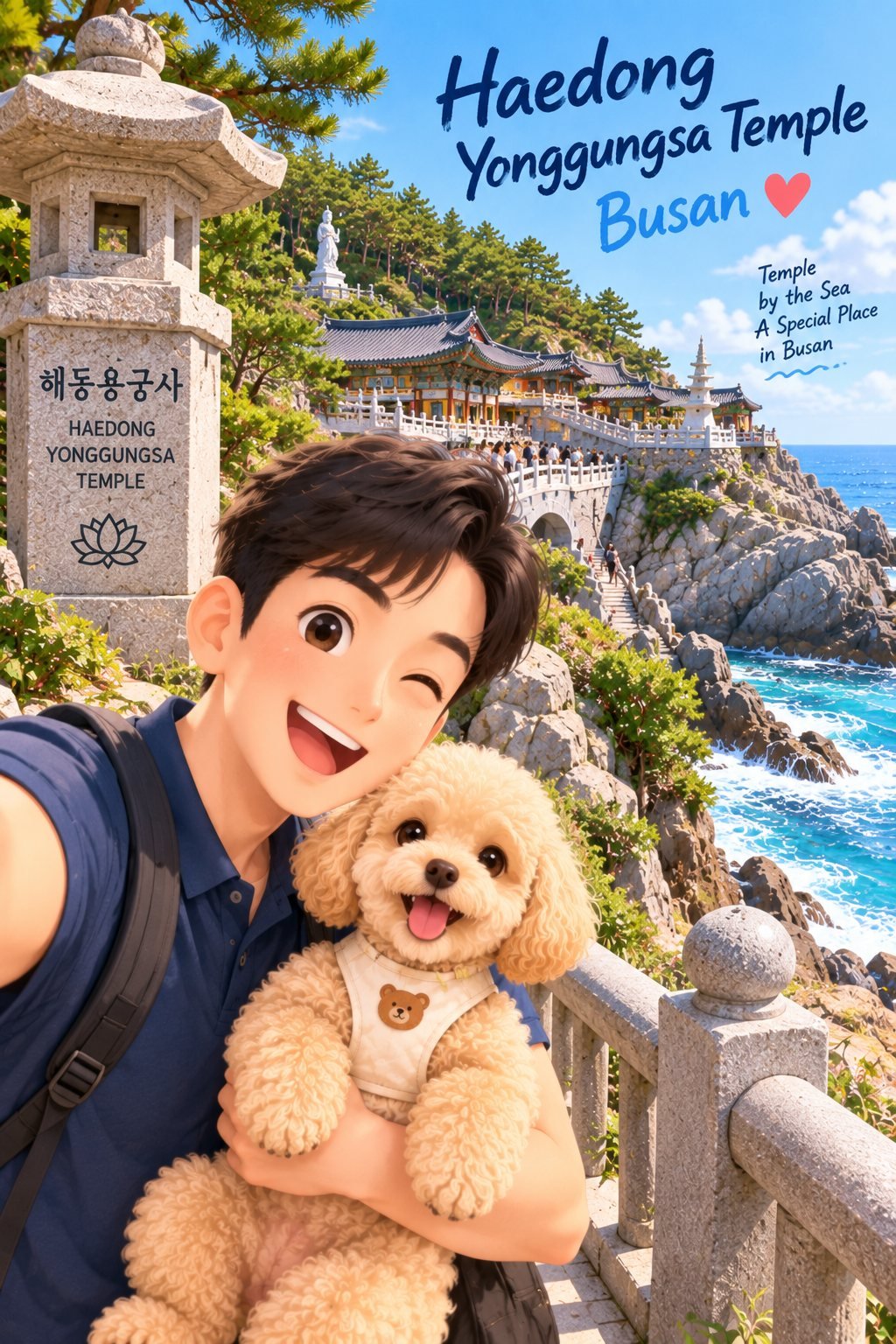
Stone paths, stairs, rocky cliffs, temple buildings, and the open sea make walking through Haedong Yonggungsa part of the experience itself.
Ocean Views & Photography
Haedong Yonggungsa offers a distinctive photography experience because traditional Korean architecture and coastal scenery can appear within the same frame.
Wide views can include temple roofs, rocky cliffs, pine trees, stone structures, and the sea, while closer photographs can focus on dancheong patterns, lanterns, statues, carvings, and architectural details.
Morning light can create particularly attractive coastal scenery, while changing weather produces very different colors and moods. Ocean visibility, waves, clouds, and sunlight will affect the appearance of the landscape throughout the day.
When taking photographs, remain aware that this is an active religious site. Avoid blocking entrances, prayer areas, stairs, or narrow paths, and follow any posted restrictions on photography.
Korean Culture by the Sea
Haedong Yonggungsa shows how traditional Korean Buddhist culture can be experienced within Busan’s coastal landscape. The temple combines religious architecture and practices with an environment shaped by rocks, pine trees, waves, and open ocean views.
This creates a strong contrast with Busan’s modern waterfront districts. Haeundae and Gwangalli emphasize beaches, high-rise buildings, cafés, restaurants, and nightlife, while Haedong Yonggungsa introduces visitors to traditional architecture, Buddhist culture, and a more reflective atmosphere.
For international travelers, the temple can therefore add cultural variety to a Busan itinerary rather than repeating another modern beach experience.

Traditional Korean architecture and Busan’s coastal scenery come together in one of the city’s most distinctive cultural landscapes.
Temple Etiquette
Haedong Yonggungsa is both a popular visitor destination and an active Buddhist temple. Visitors should behave respectfully even when exploring the site primarily for sightseeing or photography.
- Keep voices low around prayer halls and worshippers.
- Follow signs regarding photography and restricted areas.
- Do not interrupt ceremonies, prayers, or religious activities.
- Avoid touching statues, ritual objects, lanterns, or religious decorations unless clearly permitted.
- Do not block temple entrances, stairs, bridges, or narrow walking routes for photographs.
- Dress and behave appropriately for an active religious site.
- Follow staff instructions and temporary access restrictions.
Temple conditions can change during religious ceremonies, festivals, maintenance, and special events. Respecting these rules allows visitors to experience the site while preserving its religious function and atmosphere.
Haedong Yonggungsa vs Busan’s Beaches
Haedong Yonggungsa offers a very different coastal experience from Haeundae Beach and Gwangalli Beach.
Haeundae focuses on a broad sandy beach, high-rise skyline, shopping, cafés, food, and modern seaside life. Gwangalli is strongly associated with Gwangandaegyo Bridge, waterfront cafés, nightlife, and evening scenery.
Haedong Yonggungsa replaces the urban beach atmosphere with rocky coastline, traditional temple architecture, Buddhist spaces, stone paths, and cultural heritage.
Visiting these different locations helps travelers see how Busan’s relationship with the sea extends from modern city life to traditional Korean culture.
Sunrise at Haedong Yonggungsa
Haedong Yonggungsa is especially associated with sunrise because of its location along Busan’s eastern coastline. When weather and visibility are favorable, early morning light can spread across the sea and rocky shore while gradually illuminating the temple buildings.
The atmosphere at sunrise is very different from the busier daytime experience. The combination of morning light, ocean scenery, traditional roofs, stone structures, and surrounding pine trees can create one of the most memorable views of the temple.
Sunrise time changes throughout the year, and weather conditions can completely affect the view. Visitors planning an early-morning trip should check the current sunrise time, weather, transportation options, and temple access information in advance.
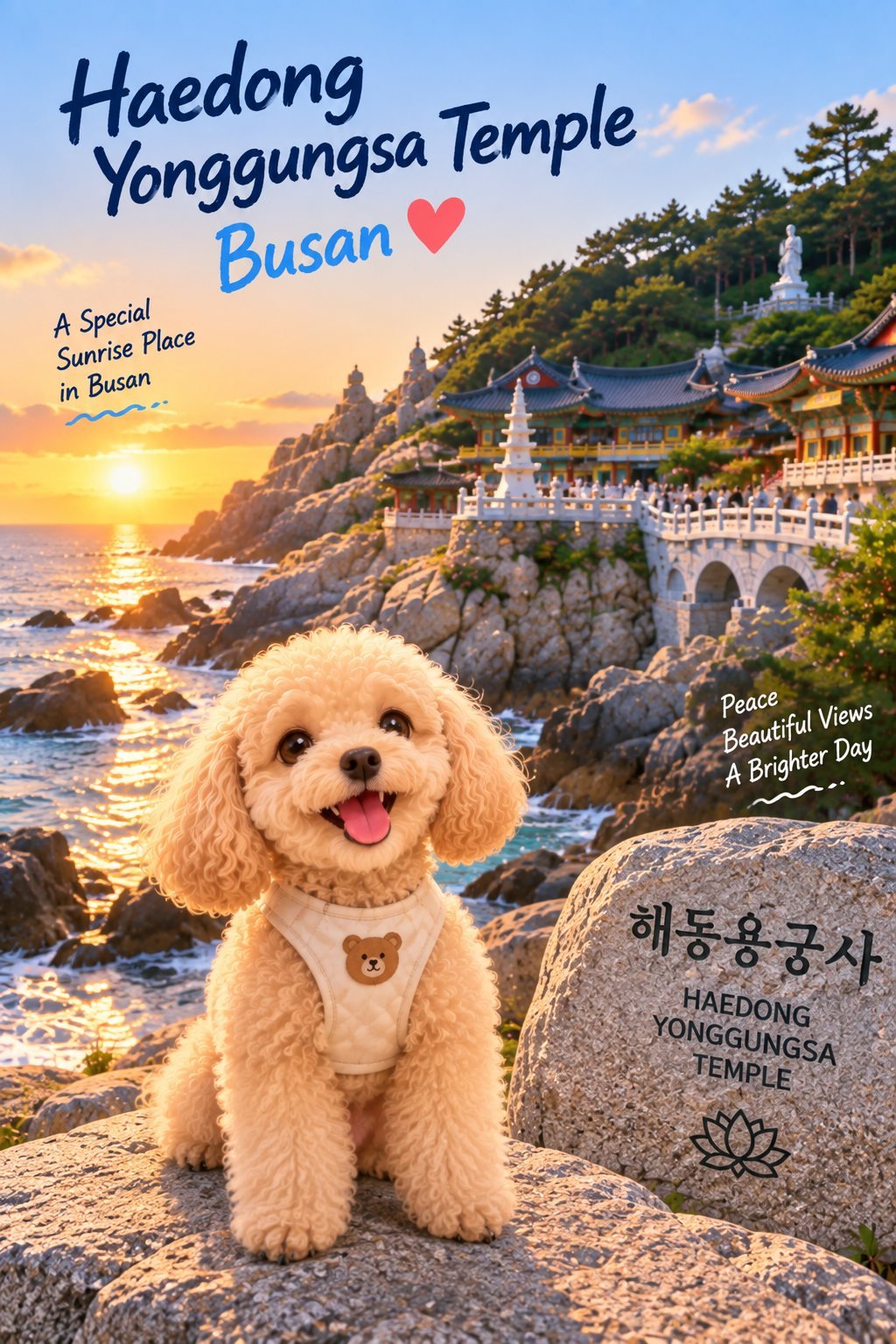
Sunrise over the sea adds warm morning light to Haedong Yonggungsa’s rocky coastline and traditional temple landscape.
Best Time to Visit
Morning is a good choice for visitors who want cooler temperatures, softer light, and the possibility of experiencing the temple before the busiest part of the day.
Spring and autumn are generally comfortable for walking, while summer can be hot and humid. Winter offers a different coastal atmosphere, but strong winds and colder temperatures can make exposed seaside areas feel significantly cooler.
Weekends, holidays, major Buddhist celebrations, and popular travel periods can attract larger numbers of visitors. Seasonal lantern displays and religious events can also change the appearance and atmosphere of the temple.
How Long to Spend
About 1.5–3 hours works well for many first-time visitors who want to explore the main temple areas, walk through the coastal paths, observe the architecture, and stop at several viewpoints.
Visitors interested in photography, Buddhist architecture, sunrise, or a slower cultural experience may want additional time. The stairs and changing elevation can also make the visit take longer than the map distance alone suggests.
How to Get There
Haedong Yonggungsa is located in Gijang-gun on the eastern side of Busan. It is farther from central Busan than many major urban attractions, so visitors should allow sufficient transportation time.
Depending on the starting point, travelers may use a combination of rail or subway connections, local buses, taxis, or other transport options to reach the temple area.
Routes, stops, schedules, and traffic conditions can change. Check a current navigation or public transportation app on the day of your visit, especially when traveling early for sunrise.
First-Time Visitor Tips
- Wear comfortable shoes suitable for stairs, stone paths, and slopes.
- Check the weather before planning a visit focused on ocean views or sunrise.
- Check the current sunrise time and transportation options for an early-morning visit.
- Allow extra travel time because the temple is located in eastern Busan.
- Keep voices low around prayer halls and worshippers.
- Follow posted photography, access, and safety rules.
- Take extra care on wet stone surfaces and coastal paths.
- Expect larger crowds during weekends, holidays, festivals, and important Buddhist celebrations.
What to Do Nearby
- OSIRIA area — a developing tourism and leisure district in eastern Busan that can be combined with a temple visit.
- Songjeong Beach — a well-known coastal destination with a more relaxed atmosphere than some of Busan’s larger urban beaches.
- Cheongsapo — a coastal neighborhood known for seaside scenery and views along eastern Busan.
- Haeundae Blue Line Park — a popular coastal sightseeing route connecting scenic areas around eastern Busan.
- Haeundae Beach — Busan’s major modern beachfront district with ocean scenery, cafés, food, shopping, and nightlife.
- Gwangalli Beach — a social waterfront destination known for Gwangandaegyo Bridge, cafés, nightlife, and evening views.
Busan K-Culture Connection
Haedong Yonggungsa adds an important traditional dimension to a Busan itinerary. The city is often associated internationally with beaches, seafood, modern skylines, films, cafés, and nightlife, but Korean Buddhist culture and traditional architecture are also part of the region’s cultural landscape.
The temple’s seaside location makes that heritage especially distinctive. Traditional roofs, dancheong decoration, Buddhist statues, lanterns, stone structures, pine trees, rocky cliffs, and the ocean appear together within one setting.
Combined with Haeundae Beach, Gamcheon Culture Village, and Gwangalli Beach, Haedong Yonggungsa helps show international visitors how Busan brings together modern coastal life, neighborhood history, contemporary culture, traditional heritage, and the sea.
FAQ
Is Haedong Yonggungsa Temple free to visit?
General access to Haedong Yonggungsa Temple is typically available without a standard admission fee, but individual programs, facilities, special events, parking, or other services may involve separate charges. Check current official information before visiting.
What is Haedong Yonggungsa Temple known for?
Haedong Yonggungsa is especially known for its unusual seaside location. Traditional Korean Buddhist architecture, statues, lanterns, stone structures, rocky cliffs, pine trees, and open ocean views create a landscape that differs from many mountain temples in Korea.
How long should I spend at Haedong Yonggungsa?
About 1.5–3 hours works well for many first-time visitors. Visitors interested in photography, architecture, Buddhist culture, coastal scenery, or sunrise may want to allow additional time.
Is Haedong Yonggungsa difficult to walk around?
The temple grounds include stairs, slopes, stone paths, bridges, and different elevations. Comfortable walking shoes are recommended, and visitors with limited mobility should check current accessibility information before traveling.
When is the best time to visit Haedong Yonggungsa?
Morning can be a good choice for softer light and cooler walking conditions. The temple is also associated with sunrise because of its eastern coastal location, but sunrise views depend on season, weather, visibility, transportation, and current access conditions.
What should visitors remember at the temple?
Haedong Yonggungsa is an active Buddhist temple as well as a sightseeing destination. Keep voices low around prayer areas, do not interrupt worshippers or ceremonies, respect restricted spaces, and follow posted rules regarding photography and access.
Related K-Nana Guides
Continue exploring Busan with Haeundae Beach for a modern seaside district, Gamcheon Culture Village for colorful hillside streets and local art, and Gwangalli Beach for Gwangandaegyo Bridge views, cafés, nightlife, and evening scenery.
Official Information
Haedong Yonggungsa is an active Buddhist temple and visitor destination. Opening and access conditions, religious ceremonies, seasonal events, lantern displays, transportation, parking, individual facilities, photography rules, restricted areas, and visitor services can change. Coastal weather and sea conditions can also affect the experience. Check current official information when sunrise access, a particular ceremony, event, facility, or transportation option is important to your visit, and always respect worshippers and temple rules.
Image Credits
Haedong Yonggungsa Temple and Busan coastal family travel visual — K-Nana Studio original visual.
Haedong Yonggungsa traditional architecture and Buddhist culture with Mom and Nana visual — K-Nana Studio original visual.
Haedong Yonggungsa coastal temple walk with Dad and Nana visual — K-Nana Studio original visual.
Haedong Yonggungsa Korean culture and ocean views with K-Nana daughter and Nana visual — K-Nana Studio original visual.
Nana enjoying sunrise and coastal scenery at Haedong Yonggungsa Temple visual — K-Nana Studio original visual.