
Getting from Incheon Airport to Seoul by AREX
AREX is a rail connection between Incheon International Airport and Seoul. For a first-time visitor, the main challenge is not simply finding the train. You must choose between two services with different stopping patterns.
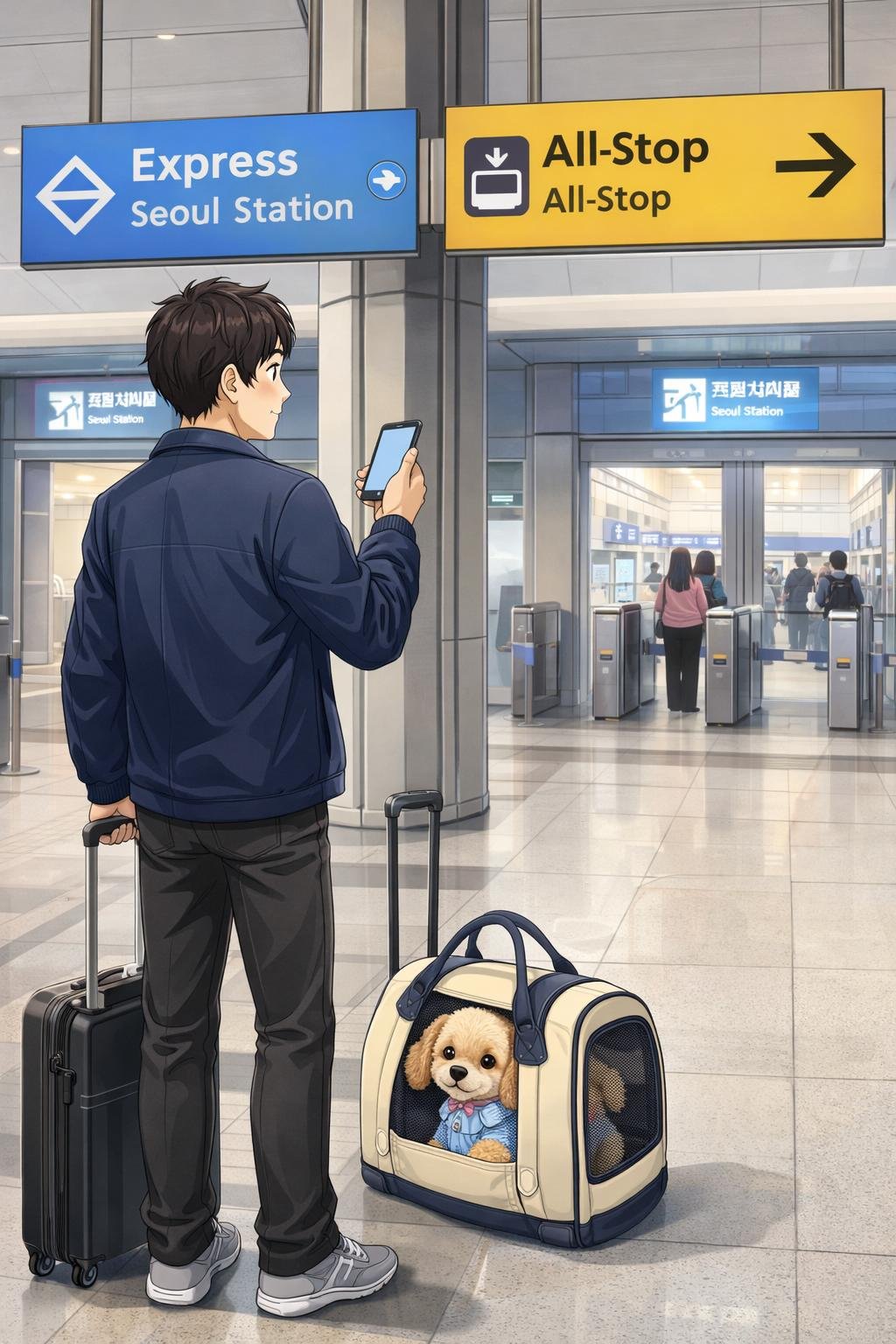
Learning how to ride the AREX from Incheon Airport to Seoul begins with your final destination. The Express Train travels nonstop to Seoul Station, while the All-Stop Train serves intermediate stations that may be more convenient for your accommodation or transfer.
Before boarding, confirm your arrival terminal, train type, ticket or transportation card, luggage plan, and onward route. Current schedules, fares, payment conditions, and transport operations should be checked through official sources before travel.
What the AREX Airport Train Is

AREX connects Incheon International Airport with central Seoul. Trains serve both airport terminals, but the two AREX services do not follow the same stopping pattern.
The Express Train runs nonstop between the airport and Seoul Station. It is intended for travelers whose route works well with a direct trip to Seoul Station.
The All-Stop Train serves stations along the route. Major stops include Gimpo International Airport, Digital Media City, Hongik University, Gongdeok, and Seoul Station. Other stops include Airport Cargo Terminal, Unseo, Yeongjong, Cheongna International City, Geomam, Gyeyang, and Magongnaru.
The word “express” therefore refers to the nonstop service to Seoul Station. The All-Stop Train may take longer to reach Seoul Station, but an intermediate stop could reduce the length or complexity of your onward transfer.
Why Travelers Use the AREX
AREX provides a direct rail connection from Incheon International Airport toward central Seoul. It allows visitors to begin the city portion of their journey without first arranging a separate road transfer from the airport.
The two services support different travel plans. A passenger going to Seoul Station can consider the nonstop Express Train, while someone staying near Hongik University, Digital Media City, or Gongdeok may find the All-Stop Train better aligned with the final destination.
AREX can also connect with onward transportation, but the easiest transfer depends on the station, luggage, time of travel, and final address. Visitors should compare the complete door-to-door route rather than choosing a service only because its name sounds faster.
Express Train or All-Stop Train: Which Should You Choose?
| Service | Stopping pattern | Approximate time to Seoul Station | Practical reason to choose it |
|---|---|---|---|
| Express Train | Nonstop between Incheon Airport and Seoul Station | About 43 minutes from Terminal 1 or 51 minutes from Terminal 2 | Your route is based around Seoul Station and you prefer a nonstop journey. |
| All-Stop Train | Serves intermediate stations before Seoul Station | About 59 minutes from Terminal 1 or 66 minutes from Terminal 2 | An intermediate stop is closer to your accommodation or offers a more suitable transfer. |
These times are approximate journey times reported by VISITKOREA. Waiting, walking, ticket purchase, immigration, baggage collection, and onward-transfer time are separate.
Choose the Express Train when Seoul Station is genuinely useful for your route. Choose the All-Stop Train when a served station such as Hongik University, Digital Media City, Gongdeok, or Gimpo International Airport better matches your destination or connection.
Speed to Seoul Station should not be the only consideration. A faster train followed by a difficult transfer may be less practical than an All-Stop journey that leaves you closer to your final address.
What to Check Before You Ride
Your arrival terminal
Confirm whether your flight arrives at Terminal 1 or Terminal 2. This affects where you enter the rail system and the approximate journey time. Do not assume the terminal based only on a previous trip, because flight arrangements can change.
Your most useful station
Look up your accommodation’s full address and identify the station that creates the simplest overall route. Check whether reaching it requires a subway transfer, taxi ride, bus connection, or walk with luggage.
Your available time
Flight arrival time is not the same as train boarding time. Allow for immigration, baggage collection, customs procedures, walking through the terminal, finding the rail area, and obtaining the correct travel media.
Tickets and payment
Express Train tickets are sold online and at station ticket machines. Check the current official purchase instructions, fares, and conditions before relying on a particular booking or payment method.
The All-Stop Train accepts single-use, prepaid, postpaid, and commuter transportation cards. These are transportation fare media; visitors should not assume that every foreign bank card can be used in the same way. Confirm current purchase, charging, and payment options through official information.
Current operating information
Check current schedules and fares close to your travel date. If accessibility, oversized luggage, station facilities, or a particular transfer is important, verify those details through the relevant official transport source rather than assuming that every station offers identical conditions.
How to Ride the AREX from Incheon Airport to Seoul

- Complete the airport arrival process. Pass through the required arrival procedures and collect all checked baggage before looking for the airport railway.
- Follow signs for the airport railroad. Use the airport’s directional signs rather than following another passenger, because that passenger may be heading to a bus, taxi, or different rail service.
- Confirm your terminal and destination. Check that you are starting from the correct airport terminal and review the Seoul station you actually need.
- Choose the correct AREX service. Select the Express Train for nonstop travel to Seoul Station or the All-Stop Train for intermediate stations and Seoul Station.
- Obtain the appropriate ticket or fare media. For the Express Train, use an official online purchase channel or a station ticket machine according to current instructions. For the All-Stop Train, use an accepted single-use, prepaid, postpaid, or commuter transportation card.
- Approach the correct gate. Check the service name before entering. Do not assume that an airport railway gate leads to the train type you intended to take.
- Verify the platform and direction. Read the destination and service information shown at the station. If anything is unclear, pause and confirm before passing farther into the boarding area.
- Board with your luggage controlled. Keep bags together and move away from the doorway when possible. Avoid placing luggage where it obstructs passengers or train movement.
- Monitor the journey. On the All-Stop Train, follow the station sequence so you are ready for your selected stop. On the Express Train, remember that the service runs nonstop to Seoul Station.
- Prepare to leave calmly. Gather your belongings before arrival without blocking the aisle or rushing toward the door.
- Exit at the chosen station. Follow station signs and use the correct exit or transfer route for your destination.
- Continue with your planned onward transport. Transfer to the appropriate subway, taxi, bus, or walking route after checking current local information and station conditions.
Keeping the service name and final station visible in your travel notes can make this sequence easier after a long flight.
Managing Luggage and Planning Your Transfer
Keep passports, wallets, phones, and other essential items secured rather than loosely placed on top of a suitcase. Maintain control of wheeled bags when boarding, standing, and leaving the train.
Do not block doors, aisles, gates, or passenger movement with luggage. Allow additional time if you have several bags, are traveling with children, or need to move slowly through a large station.
For oversized, unusual, or numerous pieces of luggage, check current operator rules before travel. Do not assume that a bag accepted by an airline will automatically be easy to carry through every train station or transfer.
Seoul Station can be useful for travelers whose accommodation or next transport connection is nearby. However, reaching a final address may still involve walking through the station and transferring to another form of transport.
Intermediate All-Stop stations can change the calculation. Hongik University, Digital Media City, Gongdeok, Gimpo International Airport, or another served station may offer a route that better fits a particular destination.
Check current subway operations, station exits, taxi arrangements, accessibility information, and facility details when they are important to your trip. Transfer distances and available facilities should not be assumed to be identical at every station.
K-Nana Family Guide
Illustrative scenario: The following family example explains how visitors might divide the planning tasks. It is not a verified review or a record of an actual journey.
Dad: Dad first compares the final address with the route map. If the family needs Seoul Station, he considers the nonstop Express Train. If their accommodation is closer to Hongik University or another intermediate stop, he considers the All-Stop Train instead.
Mom: Mom confirms the terminal, current schedule, fare, payment method, and ticket instructions. She also allows time for immigration and baggage collection, keeps the luggage manageable, and checks any important transfer or accessibility details through current official information.
Daughter: Daughter watches the station information and keeps track of the family’s chosen stop. On board, she keeps her voice moderate, avoids blocking doors with bags, and waits for passengers to leave before moving through a doorway.
Nana: Train type first, destination second—check both before you board.
AREX Etiquette, Cautions, and Common Mistakes

Considerate train behavior
Let passengers leave before attempting to board. Keep luggage from obstructing doors, aisles, seats, and gates, and limit noise from conversations, calls, or devices.
Watch your belongings throughout the journey. Prepare for your stop in time, but do not crowd the doorway or rush past other passengers.
These points describe general public-transport courtesy. They should not be treated as a complete list of official operator rules. Follow posted instructions and staff directions when traveling.
Common mistakes to avoid
- Confusing the two services: The Express Train is nonstop to Seoul Station, while the All-Stop Train serves intermediate stations.
- Boarding in the wrong direction: Check the displayed destination and platform information rather than relying only on the AREX name.
- Choosing Seoul Station automatically: Another All-Stop station may be closer to the final address or provide a more practical transfer.
- Ignoring total travel time: Immigration, baggage collection, walking, waiting, and onward transfers add time beyond the train journey itself.
- Using the wrong travel media: Verify whether you need an Express Train ticket or accepted All-Stop transportation fare media.
- Relying on old prices or timetables: Fares, schedules, payment conditions, and operating details can change.
- Underestimating luggage: A route with multiple transfers may be difficult even when it appears efficient on a map.
When current signs, official instructions, or staff guidance differ from an older travel guide, follow the current official information.
Quick AREX Checklist
- Confirm whether you are arriving at Terminal 1 or Terminal 2.
- Save the full address of your final Seoul destination.
- Identify the most useful AREX stop for that destination.
- Choose the Express Train or All-Stop Train.
- Prepare the correct ticket or accepted transportation fare media.
- Check current schedules, fares, and payment conditions.
- Arrange luggage so that you can move without blocking others.
- Verify the platform, train type, and direction before boarding.
- Plan the subway, taxi, bus, or walking stage after AREX.
- Recheck any important accessibility, facility, or unusual-luggage requirements.
A screenshot or written note containing the train type, destination station, and onward route can be useful when internet access is limited.
Frequently Asked Questions

Are the Express Train and All-Stop Train the same?
No. Both are AREX services, but the Express Train runs nonstop between Incheon Airport and Seoul Station. The All-Stop Train serves intermediate stations before reaching Seoul Station.
Which AREX service goes to Hongik University?
The All-Stop Train serves Hongik University. The Express Train does not stop there because it runs nonstop to Seoul Station.
How long does AREX take to reach Seoul Station?
The Express Train takes about 43 minutes from Terminal 1 or 51 minutes from Terminal 2. The All-Stop Train takes about 59 minutes from Terminal 1 or 66 minutes from Terminal 2. These are approximate train journey times and do not include waiting, airport procedures, walking, ticket purchase, or onward transfers.
Where are Express Train tickets sold?
Express Train tickets are sold online and at station ticket machines. Check current official instructions for fares, purchase conditions, and available payment methods.
What payment media does the All-Stop Train accept?
According to the supplied VISITKOREA information, the All-Stop Train accepts single-use, prepaid, postpaid, and commuter transportation cards. Confirm current purchase and payment conditions before travel, especially if you plan to rely on a particular foreign-issued card.
Is Seoul Station always the best stop?
No. Seoul Station may suit some routes, but an All-Stop station such as Hongik University, Digital Media City, Gongdeok, or Gimpo International Airport may be more practical for another destination. Compare the complete route to your final address.
What should I recheck before traveling?
Recheck the arrival terminal, train schedule, fare, payment conditions, service type, platform direction, luggage requirements, and onward transfer. Verify accessibility and station-facility details when they are important to your journey.
Final Takeaway
The central AREX decision is whether you need the nonstop Express Train to Seoul Station or the All-Stop Train serving intermediate stations. The best option depends on the complete route to your final destination, not speed alone.
Confirm your terminal, prepare the appropriate ticket or transportation card, control your luggage, and verify the platform and destination before boarding. Because schedules, fares, payment conditions, and transfer details may change, check current official information shortly before traveling.
References
- Airport Transportation Guide- VISITKOREA — https://english.visitkorea.or.kr/svc/contents/contentsView.do?vcontsId=140654
- FAST TRACK TO KOREA ADVENTURE WITH AREX- VISITKOREA — https://english.visitkorea.or.kr/svc/contents/contentsView.do?menuSn=654&vcontsId=1592810
Image Credits
Images in this article are K-Nana Studio original educational illustrations. They are provided for visual guidance and may be AI-generated. They do not represent verified photographs of actual venues, facilities, products, or operating conditions.
Disclaimer
This article is provided for general travel, cultural, and educational information. Prices, operating hours, reservations, payment methods, participation requirements, house rules, accessibility, photography rules, access conditions, transport operations, and venue or operator policies may vary or change. Confirm important current information with the relevant official source, transport operator, or venue before traveling.
AI-generated images are illustrative visual aids and may not exactly represent actual trains, stations, facilities, products, or visitor conditions. Nana is a K-Nana Studio family mascot. Her appearance in an illustrative scene does not imply that pets are permitted on the train or at any real location or activity.